Why USMLE Step 1 Matters for a Urology Residency
Urology is one of the more competitive surgical subspecialties, and your USMLE Step 1 preparation still plays an important role in a successful urology residency application—even in the pass/fail era.
Step 1 in the Pass/Fail Era: What Changed and What Didn’t
Step 1 scores used to be a numeric cutoff for urology program directors. Now, it’s reported as pass/fail, but that hasn’t eliminated its impact:
- Pass on first attempt is still essential. Multiple attempts can be a significant red flag.
- A solid basic science foundation from good USMLE Step 1 study translates into better performance on:
- Urology rotations
- Shelf exams (especially surgery)
- Step 2 CK (still numerically scored and very important for the urology match)
- Programs now scrutinize:
- Step 2 CK score
- Clinical grades and letters
- Research, especially in urology
- Evidence of professionalism and reliability
Step 1 is now more of a gateway exam: you must clear it cleanly to be seriously considered for a urology residency.
Why Strong Step 1 Prep Matters Specifically for Urology
Urology is a field where basic science and clinical practice are tightly intertwined:
- Renal physiology drives understanding of obstructive uropathy, electrolyte disturbances, and perioperative management.
- Embryology explains congenital genitourinary anomalies you’ll see on pediatric urology rotations.
- Pharmacology underpins everyday decisions: alpha-blockers for BPH, PDE5 inhibitors for ED, chemotherapy for urothelial carcinoma.
A disciplined, concept-driven USMLE Step 1 preparation:
- Makes your third-year surgery and medicine clerkships smoother.
- Prepares you for urology-specific reading and early research.
- Signals to future mentors that you have the cognitive discipline needed for a demanding surgical subspecialty.
Foundations: Building a Strong Step 1 Strategy with a Urology Lens
Before diving into specific Step 1 resources and daily schedules, clarify your strategy through a urology-focused lens.
Clarify Your Goals Based on Timing and Urology Interest
Ask yourself:
How certain am I about urology?
- Strongly interested or committed: integrate urology concepts early and intentionally.
- Exploring urology among other competitive fields: build a general high-yield Step 1 foundation that keeps doors open for all competitive specialties.
Where am I in my timeline?
- Preclinical years: focus on using each organ system block to build a Step 1 foundation with an eye toward future urology relevance.
- Dedicated study period: consolidate knowledge with question banks and high-yield review, while reinforcing topics important for surgery and internal medicine.
What’s my baseline?
- Academic stellar: focus on optimization and efficiency; you still need a solid pass and strong Step 2 CK.
- Average or below average: prioritize mastering core concepts, early assessment, and remediation of weak areas.
Essential Step 1 Content Areas That Matter for Urology
The exam is broad, but several domains are disproportionately important for aspiring urologists:
- Renal and Acid–Base Physiology
- Glomerular filtration and clearance concepts
- Tubular transport of sodium, potassium, bicarbonate, and water
- Mechanisms of diuretics and their side effects
- Evaluation and interpretation of acid–base disorders
- Genitourinary Anatomy and Embryology
- Kidney, ureter, bladder, urethra, and external genitalia anatomy and blood supply
- Pelvic floor and perineum anatomy
- Development of male and female genital systems
- Congenital anomalies: hypospadias, epispadias, cryptorchidism, horseshoe kidney, duplex collecting systems
- Endocrine and Reproductive Physiology
- Hypothalamic–pituitary–gonadal axis
- Testosterone, DHT, estrogen synthesis and actions
- Spermatogenesis and menstrual cycle physiology
- Pharmacology Related to Urology
- Diuretics (loop, thiazide, K-sparing, carbonic anhydrase inhibitors)
- Anticholinergics and beta-3 agonists for overactive bladder
- Alpha-1 blockers and 5-alpha-reductase inhibitors for BPH
- PDE5 inhibitors for erectile dysfunction
- Chemotherapeutic agents relevant to GU malignancies (cisplatin, BCG, etc.)
- Neoplasia and Pathology
- Renal cell carcinoma, Wilms tumor, urothelial carcinoma
- Testicular tumors (seminoma, non-seminomatous germ cell tumors)
- Prostate pathology (BPH vs. prostate cancer)
- Infectious Diseases in the GU Tract
- UTIs, pyelonephritis
- Sexually transmitted infections affecting the GU system
Aligning your USMLE Step 1 preparation with these areas helps you build a “double-purpose” foundation—good for the exam and directly translatable to urology.
Step 1 Resources and How to Use Them Effectively for Urology
There are countless Step 1 resources, but not all are equally useful, especially if you’re targeting urology. Use a core + supplemental strategy.
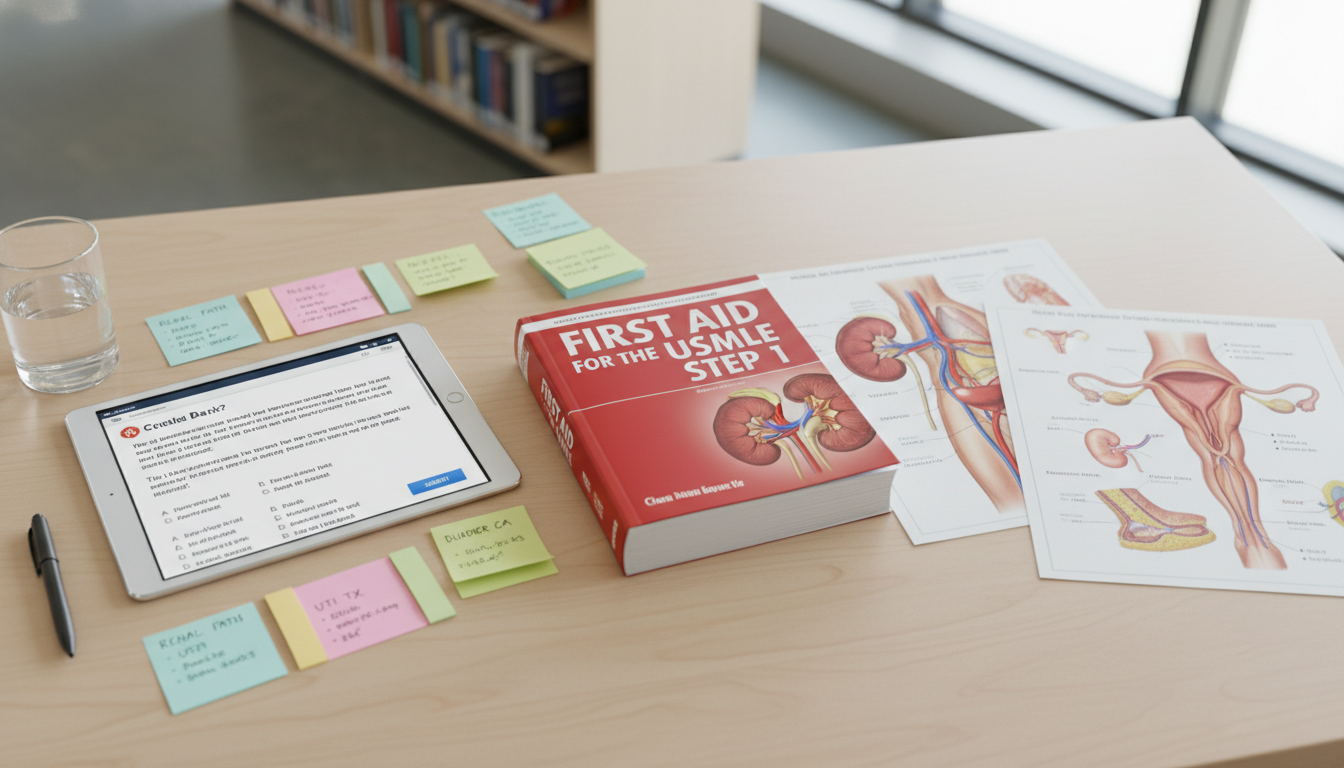
Core Step 1 Resources (Non-Negotiable)
UWorld Step 1 QBank
- Primary engine of learning and assessment.
- Strategy:
- Complete at least one full pass.
- Do questions in tutor mode early to learn content; switch to timed blocks later to simulate exam conditions.
- Tag urology-relevant topics (renal, reproductive, endocrine, embryology, neoplasia) for faster review.
First Aid for the USMLE Step 1
- High-yield outline to organize facts.
- Use as:
- A roadmap: follow along with your systems-based curriculum.
- A consolidation tool: annotate with insights from UWorld and lectures.
- Pay extra attention to:
- Renal, reproductive, and endocrine chapters
- Pharmacology tables for diuretics, anti-androgens, hormonal agents
Pathology Resource (Pathoma or similar)
- Pathology is heavily tested and crucial for understanding GU diseases.
- Pathoma:
- Watch videos and follow along in the text, especially:
- Renal pathology
- Neoplasia
- Male and female GU path
- Add diagrams and clinical pearls to your main notebook or digital notes.
- Watch videos and follow along in the text, especially:
High-Yield Supplemental Resources
Use these selectively to deepen understanding in areas that matter for urology:
Anatomy and Imaging
- A dedicated anatomy text or video series focusing on:
- Pelvic anatomy and perineum
- Renal and ureter pathways
- Vascular supply and lymphatic drainage of kidneys, testes, bladder, and prostate
- Tip: Practice mentally correlating anatomy with imaging (CT urograms, ultrasound) whenever possible.
- A dedicated anatomy text or video series focusing on:
Renal Physiology Text or Lectures
- Short, focused sources can transform renal physiology from confusing to intuitive.
- Look for:
- Clear explanations of nephron segments
- Practical clinical correlations (e.g., why loop diuretics cause hypocalcemia)
Question Banks Beyond UWorld (Optional)
- AMBOSS, Kaplan, or others can add volume if you have time.
- Use for:
- Additional exposure to renal and reproductive questions
- Clarifying tricky topics via their library/explanations
How to Integrate Urology-Relevant Learning into Your Resource Use
When studying any system or topic, explicitly connect it to urology:
- After a UWorld renal block, ask:
- How would this condition present to a urologist vs. a nephrologist?
- What surgical or procedural implications might this have?
- While reviewing embryology, link anomalies to:
- Pediatric urology cases (e.g., undescended testes → orchiopexy)
- During pharmacology review:
- Group drugs by how often you expect to see them in urology practice (alpha-blockers, PDE5 inhibitors, chemotherapeutics for bladder and testicular cancers).
This approach keeps your motivation high by constantly reminding you of your long-term goal: matching into urology.
Structuring Your Step 1 Study Plan with Urology in Mind
Effective USMLE Step 1 study requires a structured plan that is realistic, consistent, and adaptable. Below is a framework you can tailor.
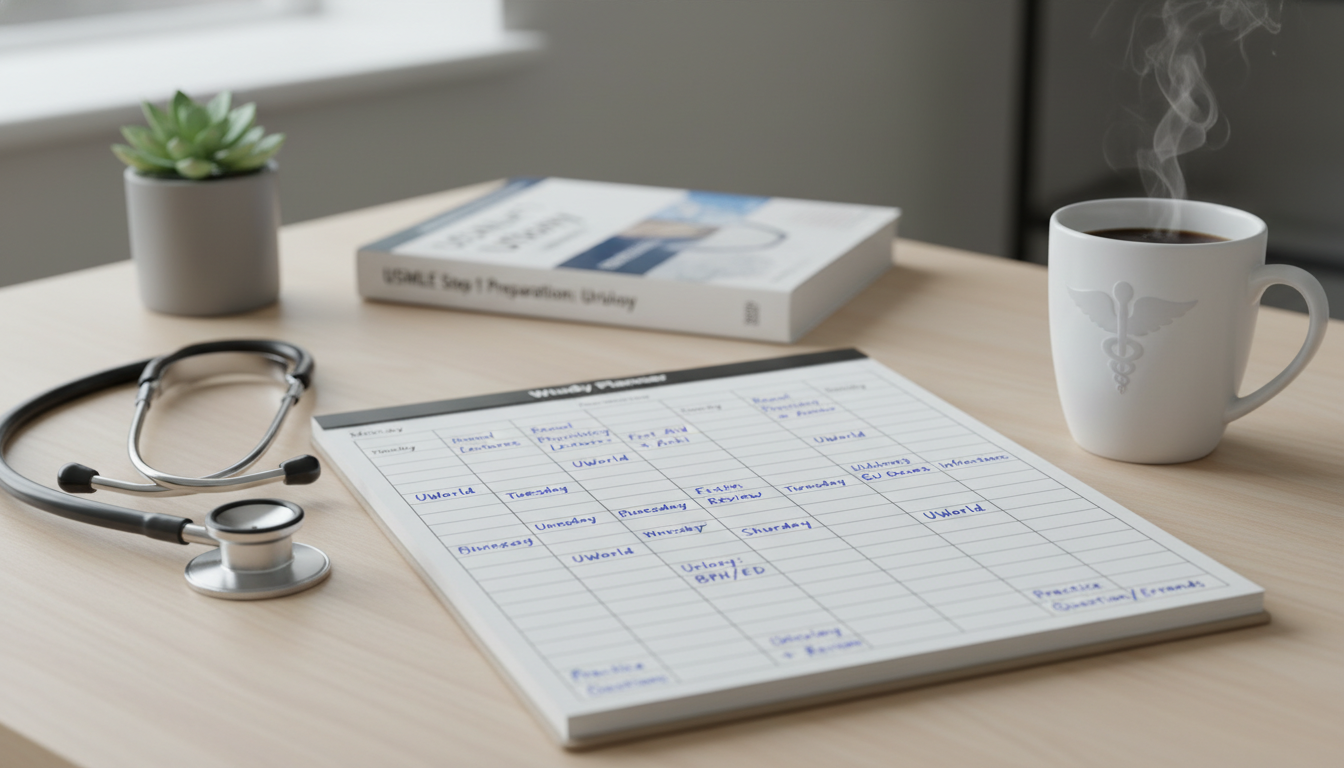
Phase 1: Pre-Dedicated (During Preclinical Courses)
Goal: Build conceptual understanding while “quietly” preparing for Step 1.
Weekly structure (example for a renal block):
Lectures/Required Curriculum (majority of weekday time)
- Attend or watch lectures at 1.25–1.5x speed.
- After each day’s lectures, spend 30–45 minutes:
- Cross-referencing First Aid for that organ system.
- Adding key details or mnemonics to your notes.
Question-Based Learning (3–5 days/week, 20–40 questions/day)
- Use UWorld for topics already covered in class.
- Start in tutor mode; take notes on:
- High-yield mechanisms
- Typical clinical presentations
- Common distractors (e.g., conditions often confused on test questions).
Weekly Urology-Relevant Deep Dive (1–2 hours/week)
- Choose a theme related to current coursework:
- During renal block: focus on nephrolithiasis, obstructive uropathy, renal tumors.
- During reproduction block: focus on testicular torsion, infertility, BPH basics.
- Read a short review article or chapter; keep notes in a dedicated “Urology Interest” document.
- Choose a theme related to current coursework:
Practical tip: Protect at least one half-day each week for pure Step 1 consolidation—no new lectures, just review.
Phase 2: Dedicated Step 1 Study (4–8 Weeks)
Goal: Consolidate, drill, and refine test-taking skills to ensure a strong pass.
Sample 6-week dedicated plan (adjust hours for your stamina and school’s policies):
Daily baseline (6–10 hours total study time):
UWorld Questions (40–80/day)
- Early weeks:
- 40–60 questions/day, tutor mode or timed-tutor.
- Later weeks:
- 60–80 questions/day, timed blocks (e.g., 2 blocks of 40).
- Review every explanation thoroughly; flag renal/GU questions for later rapid review.
- Early weeks:
First Aid + Pathology Review (2–4 hours/day)
- Use a systems-based or discipline-based approach.
- Rotate focus days:
- Day 1: Renal + Acid–Base
- Day 2: Reproductive + Endocrine
- Day 3: Cardio + Respiratory, etc.
- Return to renal and reproductive systems more frequently than others if you plan for urology.
NBME or Comprehensive Assessment Every 1–2 Weeks
- Use practice exams to:
- Gauge progress.
- Identify weak systems.
- After each exam, make a focused remediation plan:
- If renal or reproductive scores lag: dedicate an extra day to these.
- Use practice exams to:
Sample Day (8–9 hours total):
Morning (3–4 hours):
- 2 blocks of 20–25 UWorld questions (mixed or system-based).
- Immediate review of answers.
Midday (2–3 hours):
- First Aid review of one major system.
- Mix in 15–20 targeted flashcards (e.g., Anki) focusing on pharmacology and path.
Late afternoon (2 hours):
- Focused review:
- One hour: renal or reproductive questions from UWorld’s “incorrect” folder.
- One hour: video or text review of a troublesome topic (e.g., complex acid–base cases).
- Focused review:
Evening (optional 1–2 hours):
- Light review: flashcards, sketch diagrams, or discussion with a study partner.
Incorporating Wellness and Stamina
Urology is a demanding field; start building healthy habits now:
- Sleep: Aim for 7–8 hours. Cognitive performance drops with chronic sleep loss.
- Exercise: Even 20–30 minutes of walking or light cardio improves concentration.
- Scheduled breaks: Use the Pomodoro method or similar (50 minutes study, 10 minutes break).
- Practice test-day simulations:
- At least 1–2 times, do a full-length exam under Step 1 conditions.
- Practice nutrition, hydration, and break strategies.
High-Yield Basic Science Domains for Future Urologists
Within your overall Step 1 prep, deliberately master certain topics at a deeper level; they will repay you repeatedly during urology training.
Renal Physiology and Pathophysiology
Key areas to solidify:
- Glomerular filtration and clearance concepts
- Inulin and creatinine clearance
- Filtration fraction, GFR vs. RPF
- Nephron segments
- Transporters and channels in each segment (proximal tubule, loop of Henle, distal convoluted tubule, collecting duct)
- Hormonal regulation: aldosterone, ADH, ANP
- Acid–base handling
- Generation and reabsorption of bicarbonate
- Renal response to respiratory vs. metabolic acidosis/alkalosis
- Clinical correlations
- Pre-renal vs. intrinsic vs. post-renal azotemia
- Electrolyte disturbances from diuretics or obstruction
Mastery here will make perioperative management and reading urology consult notes much more intuitive later.
Embryology and Congenital Anomalies
Important for pediatric urology exposure and Step 1:
- Development of kidneys and urinary tract:
- Pronephros, mesonephros, metanephros
- Ureteric bud and metanephric mesenchyme
- Horseshoe kidney, duplex collecting system
- Development of genitalia:
- Wolffian and Müllerian ducts
- Descent of the testes
- Hypospadias vs. epispadias mechanisms
- Correlate with clinical presentations:
- Cryptorchidism and infertility risk
- Posterior urethral valves leading to obstructive uropathy
GU Pharmacology and Cancer Biology
For Step 1 and beyond:
- Drugs to know well:
- Alpha-blockers (tamsulosin, doxazosin): mechanism, side effects (orthostatic hypotension)
- 5-alpha-reductase inhibitors (finasteride, dutasteride): role in BPH and hair loss
- PDE5 inhibitors (sildenafil, tadalafil): contraindications (nitrates), side effects (blue vision, hypotension)
- Anticholinergics (oxybutynin) and beta-3 agonists (mirabegron) for overactive bladder
- Diuretics: especially loops and thiazides
- Cancer-related concepts:
- Tumor suppressor genes (e.g., VHL in clear cell RCC)
- Oncogenes and pathways relevant to GU malignancies
- Paraneoplastic syndromes (e.g., RCC producing EPO causing polycythemia)
Building these deeper layers of understanding during USMLE Step 1 preparation gives you a head start for reading urology literature and engaging in early research.
Positioning Step 1 Within Your Overall Urology Match Strategy
Step 1 is just one component of a successful urology match application. Treat it as the foundation upon which your competitive profile is built.
How Step 1 Interacts with Step 2 CK and Clinical Performance
Since Step 1 is pass/fail, programs often lean more heavily on:
- Step 2 CK score
- Clerkship grades (especially surgery and medicine)
- Urology rotation performance
Strong Step 1 preparation sets you up to:
- Transition more smoothly into clinical reasoning on clerkships.
- Retain key pathophysiology that makes Step 2 CK studying more about integration than re-learning.
- Appear competent and confident when presenting patients on surgical/urology services.
Using Step 1 Knowledge to Impress on Urology Rotations
Even as an early clinical student, your Step 1 background can set you apart:
- When seeing a patient with hematuria:
- Recall and discuss the differential across nephrology and urology causes.
- Understand imaging choices (CT urogram vs. ultrasound).
- When on a pediatric urology service:
- Recognize the embryologic basis for anomalies.
- Ask informed questions about surgical timing and fertility outcomes.
- When involved in tumor boards:
- Follow discussions of tumor staging, paraneoplastic phenomena, and targeted therapies.
Mentors notice students who ask sophisticated questions grounded in strong basic science.
Building a Long-Term Narrative: Consistency and Commitment
Program directors value a coherent story:
- Preclinical years: solid Step 1 pass, basic science excellence.
- Clerkships: strong surgical and medicine performance.
- Sub-internships/away rotations in urology: high engagement, good technical potential.
- Research and advocacy: projects or activities in GU oncology, reconstructive urology, men’s or women’s health, pediatric urology, etc.
Your USMLE Step 1 study is the first visible demonstration that you can commit deeply to a goal and execute a disciplined plan—exactly what urology training will demand.
FAQs: USMLE Step 1 Preparation for Aspiring Urologists
1. Does Step 1 still matter for urology now that it’s pass/fail?
Yes. While programs no longer see a three-digit score, they do see:
- Whether you passed on the first attempt (crucial).
- Your school’s internal records and narrative evaluations, which may reference exam performance.
- Your subsequent Step 2 CK score, which is often interpreted in the context of Step 1 performance.
A strong Step 1 preparation ensures you pass comfortably and creates the knowledge base for a high Step 2 CK—both important for a competitive urology residency application.
2. Should I study urology-specific material for Step 1?
You don’t need full urology textbooks or operative atlases for Step 1. Instead:
- Focus on high-yield basic sciences highly relevant to urology:
- Renal physiology and pathology
- Reproductive and endocrine systems
- Embryology of the GU tract
- Pharmacology of diuretics, BPH medications, and ED treatments
- Use urology as a mental framework:
- When you study a concept, ask how it might show up in urologic practice.
This approach keeps you efficient while still aligning your learning with your future specialty.
3. How many hours per day should I study during dedicated Step 1 prep?
Most students aiming for competitive specialties study 6–10 hours/day during their dedicated period, depending on:
- Their baseline knowledge.
- Length of dedicated time.
- Personal stamina and mental health.
Focus on quality over sheer quantity:
- Strong question bank usage (UWorld) every day.
- Targeted review of weak areas.
- Regular practice exams for calibration.
Taking at least one rest half-day per week typically improves long-term productivity.
4. What if I’m struggling with renal physiology and it’s hurting my confidence?
Renal physiology is notoriously challenging, but it is also one of the most clinically useful systems in urology. To improve:
- Use a single, clear resource (short renal phys text or video series).
- Build a visual map of the nephron, annotating:
- Major transporters and channels.
- Hormones acting at each segment.
- Diuretics and their action sites.
- Do targeted question blocks (20–30 renal questions at a time) and thoroughly review explanations.
- Explain concepts aloud as if teaching a peer.
Improving in renal not only boosts your Step 1 performance but also gives you a real advantage in future urology training.
By approaching USMLE Step 1 preparation as the foundational phase of your journey toward a urology residency, you transform the exam from a hurdle into an opportunity: a chance to build the scientific and cognitive toolkit that will support you throughout your surgical career.