Preparing for USMLE Step 1 is a pivotal milestone for every medical student—but if you’re planning for a psychiatry residency, your approach to Step 1 preparation can be more strategic and targeted than a generic study plan. Although the exam is now pass/fail, your Step 1 preparation still plays a major role in how strong you’ll be for Step 2 CK, your psych clerkship, and ultimately the psych match.
This guide walks you through USMLE Step 1 preparation with a psychiatry-focused lens: what to prioritize, how to integrate behavioral sciences and neuroanatomy, and how to use your study time to build a foundation for a future psychiatry residency.
Understanding Step 1 in the Context of Psychiatry
USMLE Step 1 is designed to test your understanding of basic sciences as they apply to clinical practice. For students eyeing psychiatry residency, certain Step 1 domains are especially relevant:
- Neuroscience and neuroanatomy
- Behavioral sciences and biostatistics
- Pharmacology of psychotropic medications
- Neurophysiology and neurochemistry
- Ethics, communication, and doctor–patient relationship
Although the USMLE Step 1 score is now reported as pass/fail, it remains important for several reasons:
Foundation for Step 2 CK
Step 2 CK is still numerically scored and heavily weighted in the psych match. Strong Step 1 preparation makes Step 2 CK markedly easier, especially in psychiatry-related topics like mood disorders, psychosis, and substance use disorders.Shelf exams and clerkship performance
Your psychiatry clerkship grade and shelf exam rely on the same core content you learn for Step 1: neurobiology, psychopharmacology, and behavioral sciences. Step 1 prep is, in practice, early psychiatry residency prep.Program directors still care about “pass on first attempt”
In psychiatry residency applications, a first-attempt pass is reassuring to program directors. A fail is not necessarily fatal, but it adds an obstacle you could avoid with solid Step 1 preparation.Signal of self-discipline and knowledge base
Even without a three-digit score, taking Step 1 preparation seriously signals that you can handle large volumes of complex material—exactly what residency demands.
How Much Does Psychiatry Rely on Step 1 Content?
Psychiatry is not “all talk therapy.” A psychiatry residency requires comfort with:
- Neurotransmitter pathways and receptor pharmacology
- Brain circuitry involved in mood, cognition, and reward
- Neurodevelopmental processes and neurocognitive disorders
- Data interpretation (trials of psychotropic medications, epidemiology of mental illness)
Every one of these areas is rooted in Step 1 content. If you internalize them now, you will feel more confident on wards, in residency, and on your psychiatry board exams later.
Core Content Domains for Psychiatry-Focused Step 1 Prep
While you must cover the entire USMLE Step 1 blueprint, students interested in psychiatry residency should pay close attention to areas that will serve them long-term.
1. Neuroscience and Neuroanatomy
Neuroanatomy can feel abstract, but it’s highly testable and deeply relevant to psychiatry.
High-yield themes:
Major brain regions and functions
- Prefrontal cortex: executive function, impulse control, personality
- Limbic system (amygdala, hippocampus): emotion regulation, memory
- Basal ganglia: movement, often involved in antipsychotic side effects
- Hypothalamus: sleep, appetite, endocrine–psychiatric relationships
Neurotransmitter systems
- Dopamine pathways (mesolimbic, mesocortical, nigrostriatal, tuberoinfundibular)
- Serotonin, norepinephrine, GABA, glutamate and their roles in psychiatric illness
- Pathways affected by antidepressants, antipsychotics, mood stabilizers
Lesion localization with psychiatric manifestations
- Frontal lobe lesions → personality changes, disinhibition
- Temporal lobe lesions → emotional lability, memory issues
- Right vs left hemisphere involvement and affect/communication changes
Actionable tip:
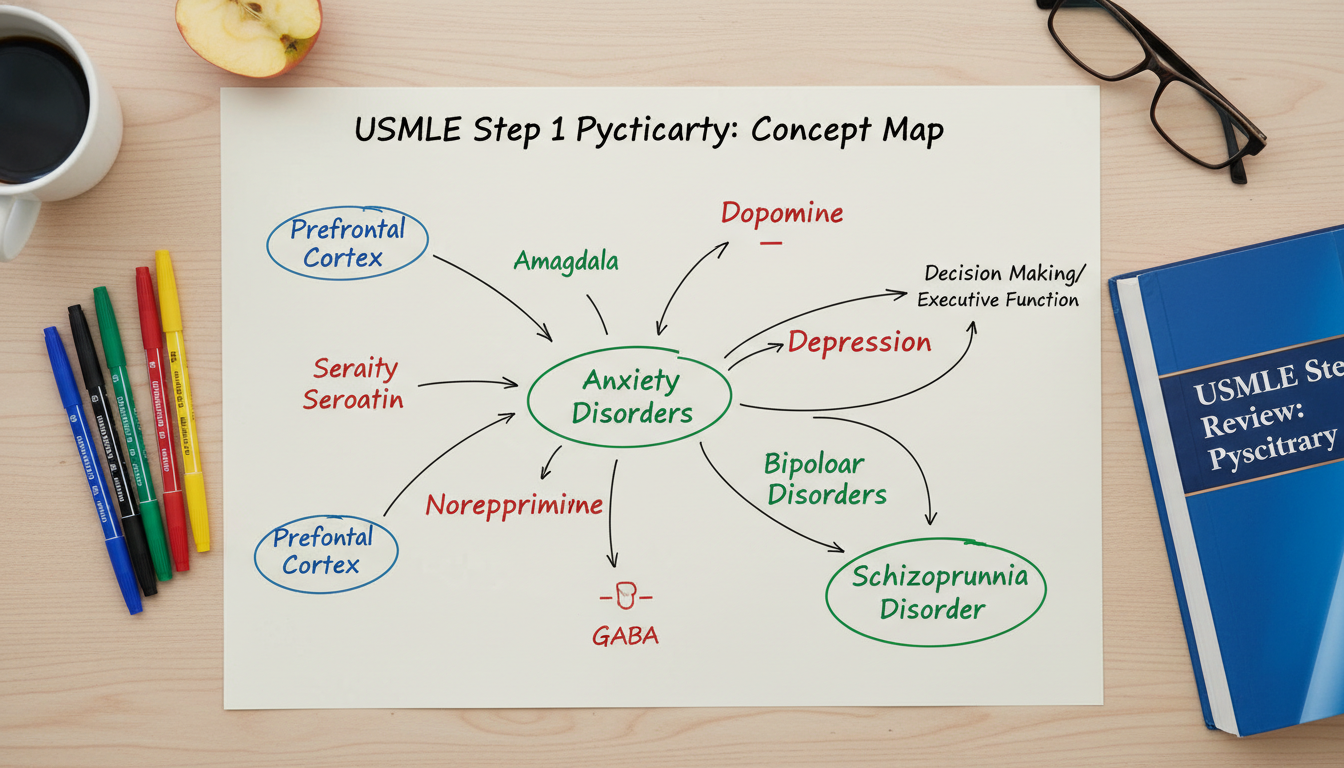
Create a one-page “psychiatry-relevant neuroanatomy” map summarizing pathways, regions, and classic clinical syndromes (e.g., Kluver–Bucy, frontal lobe syndrome). Review it weekly during your USMLE Step 1 study.
2. Behavioral Sciences and Biostatistics
Behavioral sciences are central both to Step 1 and psychiatry practice. Psych match committees expect you to be comfortable with:
- Defense mechanisms (sublimation, reaction formation, splitting, projection)
- Attachment styles and developmental milestones
- Learning theory and conditioning
- Psychological testing and diagnostic criteria
- Ethics, boundaries, confidentiality, duty to warn/protect
Biostatistics overlaps with psychiatry research literacy:
- Sensitivity, specificity, PPV/NPV
- Study design (RCT, cohort, case-control, cross-sectional)
- Biases (selection, recall, observer)
- P-values, confidence intervals, Type I/II error
These topics frequently appear in both USMLE Step 1 and psychiatry shelf exams.
Actionable tip:
During USMLE Step 1 study, tag behavioral science and biostatistics questions in your Qbank. Re-do them in a separate block weekly. This repetition reinforces skills that psychiatrists rely on to interpret clinical trials and psychometric data.
3. Psychiatric Pharmacology
Psychopharmacology is an anchor topic for both Step 1 and psychiatry residency.
Focus your USMLE Step 1 study on:
Antidepressants
- SSRIs, SNRIs, TCAs, MAOIs, atypical antidepressants
- Mechanism of action, side-effect profiles, overdose risks
- Serotonin syndrome and discontinuation syndromes
Antipsychotics
- Typical vs atypical, receptor profiles (D2, 5-HT2A, etc.)
- EPS, tardive dyskinesia, NMS, metabolic syndrome
- Long-acting injectables (conceptual knowledge)
Mood stabilizers
- Lithium: mechanism, therapeutic monitoring, toxicity, teratogenic effects
- Anticonvulsants used in mood disorders (valproate, carbamazepine, lamotrigine)
Anxiolytics and sedative-hypnotics
- Benzodiazepines, Z-drugs, buspirone
- Dependence potential, withdrawal syndromes, overdose management
Actionable tip:
Build a “psych pharm grid” summarizing each drug class: mechanism, indications, key side effects, and contraindications. Use it as part of your spaced repetition; this will remain one of your most valuable reference sheets in psychiatry residency.
4. Neurodevelopment, Cognition, and Neurocognitive Disorders
Step 1 integrates psychiatry where neurology and development intersect:
Neurodevelopmental disorders
- Autism spectrum disorder, ADHD, learning disorders, intellectual disability
- Genetic underpinnings (e.g., fragile X, tuberous sclerosis associations)
Cognitive disorders
- Delirium vs dementia distinctions
- Major neurocognitive disorders (Alzheimer disease, Lewy body, frontotemporal)
- Reversible cognitive impairments (B12 deficiency, hypothyroidism)
Pediatrics + psychiatry intersections
- Childhood anxiety, mood, and behavioral disorders in Step 1 vignettes
Actionable tip:
When you review pediatrics or neurology material during USMLE Step 1 study, deliberately ask: “What is the psychiatric angle here?” This mental habit will pay off in your psych clerkship and later residency.
Building an Effective Step 1 Study Strategy with Psychiatry in Mind
Your Step 1 preparation plan should be systematic but flexible. A psychiatry-focused approach does not mean skipping renal physiology or microbiology; it means deliberately strengthening neuro-psychiatric domains while still aiming for a comprehensive pass.
Step 1 Study Phases
You can think of USMLE Step 1 study in three phases:
- Foundation Phase (Pre-clinical / early prep)
- Dedicated Study Period
- Final Review and Exam Readiness Check
1. Foundation Phase
During pre-clinical years, integrate your Step 1 preparation with coursework:
Link basic science to clinical psychiatry cases
- When learning about neurotransmitters, think of specific psychiatric disorders and medications.
- When covering the limbic system, read a short clinically oriented psychiatry case.
Use active learning from the beginning
- Start with a lower Qbank volume early (e.g., 5–10 questions/day related to your current block).
- Build Anki decks or use premade decks, tagging psychiatry-related basic science content.
Identify weak areas early
- If neuroanatomy or biostatistics are weak, don’t postpone them. Address them during courses rather than cramming during dedicated.
2. Dedicated Study Period
During your 4–8 weeks of dedicated USMLE Step 1 study, follow a structured plan:
Daily structure example (8–10 hours):
Morning: Timed Qbank block (40 questions)
- Mixed or system-based depending on your schedule
- Carefully review explanations; note psych-related questions
Midday: Content review
- Use a primary Step 1 resource (e.g., First Aid, Boards & Beyond, etc.)
- Spend extra focus on:
- Neuroanatomy
- Behavioral sciences
- Psychiatry pharmacology
- Neurophysiology
Afternoon: Second Qbank block (40 questions)
- Focus on weakest systems from the prior week
Evening: Spaced repetition
- 1–2 hours of flashcards (especially psych/behavioral-related)
- 10–15 minutes revisiting your psych pharm grid and neuroanatomy map
Psychiatry-focused twists to your schedule:
Dedicate one half-day per week in dedicated specifically to:
- Neuro and psych pharm review
- Behavioral sciences/bioethics
- Neurocognitive and neurodevelopmental disorders
As your exam date nears, ensure that mixed Qbank blocks include a healthy representation of psych-related questions to keep you comfortable with integrated vignettes.
3. Final Review and Exam Readiness
In the last 7–10 days before your Step 1 exam:
- Revisit high-yield psychiatry and neuro content repeatedly
- Rapid review tables from your Step 1 resources
- ~50–100 psychiatry/behavioral science questions from your Qbank or marked questions
- Take at least one practice NBME-style exam
- Validate that you are comfortably above the pass threshold
- Pay attention to performance in behavioral/neuro/psych content
If you’re doing particularly well in psychiatry-related domains, don’t become complacent: sustaining a pass means overall competence, not just strength in your intended specialty.
Best Step 1 Resources for Future Psychiatrists
Most USMLE Step 1 resources are not specialty-specific, but some will be particularly helpful for students aiming at a psychiatry residency.
Core Step 1 Resources
These USMLE Step 1 study materials are staples for nearly all students:
“First Aid for the USMLE Step 1”
- Use as a framework, not as your only resource
- Pay attention to the neurology, psychiatry, pharmacology, and behavioral science sections
Question banks (UWorld, AMBOSS, etc.)
- Treat these as your primary learning tool
- Filter or tag questions involving neuro, psych, and behavioral science to review them more frequently
Video resources (e.g., Boards & Beyond, Osmosis, Sketchy)
- For psychiatry and neuroanatomy, video explanations often clarify pathways and clinical presentations far better than text alone.
Psychiatry-Relevant Supplements
In addition to the core USMLE Step 1 resources:
Behavioral Science and Biostatistics review books or modules
- Short, targeted resources can make your understanding of ethics and statistics more robust. These topics are highly relevant to psychiatry residency interviews and academic psychiatry.
Neuroanatomy atlases with clinical correlations
- Choose one with case-based discussions that mimic real clinical scenarios.
- Prioritize sections on frontal, temporal, and limbic systems.
Psychiatry introductory texts or board-style review books
- Use sparingly during Step 1 prep—your priority is still the tested content.
- After your exam, these books will be ideal for building depth before your psych clerkship.
How to avoid resource overload:
Pick one primary text, one primary Qbank, and one video source. Add only 1–2 focused supplements for behavioral sciences or neuroanatomy. Overcollecting resources is a major cause of burnout and fragmented Step 1 preparation.
Integrating Step 1 Prep with a Long-Term Psychiatry Career Plan
Your USMLE Step 1 preparation does not exist in isolation. It’s one of the earliest ways you begin to build your identity as a future psychiatrist.
Using Step 1 Prep to Strengthen Your Psych Residency Application
You can leverage Step 1 preparation in multiple ways:
Building a knowledge base for Step 2 CK
- Step 2 CK is now a major discriminator in psych match decisions.
- Mastering neuroanatomy, pharmacology, and behavioral sciences during Step 1 preparation sets you up for an easier, more effective Step 2 CK study period.
Improved psychiatry clerkship performance
- Understanding psychopharmacology and neurobiology helps you stand out on the wards:
- You’ll anticipate side effects and monitoring requirements.
- You’ll engage more meaningfully in discussions about diagnosis and management.
- Understanding psychopharmacology and neurobiology helps you stand out on the wards:
Research and scholarly activity
- Familiarity with biostatistics and study design from Step 1 resources makes it easier to participate in psychiatry research—another perk in your psych residency application.
Professional identity development
- As you study Step 1 content, notice which psychiatry-related topics resonate most:
- Neurodevelopment? Addiction? Mood disorders?
- These early preferences can guide later electives, research, and sub-specialty exploration (child and adolescent psychiatry, addiction, forensic, etc.).
- As you study Step 1 content, notice which psychiatry-related topics resonate most:
Balancing Step 1 with Other Preclinical Priorities
Students often ask whether they should devote extra time to psychiatry-specific reading during Step 1 preparation. A practical approach:
During intense Step 1 periods:
- Focus on USMLE Step 1 study and passing on the first attempt.
- Do not sacrifice broad exam readiness for narrow specialty reading.
After Step 1, before clinical years:
- Add one introductory clinical psychiatry text or review resource.
- Seek early mentorship from psychiatry faculty and residents.
- Explore small-scale research or volunteer opportunities in mental health settings.
This staged strategy ensures you meet the gatekeeping requirement (passing Step 1) while still building a trajectory toward a strong psychiatry residency application.
Practical Tips, Common Pitfalls, and Mental Health During Step 1 Prep
Psychiatry-bound students tend to be attuned to mental health and wellness. Use that insight to protect yourself during the high-stress USMLE Step 1 preparation period.
Practical Study Tips
Treat Step 1 like marathon training, not a sprint.
- Protect sleep, nutrition, and physical activity.
- Create a written schedule with rest days and mental health check-ins.
Use active learning techniques.
- Teach a concept aloud to a partner (or to yourself).
- Build small teaching sessions of “today’s psych-relevant topic” into your day.
Simulate exam conditions regularly.
- Timed blocks with minimal interruptions.
- Practice sitting for multiple consecutive blocks before the real exam.
Regularly revisit psychiatry-related material.
- Short, frequent reviews (10–20 minutes/day) of psych pharm and behavioral sciences beat once-a-week cramming.
Common Pitfalls for Psychiatry-Oriented Students
Over-focusing on psych and under-preparing other areas
- Psych is only a portion of Step 1. You still must pass the entire exam.
- Ensure you allocate time for traditionally challenging subjects (renal, cardio, micro, etc.).
Neglecting biostatistics and ethics
- Because these topics feel “less medical,” students underprepare them.
- Yet they are highly testable and critically important in psychiatry practice and research.
Resource overload and perfectionism
- Many psychiatry-bound students are reflective and conscientious—traits that can slide into perfectionism under pressure.
- Limit your Step 1 resources and aim for mastery of a few, not partial coverage of many.
Ignoring your own mental health
- Step 1 stress can unmask or worsen anxiety or mood symptoms.
- If you notice persistent sleep disturbance, loss of interest, or significant distress, reach out to appropriate support—counseling, mentors, or healthcare providers.
Self-Care as Early Professional Practice
As a future psychiatrist, how you manage stress during Step 1 preparation is part of your professional formation:
- Practice setting boundaries (e.g., scheduled breaks, tech-free time).
- Normalize seeking support when needed.
- Develop non-academic coping strategies (exercise, mindfulness, hobbies).
Your future patients will benefit from a psychiatrist who has navigated similar academic pressures thoughtfully and compassionately.
FAQs: USMLE Step 1 Preparation for Psychiatry-Bound Students
1. With Step 1 now pass/fail, how much does it really matter for psychiatry residency?
It matters in three key ways:
- Programs expect a first-attempt pass, and a failure can require explanation.
- Strong Step 1 preparation is the backbone for Step 2 CK, which is heavily weighted in psych match decisions.
- It gives you a solid foundation in neurobiology, behavior, and pharmacology that will make your psych clerkship and residency easier and more rewarding.
2. Should I use psychiatry-specific books during my Step 1 study period?
Use them sparingly. Your priority is to pass Step 1 using core Step 1 resources. If you already have a strong handle on general content, a short, board-style psychiatry review can help consolidate psych-related material. For deeper psychiatry texts, it’s usually better to wait until after Step 1 or integrate them during your clinical years.
3. What Step 1 resources are best specifically for behavioral sciences and biostatistics?
Look for a concise, high-yield behavioral science/biostatistics review book or video series that matches your primary Step 1 resources. Combine that with consistent practice questions in these domains from your Qbank. The key is repetition: re-do psych and biostatistics question blocks periodically to reinforce concepts.
4. How can I show my interest in psychiatry if Step 1 is pass/fail?
Use Step 1 preparation as a foundation, then build a visible psychiatry-focused portfolio:
- Strong Step 2 CK performance, especially in psychiatry-related areas
- Excellent evaluations on your psychiatry clerkship
- Involvement in psychiatry research, interest groups, or volunteer work
- Thoughtful discussion of psychiatry-related topics in your personal statement and interviews
Step 1 prep is the beginning, not the entirety, of your path toward a successful psychiatry residency and a strong psych match outcome. Combine disciplined USMLE Step 1 study with deliberate career planning, and you’ll enter your clinical years—and later your psychiatry residency—on a solid, confident foundation.