



Preparing for the USMLE Step 2 CK is demanding under any circumstances—but doing it while engaged in global health work, international rotations, or a global health residency track adds unique challenges and opportunities. Balancing intensive clinical responsibilities, cross-cultural medicine, and uneven access to resources requires a highly strategic approach.
This guide walks you through how to build an effective USMLE Step 2 study plan tailored to a global health–oriented path, whether you are currently abroad, planning a global health residency track, or aiming to integrate international medicine into your career.
Understanding Step 2 CK in the Context of Global Health
Step 2 CK is designed to assess your ability to apply medical knowledge and clinical science to patient care. For applicants interested in global health or international medicine, this exam plays three critical roles:
Signal of Clinical Readiness
Programs with a global health residency track often expect strong clinical performance because residents may work in resource-limited or independent settings sooner than others. A solid Step 2 CK score reassures program directors that you can safely manage complex patients.Second Chance to Strengthen Your Application
If Step 1 did not go as planned, Step 2 CK becomes a crucial tool to demonstrate improvement. This can be especially important in competitive internal medicine, pediatrics, EM, OB/GYN, and surgery programs with robust global health pathways.Alignment With Real-World Global Practice
Step 2 CK is still very “US-centric,” but many skills it tests are core to global health:- Triage and emergency management
- Infectious disease diagnosis and treatment
- Maternal and child health
- Preventive medicine and vaccination
- Systems-based practice and quality improvement
Understanding these links can make your USMLE Step 2 study feel more relevant to your career goals.
Step 2 CK Content Areas Most Relevant to Global Health
While all content areas matter, these are particularly high yield for students drawn to international medicine:
- Infectious Diseases: HIV, TB, malaria, parasitic infections, sexually transmitted infections, opportunistic infections.
- Obstetrics & Gynecology: Prenatal care, management of pregnancy complications, postpartum hemorrhage, hypertensive disorders of pregnancy.
- Pediatrics: Vaccine-preventable diseases, malnutrition, dehydration, congenital infections.
- Emergency/Acute Care: Sepsis, trauma, shock, respiratory failure, first-line stabilization.
- Public Health & Prevention: Screening guidelines, vaccination schedules, antimicrobial stewardship.
- Ethics & Systems-Based Practice: Limited resources, triage, cross-cultural communication, consent and capacity.
If you are working or studying in a low- or middle-income country, you may see many of these conditions daily. The key is aligning your real-world experiences with the way they are tested on Step 2 CK.
Building a High-Yield Step 2 CK Study Plan with a Global Health Lens
A structured, realistic plan is essential—especially if you are balancing rotations, language barriers, or irregular schedules abroad.
Step 1: Define Your Target and Constraints
Before you start intensive USMLE Step 2 study, clarify:
Target Step 2 CK score
- Competitive for many global health–oriented internal medicine or pediatrics programs: often 5–10 points above national mean (though this changes year to year).
- Highly competitive or research-heavy global health residency track: Aim as high as realistically possible and aim to show an upward trend from Step 1.
Timeline to Exam
- Common dedicated period: 4–8 weeks.
- If you are in a demanding global health rotation, you may need a hybrid plan: 2–3 months of part-time studying during your rotation plus 3–5 weeks of full-time study afterward.
Available Resources
- Do you have stable internet for question banks and NBME exams?
- Are you in a time zone that makes live online classes difficult?
- Do you have reliable power / electricity?
Write down your constraints honestly—your plan should work in your real context, not an idealized one.
Step 2: Choose a Core Resource Set
For nearly all students, an effective Step 2 CK preparation plan includes:
Primary Question Bank (QBank)
- Examples: UWorld, Amboss.
- Use tutor mode early for learning, then timed mode closer to the exam.
- Aim for one full pass of your main QBank, ideally 2,000–3,000 questions total.
Clinical Knowledge Text or Series
- Examples: OnlineMedEd videos + notes, Master the Boards Step 2, Step-Up to Medicine (for IM-heavy review).
- Use as a reference to consolidate after doing questions, not as your only activity.
NBME and Practice Exams
- NBME self-assessments and the official practice forms are crucial to calibrate your Step 2 CK score estimate and timing.
Supplemental Global Health Readings (Optional)
While not required for the exam, supplement with:- WHO guidelines (e.g., TB, malaria, HIV, maternal mortality).
- CDC travel medicine recommendations.
Use these to enrich your understanding, but don’t let them displace core USMLE materials.

Step 3: Integrate Clinical Work and Step 2 CK Preparation
If you are in a global health rotation or international medicine elective:
Turn each patient into a test question.
After clinic or ward rounds, identify:- Primary diagnosis
- Key differentials
- Next best test and next best step in management
Then find 2–3 related QBank questions that day.
Bridge resource differences.
Many global health sites use different formularies or protocols:- Compare local practice with US guidelines (e.g., for TB, HIV, malaria, sepsis).
- Ask: “What would be the USMLE-best answer in a fully resourced US setting?”
Use your cases to anchor memory.
You will remember the algorithm for postpartum hemorrhage or sepsis far more deeply if you tie it to a real patient you helped manage in a district hospital or refugee clinic.
Step 4: Weekly Study Structure (Sample)
For a student on a moderate clinical schedule (e.g., 40-hour week) during a global health elective:
Daily (Mon–Fri)
- 20–30 QBank questions/day (timed, mixed or by system).
- 45–60 minutes of review with notes.
- 20–30 minutes of targeted reading or watching a short video (e.g., high-yield OB, ID, peds).
Weekend
- 40–60 QBank questions/day.
- 1–2 hours of cumulative review and note consolidation.
For a fully dedicated 4–6 week period:
- Daily
- 60–80 questions/day in 2–3 blocks.
- 2–3 hours of review and reading.
- 30 minutes of spaced repetition (Anki or your own notes).
Adjust the question volume based on your baseline, burnout risk, and available time.
High-Yield Content Areas with Global Health Relevance
While you should study broadly, some areas are especially high yield for both Step 2 CK and a career in global health.
1. Infectious Diseases and International Medicine
Step 2 CK has extensive coverage of ID topics that overlap strongly with global health:
HIV:
- Initial evaluation, baseline labs, OI prophylaxis, acute vs chronic infection.
- Opportunistic infections (PCP, toxoplasmosis, MAC, CMV).
- Pregnancy and prevention of vertical transmission.
Tuberculosis:
- Latent vs active TB (diagnosis and treatment differences).
- Extrapulmonary TB manifestations.
- Management in pregnancy, HIV co-infection.
Parasitic Infections:
- Malaria: diagnosis, treatment by species and severity.
- Helminths, strongyloides, schistosomiasis, echinococcus.
- Amebiasis vs noninfectious colitis.
Common Global Pathogens:
- Typhoid, dengue, chikungunya, Zika, rabies (post-exposure prophylaxis), leishmaniasis (less tested but conceptually relevant).
Actionable tip:
When you see a disease frequently in your international setting, look it up in:
- A USMLE review source (to learn the “testable” version).
- A global health resource (WHO guideline) to learn context-specific nuances.
This dual approach keeps your Step 2 CK preparation efficient and aligned with global practice.
2. Maternal and Child Health
Many global health residency track programs emphasize women’s and children’s health because they are central to global disease burden.
Step 2 CK expects strong mastery of:
Obstetric Emergencies
- Postpartum hemorrhage: causes (4 Ts), stepwise management, uterotonics, transfusion.
- Hypertensive disorders of pregnancy: gestational HTN vs preeclampsia vs eclampsia.
- Shoulder dystocia, uterine rupture, cord prolapse.
Antenatal Care and Screening
- Recommended labs and imaging.
- Rhesus isoimmunization prevention.
- Infectious screenings and management.
Neonatal Care
- Resuscitation (NRP principles).
- Neonatal sepsis, jaundice, hypoglycemia.
- Congenital infections and screening.
Pediatric Essentials
- Dehydration assessment and treatment.
- Failure to thrive and malnutrition.
- Vaccine-preventable diseases.
Global health connection:
Many students working in low-resource maternity wards see high rates of eclampsia, PPH, and neonatal complications. Use these experiences as frameworks when you study these topics for Step 2 CK.
3. Emergency Medicine and Triage
Global health often involves resource-limited emergency care. Step 2 CK questions frequently test:
- Initial stabilization: ABCs, airway management, fluid resuscitation.
- Shock: hypovolemic vs cardiogenic vs distributive.
- Trauma priorities: C-spine, FAST exam, indications for emergent OR.
- Poisoning and environmental injuries (e.g., heat stroke, envenomation).
In international settings, you may face scenarios where:
- Imaging is unavailable.
- Blood products are scarce.
- Specialist backup is limited.
For the exam, you must answer based on ideal US-standard care unless the question explicitly describes resource limitations.
4. Prevention, Screening, and Public Health
Step 2 CK has consistent questions on:
- Vaccination schedules and catch-up.
- Cancer screening guidelines (cervix, breast, colon, lung).
- Infectious disease screening (HIV, hepatitis, STIs).
- Occupational exposures and post-exposure prophylaxis.
This content directly ties into international medicine, where prevention and systems-level thinking drive population health. Understanding US preventive guidelines will also help you interpret how and why they differ in global contexts.
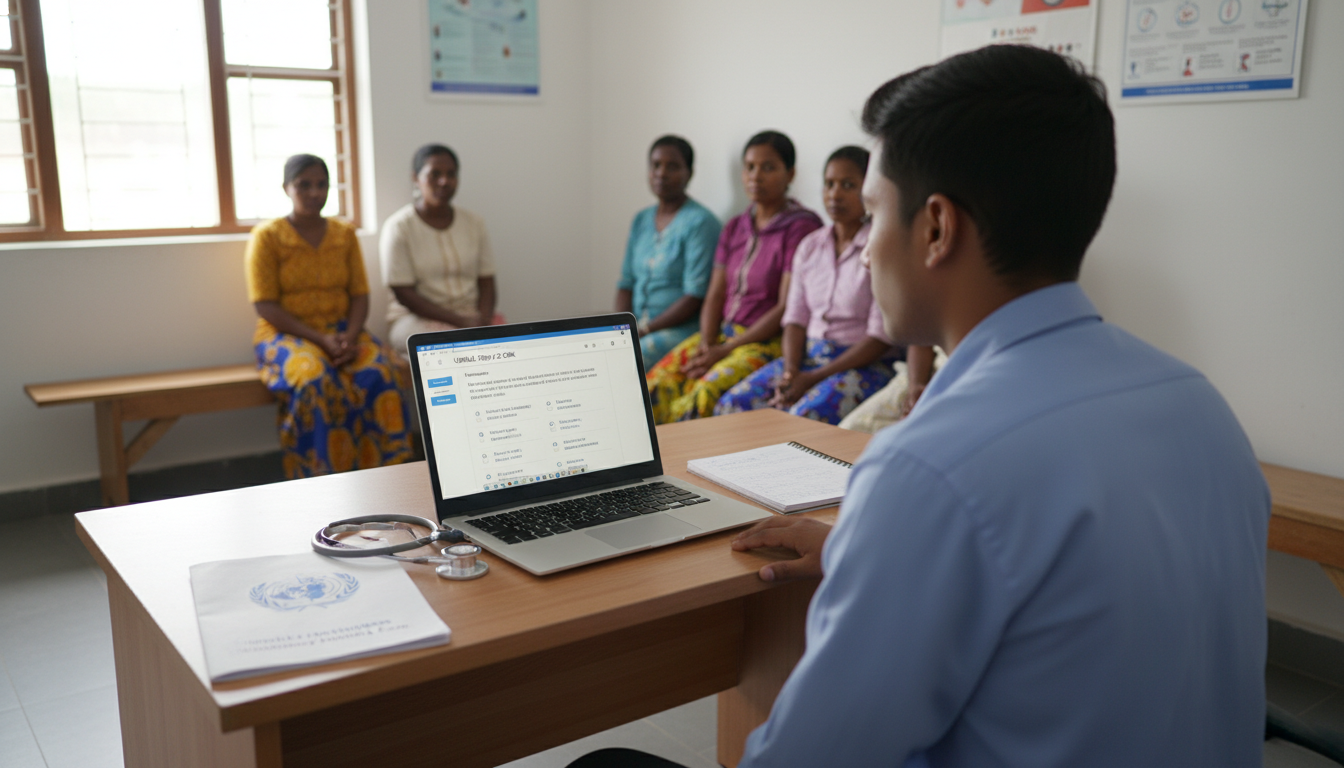
Practical Strategies for Step 2 CK Preparation While Abroad
Global health experiences can complicate—but also significantly enrich—USMLE Step 2 preparation. Here’s how to stay effective if you’re outside the US or in a demanding global rotation.
Managing Time Zones, Connectivity, and Power
Download Materials Offline
- Save PDFs of notes and guidelines.
- Use offline modes of apps (Anki, some QBank apps, if available).
- Keep a local copy of important documents and algorithms.
Plan Around Electricity/Predictable Access
- Study during times you typically have power and internet.
- Use minimal-device tasks (reading, handwritten notes) when power is unreliable.
Batch Online Work
- When connectivity is strong, focus on:
- Downloading offline content.
- Taking QBank blocks.
- Syncing Anki / cloud notes.
- When connectivity is strong, focus on:
Optimizing Learning from Global Health Clinical Work
Daily “USMLE Reflection”
Spend 10–15 minutes each evening identifying:- One case that could be turned into a multiple-choice question.
- One lab or diagnostic that would have been used in a US setting but wasn’t available.
- One guideline you will look up in a USMLE resource.
Maintain a “Translational” Notebook
One side: “What I saw/what we did here.”
Other side: “What Step 2 CK / US guidelines would say.”
This helps you juggle dual frameworks without confusion.
Protecting Your Well-Being
Global health work can be emotionally and physically taxing. Burnout will directly undermine your Step 2 CK preparation.
- Set realistic daily goals: e.g., 15–20 questions on heavy clinical days.
- Build in rest days every 1–2 weeks where you either:
- Do no questions, or
- Only do light review (flashcards, brief reading).
- Use simple stress management strategies: brief walks, short exercise routines, breathing exercises, or journaling—especially if you are dealing with emotionally intense cases.
Translating Step 2 CK Success into a Strong Global Health Application
Your Step 2 CK score is one piece of your broader story as a global health–focused applicant.
How Programs View Step 2 CK for Global Health Tracks
Program directors for a global health residency track often look for:
- Solid or improving standardized test performance (upward trend from Step 1 to Step 2 CK).
- Evidence of commitment to international medicine (electives, research, service, language skills).
- Cultural humility and flexibility (expressed in personal statements and letters of recommendation).
- Clinical maturity and reliability (often reflected in narrative evaluations and LORs).
A strong Step 2 CK score reassures them that you can handle independent decision-making and complex clinical scenarios—which are common in international and underserved settings.
Reflecting Your Global Health Step 2 Journey in Applications
In your personal statement or interviews, you might briefly describe:
- How you studied for Step 2 CK while working in a global health setting.
- What you learned about adapting evidence-based medicine to resource-limited environments.
- How your Step 2 CK preparation deepened your understanding of:
- Infectious disease management,
- Maternal-child health,
- Emergency triage,
- Or public health principles.
Keep the focus on resilience, resourcefulness, and growth, not on hardship or excuses.
Frequently Asked Questions (FAQ)
1. How important is Step 2 CK for applicants interested in a global health residency track?
Step 2 CK is very important. Many programs see it as the best standardized measure of your clinical reasoning and readiness for independent patient care. For a global health residency track—where residents may rotate in resource-limited settings, manage complex infectious diseases, and lead care teams—a strong Step 2 CK score signals that you have the clinical foundation necessary to handle these responsibilities safely. It won’t replace genuine global health experience, but it strengthens your overall profile and can offset a weaker Step 1 performance.
2. Can my global health clinical work count as Step 2 CK preparation?
Yes—if you use it intentionally. Seeing real patients with TB, HIV, malaria, sepsis, obstetric emergencies, or pediatric malnutrition provides a powerful context for Step 2 CK content. The key is to:
- Translate each case into exam-style questions in your mind.
- Look up the “USMLE-best” management in a QBank or review book.
- Note differences between local practice and US guidelines.
This approach can dramatically improve retention and clinical reasoning while still honoring the realities of your setting.
3. How should I balance Step 2 CK preparation with a demanding international rotation?
Start by honestly estimating your weekly bandwidth. During intense rotations, aim for smaller but consistent daily goals (e.g., 10–25 questions/day). Protect 1–2 half-days per week for cumulative review and practice questions. Use your rotation to anchor your understanding of high-yield topics, and plan a dedicated study period (3–6 weeks) after you return, if possible. Communicate your exam timeline to mentors early so they can help adjust your workload when necessary.
4. Are there any special resources for combining global health and USMLE Step 2 study?
There is no single “global health Step 2 CK book,” but you can combine:
- Standard Step 2 CK resources (UWorld, NBME, clinical review texts).
- Select WHO/CDC guidelines on topics you see frequently (TB, malaria, HIV, maternal mortality, vaccine-preventable diseases).
Use the global health materials to deepen your understanding of disease burden and implementation challenges, while relying on USMLE-specific resources for exam-format clinical decision-making.
Preparing for USMLE Step 2 CK in the context of global health is not just a logistical challenge; it is an opportunity. By deliberately connecting your international medicine experiences with exam-tested knowledge, you develop the kind of adaptable, evidence-based clinical reasoning that global health residency programs value deeply. With a structured plan, intentional integration of your global work, and a clear understanding of what Step 2 CK measures, you can turn this exam into a powerful step toward a career at the intersection of clinical excellence and global equity.




















