
Understanding Step 2 CK as a DO Graduate Targeting Neurology
For a DO graduate interested in neurology residency, Step 2 CK is no longer just “the other exam after Step 1.” In the current landscape—where many programs use Step 2 CK as a major screening tool—your Step 2 CK score can significantly influence:
- Your competitiveness for neurology residency
- Whether you get a look at more “academic” vs community neurology programs
- How PDs interpret your COMLEX scores
- How they gauge your readiness for the neurology match
Because you’re a DO, you have an additional layer: you must show you can perform strongly on a USMLE exam that many PDs are more familiar with than COMLEX. Well-planned USMLE Step 2 study can help bridge any perceived gap and bolster your osteopathic residency match prospects.
Why Step 2 CK Matters So Much for a DO Neuro Applicant
Key reasons Step 2 CK is high-yield for you:
- Objective comparison across all applicants: Many neurology programs receive applicant pools with mixed USMD, DO, and IMG backgrounds. A strong Step 2 CK score provides a common metric for comparison.
- Compensates for Step 1 pass/fail: With Step 1 no longer numerically scored, PDs increasingly lean on Step 2 CK as the primary standardized measure of medical knowledge.
- Clarifies COMLEX performance: If your COMLEX Level 1 or 2 scores are average or slightly below average, a higher Step 2 CK score can reassure PDs about your knowledge base.
- Neurology is medicine-heavy: Step 2 CK is heavily internal medicine oriented, and neurology residency requires strong medicine fundamentals. Doing well signals you’re prepared for neuro wards, stroke codes, and complex inpatient consults.
If you plan to pursue an osteopathic residency match in neurology or ACGME-accredited neurology programs that welcome DOs (which is now the majority), Step 2 CK can powerfully support your application—if you approach it strategically.
Step 2 CK Content and Neurology: What You Must Know
Step 2 CK tests clinical application rather than raw memorization. For a future neurologist, that’s an advantage: neurology questions heavily emphasize localization, diagnostic reasoning, and management.
Overall Content Emphasis
Rough approximate distribution (varies year to year):
- Internal Medicine (including neurology content): 50–60%
- Surgery, OB/GYN, Pediatrics, Psychiatry, and other specialties: remainder
- Systems-based practice, ethics, quality improvement: sprinkled throughout
Neurologic content appears prominently in:
- Internal medicine vignettes (e.g., stroke, seizures, neuropathies)
- Pediatrics (e.g., febrile seizures, muscular dystrophy, developmental delay)
- Psychiatry/behavioral (e.g., delirium vs dementia vs psychiatric)
- Emergency medicine scenarios (e.g., status epilepticus, trauma with neuro deficits)
Neuro-Specific Themes You’ll See Repeatedly
As a DO graduate with neuro ambitions, you should aim to overperform on neurology-related items. Focus on these recurring Step 2 CK themes:
Stroke Evaluation and Management
- Distinguish ischemic vs hemorrhagic based on presentation and imaging.
- Know time windows for IV thrombolysis, mechanical thrombectomy.
- Master secondary prevention: antiplatelets, statins, BP targets, AFib anticoagulation.
- Understand workup for young stroke (PFO, hypercoagulable states, vasculitis).
Seizures and Epilepsy
- Differentiate focal vs generalized seizure semiology.
- Initial management of first-time seizure vs known epilepsy.
- Status epilepticus sequence: benzodiazepines → IV anti-seizure meds → refractory management.
- Special populations: pregnancy, hepatic/renal dysfunction, interactions with other meds.
Headache Disorders
- Red flags: sudden onset, neurologic deficits, papilledema, immunosuppression, cancer.
- Migraine vs tension vs cluster vs secondary causes.
- Appropriate imaging and when not to image.
- Abortive vs preventive therapies and contraindications.
Neuromuscular and Demyelinating Disease
- Guillain-Barré syndrome, myasthenia gravis, Lambert-Eaton.
- Multiple sclerosis: clinical syndromes, MRI findings, acute and chronic management.
- Peripheral neuropathy patterns (length-dependent, diabetic, alcoholic, B12 deficiency).
- Myopathies: statin-induced, inflammatory, dystrophies.
Altered Mental Status and Neuro Emergencies
- Delirium vs dementia vs psychiatric causes.
- Differential for coma and acute confusion (metabolic, structural, infectious, toxic).
- Increased intracranial pressure, herniation signs, when to image before LP.
- Meningitis and encephalitis management.
Pediatric Neurology Essentials
- Febrile seizures: simple vs complex and workup.
- Cerebral palsy, muscular dystrophies, neurocutaneous syndromes.
- Developmental milestones and regression patterns.
Because neurology is your intended specialty, your goal is not just competence but high-level fluency in these topics. High neurology performance can compensate for slightly weaker sections in non-neuro domains as long as you avoid critical deficits (especially in cardiology, pulmonary, and renal).
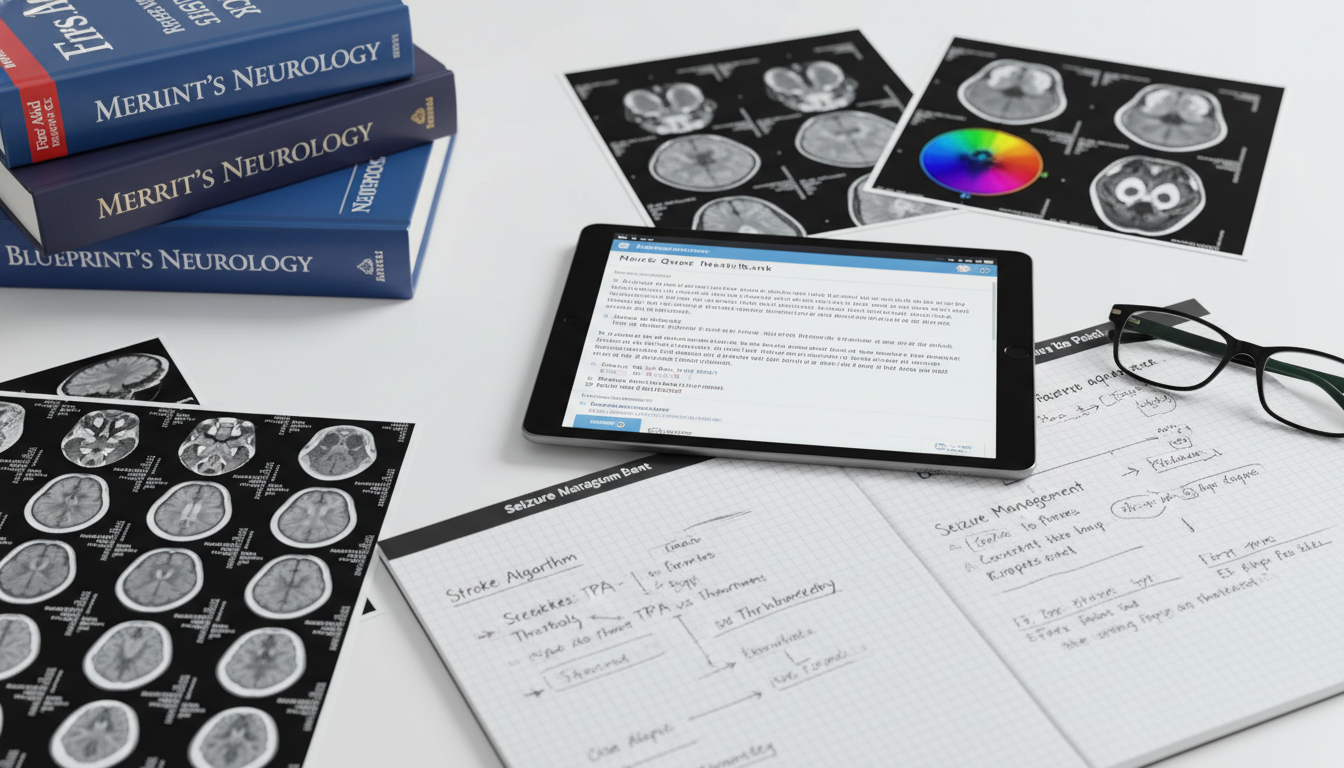
Building a Strategic Step 2 CK Study Plan as a DO Graduate
Step 1: Define Your Target Score in Context of Neurology
Neurology is moderately competitive and increasingly popular among DO graduates. Individual program expectations vary, but as ballpark guidance:
- Strongly competitive for most neurology programs: Step 2 CK 240+
- Comfortably within range for many programs: Step 2 CK 230–239
- Still viable, especially with strong COMLEX and application: Step 2 CK 220–229
These are not strict cutoffs, but they help frame how intense your USMLE Step 2 study needs to be. Factor in:
- Your COMLEX Level 1 and Level 2 scores
- Whether you’re aiming for large academic centers vs community-based neurology
- Strength of your neurology letters, research, and clinical grades
If your COMLEX scores are average, targeting ≥235 on Step 2 CK can meaningfully strengthen your neuro match chances.
Step 2: Time Your Exam for Maximum Impact on the Neuro Match
For the neurology residency match, many PDs want to see Step 2 CK scores before ranking and often before interview invitations.
General timing advice:
- Ideal: Take Step 2 CK by late June–July of the year you apply.
- Acceptable: Exam in August–early September if:
- Your practice scores are rising and
- You can still get an official score before ERAS programs begin heavy screening.
- Risky: Taking it after September; many PDs may already be sending out a first wave of interviews.
Because you are a DO graduate, having your Step 2 CK score visible when programs first review applications is particularly helpful in the osteopathic residency match and ACGME neurology match processes.
Step 3: Decide on Dedicated Study Length
Common dedicated study lengths:
- 4–6 weeks (full-time) for students who:
- Did well in third-year clinical rotations and shelves
- Have solid COMLEX Level 2 performance
- 6–8 weeks (full-time) for:
- Those with average shelf performance
- Those needing to rebuild test stamina or address weaker IM fundamentals
- 8–12 weeks (part-time) while on rotations if:
- You’re already in residency application season or have scheduling constraints
As a DO graduate who has already balanced COMLEX and possibly Step 1, you know your test-taking profile. Err on the side of slightly longer if your internal medicine foundation feels shaky or your neuro rotations took up much of your mental bandwidth at the expense of other specialties.
Core Resources and How to Use Them (With a Neurology Tilt)
There are many Step 2 CK resources; your job is to use a focused subset very well. The priority is not quantity but depth of engagement and repetition.
1. Question Banks (Qbanks): Centerpiece of Preparation
Your main active-learning tools should be:
- UWorld Step 2 CK Qbank
- Optionally, AMBOSS Step 2 CK (especially for explanations and tables)
Recommended approach:
- Treat UWorld as your primary curriculum, not just assessment.
- Aim to complete at least 1 full pass of UWorld (preferably 1.2–1.5 passes in weaker areas).
- Do 40–80 questions/day in timed, random mode once you are mid-dedicated.
As a neurology-focused DO graduate:
- Tag all neurology questions (stroke, seizures, neuro exam findings, neuropathies).
- Maintain a short “Neuro Pearls” doc where you summarize:
- Localization patterns (e.g., MCA vs ACA vs PCA stroke signs)
- Key distinguishing features (e.g., myasthenia vs Lambert-Eaton vs botulism)
- CT vs MRI indications and typical findings
This high-yield neuro note set will be invaluable for last-week review and future neurology rotations.
2. Practice Exams (NBME and UWSA)
You should routinely track your Step 2 CK preparation with:
- NBME Comprehensive Clinical Science Self-Assessments (CCSSAs)
- UWorld Self-Assessments (UWSA 1 & 2)
Strategy:
- Start self-assessments when you’ve completed ~50–60% of your Qbank.
- Take one practice exam every 1–2 weeks during dedicated.
- Use scores to:
- Adjust your test date (delay a few weeks if far below your goal).
- Identify weak organ systems and question types (e.g., ethics, OB, renal).
For neurology aspirants, review every neuro-related NBME question thoroughly—these often mirror the clinical complexity you’ll see on the real exam.
3. Content Review Texts and Videos
A common efficient mix:
- Online MedEd (OME) for a structured big-picture of core clinical topics.
- A concise review text if you like books, such as:
- Master the Boards Step 2 CK (good for algorithm-style thinking)
- Step-Up to Medicine focused on internal medicine systems.
As a DO graduate going into neurology, supplement with:
- Your neurology shelf or rotation notes if you kept them.
- A brief review of:
- Neuroanatomy relevant to localization (brainstem, spinal cord, cortical).
- Imaging basics: CT head, MRI sequences, common pathologies.
4. Integrating COMLEX and USMLE Content
If you’ve already prepared heavily for COMLEX Level 2, you’ve likely covered:
- OMT and osteopathic principles (less relevant for USMLE)
- The same core medical content, but framed with a slightly different question style
To pivot effectively to USMLE Step 2 CK:
- Shift emphasis to longer, layered vignettes with multi-step reasoning.
- Practice time management on 40-question blocks; USMLE pacing feels different from COMLEX.
- Focus on visual interpretation (imaging, EKGs, dermatology lesions) which is more prominent in USMLE.
You’re not starting from scratch; you’re translating your existing knowledge into a USMLE-style approach.
Daily and Weekly Study Structure for Maximum Score Gain
Building an Efficient Daily Routine
A balanced Step 2 CK day might look like this (8–10 hours of study):
Morning (3–4 hours): Timed Qbank Blocks
- 1–2 blocks of 40 questions (UWorld) in timed mode.
- Immediately after each block:
- Review every question, right or wrong.
- Focus on why the correct answer is right and others are wrong.
- Write quick 1–2 line takeaways for high-yield neuro and IM concepts.
Midday (2–3 hours): Targeted Content Review
- Use your Qbank performance to guide what you review:
- Getting lots of stroke questions wrong? Review stroke algorithms.
- Missing AMS cases? Review delirium/dementia and metabolic encephalopathy.
- Watch OME videos or read selective chapters in a review book.
- Use your Qbank performance to guide what you review:
Late Afternoon/Evening (2–3 hours): Mixed Tasks
- Additional 20–40 Qbank questions or flashcards (e.g., Anki).
- 30–60 minutes of neuro-only review (your “Neuro Pearls” doc or key tables).
- Brief review of high-yield non-neuro weak spots, such as:
- OB complications
- Pediatric infectious disease
- Renal and acid-base disturbances
- Cardiology (HF, ACS, arrhythmias)
Weekly Structure and Milestones
Over a typical 6-week dedicated period:
Weeks 1–2: Foundation & Calibration
- Goal: 40–60 UWorld questions/day; complete ~25–40% of the bank.
- Take your first NBME baseline late in Week 1 or Week 2.
- Identify your weakest two organ systems and weakest question style (e.g., multi-step endocrine, psych overlap).
Weeks 3–4: Acceleration & Correction
- Increase to 60–80 questions/day if feasible.
- Take 1 NBME or UWSA each week.
- Start second-pass review in your weakest sections (e.g., OB, renal, psych).
- Neuro-specific: ensure all stroke, seizure, neuromuscular questions are thoroughly tagged and reviewed.
Weeks 5–6: Refinement & Exam Readiness
- Finish Qbank (or at least 90%).
- Take UWSA 2 about 7–10 days before your exam; adjust study based on that performance.
- Last 5–7 days:
- Focus on rapid review of summary sheets, equations, algorithms.
- Review every neuro topic and question you flagged.
- Keep doing 40–60 questions/day, but shift more towards mixed, random blocks.
Neurology-Focused Additions to Your Routine
As a future neurologist, integrate these into your weekly planning:
- One “neuro-heavy day” per week, where:
- You do Qbank blocks filtered by neuro-heavy systems (IM, neuro, psych).
- You spend an extra hour on imaging review (CT/MRI of stroke, bleeds, tumors).
- Maintain a neuro differential table:
- Causes of acute weakness by time course (seconds, hours, days, weeks).
- Patterns of sensory loss (stocking-glove, dermatomal, hemibody).
- Typical presentations of common neuro infections (HSV encephalitis, meningitis, brain abscess).
This extra work not only boosts your Step 2 CK score but also deepens your clinical reasoning for neurology residency.
Test-Day Strategy, Mindset, and Common DO Pitfalls
Managing the Long Exam Day
Step 2 CK is a long test (8 blocks, 9 hours total testing time). Success requires:
- Stamina training: Regularly simulate 4–6 block days in the weeks before the exam.
- Structured breaks: Plan when to eat, hydrate, and use the restroom.
- Decision rules for flagging questions:
- If you’ve spent >75–90 seconds and are no closer to the answer, make your best guess, flag, and move on.
- Avoid leaving more than 3–5 questions per block for revisiting; time can easily slip away.
Cognitive Approach: How to Think Like Step 2 CK
Key mindsets:
- Diagnosis-first, then management:
- Quickly nail the most likely diagnosis.
- Then ask: “What is the very next best step?”—often a key phrase in questions.
- Reject unrealistic workups:
- The test expects you to prioritize high-yield, cost-effective diagnostics.
- Avoid over-imaging or over-ordering labs in straightforward vignettes.
- Prioritize safety and stability:
- ABCs (airway, breathing, circulation) always come first.
- In neuro cases, remember urgent concerns: airway in status epilepticus, imaging before LP if ICP is suspected, etc.
Common Pitfalls for DO Graduates
Underestimating Question Length and Complexity
- COMLEX questions are often shorter and more direct.
- USMLE vignettes may include extraneous data; practice quickly extracting key clues.
Over-focusing on OMT and Under-focusing on Bread-and-butter IM
- Helpful for COMLEX, but Step 2 CK rewards deep internal medicine and management knowledge.
- Make IM coverage your top priority, with neuro content as one of your strongest IM domains.
Taking the Exam Before You’re Truly Ready
- Use NBME and UWSA trends to decide:
- If you’re still >15–20 points below your target score 2–3 weeks before the exam, consider pushing the date if possible.
- For the neurology match, a solid score is better than an early but mediocre one—within reason.
- Use NBME and UWSA trends to decide:
Neglecting Wellness and Sleep
- Cognitive performance plummets with sleep deprivation.
- The week before the exam, prioritize:
- Consistent sleep schedule
- Light exercise or walks
- Brief review over cramming deep new content
Final Thoughts: Positioning Your Step 2 CK Score for the Neuro Match
As a DO graduate entering the neurology residency match, Step 2 CK is your opportunity to show PDs:
- You can excel on a standardized exam that many of them are most familiar with.
- You’ve built a strong internal medicine and neurology foundation.
- You can manage the cognitive demands of neurology, from stroke codes to complex neuro-diagnostics.
Align your preparation with these principles:
- Use Qbanks and NBMEs as your primary learning engines.
- Build deliberate neurology depth while maintaining broad competence across all specialties.
- Time the exam strategically so the score strengthens your application when programs start screening.
- Let your Step 2 CK score be a clear, confident data point reinforcing your readiness to thrive in neurology residency.
FAQs: Step 2 CK Preparation for DO Graduates in Neurology
1. As a DO, do I really need Step 2 CK if I have COMLEX for neurology residency?
While some programs will accept COMLEX alone, many neurology programs—especially larger academic centers—prefer or strongly favor applicants with USMLE scores. For a DO graduate targeting neurology, a strong Step 2 CK score:
- Makes it easier for PDs to compare you with USMD and IMG applicants.
- Helps clarify your medical knowledge if COMLEX scores are average.
- Can open doors at programs that might otherwise hesitate to interview DOs.
If your goal is to maximize options in the neuro match, Step 2 CK is highly advisable.
2. How high does my Step 2 CK score need to be to match into neurology as a DO?
There is no universal cutoff, but approximate guidance:
- ≥240: Strongly competitive for many neurology programs; puts you in an excellent position, especially with solid clinical evaluations and letters.
- 230–239: Competitive for a wide range of programs, including many academic centers.
- 220–229: Still viable, especially if:
- Your COMLEX scores, clinical evaluations, and neurology letters are strong.
- You apply broadly and strategically.
Programs look at the whole application, but in the current environment, a higher Step 2 CK score almost always helps.
3. How can I balance neurology depth with broad Step 2 CK coverage?
Think of it as 80/20:
- 80% of your time: Core Step 2 content across all specialties, driven by Qbanks and practice exams.
- 20% of your time: Deliberate neurology enrichment:
- Stroke, seizure, neuromuscular, MS, neuro-infectious, pediatric neuro.
- Imaging review and localization practice.
This way, neurology becomes your standout strength, but you still prevent weak areas (like OB, peds, or psych) from dragging down your overall Step 2 CK score.
4. My NBME scores are lower than I’d like. Should I delay my exam?
Consider delaying if:
- You are >15–20 points below your target score 2–3 weeks before your planned exam date.
- Your scores are not improving across multiple NBMEs/UWSAs.
- You can feasibly delay without harming your residency timeline (e.g., still getting an official score before programs heavily screen ERAS applications).
For neurology applicants, especially DO graduates, a modest delay that yields a higher Step 2 CK score can be worthwhile—provided you use that extra time with a structured, high-yield plan rather than unsystematic studying.
By approaching USMLE Step 2 CK preparation in a planned, neurology-conscious way, you can transform this exam from a hurdle into one of the strongest assets in your neurology residency application.