



Understanding Step 2 CK in the Context of a Preliminary Medicine Year
For an international medical graduate, Step 2 CK is more than just another licensing exam—it is a strategic gateway into the U.S. residency system, especially when you are targeting a preliminary medicine year (prelim IM) as part of your long‑term plan (e.g., neurology, anesthesiology, radiology, or advanced specialty).
Why Step 2 CK Matters So Much for IMGs
Compared to many U.S. graduates, IMGs often have:
- Less direct U.S. clinical experience
- Less access to home‑institution program directors
- Visa requirements that narrow potential program lists
Because of this, your Step 2 CK score becomes one of the clearest, standardized signals of your readiness for U.S. clinical training. For prelim IM positions—where programs need residents who can safely manage acutely ill patients from day one—Step 2 CK is especially critical.
Step 2 CK specifically evaluates:
- Clinical reasoning and diagnostic decision‑making
- Management of common and emergent inpatient problems
- Use of guidelines and evidence‑based medicine
- Prioritization and triage skills
These directly overlap with what you will do in a preliminary medicine year: admit and manage patients, respond to pages, present on rounds, and make safe, guideline‑consistent decisions under supervision.
Step 2 CK and Preliminary Medicine: Strategic Alignment
If your goal is a preliminary medicine year, Step 2 CK preparation should tilt toward:
- Inpatient internal medicine topics (e.g., sepsis, heart failure, COPD exacerbations)
- Emergency and critical care concepts (e.g., initial stabilization, airway, shock, code situations)
- Common consult issues (e.g., anticoagulation, perioperative medicine, electrolyte abnormalities)
This targeted focus not only boosts your score, but also prepares you to function more smoothly on wards during residency—something faculty and program directors quickly notice.
Step 2 CK Exam Blueprint and High‑Yield IMG Strategy
Understanding the structure and blueprint of the exam will guide your USMLE Step 2 study plan and help you avoid wasting time.
Exam Structure at a Glance
- Length: 1-day exam, 9 hours total
- Question format: Multiple-choice, single best answer
- Blocks: 8 blocks, up to 40 questions each (max 318 questions)
- Break time: 45 minutes total (can be increased by finishing blocks early)
Most questions are clinical vignettes, often multiple steps:
- Identify the most likely diagnosis
- Decide the next best step in management or workup
- Apply guidelines, testing strategies, or risk stratification
Content Distribution (Approximate Emphasis)
While the exact blueprint can evolve, key domains include:
- Internal Medicine (largest portion):
- Cardiology, pulmonology, infectious diseases, gastroenterology, nephrology, endocrine, rheumatology, oncology, hematology
- Surgery, OB/GYN, Pediatrics, Psychiatry, Neurology
- Epidemiology and ethics
For an IMG targeting prelim IM, you must be especially strong in:
- Acute chest pain, dyspnea, arrhythmias
- Sepsis, shock, and antibiotic selection
- Diabetes management, DKA/HHS
- Renal failure, electrolyte disturbances
- Cirrhosis and its complications
- Stroke workup and emergent management
- Inpatient anticoagulation and perioperative medicine
Common IMG‑Specific Challenges
International medical graduates often face particular obstacles in Step 2 CK preparation:
- Different guideline exposure
- U.S. guidelines (e.g., ACC/AHA, IDSA, USPSTF) may differ from your home country’s practice.
- Language and reading speed
- Long vignettes in English can slow you down and reduce stamina.
- Limited access to mentoring or up‑to‑date resources
- Not all medical schools abroad provide strong support for USMLE prep.
- Clinical exposure gap
- Less experience with U.S.-style documentation, terminology, and test availability.
Recognizing these early will help you compensate deliberately in your IMG residency guide strategy.
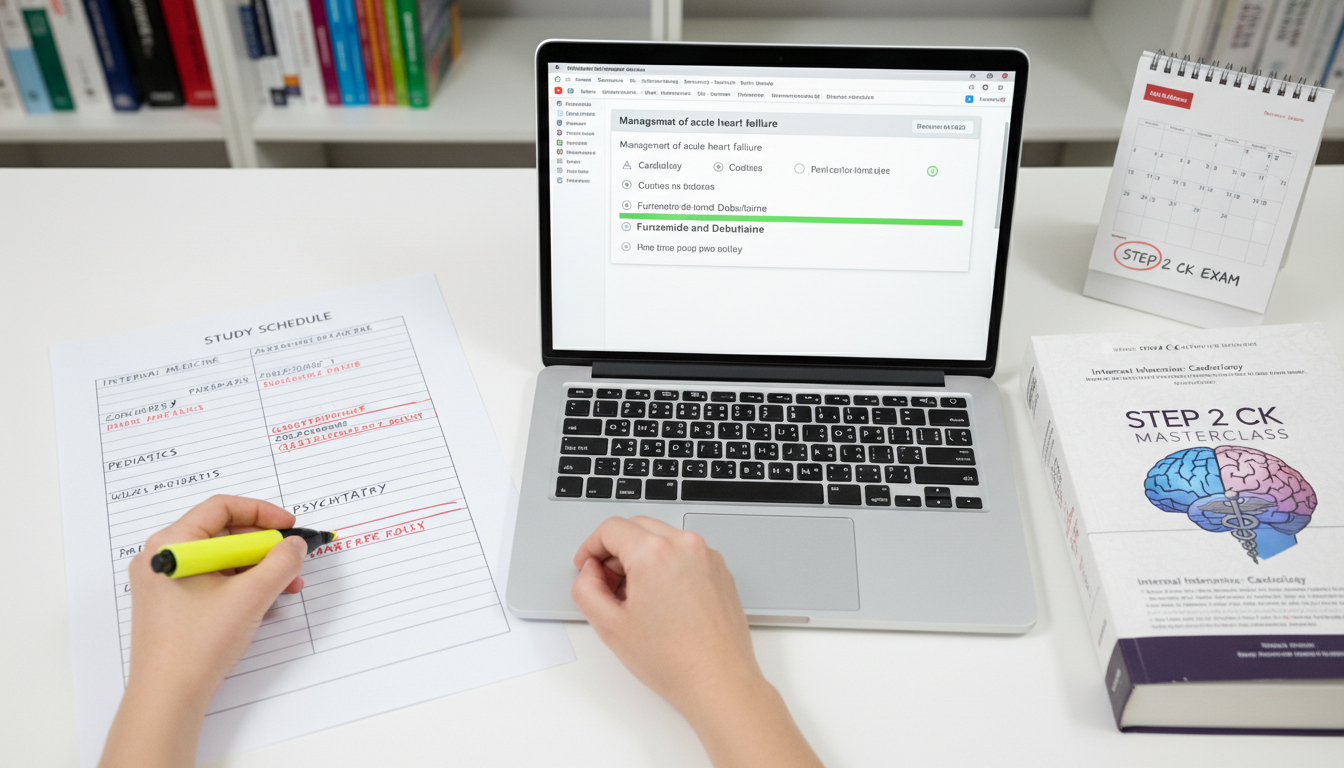
Building a High‑Yield Step 2 CK Study Plan for IMGs
You’ll maximize your Step 2 CK preparation results by creating a structured, realistic, and disciplined plan. Below is a framework you can adapt whether you have 8, 12, or 16+ weeks.
Step 1: Define Your Timeframe and Baseline
Set your test window strategically
- For residency applications (September ERAS opening), aim to have your Step 2 CK score available by August if possible.
- Many IMGs use Step 2 CK to strengthen their profile if Step 1 is average or pass-only.
Assess your baseline early
- Within the first 1–2 weeks, take a NBME practice exam (e.g., NBME Comprehensive Clinical Science Self‑Assessment).
- This baseline:
- Reveals weak areas
- Helps determine if you need more than 2–3 months
- Guides how aggressive your schedule must be
Clarify your target score
While there is no official cutoff, for competitive preliminary medicine programs and for IMGs aiming to offset weaker aspects of their application:
- Reasonable Step 2 CK score target: often above the national mean and as high as feasible given your starting point.
- If your Step 1 is low or pass/fail with concerns, Step 2 CK becomes your chance to show clear improvement.
Step 2: Choose Core Resources (Less is More)
A common IMG mistake is using too many resources. A focused USMLE Step 2 study toolkit is more effective:
1. Question Bank (Primary Tool)
- UWorld Step 2 CK (gold standard)
- Strategy:
- Aim for 2 complete passes if you have time; at minimum, 1 full pass with detailed review.
- Start in tutor mode to learn, then switch to timed blocks to build stamina and pacing.
- Organize by system initially (e.g., cardio, pulm) to consolidate content, then do mixed blocks near the end.
2. Comprehensive Text / Notes
- Options:
- A well‑known Step 2 CK review book
- Personal digital notes from UWorld and practice tests (often more efficient)
- Use this to:
- Summarize algorithms
- Capture management steps and guideline nuances
- Build rapid‑review lists for the final 2–3 weeks
3. Supplementary Video Resources (as needed)
- Use selectively for:
- Topics you repeatedly miss (e.g., biostatistics, EKGs, acid–base, OB emergencies).
- Avoid passively watching; always take short notes and link them to practice questions.
4. CCS is not on Step 2 CK
- Focus remains on multiple-choice questions, but ask yourself:
- “What is the immediate next step?”
- “What are the top 2–3 differentials and how would I distinguish them?”
Step 3: Weekly Structure for 10–12 Weeks
Below is a sample 10–12 week schedule tailored to an IMG targeting prelim IM:
Weeks 1–4: Foundation and Systems Review
- 40–60 UWorld questions/day (tutor mode, system‑based)
- Daily routine example:
- 2 question blocks of 20–25 questions each
- Detailed review (2–3x time of solving)
- 1–2 hours of reading or watching targeted videos on your weakest area
- Emphasis:
- Start with Internal Medicine systems: cardiology, pulmonology, nephrology, GI, ID, endocrine.
- Build a mistake log (spreadsheet or notebook) with:
- Question ID or topic
- Why you missed it (knowledge gap, misread, rushed, misinterpreted)
- Key learning point or algorithm
Weeks 5–8: Integrated and Exam‑Like Practice
- 60–80 UWorld questions/day (start timed blocks, mixed toward later weeks)
- Take one NBME or UWSA practice test every 2 weeks.
- After each assessment:
- Analyze performance by system and competency (e.g., diagnosis vs management vs ethics).
- Adjust your next 2 weeks’ focus accordingly.
Weeks 9–10 (or last 2–3 weeks): High‑Yield Refinement
- Maintain 60–80 questions/day, mostly mixed, timed blocks.
- Review:
- UWorld marked questions
- Mistake log
- High‑yield algorithms (e.g., chest pain workup, syncope, anemia, pneumonia, anticoagulation, perioperative evaluation).
- Take 1–2 additional full‑length practice tests:
- Simulate real conditions: same breaks, same timing, no interruptions.
Final 3–4 days
- Scale down volume, focus on:
- Rapid review of notes
- Sleep, hydration, and stress management
- Light question review, not heavy new content
Internal Medicine–Centered Content Priorities for a Prelim Year
Because you’re targeting a preliminary medicine year, your Step 2 CK preparation should deliberately lean into high‑yield internal medicine and inpatient topics.
1. Cardiology
Must‑master clinical scenarios:
- Chest pain:
- Distinguish unstable angina, NSTEMI, STEMI, pericarditis, aortic dissection, PE.
- Know acute management: antiplatelets, anticoagulation, thrombolytics, PCI indications.
- Heart failure:
- Acute decompensation vs chronic management.
- Diuretics, vasodilators, inotropes; discharge meds.
- Arrhythmias:
- AFib with RVR, SVT, VT, torsades, bradyarrhythmias.
- Acute vs chronic management, anticoagulation decisions.
2. Pulmonology and Critical Care
This is central to prelim IM and Step 2 CK:
- COPD and asthma exacerbations
- Pneumonia (CAP, HAP, VAP), antibiotic selection
- PE and DVT diagnosis and management
- ARDS basics: oxygenation strategies
- Ventilator and oxygen support concepts (not deep ICU level, but initial steps, ABG interpretation)
3. Infectious Diseases
- Empiric antibiotic choices for:
- Sepsis, meningitis, endocarditis, pneumonia, UTI, intra‑abdominal infections
- HIV and opportunistic infections basics
- Screening, prophylaxis (e.g., PJP, vaccines in immunocompromised patients)
4. Endocrine, Renal, and Electrolytes
- Diabetic emergencies: DKA, HHS (fluids, insulin, electrolyte correction)
- Thyroid storm, myxedema coma
- Acute kidney injury vs chronic kidney disease
- Hyponatremia, hypernatremia, hyperkalemia, acid‑base status interpretation
5. Perioperative and Hospital Medicine
Prelim residents deal with this daily:
- Preoperative cardiac risk assessment
- Management of anticoagulation around surgery
- Post‑op fever differential and workup
- DVT prophylaxis strategies
6. Neurology and Psychiatry Essentials
Even in prelim IM:
- Stroke:
- Time windows for thrombolysis, thrombectomy, antiplatelets, imaging sequences.
- Seizures and status epilepticus initial management
- Delirium vs dementia vs depression in hospitalized patients
- Hospital management of withdrawal (alcohol, benzodiazepines, opioids)
When reviewing these systems, continuously ask:
“How would a preliminary medicine intern handle this overnight call in a U.S. hospital?”

Test‑Taking Skills, Time Management, and Exam‑Day Tactics
A strong knowledge base alone isn’t enough; many IMGs lose points due to pacing, misreading, or anxiety.
Pacing and Reading Strategies
- Aim for ~1 minute/question on average
- Some vignettes will take longer; build a buffer by moving faster through shorter questions.
- Use a consistent approach:
- Read the question stem last or first—choose one style and stick to it.
- Many find it helpful to:
- Skim the last line to know what is asked (diagnosis, next step, test, treatment).
- Then read the case with a purpose.
- Highlight key data (digitally)
- Age, time course, vitals, risk factors, lab abnormalities.
Handling Difficult Questions
- If genuinely stuck:
- Eliminate clearly wrong options.
- Choose the safest, most conservative option consistent with guidelines.
- Avoid overtesting or overtreating when a simpler, guideline-based answer is available.
- Don’t spend >75–90 seconds on a single question:
- Mark it, choose a provisional answer, and move on.
Break Management on Exam Day
- You have 45 minutes of break time (more if you finish blocks early).
- Plan 3–4 short breaks:
- After Block 2, 4, 6 for example.
- During breaks:
- Eat small snacks, hydrate.
- Avoid heavy meals that cause drowsiness.
- Do light stretching to reduce tension.
Managing Anxiety and Stamina
- Simulate the full exam at least once with a practice test.
- Sleep well for at least 2–3 nights before the exam; you can’t fully compensate last‑minute.
- Remember:
- A few confusing blocks are normal. Most candidates feel uncertain.
- Trust your preparation and avoid overanalyzing during breaks.
IMG‑Specific Tips and Residency Strategy Integration
Your Step 2 CK preparation should align with your broader IMG residency guide planning—especially if you’re targeting a preliminary medicine position as part of your U.S. training pathway.
Balancing Step 2 CK With CV Building
Many IMGs try to juggle:
- Research
- US clinical observerships or externships
- English language exams
- ECFMG certification steps
Whenever possible:
- Prioritize Step 2 CK in the months leading up to the exam. Your score will influence how program directors interpret the rest of your CV.
- If you are already in a clinical observership:
- Study during evenings and protected times.
- Use real cases to reinforce Step 2 CK topics (ask: “How would this appear in a vignette?”).
Leveraging Step 2 CK to Strengthen a Prelim IM Application
Compensating for Step 1 or other weaknesses
- A strong Step 2 CK score can:
- Reassure programs about your clinical reasoning
- Demonstrate growth and adaptation to U.S.-style medicine
- A strong Step 2 CK score can:
Personal Statement and Interviews
- Highlight:
- How your Step 2 CK preparation deepened your understanding of inpatient medicine.
- Specific internal medicine topics you found meaningful (e.g., sepsis management, heart failure, stroke care).
- Your readiness to hit the ground running in a busy medicine service.
- Highlight:
Letters of Recommendation
- If you have U.S. clinical experience:
- Residents and attendings will notice if you apply Step 2 CK–level reasoning at the bedside.
- This can translate into strong comments about your clinical judgment and knowledge.
- If you have U.S. clinical experience:
Cultural and Communication Considerations
- Practice explaining clinical reasoning out loud in English:
- “I think this patient most likely has X because of A, B, and C. The next best step is Y because…”
- This mirrors what Step 2 CK is testing and what program directors value during a preliminary medicine year: clear, structured thinking.
Using Feedback Loops
Throughout your preparation:
- Track progression:
- NBME or UWSA scores over time
- Percentage correct in UWorld by system
- Identify persistent weak areas:
- For IMGs, common problem zones include: biostatistics/ethics, OB, pediatrics, and psychiatry.
- Dedicate dedicated blocks of time (1–2 days per week) to shore up these sections so they don’t drag down your overall score.
FAQs: Step 2 CK Preparation for IMGs Targeting Preliminary Medicine
1. How long should an IMG study for Step 2 CK if aiming for a strong prelim IM application?
Most IMGs need 10–16 weeks of focused, full‑time preparation, depending on:
- Your clinical experience
- Baseline NBME score
- Comfort with English and U.S. guidelines
If you are simultaneously doing research or clinical work, you may need to extend this timeline but increase scheduling discipline (e.g., early mornings, evenings, weekends).
2. Is Step 2 CK more important than Step 1 for preliminary medicine?
Both are important, but with Step 1 becoming pass/fail for many applicants and with IMGs often judged heavily on objective outcomes, Step 2 CK is increasingly critical:
- It reflects clinical, not just basic science, knowledge.
- It directly predicts performance in a busy preliminary medicine year.
If your Step 1 is average or borderline, a strong Step 2 CK score is your best opportunity to elevate your application.
3. How many practice NBMEs or UWSAs should I take before Step 2 CK?
Aim for 3–5 full‑length practice tests in total:
- 1 baseline early in preparation.
- 2–4 additional tests in the last 6–8 weeks.
Use these not only to estimate your score range but to identify specific weak areas and to practice exam‑day pacing and stamina.
4. What is the best way for an IMG to improve English reading speed for long vignettes?
- Do all question bank practice in English, timed.
- Avoid translating in your head; train yourself to think directly in English.
- Read U.S.-based clinical guidelines, UpToDate‑style summaries, or review texts for 30–60 minutes daily.
- If needed, regularly read short clinical articles or NEJM case discussions to acclimate to the language and style.
By anchoring your USMLE Step 2 CK preparation in high‑yield internal medicine content, disciplined question‑bank practice, and realistic exam simulations, you will not only maximize your score but also lay the foundation for success in a preliminary medicine year. For an international medical graduate, this synergy between exam performance and clinical readiness is the cornerstone of a convincing, competitive application to U.S. residency programs.




















