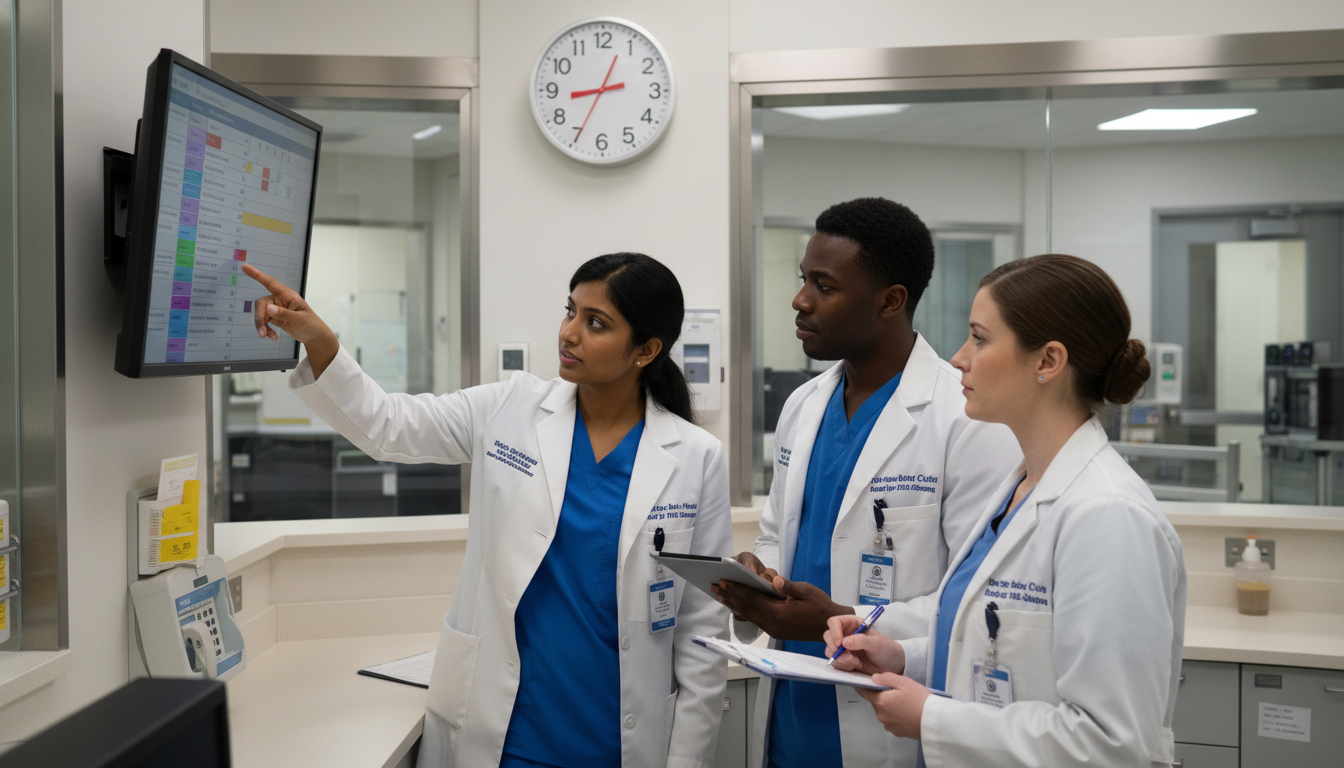
Understanding Step 2 CK in the Context of Diagnostic Radiology
USMLE Step 2 CK is often the most important exam on your record at the time you apply for radiology residency. For many MD graduate residency applicants, especially in Diagnostic Radiology, the score you achieve can significantly influence interview invitations and your overall diagnostic radiology match prospects.
Although radiology is perceived as “image-focused,” program directors still rely heavily on standardized metrics to compare MD graduates. When your Step 1 is pass/fail, your Step 2 CK score becomes the key numerical filter in the allopathic medical school match process, especially for competitive fields like radiology.
Why Step 2 CK Matters So Much for Radiology
For a diagnostic radiology match, programs often care about Step 2 CK because it:
- Demonstrates clinical reasoning: Radiologists must integrate complex clinical data into imaging interpretation. Step 2 CK tests precisely that integration of clinical information.
- Signals consistency and work ethic: Strong Step 2 CK performance reassures programs that you’ll handle a demanding residency.
- Compensates for weaker elements: A high Step 2 CK score can partially offset a weaker Step 1 outcome, marginal third-year clerkship grades, or a less well-known medical school.
Program director surveys (prior to 2024) consistently listed Step 2 CK as one of the top criteria for granting interviews, especially after Step 1 became pass/fail. This trend has continued: radiology residency programs now often use Step 2 CK score thresholds in their initial screen.
How Diagnostic Radiology Applicants Are Viewed
Radiology program directors look for:
- Solid clinical foundation – even though the specialty is imaging-based, you’ll be consulted on diverse patients. Step 2 CK tests your readiness.
- Pattern recognition and analytical thinking – reflected indirectly in your performance on complex multi-step vignettes.
- Reliability and test-taking discipline – radiology has a strong exam culture: Core Exam, boards, and QI/maintenance of certification. Strong Step 2 CK preparation showcases your ability to succeed in this environment.
For an MD graduate residency applicant, this means your Step 2 CK preparation strategy should be deliberate, data-driven, and aligned with radiology’s expectations.
Setting Targets and Building a Realistic Study Timeline
Before you open a book or start a question block, you need two things: a target Step 2 CK score range that aligns with diagnostic radiology competitiveness, and a timeline that fits your graduation status and application cycle.
Setting a Step 2 CK Score Target for Radiology
Exact score “cutoffs” vary by year and program, but some guiding principles:
- Diagnostic Radiology is historically a competitive specialty.
- Strong MD graduate residency applicants typically aim for a Step 2 CK score at or above the national mean plus 10–15 points.
- If Step 1 is pass/fail, programs naturally lean more on your Step 2 CK score to differentiate candidates.
Your personal target should consider:
Your Step 1 performance (if numeric)
- If Step 1 was strong: Aim to match or slightly exceed that performance on Step 2 CK to show consistency.
- If Step 1 was average or low: Aim for meaningful improvement on Step 2 CK to demonstrate growth.
Your overall application strength
- Honors in core clerkships plus meaningful radiology experiences may allow a slightly wider Step 2 CK score range.
- If your application has vulnerabilities (e.g., mediocre clinical grades, limited research), a strong Step 2 CK score becomes more important.
Type of radiology programs you’re targeting
- Highly academic, research-heavy programs at major academic centers tend to be more score-conscious.
- Community-based or hybrid programs may weigh Step 2 CK slightly less, but still use it as an interview screen.
Building Your Study Timeline as an MD Graduate
As an MD graduate (as opposed to a current core clerkship student), you may have more control over your time—but also more responsibilities (preliminary year, research, or gap year obligations).
Common Step 2 CK preparation timelines for an MD graduate in diagnostic radiology:
Dedicated 4-week plan
- Best for: Strong Step 1 foundation, high clinical performance, and recent completion of clerkships.
- Intensity: Very high, 8–10 study hours daily.
Dedicated 6–8-week plan (most common)
- Best for: Majority of MD graduate residency applicants, particularly if some rotations are older or Step 1 wasn’t stellar.
- Intensity: Moderate-high, 6–8 hours/day with periodic lighter days.
10–12-week plan (part-time during other responsibilities)
- Best for: Applicants with clinical duties, research commitments, or those who need to rebuild content foundation.
- Intensity: 3–5 hours/day during weekdays, more on weekends.
Example: 8-Week Timeline for a Radiology-Bound MD Graduate
Weeks 1–2: Baseline and Systems Review
- Take an NBME practice exam or UWorld self-assessment.
- Begin system-based review (medicine-heavy systems first: cardiology, pulmonology, nephrology).
- Do 40–60 UWorld questions/day.
Weeks 3–5: Peak Question Intensity
- Ramp to 60–80 questions/day.
- Add targeted review of weak systems and Step 2 CK-specific resources.
- Integrate high-yield radiology-relevant topics (e.g., imaging indications, contrast use, common radiologic findings in ED settings).
Weeks 6–7: Refinement and Exam Simulation
- Take 1–2 NBME exams to calibrate your Step 2 CK score prediction.
- Do mixed blocks only, simulating real exam conditions.
- Focus on error analysis and pattern recognition.
Week 8: Taper and Consolidation
- Lighter question volume (40–50/day).
- Memorize key tables, algorithms, and must-know guidelines.
- Practice full-length test day simulation with timed blocks and scheduled breaks.

Core Step 2 CK Study Strategies Tailored to Radiology Applicants
The fundamentals of USMLE Step 2 study are similar for everyone, but as a future diagnostic radiologist, you can leverage your interests and strengths for better retention and performance.
Choosing the Right Primary Resources
For MD graduate residency applicants in Diagnostic Radiology, an efficient resource stack is critical. You do not need every book on the market—just a strong core set used well.
Essential resources:
UWorld Step 2 CK QBank
- Non-negotiable primary resource.
- Aim to complete at least 1 full pass, ideally 1.25–1.5 passes if time allows.
- Do questions in timed, random blocks in the final 3–4 weeks to best simulate the exam.
NBME Practice Exams
- Use 2–4 forms across your study period.
- Track your progression and refine your predicted Step 2 CK score.
- Treat them like the real exam: timed, no pausing, minimal breaks.
A Concise Review Text or Video Series
- Options include comprehensive Step 2 CK review books or structured video lectures.
- Use as a reference for concepts you keep missing in question banks, not as your primary study mode.
- For time-constrained MD graduates, targeted use is more efficient than full linear coverage.
Radiology-relevant supplemental resources:
- Radiology-focused clinical content
While there is no dedicated “radiology Step 2 CK book,” you can:- Review imaging chapters or sections within major medicine/surgery texts.
- Study appropriate imaging guidelines (e.g., when to order CT vs. US vs. MRI).
- Practice interpreting basic X-rays (chest, abdomen) from trusted educational sites.
This not only prepares you for radiology residency but can help with Step 2 CK questions that include imaging findings and ask for next steps.
Question Bank Strategy: Thinking Like a Radiologist
Step 2 CK is, at its core, a pattern-recognition exam—exactly like radiology. Use your diagnostic mindset to your advantage.
How to approach questions:
Preview and anchor
- Quickly read the last line first (“What is the next best step?” “Most likely diagnosis?”).
- Skim the vignette focusing on key patterns: age, tempo, risk factors, exam findings, and test results.
Build a differential before checking choices
- Radiologists form a differential diagnosis based on limited data. Do the same here:
- “This sounds like acute coronary syndrome vs. PE vs. pneumonia—what’s the most likely with the given labs/imaging?”
- Radiologists form a differential diagnosis based on limited data. Do the same here:
Use imaging clues actively
- Many Step 2 CK questions embed imaging or reference previous scans.
- Ask: What imaging, if any, is truly needed next? Radiology-bound applicants should excel here.
- Avoid over-ordering or under-ordering imaging; understand guidelines and cost-conscious care.
Post-block review method
- For each missed or guessed question:
- Identify the concept gap (not just the fact you missed).
- Write a one-line takeaway in your notes or digital flashcard.
- Ask yourself: “If this were an imaging consult, what clinical red flag would make me change my read or recommendations?”
- For each missed or guessed question:
Balancing Content Review and Question Practice
For most MD graduate residency applicants, especially in radiology:
- Aim for a 70–80% time allocation to questions and review.
- Limit passive reading/watching to 20–30% of your study time, focused on your weakest systems.
A practical daily structure during your peak Step 2 CK preparation:
- Morning: 2 timed UWorld blocks (40 questions each: 2 x ~1 hour + 2 x ~1 hour review).
- Afternoon: 1 additional block or targeted review of weak subjects.
- Evening: Flashcards or brief high-yield reading; short review of imaging concepts related to that day’s cases.
High-Yield Clinical Domains and Radiology-Relevant Topics on Step 2 CK
Although Diagnostic Radiology is your goal, Step 2 CK covers the full clinical spectrum. Some domains are particularly critical both for the exam and for future radiology practice.
Medicine and Emergency Scenarios (Very High Yield)
Internists and emergency physicians are your primary “customers” as a radiologist. Step 2 CK places heavy emphasis on these areas:
- Cardiology: ACS, heart failure, arrhythmias, valvular disease, endocarditis, hypertensive emergencies.
- Pulmonology: COPD, asthma, PE, pneumonia, ARDS.
- Gastroenterology/Hepatology: GI bleeding, pancreatitis, cirrhosis complications, hepatitis.
- Neurology: Stroke (ischemic vs hemorrhagic), seizures, headaches, demyelinating disease.
For each topic, know:
- Typical presentations and red flags.
- First-line vs second-line investigations.
- When and why to order imaging (e.g., CT head without contrast vs MRI brain vs CT angiography).
Surgery and Perioperative Care
Radiology and surgery intersect frequently—trauma scans, post-op complications, and acute abdomen imaging.
Key Step 2 CK themes:
- Trauma evaluation and ATLS algorithms (e.g., when to get a CT vs FAST vs X-ray).
- Abdominal emergencies (appendicitis, bowel obstruction, perforation, mesenteric ischemia).
- Post-op complications (PE, DVT, anastomotic leak, abscess).
As a radiology-bound MD graduate, pay special attention to decision-making around imaging in acute surgical scenarios.
Pediatrics, OB/GYN, and Psychiatry
These areas are also well-represented on Step 2 CK and frequently intersect with imaging:
Pediatrics:
- Common infections, developmental milestones, congenital heart disease, pediatric abdominal emergencies.
- When to use ultrasound vs CT vs MRI in children (radiation exposure considerations are key).
OB/GYN:
- Ectopic pregnancy, placental issues, preeclampsia, labor management.
- Imaging in pregnancy, radiation safety, and ultrasound as first-line modality.
Psychiatry:
- Mood disorders, psychosis, substance use, emergencies (suicidality).
- Knowing when imaging is indicated in new-onset psychiatric disease (e.g., red flags for intracranial pathology).
Integrating Imaging Principles Into Your Step 2 CK Preparation
While the exam does not require deep radiologic expertise, you should be comfortable with:
Basic imaging indications:
- Non-contrast CT head for acute bleed or trauma.
- CT angiography for PE or aortic dissection.
- Ultrasound for suspected biliary disease, gynecologic pathology, or pediatric appendicitis (depending on setting).
- MRI spine for suspected cord compression.
Radiation safety and contrast issues:
- Avoid unnecessary CT in pregnancy and children when ultrasound or MRI suffice.
- Recognize contraindications to iodinated contrast and gadolinium.
Common imaging appearances (at a descriptive level):
- “Ground-glass opacities” vs “consolidation” vs “pleural effusion” on chest imaging.
- Findings suggesting small bowel obstruction, perforation, or appendicitis.
When you encounter imaging-based questions in your USMLE Step 2 study, take an extra 30 seconds to mentally “practice being the radiologist”: What’s the key abnormality? What’s the single next best test or management decision?
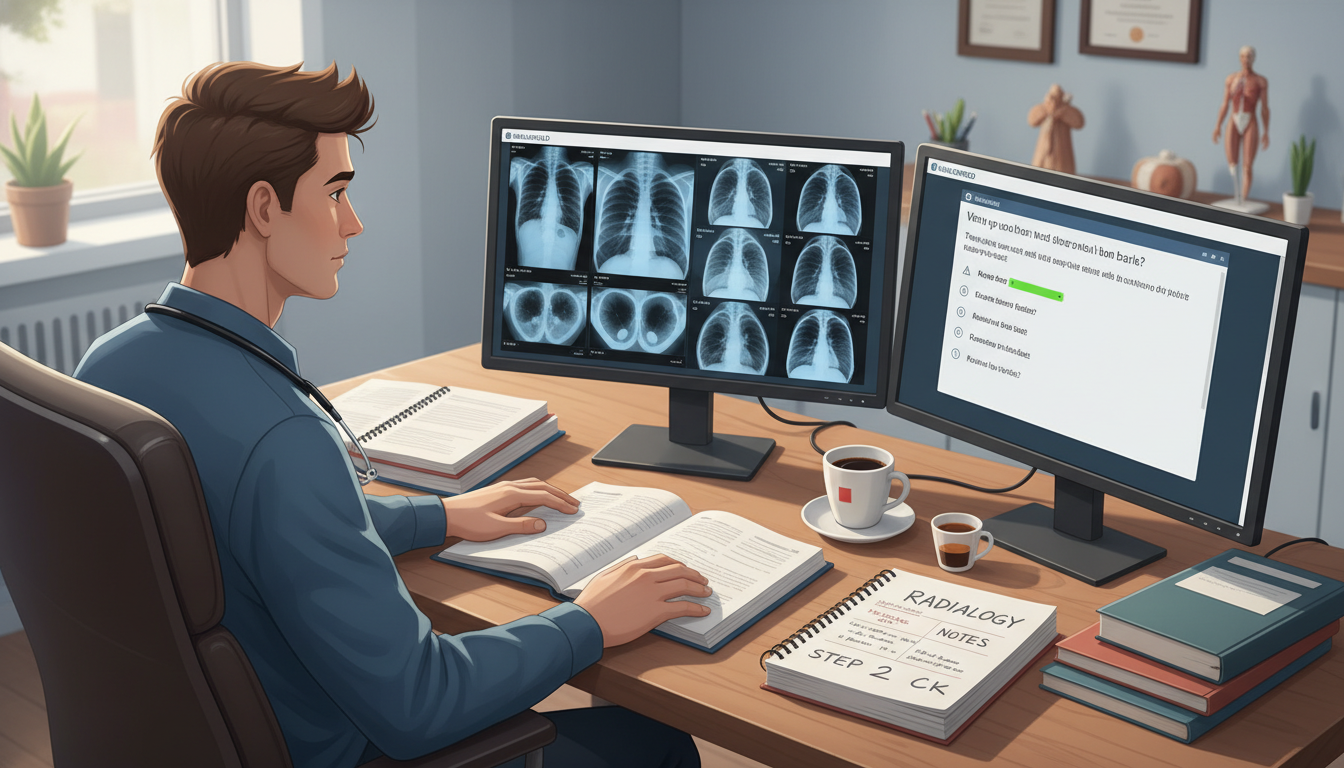
Scheduling, Test-Day Strategy, and Application Timing for the Radiology Match
Your Step 2 CK date and score release must align with the allopathic medical school match calendar and your radiology residency application strategy.
When Should a Radiology Applicant Take Step 2 CK?
As an MD graduate, you may be outside the traditional third-year clerkship cycle, but NRMP and ERAS deadlines still apply.
Consider:
Score release time
- Scores typically return in 2–4 weeks (check current USMLE reporting timelines).
- For a diagnostic radiology match, you want your Step 2 CK score available before programs start offering interviews, ideally before or near ERAS opening.
Ideal timing
- For MD graduates applying in the upcoming cycle, taking Step 2 CK by late July to mid-August often works best.
- This allows you to:
- Receive your Step 2 CK score before ERAS submission.
- Adjust your program list based on actual performance.
- Communicate your score proactively in your application and personal statement if it’s a strength.
Should You Delay Your Application If Step 2 CK Is Weak?
If your practice exams and predicted Step 2 CK score are well below your target range, consider:
Short postponement if:
- You are early enough in the application cycle.
- You can realistically improve your score with an extra few weeks of focused study.
Proceeding on schedule if:
- You are already near application deadlines.
- You have other strong components (radiology research, robust LORs, strong clerkship performance).
- Your NBME scores are consistent and not far below your target.
Discuss this with:
- A trusted faculty advisor, ideally in radiology.
- Your Dean’s office or student affairs advisor, who knows historical match outcomes.
Test-Day Strategy and Stamina
Step 2 CK is a long, mentally demanding exam—an important parallel to long radiology call days.
Key tactics:
Simulate the real day in advance
- At least one “mock test day” with full-length blocks and timed breaks.
- Eat and hydrate exactly as you plan on test day.
Block pacing
- Aim for a steady rhythm: roughly 1 minute per question, with extra time at the end for marked questions.
- Don’t spend more than 90 seconds on a single question; make your best choice and move on.
Break management
- Use your breaks strategically: short 5–7 minute breaks between blocks; one longer break for lunch.
- Avoid checking your phone or discussing questions during breaks—this can spike anxiety.
Mindset
- Treat each block as a fresh opportunity, regardless of how the previous one felt.
- Remember: even very strong examinees feel uncertain on many questions. The exam is designed that way.
Communicating Your Step 2 CK Score in Your Application
For a radiology-bound MD graduate:
Strong score (above your target range)
- Highlight briefly in your personal statement or ERAS experiences where relevant:
“My performance on Step 2 CK reflects my commitment to rigorous clinical reasoning and preparation for a diagnostic specialty.” - Mention in conversations or interview responses when asked about strengths.
- Highlight briefly in your personal statement or ERAS experiences where relevant:
Average or modest score
- Let the score stand without overemphasis.
- Redirect focus to your radiology experiences, imaging-related research, and clinical evaluations.
Score below expectations
- If asked, address it honestly and succinctly:
- What you learned from your USMLE Step 2 study process.
- Concrete steps you took afterward to improve your medical knowledge (e.g., subinternships, radiology electives, additional study).
- Emphasize consistent clinical performance and strong radiology-specific evaluations.
- If asked, address it honestly and succinctly:
Practical Tips, Common Pitfalls, and Final Advice
Practical Day-to-Day Tips for Efficient Step 2 CK Preparation
- Study in clinical “clusters”
- If you do UWorld blocks heavy in cardiology and pulm today, quickly review the relevant guidelines and algorithms right afterward.
- Leverage spaced repetition
- Use Anki or a similar flashcard tool for facts you miss repeatedly.
- Keep a concise “Radiology-Relevant” notebook
- One small digital or physical notebook where you track:
- Imaging indications and contraindications.
- Radiation considerations (pregnancy, pediatrics).
- Imaging-based patterns you see repeatedly in question banks.
- One small digital or physical notebook where you track:
- Protect your physical health
- Sleep 7–8 hours whenever possible.
- Take short walks between long study sessions to reset your concentration.
Common Mistakes Radiology Applicants Make with Step 2 CK
Over-prioritizing radiology topics at the expense of core medicine
- Radiology is your future, but Step 2 CK rewards a strong generalist foundation. Don’t over-focus on imaging at the expense of bread-and-butter internal medicine, pediatrics, and OB/GYN.
Underestimating stamina
- Long exam days are similar to long call shifts. If you haven’t done at least one full practice test day, you may underperform from fatigue alone.
Using too many resources superficially
- Better to know UWorld + 1–2 core resources deeply than to skim multiple books and video series.
Ignoring timing of score release for the application cycle
- Submitting an application without a Step 2 CK score can hurt competitiveness in a field like diagnostic radiology, especially if Step 1 is pass/fail. Plan test dates deliberately.
Aligning Your Step 2 CK Effort With Long-Term Radiology Goals
Approach your USMLE Step 2 study not just as a hurdle but as a foundation for your radiology residency:
- Build robust comfort with clinical context—it will make you a far better imaging consultant.
- Practice pattern recognition and probabilistic thinking, just as you will in daily radiology work.
- Demonstrate to programs that you are not only interested in images but also grounded in holistic patient care.
Your Step 2 CK preparation, if done thoughtfully, signals that you are ready to contribute meaningfully on multidisciplinary teams—and that you can handle the exam-heavy environment of a radiology career.
FAQ: USMLE Step 2 CK Preparation for MD Graduates in Diagnostic Radiology
1. What Step 2 CK score should I aim for to be competitive for a radiology residency?
There is no universal cutoff, but most strong radiology applicants target a Step 2 CK score at or above the national mean plus 10–15 points. If your Step 1 is pass/fail or weaker, aim even higher to help your application stand out in the diagnostic radiology match. Adjust your personal goal based on mock exam performance, school advising, and the types of programs (academic vs community) you’re targeting.
2. How many months do I need to prepare for Step 2 CK as an MD graduate?
Most MD graduate residency applicants do well with 6–8 weeks of focused preparation if they recently completed core clerkships and have an existing USMLE base. If your clinical rotations are older, your Step 1 knowledge is rusty, or you’re balancing a full-time position, you may benefit from 10–12 weeks of part-time study. The key is consistent daily effort and heavy use of high-quality question banks.
3. Should I take Step 2 CK before or after radiology electives or subinternships?
If possible, complete most core clerkships (especially medicine, surgery, pediatrics, OB/GYN, and psychiatry) before Step 2 CK, as they provide a strong content base. Radiology electives are valuable for your application and career exploration, but they don’t dramatically change your Step 2 CK score. Many MD graduates find it best to prioritize Step 2 CK first (to secure a good Step 2 CK score) and then schedule radiology electives and subinternships to strengthen letters of recommendation and confirm their specialty choice.
4. What’s the best way for a radiology-bound applicant to integrate imaging into Step 2 CK prep?
Use imaging as a reinforcement tool, not your primary focus. When a question involves imaging:
- Pause to mentally interpret the image at a basic level.
- Ask why that imaging modality was chosen and whether another would have been better.
- Keep a short list of imaging indications, contraindications, and radiation considerations.
This will help your Step 2 CK performance and transition smoothly into diagnostic radiology training, without distracting from mastery of the core clinical content the exam emphasizes.