
Preparing for USMLE Step 2 CK as a non-US citizen IMG aiming for a preliminary medicine year is very different from studying for an exam during medical school at home. Your Step 2 CK score is not only a test result; it is an important screening filter and a signal to internal medicine program directors that you can handle the clinical workload of a prelim IM year.
Below is a detailed, step‑by‑step guide tailored specifically for the foreign national medical graduate targeting Preliminary Medicine positions in the US.
Understanding Step 2 CK in the Context of a Preliminary Medicine Year
As a non-US citizen IMG, you must be strategic. You are competing not only with US grads, but also with other IMGs for a limited number of preliminary medicine positions. In that context, your Step 2 CK preparation takes on three major roles:
Compensating for Step 1 pass/fail and/or lower Step 1 performance
- Since Step 1 is now pass/fail, many programs rely more heavily on Step 2 CK score as an objective metric.
- For IMGs, a strong Step 2 CK can counterbalance:
- Lower-tier medical school reputation
- Gaps in clinical experience
- Lack of US letters early on
Demonstrating readiness for the intensity of prelim IM
Preliminary internal medicine is often front‑loaded with admissions, cross‑coverage, and night float. Programs want to see that you can:- Interpret labs and imaging quickly
- Recognize red flags
- Manage common inpatient problems independently
Step 2 CK heavily tests these competencies.
Influencing visa sponsorship decisions
For a non-US citizen IMG, programs already invest effort and money into J‑1 or H‑1B sponsorship. Strong numbers can make you a “low‑risk” choice:- A 240+ is often seen as competitive for many prelim medicine programs, though this varies.
- Highly competitive university prelim spots may look for 250+.
Key takeaway: For a foreign national medical graduate, Step 2 CK is arguably the most critical single factor you can still control before applying to Preliminary Medicine.
Building a Timeline: When and How Long to Prepare
1. Aligning Your Exam with Your Match Strategy
Consider your target match cycle and work backward.
Ideal scenario for most non-US citizen IMGs
- Finish core clinical rotations (in home country or US)
- Allow 3–4 dedicated months for USMLE Step 2 study
- Take Step 2 CK by June–August of the year before you apply (e.g., June–August 2026 for the 2027 Match)
- This allows your Step 2 CK score to be available early in ERAS season and used in interview decisions.
If you already graduated
- Combine Step 2 CK preparation with clinical observerships or research to avoid big CV gaps.
- Try to schedule Step 2 CK 6–9 months before Match application deadline so you can retake if performance is far below target (only if truly necessary).
2. How Long Do You Need?
As a non-US citizen IMG, your baseline knowledge, time since graduation, and English fluency will affect your timeline. A rough guide:
Recent graduate (≤1 year since clinical rotations)
- Good Step 1 foundation, daily English use
- 3 months of dedicated full‑time study may be enough
2–4 years since graduation
- Some clinical rustiness, need to re-learn scoring systems, guidelines
- 4–6 months of structured preparation is realistic
>5 years since graduation / Career interruption
- Need to rebuild core medicine, adapt to US guidelines, and acclimate to timed questions in English
- Plan 6–9 months, especially if working or doing research simultaneously
3. Phased Approach to Preparation
Break your timeline into phases:
Foundation Review (4–8 weeks)
- Clarify and standardize your knowledge to US guidelines.
- Use a main review resource (e.g., OnlineMedEd, Boards & Beyond, or a focused IM curriculum).
- Light question bank (Qbank) use: 10–20 questions/day.
Intensive Qbank Phase (8–12 weeks)
- Main emphasis on UWorld (or another high-quality Qbank), 40–80 questions/day.
- Timed blocks, mixed subjects, US-style clinical reasoning.
- Annotating or linking back to your review resource.
Refinement & Mock Exam Phase (3–4 weeks)
- Multiple self-assessments (NBME, UWSA).
- Targeted review of weak areas and exam skills.
- Final polishing of test‑taking strategies and stamina.

Core Resources and How to Use Them as a Non-US Citizen IMG
1. Question Banks: Your Primary Learning Tool
For USMLE Step 2 study, Qbanks are central. Focus on:
UWorld Step 2 CK
- Considered the gold standard.
- For a foreign national medical graduate, aim to complete the full bank at least once, ideally 1.5–2 times if time allows.
- Use Timed, Mixed mode after the first 2–3 weeks:
- Simulates real exam conditions.
- Forces integration across disciplines (medicine, surgery, OB/GYN, pediatrics, psych).
How to review effectively:
For each block (40 questions):
- Spend 1.5–2x as long in review as you did answering.
- For wrong answers:
- Identify whether the problem was knowledge, interpretation, or test-taking.
- For right answers:
- Skim explanation to confirm reasoning; don’t ignore “lucky guesses.”
Create a system of notes:
- Digital (OneNote, Notion) or a dedicated notebook.
- Summarize high-yield rules:
- e.g., “First-line workup of upper GI bleed,” “Management of new-onset atrial fibrillation in unstable vs stable patients.”
Additional Qbanks (if time allows)
- AMBOSS: Excellent for deeper understanding and quick reference; helpful for IMGs adapting to US practice.
- Kaplan or USMLE-Rx: More useful early in foundation building.
Prioritize depth of understanding in one major Qbank (often UWorld) over shallow use of many.
2. Content Review Resources
Because many non-US citizen IMGs trained outside the US system, focus on resources that emphasize guideline-based management and US-style clinical reasoning:
OnlineMedEd (OME)
- Clear clinical frameworks.
- Great for medicine, surgery, OB/GYN, pediatrics.
- Watch videos for your weak systems first (cardiology, pulmonary, etc.).
Boards & Beyond – Step 2 (if available to you)
- Deeper explanation of mechanisms and clinical links.
- Good for bridging old Step 1 knowledge with Step 2.
NBME CMS practice forms
- Especially for Internal Medicine and Surgery.
- Good to identify gaps in common inpatient problems relevant to prelim IM (e.g., sepsis, acute kidney injury, electrolyte issues).
3. Reference Tools for Clinical Style and Language
As a foreign national, you must become comfortable with US terminology and documentation style:
UpToDate (if you have institutional access)
- Cross-check management algorithms tested on UWorld with UpToDate or current guidelines.
AMBOSS Library
- Integrated with Qbank; very useful for quick topic refreshes.
English language practice
- Practice summarizing clinical vignettes out loud.
- Listen to short US-based podcasts (e.g., Core IM, The Curbsiders) to internalize phrasing and clinical priorities.
Strategic Study Plan Tailored to Preliminary Medicine
Because you’re aiming for a preliminary medicine year, you should emphasize the content and thinking patterns that match what prelim IM programs care about.
1. Prioritize High-Yield Internal Medicine Systems
Focus your USMLE Step 2 CK preparation on:
- Cardiology
- Acute coronary syndromes, arrhythmias, heart failure, valvular disease
- Pulmonology
- COPD/asthma exacerbations, pneumonia, pulmonary embolism, ARDS
- Nephrology & Electrolytes
- AKI, CKD, acid–base disorders, sodium/potassium/magnesium imbalances
- Endocrinology
- Diabetes management, DKA vs HHS, thyroid disorders, adrenal disease
- Infectious Diseases
- Sepsis, meningitis, endocarditis, pneumonia, HIV-related issues, antibiotic choices
These are the problems you will repeatedly manage as a prelim IM resident; mastering them will strengthen both your exam performance and future residency evaluations.
2. Use the Exam to Build Real Clinical Skills
As you work through Qbank cases, always ask:
- “If this patient arrived to my night shift as a cross-cover call, what would I do first?”
- “What labs, imaging, and monitoring would I order in the first hour?”
- “What are ‘don’t miss’ diagnoses here?”
This approach makes USMLE Step 2 study much more aligned with real prelim IM responsibilities.
3. Building Speed and Stamina
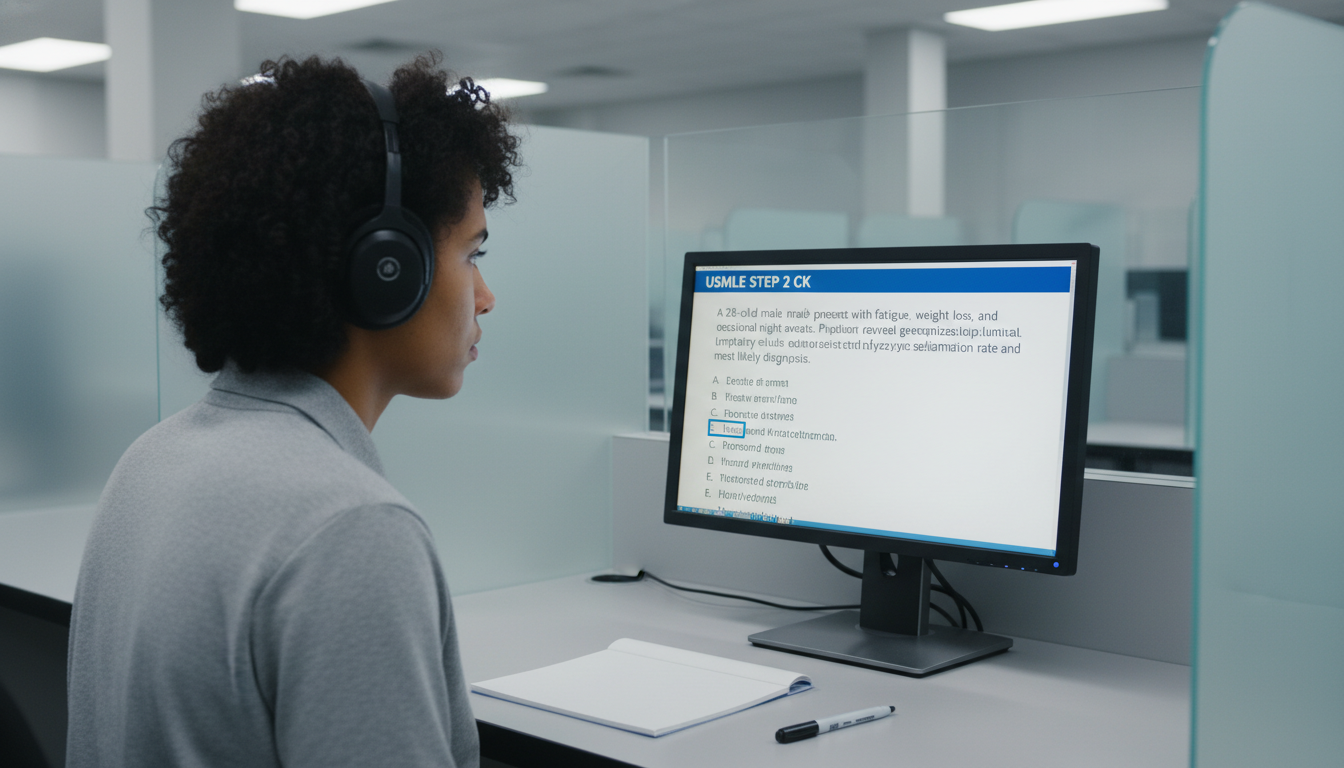
Step 2 CK is a long exam (up to 9 hours). For a non-US citizen IMG, stamina in a foreign language can be challenging. Address this directly:
From month 2 onward:
- Do at least 1 full 40‑question timed block daily, simulating real test speed.
- Gradually increase to 2–3 blocks back‑to‑back once per week in the last month.
Practice:
- Skimming quickly for key information (age, vitals, time course, red flags).
- Avoiding rereading entire stems unless necessary.
- Eliminating obviously wrong choices early to speed up decisions.
Practice Exams, Score Prediction, and When You’re Ready
1. Choosing Self-Assessments
For Step 2 CK score prediction, these are commonly used:
NBME Comprehensive Clinical Science Self-Assessments (CCSSAs)
- Multiple forms available (e.g., 9, 10, 11, 12, etc.).
- Closer to real exam style; give scaled scores.
UWorld Self-Assessments (UWSA 1 & 2)
- Often slightly overpredict vs real exam but useful for confidence and timing.
A typical sequence for a foreign national candidate:
First NBME: after finishing ~50–60% of UWorld
- Goal: identify weak systems and a baseline.
Second NBME or UWSA 1: ~4–6 weeks before exam
- Use the score to decide if you’re near your target.
Final NBME or UWSA 2: 7–10 days before exam
- Final check of readiness and adjustment of last-minute focus.
2. Target Scores for Non-US Citizen IMGs Aiming at Prelim Medicine
Every program is different, but general benchmarks:
≥ 250:
- Strongly competitive for many university prelim IM programs, especially with decent clinical experience.
240–249:
- Competitive for most community and some university-affiliated preliminary medicine programs.
230–239:
- Reasonable for many community prelim IM spots, particularly if you have strong US LORs, some US experience, and no major red flags.
< 230:
- Still can match into prelim medicine, but you must maximize other application aspects (US letters, observerships, personal statement, interview skills).
Use practice test scores as a trend rather than an absolute truth. What matters:
- Are your scores rising across NBME/UWSA tests?
- Are your weakest systems gradually improving?
3. Deciding Whether to Postpone the Exam
As a foreign national medical graduate, timing is critical because you also need to handle ECFMG certification and visa paperwork. Consider postponing only if:
- Your latest NBME/UWSA score is:
- More than 15–20 points below your realistic target AND
- You still have major content gaps (e.g., entire systems weak)
- You have enough flexibility in your match timeline to delay by 4–6 weeks.
If you are within 5–10 points of your target, it is usually more productive to:
- Use the final weeks for intense, targeted review.
- Focus on exam skills and speed rather than restarting major content.
Additional Challenges for Non-US Citizen IMGs—and How to Overcome Them
1. Language and Reading Speed
Even if your English is good, reading long, dense question stems quickly can be draining.
Strategies:
Daily reading:
- 1–2 New England Journal of Medicine (NEJM) or JAMA case reports or abstracts.
- Summarize them in your own words in English.
Active vocabulary building:
- Track clinical words or phrases you misunderstand or misinterpret.
- Example: “pleuritic,” “pulsus paradoxus,” “loculated effusion.”
Time‑limited reading drills:
- Give yourself 1 minute per Qbank question just to read the stem and identify the main problem, without answering.
- This trains rapid comprehension.
2. Adapting to US-style Guidelines and “Standard of Care”
Many foreign medical systems use different guidelines or resource‑limited practices. USMLE Step 2 CK expects a US standard of care assumption.
Action points:
When UWorld explanations differ from what you learned:
- Write “US guideline” in your notes and accept that this is what’s tested.
- Cross-check with UpToDate or American College of Cardiology/Chest/IDSA guidelines if you want deeper confidence.
Focus on:
- Screening recommendations (e.g., colon cancer, breast cancer).
- First‑line drugs (ACE inhibitors vs ARBs, DOAC vs warfarin, etc.).
- US vaccination schedule and prophylaxis (hepatitis B, rabies, HIV PrEP/PEP).
3. Balancing Step 2 CK with US Clinical Experience
As a foreign national, you may be doing observerships, externships, or research while studying.
Tips for balance:
Protect at least 2–3 hours daily of high‑quality, uninterrupted study time.
Use commute times for:
- Reviewing flashcards (Anki).
- Listening to short clinical podcasts.
On days off from rotations:
- Aim for 2–3 UWorld blocks plus review.
- Use evenings for video lectures and consolidation.
4. Mental Health and Isolation
Studying in a new country without your usual support system can be overwhelming.
Maintain structured routines:
- Fixed wake time, sleep time, and meal time.
- Short exercise sessions to maintain stamina.
Stay connected:
- Join IMG Step 2 CK study groups (online or local).
- Have a weekly “check-in” with a peer where you discuss progress and difficulties.
Avoid comparison:
- Your journey as a non-US citizen IMG is different from that of US medical students.
- Focus on your own improvement curve, not absolute numbers.
Frequently Asked Questions (FAQ)
1. What is a “good” Step 2 CK score for a non-US citizen IMG targeting Preliminary Medicine?
For a foreign national medical graduate, “good” is contextual, but as a rough guide:
- ≥ 250: Strong for most prelim IM programs, including many academic centers.
- 240–249: Competitive for many community and some university-affiliated programs.
- 230–239: Acceptable for many community prelim positions if other parts of your application are solid (US LORs, clinical experience).
- < 230: You may still match into prelim medicine, especially in community or smaller programs, but you should strengthen your profile with strong clinical performance, good letters, and a convincing application story.
Programs look at your score in combination with your overall IMG profile and visa status, not in isolation.
2. Should I take Step 2 CK before applying, or can I apply with only Step 1?
For a non-US citizen IMG, especially aiming at Preliminary Medicine:
- It is highly recommended to have your Step 2 CK score available before you submit ERAS.
- Many program directors use Step 2 CK more heavily than Step 1 for IMGs.
- Applying with only a Step 1 Pass (and no Step 2 CK) often makes it harder to get interviews, especially if you need visa sponsorship.
If possible, take Step 2 CK early enough that your score is reported by September–October of the application year.
3. How many question bank questions should I complete for Step 2 CK?
For effective USMLE Step 2 study:
- UWorld: Aim to finish 100% of the Qbank at least once, ideally 1.5–2 times if your timeline allows.
- If you add AMBOSS or another Qbank:
- Use them selectively for weaker topics or additional practice.
- Do not sacrifice deep review of UWorld just to increase your total question count.
The quality of your review and your ability to learn from mistakes matter more than raw number of questions.
4. I am several years out of medical school. Is it still possible to score well on Step 2 CK?
Yes. Many foreign national medical graduates several years post‑graduation achieve strong Step 2 CK scores, but they usually:
- Allow 6–9 months of structured preparation.
- Spend more time in foundation review (pathophysiology, updated guidelines).
- Use consistent daily Qbank practice to rebuild clinical reasoning speed.
- Gradually adapt to English exam conditions with timed blocks.
The key is consistency and a realistic, disciplined plan, not your year of graduation alone.
By approaching USMLE Step 2 CK preparation with a structured plan, US-focused resources, and a clear understanding of what Preliminary Medicine programs value, you can turn this exam into a powerful asset in your residency application. As a non-US citizen IMG, your path is demanding, but with deliberate practice and strategic preparation, Step 2 CK can become one of the strongest parts of your prelim IM application.