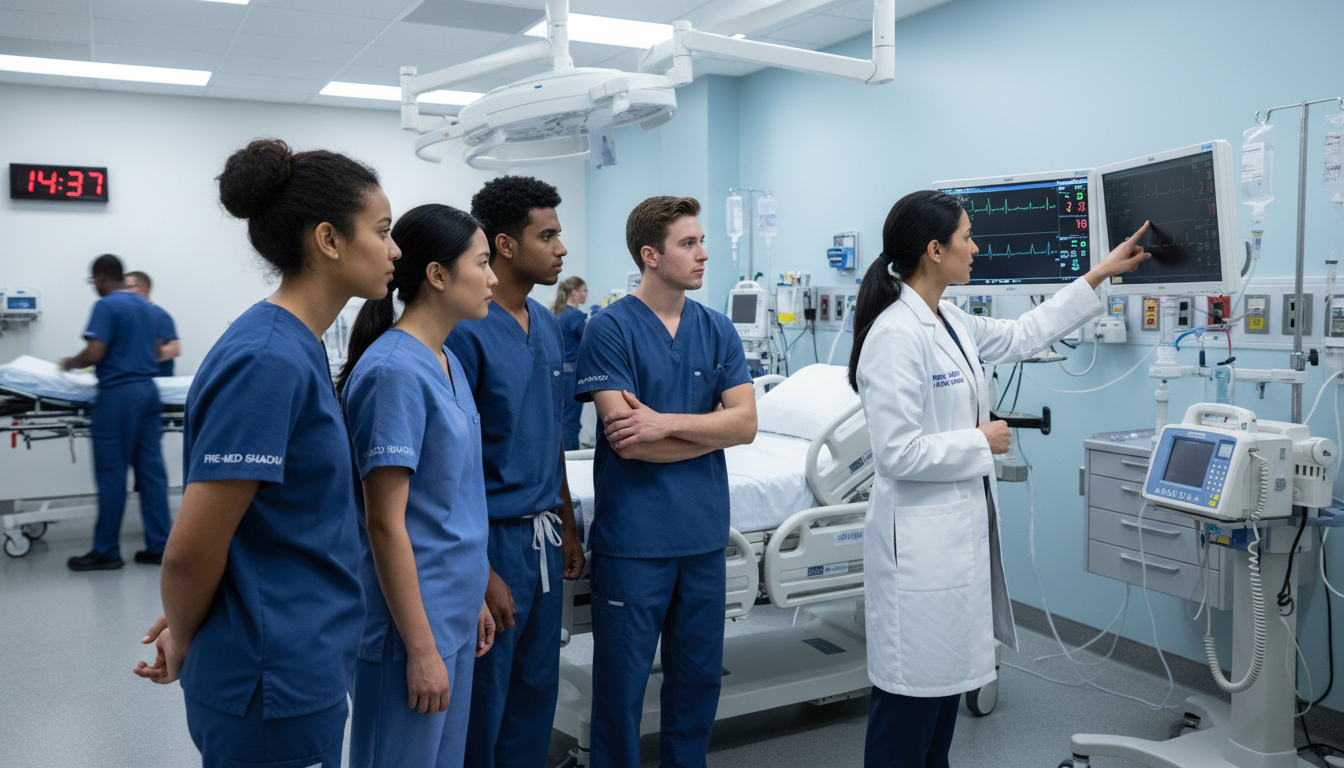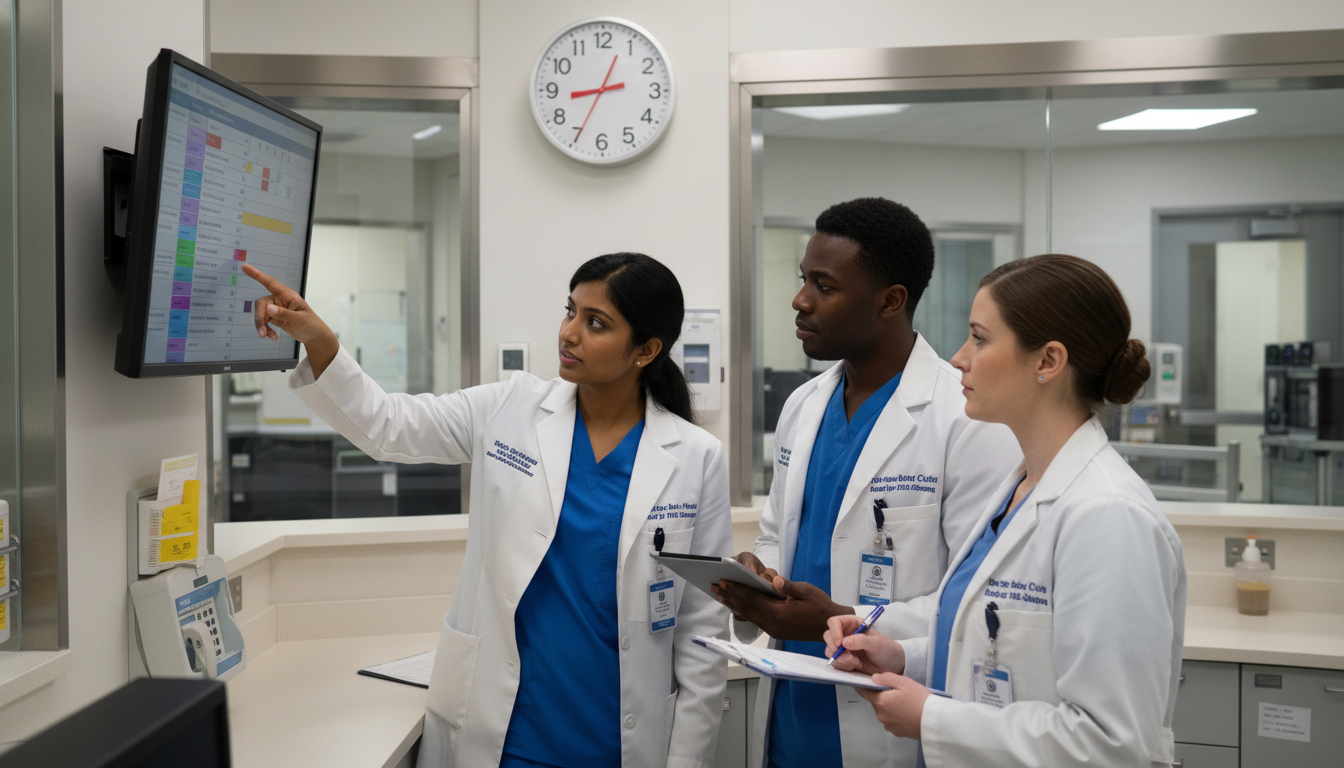
Understanding Your Unique Position as a US Citizen IMG in a Transitional Year
US citizen IMGs (often “Americans studying abroad”) occupy a very specific niche in residency and board exam preparation. When you add a Transitional Year (TY) program into the equation, your USMLE Step 2 CK preparation looks different from both traditional IMGs and US medical graduates.
You’re likely navigating:
- Returning to the U.S. clinical system after training abroad
- Proving clinical readiness through your Step 2 CK score
- Balancing your transitional year residency workload with intensive USMLE Step 2 study
- Planning ahead for a categorical residency (often in fields like radiology, anesthesiology, PM&R, or dermatology)
This article focuses on how to prepare for Step 2 CK as a US citizen IMG specifically during a Transitional Year, with concrete strategies that acknowledge your schedule, clinical demands, and long‑term career goals.
How Step 2 CK Fits into Your Match Strategy as a TY Resident
Why Step 2 CK Matters So Much for US Citizen IMGs
As an American studying abroad, program directors often look at your USMLE Step 2 CK score as:
Objective standardization
It’s a direct way to compare you with U.S. MD/DO graduates and other IMGs.Evidence of clinical readiness
Particularly important if your medical school lacks name recognition or a strong reputation in the U.S.Compensation for weaker areas
A strong Step 2 CK can help offset:- Mediocre Step 1 performance
- Limited U.S. clinical experience
- Fewer home institution letters from U.S. academic centers
Specialty competitiveness filter
If you’re using a Transitional Year as a stepping stone to a competitive specialty (e.g., radiology, anesthesiology, dermatology), your Step 2 CK is often a primary screening metric.
Timing Step 2 CK During Transitional Year
You have three main timing strategies as a TY resident:
Early in Transitional Year (July–October)
- Best if you finished medical school recently and clinical knowledge is fresh.
- Pros:
- Score is ready for ERAS in time for applying to a categorical spot (if re‑applying or switching).
- You can focus more on residency after the exam.
- Cons:
- Adjustment to a new health system and residency responsibilities can make early months stressful.
Middle of Transitional Year (November–February)
- Pros:
- Some acclimatization to the system and schedule.
- You’ve identified lighter rotations vs. heavier ones.
- Cons:
- Risk of fatigue and possible burnout midyear.
- If you’re trying to apply for the very next ERAS cycle, a late score might miss some programs’ review windows.
- Pros:
Late Transitional Year (March–June)
- Pros:
- You’re clinically sharper after months of U.S. training.
- You may have more elective time to use for study.
- Cons:
- If you’re delaying categorical applications, you might be forced into a gap year if scores or applications are delayed.
- You’re also dealing with end‑of‑year fatigue and transition stress.
- Pros:
Actionable advice:
- If you already have a target specialty and plan to apply in the upcoming cycle, aim to take Step 2 CK no later than late August–September of your application year so your score is available early in the ERAS cycle.
- If you’re using the TY as a “reset year” after a previous unsuccessful match, early‑to‑mid‑year (July–December) is generally optimal.
Building a High‑Yield Step 2 CK Study Plan Around a TY Schedule

Step 1: Clarify Your Baseline and Target Score
Your first step is to be very clear on your starting point and your goals.
Review your Step 1 and school exam performance
- Strong Step 1 (e.g., above prior numerical average or strong pass): Aim for at least 10–15 points higher equivalent percentile on Step 2 CK.
- Weak Step 1: Step 2 CK should demonstrate a clear upward trend.
Set a realistic target Step 2 CK score based on:
- Competitiveness of your intended field (e.g., radiology vs. family medicine)
- Typical matched US citizen IMG scores in that specialty
- Your prior standardized test performance
As a US citizen IMG, being at or above the mean of matched U.S. MDs in your target specialty makes you much more competitive. For many core specialties, this means thinking in terms of a high-220s to mid-240s+ goal, depending on competitiveness.
Step 2: Map Out Your Transitional Year Rotations
Look at your TY schedule and identify:
- Light rotations (e.g., electives, outpatient clinic, consults)
- Moderate rotations (e.g., ward months with manageable hours)
- Heavy rotations (e.g., inpatient medicine with long calls, ICU, night float, ED with many shifts)
You’ll structure your study intensity accordingly:
- Heavy months: Maintenance mode – 10–15 hours/week study
- Moderate months: Standard mode – 15–25 hours/week
- Light/elective months: Peak mode – 25–35+ hours/week
If possible, schedule a lighter elective in the 4–6 weeks before your exam to allow focused, high-yield study.
Step 3: Create a 10–16 Week Study Framework
A common and effective structure for USMLE Step 2 preparation during residency:
Phase 1 (Weeks 1–4): Foundation & Re-Orientation
- Goal: Rebuild clinical knowledge base and USMLE style thinking.
- Daily tasks:
- 20–40 UWorld Step 2 CK questions/day in tutor or random-timed mode
- 1–2 hours/day review of explanations
- Use a primary resource (e.g., Online MedEd, AMBOSS articles, or Boards & Beyond Step 2) to address weak systems.
Phase 2 (Weeks 5–10): Intensive QBank & NBME Integration
- Goal: Maximize score through pattern recognition and data interpretation.
- Daily/weekly tasks:
- 40–80 UWorld questions/day depending on rotation load
- 1–3 hours/day explanation review
- Weekly NBME or UWorld Self-Assessment (every 2–3 weeks):
- NBME forms (e.g., 9, 10, 11, 12) spaced out
- Identify trending weak areas and target those using focused reading/videos.
Phase 3 (Last 2–3 Weeks): Simulation & Fine-Tuning
- Goal: Convert knowledge into exam performance and reduce careless errors.
- Tasks:
- Full-length exam simulations (7 blocks) on days off
- Timed blocks only
- Focus on:
- Test endurance
- Time management
- Anxiety control and break strategy
- Rapid review:
- UWorld incorrects
- Personal notes / flashcards (e.g., Anki)
- High-yield tables (electrolytes, toxicities, biostat formulas)
Sample Weekly Study Schedule (Heavy Inpatient Month)
Monday–Friday:
- Post-call or after shift: 10–20 questions + 30–60 minutes review
- 1–1.5 hours total
Saturday:
- 40–60 questions
- Focused review of explanations + 1–2 hours reading on weak topics
Sunday:
- 40–60 questions
- Short system review (using concise notes/video at 1.5–2x speed)
Total: ~12–18 hours/week.
Sample Weekly Study Schedule (Light Elective Month)
5–6 study days per week:
- 60–80 UWorld questions/day (2–3 timed blocks)
- 2–3 hours explanation review
- Short daily topic review (20–30 minutes) based on QBank gaps
1 longer session per week:
- NBME (or UWSA) full-length simulation
- Detailed review of missed/guessed questions
Total: 25–35+ hours/week.
Resources and Techniques Tailored to US Citizen IMGs
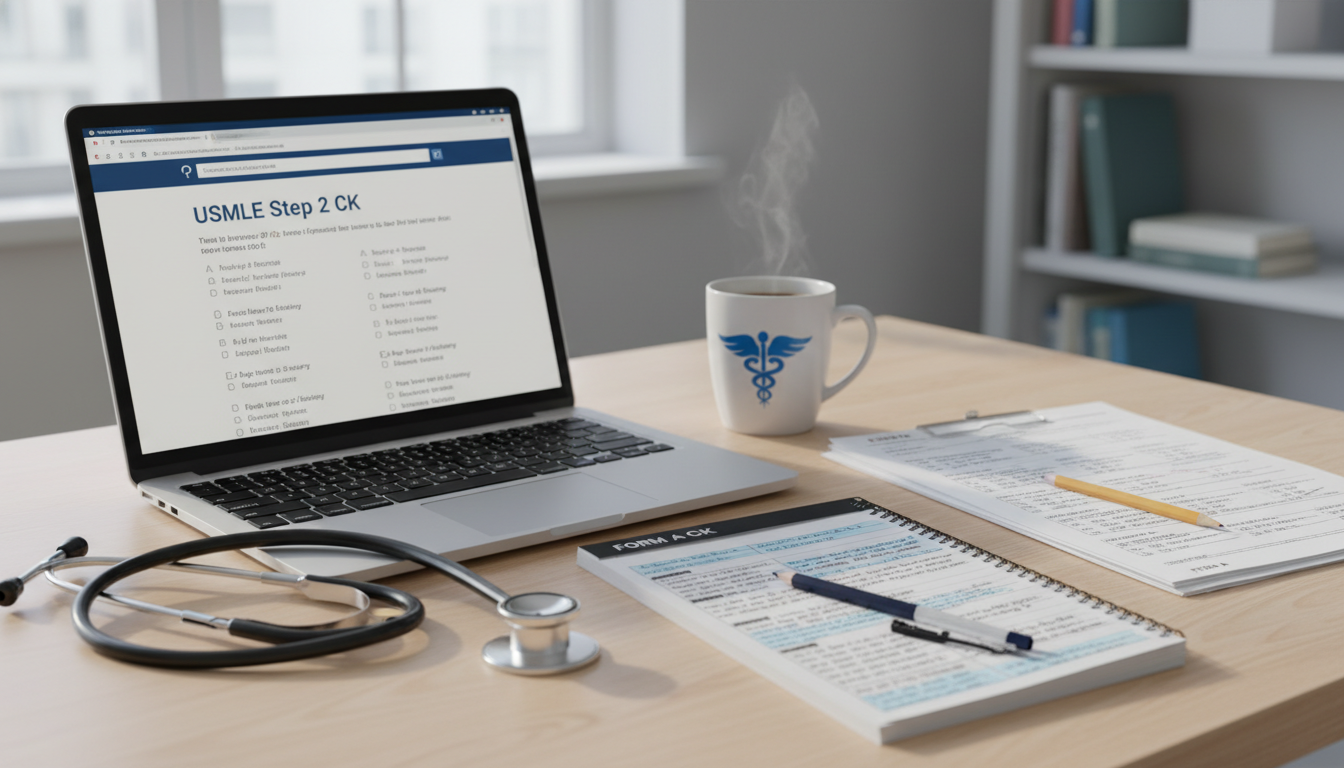
Core Resources (Must-Haves)
UWorld Step 2 CK QBank
- Non-negotiable primary resource.
- Strategy:
- Target to complete 1 full pass, ideally 1.5x–2x passes if time permits.
- Do questions in random, mixed, timed mode after your initial warm-up.
- Build a habit: every missed or guessed question → learn why.
NBME Practice Exams
- Best predictors of performance.
- For US citizen IMGs, these are crucial to:
- Benchmark against U.S. MD cohorts
- Show consistent improvement trend leading up to your test date
- Take at least 3–4 forms at various stages in your prep.
UWorld Self-Assessments (UWSA 1 & 2)
- Often overpredict slightly, but excellent for:
- Full-length practice
- Stamina building
- Confidence calibration
- Often overpredict slightly, but excellent for:
Secondary Resources (Use Strategically)
Online MedEd
- Great for rebuilding foundations if your clinical knowledge feels “rusty” after graduation abroad.
- Watch selectively (e.g., renal, cardiology, OB, psych) instead of every video.
AMBOSS
- Helpful for:
- Rapid reference on rotations
- Short targeted article reading for weak topics
- Can complement or partially substitute some UWorld if you want variety.
- Helpful for:
Anki (Spaced Repetition)
- Extremely powerful if used consistently.
- For a busy TY resident:
- Use pre-made Step 2 CK decks filtered to your weakest systems.
- Limit daily new cards; prioritize reviewing due cards.
High-Yield Books (Selective)
- E.g., Step-Up to Medicine (for IM emphasis) or concise review notes.
- Use as references for difficult areas rather than cover-to-cover reading.
Adaptations for US Citizen IMGs
As a US citizen IMG, you may have:
- Gaps between graduation and transitional year residency
- Different emphasis in your foreign curriculum (e.g., heavy theory, less guidelines)
- Less familiarity with U.S. practice patterns and health system nuances
Focus extra time on:
U.S. Guidelines and Practice Patterns
- Hypertension, diabetes, lipid management
- Cancer screening schedules
- Vaccination schedules
- Prenatal care and OB guidelines
- Psychiatric medication choices and safety profiles
Biostatistics and Ethics
- Many IMG curricula under-emphasize these.
- Step 2 loves:
- Sensitivity/specificity, likelihood ratios
- Study design and bias
- Informed consent, decision-making capacity
- End-of-life care and advanced directives
Cultural and System-Based Competence
- Insurance and follow-up logistics questions (e.g., when to discharge versus admit).
- Outpatient vs. inpatient decision-making in the U.S. system.
- “Next best step” that accounts for resources and standard U.S. practice.
Balancing Clinical Duties, Wellness, and Exam Performance
Time Management Strategies That Work in a TY Program
Anchor Your Day with a Non-Negotiable Study Block
- E.g., 45–60 minutes immediately after sign-out or before leaving the hospital.
- Even 15–20 meaningful questions/day on tough rotations preserves momentum.
Convert “Dead Time” into Micro-Study Sessions
- Use:
- Commutes (audio review of topics)
- Waiting for admissions or consults (flashcards on phone)
- 5–10 minute bursts add up over weeks.
- Use:
Make Studying Practical and Directly Rotation-Relevant
- If you’re on internal medicine:
- Do medicine-heavy Step 2 blocks (cardio, pulm, renal).
- This reinforces both your residency performance and exam prep.
- If you’re on internal medicine:
Avoiding Burnout As You Prepare
Transitional year can be emotionally and physically challenging:
- Night shifts, call, and new responsibilities
- Adapting to a new health system as a US citizen IMG
- Pressure to achieve a strong Step 2 CK score
Protect yourself with:
Realistic Expectations
- Not every day will be a “perfect study day.”
- Focus on weekly goals rather than daily failures.
Scheduled Rest
- At least one partial day per week with minimal to no heavy studying.
- Use this for sleep, exercise, or social connection.
Early Problem Recognition
- Red flags:
- Chronic insomnia
- Persistent low mood or anxiety about performance
- Cognitive fog and inability to retain information
- Seek support:
- Program director or chief residents
- Employee Assistance Programs
- Peer support networks, especially other US citizen IMGs
- Red flags:
Integrating Step 2 CK Prep with Career Planning
As a US citizen IMG in a transitional year residency, your Step 2 CK plan should align with:
- Your planned categorical specialty (e.g., radiology, anesthesiology, IM, PM&R, EM)
- Whether you’re:
- Applying during TY
- Re-applying after a previous non-match
- Using TY as a bridge to a future match cycle
Use your preparation period to also:
- Identify attending physicians who can write strong letters.
- Strengthen your CV with:
- Case reports
- QI projects
- Teaching roles (med students, interns, peers)
A strong Step 2 CK score plus US clinical performance is one of the most powerful combinations you can present as an American studying abroad.
Common Pitfalls and How to Avoid Them
Pitfall 1: Delaying Step 2 CK Indefinitely
Some TY residents, especially those who feel weak on basics, keep postponing the exam.
Why it’s a problem:
- Your knowledge decays with time and fatigue.
- You risk missing application windows.
- Anxiety increases the longer you delay.
Solution:
- Set a firm test date range early (e.g., “between late July and early September”) and adjust by a few weeks if data (NBMEs) strongly support a delay—not by months without reason.
Pitfall 2: Over-Reliance on Passive Learning
Watching hours of videos after a 12-hour shift can feel productive but often isn’t.
Solution:
- Make QBank questions the core of your preparation.
- Supplement videos/readings only for areas repeatedly identified as weak.
Pitfall 3: Ignoring NBME Feedback
Some residents avoid taking NBMEs until they “feel ready” and then are surprised close to test day.
Solution:
- Build NBMEs into your schedule from early-mid prep:
- First NBME around week 3–4, then every 2–3 weeks.
- Use score trends and item review to guide targeted study.
- If you’re consistently scoring far below your target (e.g., 20–25 points), consider:
- Pushing back the exam 4–6 weeks.
- Re-structuring your study and possibly reducing clinical load if feasible.
Pitfall 4: Not Leveraging the Transitional Year Environment
As a TY resident, you’re in the perfect environment to make Step 2 CK content real.
Solution:
- Convert daily cases into Step 2 learning:
- After a complicated admission, quickly look up guideline-based management.
- Ask yourself: “How would this case be turned into a Step 2 question?”
- Discuss clinical decision-making with seniors and attendings through a “board-style lens.”
FAQs: Step 2 CK Preparation for US Citizen IMGs in a Transitional Year
1. When is the best time in my Transitional Year to take Step 2 CK?
For most US citizen IMG TY residents, the best window is during a lighter month once you’ve had a few months of U.S. clinical exposure but still early enough to meet application timelines.
- If applying to the next cycle: target late July to September.
- If re-applying or taking extra time: you can extend into late fall, but avoid dragging prep beyond 4–5 months without clear progress.
2. How many hours per week should I realistically study during TY?
It depends on your rotations:
- Heavy inpatient/ICU: 10–18 hours/week (maintenance + focused progress)
- Standard rotations: 15–25 hours/week
- Light/elective months: 25–35+ hours/week with full-length practice exams
The key is consistency: even on tough weeks, aim for some questions rather than zero.
3. Is one QBank enough, or should I use both UWorld and AMBOSS?
For most US citizen IMGs in a transitional year, UWorld alone is sufficient as the primary QBank, provided you use it deeply and thoroughly. Adding AMBOSS can help if you:
- Finish UWorld early and have time for more questions
- Want additional targeted practice in weak areas
However, it’s better to master one QBank than rush through two superficially.
4. How can I improve quickly if I’m scoring low on my first NBME?
If your early NBME scores are lower than expected:
- Analyze which systems and question types you’re missing.
- Dedicate 2–3 weeks to intensive QBank + targeted content review in those areas.
- Use mini-blocks of 10–15 timed questions and obsessively analyze each explanation.
- Schedule a repeat NBME after this focused period; adjust your test date only based on trends across 2–3 practice exams, not a single bad day.
Preparing for USMLE Step 2 CK as a US citizen IMG in a Transitional Year is demanding, but your TY program also gives you a powerful advantage: real-time clinical immersion in the very system you’re being tested on. With a structured plan, smart resource use, and realistic scheduling around your rotations, you can turn your TY year into the launching pad for an excellent Step 2 CK score and a successful categorical residency match.