Understanding Step 2 CK as a US Citizen IMG Aiming for Neurology
If you are a US citizen IMG or an American studying abroad planning a neurology residency, USMLE Step 2 CK will likely become the cornerstone of your application. For many US citizen IMGs, Step 2 CK is the exam that can compensate for limited home‑institution connections, variable clinical exposure, or a Step 1 that is now pass/fail.
Neurology residencies, including academic and university‑based programs, increasingly scrutinize your clinical reasoning and consistency across:
- Step 2 CK score
- Neurology rotation grades and narratives
- Letters of recommendation
- Neurology‑related research, if any
This guide focuses on how a US citizen IMG targeting a neurology residency can strategically use USMLE Step 2 study time to:
- Build a strong Step 2 CK score
- Showcase strength in neurology and allied fields (internal medicine, psychiatry)
- Align Step 2 CK preparation with the broader “neuro match” strategy
Throughout, the emphasis is on practical, stepwise planning designed for the realities of being abroad (different calendars, different clinical systems, and less direct access to US‑style teaching).
How Step 2 CK Fits Into a Neurology Residency Application
Why Step 2 CK Matters So Much for US Citizen IMGs
As a US citizen IMG, program directors often see Step 2 CK as:
- Evidence you can handle US clinical medicine
- An objective comparison point with US MD/DO seniors
- A predictor of your ability to pass neurology boards and perform in residency
Neurology is a cognitively heavy field. Programs look favorably on applicants who show:
- Strong performance on clinical vignettes
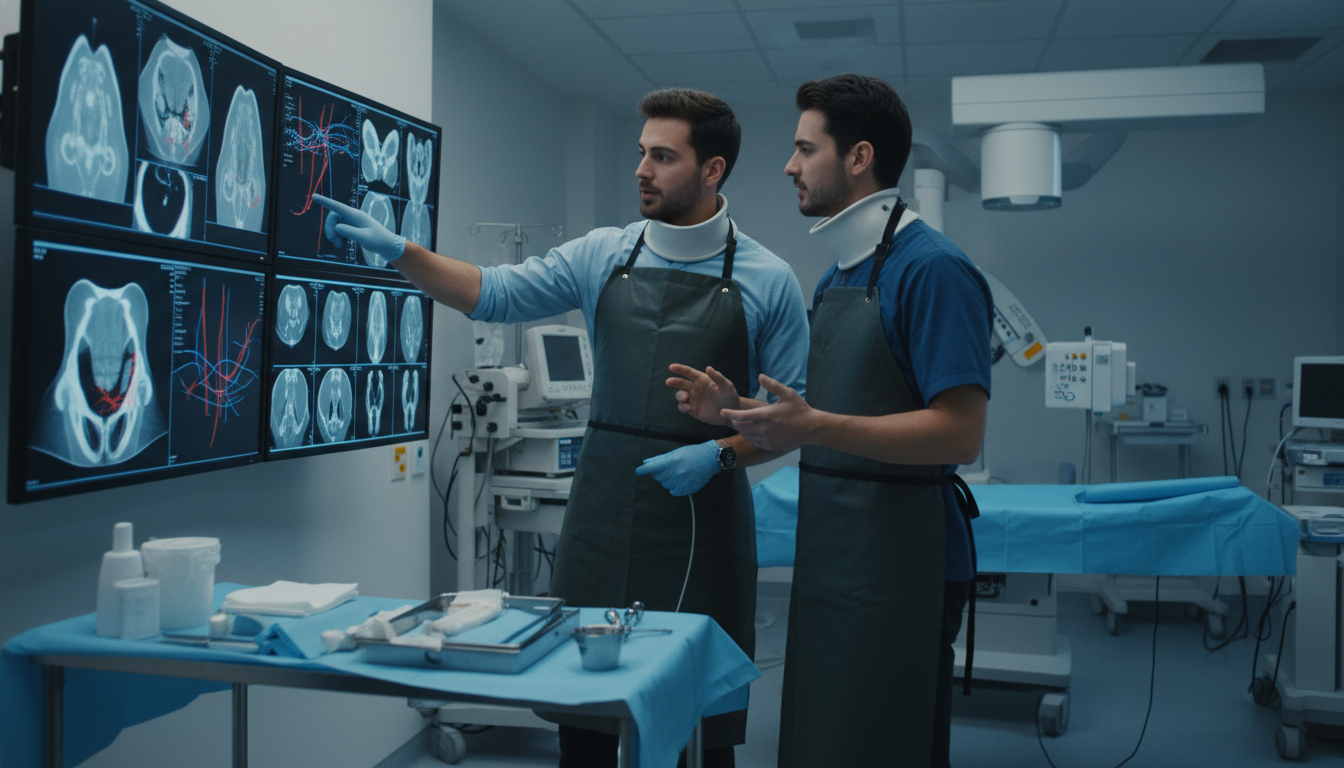
- Skillful interpretation of imaging and labs related to neuro
- Clear thinking around acute neurologic emergencies
Your Step 2 CK score is not the only factor, but it is one of the few standardized pieces of data that residency programs can compare directly across all applicants.
Target Score Range for Neurology Applicants
Benchmarks change over time, but for neurology residency applicants:
- Highly competitive academic neurology programs:
Aim for a Step 2 CK score around or above the top quartile of test‑takers (often in the 250+ range, depending on the cohort and year). - Solid mid‑tier or community‑based neurology programs:
A score in the 240s or higher is often considered strong, especially for a US citizen IMG. - If Step 1 was weaker or just passed on second attempt:
Step 2 CK becomes your “redemption” exam. Prioritize getting as high above the national mean as you can; programs love a clear upward trajectory.
Keep in mind:
- A slightly lower Step 2 CK score can be offset by outstanding letters, strong neurology clerkship performance, US clinical experience (USCE), and research.
- But if you are a US citizen IMG, a strong Step 2 CK score makes it much easier to get noticed in ERAS filters and for programs to feel confident granting interviews.
Building a High‑Yield Step 2 CK Study Plan as a US Citizen IMG
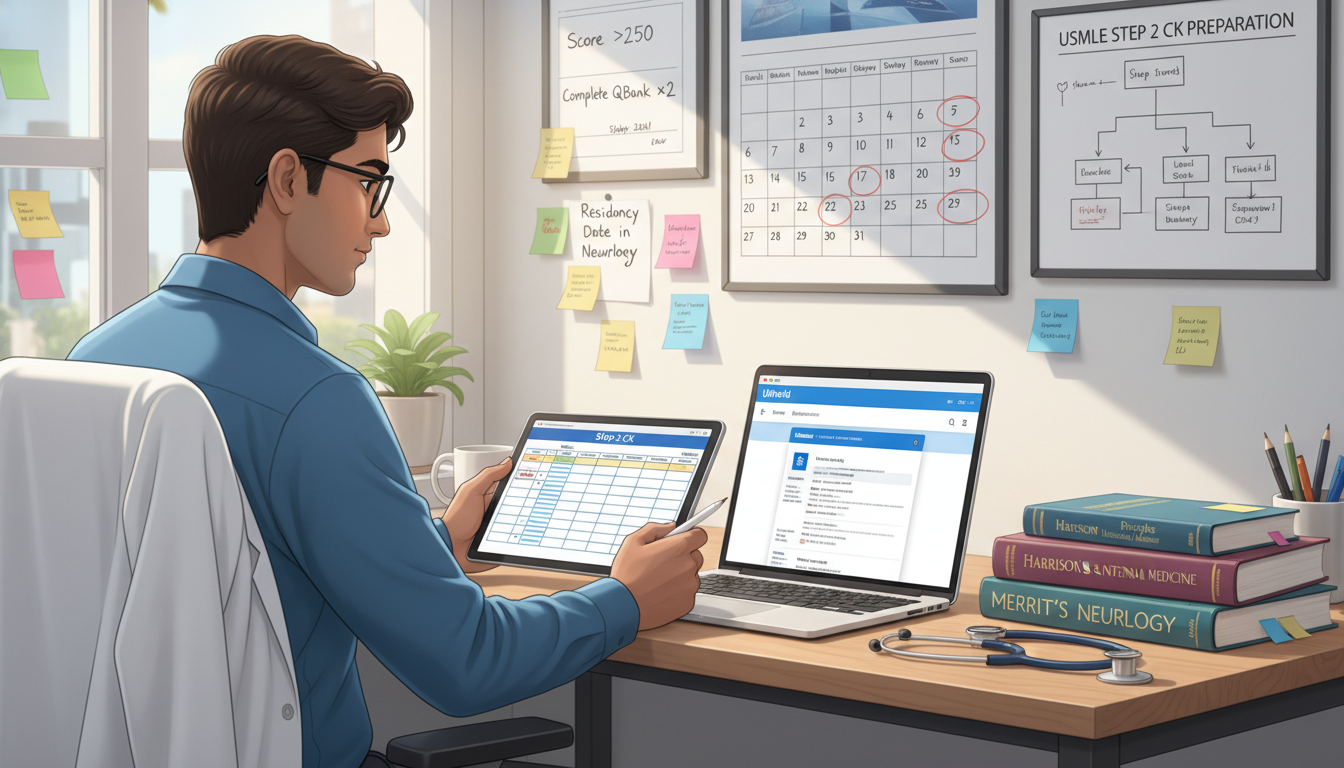
Step 1: Clarify Your Timeline and Constraints
Being an American studying abroad often means:
- Different academic calendars
- Variable access to US‑style clerkships
- Visa and travel logistics around US clinical electives
Before you dive into resources, outline:
Exam date window
- Ideally, take Step 2 CK before ERAS submission so your score is available when programs screen.
- Many US citizen IMGs aim for May–August of the year they apply.
Available full‑time study weeks
- Count uninterrupted weeks where you can devote 8–10 hours/day.
- US citizen IMGs often need a 6–10 week dedicated period, depending on how strong their clinical base is.
Clinical rotations and obligations
- Identify lighter rotations where you can integrate 3–4 hours/day of USMLE Step 2 study.
- Use heavier rotations (e.g., call‑heavy surgery) for light review only.
Step 2: Establish Your Baseline
Take a baseline self‑assessment 2–3 months before your dedicated period:
- NBME Comprehensive Clinical Science Self‑Assessment (CCSSA) form (any current form)
- Or a UWorld Self‑Assessment (UWSSA)
Purpose:
- Gauge starting point (e.g., equivalent of 220 vs 240).
- Identify weak systems (e.g., psychiatry, OB/GYN, or neurology).
- Build a realistic Step 2 CK score goal.
For neurology applicants:
- Pay particular attention to internal medicine and neuro‑related domains (stroke, seizures, headaches, neuromuscular disease, altered mental status).
Step 3: Use a Phased Study Strategy
A structured USMLE Step 2 study approach for a US citizen IMG in neurology might look like this:
Phase 1 – Foundation & Systems Review (4–6 weeks, part‑time)
Goal: Build solid clinical knowledge across all specialties, with extra emphasis on neurology and internal medicine.
- Primary resources
- UWorld Step 2 CK Qbank (anchor resource)
- A concise text like Step-Up to Medicine or Master the Boards Step 2 CK for reference
- Neurology‑focused clinical resources (e.g., a concise neurology handbook) for tricky topics
Tactics:
- Do 20–40 UWorld questions/day in tutor mode while you are still learning concepts.
- Organize by system (e.g., neurology, cardiology, GI) rather than random, early on.
- Maintain an “error log” – document questions you missed, why, and the correct rationale.
Neurology focus during Phase 1:
- Seizure types, status epilepticus management
- Stroke classification, imaging choices, thrombolysis and thrombectomy criteria
- Headache red flags and differential
- Demyelinating disease (MS, optic neuritis)
- Neuromuscular junction disorders (MG, Lambert‑Eaton, botulism)
- Peripheral neuropathies, Guillain‑Barré, CIDP
- Movement disorders (Parkinson’s, Huntington’s, drug‑induced)
- Common neuro‑imaging patterns (CT and MRI)
Phase 2 – Dedicated Study (6–8 weeks, full‑time)
Goal: Transition from learning to test performance with intensive USMLE Step 2 study and simulation of exam conditions.
Daily framework:
- 2–3 UWorld blocks (80–120 questions/day) in timed, random mode
- 3–5 hours of review and targeted content reinforcement
- 1–2 hours of practice with biostatistics, ethics, and CCS‑style clinical reasoning (even though CK is not CCS‑heavy, advanced management reasoning helps)
Weekly targets:
- 1 self‑assessment every 2 weeks
- Review all incorrect and marked questions from the previous week
- Tight feedback loop: weaknesses from self‑assessments become the following week’s content focus
Neurology‑specific strategies in Phase 2:
- Identify patterns in neuro questions you consistently miss (e.g., misinterpreting localizing signs or incorrectly choosing imaging).
- Create mini‑one‑pagers (or flashcards) on:
- Approach to acute weakness
- First‑line vs second‑line treatments for epilepsy by demographic (childbearing age, elderly, focal vs generalized)
- Stroke timing windows and contraindications for tPA or thrombectomy
- Workup of dementia and reversible causes
Phase 3 – Final Polishing (2–3 weeks pre‑exam)
Goal: Sharpen timing, stamina, and last gaps.
- Shift to full‑length exam simulations (7–8 blocks in a single day) at least once per week.
- Review:
- High‑yield tables (e.g., rheum vs infectious vs neoplastic causes of neuro deficits).
- Algorithms (e.g., workup of back pain with red flags, syncope, altered mental status).
- Light review of wrong and marked questions from UWorld (or your main Qbank).
- Prioritize sleep, exercise, and mental resilience to avoid burnout.
Key Resources and How to Use Them Effectively

Question Banks: The Core of Step 2 CK Preparation
For USMLE Step 2 CK preparation, UWorld is non‑negotiable for most serious applicants.
How to use UWorld as a US citizen IMG in neurology:
- Aim to complete 100% of the Qbank, ideally 1.2–1.5 passes if time permits.
- In dedicated, use timed random blocks to simulate the real exam.
- Spend at least as much time reviewing explanations as doing questions.
- Tag neurology questions and high‑yield internal medicine/neuro‑overlap topics (cardio‑embolic stroke, vasculitis, infective endocarditis and neuro complications).
Beware:
- Don’t chase multiple Qbanks and dilute your focus. UWorld + one smaller supplemental bank (Amboss, Kaplan, or OnlineMedEd questions) is usually enough if you use them thoroughly.
Self‑Assessments: Guiding Your Neuro Match Strategy
Use self‑assessments to track your growth and refine your neuro match planning:
NBMEs (CCSSA)
- Closest to the real exam feel.
- Use to check whether your Step 2 CK score trajectory aligns with your target neurology programs.
UWorld Self‑Assessments (UWSSA)
- Great for predicting score range and timing.
- Use mid‑dedicated and 1–2 weeks before the real exam.
How to interpret these scores:
- If your NBME/UWSSA is 10–15 points below your target 4–6 weeks out, adjust your plan to:
- Increase daily question volume.
- Focus on weakest two systems, but still practice all systems in random mode.
- If you are at or slightly above target:
- Maintain intensity but avoid last‑minute resource creep.
- Switch focus to test‑taking strategy and endurance.
Content Review for US Citizen IMG Neurology Applicants
Use concise, board‑oriented resources rather than broad textbooks during dedicated:
Internal Medicine and Neurology
- Step‑Up to Medicine or a similar high‑yield review book for IM.
- A short, clinically oriented neurology review (or high‑yield notes from your neurology rotation).
Psychiatry and Behavioral Science
- High‑yield psychiatry chapters in your Step 2 CK book of choice.
- Focus on psych emergencies, suicide risk, and commonly tested meds.
Obstetrics/Gynecology, Pediatrics, Surgery, Family Medicine
- Use the Qbank and review book chapters; neurology applicants still need decent performance in these areas.
Images, Labs, and EKGs
Neurology is image‑heavy, and Step 2 CK reflects that:
- Practice interpreting:
- Non‑contrast head CT (hemorrhage vs ischemia, epidural vs subdural).
- Basic MRI brain patterns (MS plaques, tumors, infarcts, demyelination).
- Ensure you are comfortable reading:
- Basic EKGs (AFib with RVR, ST‑elevation MI, AV block), since cerebrovascular events often overlap with cardiology.
- Use Qbank image‑based questions as your main training ground; don’t ignore the pictures in explanations.
Special Considerations for US Citizen IMGs and Neurology
Integrating Step 2 CK with US Clinical Experience (USCE)
If you are doing or planning US rotations (electives, sub‑internships, observerships):
- Time your Step 2 CK so that:
- You have enough pre‑rotation study to feel clinically confident.
- You can still sit for the exam before or soon after high‑yield neurology rotations.
During neurology rotations:
- Treat every case as a Step 2 CK scenario:
- Generate a differential, plan initial imaging/labs, and anticipate management.
- Ask attendings to explain why one imaging modality or treatment is chosen over another; these rationales mirror CK questions.
This not only boosts your Step 2 CK preparation but also strengthens your letters and narrative for the neuro match.
Overcoming Common Challenges for American Students Studying Abroad
As a US citizen IMG, you may encounter:
Limited access to standardized patients and US exam style
- Solution:
- Use USMLE‑style video lectures or cases (OnlineMedEd, Boards & Beyond, etc.).
- Practice clinical vignettes out loud, explaining your reasoning.
- Solution:
Different practice standards or guidelines
- Solution:
- Rely on UWorld and US‑based review material to anchor American practice guidelines.
- Make separate notes labeled “US standard” whenever it differs from your local training.
- Solution:
Scheduling and logistical burdens
- Solution:
- Build your Step 2 CK preparation plan early (9–12 months out) to leave room for delays.
- Register and secure your exam slot around your target date as soon as you can.
- Solution:
Using Step 2 CK to Tell a Cohesive “Neuro Story”
Your Step 2 CK studying doesn’t sit in isolation. Tie it into your neurology application:
In your personal statement and interviews, you might highlight:
- How rigorous USMLE Step 2 preparation sharpened your diagnostic reasoning in neurology.
- Specific neuro‑heavy areas you developed deeper expertise in (stroke, epilepsy, neuroimmunology).
If you have a strong neurology subsection on Step 2 CK (reflected in performance profiles):
- This can reinforce letters from neurology attendings commenting on your clinical acumen.
Think of your Step 2 CK performance as a data point that backs up your narrative:
“I am a US citizen IMG who actively sought out high‑level neurology training and proved I can perform at or above the level of my US peers.”
Test‑Day Strategy, Mindset, and Post‑Exam Planning
Test‑Day Game Plan
For Step 2 CK:
- 8 blocks, 40 questions per block, one full day.
- You need a pacing and breaks strategy:
Pacing
- Aim for ~1 minute per question with a small buffer.
- Flag questions you’re stuck on at ~60–75 seconds, choose a best guess, and move on; come back only if time allows.
Break management
- Use your tutorial time as extra break if you already know the interface.
- Typical pattern:
- 2 blocks → 10–15 min break
- 2 blocks → 10–15 min break
- 2 blocks → 5–10 min break
- 2 blocks → final short break if needed
On‑site tactics
- Bring familiar snacks, hydration, and avoid anything that causes sugar crashes.
- Use brief breaks to reset mentally, not to re‑study.
Cognitive Approach: Thinking Like a Neurology Resident
The exam wants to see that you can:
- Rapidly identify sick vs stable.
- Choose initial diagnostic tests that are high‑yield and cost‑conscious.
- Initiate time‑critical therapies (examples: tPA decisions, airway protection, status epilepticus management).
Approach complex neuro questions as you would on a busy stroke service:
- Stabilize the patient (ABCs).
- Localize the lesion (based on deficits, timing).
- Pick the imaging or test that answers the most urgent question.
- Start or withhold treatment based on contraindications and risk‑benefit.
Practicing this algorithm during your USMLE Step 2 study improves both your test performance and your on‑rotation performance.
After the Exam: Aligning Your Score with Your Neuro Match Strategy
Once you receive your Step 2 CK score:
If your Step 2 CK score is at or above your neurology target range:
- Highlight it in ERAS and in conversations with mentors.
- Consider including it in introductory emails to program coordinators or faculty if appropriate.
If it’s below what you hoped:
- De‑brief honestly: did you underperform due to knowledge gaps, test‑taking, or anxiety?
- Strengthen other parts of your neuro application:
- Additional neurology electives or observerships in the US
- Strong letters from neurologists
- Engaging in small research projects or case reports
- Discuss with advisors which programs remain realistic, and adjust your program list accordingly.
Remember: programs evaluate the whole file, and a strong clinical track record + US citizenship + improving trajectory can still make you a compelling neurology candidate.
FAQs: Step 2 CK Preparation for US Citizen IMGs Targeting Neurology
1. As a US citizen IMG, what Step 2 CK score should I aim for to be competitive for neurology?
Aim for at least the mid‑240s or higher to be broadly competitive, especially for university‑affiliated neurology programs. For aspirational, research‑heavy academic centers, target the 250+ range if realistically achievable. That said, a slightly lower Step 2 CK score can be balanced by strong neurology rotations, excellent letters, USCE, and a clear commitment to neurology.
2. How much neurology is actually tested on Step 2 CK?
Neurology is embedded primarily within internal medicine, emergency medicine, and pediatrics questions. While it may not be the largest single category, neuro topics like stroke, seizures, headaches, neuromuscular disease, altered mental status, and back pain with neurologic deficits appear frequently. As a neurology‑bound applicant, you should aim to excel in these topics, not just barely pass.
3. When is the best time to take Step 2 CK relative to neurology rotations and ERAS?
For the neuro match, the ideal timeline for a US citizen IMG is:
- Complete most core rotations (including internal medicine and preferably neurology) first.
- Take Step 2 CK by late summer (June–August) of the application year so your score appears in ERAS when programs first review applications.
- If possible, take the exam after at least one neurology rotation so you can integrate real‑world neurology reasoning into your exam prep.
4. Should I delay my neurology application if my Step 2 CK score is lower than expected?
Not necessarily. Consider:
- How far your Step 2 CK score is from typical neurology ranges.
- The strength of your other application components (US letter writers in neurology, research, USCE, clinical grades).
- Your level of flexibility in program type and geographic preference.
If your score is substantially below target (e.g., more than ~20 points under your goal) and your overall application is not yet robust, a planned, strategic delay of one application cycle to strengthen your profile may be reasonable. Discuss this with trusted mentors who know both your performance and the neurology landscape.
By approaching USMLE Step 2 CK preparation with a structured plan, neurology‑specific focus, and realistic scoring goals, you can turn this exam into a major asset in your neurology residency application as a US citizen IMG. Use your preparation not only to chase a number, but to build the clinical reasoning and neuro‑centric mindset that will define your future as a neurologist.