
Understanding Step 2 CK as a US Citizen IMG Aiming for Pathology
For a US citizen IMG (American studying abroad), USMLE Step 2 CK is not just another exam—it is often the single most important standardized metric in your residency file, especially after Step 1 became Pass/Fail. Even if you are targeting a pathology residency, where clinical reasoning may seem less directly relevant than in internal medicine or surgery, programs still use your Step 2 CK score as:
- A primary screening tool for interview offers
- An indicator of your clinical knowledge and test discipline
- A proxy for your likely performance on pathology in‑training exams and boards
Many pathology program directors report that, for IMGs (including US citizen IMG applicants), a strong USMLE Step 2 CK score can offset other disadvantages—such as studying abroad, fewer US clinical rotations, or a weaker school brand name. This makes Step 2 CK preparation a strategic priority in your overall pathology match plan.
Key implications if you are an American studying abroad and want pathology:
- Pathology is relatively less competitive than some procedural specialties, but applicant quality is high and slots are limited.
- US citizen IMG status means you often compete directly with strong US MD and DO applicants.
- A high Step 2 CK score helps signal reliability, work ethic, and test‑taking ability—all valued traits in pathology fellowship and board exams.
In short: treat USMLE Step 2 CK as your most powerful quantitative metric for getting noticed in the pathology match.
How Step 2 CK Relates to Pathology Residency Competitiveness
Although pathology is not as score-obsessed as dermatology or orthopedics, numbers still matter. As a US citizen IMG:
- Many programs use score cutoffs when filtering ERAS applications.
- Your Step 2 CK score often carries more weight than Step 1 (now pass/fail).
- Strong scores can counterbalance:
- Attending a lesser-known international school
- Gaps in training or delays in graduation
- Limited US clinical experience (especially if you lack substantial US letters of recommendation)
What Score Should a US Citizen IMG in Pathology Aim For?
Absolute thresholds vary per year, but the general advice:
- Below ~230: Risky for many mid‑tier academic pathology programs; still possible for community programs if the rest of your application is strong.
- 230–245: Competitive for many pathology residencies; helps offset IMG status if other elements (letters, transcript, personal statement) are solid.
- 245+: Strongly competitive for most pathology programs, including many academic centers; makes it easier to get through automated filters.
Because pathology PDs often see IMGs with very solid exam performances, a Step 2 CK score in the mid‑240s or higher can meaningfully strengthen your profile as a US citizen IMG.
Building a High-Yield Step 2 CK Study Strategy (Pathology-Focused)
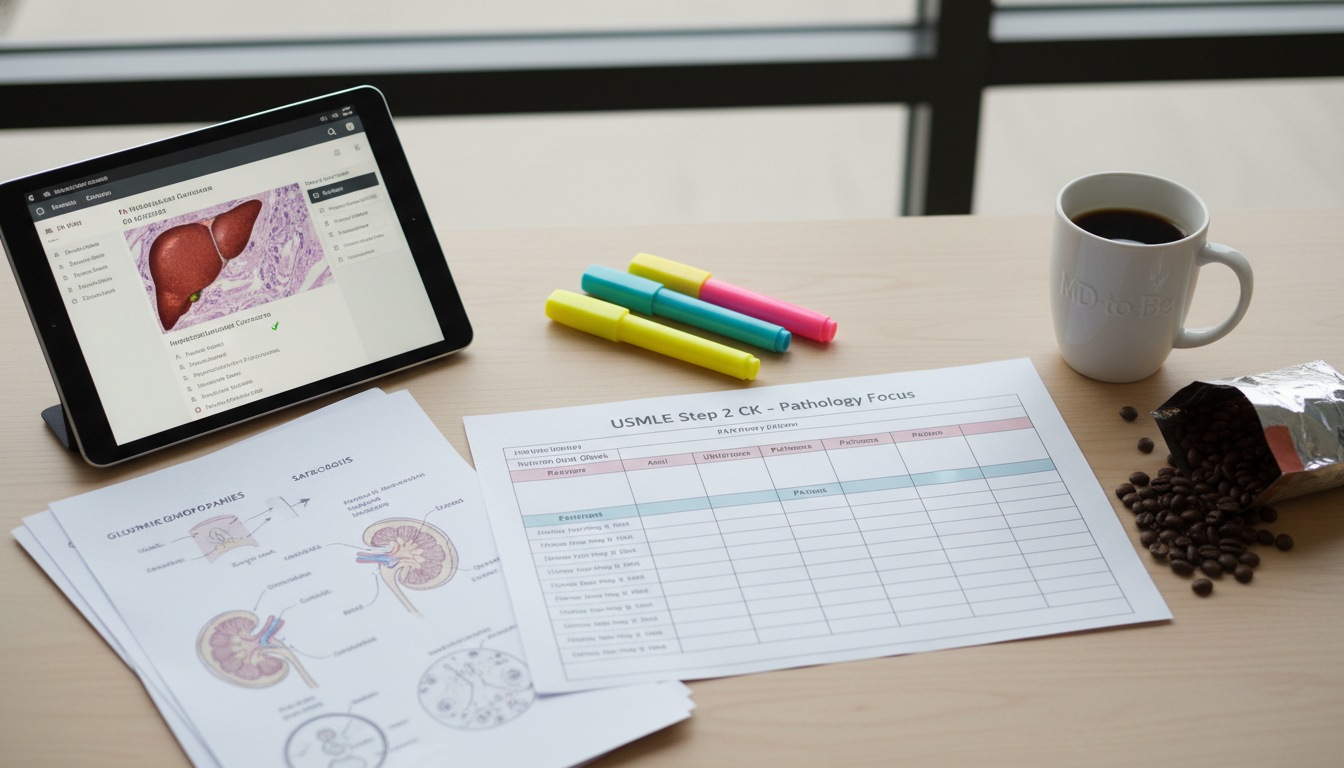
1. Understand the Exam Blueprint (and Where Pathology Fits)
Step 2 CK is officially a clinical exam, yet pathology underlies many questions:
- Interpreting lab trends, blood gases, CBC, LFT, renal panels
- Understanding mechanisms of disease to choose the right diagnosis or next step
- Recognizing pathophysiology behind common presentations (DIC, hemolytic anemia, acute kidney injury, autoimmune disorders, malignancies)
As a future pathologist, mastering these areas does more than boost your score—it builds the conceptual foundation you will use daily.
Key content domains where pathology knowledge is heavily tested:
- Internal medicine: hematology/oncology, nephrology, rheumatology, infectious disease, endocrinology
- OB/GYN: gestational trophoblastic disease, gynecologic cancers, pregnancy-related complications
- Pediatrics: congenital disorders, inborn errors of metabolism, pediatric malignancies
- Surgery & EM: shock, trauma-induced coagulopathy, acute abdomen differential, perioperative labs
Your Step 2 CK preparation should integrate pathology thinking into clinical decision-making, not just memorization of facts.
2. Create a Realistic Study Timeline
Recommendations for a US citizen IMG will vary based on your medical school and schedule, but common scenarios:
A. Dedicated Study Period (6–10 Weeks)
Ideal if your school allows a focused break:
- Week 1–2:
- Rapid content review (internal medicine heavy)
- Start question bank (QBank) at 40–80 questions/day
- Week 3–6:
- Intensify QBank (60–120 questions/day)
- Daily focused review of weak systems (cardio, neuro, renal, heme/onc)
- 1 NBME practice exam every 1–2 weeks
- Week 7–8 (and up to 10):
- Focus on high-yield clinical algorithms
- Systematic review of missed questions
- 1–2 more practice NBMEs + UWSA exams
- Address test-day logistics and timing
B. Longitudinal Prep While on Rotations (3–6 Months)
Common for IMGs with busy clinical schedules:
- Aim for 10–20 QBank questions per day on weekdays, 40–80 on weekends.
- Use UWorld (or other primary QBank) as your core study tool.
- Anchor your learning in your current rotation:
- On internal medicine: emphasize heme/onc, renal, ID, endocrine.
- On OB/GYN: focus on pregnancy complications, cancer screening, gynecologic path.
- Reserve the last 4–6 weeks for intensified question practice and practice tests.
3. Core Resources for USMLE Step 2 CK Preparation
For a US citizen IMG targeting pathology, choose resources that reinforce both clinical reasoning and disease mechanisms.
Primary Resources (Must-Haves)
UWorld Step 2 CK QBank
- Treat it as your “textbook.”
- Do timed, random blocks once you’ve covered the basics by system.
- Carefully read explanations—especially lab interpretation and pathophysiology rationales.
NBME Practice Exams (Comprehensive Clinical Science Self-Assessments)
- Best predictors of real Step 2 CK performance.
- Take 3–5 over your study period.
Amboss or another secondary QBank (optional but helpful)
- Use for extra practice after completing UWorld.
- Amboss articles are great for quick, high-yield reviews.
Secondary Resources (Selective Use)
- Online MedEd (OME) or similar video series
- Good for initial framework if you feel weak in a clinical area.
- Anki (especially Step 2 decks)
- Great for spaced repetition of key algorithms, management guidelines, and pathophysiology.
- High-Yield Review Books (e.g., Step-Up to Medicine, Master the Boards)
- Use as references, not primary learning tools, unless your learning style favors text.
As a pathology-bound student, avoid the trap of spending excessive time on basic science resources at the expense of clinical decision-making practice. Step 2 CK rewards application, not memorized minutiae.
Integrating Pathology Strengths into Your Step 2 CK Study

1. Leverage Your Pathology Interest as an Advantage
US citizen IMG applicants often have strong theoretical pathology foundations from their international schools. Use this to your benefit:
- When reviewing questions, explicitly ask:
- What disease mechanism explains this presentation?
- How do the lab findings align with the underlying pathology?
- How would a pathologist contribute to this case (biopsy interpretation, blood smear, cytology)?
This approach deepens your understanding and reinforces clinically relevant pathology thinking that will serve you in residency.
2. Focus on High-Yield Pathology-Heavy Topics
These areas are both frequently tested on Step 2 CK and central to pathology:
- Hematology/Oncology
- Leukemia and lymphoma subtypes and presentations
- Anemia workup, hemolysis labs, transfusion reactions
- Cancer staging vs. grading, paraneoplastic syndromes
- Coagulation and Thrombosis
- DIC, HIT, TTP/HUS, vitamin K deficiency
- Interpretation of PT, aPTT, INR, fibrinogen, d‑dimer
- Renal Pathophysiology
- Nephritic vs. nephrotic syndromes
- AKI patterns (pre‑renal, intrinsic, post‑renal)
- Electrolyte disturbances and acid–base interpretation
- Liver and GI
- Patterns of LFT abnormalities (cholestatic vs. hepatocellular)
- Hepatitis serologies and autoimmune liver disease markers
- GI bleeding workup and malignancy screening
- Endocrine and Metabolic
- Diabetic emergencies and lab interpretation
- Thyroid function test patterns
- Hypercalcemia workup, adrenal insufficiency
- Infectious Disease
- Sepsis, opportunistic infections, endocarditis
- Lab patterns and microbiology–path correlation
Link each topic to clear clinical actions: diagnosis, initial management, next test, admission vs. outpatient.
3. Example: Turning Pathology Knowledge into Step 2 CK Points
Consider a question:
A 65-year-old man presents with fatigue and weight loss. CBC shows Hb 9, MCV 78, platelets 700k, WBC 60k with left shift. Peripheral smear reveals numerous myelocytes and metamyelocytes. Leukocyte alkaline phosphatase score is low.
A pathology-minded approach:
- Recognize CML pattern (high WBC with left shift, low LAP).
- Understand underlying BCR-ABL fusion causing constitutive tyrosine kinase activation.
- For Step 2 CK, translate that to clinical management:
- Next step: confirm with PCR for BCR‑ABL or FISH.
- Treatment: tyrosine kinase inhibitor (imatinib).
Your pathology background helps identify the disease; your Step 2 CK preparation ensures you pick the correct next best step and initial therapy.
Practical Study Tactics and Day‑to‑Day Plan
1. Daily Structure During Dedicated Study
For a 6–8 week dedicated period:
Morning (3–4 hours)
- 2 timed blocks of 40 questions (UWorld or main QBank).
- Review each block immediately—spend 1–2 minutes per question.
Afternoon (3–4 hours)
- Targeted review of weak systems/topics identified from morning blocks.
- Watch 1–2 brief videos or read concise summaries for problem areas.
- Do 10–20 Anki cards (or review existing ones).
Evening (1–2 hours)
- Optional: a shorter block of 20 questions, untimed, focusing on your weakest specialty (e.g., OB, peds).
- Quick review of any formulas, scoring systems, or must-know guidelines.
2. How to Review Questions Effectively
To maximize USMLE Step 2 study efficiency:
For each missed or guessed question:
- Identify:
- What clue did I miss?
- What concept did I not fully understand?
- Was the error knowledge-based, reading-based, or strategy-based?
- Write a short, actionable note:
- Ex: “In elderly with normocytic anemia + kidney disease → think EPO deficiency; check erythropoietin; treat with ESA if symptomatic.”
- Add only high-yield concepts to Anki or a personal notes file. Avoid rewriting entire UWorld explanations.
3. Timing Your Exam Strategically for the Pathology Match
For a US citizen IMG, timing is crucial:
- Aim to take Step 2 CK no later than August–September of the application year, so your score is available early in the ERAS season.
- If your Step 1 is pass/fail with no three-digit score, your Step 2 CK score becomes the main quantitative metric in your file—having it ready by application submission can significantly improve interview chances.
- If you feel underprepared, balance the benefit of extra preparation against the cost of delayed score release. In pathology, late scores may still be acceptable, but early strong scores are preferred.
Managing Unique Challenges as a US Citizen IMG
1. Adjusting to US-Style Exam Questions
As an American studying abroad, you may have been trained in a system with:
- More memorization-based exams
- Fewer clinical vignettes
- Less emphasis on multi-step reasoning
To adapt:
- Use timed, random QBank blocks early to train your brain for Step 2 CK style questions.
- After each block, identify whether wrong answers were due to:
- Misreading the stem
- Misinterpreting labs or imaging
- Not knowing the guideline-recommended next step
Consistent exposure gradually narrows this gap and improves your test-taking instincts.
2. Balancing Rotations, US Clinical Experience, and Study
US citizen IMG applicants to pathology often feel pressure to:
- Arrange US clinical electives or observerships
- Work on research projects
- Prepare for Step 2 CK
Tips to manage:
- During heavy rotation months, set a minimum QBank goal (e.g., 10–15 questions per day) to maintain momentum.
- Use lighter months or gaps between rotations as mini-dedicated periods.
- Protect at least one full day per week for Step 2 CK study during busy clinical periods.
Remember: from a program director’s perspective, a strong Step 2 CK score often outweighs a marginal extra observership, especially when both cannot be maximized.
3. Mental Health, Burnout, and Realistic Expectations
Preparing for Step 2 CK while navigating visas, travel, and clinical responsibilities is stressful. To maintain performance:
- Schedule regular breaks: short daily breaks and 1 half-day off per week.
- Build in buffer days for illness or fatigue.
- Avoid comparing yourself obsessively to classmates—US citizen IMG paths are often less linear than US MD/DO peers.
If your practice NBMEs are persistently below your goal:
- Reassess your timeline—consider postponing the exam if feasible.
- Identify specific blocks of content (e.g., OB vs. psych vs. heme/onc) and address them with targeted resources.
- Consider short-term tutoring or study coaching if you find recurring conceptual gaps or strategy problems.
Putting It All Together for a Strong Pathology Match
As a US citizen IMG aspiring to a pathology residency, your Step 2 CK preparation should be:
- Clinically grounded: Focused on decision-making and management.
- Pathology-aware: Leveraging your interest in mechanisms of disease to understand, not just memorize.
- Strategically timed: Completed early enough to strengthen your ERAS profile.
- Data-driven: Guided by NBME practice scores and QBank performance.
A strong Step 2 CK score signals to pathology programs that you are:
- Academically capable
- Disciplined and reliable
- Likely to succeed in in‑training and board exams
Combined with solid letters (ideally including at least one from a pathologist), a clear personal statement, and some engagement with pathology (electives, observerships, or research), your USMLE Step 2 CK performance can significantly elevate your chances in the pathology match as a US citizen IMG.
FAQ: USMLE Step 2 CK Preparation for US Citizen IMG in Pathology
1. I’m an American studying abroad and want pathology. How high does my Step 2 CK score need to be?
For a US citizen IMG, a Step 2 CK score around 230–240 typically makes you reasonably competitive for many pathology programs, especially community and some university-affiliated programs. A score of 245+ will improve your chances significantly at a wider range of academic centers. While there’s no absolute cutoff, higher scores make it easier to pass automated filters and stand out among IMGs.
2. Should I delay my application if I’m not happy with my Step 2 CK practice scores?
If your NBME practice exams are far below your target range (e.g., under 220 when aiming for 240+), it may be wise to extend your preparation and take Step 2 CK later—especially if you can still take it in time for your desired match cycle. However, if the delay would push your score release beyond the main interview invitation period (October–November), weigh the benefit of a higher score against the risk of appearing incomplete when programs first review applications.
3. As a future pathologist, do I still need to study OB/GYN, pediatrics, and psychiatry intensely for Step 2 CK?
Yes. The exam is designed to assess broad clinical competence, and all specialties are represented. While internal medicine and pathology-heavy subjects may feel more relevant, ignoring OB, peds, or psych will hurt your overall Step 2 CK score, which matters much more to pathology PDs than precisely which questions you missed. Aim for at least a solid baseline in every discipline, with extra strength in medicine, heme/onc, and renal.
4. How can I highlight my pathology interest while focusing on Step 2 CK preparation?
You don’t need separate resources. Instead, make small adjustments to your daily study:
- Pay extra attention to cases involving lab patterns, biopsies, hematology, and oncology.
- When reviewing explanations, ask how a pathologist would be involved: biopsy interpretation, lab consult, tumor board, etc.
- Keep a short list of interesting pathology-related cases from your QBank or rotations; these can later inform your personal statement or interview discussions.
This way, your USMLE Step 2 study reinforces both exam success and your long-term development as a pathology resident.