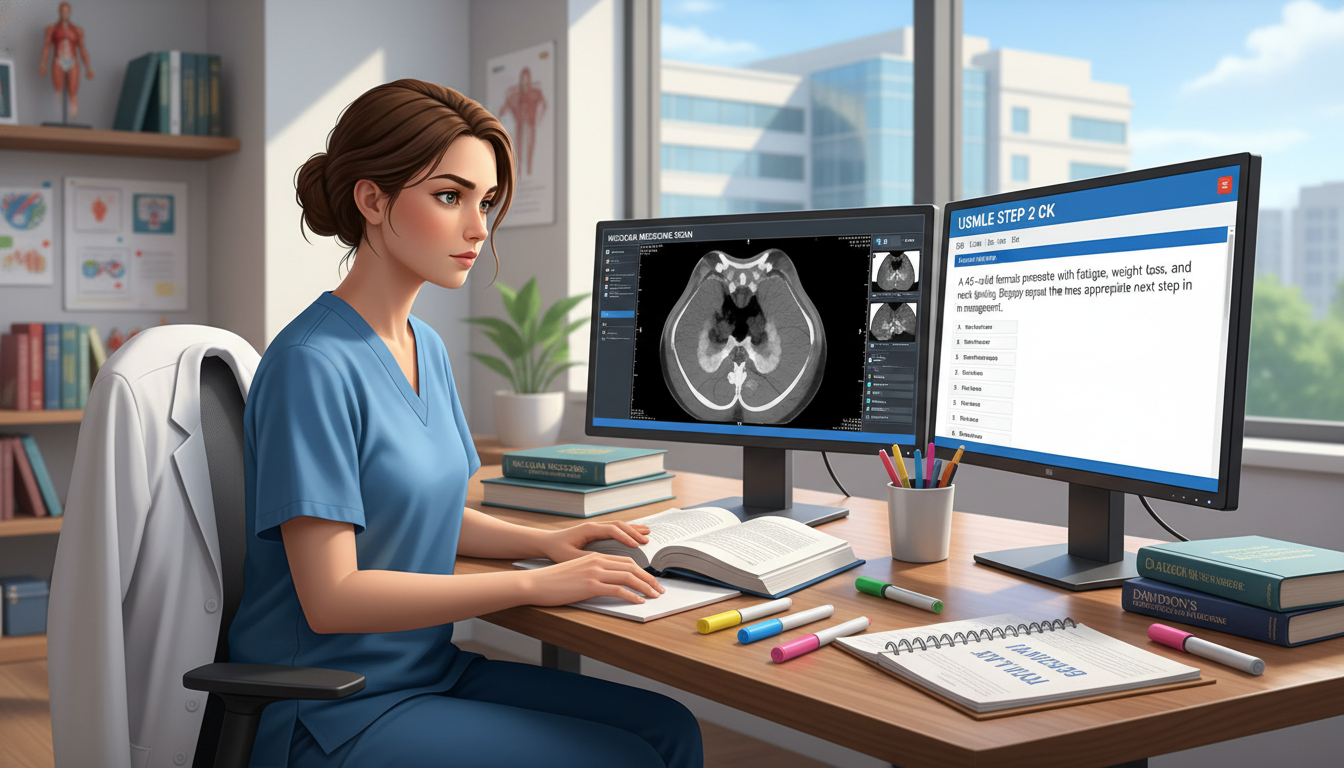
The USMLE Step 2 CK is a critical milestone for any residency applicant, and for those pursuing a nuclear medicine residency, it plays an especially strategic role. While nuclear medicine is a highly specialized, imaging-focused field, program directors still rely heavily on your Step 2 CK score to assess clinical reasoning, readiness for residency, and your ability to manage complex patients—not just interpret scans.
This guide focuses on USMLE Step 2 study strategies tailored for students interested in nuclear medicine, including scheduling decisions, content emphasis, and how to leverage your nuclear medicine interests to stand out in the nuclear medicine match while still maximizing your Step 2 CK performance.
Understanding Step 2 CK in the Context of Nuclear Medicine
Before designing a study plan, it helps to clarify what Step 2 CK measures and why it matters for nuclear medicine residency applications.
What Step 2 CK Really Tests
Step 2 CK is primarily about:
- Clinical reasoning and decision-making
- Diagnosis and management of acute and chronic diseases
- Integration of pathophysiology, pharmacology, and clinical guidelines
- Prioritization, triage, and patient safety
Even if your long-term goal is to read PET/CTs and interpret myocardial perfusion scans, you’ll still be:
- Managing patients on call (especially in combined pathways such as internal medicine–nuclear medicine or radiology–nuclear medicine)
- Communicating findings to clinicians in complex clinical contexts
- Understanding how imaging results change management
Step 2 CK ensures you are clinically competent at that foundational level.
How Important Is Step 2 CK for a Nuclear Medicine Residency?
For nuclear medicine–focused candidates, Step 2 CK is important in multiple ways:
Objective comparison tool
Nuclear medicine is a relatively small field, with applicants coming from diverse backgrounds (internal medicine, radiology, surgery, or direct pathways in some systems). The Step 2 CK score becomes a standardized metric to compare applicants from different schools and countries.Evidence of clinical strength
Nuclear medicine demands excellent understanding of physiology, pharmacology, and systemic disease. A strong Step 2 CK performance signals that you can:- Interpret nuclear tests in clinical context
- Recognize contraindications (e.g., to pharmacologic stress agents)
- Understand treatment implications of imaging findings
Signal after Step 1 pass/fail
With Step 1 now pass/fail, many programs—including those affiliated with nuclear medicine—lean more on Step 2 CK for a numerical score. If your Step 1 performance was borderline or you’re an IMG, Step 2 CK can significantly influence your nuclear medicine match competitiveness.Backup and flexibility
Many nuclear medicine physicians enter via diagnostic radiology or internal medicine. A strong Step 2 CK opens doors to:- Categorical internal medicine or radiology programs
- Transitional or preliminary years needed before specialized nuclear training
Strategic Timing: When to Take Step 2 CK if You’re Nuclear Medicine–Bound
Your Step 2 CK preparation timeline should sync with your clinical rotations and residency application strategy.
Ideal Timing Relative to Rotations
Aim to take Step 2 CK:
- 2–4 weeks after finishing core clerkships, especially:
- Internal Medicine
- Surgery
- Pediatrics
- Obstetrics & Gynecology
- Psychiatry
- Family Medicine
- Ideally before your dedicated nuclear medicine elective or sub-I, so you can:
- Focus fully on clinical material for the exam
- Use your nuclear medicine time to enrich your application, research, and letters
If you’ve already had a nuclear medicine rotation:
- Leverage that knowledge for:
- Radiology/nuclear imaging questions
- Oncologic staging and follow-up
- Cardiology/perfusion scan interpretation
But do not over-focus on nuclear medicine content for Step 2; it’s a small slice of the test.
Timing Relative to the Match
For applicants in the main NRMP Match or specialty pathways related to nuclear medicine:
- Target exam by late July–August of application year for:
- On-time score release before ERAS submission
- Inclusion of the Step 2 CK score on your initial application
- If Step 1 was weak:
- Strongly consider taking Step 2 CK earlier (June–July) to show improvement and reassure programs
For those applying to pathways that require or strongly value internal medicine or radiology:
- A competitive Step 2 CK score (commonly > 240–245 for highly competitive radiology programs, somewhat lower for general nuclear medicine but still strong) can:
- Buffer modest research experience
- Strengthen your position if coming from a less-known medical school

Building a High-Yield Step 2 CK Study Plan with a Nuclear Medicine Lens
Your USMLE Step 2 study plan should prioritize what’s high-yield for the exam, then add targeted nuclear medicine–relevant reinforcement where it naturally fits.
Core Study Resources (Regardless of Specialty)
For nearly all Step 2 CK takers, including future nuclear medicine physicians, the following structure works well:
Primary Question Bank (QBank)
- UWorld remains the cornerstone.
- Aim for at least 1 full pass (2,000+ questions), ideally:
- Tutor mode early, then
- Timed, random blocks later
- Focus on:
- Reading explanations thoroughly, especially wrong answers
- Making notes of patterns: management thresholds, “next best step,” contraindications
Supplemental Question Bank (Optional)
- AMBOSS, Kaplan, or other banks can be helpful if:
- You finish UWorld early
- You need extra practice in weaker areas (e.g., pediatrics, OB/GYN)
- For those very radiology-/nuclear-focused, occasional radiology-style stems in AMBOSS can sharpen image-based reasoning.
- AMBOSS, Kaplan, or other banks can be helpful if:
Concept Review Texts/Platforms
- Online MedEd, Boards & Beyond (if updated for Step 2 concepts), or similar video series
- Step 2 CK–focused review books:
- Step-Up to Medicine (esp. internal medicine)
- Case Files series for specific rotations
- Use these for:
- Clarifying weak topics
- System-based reviews in final 4–6 weeks
Nuclear Medicine–Relevant References (Secondary Priority) These are not primary Step 2 resources but can deepen understanding in areas that overlap with exam content:
- An introductory nuclear medicine text or imaging atlas
- Journal review articles on:
- Oncologic PET/CT
- Myocardial perfusion imaging
- V/Q scans for pulmonary embolism Reference them sparingly and mainly to:
- Reinforce physiology and pharmacology
- Better understand indications and contraindications that might appear in Step 2 CK questions
Structuring Your Dedicated Study Period
A typical 6–8 week dedicated period can be adapted to your schedule:
Weeks 1–3: Foundation & High-Yield Systems
- Daily:
- 2 blocks of UWorld (40 questions each) in tutor or timed-tutor mode
- 1–2 hours of content review (videos or notes)
- Focus systems:
- Internal medicine (cardio, pulm, GI, renal, endocrine)
- Infectious disease
- Emergency/critical care
- Make brief, focused notes on:
- Algorithms (e.g., chest pain workup, PE evaluation)
- Must-know drug side effects
- Thresholds (e.g., blood pressure in preeclampsia, O2 saturation cutoffs)
Weeks 4–5: Breadth & Integration
- Daily:
- 2–3 blocks of UWorld, now in timed, random mode
- One integrated system review (peds, OB/GYN, psych, surgery, neuro)
- Begin incorporating:
- Full-length practice exams (NBME forms or UWSA)
- Revisit radiology/nuclear medicine–related areas:
- Imaging for PE (when V/Q vs. CT angio)
- Ischemic workup (stress test types, when to choose pharmacologic stress)
Weeks 6–8: Refinement & Exam Readiness
- Weekly full-length practice test or 2 half-length sessions
- Focus:
- Reviewing missed questions and themes
- Light content refresh for low-confidence topics
- Timed blocks only, mirroring exam conditions
- Use a “weak topics” spreadsheet:
- Track errors by system and concept
- Schedule specific refresh sessions
Example Day in Late Dedicated Period
- 08:30–10:00: 1 timed UWorld block (40 questions)
- 10:00–11:30: Review block, annotate key missed concepts
- 11:30–12:00: Quick review of one weak topic (e.g., pulmonary hypertension)
- 13:00–14:30: 1 timed UWorld block (40 questions)
- 14:30–16:00: Review block and consolidate notes
- 16:00–17:00: Targeted review from a Step 2 text or videos
- Evening (optional): Light nuclear medicine reading related to clinical topics you missed (e.g., PET staging in lymphoma) to deepen understanding but not as core exam prep
High-Yield Content Areas for Future Nuclear Medicine Physicians
While you must study broadly for Step 2 CK, some content inherently overlaps with nuclear medicine practice. Mastering these areas helps both your Step 2 CK score and your readiness for the field.
1. Cardiology and Myocardial Perfusion
Nuclear medicine plays a key role in cardiac stress testing and perfusion imaging.
For Step 2 CK, focus on:
- Indications for stress testing:
- When to choose exercise vs. pharmacologic stress
- When imaging is needed vs. exercise ECG alone
- Contraindications to stress modalities:
- Beta-blockers, asthma/COPD (adenosine/dipyridamole), severe aortic stenosis
- Risk stratification:
- How perfusion defects change management
- Identifying high-risk lesions that require urgent cath
- Acute coronary syndrome management:
- Initial stabilization
- Antiplatelet/anticoagulant use
- Reperfusion strategies
You don’t need to know tracer physics for Step 2 CK, but understanding how test results influence disposition and medication choices is vital.
2. Pulmonary Embolism and V/Q Scans
V/Q scans are classic nuclear medicine studies and do show up indirectly on Step 2 CK.
Know:
- Appropriate imaging choice:
- When V/Q scan vs. CT pulmonary angiography is preferred (e.g., pregnancy, contrast allergy, renal failure)
- Pre-test probability (Wells, Geneva):
- How clinical probability and D-dimer guide test selection
- Interpreting “high probability” vs. “low probability”:
- How this impacts treatment decisions
- Management:
- Anticoagulation choices
- Thrombolysis indications
Link the nuclear imaging to the clinical scenario, not to physics or radiopharmacy details.
3. Oncologic Imaging and PET/CT
Much of nuclear medicine revolves around oncology, which integrates well with Step 2 topics.
For Step 2 CK:
- Focus on cancer staging and surveillance:
- Lung cancer: when imaging for staging is necessary
- Lymphoma: PET vs. CT for response assessment
- Colorectal cancer: imaging for metastasis
- Understand how imaging:
- Guides biopsy site selection
- Alters surgical or chemotherapy plans
- Know paraneoplastic syndromes and their workup:
- Cancer screening across relevant risk factors
Again, Step 2 won’t ask you to choose PET tracer specifics, but it will test whether you know which imaging modality is appropriate and what changes in management follow.
4. Endocrine and Metabolic Nuclear Studies
Topics relevant both clinically and to nuclear medicine:
- Thyroid disease:
- Indications for radioactive iodine uptake and scan vs. ultrasound
- Distinguishing Graves disease vs. toxic multinodular goiter on imaging
- Contraindications to radioactive iodine therapy (e.g., pregnancy)
- Parathyroid imaging:
- Workup of hyperparathyroidism (labs > imaging logic)
- Bone scans:
- When to image for metastases vs. other modalities (MRI, PET)
On Step 2, expect more on disease management and workup sequencing rather than nuclear procedural detail.
5. Radiation Safety and Pregnancy Considerations
Though rarely tested in depth, a few recurring themes show up:
- Imaging in pregnancy:
- When to use ultrasound or MRI first line
- When and how to minimize radiation exposure
- Contraindicated nuclear procedures:
- Iodine-based therapies in pregnant or breastfeeding patients
- Recognizing relative vs. absolute contraindications in emergent situations where imaging is critical
Even minimal familiarity with radiation risk principles can help you choose safer options on multiple-choice questions.

Integrating Step 2 CK Success with a Strong Nuclear Medicine Application
You are not just preparing for an exam—you’re also building a profile for the nuclear medicine match. Done thoughtfully, Step 2 CK preparation can complement your specialty trajectory.
Using Step 2 CK Study to Strengthen Your Clinical Narrative
As you deepen your clinical understanding:
- Keep a log of topics where nuclear medicine changes care:
- Example: A PE case where V/Q scan is chosen due to pregnancy
- Example: Cancer patient whose PET/CT altered staging and chemotherapy
- Use these experiences in:
- Personal statement (emphasizing your interest in physiology-based imaging)
- Interview anecdotes demonstrating clinical reasoning
This shows programs that your passion for nuclear medicine is grounded in patient-centered thinking, not just fascination with imaging.
Balancing Research, Rotations, and Exam Prep
If you are involved in nuclear medicine research or rotations while preparing for Step 2:
- Block your schedule:
- Protect at least 4–5 hours/day of focused Step 2 study during peak prep
- Use nuclear medicine work to:
- Reinforce relevant content (oncology, cardiology, pulmonary)
- Sharpen pattern recognition in imaging, indirectly supporting Step 2’s image-based questions
Avoid allowing research obligations to push Step 2 CK too late into the application cycle. A missing or low Step 2 score can overshadow a great imaging CV.
Target Scores for Nuclear Medicine–Relevant Pathways
While programs vary, general benchmarks:
- ≥ 245–250: Strong for many radiology programs; excellent for nuclear medicine–adjacent tracks
- 235–245: Solid, especially when paired with good clinical evaluations and some research
- < 230: Still viable, but:
- Compensate with stronger nuclear medicine research, letters, and clinical performance
- Consider explaining any clear extenuating circumstances in an appropriate context
If your Step 2 CK score is below expectations:
- Focus on:
- Strong away rotations in nuclear medicine or radiology
- High-impact letters from nuclear medicine faculty
- Highlighting growth and resilience in your narrative
Practical Exam-Day and Final-Week Strategies
As your Step 2 CK preparation nears the end, fine-tune test-taking and stamina.
The Last 7–10 Days
- Don’t learn new resources
Stick with your main QBank and notes. - Review all practice exams
Identify recurring traps and misreadings. - Light content sprints
1–2 hours/day on:- OB emergencies
- Pediatric infections
- Psych emergencies and drug interactions
- Simulate test timing
When possible, start full practice blocks at the same time of day as your scheduled exam.
On Test Day
- Plan breaks strategically:
- After every 2 blocks or whenever mental fatigue noticeably increases
- Scan stems for key context:
- Acute vs. chronic presentation
- Vital signs first—hemodynamic stability drives many answers
- Look for words that trigger immediate “do not image yet” or “skip nuclear test” logic (e.g., clear alternative diagnosis, obvious immediate surgery indication)
- When imaging is part of the answer choices:
- Apply your nuclear medicine-informed thinking:
- Is radiation risk acceptable given the urgency?
- Is contrast safe for this patient (renal function, allergy, pregnancy)?
- Is there a simpler or safer first-line study?
- Apply your nuclear medicine-informed thinking:
Remember, Step 2 CK rewards structured reasoning, not obscure knowledge.
FAQs: Step 2 CK Preparation for Future Nuclear Medicine Physicians
1. How much nuclear medicine content is actually on Step 2 CK?
Relatively little in a direct sense. You’re unlikely to be asked about specific radiotracers or camera technology. However, nuclear medicine–related decision-making appears through:
- Choosing imaging modalities for PE, coronary disease, and some cancers
- Understanding when V/Q scans or stress tests are appropriate
- Applying radiation safety principles in pregnancy and kidney disease
Your focus should remain on clinical management; nuclear medicine knowledge is a helpful enhancer, not a core content block.
2. Should I use nuclear medicine textbooks as part of my Step 2 CK resources?
Use them sparingly and strategically. Step 2 CK is not the place for deep dives into radiophysics or tracer pharmacokinetics. Instead:
- Rely on standard Step 2 CK sources (UWorld, NBME, review books)
- Use nuclear medicine texts only:
- To clarify concepts you’re already likely to see (stress testing, PE imaging, thyroid disease)
- For your own enrichment and specialty preparation
Over-investing in nuclear-specific texts can take time away from high-yield exam content.
3. What if my Step 1 was average—can a high Step 2 CK help me match into nuclear medicine?
Yes. With Step 1 now pass/fail in many contexts and historically variable in meaning, Step 2 CK carries extra weight:
- A strong Step 2 CK score can:
- Demonstrate upward academic trajectory
- Reassure programs about your clinical readiness
- Compensate for earlier modest scores, especially for IM or radiology pathways leading to nuclear medicine
- Combine that with:
- Nuclear medicine research or scholarly work
- Strong letters from imaging or nuclear medicine faculty
- Well-articulated interest in your personal statement
Together, these factors can create a compelling, competitive profile.
4. Is it better to delay Step 2 CK to study more or take it earlier for the residency application?
Most nuclear medicine–interested applicants benefit from taking Step 2 CK earlier enough to have a score on their application, typically by late July or August. Delay only if:
- Your practice scores are clearly below your target range
- You have a realistic plan and sufficient time to improve before key deadlines
In most cases, a solid, timely score is more valuable than a marginally higher late score that programs don’t see until after their initial interview decisions.
By approaching USMLE Step 2 CK preparation with a clear strategy, strong general clinical focus, and a subtle nuclear medicine lens, you can achieve an excellent Step 2 CK score while also strengthening your candidacy for a nuclear medicine residency or related pathways. Your goal is not just to pass an exam, but to build the clinical foundation that will make you a thoughtful, safe, and highly effective nuclear medicine physician.