
Understanding Step 2 CK in the Context of OB GYN Residency
USMLE Step 2 CK has become one of the most important components of the OB GYN residency application. With Step 1 now pass/fail, program directors rely far more heavily on your Step 2 CK score when screening applicants for interview and assessing readiness for the obstetrics match.
For applicants interested in OB GYN residency, Step 2 CK isn’t just another exam—it’s your opportunity to demonstrate:
- Clinical reasoning in women’s health
- Ability to manage obstetric and gynecologic emergencies
- Comfort with management guidelines and algorithms
- Readiness to function as an intern on labor & delivery, in the OR, and in clinic
Why Step 2 CK matters so much for OB GYN residency:
- OB GYN is moderately competitive; many programs use a Step 2 CK score cutoff to filter ERAS applications.
- Programs want to see strong clinical reasoning in acute settings (e.g., postpartum hemorrhage, preeclampsia, ectopic pregnancy).
- Many applicants take Step 2 CK before ERAS submission, so your score can directly influence interview offers for the obstetrics match.
- A strong performance in women’s health on Step 2 CK signals that you’ll be safer and more effective as an intern on L&D.
If you’re aiming for OB GYN, you should approach USMLE Step 2 study not only as a licensing requirement but as early preparation for your future specialty. The good news: OB and gynecology questions on Step 2 CK are high-yield if you study them strategically.
Exam Blueprint: How Much OB GYN Is on Step 2 CK?
The NBME doesn’t give exact percentages for each subspecialty, but based on the official content outline and large question bank data, OB GYN typically accounts for about 10–15% of Step 2 CK.
You’ll see OB GYN content in several ways:
Obstetrics (major portion of the OB GYN content):
- Normal pregnancy, prenatal care, screening
- Complications of pregnancy (HTN, diabetes, infections)
- Labor management and intrapartum care
- Fetal heart rate interpretation
- Postpartum complications
Gynecology:
- Abnormal uterine bleeding and menstrual disorders
- Pelvic pain, ectopic pregnancy, PID
- Contraception and sterilization
- Menopause and hormone therapy
- Cervical, endometrial, ovarian, vulvar, and vaginal cancers
- Benign gynecologic conditions (fibroids, endometriosis)
Reproductive endocrinology & infertility basics
Breast disease (often categorized with OB GYN or surgery)
You’re not expected to know as much detail as a resident, but you are expected to:
- Apply ACOG-style management algorithms (which often overlap with IM and EM reasoning)
- Prioritize maternal stability first, fetus second
- Choose the next best step in evaluation or management, not just the diagnosis
Bottom line: You can’t “skip” OB GYN in your USMLE Step 2 study plan, especially if you’re serious about the obstetrics match. Targeted preparation here pays off in both your score and your future specialty.
Foundations: Core OB GYN Concepts You Must Master
Before building a study schedule, you need a clear picture of the non‑negotiable OB GYN content areas for Step 2 CK. Use this section as a checklist to guide your review.
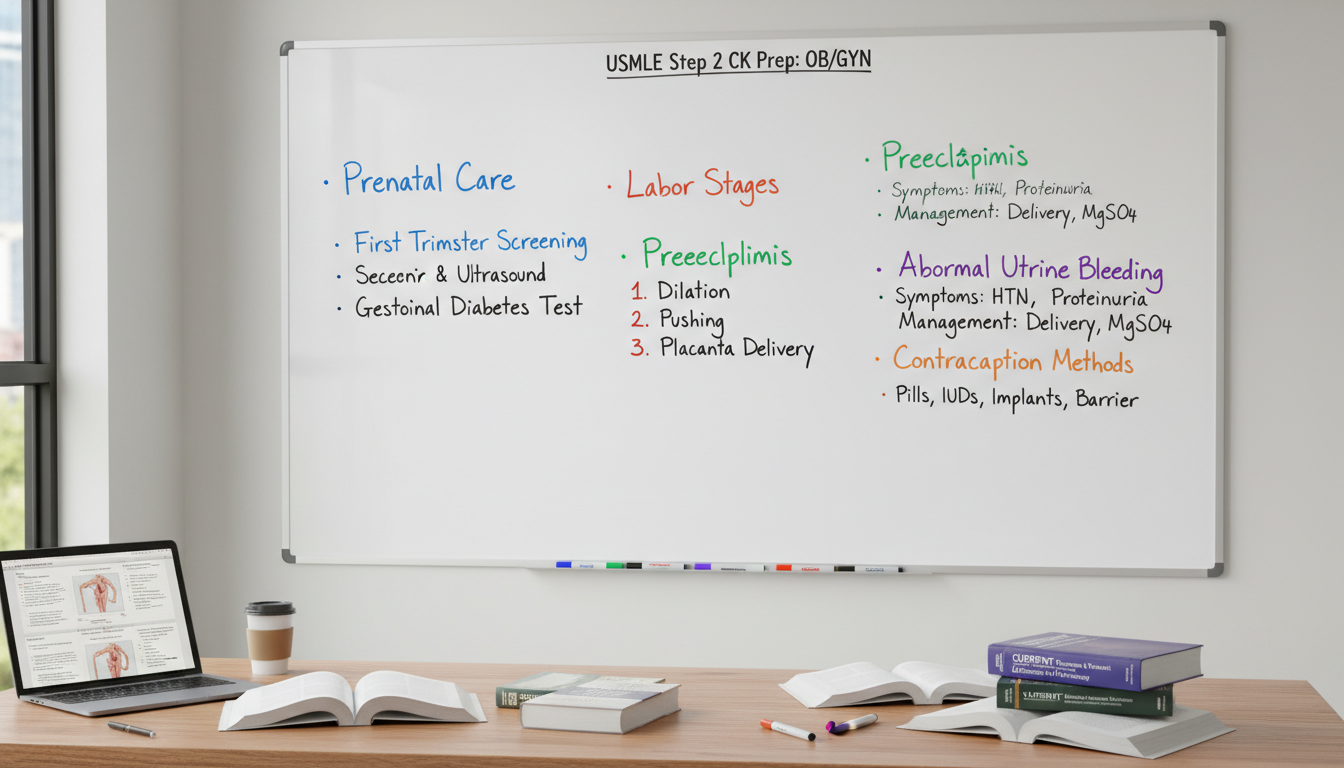
1. Normal Pregnancy and Prenatal Care
Know the timeline, labs, and routine care:
- Initial prenatal visit: baseline labs (CBC, type and screen, infectious disease screening, Pap if indicated)
- First-trimester screening:
- Aneuploidy screening options: combined test, cell-free DNA, chorionic villus sampling
- Second-trimester testing:
- Quad screen, anatomy ultrasound (18–22 weeks), gestational diabetes screening (24–28 weeks)
- Third-trimester care:
- GBS screening (35–37 weeks), vaccination (Tdap), monitoring high‑risk pregnancies
High-yield exam questions will ask: What is the next best test, at this gestational age, for this risk profile?
2. Hypertensive Disorders of Pregnancy
This is one of the most tested obstetric topics on Step 2 CK and extremely relevant for OB GYN residency.
You must confidently distinguish:
- Gestational hypertension
- Preeclampsia without severe features
- Preeclampsia with severe features
- Eclampsia
- Chronic hypertension vs superimposed preeclampsia
Key exam skills:
- Identify severe features (e.g., severe-range BP, thrombocytopenia, elevated LFTs, pulmonary edema, new-onset headache/visual changes, renal insufficiency).
- Decide between:
- Magnesium sulfate use (seizure prophylaxis in severe disease and eclampsia management).
- Delivery timing (e.g., 37 weeks vs immediate delivery in unstable/severe cases).
- Antihypertensive choice (labetalol, hydralazine, nifedipine).
3. Labor, Delivery, and Fetal Monitoring
Step 2 CK expects recognition of labor patterns and fetal heart rate (FHR) tracings.
You should know:
- Stages and phases of labor:
- Latent vs active phase
- Arrest of dilation vs arrest of descent definitions
- Indications for cesarean delivery (e.g., nonreassuring FHR, arrest disorders, malpresentation in certain contexts)
- FHR interpretation:
- Baseline, variability, accelerations, decelerations
- Early vs late vs variable decelerations
- Appropriate action for each (e.g., maternal repositioning, oxygen, stopping oxytocin, amnioinfusion, immediate c-section)
Expect many questions framed as: “What is the next best step in management of this fetal heart tracing in a woman at X weeks in labor?”
4. Obstetric Emergencies
You must be able to rapidly triage and manage:
- Postpartum hemorrhage:
- Causes: “4 Ts” – Tone, Trauma, Tissue, Thrombin
- First-line interventions: uterine massage, uterotonics, IV fluids, blood products
- Placental abruption vs placenta previa vs uterine rupture
- Shoulder dystocia and its maneuvers (McRoberts, suprapubic pressure, Wood’s screw)
- Amniotic fluid embolism, cord prolapse, uterine inversion
On Step 2 CK, these are classic “stabilize first” questions. Often, the correct answer is an immediate action (e.g., emergent cesarean, resuscitation measures) rather than ordering a diagnostic test.
5. Gynecologic Conditions and Pelvic Pain
Common tested topics:
- Abnormal uterine bleeding (AUB):
- PALM-COEIN classification
- Workup by age and risk factors
- When to biopsy endometrium vs observe vs treat medically
- Ectopic pregnancy:
- β-hCG trends, ultrasound findings, methotrexate vs surgery
- Pelvic inflammatory disease (PID):
- Diagnosis, outpatient vs inpatient antibiotic regimens, complications (tubo-ovarian abscess, infertility, ectopic risk)
- Endometriosis, fibroids, adenomyosis:
- Distinguishing features and initial treatment options
Step 2 loves algorithms like: “Reproductive-age woman, abnormal bleeding, pregnancy test result X, ultrasound findings Y—what’s the next best step?”
6. GYN Cancers and Screening
Expect questions on:
- Cervical cancer screening and management:
- Pap smear intervals
- When to perform colposcopy, excisional procedures, or repeat testing
- Endometrial cancer:
- Risk factors: obesity, unopposed estrogen, PCOS, early menarche/late menopause
- Who needs endometrial biopsy (e.g., postmenopausal bleeding, AUB >45 years, younger with risk factors)
- Ovarian cancer:
- Risk factors and protective factors (OCPs, multiparity)
- Adnexal mass evaluation, tumor markers in the right context
- Vaginal and vulvar neoplasia, especially with HPV associations
7. Contraception and Reproductive Planning
You need to be comfortable choosing best contraception options based on:
- Comorbidities (e.g., migraine with aura, history of VTE, hypertension, smoking >35)
- Postpartum status and breastfeeding
- Need for emergency contraception (timing and methods)
- Long-acting reversible contraception (IUDs, implants) indications and side effects
These are frequent Step 2 CK “patient counseling” style questions with subtle contraindications.
Building an Effective Step 2 Study Plan Focused on OB GYN
To prepare efficiently, integrate OB GYN into your overall USMLE Step 2 study rather than treating it as an afterthought. Below is a structure you can adapt to your timeline.

Step 1: Assess Your Baseline
Before designing your USMLE Step 2 study schedule:
- Take:
- A baseline NBME (if early in prep) or
- A block or two of UWorld Step 2 CK questions filtered to OB GYN.
- Identify:
- Whether you are weak in core obstetric management (e.g., preeclampsia, labor) vs.
- Complex gynecology (e.g., malignancies, endocrine disorders).
Use this to decide if you need extra OB GYN blocks in your study plan.
Step 2: Choose High-Yield Resources for OB GYN
You don’t need a shelf of books. For Step 2 CK preparation, the best strategy is depth in a few high-yield tools:
Primary resources:
UWorld Step 2 CK Qbank
- Mandatory. Do all OB GYN questions, ideally twice if OB GYN is your target specialty.
- Take detailed notes on:
- Management algorithms
- Contraindications to therapies
- Classic presentations
NBME practice exams
- Use them to track your global progress, but pay close attention to OB GYN sections. Review each OB GYN miss carefully.
Supplemental OB GYN references (optional but useful):
- A concise Step 2 CK text (e.g., Step-Up to Medicine’s OB GYN chapters or a similar high-yield review)
- Your OB GYN clerkship notes or shelf review book (if they are strong and structured)
Avoid spending excessive time on full-length OB GYN textbooks; they’re too detailed for USMLE Step 2 study.
Step 3: Integrate OB GYN into Your Weekly Schedule
Regardless of whether you’re in dedicated or concurrent with rotations, integrate OB GYN intentionally:
During non-OB rotations (IM, Surgery, etc.):
- Reserve 2–3 study blocks per week specifically for OB GYN.
- Example weekly structure:
- 1 block of 40 UWorld questions focused on OB GYN
- 1–2 hours reviewing OB GYN algorithms and notes
- 1 mini‑review session (20–30 minutes) of FHR tracings, hypertensive disorders, and postpartum complications
During your OB GYN rotation:
- Align USMLE Step 2 study with clinical exposure:
- Read about conditions you saw that day from a Step 2 perspective.
- Do OB GYN blocks in UWorld parallel to your cases (e.g., labor management after a day on L&D).
- Use the rotation to solidify your basics:
- Ask residents or attendings to explain real-life algorithms that overlap with exam content.
Step 4: Dedicated Period Strategy for OB GYN
During 4–8 weeks of dedicated Step 2 CK preparation:
- Front-load OB GYN early if it’s a relative weakness.
- Make sure you:
- Finish all OB GYN questions in UWorld at least once by mid-dedicated.
- Flag questions that teach you high-yield algorithms.
- In the last 10–14 days, do:
- Rapid review of:
- Prenatal care schedules
- Preeclampsia/eclampsia management
- AUB workups by age group
- FHR pattern responses
- Re-do select UWorld OB GYN questions (especially ones you previously missed).
- Rapid review of:
Goal: By test day, OB GYN should feel like a source of points, not anxiety.
High-Yield OB GYN Question Types on Step 2 CK (With Examples)
One of the best ways to optimize your USMLE Step 2 study is to recognize patterns in how OB GYN is tested. Below are common question types and how to approach them.
1. “Next Best Step in Management” in Pregnancy Complications
Example stem elements:
- 32-year-old G2P1 at 35 weeks with headache, BP 170/110, 2+ proteinuria, platelet count 90,000
- Asking: “Next best step in management”
Your thought process:
- This is likely preeclampsia with severe features (severe HTN, thrombocytopenia).
- At ≥34 weeks with severe features: stabilize and deliver.
- Answer choices may include:
- Start magnesium sulfate and plan for immediate delivery.
- Don’t delay for lung maturity steroids at this gestational age in an unstable/near-term severe disease.
2. Algorithm-Based Workup of AUB
Example stem elements:
- 48-year-old woman with heavy menstrual bleeding, obesity, no prior workup
- Stable vitals, negative pregnancy test
Key reasoning:
- Age >45 with AUB → endometrial biopsy regardless of ultrasound findings.
- If answer options include pelvic ultrasound, OCPs, and endometrial biopsy:
- Choose endometrial biopsy as next step.
3. Emergencies in the Delivery Room
Example stem elements:
- Patient in active labor suddenly has vaginal bleeding and fetal bradycardia.
- Uterus is tender and rigid.
Likely scenario: Placental abruption with nonreassuring FHR.
- Next step is often emergent cesarean delivery.
- Don’t get distracted by ordering tests when the clinical picture demands immediate action.
4. Contraceptive Choice with Comorbidities
Example stem:
- 37-year-old smoker (15 cigarettes/day) seeking contraception
- No contraindications to IUDs; wants long-term method
Rule to recall:
- Combined estrogen-progestin contraception is contraindicated in smokers ≥35 with heavy use.
- Best options:
- Progestin-only methods or
- Copper or levonorgestrel IUD.
The exam expects you to detect subtle contraindications early in the stem and choose safely.
5. Pregnancy-Related Infections and Prophylaxis
Common themes:
- GBS prophylaxis algorithms
- Management of HIV or hepatitis B in pregnancy
- Varicella, rubella status and postpartum vaccination
Example: A GBS-positive woman presenting in labor with penicillin allergy (rash vs anaphylaxis) → appropriate antibiotic selection (e.g., cefazolin, clindamycin, or vancomycin based on details).
Step 2 CK Score and the Obstetrics Match: How to Use OB GYN Strength Strategically
For OB GYN residency applicants, your Step 2 CK score often becomes the numerical centerpiece of your application. You can use your performance, particularly in OB GYN-related content, to strengthen your ERAS profile.
How Programs View Step 2 CK in OB GYN
While specific numbers change by cycle and program:
- Many OB GYN residencies informally use a Step 2 CK cutoff to screen applications.
- A strong Step 2 CK score (especially well above national mean) helps:
- Compensate for a weaker Step 1 (now pass/fail, but timing and context still matter).
- Draw attention if your school is less well known.
- Support your claim that OB GYN is the right specialty for you (especially if you highlight women’s health in your personal statement and experiences).
Even though programs don’t see subscores from USMLE, strong performance in OB GYN tends to correlate with solid clerkship grades and letters in the specialty, which interviewers will notice.
Timing Step 2 CK for Maximum Impact
If you’re applying for OB GYN:
- Aim to take Step 2 CK before ERAS is submitted, if possible.
- A strong score can boost your initial screen.
- It prevents programs from waiting to rank you contingent on a pending score.
- If you had a weaker Step 1 performance or academic concerns:
- A clear upward trend with a strong Step 2 CK is particularly helpful.
- Coordinate with:
- Your school’s academic advisor
- OB GYN mentors So your test timing works with letters of recommendation and sub-internships.
Showcasing Your OB GYN Interest Beyond the Score
Your USMLE Step 2 study obviously helps your exam results, but you can also:
- Use your OB GYN knowledge to excel on OB GYN rotations, which leads to:
- Strong evaluations
- Compelling letters of recommendation
- Discuss in interviews how:
- Preparing for Step 2 CK helped solidify your commitment to women’s health.
- You used exam prep to deepen knowledge in areas like maternal morbidity, reproductive justice, and high-risk pregnancy.
This ties your exam performance back to your clinical identity as a future OB GYN.
Practical Tips, Pitfalls, and Final Strategy Checks
To close, here are some concrete, actionable recommendations to sharpen your USMLE Step 2 study in OB GYN and avoid common mistakes.
Practical Study Tips
Create one master OB GYN summary document
- Include:
- Prenatal care tables (tests by gestational age)
- Hypertensive disorder criteria and treatments
- AUB workup by age and risk
- Key FHR patterns and responses
- Review this twice weekly in the last month before your exam.
- Include:
Practice with time pressure
- OB GYN questions often involve urgent management.
- Train yourself to recognize:
- When to act immediately (cesarean, magnesium, blood transfusion)
- When to observe vs investigate further.
Use clinical experience to your advantage
- On L&D, mentally frame patients as USMLE stems:
- “If this patient’s BP increased and platelets fell, what would Step 2 ask me to do?”
- This bridges exam content and real-life reasoning.
- On L&D, mentally frame patients as USMLE stems:
Anchor guidelines with “if–then” rules
- If pregnant woman ≥34 weeks with preeclampsia with severe features → deliver.
- If AUB in woman >45 years → endometrial biopsy.
- If postpartum hemorrhage unresponsive to uterotonics and massage → escalate to procedural or surgical interventions.
Common Pitfalls to Avoid
Memorizing lists without algorithms
Step 2 CK tests management sequences, not isolated facts. Always ask: “What comes next?”Neglecting gynecologic oncology and AUB
Many students overemphasize obstetrics and underprepare for endometrial and ovarian cancer workups and bleeding algorithms, which are frequent high-yield questions.Ignoring subtle contraindications
For contraception and pregnancy meds, small clinical details (like migraines with aura, history of DVT, severe penicillin allergy) can flip the correct answer.Cramming OB GYN at the very end
Integrate OB GYN early into your USMLE Step 2 study. You want pattern recognition, not last-minute memorization.
Final Strategy Check Before Test Day
In the last week before Step 2 CK, confirm that you can:
- Outline prenatal visit schedule and major screenings.
- Rapidly distinguish gestational hypertension, preeclampsia types, and eclampsia and choose the correct management.
- Interpret basic FHR tracings and name the first-line response.
- Work up AUB appropriately by age and risk.
- Pick safe contraception for patients with common comorbidities.
- Form a differential for pelvic pain in early pregnancy and manage ectopic pregnancy appropriately.
If you can do this quickly and confidently, OB GYN will likely become a scoring strength on your exam and a powerful asset for your OB GYN residency applications.
FAQs: Step 2 CK Preparation for OB GYN–Bound Students
1. How high should my Step 2 CK score be if I’m applying to OB GYN residency?
There is no universal “cutoff,” and ranges vary yearly and by program. In general:
- Aim to be at or above the national mean, and higher if your application has other weaknesses.
- A strong Step 2 CK score can:
- Offset a lower Step 1 or mid-range preclinical grades.
- Make you more competitive at university and academic programs. Use your school’s advising office and recent match data to set realistic score targets.
2. Do I need a separate OB GYN resource, or is UWorld enough?
For most students, UWorld Step 2 CK plus NBME practice exams provide sufficient OB GYN content. Adding a short OB GYN review book or your shelf notes can help if:
- You felt weak on your OB GYN rotation.
- Your question bank performance in OB GYN is consistently lower than other areas. But avoid overloading yourself with multiple full-length resources; depth in UWorld is more valuable.
3. Should I time Step 2 CK right after my OB GYN rotation if I want OB GYN?
If possible, yes—it’s helpful. Immediately after OB GYN, you’ll:
- Retain algorithms for labor, prenatal care, and complications more clearly.
- Feel more confident with women’s health questions. However, your overall Step 2 CK timing should also consider:
- When you finish core rotations
- Time needed for full-board prep
- ERAS deadlines
Discuss with an advisor to balance all these factors.
4. How can I show programs that my strong OB GYN performance on Step 2 CK isn’t just “book knowledge”?
Use your application to connect the two:
- Highlight examples of applying OB GYN knowledge clinically (e.g., cases on L&D, QI projects on postpartum hemorrhage, research in maternal-fetal health).
- Ask letter writers to mention:
- Your strong clinical reasoning
- How your medical knowledge translated into safe patient care.
- In interviews, mention how USMLE Step 2 study in OB GYN pushed you to think like a future OB GYN resident, not just an exam taker.
Done well, Step 2 CK preparation in obstetrics and gynecology becomes both a path to a strong score and an early investment in the skills you’ll need on day one of residency.