


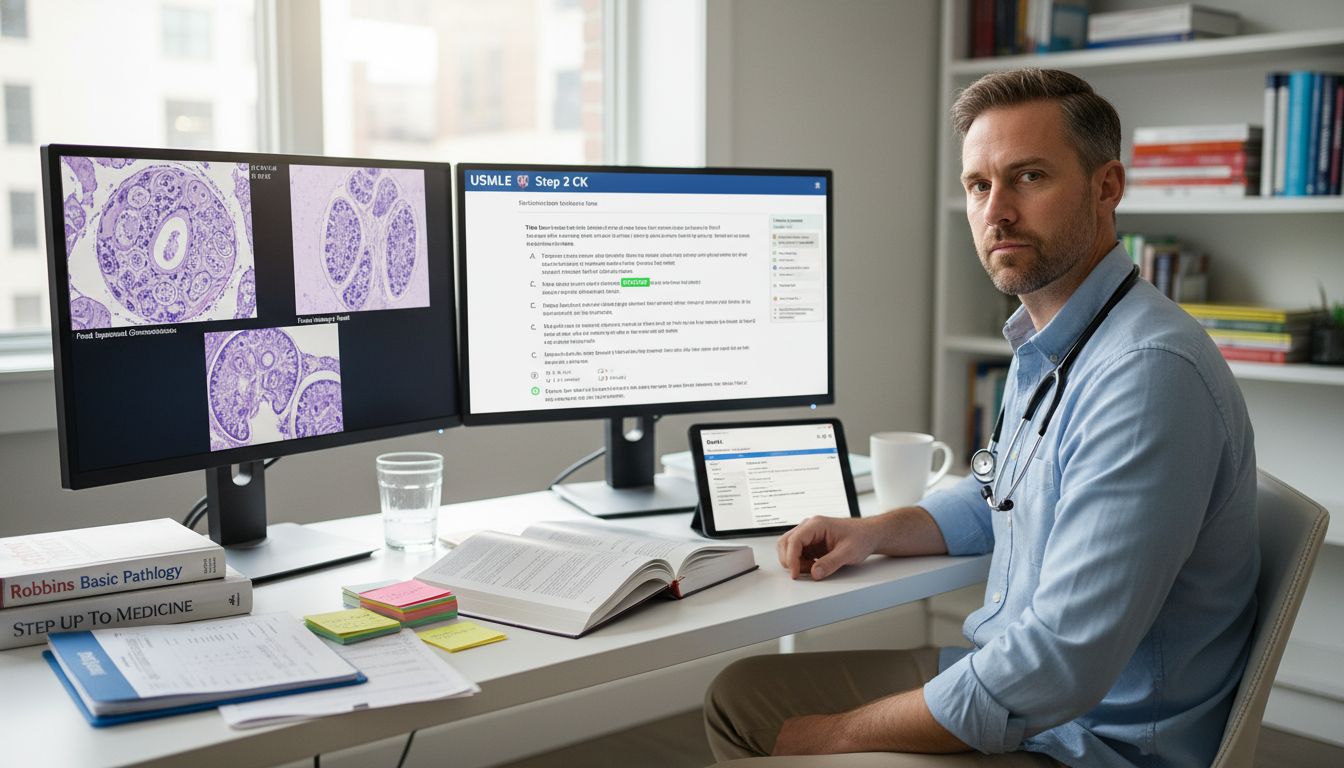
Preparing for USMLE Step 2 CK as a future pathologist can feel paradoxical: you’re drawn to microscopes, tissue sections, and lab medicine, yet Step 2 CK is dominated by clinical decision-making, management algorithms, and patient-facing scenarios. But doing well on Step 2 CK matters, both for the pathology match and for your overall competency as a physician.
This guide will help you approach USMLE Step 2 CK preparation strategically as a pathology-focused student, connecting your study plan with your long-term goal: a successful pathology residency and a strong application in the pathology match.
Why Step 2 CK Matters for Future Pathologists
The role of Step 2 CK in pathology residency applications
Pathology has a reputation as a “less competitive” specialty, but that view is oversimplified. In recent years:
- More applicants are exploring pathology as a lifestyle-friendly, intellectually rich specialty.
- Some programs are increasingly selective, especially academic and research-heavy departments.
- With Step 1 now Pass/Fail, Step 2 CK score is often the only standardized numerical metric.
Program directors in pathology report that they value:
- Demonstrated academic performance (including Step 2 CK)
- A solid understanding of clinical medicine
- Evidence that you can integrate lab data with patient care
Even though pathologists do not routinely manage medications or perform bedside procedures, they are consultants in diagnosis and key players in tumor boards, transfusion decisions, and complex diagnostic challenges. Step 2 CK tests exactly the kind of clinical reasoning and understanding of disease processes that will make you a better pathology resident and colleague.
When is Step 2 CK especially important?
Step 2 CK tends to carry extra weight if:
- Your Step 1 was borderline or required multiple attempts.
- You are a non-U.S. international medical graduate (IMG) and need to stand out numerically.
- You are applying to highly academic pathology programs in competitive locations.
- You had weaker pre-clinical basic science grades but improved in clinical rotations.
In these situations, a strong Step 2 CK score can help reassure programs that you can handle rigorous training and complex medical information.
Understanding Step 2 CK Through a Pathology Lens
Step 2 CK is not a pathology exam, but it is fundamentally about applied pathophysiology + clinical decision-making. Thinking like a pathologist can actually sharpen your performance.
Exam structure and content overview
USMLE Step 2 CK typically includes:
- ~8 blocks of questions over a 9-hour testing day
- 40 questions per block (maximum), mostly clinical vignettes
- Focus on diagnosis, next best step in management, and prognosis
High-yield domains include:
- Internal Medicine (largest portion)
- Surgery
- Pediatrics
- Obstetrics and Gynecology
- Psychiatry and Neurology
- Emergency medicine, critical care, ethics, and patient safety
From a pathology perspective, each vignette gives you data you’d see in clinical practice:
- Lab values (CBC, CMP, coagulation panels, autoantibodies)
- Imaging reports
- Biopsy and cytology descriptions
- Microbiology results (cultures, Gram stains, sensitivities)
Your task is not just to recognize the disease but to use this data to decide what happens next.
How pathology thinking can boost your Step 2 CK performance
As a future pathologist, you can leverage your strengths:
Pattern recognition in lab data
- Use your understanding of pathophysiology to interpret abnormal labs:
- Microcytic anemia with low iron and ferritin → iron deficiency, think source of blood loss.
- Isolated prolonged PTT that corrects with mixing → factor deficiency, not inhibitor.
- Use your understanding of pathophysiology to interpret abnormal labs:
Diagnostic reasoning
- Ask: “What pathological process best explains this constellation of findings?”
- Think in categories: inflammatory, neoplastic, degenerative, congenital, infectious.
Connecting pathology to management
- The exam often tests: “You’ve identified the pathology—now what?”
- Example: You recognize a thrombotic microangiopathy pattern → next best step is plasma exchange for TTP, not platelet transfusion.
High-yield pathologic clues in vignettes
- Biopsy buzzwords remain important:
- “Crushed lymphocytes, smudge cells” → CLL
- “Granulomas with caseous necrosis” → TB
- But Step 2 CK is more about what to do once you see them.
- Biopsy buzzwords remain important:
Building an Effective Step 2 CK Study Plan (With Pathology in Mind)
Step 1: Establish your timeline
A typical schedule:
- Total dedicated time: 4–8 weeks full-time, or 8–12 weeks part-time if combined with rotations.
- For most students aiming for pathology:
- If your goal is to be comfortably above the passing threshold and solidly average: 4–6 weeks of focused study.
- If you want a stand-out score (especially if other parts of your application are weaker): 6–8+ weeks.
Key considerations:
- When does ERAS open and when will your pathology residency programs see your score?
- Plan to take Step 2 CK no later than August–September of application year for most cycles, earlier if you need a retake buffer.
Step 2: Core resources for USMLE Step 2 CK preparation
Question Banks (Primary Tools)
- UWorld Step 2 CK QBank
- Non-negotiable mainstay; treat it as your curriculum.
- Use tutor mode early, then timed random later.
- Aim to complete at least 1 full pass (75–100% of questions), 1.2–1.5 passes if you have time.
- Optional secondary QBank (AMBOSS, Kaplan) if you start early or finish UWorld.
- UWorld Step 2 CK QBank
Comprehensive Review Resources
- Online MedEd (OME) or similar video series
- Excellent for building a big-picture framework, especially for medicine and surgery.
- NBME practice exams
- Crucial for assessment and calibration.
- Take 2–4 NBMEs during prep.
- Online MedEd (OME) or similar video series
Step 2 CK-Style Books
- Some students use:
- Master the Boards Step 2 CK
- Step-Up to Medicine (for IM emphasis)
- Use selectively—don’t sacrifice QBank time for reading.
- Some students use:
Spaced-Repetition Flashcards (Anki or similar)
- Ideal for memorizing:
- Management algorithms
- Drug side effects and contraindications
- Diagnostic criteria (e.g., depression, ADHD, SIRS/sepsis)
- You can add cards specifically linking pathology concepts to clinical management.
- Ideal for memorizing:
Step 3: Integrate clinical and pathology learning
You’re not taking a pathology board exam yet, but you can subtly align your Step 2 CK preparation with pathology interests:
- When reviewing a question, ask:
- “What test did the clinician order that involved pathology (biopsy, smear, cytology, PCR, flow cytometry)?”
- “What pathology findings would I expect to see?”
- “Could a pathologist’s input change the management of this case?”
Example:
A vignette shows an elderly patient with unintentional weight loss, microcytic anemia, and positive fecal occult blood.
- Step 2 CK tasks: recognize need for colonoscopy, consider colon cancer, plan staging and treatment.
- Pathology overlay: think about polyp types, adenoma-carcinoma sequence, mismatch repair status, and how your future specialty would guide molecular testing reports and prognosis.
Daily Study Routines and Strategies for High-Yield Learning
Structuring your day
In dedicated study mode, a balanced daily schedule might look like:
- 6–8 blocks of 10–15 UWorld questions (60–80/day)
- 2–3 hours of review of missed and challenging questions
- 1–2 hours of targeted content review or videos
- 30–45 minutes of flashcards (Anki)
If you’re on a clinical rotation while studying (often the case as you approach Step 2 CK):
- Weekdays:
- 20–40 UWorld questions in the evening
- 15–30 minutes flashcards
- Weekends:
- 60–80 questions per day
- Longer review and maybe 1–2 lectures/videos
How to review Step 2 CK questions effectively
Simply checking the correct answer is not enough. For pathology-bound students, use each question to deepen your understanding of:
Why each wrong answer is wrong
- Think of each distractor as a separate mini-case.
- Example: In a question about DKA, wrong options may include causes of HHS, lactic acidosis, or alcohol ketoacidosis.
What pathology finding underlies the clinical picture
- If the question is about nephrotic syndrome management, review the histologic patterns (minimal change, FSGS, membranous, etc.), even if the exam emphasizes ACE inhibitors and diuretics.
Create mini framework notes
- Not more than 2–3 bullet points per challenging question:
- “New onset nephrotic syndrome in child → minimal change disease → treat with steroids; biopsy only if atypical.”
- Not more than 2–3 bullet points per challenging question:
Over time, you will build a clinically oriented pathology map in your mind.
Applying the “next step” mindset
Step 2 CK loves “What is the next best step in management?” questions. For each disease:
- Think in this sequence:
- Stabilize the patient (ABCs, immediate interventions).
- Identify the key diagnostic test (sometimes pathology-based).
- Determine first-line therapy and alternatives.
- Know when to refer for surgery, oncology, or specialty care.
Example:
A 55-year-old smoker with painless hematuria.
- Step 2 CK:
- Next step: CT urography or cystoscopy (depending on details).
- Likely diagnosis: bladder cancer.
- Next: TURBT, staging, and possibly intravesical therapy.
- Pathology overlay:
- You’ll one day evaluate the resected tumor, grade it, and guide adjuvant therapy.

Assessments, Score Targets, and Pathology Match Strategy
Using NBMEs and practice tests wisely
NBME forms and other comprehensive exams (e.g., UWorld self-assessments) are your best predictors of Step 2 CK performance.
Sample schedule:
- 3–4 weeks before the exam: First NBME to benchmark.
- 2 weeks before: Second NBME; adjust study strategy based on weak areas.
- 1 week before: Final NBME or self-assessment; make go/no-go decision.
Track:
- Total score and subscores by discipline (e.g., medicine, surgery, OBGYN).
- Specific topics you consistently miss (e.g., OB triage, pediatric developmental milestones, psych pharmacology).
Focus remediation here, not on re-reading entire textbooks.
What Step 2 CK score should you aim for as a pathology applicant?
There is no universal cutoff, but general guidelines:
Pass–Low 220s range:
- May be acceptable for community-based pathology programs, especially with strong letters, pathology exposure, and U.S. clinical experience.
- Riskier if you’re an IMG or have other academic red flags.
Mid–High 220s to low 240s:
- Competitive for many pathology programs, particularly if combined with strong CV (research, publications, pathology electives).
245+:
- Moves you into a strong position even for academic/university programs.
- Particularly valuable if Step 1 was modest, or if you’re an IMG.
Remember: programs evaluate your entire application, including:
- Pathology-related experiences (electives, observerships, research)
- Letters of recommendation from pathologists
- Personal statement with a clear narrative
- Clinical performance and professionalism
But a solid Step 2 CK score can stabilize and strengthen the whole package.
If your Step 2 CK practice scores are low
If NBMEs are not where you want them:
Delay the exam if feasible
- A 2–4 week delay can meaningfully change your score if used strategically.
Identify 2–3 highest-yield weak areas
- For most students: OB triage, psychiatry, pediatric vaccinations/ milestones, or surgical management pearls.
Use high-yield targeted resources
- Short OB/GYN and pediatrics review videos
- Focused notes or decks (e.g., vaccine schedules, prenatal care, postpartum complications)
- Ethics and communication practice questions (often easy points once you know patterns).
Commit to daily deliberate practice
- 40–60 focused questions on your weak domains
- Immediate review
- Brief notes/flashcards for any concept you still can’t explain clearly to yourself
Connecting Step 2 CK Prep to Your Future in Pathology
Clinical knowledge makes you a better pathologist
As a pathologist, you will:
- Present at tumor boards where decisions hinge on your interpretation of biopsy results.
- Collaborate with clinicians on complex diagnostic dilemmas.
- Interpret lab results in the clinical context (e.g., autoimmune panels, coagulation assays, molecular tests).
Strong clinical understanding—cemented through rigorous USMLE Step 2 study—will:
- Improve your ability to provide actionable pathology reports.
- Help you recognize when a diagnosis doesn’t fit the clinical syndrome and raise red flags.
- Earn you credibility and respect from surgical, medical, and oncology teams.
Highlighting Step 2 CK strengths in your application
Consider ways to reflect your clinical engagement in your application:
- Mention a capstone clinical experience tied to pathology:
- Example: an internal medicine sub-internship where you regularly followed up on biopsy and lab results, participated in multidisciplinary rounds, or liaised with pathology.
- If your Step 2 CK score is particularly strong, you don’t need to brag, but you can emphasize:
- “My performance in clinically oriented exams, including Step 2 CK and core clerkships, reflects a strong foundation in clinical reasoning that I look forward to bringing into a diagnostic pathology role.”
Balancing pathology-specific preparation with Step 2 CK
You may be tempted to spend your free time during dedicated on pure pathology (e.g., surgical pathology atlases, hematopathology books). During Step 2 CK prep:
- Keep your focus primarily on exam-related resources, but:
- You can choose practice questions with richer lab and path content.
- When something pathology-related appears (e.g., leukemia classification, liver failure etiologies), spend an extra minute tying it to your future specialty.
After Step 2 CK is done, you can pivot into more targeted pathology readings and electives with the confidence that your clinical base is strong.
FAQs: USMLE Step 2 CK Preparation for Aspiring Pathologists
1. Do I need a very high Step 2 CK score to match into pathology?
No, pathology typically does not require the same extremely high scores seen in dermatology or neurosurgery. However, with Step 1 now Pass/Fail, Step 2 CK has become an important metric. A solid passing score in the mid–high 220s is often sufficient for many programs if the rest of your application is strong. A 245+ can significantly boost your competitiveness, especially for academic programs or if you have other weaknesses in your file.
2. Should I study pathology-specific textbooks for Step 2 CK?
Not during dedicated Step 2 CK preparation. Use your time on high-yield Step 2 CK resources—primarily question banks, practice exams, and concise review tools. Deep-dive pathology texts are better reserved for after the exam or during pathology electives and residency. During Step 2 CK prep, it is enough to layer pathology thinking onto clinical resources rather than using pathology-only texts.
3. How can I use my interest in pathology to improve my Step 2 CK performance?
Use your pathology interest as a strength:
- Pay special attention to lab values, biopsy descriptions, and microbiology results in vignettes.
- For each case, ask what underlying pathology explains the findings and how that pathology drives management.
- Create quick conceptual links: for example, connect anemia patterns with bone marrow findings, or autoimmune pathology with specific antibody tests and organ involvement.
This will deepen understanding rather than rote memorization, which improves both Step 2 CK performance and future pathology proficiency.
4. When should I schedule Step 2 CK relative to applying for pathology residency?
Aim to complete Step 2 CK by late summer (July–August) of your application year so your score is available when ERAS opens and programs begin reviewing files. If you anticipate difficulty or want a buffer for a possible retake, consider an earlier date (May–June). Coordinate with your clinical rotations so you have at least 4–6 weeks of focused or semi-dedicated time to prepare thoroughly.
Preparing for Step 2 CK as an aspiring pathologist is not just about checking a box; it’s an opportunity to build the clinical framework that will make you a far more effective diagnostician. By approaching your USMLE Step 2 study with both exam success and future pathology practice in mind, you can turn this challenge into a long-term asset for your career and your patients.




















