
Understanding Step 2 CK as an IMG Interested in Neurology
USMLE Step 2 CK sits at the center of your residency application strategy, especially if you are an international medical graduate (IMG) targeting neurology residency in the United States. After Step 1 became pass/fail, your Step 2 CK score is now one of the most critical quantitative metrics programs see when evaluating applicants for the neurology match.
For an IMG residency guide tailored to neurology, you need to appreciate not just how to prepare, but what score range and preparation approach are realistic and strategic.
Why Step 2 CK Matters So Much for Neurology Applicants
Objective comparison tool
- With Step 1 pass/fail, Step 2 CK has become the main standardized number programs use.
- For neurology, where cognitive skills, clinical reasoning, and comfort with neuro-emergencies are crucial, program directors look closely at your Step 2 CK performance in neurology-related content (neuro, psych, internal medicine).
Signal of clinical readiness
- Step 2 CK tests clinical judgment, patient safety, and the ability to manage real-world scenarios—core skills for neurology interns handling stroke codes, seizure emergencies, and encephalopathy workups.
Particularly important for IMGs
- As an international medical graduate, your medical school, grading system, and clinical exposure may be less familiar to U.S. program directors.
- A strong Step 2 CK score indicates you can perform at or above the level of U.S. graduates in a standardized setting.
Impact on neurology residency competitiveness
While specific “cutoffs” vary by program and year, broad Step 2 CK score ranges can be loosely categorized as:- ≥255: Very strong for neurology, even at highly competitive academic and research-heavy programs
- 245–254: Competitive at many university programs and most community programs
- 235–244: Reasonable for many programs, especially if supported by research, strong letters, and neurology electives
- <235: Still possible to match into neurology, but your application will rely more heavily on other strengths (U.S. clinical experience, strong LORs, research, compelling personal story)
These are not hard cutoffs, but they help you calibrate your target Step 2 CK score and the intensity of your USMLE Step 2 study effort.
Core Components of an Effective Step 2 CK Study Strategy
Before diving into neurology-specific preparation, you need a solid global approach to Step 2 CK preparation as an IMG.
1. Clarify Your Timeline and Baseline
Ideal timeline for IMGs targeting neurology:
- 6–9 months total from start of serious study to exam date, especially if:
- You’re working or in internship/house job
- You have gaps in U.S.-style clinical reasoning or documentation
- You need more foundation review in internal medicine and neurology
A typical structure:
Phase 1 – Foundation & Content Review (2–3 months)
Focus: Build/refresh core knowledge in internal medicine, neurology, psychiatry, pediatrics, OB/GYN, surgery, and ethics.Phase 2 – Intensive Qbank & Systems Integration (2–3 months)
Focus: High-volume question practice + targeted weak-area review.Phase 3 – Exam Simulation & Refinement (4–8 weeks)
Focus: Full-length practice exams, timing, endurance, and boosting weak subspecialties (including neurology).
2. Assess a Baseline and Set a Realistic Target
If feasible, start with:
- One NBME self-assessment or a UWorld self-assessment
- Or a diagnostic block of 80–120 questions in UWorld Step 2 CK
Interpretation:
- Baseline equivalent <215–220: You likely need 6+ months of structured USMLE Step 2 study.
- Baseline 220–235: 4–6 months of focused prep may be enough to achieve a competitive neuro match score.
- Baseline >235: 3–4 months of concentrated effort may position you well above average, especially with smart neurology-focused preparation.
Your target score should be based on:
- Historical neurology match data (NRMP Charting Outcomes)
- The competitiveness of your target programs (community vs. large academic centers)
- Your overall profile (visa needs, research, clinical experience)

Building a High-Yield Resources Plan (with a Neurology Focus)
You do not need every resource. You need a coherent, manageable set and a clear approach to using them.
1. Primary Question Bank
UWorld Step 2 CK should be your main question bank.
Use it as:
- Your core learning tool, not just an assessment tool
- A way to practice U.S.-style clinical reasoning, not just fact recall
Recommended strategy:
- Aim for 1.5–2 passes if starting early, or 1 pass with detailed review if time is limited.
- Study in timed, random mode after the first 4–6 weeks, to mimic exam conditions.
- Flag neurology, internal medicine, and psychiatry questions related to:
- Stroke / TIA
- Seizures / status epilepticus
- Neuromuscular junction disorders (MG, LEMS, botulism)
- Demyelinating disease (MS, ADEM)
- Headache syndromes
- Peripheral neuropathies and myopathies
- Encephalopathy, coma, and brain death
- Neuroimaging interpretation and localization
2. Supplemental Question Sources
If you finish UWorld early or want additional practice:
- Amboss Step 2 CK Qbank
- Excellent for deepening knowledge, particularly in neurology and internal medicine.
- Use it especially for:
- Localizing lesions based on clinical findings
- Distinguishing similar neuro-syndromes (e.g., MS vs. NMO vs. small vessel ischemia)
- NBME practice exams
- Crucial for score prediction and style familiarity.
- Use at least 2–3 NBMEs in the final 6–8 weeks.
3. Content Review Resources
For broad Step 2 CK preparation:
- Online MedEd (videos + notes)
- Good for internal medicine, OB/GYN, pediatrics, surgery, and basic neurology.
- Step-Up to Medicine or similar references
- Useful if your internal medicine foundation is weaker.
For neurology-specific reinforcement:
- Case Files: Neurology or Blueprints Neurology (optional but helpful)
- Use selectively for building structured clinical approaches (stroke, headache, seizure, dementia, movement disorders).
- Neuroanatomy and localization
- Some IMGs benefit from a brief, focused neuroanatomy refresher (e.g., concise review chapters or online modules) to improve lesion localization questions.
4. Ethics, Communication, and Systems-Based Practice
U.S. neurology residents deal heavily with capacity, end-of-life decisions, family discussions, and safety:
- Use UWorld, AMBOSS, and NBME forms to flag:
- Ethics questions (consent, confidentiality, autonomy, surrogate decision-making)
- End-of-life and palliative care scenarios (common with neurodegenerative diseases)
- Patient safety, systems errors, and quality improvement
These are heavily tested and often yield relatively “easier” points if you understand the patterns.
Structuring Your Weekly Study Plan as an IMG
You need a realistic structure that accounts for clinical duties, time zone differences, and sometimes visa or work constraints.
1. Example 6-Month Plan (IMG with Part-Time Clinical Work)
Months 1–2: Foundation + Systematic Review
Daily (5–6 days/week):
- 20–30 UWorld questions (tutor mode initially, system-based)
- 2–3 hours of content review (Online MedEd, notes, or text)
- 30–45 minutes revisiting tricky neurology topics (e.g., stroke algorithms, seizure classification)
Weekly:
- One longer review session for neurology and internal medicine (4–5 hours)
- Begin a neurology “error log” to track frequently missed concepts.
Months 3–4: Intensive Qbank + Integration
Daily:
- 40–60 UWorld questions (timed, mixed)
- 2–3 hours detailed review of UWorld explanations
- 30–45 minutes flashcards or spaced repetition for high-yield topics (stroke, seizure, demyelinating disease, neuromuscular junction disorders, dementia workup, encephalitis vs. encephalopathy)
Every 2–3 weeks:
- One NBME or UWorld self-assessment
- Review all neurology and internal medicine questions missed.
Months 5–6: Simulation, Refinement, and High-Yield Review
Daily (5–6 days/week):
- 40–80 questions in exam-like conditions (differs day to day)
- Strict timing practice (1 minute 15 seconds per question)
- Targeted neurology, psychiatry, and ethics review sessions.
Every 1–2 weeks:
- Full-length simulated exam (7–8 blocks)
- Post-exam review day focusing on patterns of error, especially in neurology-related content.
2. Managing Study While in Internship/House Job
If you are doing an internship or house job:
- Accept a longer, more flexible timeline (8–9 months).
- Use short, high-yield sessions on weekdays (questions only) and longer review blocks on weekends.
- Consider:
- Weekdays: 20–30 questions/day + 30–45 minutes review.
- Weekends: 60–80 questions/day + 3–4 hours review.
Consistency is far more important than occasional “marathon” days, especially when you are balancing clinical responsibilities.
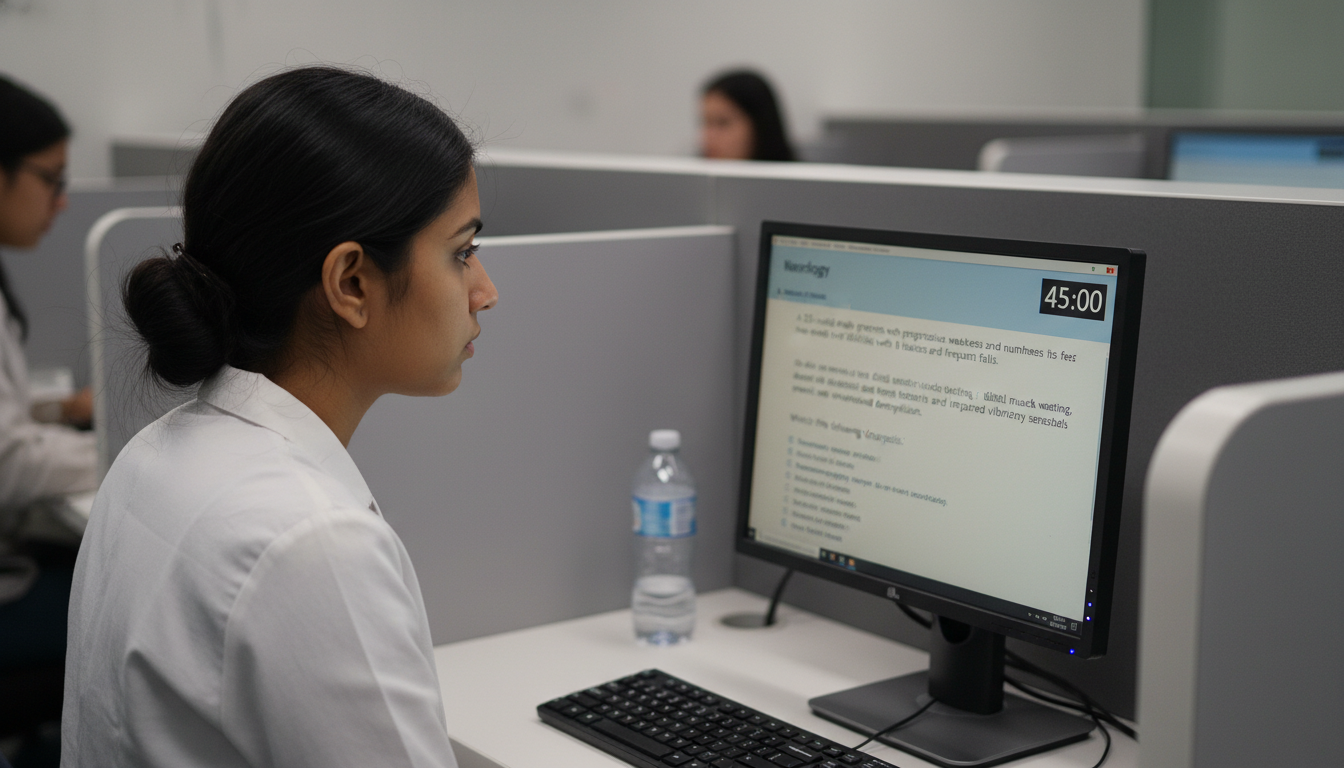
Neurology-Focused Strategies for Step 2 CK
Even though Step 2 CK is not a neurology exam, neurology and related domains (psychiatry, internal medicine, emergency care) play a central role. If you aim for neurology residency, you should treat neurology questions as must-win points.
1. Master Neurologic Emergencies
Step 2 CK heavily tests acute management. High-yield areas:
Acute Ischemic Stroke
- Time windows for IV thrombolysis and mechanical thrombectomy
- Contraindications to tPA
- Expected findings on CT vs. MRI
- Post-tPA blood pressure and monitoring protocols
- Secondary prevention (antiplatelets, statins, BP targets)
Intracerebral and Subarachnoid Hemorrhage
- Initial stabilization: ABCs, BP control, reversal of anticoagulation
- Indications for neurosurgical intervention (e.g., cerebellar hemorrhage)
- Nimodipine in SAH; screening for vasospasm and rebleeding prevention
Status Epilepticus
- Stepwise management: benzodiazepines → IV anti-seizure meds → anesthetic agents
- Workup for cause: metabolic, infectious, structural, toxic
Spinal Cord Compression & Cauda Equina
- Warning signs (urinary retention, saddle anesthesia, rapidly progressive weakness)
- Urgent MRI and early high-dose steroids when appropriate
- Urgent neurosurgical consultation
Acute Neuromuscular Weakness
- GBS vs. myasthenic crisis vs. botulism vs. Lambert-Eaton
- When to intubate (vital capacity, signs of respiratory failure)
- Role of IVIG, plasmapheresis, and steroids
Approach these topics with algorithms in mind. Many acute neurology questions are pattern-based and reward a clear, stepwise response.
2. Develop Strong Neuro-Localization Skills
A recurring theme in neurology residency and on Step 2 CK is the ability to localize lesions based on history and examination.
Key localization patterns to master:
- Cortical vs. subcortical vs. brainstem vs. spinal cord vs. peripheral nerve vs. muscle
- Hemispheric strokes: aphasia, neglect, homonymous hemianopia, gaze deviations
- Brainstem lesions: crossed findings (ipsilateral cranial nerve deficits, contralateral motor/sensory deficits)
- Spinal cord syndromes: anterior spinal artery vs. posterior cord vs. central cord vs. Brown-Sequard
- Peripheral neuropathy patterns: length-dependent vs. mononeuritis multiplex vs. entrapment neuropathies
During UWorld and NBME neuro questions, explicitly ask yourself:
“Where is the lesion?” before choosing the answer.
3. Understand Chronic Neurologic Disease Management
Neurology residency will expect you to be comfortable with long-term management, especially in:
- Epilepsy:
- Choosing first-line anti-seizure meds based on seizure type, comorbidities, pregnancy status
- Side effect profiles and drug interactions
- Multiple Sclerosis:
- Relapsing-remitting vs. progressive forms
- Acute relapse treatment (IV steroids, plasma exchange)
- Disease-modifying therapy basics (when to escalate)
- Parkinson’s disease and movement disorders:
- Medication titration (levodopa, dopamine agonists, MAO-B inhibitors)
- Management of medication side effects (dyskinesias, psychosis, orthostatic hypotension)
- Dementia syndromes:
- Differentiating Alzheimer, vascular, Lewy body, and frontotemporal dementias
- Managing behavioral and psychological symptoms
- Headache disorders:
- Red flag vs. primary headaches
- Acute and preventive therapies (migraine, cluster, tension-type)
These topics show up in Step 2 CK vignettes as outpatient visits, follow-ups, or medication adjustment questions. For an aspiring neurologist, these should be “easy points” once you know the frameworks.
4. Integrate Psychiatry and Neurology
Many vignettes blur the line between neurology and psychiatry:
- Functional neurological disorder vs. true neurological disease
- Neurocognitive disorders vs. primary psychiatric illness
- Post-stroke depression, psychosis in Parkinson’s disease, behavioral variant FTD
Take time to cross-review psychiatric disorders and how neurologic diseases can present with or mimic psychiatric conditions. This dual understanding will serve you in both Step 2 CK and future neurology training.
5. Use Your Neurology Interest Strategically in Prep
As an IMG targeting neurology residency:
- Pay extra attention to neurology and neurology-adjacent content in your question banks.
- Analyze why you miss neurology questions:
- Knowledge gap vs. mislocalization vs. misreading vs. poor time management.
- Convert your preparation into interview talking points:
- For example, “While preparing for Step 2 CK, I found neuro-localization particularly interesting, and it motivated me to deepen my understanding through supplementary neurology texts…”.
This reinforces to program directors that your neuro match goals are reflected in your preparation and mindset.
Test Day Strategy, Endurance, and Mindset
A strong content base can be undermined by poor execution on exam day. As an IMG, test-day unfamiliarity (computer-based testing centers, long exam format, strict rules) can add extra stress.
1. Simulate the Real Exam Environment
In the last 4–6 weeks:
- Do at least 2 full-length simulations (7–8 blocks, 40 questions/block) in:
- Timed mode
- Same start time as your actual exam
- With scheduled 5–10-minute breaks
Use these simulations to:
- Experiment with your break strategy (e.g., 1 longer break mid-exam vs. multiple shorter breaks).
- Practice nutrition and hydration: what you’ll eat and drink to maintain focus and avoid GI discomfort.
2. Time Management on Step 2 CK
Target pace: ~1 minute 15 seconds per question.
Tips:
- Early in each block, answer straightforward questions quickly (~45–60 seconds) to “bank” time.
- Flag difficult questions and move on; don’t spend >2 minutes stuck on one item.
- If two options are clearly wrong, choose between remaining ones by asking:
- “What is the next best step in management, not just a reasonable step?”
- “What would I do first in real life for this patient at this moment?”
3. Managing Anxiety and Fatigue
As an international medical graduate under heavy pressure for a strong Step 2 CK score:
- Normalize test anxiety: almost everyone experiences it.
- Build mental stamina through practice blocks, not just reading.
- Use brief pre-exam routines:
- 3–5 minutes of slow, deep breathing.
- Brief visualization of success and calm performance.
- A reminder that even if you miss some questions, overall performance is what matters.
Remember: You do not need 100% to achieve a very competitive Step 2 CK score. You need consistent, solid performance across blocks.
FAQs: Step 2 CK Preparation for IMGs Targeting Neurology
1. What Step 2 CK score should an IMG aim for to be competitive in neurology residency?
There is no official cutoff, but many successful IMG applicants to neurology have Step 2 CK scores in the 240–255 range or higher. Scores ≥250 are particularly strong for academic and research-oriented programs. However, IMGs with scores in the 230s can still match well, especially with U.S. clinical experience in neurology, strong letters, and research. Focus on achieving the highest score you can reasonably reach based on your baseline and time.
2. How early should I take Step 2 CK in relation to the neurology match?
Most programs prefer to see a Step 2 CK score before ranking applicants, and many before they offer interviews. Ideally, you should take Step 2 CK by late spring or early summer of the application year so your score is available when ERAS opens. As an IMG, it is safer not to delay too close to application deadlines, because late scores can limit your interview chances.
3. Do I need neurology-specific resources beyond UWorld and NBME exams?
You can achieve an excellent Step 2 CK score with UWorld + NBMEs + a solid general review resource. However, if neurology is a weaker area for you, or you want to leverage your neuro interest to maximize your Step 2 performance, then targeted resources like Case Files Neurology, Blueprints Neurology, or a short neuroanatomy refresher can be very helpful. These are supplements, not replacements, for high-yield Step 2 CK resources.
4. How should I balance Step 2 CK preparation with research and electives for neurology?
Step 2 CK remains a high-priority component of your neurology residency application. If forced to choose between extensive research and a significantly better Step 2 CK score, most IMGs benefit more from investing in a stronger Step 2 CK performance. Ideally:
- Prepare and sit for Step 2 CK early enough to free time for neurology electives and research.
- Use your USMLE Step 2 study to sharpen clinical reasoning that will also impress attendings during neurology rotations.
- Coordinate with mentors to plan research timelines around your intensive Step 2 preparation phases.
By building a structured, neurology-aware USMLE Step 2 CK preparation plan tailored to the realities of being an international medical graduate, you not only raise your Step 2 CK score, but also align your study habits with the clinical reasoning and neuro-emergency thinking you’ll need as a future neurology resident.