
Understanding Step 2 CK as a US Citizen IMG Aiming for Preliminary Surgery
As a US citizen IMG (American studying abroad), USMLE Step 2 CK is often your single most important metric for preliminary surgery residency. Program directors know your medical school may be less familiar to them, so they lean heavily on objective data—particularly your Step 2 CK score—when screening applications.
For a prelim surgery year, Step 2 CK matters in three ways:
Getting interviews at all
Many surgery programs use number-based filters. Even for preliminary surgery year positions, a low Step 2 CK score (or many failures) can quietly eliminate you from their initial review.Compensating for weaker Step 1 or school reputation
If Step 1 was pass-only or low, a strong Step 2 CK score can “reassure” programs that you can handle the surgical prelim workload and pass in-training exams. As an American studying abroad, this is one of the clearest ways to show you’re on par with US grads.Positioning yourself for a categorical spot later
Many US citizen IMG applicants use a prelim surgery residency as a bridge to a future categorical general surgery or another specialty. A high Step 2 CK score helps:- Stand out as a prelim when being considered for mid-year or next-cycle categorical positions.
- Support applications to competitive non-surgical specialties if you switch paths.
In other words: for you, USMLE Step 2 CK preparation is not just about “passing.” It’s about strategically building a score that supports both your preliminary surgery year and your long-term career options.
Setting a Strategic Target Score for Preliminary Surgery
Before you start USMLE Step 2 study, you need a realistic yet ambitious target Step 2 CK score based on your profile and goals.
1. Typical Competitiveness Benchmarks
These are approximate, not rigid cutoffs, and vary by cycle, but they’re useful guardrails:
Prelim Surgery (Community or Less Competitive Academic Programs)
- Target: 230+
- Below ~220 may still get you interviews if supported by US clinical experience (USCE), strong letters, and US citizenship, but it becomes very program-dependent.
Prelim Surgery with Strong Potential to Convert to Categorical
- Target: 240–250+
- Stronger Step 2 CK scores improve your chances of impressing faculty and program leadership who may advocate for you when categorical positions open.
Compensating for Red Flags (low Step 1, multiple attempts, large gaps)
- Aim for at least 240+ to change the narrative about your test-taking ability.
These are not strict thresholds, but they help you frame your USMLE Step 2 preparation goals in the context of your prelim surgery plans.
2. Individual Factors That Modify Your Target
Ask yourself:
What was your Step 1 performance?
- Low or borderline Step 1: You should aim significantly higher on Step 2 CK (≥20 points higher if you have a numeric) to show growth.
- Strong Step 1: Step 2 CK should at least match, preferably exceed that level to confirm consistency.
Do you already have strong US clinical experience?
- If you have multiple US surgery rotations, strong LORs, and maybe a sub-I in the US, you have more flexibility—but a good Step 2 CK score is still a major asset.
How many application cycles can you tolerate?
- If this is your “must-match” cycle, err on the side of taking a few extra months to raise your score.
Action step: Write down:
- “Floor” score (minimum acceptable): e.g., 225
- “Target” score: e.g., 245
- “Stretch” score: e.g., 255+
Use this to anchor your USMLE Step 2 study intensity, timeline, and decision about when to sit for the exam.
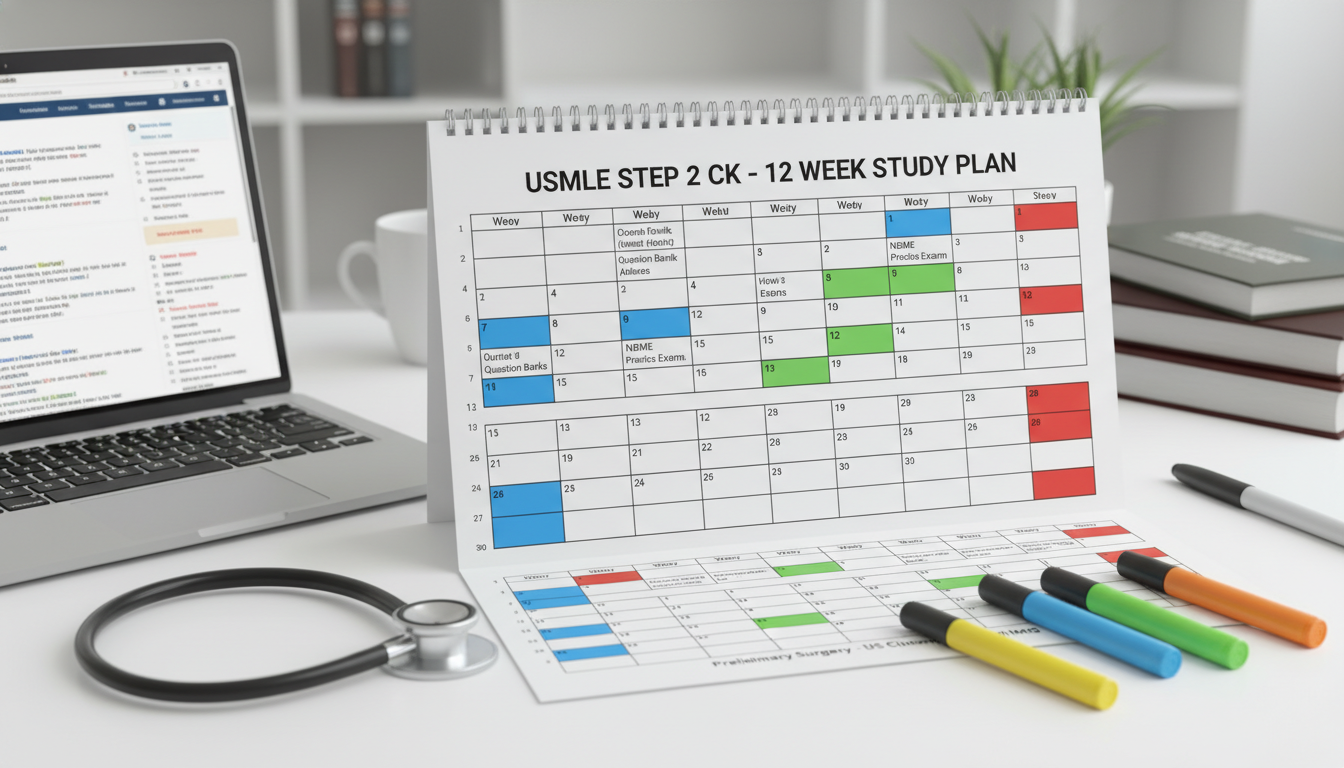
Building a High-Yield Step 2 CK Study Plan for Surgery-Oriented IMGs
US citizen IMGs often face two unique pressures:
- You may be juggling visa/credentialing paperwork and ERAS prep while studying.
- Your clinical foundation might be uneven if your school emphasized theory over US-style clinical reasoning.
That means your Step 2 CK preparation needs structure, realism, and focus on test style, not just content.
1. Decide Your Study Timeline
Common full-time USMLE Step 2 study timelines (assuming 6–8 hours/day):
- 8 weeks (aggressive):
- Suitable if you had strong clinical rotations, did well on Step 1, and your school exams mirrored USMLE style.
- 10–12 weeks (standard for many US citizen IMGs):
- More time to fill knowledge gaps and build endurance.
- 16+ weeks (part-time or while doing rotations/research):
- Best if you must work or rotate while preparing, but requires strict consistency.
When aligning with prelim surgery residency applications:
- Ideally, you want your Step 2 CK score available by early–mid September of the application year.
- Count backwards from that date, then add:
- 1–2 weeks buffer for unexpected issues.
- Time for NBME practice exams and adjustment if your scores are low.
2. Core Resources for Step 2 CK
You do not need every resource. Deep, repeated exposure to a few is far better than shallow exposure to many.
Question Banks (Primary):
- UWorld Step 2 CK (non-negotiable)
- Use in tutor mode early, then timed random later.
- Goal: At least 80–100% of questions completed, with detailed review and note-taking.
- Optional second QBank (Amboss or Kaplan) if:
- You have >12 weeks.
- You finish UWorld early and still want more practice.
Core Content Review:
- Online MedEd (OME) or similar structured video series for:
- Internal medicine, surgery, OB/Gyn, pediatrics, psychiatry, emergency medicine.
- Step-Up to Medicine or similar texts if you’re weak in IM, but be careful with time; prioritize questions.
Practice Exams:
- NBME practice forms (multiple) and UWorld Self-Assessments (UWAs):
- They help project your eventual Step 2 CK score.
- Schedule them regularly every 2–3 weeks toward the second half of your prep.
3. Weekly Structure for Efficient USMLE Step 2 Study
Sample 10–12 Week Framework
Monday–Saturday
- 3–4 blocks/day of questions (40–50 Q each)
- 4–5 hours/day of review
- 1–2 hours of targeted content (videos or notes) for weak areas
Sunday
- Lighter review (2–3 hours):
- Wrong questions log
- Anki/flashcards
- Reviewing key guidelines (e.g., sepsis, DVT/PE, ACS)
- Lighter review (2–3 hours):
Question Strategy:
- First 4–6 weeks:
- System- or subject-based blocks (e.g., all IM or all surgery for a few days).
- Emphasize understanding why each distractor is wrong.
- Last 4–6 weeks:
- Timed, random blocks to simulate the real exam.
- Focus on endurance and mixed-topic transitions.
4. Tracking Progress and Adjusting
Keep a simple weekly log:
- Number of questions completed
- Average QBank score (don’t obsess, but watch trends)
- NBME predicted score(s)
If NBME scores are:
- 20+ points below your target with <4 weeks to go:
- Postpone if possible and intensify weak-area work.
- Within 10–15 points of your target:
- Focus on stamina, practice exams, and refining test strategy, not brand-new resources.
Clinical Emphasis for Preliminary Surgery Applicants: What to Focus on in Step 2 CK
Even though Step 2 CK is not a “surgery exam” per se, there are high-yield domains particularly relevant to someone aiming for a preliminary surgery residency.
1. Surgical and Perioperative Topics
These areas not only boost your score but also prepare you for day-one surgical intern responsibilities.
Key Domains:
- Preoperative evaluation
- When to delay surgery (active infection, unstable cardiac disease, poor functional status).
- Cardiac risk stratification and medication management (e.g., beta-blockers, anticoagulants).
- Postoperative complications
- Recognizing post-op day–specific issues:
- POD 1–2: atelectasis, pneumonia, early infection.
- POD 3–5: DVT/PE, wound infections, ileus, anastomotic leak.
- Early vs delayed hemorrhage, shock types, fluid resuscitation.
- Recognizing post-op day–specific issues:
- Acute abdomen and trauma
- Classic presentations: perforated viscus, bowel obstruction, appendicitis, cholecystitis, diverticulitis.
- Primary and secondary trauma surveys, when to use CT vs FAST vs ex-lap.
- Wound care and infections
- Surgical site infection types, necrotizing fasciitis, antibiotic selection.
How to integrate this into Step 2 CK prep:
- Tag surgical/ACLS/trauma questions in UWorld and re-review them in the final weeks.
- Create mini one-page summaries with:
- Workup pathways (e.g., “post-op fever workup”).
- First-line management steps with indications and contraindications.
2. Medicine Topics That Affect Surgical Patients
As a prelim surgery intern, you will constantly manage complex medical issues on surgical patients. USMLE Step 2 CK loves to test this overlap.
Focus on:
- Cardiology
- Heart failure, ACS, arrhythmias, anticoagulation management, perioperative risk.
- Pulmonology
- Post-op respiratory failure, pulmonary embolism, management of COPD/asthma in surgical patients.
- Endocrinology
- Perioperative diabetes and steroid management, thyroid storm, adrenal crisis.
- Infectious Diseases
- Sepsis and septic shock, hospital-acquired infections, antibiotic stewardship.
3. Integrating EBM and Guidelines
Programs want residents who practice evidence-based medicine, and Step 2 CK reflects this.
Invest time in:
- Sepsis guidelines (fluid resuscitation, vasopressors, lactate).
- VTE prophylaxis (when to start, contraindications).
- ACS/MI management (timing for PCI, thrombolysis contraindications).
These are heavily tested and clinically essential on surgical services.

Test-Taking Strategy, Practice Exams, and Timing for US Citizen IMGs
Smart USMLE Step 2 preparation is not only what you study, but how you sit for the exam.
1. Building Exam Stamina
Step 2 CK is long. Many IMGs underestimate fatigue as a cause of scoring below practice exam levels.
- Simulate at least 2–3 full-length exam days:
- 6–8 blocks of 40 questions.
- 10–15 minutes break after every 1–2 blocks.
- Practice your break strategy:
- Eat light but frequent snacks.
- Stay hydrated; avoid trying new stimulants on exam day.
2. Question Approach Strategy
Always apply a consistent method:
- Read stem for context first (age, setting, acute vs chronic).
- Identify the actual question: diagnosis? next best step? most likely etiology?
- Eliminate clearly wrong options quickly
- Don’t waste time debating obviously unrelated answers.
- Prioritize safety and urgency
- Stabilization (ABCs) before diagnostics in unstable patients.
- Avoid unnecessary imaging when red-flag findings mandate immediate intervention.
Step 2 CK loves “what is the most appropriate next step?” with multiple correct-sounding answers. Think:
- What is the safest, most evidence-based first step?
- What changes mortality, not just symptoms?
3. Using NBME and UWorld Self-Assessments
For a US citizen IMG aiming for a prelim surgery year, these are essential data points.
Suggested Timeline (for a 12-week study plan):
- Week 4: NBME #1 (baseline after some study)
- Week 6–7: NBME #2
- Week 8–9: UWorld Self-Assessment (UWSA1 or 2)
- Week 10–11: NBME #3 or another UWSA
General guidance:
- Many applicants score within ±5–10 points of their average of last 2–3 assessments.
- Take exams in test-like conditions (one sitting, timed, minimal breaks).
Decision rules:
- If your last 2 scores are:
- Within 10 points of your target: You are likely ready.
- Consistently below 220 and your target is 230–240+: Consider adding 4–6 weeks if your timeline allows.
4. Timing the Exam in Relation to ERAS and Prelim Surgery Applications
Your Step 2 CK score should ideally:
- Be available by ERAS opening / when programs start reviewing, usually mid–late September.
- Not interfere heavily with your strongest US rotations (especially sub-internships in surgery).
As a US citizen IMG:
- You may not face visa issues like non-US IMGs, but you still:
- Need ECFMG certification timelines aligned.
- Want your best Step 2 CK score on file before programs decide interview invites.
If your USMLE Step 2 study is behind schedule:
- Balance risk of a mediocre score early vs a better score slightly later:
- For prelim surgery, a stronger October/November score can sometimes still help if programs review applications on a rolling basis.
- However, taking the exam too late may limit its impact in the first wave of invitations.
Integrating Step 2 CK Prep with Overall Prelim Surgery Strategy as a US Citizen IMG
Your USMLE Step 2 preparation should align with the broader narrative of your application as an American studying abroad.
1. Use Step 2 CK to Strengthen Your Application Story
Common profiles for US citizen IMG prelim surgery applicants:
“Clinically strong but Step 1 mediocre”
- Step 2 CK: show a sharp upward trend (e.g., from 215 to 245).
- In your personal statement and interviews, emphasize:
- Improved test strategy.
- Alignment of your clinical performance with your Step 2 CK score.
“Late to decide on surgery” or “switching from another specialty”
- Step 2 CK: demonstrate robust general clinical knowledge that can serve any field.
- Pair with:
- One or two US-based surgical rotations or sub-Is.
- Strong surgery-specific letters of recommendation.
“Multiple challenges in training path” (delays, leaves, transfers)
- Step 2 CK: demonstrate resilience and readiness now.
- Show a recent solid score supporting that you are prepared for the rigors of a prelim surgery residency.
2. Leveraging Your US Citizen IMG Status
Being a US citizen IMG has advantages:
- Programs don’t need to worry about visa sponsorship.
- You may be more flexible about where you can train geographically.
To maximize this:
- Cast a wide net geographically for prelim surgery year programs.
- Highlight:
- US ties (family, previous education, or work).
- Long-term commitment to training in the US healthcare system.
3. After the Exam: Using Your Score Strategically
Once you receive your Step 2 CK score:
If it meets or exceeds your target:
- Update your ERAS application.
- Highlight it briefly in your personal statement or “additional information” if it represents a strong improvement or overcomes a previous concern.
If it is below expectations:
- Don’t panic; many prelim surgery positions are less score-focused than categorical slots.
- Strengthen other aspects:
- More USCE (especially surgical).
- Strong, specific letters.
- Clear, honest explanation (if asked) of any discrepancies.
In interviews, frame your Step 2 CK preparation positively:
- Discuss:
- How you structured your USMLE Step 2 study.
- What you learned about self-discipline and clinical reasoning.
- How that preparation directly prepared you for the pace and demands of a prelim surgery residency.
FAQs: Step 2 CK and Preliminary Surgery for US Citizen IMGs
Q1: What Step 2 CK score should a US citizen IMG aiming for a preliminary surgery year realistically target?
For many US citizen IMGs, a realistic but competitive target is 230–245. If you have a weaker Step 1 or significant gaps in training, aiming for 240+ helps compensate. For those hoping to convert a prelim surgery year into a categorical surgery spot, 245+ strengthens your future candidacy.
Q2: Is it better to take Step 2 CK early with a “good enough” score or delay for a potentially higher score?
If your baseline is far below your goal (e.g., practice scores in low 220s when you aim for 240+), it is usually better—when feasible—to delay and improve. For a US citizen IMG in prelim surgery, a stronger Step 2 CK score can significantly influence interview offers and later opportunities to move into categorical positions. However, be careful not to push so late that your score is reported after most interviews are decided.
Q3: How much does Step 2 CK matter for prelim surgery compared to categorical general surgery?
Step 2 CK is still important for prelim surgery, but filters may be slightly more flexible than for categorical positions. Many programs use the same initial screening thresholds for both tracks, especially at large academic centers. A strong score also helps if:
- You want to be considered for in-cycle categorical openings.
- You consider switching to another competitive specialty after your prelim year.
Q4: What’s the biggest mistake US citizen IMGs make when preparing for Step 2 CK?
The most common mistakes are:
- Spreading themselves too thin across many resources instead of mastering one QBank (e.g., UWorld) and a concise set of review tools.
- Underestimating the exam’s emphasis on management decisions and prioritization (not just diagnosis).
- Not taking enough full-length practice tests to build stamina and accurately gauge readiness.
Focus your USMLE Step 2 study on deep understanding of questions, regular NBME assessments, and consistent, structured daily work. For a US citizen IMG entering a preliminary surgery year, that combination can transform Step 2 CK from a hurdle into a major asset for your residency journey.