
Understanding Step 2 CK as a US Citizen IMG Targeting Psychiatry
USMLE Step 2 CK preparation is strategically different when you are a US citizen IMG and your goal is psychiatry residency in the United States. Program directors in psychiatry care deeply about clinical judgment, interpersonal skills, and evidence-based decision-making—but your Step 2 CK score still plays a major filtering role in getting interview offers, especially as an American studying abroad.
As a US citizen IMG, you typically don’t face visa barriers, which is a major advantage compared to many non‑US IMGs. That reality makes exam performance, clinical experience, and letters of recommendation even more central to distinguishing you from the large pool of applicants. A strong Step 2 CK score can:
- Compensate for an average Step 1 performance or pass/fail report
- Demonstrate readiness for US clinical rotations and internship
- Signal that you can handle US training demands, especially with complex psychiatric patients who often have substantial medical comorbidities
In psychiatry, Step 2 CK is not just about psych questions. It’s a test of how safely and efficiently you manage the whole patient—psych, neuro, medicine, OB, peds, surgery, and emergency medicine. Designing your USMLE Step 2 study plan with psychiatry in mind should start from that big-picture view.
What Score Should a US Citizen IMG Aim for in Psychiatry?
There’s no absolute “cutoff” that guarantees a psych match, but there are realistic targets based on recent match data and program behavior.
General Psychiatry Context
For psychiatry:
- Many university and competitive community programs like to see Step 2 CK scores in the mid‑220s or higher.
- Top academic or research‑heavy programs may more commonly interview applicants with 230–245+.
- Some community programs and IMG‑friendly institutions will consider applicants in the 210s, especially if other parts of the application are strong (US clinical experience, strong MSPE, letters from US psychiatrists, etc.).
As a US citizen IMG, programs know:
- You don’t need visa sponsorship (a plus for them).
- You may have slightly more favorable consideration than non‑US IMGs with similar scores.
- However, you still compete with US MD/DO students.
Practical Target Ranges for US Citizen IMGs
Use these ranges as a planning framework:
Target minimum: 220+
Below 220, you’re not automatically out—but you may have to apply broadly and rely heavily on strong clinical performance and networking.Competitive range: 225–240
This range keeps you viable for many academic and strong community psychiatry programs, especially if your application is well-rounded.High-impact range: 240+
This helps offset weaker areas (average school reputation, late psych experiences, or modest Step 1) and improves your chances at more selective psych programs.
If your Step 1 was pass/fail or on the lower side, your Step 2 CK score becomes your primary standardized metric. For an American studying abroad, Step 2 may be the single most important numerical signal of your readiness.
Building a Psychiatry‑Focused Step 2 CK Study Strategy
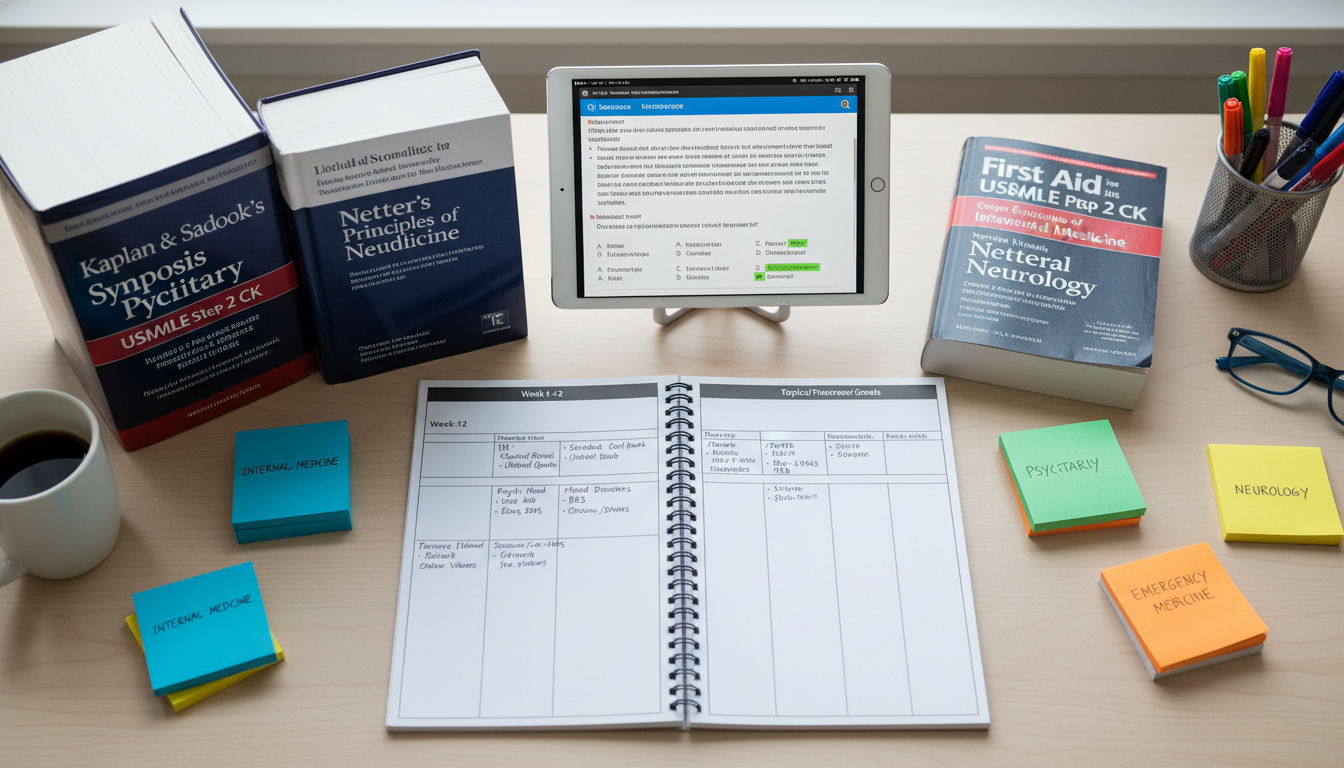
Step 1: Clarify Your Time Frame and Commitments
Your optimal USMLE Step 2 study strategy depends on:
- Your current year in medical school (3rd, 4th, or graduate)
- Clinical rotation schedule
- Existing strengths and weaknesses
- Planned application cycle (ERAS year)
Common scenarios for US citizen IMGs:
American studying abroad in 4th or 5th year of a 6‑year program
- Have parallel clinical rotations and exams.
- Often need a 4–6 month blended schedule (rotations + Step 2 prep).
Final-year student planning to graduate and apply immediately
- Often aim for a 3–4 month dedicated period after core rotations.
Graduate who has finished medical school
- Can commit to a 2–3 month full‑time dedicated prep if financially and logistically possible.
Aim to have Step 2 CK taken and scored before ERAS submission in your application year, if possible. A strong Step 2 CK score on file strengthens your psych match chances early.
Step 2: Core Resources for a Psychiatry‑Oriented USMLE Step 2 Study Plan
You don’t need a massive pile of books. You need a high‑yield core and disciplined use.
1. Primary Question Bank (QBank)
Use one primary QBank and complete it thoroughly:
- UWorld Step 2 CK (most recommended)
- Consider AMBOSS as a supplement if you finish UWorld early
Do questions in timed, random blocks to simulate test conditions. Pay particular attention to:
- Psychiatry and behavioral sciences
- Neurology
- Internal medicine, especially conditions with psychiatric overlap (endocrine, neurology, geriatrics, toxicology)
2. High-yield Text/Outline
- A concise Step 2 CK review book (e.g., Master the Boards Step 2 CK or similar)
- Use this as a spine for systematic review after or parallel to QBank usage.
3. Dedicated Psychiatry/Behavioral References
While Step 2 CK doesn’t require specialist-level psychiatry knowledge, psych is high‑yield. Consider:
- A short psychiatry review book or dedicated psych chapter summaries
- UpToDate or similar references for clarifying treatment sequences if available through your school
4. Practice Exams
- NBME practice exams (online, latest forms)
- UWorld Self‑Assessments (UWSA1, UWSA2)
Use these strategically to track progress, not randomly.
Step 3: Designing a 10–12 Week Study Schedule
Here’s a sample 10‑week schedule for a US citizen IMG with moderate time available (4–6 hours/day). Adjust volume if you are fully dedicated.
Weeks 1–4: Foundation and Content Build
Daily
- 40–60 UWorld questions (timed, random, tutor later)
- Review all explanations, annotate in your notes or digital flashcards
- 1–2 hours reading from your primary review text
Weekly focus
- At least one week emphasizing psychiatry and neurology
- Identify weak domains: OB, pediatrics, surgery, emerg/ICU
- Add 50–60 psychiatry‑specific questions across the week
Week 5–7: Consolidation and Timed Performance
Increase to 60–80 questions/day as tolerated
Transition to strictly timed blocks (38–40 questions in 1 hour)
First NBME practice exam at the end of week 5 or 6
- Compare your projected score with your target (e.g., 230–240)
- Analyze mistakes by system, not just by question
Continue:
- 1–2 hours of focused review on weak systems
- Build or review flashcards for recurring psych drugs, side effects, and treatment algorithms
Weeks 8–9: High-Yield Refinement and Psych Emphasis
- 40–60 questions/day with focus on:
- Psychiatry
- Neurology
- Internal medicine
- Second practice exam (NBME or UWSA) early in week 8
- Deep‑dive review of:
- Adverse effects and contraindications of psych meds
- Emergency psych scenarios (suicidality, violent patients, acute agitation, serotonin syndrome, NMS)
Week 10: Taper and Final Review
- 40 questions/day or 1–2 small blocks for rhythm
- Prioritize:
- Practice exam reviews
- High-yield tables and algorithms
- Flashcards (especially medications, diagnostic criteria)
- Light study the day before the exam (2–4 hours maximum)
If you have more time (12–16 weeks), you can:
- Spend more time on weaker rotations (OB/GYN, pediatrics, surgery)
- Do full second pass of psychiatry and neurology questions
- Add AMBOSS or other QBank for reinforcement
How Psychiatry Content Actually Shows Up on Step 2 CK
Psychiatry on Step 2 CK is less about memorizing DSM lists and more about clinical decision-making in real-life scenarios. The exam assumes you’re functioning as a junior resident in a hospital with psych and non‑psych patients.
High-Yield Psychiatry Domains
Mood Disorders
- Major depressive disorder vs. bereavement vs. normal sadness
- Bipolar I vs. II vs. cyclothymia
- Treatment selection: SSRI vs. SNRI vs. bupropion vs. mirtazapine
- Treatment-resistance, augmentation strategies, and ECT indications
Anxiety and Trauma-Related Disorders
- GAD, panic disorder, social anxiety, specific phobias
- PTSD vs. acute stress disorder vs. adjustment disorder
- First-line pharmacologic and psychotherapeutic approaches
Psychotic Disorders
- Schizophrenia vs. schizoaffective vs. brief psychotic disorder vs. schizophreniform
- Antipsychotic selection (typical vs. atypical)
- Management of metabolic syndrome, EPS, NMS, QT prolongation
Substance Use Disorders
- Alcohol, opioids, benzodiazepines, stimulants
- Intoxication vs. withdrawal presentations
- Acute management: benzodiazepines for alcohol withdrawal, buprenorphine, methadone, naltrexone, disulfiram
Child & Adolescent Psychiatry
- ADHD, autism spectrum disorder, conduct vs. oppositional defiant disorder
- Learning disorders, intellectual disability
- Medication selection and behavioral interventions
Delirium and Dementia
- Distinguishing delirium vs. dementia vs. depression in older adults
- Workup of reversible causes
- Non‑pharmacological and pharmacologic management
Emergency and Safety
- Assessing suicidal and homicidal risk
- Involuntary hospitalization criteria
- Restraints, capacity assessment, and informed consent
Behavioral Science and Ethics
- Capacity, informed consent, surrogate decision makers
- Boundary violations, confidentiality, Tarasoff duty to warn
- Culturally sensitive care and bias recognition
Example Psychiatry‑Style Step 2 Question Breakdown
Imagine a vignette:
A 42-year-old woman with a history of breast cancer presents with low mood, poor appetite, and insomnia for 6 weeks. She reports guilt about being a burden and passive wishes not to wake up. She is currently taking tamoxifen. Which antidepressant is most appropriate?
To answer efficiently, you must know:
- Diagnostic features of major depressive disorder
- Safety with comorbid conditions (drug interactions with tamoxifen: avoid potent CYP2D6 inhibitors like paroxetine, fluoxetine)
- Appropriate first-line medication (e.g., citalopram, sertraline)
This is typical Step 2 CK style—integrating psychiatry, oncology, and pharmacology, not just labeling the diagnosis.
Tailoring Step 2 CK Preparation as a US Citizen IMG

Leveraging Your Clinical Rotations (Especially Psychiatry)
As an American studying abroad, your clinical rotations may differ in structure or patient population from US systems. Use rotations to reinforce Step 2 CK content:
During internal medicine, deliberately focus on:
- Delirium workups and management
- Depression screening in chronic illness
- Capacity assessments
During psychiatry rotations, connect real patients to:
- Diagnostic criteria (MDD, bipolar, schizophrenia, anxiety)
- Pharmacologic decision-making and side effect monitoring
- Emergency situations (suicidal ideation, psychosis, agitation)
Actionable tip:
Keep a small notebook or digital note for “Step 2 CK connections” during rounds—brief summaries like “elderly patient with delirium from UTI – avoid benzodiazepines, use antipsychotics cautiously.”
Addressing IMG‑Specific Challenges
Variability in Teaching Style and Guidelines
- Your med school abroad may use different treatment algorithms or medication names.
- Always cross-reference with US practice using:
- UWorld explanations
- US‑based review books
- UpToDate or similar (if your institution provides access)
Gaps in Exposure to Certain Specialties
- Obstetrics, emergency medicine, or pediatrics exposure may be limited.
- Step 2 CK still tests these heavily—build them proactively into your schedule.
Limited Access to US Mentorship
- Seek virtual mentorship opportunities:
- Online IMG or US citizen IMG psychiatry groups
- Alumni networks from your school in US residencies
- Ask for feedback on your study plan, targeted scores, and resource choices.
- Seek virtual mentorship opportunities:
Balancing Exams, Rotations, and US Planning
- Many US citizen IMGs must juggle:
- Local exams
- Step 2 CK
- Securing US clinical experience (USCE)
- Prioritize Step 2 CK in the 6–9 months before ERAS submission—it significantly shapes interview offers.
- Many US citizen IMGs must juggle:
Using Practice Exams to Guide Decisions
Treat NBME and UWSA scores as data, not final judgment.
- If your first NBME (after 5–6 weeks) is 20+ points below target, extend your study or delay your test date if possible.
- If you’re within 10–15 points of your target in the last 3–4 weeks, refine weak spots and push through.
Pay special attention to:
- Repeated weaknesses in psychiatry or behavioral questions
- Chronic underperformance in a system (e.g., OB/GYN, peds) that could drag your overall score below psych program thresholds
Use missed questions to build a focused list of topics to revisit—you don’t need to re‑read everything, only what repeatedly costs you points.
Cognitive, Test-Taking, and Wellness Strategies
Step 2 CK preparation is as much about mental performance as content mastery, which is particularly relevant for a future psychiatrist.
Cognitive Strategies
Active over passive learning
- Prioritize QBank and flashcards over long reading sessions.
- Teach key concepts out loud to yourself or a study partner.
Error pattern analysis
- Are you missing diagnosis questions, treatment questions, or interpretation of labs/imaging?
- Do you misread details or run out of time?
- Adjust your approach: slow down during reading or practice timing.
Integrative thinking
- For psychiatric questions, practice linking:
- Medical comorbidities (e.g., hypothyroidism and depression)
- Social context (housing, trauma, substance use)
- For psychiatric questions, practice linking:
Test-Taking Tips for Psychiatry Questions
Identify the primary safety concern first (suicidality, homicidality, delirium) before thinking about long-term management.
Use age, time course, and associated features to differentiate diagnoses:
- Teen vs. middle-aged vs. older adult
- Acute onset vs. chronic pattern
- Presence of psychosis, mania, or substance use
For medication questions:
- Always screen for contraindications (pregnancy, cardiac disease, seizures, eating disorders)
- Common traps:
- Bupropion in patients with seizures or eating disorders
- TCAs in suicidal patients (overdose toxicity)
- Lithium in renal disease or with NSAIDs, ACE inhibitors, or thiazides
Protecting Your Own Mental Health
As a future psychiatrist, modeling good self-care is important.
- Plan rest days or half-days in your weekly schedule.
- Use short, structured breaks during long QBank sessions (e.g., 5–10 minutes every hour).
- Avoid comparing your practice scores obsessively with peers—use them to track your own trajectory.
- If anxiety becomes overwhelming, consider:
- Speaking with a counselor or mental health professional
- Using relaxation techniques (breathing exercises, mindfulness)
- Adjusting your test date rather than pushing through in a compromised state
Bringing It All Together for a Strong Psych Match
For a US citizen IMG targeting psychiatry, a well‑executed Step 2 CK preparation plan does more than yield a strong Step 2 CK score—it signals to programs that you:
- Understand the clinical realities of psychiatric practice
- Can manage medically complex patients with psychiatric symptoms
- Possess discipline, resilience, and self-awareness
Integrating your USMLE Step 2 study with your psychiatry interests—rather than seeing them as separate—helps you answer questions more intuitively and prepares you for residency.
Key takeaways:
- Aim for 220+ as a floor, 225–240 as a competitive target, and 240+ for maximum flexibility in psych programs.
- Use UWorld (or similar) as your backbone, and study psychiatry in context with neurology, internal medicine, and emergency care.
- Tailor your schedule to your rotations, obligations, and specific IMG circumstances.
- Leverage practice exams strategically and be willing to adjust your timeline.
- Protect your own mental health—this is part of your professional identity as a future psychiatrist.
FAQ: USMLE Step 2 CK Preparation for US Citizen IMG in Psychiatry
1. How important is Step 2 CK compared to Step 1 for a US citizen IMG applying to psychiatry?
Step 2 CK is very important, especially now that Step 1 is pass/fail for many applicants. For a US citizen IMG, programs often use Step 2 CK to assess clinical readiness. A solid Step 2 CK score can mitigate a marginal Step 1 or less well-known medical school, and it can strongly influence interview offers in psychiatry.
2. What Step 2 CK score should I realistically aim for to be competitive in psychiatry?
Aim for at least 220+, which usually keeps you viable for a broad range of programs. A 225–240 score is competitive for many academic and community programs, and 240+ improves your chances at more selective or research-oriented psychiatry residencies. Remember that your overall profile—US clinical experience, letters, and interviews—also matters.
3. How much of my Step 2 CK study time should be dedicated to psychiatry content?
Most students dedicate 15–25% of focused review time specifically to psychiatry and behavioral sciences, integrated with neurology and internal medicine. Don’t over-focus on psych at the expense of other systems; Step 2 CK is still dominated by internal medicine, OB/GYN, pediatrics, and surgery. Instead, ensure you thoroughly understand high-yield psychiatry topics and how they intersect with medical conditions.
4. If my first practice NBME score is low, should I delay my exam?
If your first NBME is 20 or more points below your target range and your exam is within 4–6 weeks, consider delaying—if your visa, graduation, and ERAS timeline allow it. Use the NBME performance profile to identify weak systems, adjust your study plan, and repeat a practice test after 2–3 weeks of targeted work. The decision to delay should balance your projected improvement with your application deadlines and personal circumstances.