
Understanding Step 2 CK as a US Citizen IMG Interested in Clinical Informatics
As a US citizen IMG (American studying abroad), your USMLE Step 2 CK score carries particular strategic weight. Programs know you completed medical school outside the US system, so standardized exams are one of the clearest, comparable metrics they have. For someone targeting a future clinical informatics fellowship and a career in health IT, Step 2 CK is also your chance to demonstrate that you’re not just “tech‑savvy,” but clinically solid across the breadth of medicine.
Step 2 CK is no longer just a hurdle after Step 1 became Pass/Fail; it is now a primary differentiator for:
- Residency selection (especially for competitive programs or regions)
- Future subspecialty opportunities, including clinical informatics fellowship
- Scholarship, leadership, and early informatics/quality improvement roles
If you’re an American studying abroad, you may already feel the pressure: you’re competing against US grads who trained in the healthcare system where you want to work, often with built‑in advising and structured USMLE courses. You can absolutely level that playing field—but you need a focused, deliberate Step 2 CK preparation strategy tailored to your situation and goals.
This guide will walk you through:
- How Step 2 CK fits into your path to clinical informatics
- A 3–6 month prep blueprint specifically for US citizen IMGs
- Evidence‑based study methods and resources
- Ways to integrate informatics thinking into your USMLE Step 2 study
- How to handle common IMG‑specific challenges (time zones, rotations, visa issues, gaps, etc.)
How Step 2 CK Fits into a Clinical Informatics–Focused Career
Why Step 2 CK Matters More Than You Think
For residency programs and later clinical informatics fellowship directors, a strong Step 2 CK score says:
- You have mature clinical reasoning, not just memorization skills
- You can manage real‑world bread‑and‑butter medicine—critical for designing safe health IT systems
- You can thrive within the information‑dense environment that characterizes modern healthcare
Even though clinical informatics is heavily about data, workflows, and decision support, the fellowship is grounded in clinical practice. Most pathways require you to be board‑eligible or board‑certified in a primary clinical specialty (internal medicine, pediatrics, EM, etc.). Your Step 2 CK score directly affects your chances of matching into a strong primary specialty program that will later support:
- Protected time for informatics work
- Access to EHR build committees and quality projects
- Letters from physician‑informaticists
- Early exposure to health IT training and data analytics
What Step 2 CK Actually Tests (and Why That’s Informatics‑Relevant)
Step 2 CK focuses on clinical application rather than basic science. The exam emphasizes:
- Diagnosis and management over pathophysiology
- Prioritization and safety: “What do you do next?”
- Interpretation of data‐dense content: labs, imaging, flow sheets, guidelines
- Systems‑based practice, ethics, and quality improvement elements
These are the same thinking skills you’ll use when evaluating:
- EHR alerts and decision support rules
- Order sets and care pathways
- Quality dashboards and outcome metrics
- Clinical workflows during system implementations
In other words, the mental rigor you build during USMLE Step 2 study is precisely the foundation you’ll reuse in informatics: structured reasoning, pattern recognition, risk stratification, and data interpretation.

A 3–6 Month Strategic Study Plan for US Citizen IMGs
Your exact timeline will depend on how much foundation you already have and whether you’re on clinical rotations, research, or a dedicated study period. Below is a flexible framework you can adapt.
Step 1: Diagnostic Assessment (Week 0–1)
Before you buy every resource and start random questions, you need a baseline.
Actions:
Take a self‑assessment:
- NBME Comprehensive Clinical Science Self‑Assessment (CCSSA) Form (e.g., 10 or 11, depending on what’s currently available)
- If you’re very early, you can start with a half‑length practice test or a UWorld sample block
Analyze more than just your score:
- Domains: medicine, surgery, OB/GYN, pediatrics, psychiatry
- Task types: diagnosis, management, next best test, ethics, communication
- Patterns: Are you missing data interpretation or guideline‑based management questions?
Set a Step 2 CK score goal:
- Look at your target specialty and regions; for fields that pair well with clinical informatics (e.g., internal medicine, pediatrics, EM, anesthesiology), aim to be at or above the average step scores for matched applicants.
- US citizen IMG? Aim for at least slightly above the US MD average in your target specialty if possible, to reduce the IMG disadvantage.
Step 2: Build a Structured Weekly Routine
Assuming a 12–16 week dedicated period (adjust upward if part‑time while on rotations):
Target weekly structure:
- 5–6 days/week of intensive study
- 1 rest/light day (for burnout prevention)
Daily breakdown (full‑time dedicated):
- 4–5 hours: Question bank (Qbank) blocks and review
- 2–3 hours: Targeted content review
- 30–60 minutes: Step 2 CK–style practice of CCS‑like scenarios (if using tools that simulate clinical reasoning) or structured case review
- 15–20 minutes: Exam strategy / error log review
If you’re balancing rotations:
- 1–2 blocks of 40 questions/day on lighter rotations
- 20–40 questions/day on heavier rotations
- Use commute and short breaks for flashcards & rapid review
Step 3: Qbank‑Centered Learning
For most USMLE Step 2 study plans, the question bank is the spine of your preparation.
Core resources (pick 1 primary Qbank, 1 secondary at most):
- UWorld Step 2 CK – Gold standard; treat explanations like a textbook
- Amboss – Excellent for explanations, pop‑up library, and fast review
How to use Qbanks effectively:
- Start in tutor mode for your first 1–2 weeks to learn from questions
- Move to timed, random blocks once you have a basic structure
- Aim for 2,000–3,000 total questions across your prep, more if you have time
Review is where the learning happens:
- Spend at least 2–3 minutes per question in review, more for wrong ones
- For each question, log:
- Why you missed it (knowledge gap, misreading, time pressure, second‑guessing)
- Key teaching point (1–2 short sentences)
- If relevant, any guideline, risk score, or algorithm (e.g., Wells criteria, Ottawa rules)—this kind of algorithmic thinking parallels informatics logic
Create a “Clinical Algorithms” document:
- Summarize key workflows that show up across questions:
- Chest pain evaluation
- Sepsis management
- Stroke workup
- Prenatal screening decisions
- These mini–decision trees resemble how clinical decision support is built.
Step 4: Content Consolidation (Blueprint‑Focused)
Use a trusted Step 2 CK review framework:
- Online MedEd (videos and structured notes)
- Boards & Beyond Step 2/3 (if you used B&B for Step 1, continuity helps)
- A concise text (e.g., Step‑2–focused rapid review) as a reference, not primary
Don’t try to memorize full textbooks. Instead:
- Prioritize high‑yield systems: cardiology, pulmonology, GI, neuro, OB, pediatrics, infectious disease
- Integrate practice guidelines: hypertension, diabetes, lipid management, anticoagulation
As a future clinical informaticist, pay special attention to:
- How guidelines translate into if–then decision rules
- Where alerts or order sets might be triggered in real life (e.g., sepsis bundles, VTE prophylaxis reminders)
Step 5: Timing, Endurance, and Exam Simulation
Step 2 CK is long (8 blocks in one day). You must train your:
- Endurance – 7–8 hours of focused clinical reasoning
- Time management – ~90 seconds/question on average
From week 4 onward:
- Do at least 2–3 full timed blocks (40 questions) in a row several times per week
- Simulate test conditions:
- Quiet room, no phone
- One short break between blocks
- Eat and drink the way you plan for test day
In the last 4–6 weeks, schedule full‑length practice exams:
- NBMEs (at least 2, ideally 3+)
- UWSA (UWorld Self‑Assessments), if available for Step 2 CK
Track your performance in a simple spreadsheet:
- Date, exam type, score (and predicted Step 2 CK score)
- Notes on weak areas and what you’ll change in the next 1–2 weeks
Step 6: Final 2–3 Weeks – Polishing and Targeted Fixes
Use your performance data to refine:
- Top 3–4 weak systems (e.g., OB, psych, nephrology, rheumatology)
- Task types you struggle with (ethics, next best step, imaging interpretation)
Focus on:
- High‑yield quick review (cheat sheets, flashcards, algorithms)
- Re‑doing questions you got wrong, especially those from your earliest blocks
- Maintaining a consistent sleep/wake schedule similar to test day
Avoid adding major new resources in the last 10 days; deepen what you already know.
Integrating Clinical Informatics Thinking Into Step 2 CK Preparation
Even though Step 2 CK doesn’t test clinical informatics directly, you can use your study time to build the mental framework you’ll later use in clinical informatics fellowship and health IT training.
Think in Terms of Workflows and Systems
When doing questions:
- Map the patient journey: presentation → triage → diagnostics → treatment → monitoring → discharge
- Ask yourself:
- “Where could an EHR alert have helped in this case?”
- “What order set would streamline the care in this scenario?”
- “Which data elements are crucial for risk stratification here?”
Example: Sepsis case in the ICU
- You see hypotension, tachycardia, high lactate, infection source
- Step 2 CK question: “What is the next best step?” → fluid resuscitation, cultures, early antibiotics
- Informatics add‑on thought:
- How would I design a sepsis alert so it triggers correctly (vital signs + labs) but doesn’t over‑alert?
- Which order sets would be pre‑populated (labs, broad‑spectrum antibiotics)?
This habit of layered thinking helps you master the question while simultaneously building your future informatics perspective.
Pay Attention to Data: Labs, Scores, and Trends
As you do USMLE Step 2 study questions:
- Practice reading tables, flow sheets, and trend graphs as if you’re in the EHR
- Identify which variables really matter for the decision:
- Troponin trend more than a single value
- Creatinine change over time
- Vital sign trends vs. one outlier reading
This is analogous to designing dashboards and analytics for clinical informatics:
- What information must be visible to frontline clinicians?
- How do we summarize complex data into actionable displays?
Ethics, Communication, and Safety: The Human Side of IT
Step 2 CK devotes a meaningful fraction of content to:
- Ethics (consent, confidentiality, capacity, surrogates)
- Communication with patients and colleagues
- Safety and systems errors (near misses, root cause analysis)
These map directly to informatics issues like:
- Access control and privacy in EHRs
- Alert fatigue and unsafe workflows
- Documentation burden and its impact on burnout
As you answer ethics and systems questions, ask:
- “If this error occurred, what system‑level change could prevent it?”
- “Could documentation templates, decision support, or better information display mitigate this risk?”
You’ll walk into residency interviews already demonstrating systems thinking—a huge plus for someone who later wants a clinical informatics fellowship.
Practical Considerations Unique to US Citizen IMGs
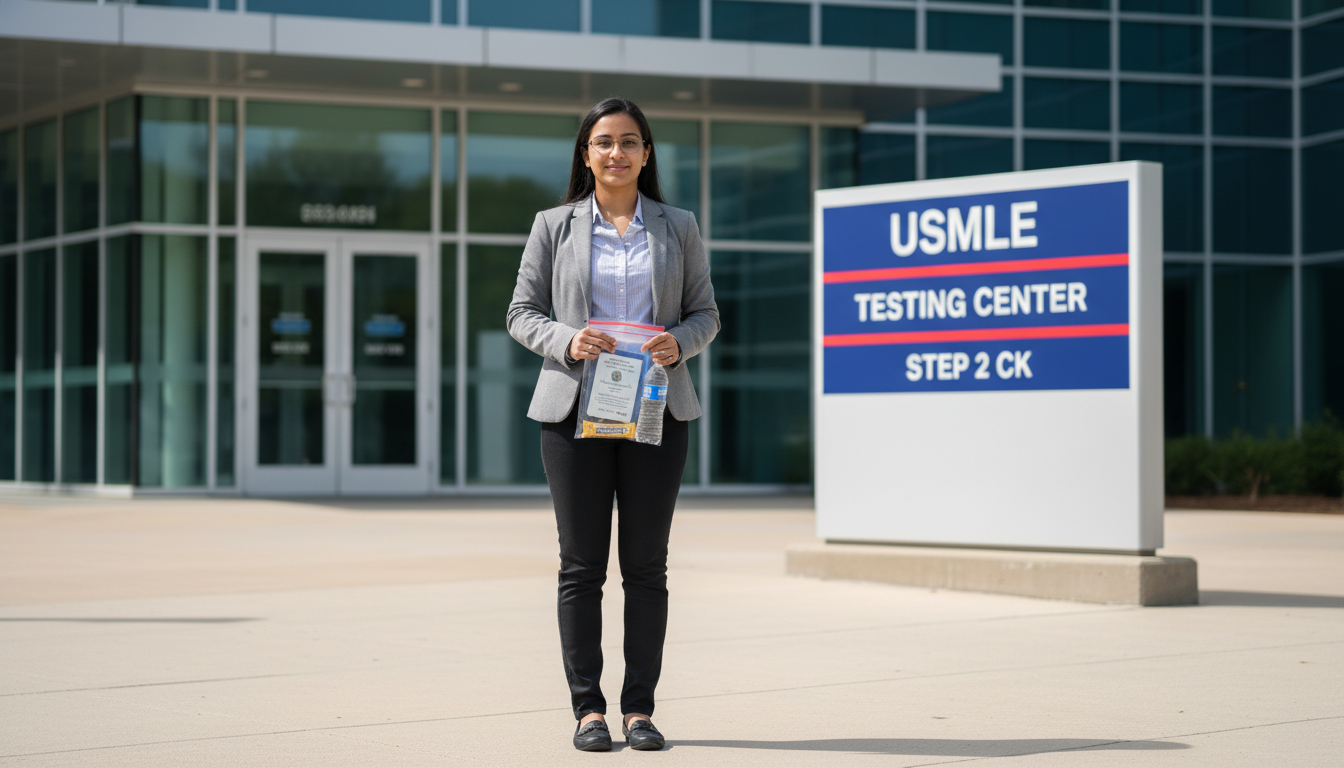
As an American studying abroad, you face some distinctive logistic and strategic challenges. Planning for them ahead of time will directly protect your USMLE Step 2 CK preparation.
Scheduling the Exam From Abroad
- Prometric center availability can be limited in some countries.
- Consider taking Step 2 CK either:
- During a visit to the US (potentially combined with clinical electives), or
- At a major testing center hub in your region, booking months in advance.
Plan backward from your residency application cycle:
- For a strong application, aim to have your Step 2 CK score available by early September of the year you apply, earlier if Step 1 is weaker or you need to offset an IMG disadvantage.
- Remember reporting delays: scores are typically released about 3–4 weeks after your exam, but around June–July there can be additional delays.
Balancing Step 2 CK Prep With Clinical Rotations and US Electives
Many US citizen IMGs travel to the US for:
- Clinical electives
- Sub‑internships (“sub‑Is”)
- Research or observerships
These are also prime times to learn about EHR use and informatics. However, they can make dedicated Step 2 CK study time scarce.
Strategies:
- If you’re on a lighter elective:
- Use evenings for blocks of 40 questions and review
- Use weekends for longer study sessions and full practice blocks
- If you’re on an intense sub‑I:
- Maintain at least 20–40 questions/day plus focused review
- Accept a slower Qbank progression; consider extending your exam date if needed
Use the rotations to enhance your health IT awareness:
- Observe how the team uses the EHR:
- Which order sets are used most?
- Where do people complain about the system?
- What workarounds exist?
- Ask residents/fellows with informatics interests about:
- Ongoing IT or quality projects
- How they got involved in informatics
- Any advice on future clinical informatics fellowships
Addressing Potential Weaknesses as a US Citizen IMG
You may worry about:
- Being less familiar with US practice patterns and guidelines
- Having gaps between clinical experiences and exams
- Adapting to English‑language nuance in questions (even as a native speaker, the exam style can feel foreign if you trained abroad)
To mitigate this:
- Use Qbanks that emphasize US guidelines and practice; read explanations carefully
- Watch US‑based clinical review videos (e.g., Online MedEd) to internalize standard approaches
- Practice NBME‑style questions, since their phrasing and style mirror the actual exam
- Join online communities (e.g., US citizen IMG groups, USMLE forums) for:
- Study partners
- Anki decks
- Strategy discussions relevant to Americans studying abroad
Test Day Strategy: Executing After Months of Preparation
Your Step 2 CK score is the result not just of knowledge, but of how well you execute on a long, cognitively demanding day.
One Week Before
- Stabilize your sleep schedule: wake up and start studying at the time you’ll need to be alert on test day.
- Finalize your:
- Exam center route and timing
- Allowed items (ID, snacks, water, earplugs if permitted)
- Break strategy (e.g., short break every 2 blocks)
Avoid:
- New major resources
- All‑night cramming
- Major life changes (travel, moving, etc.) if possible
On Test Day
During each block:
- Quickly flag time‑consuming questions and move on; return at the end if time remains.
- Don’t over‑obsess over one confusing stem; every question is worth the same.
- Use educated elimination when you’re unsure: narrow down to 2 options and pick the one most aligned with safety, guidelines, and common presentations.
During breaks:
- Eat small, frequent snacks to avoid energy crashes.
- Hydrate strategically (not so much that you need breaks every 20 minutes).
- Do not re‑hash past blocks; they’re over.
From Step 2 CK to Clinical Informatics: Next Steps After the Exam
Once your USMLE Step 2 CK preparation is complete and you’ve taken the exam, start planning how to convert that effort into long‑term momentum toward clinical informatics.
Interpreting Your Score
When you receive your score:
- Compare your Step 2 CK score to:
- The averages for your target specialties (NRMP Charting Outcomes)
- Your Step 1 performance (if applicable; Step 1 is now Pass/Fail but older scores still show)
If you’re above average for your target field as a US citizen IMG:
- You’re well‑positioned for solid residencies, including those with strong informatics opportunities.
If your score is around or slightly below average:
- You can still match, but:
- Be thoughtful about your specialty and program list
- Strengthen other aspects of your application (US clinical experience, strong letters, informatics‑adjacent projects, research)
Building an “Informatics‑Friendly” Residency Application
Parallel to Step 2 CK, or shortly after:
- Seek electives or rotations where you can:
- Work with EHR optimization teams
- Participate in quality improvement or data projects
- Shadow or speak with a chief medical information officer (CMIO) or physician‑informaticist
- Highlight in your personal statement:
- How your systems‑oriented thinking from exam prep translates into interest in clinical informatics
- Any experience with data analysis, EMR projects, or health IT tools
Your Step 2 CK score will open doors; your narrative and experiences in informatics will show programs how you’ll use those doors.
FAQs: USMLE Step 2 CK Preparation for US Citizen IMGs Interested in Clinical Informatics
1. How high does my Step 2 CK score need to be if I want a future clinical informatics fellowship?
Clinical informatics fellowships typically recruit from residents who’ve already proven themselves clinically. There is no universal “minimum Step 2 CK score,” but as a US citizen IMG, a score at or above the US MD average for your chosen specialty gives you more options. Because informatics fellowships sit in academic/innovation‑oriented environments, a stronger score helps you land at programs with robust health IT training and informatics infrastructure.
2. Should I study differently for Step 2 CK if my long‑term goal is clinical informatics?
Your core Step 2 CK preparation shouldn’t be different—you still need broad, deep clinical knowledge. However, you can enhance your preparation by:
- Thinking in algorithms and workflows (which mimics decision support logic)
- Paying attention to how data and guidelines drive decisions
- Reflecting on how EHR tools could prevent errors seen in questions
This doesn’t change what you study; it changes how you think while studying, making the material more relevant to future informatics work.
3. Is it better to take Step 2 CK before or after US clinical electives as a US citizen IMG?
If possible, taking Step 2 CK after at least some US clinical exposure can be beneficial because:
- You’ll be more familiar with US practice patterns and team structures
- You’ll see real‑world application of guidelines and workflows
However, don’t delay the exam so long that it pushes your residency application timeline or causes long knowledge gaps after core rotations. Many US citizen IMGs aim to complete Step 2 CK by mid‑summer of the application year, sometimes during or right after US electives.
4. Can I talk about my interest in informatics during residency interviews if my profile is centered on exam scores and clinical work?
Yes—and you should. Use your strong USMLE Step 2 study and clinical performance as evidence that you are a reliable clinician, then explain how your interest in systems, data, and technology evolved. Mention:
- Any projects or observations during rotations related to EHRs or workflow
- How you think about clinical decision rules and safety alerts
- Your long‑term aim of pursuing a clinical informatics fellowship
Residency programs appreciate applicants who bring a systems‑improvement mindset, as long as it’s clear you prioritize patient care and clinical excellence first.
By building a disciplined, data‑driven approach to your USMLE Step 2 CK preparation now, you’re not only improving your chances of matching as a US citizen IMG—you’re also laying the intellectual groundwork for a future career at the intersection of clinical medicine and health IT.