As a US citizen IMG (international medical graduate) or American studying abroad, Step 2 CK is often the single most important exam for your residency prospects—especially if you’re interested in global health, international medicine, or a global health residency track. With Step 1 now pass/fail, many program directors rely heavily on your Step 2 CK score to compare you with US MD/DO seniors.
This guide is designed specifically for US citizen IMGs with an interest in global health. It will walk you through how to structure your USMLE Step 2 study, what resources to use, how to manage clinical rotations across borders, and how to use your global experiences to strengthen your application while you prepare.
Understanding Step 2 CK in the Context of Global Health
Step 2 CK is not just “more of Step 1.” It’s a clinical reasoning exam focused on:
- Diagnosis and management
- Prioritization and next best step
- Patient safety and ethics
- Systems-based practice and public health
For someone aiming at international medicine or a global health residency track, this is actually an advantage: many of the skills Step 2 CK tests mirror what you will do in global health practice—triaging, optimizing limited information, and applying evidence-based guidelines.
Why Step 2 CK Matters Extra for a US Citizen IMG
As a US citizen IMG, you’re in a unique position:
- You don’t face visa issues, which is a plus for program directors.
- But you are often compared directly to US MD/DO students.
- Program directors may not be familiar with your school’s grading rigor or curriculum.
A strong Step 2 CK score therefore becomes a standardized, objective metric that can:
- Compensate for a lower-profile or lesser-known school
- Help overcome weaker Step 1 performance (now reported as Pass only)
- Demonstrate that your clinical reasoning matches or exceeds US graduates
For those aiming at programs with a global health residency track, PDs are often very academically oriented. Many global health–heavy IM or FM programs are at university-affiliated institutions that value:
- Strong Step 2 CK performance
- Evidence of scholarship (QI projects, global health research)
- Demonstrated commitment to underserved populations
Your Step 2 CK score is a way to show you can handle the demands of these academically intense environments.
Building a High-Yield Step 2 CK Study Framework as a US Citizen IMG

Step 1: Clarify Your Target Score and Timeline
Your target Step 2 CK score should reflect your specialty interests and competitiveness of global health programs you’re aiming for. While score expectations vary, some general ranges:
- Internal Medicine or Family Medicine with strong global health tracks:
Often like to see 240+, but solid applications can match with scores in the 225–240 range, especially for US citizen IMGs with strong global health experience. - More competitive specialties with global health niches (e.g., EM, Pediatrics):
Aim for 245–250+ to maximize options.
Use this to define:
- How many months of serious preparation you need (usually 2–4 months of dedicated time for most IMGs)
- When to schedule the exam relative to:
- Core clerkships (if your school follows a US-style curriculum)
- US clinical electives
- ERAS application deadlines (you typically want your Step 2 CK score reported before programs start reviewing applications)
Practical guideline:
Most US citizen IMG candidates do best with 12–16 weeks of structured USMLE Step 2 study, with:
- 8–10 weeks of intensive Qbank + content review
- 4–6 weeks of NBME practice exams, UWSA, and focused weak-area remediation
Step 2: Choose a Core Resource Set (Don’t Overload)
For Step 2 CK, depth matters more than the number of resources. A lean but complete set is best:
Primary Qbank (mandatory)
- UWorld Step 2 CK:
- Use as your main learning tool, not just assessment.
- Do all questions (ideally all available) once, and 30–50% twice if time allows.
- Focus on timed, random blocks once you’ve covered the basics.
Core Text/Concise Review Source
Choose one of:
- Online MedEd (videos + notes) – great if you like structured teaching.
- Boards and Beyond Step 2 – particularly strong for IM, cards, and reasoning.
- Master the Boards Step 2 CK – focused on “next best step” thinking.
Supplemental Resources (optional and targeted)
- AMBOSS Qbank: for extra questions, especially if you finish UWorld early.
- NBME self-assessments (NBSAs): critical for score prediction (detailed plan below).
- UWorld Self-Assessments (UWSA 1 & 2): good predictors and full-length practice.
Avoid:
- Using 3–4 different textbooks simultaneously.
- Spending weeks rereading notes instead of doing questions.
Step 3: Design a Weekly Schedule That Fits an IMG Lifestyle
As a US citizen IMG, your schedule might be complicated by:
- Rotations in multiple countries
- US clinical electives or observerships
- Travel and visa/posting requirements (even if not for residency, for electives)
- Time zone differences if coordinating with US-based mentors or tutors
A solid baseline weekly structure during dedicated prep might look like:
Example: 6-day study week (full-time)
- Daily (Mon–Sat)
- 2 blocks of 40 UWorld questions (timed, random)
- 2–3 hours of explanation review and note consolidation
- 1–2 hours of targeted video or text review for weak systems
- Once weekly
- 1 mini “mock” exam day:
- 3 blocks back-to-back, timed
- Review in the evening
- Update an error log and revisit high-yield mistakes.
- 1 mini “mock” exam day:
If you’re on busy clinical rotations:
- Aim for 1 block/day on weekdays and 3–4 blocks each weekend day.
- Focus on questions that align with your current rotation (e.g., IM questions while on medicine), but still sprinkle in other specialties to maintain global coverage.
Integrating Global Health Experience into Step 2 CK Preparation
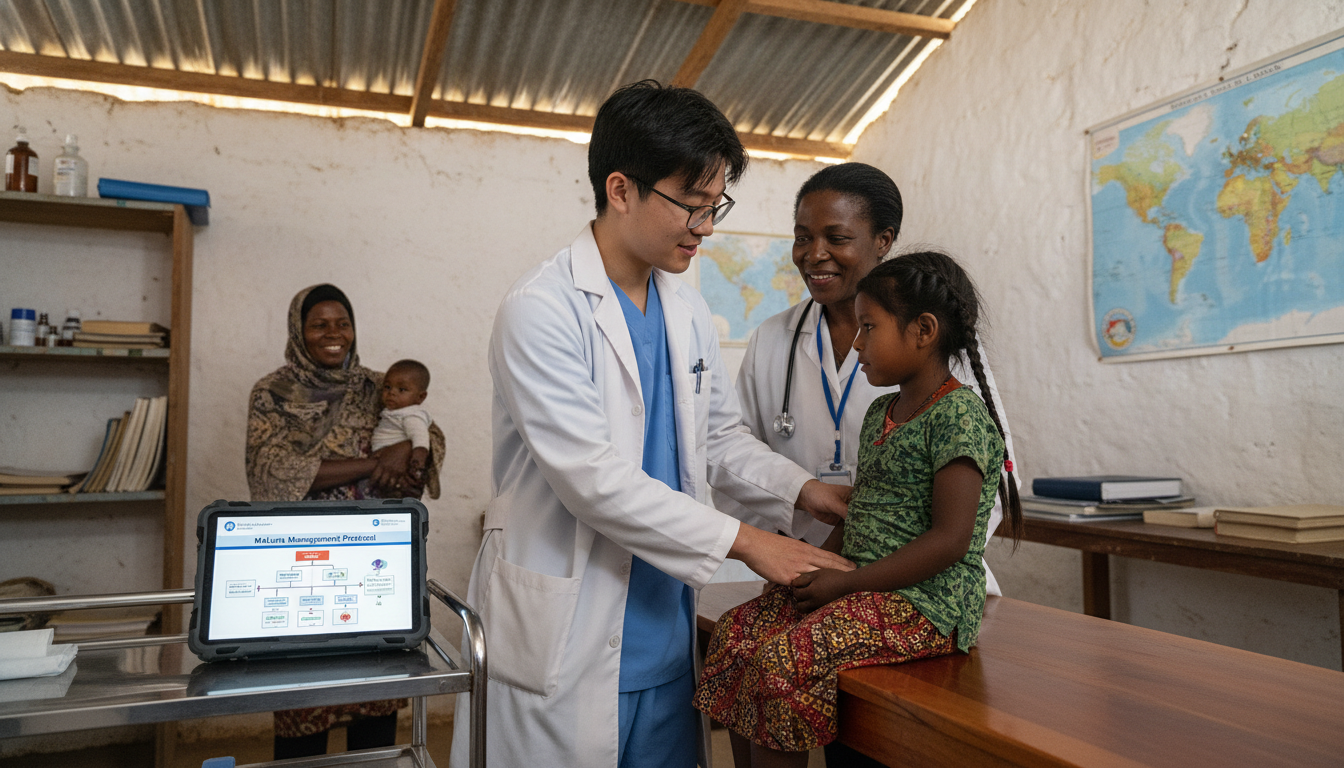
Your interest in global health and international medicine can be a strength, not a distraction, in your USMLE Step 2 study—if you approach it strategically.
Using Global Health Rotations to Reinforce Step 2 CK Content
Rotations in resource-limited settings (or mission trips, NGO work, or exchange programs) often emphasize:
- Infectious diseases (TB, HIV, malaria, helminths)
- Maternal-fetal medicine and obstetrics
- Pediatric diseases with nutritional and environmental components
- Public health and epidemiology (screening programs, vaccination)
These areas are heavily tested on Step 2 CK. To maximize synergy:
During a global health rotation:
- Keep a running list of real patient cases and map each case to:
- Chief complaint
- Differential diagnosis
- Workup in ideal US setting
- Workup in resource-limited setting
- Evidence-based treatment (US guidelines)
- After clinic, do UWorld blocks related to the patients you saw that day.
For example:- Saw TB and HIV cases → do ID/HIV/TB questions.
- Saw postpartum hemorrhage → OB/GYN block.
This contextualizes your USMLE Step 2 study with real patients and deepens retention.
Recognizing US vs. Global Practice Gaps
One challenge for US citizen IMGs in global settings: the standard of care you see daily may differ from US guidelines tested on Step 2 CK.
For example:
- Antibiotic choices may be limited in your setting.
- Imaging and labs may be constrained.
- Common “US board-type” pathologies (e.g., CT pulmonary angiogram for PE, broad use of troponins, specific biologics) may be rare or unavailable.
To stay exam-aligned:
- For each patient, ask:
“If this patient were in a US teaching hospital with full resources, what would be the next best step according to US guidelines?” - Cross-check with:
- UWorld explanations
- UpToDate (if available)
- Online MedEd/Boards & Beyond notes
Creating this “dual lens”—what’s realistic in your setting vs. what is expected in US practice—is invaluable both for Step 2 CK and for your future work in global health.
Showcasing Global Health in Your Application, Not in Your Answers
Important nuance: while your global health background helps your long-term career and application, Step 2 CK itself is:
- A standardized test based on US clinical practice
- Not the place to answer based on limited-resource constraints unless specified
For example:
- If a question gives you access to MRI and labs, and does not mention resource constraints, answer according to US guidelines, not what you would do in a remote clinic.
Think of it this way:
Your global health rotations shape your clinical maturity and perspective, but on test day, you must think like a physician practicing in a resource-rich US academic center unless the vignette clearly indicates otherwise.
Step-by-Step USMLE Step 2 Study Strategy and Milestones
Months 3–4 Before Exam: Foundation + High-Yield Qbank Start
Goals:
- Cover core content once in a structured way
- Start UWorld with system-based or mixed blocks
Action Plan:
Content Review (2–3 hours/day)
- Online MedEd or Boards & Beyond:
- Internal Medicine, Surgery, Ob/Gyn, Pediatrics, Psychiatry, Neurology.
- Make short, high-yield notes organized by system (heart failure management, COPD exacerbation, prenatal care, etc.).
- Online MedEd or Boards & Beyond:
Qbank (1–2 blocks/day)
- Start with:
- Timed but system-focused blocks while content is fresh.
- Focus on:
- Thoroughly reading explanations
- Understanding why wrong options are wrong
- Not just memorizing buzzwords.
- Start with:
Error Tracking
Maintain an “error log” doc or spreadsheet:- Question ID or topic
- Why you missed it (knowledge gap, misread, time pressure, overthinking)
- The correct concept summarized in 1–3 sentences
Months 2–3 Before Exam: Transition to Exam Mode
Goals:
- Shift to more realistic exam conditions
- Identify weak areas
Action Plan:
Increase UWorld Intensity
- 2–3 blocks per day, timed and random.
- Aim to complete the full Qbank at least once by 6–8 weeks out.
First NBME
Around 6–8 weeks before target date:- Take an NBME self-assessment in exam-like conditions:
- Quiet environment
- No breaks beyond scheduled
- No phone or interruptions
- Use the score as a baseline, not a final verdict.
- Take an NBME self-assessment in exam-like conditions:
Targeted Remediation
Based on NBME and UWorld performance:- Identify top 2–3 weakest systems (e.g., OB/GYN, Psychiatry).
- Spend 3–5 days heavily focusing on:
- Re-watching related videos
- Re-doing UWorld questions for those topics
- Reading guideline summaries
Final 4–6 Weeks: Polishing and Predictive Testing
Goals:
- Maximize score potential
- Fine-tune timing and stamina
Action Plan:
Full-Length Practice Tests
- Schedule:
- NBME 1: ~4–6 weeks before
- UWSA 1: ~3–4 weeks before
- NBME 2/3 (if available): ~2–3 weeks before
- UWSA 2: ~1–2 weeks before
- Use average of recent NBME/UWSA scores to estimate real Step 2 CK performance.
- Schedule:
Refine Test-Day Strategy
- Practice:
- How many questions you can comfortably answer per minute (target ~80–90 seconds/question).
- Break schedule: plan where your longer and shorter breaks will go.
- During UWSAs, simulate:
- Same start time as your real test
- Same food and hydration pattern.
- Practice:
High-Yield Rapid Review In last 10–14 days, concentrate on:
- Key tables:
- Murmurs and maneuvers
- EKG patterns
- OB emergencies and management
- Pediatric milestones and red flags
- Common antibiotic regimens
- Missed question patterns from your error log.
- Key tables:
Do Not Cram New Resources
- Avoid starting a brand-new question bank or full textbook in the last 2 weeks.
- Focus instead on consolidating what you already studied.
Step 2 CK Test-Day Strategy and Mindset for US Citizen IMGs
Logistics for Americans Studying Abroad
If you’re an American studying abroad, you may be taking Step 2 CK:
- In your school’s country, at a local Prometric center
- Or in the US, combined with US electives or interviews
Plan ahead:
- Book your exam date at least 2–3 months in advance, especially in busy seasons (summer, early fall).
- If traveling internationally:
- Arrive 3–5 days early to adjust for jet lag.
- Visit the testing center at least once beforehand if possible (even just to see the neighborhood).
- Confirm ID requirements—usually:
- Passport
- ECFMG permit printout (check current ECFMG rules)
Test-Day Break and Time Management
The exam is 8 blocks (up to 40 questions each), 60 minutes per block, with a total of 9 hours including breaks.
Suggested structure:
- Start: 1st block, no break (if you’re fresh and focused).
- After Block 1: 5-minute reset (bathroom, water).
- After Block 3: 10–15-minute snack break.
- After Block 5 or 6: another 10–15-minute break.
- Keep at least 5–10 minutes in reserve for an emergency (fatigue, unexpected issue).
Mental Approach: Answer Like a US Resident Physician
As a global health–oriented IMG, you may naturally think about resource constraints or cultural nuances. On test day:
- Prioritize:
- US standard of care guidelines
- Patient safety and medico-legal considerations
- Evidence-based next best step
Examples:
- A patient with classic STEMI and no contraindications → early PCI, aspirin, P2Y12 inhibitor, heparin.
- A child with suspected meningitis and signs of increased ICP → imaging before LP.
Even if your global setting would force alternative strategies, the exam wants the ideal US answer unless otherwise indicated.
Putting It All Together: Aligning Step 2 CK, Global Health, and Residency Goals
As a US citizen IMG interested in a global health residency track or international medicine, your strategy should connect three elements:
- High Step 2 CK performance
- Meaningful global health experience
- Clear narrative in your application
How Step 2 CK Supports a Global Health–Focused Application
Program directors in global health–oriented tracks want residents who can:
- Work effectively in low-resource settings
- Think critically about systems of care
- Still maintain strong core clinical and diagnostic skills
Your Step 2 CK score signals that you:
- Can handle high-cognitive-load clinical environments
- Are capable of practicing to a high standard in the US context
- Will maintain quality of care even while navigating global challenges
Timeline Integration with ERAS and Match
As a US citizen IMG:
- Try to take Step 2 CK by early August of the year you apply, if possible.
- This allows:
- Scores to be reported in time for application review
- Time to adjust your program list based on performance
- If you are late:
- Communicate clearly with programs (via ERAS, emails) about your test date and expectations.
Common Pitfalls for US Citizen IMGs and How to Avoid Them
Overreliance on “real-world” experience over exam prep
- Solution: Treat global health and international medicine as complementary to, not a replacement for, structured USMLE Step 2 study.
Fragmented preparation due to travel and rotations
- Solution: Use portable resources (UWorld app, PDF notes, small tablet) and protect at least 2–3 hours daily consistently, even during busy weeks.
Delaying Step 2 CK too long after clinical rotations
- Solution: Ideally, take Step 2 CK within 6–12 months of completing your core clinicals, while knowledge is still fresh.
Underestimating importance of practice tests (NBMEs, UWSAs)
- Solution: Schedule and respect them as non-negotiable milestones for Step 2 CK preparation and score prediction.
FAQs: USMLE Step 2 CK Preparation for US Citizen IMG in Global Health
1. As a US citizen IMG, what Step 2 CK score should I aim for if I want a global health residency track?
For internal medicine or family medicine with strong global health residency tracks, a Step 2 CK score in the 240+ range is generally competitive, especially at academic centers. However:
- A solid overall application (strong LORs, US clinical experience, clear global health narrative) can still be competitive with scores in the 225–240 range.
- For more competitive specialties with global health niches (like EM or Pediatrics), target 245–250+ to broaden options.
2. Can my global health experience compensate for a lower Step 2 CK score?
Global health experience strengthens your application narrative, but it is not a substitute for a solid Step 2 CK score. Admissions committees still heavily weigh standardized metrics. Strong international medicine experience can:
- Help you stand out among similar-score applicants
- Boost your chances when combined with a solid but not stellar score
But it rarely fully compensates for significantly below-average scores, especially for US citizen IMGs.
3. How should I balance US clinical electives and Step 2 CK preparation?
Ideally:
- Complete your busiest US electives before or well before your dedicated USMLE Step 2 study period.
- Use lighter rotations or gaps between electives for dedicated exam prep (8–12 weeks).
- During electives:
- Do at least 1 UWorld block per day.
- Use real patients as prompts to review related topics in your Step 2 CK resources.
If you must overlap heavily, protect evening and weekend time and avoid postponing the exam more than necessary.
4. Are there any Step 2 CK topics particularly important for someone interested in global health?
Yes. For an American studying abroad or US citizen IMG targeting global health:
- Infectious diseases (HIV, TB, malaria, parasitic infections)
- Obstetrics and maternal health (antenatal care, eclampsia, PPH)
- Pediatrics and nutrition (growth, vaccination, malnutrition)
- Public health/epidemiology (screening programs, vaccine-preventable diseases)
- Ethics and systems-based practice (resource allocation, triage)
These topics are both heavily tested on Step 2 CK and central to global health practice. Mastering them helps your score and reinforces your long-term goals in international medicine.
With a focused, disciplined USMLE Step 2 study plan and strategic use of your global health experiences, you can turn Step 2 CK into a major asset for your residency application. As a US citizen IMG, your unique path is a strength—Pair it with a strong Step 2 CK performance, and you’ll be well positioned for a career that blends high-quality US clinical practice with meaningful work in global health.