



Understanding Step 2 CK as a DO Graduate Aiming for Pathology
USMLE Step 2 CK is more than just the “next exam” after Level 2-CE or Step 1. For a DO graduate targeting a pathology residency, especially in today’s increasingly competitive environment, your Step 2 CK score can:
- Demonstrate you are fully comparable to MD applicants.
- Offset a weaker Step 1 or COMLEX Level 1 score.
- Strengthen your position in the pathology match (especially for university programs).
- Show program directors that you handle clinical reasoning and medical knowledge at a high level—even though pathology is not a mainly clinical specialty.
Many DO graduates applying to pathology ask: “How much does Step 2 CK matter if I want to do pathology?” The answer: it may not need to be a “superstar” score like for dermatology or orthopedics, but it must be solid and in line with your overall application. For some programs, a good Step 2 CK score is the single clearest signal of your readiness and competitiveness as a DO graduate in the osteopathic residency match and the broader pathology match.
This article will walk you through a comprehensive, practical approach to USMLE Step 2 study and test-day execution, tailored specifically for a DO graduate interested in pathology.
How Step 2 CK Fits into a DO Pathology Applicant’s Strategy
Why Step 2 CK Still Matters for Pathology
Even though pathology is not a direct patient-facing specialty for most residents, program directors still consider Step 2 CK:
- Objective benchmark: It’s a standardized metric across MD and DO applicants.
- Evidence of clinical reasoning: Pathologists collaborate with clinicians and must understand how lab and pathology findings fit into clinical context.
- Residency performance predictor: Strong Step 2 CK performance correlates with passing Board exams and handling academic demands.
For DO graduates, Step 2 CK can particularly help with:
- Showing equivalency in training and knowledge base.
- Addressing any concern about COMLEX-only scores.
- Supporting interest in academic or competitive pathology residency tracks.
When a DO Graduate Should Definitely Take Step 2 CK
You should strongly consider Step 2 CK if:
- You’re applying mainly to ACGME-accredited pathology residencies (which is now essentially all programs after the single accreditation system).
- Your COMLEX Level 1 or Level 2-CE scores are average or below average and you need a stronger metric.
- You are targeting university-based, research-heavy, or big-name academic centers where selection is more competitive.
- You’re considering a backup specialty that places more weight on clinical exam scores.
Pathology vs. Clinical Heavy Specialties: Score Targeting
You do not need a neurosurgery-level Step 2 CK score. But you should aim for a comfortably above-average score to enhance your application. While exact score thresholds change over time, a rational approach is:
- Baseline target: Aim to perform at or above the national mean (commonly around the high 240s in recent years; check current NBME data).
- Competitive academic pathology: Aim for 10–15 points above the mean, especially if you want top-tier or research-heavy programs.
- If Step 1/COMLEX Level 1 was low: Use Step 2 CK as a “redemption exam” and shoot as high as realistically possible.
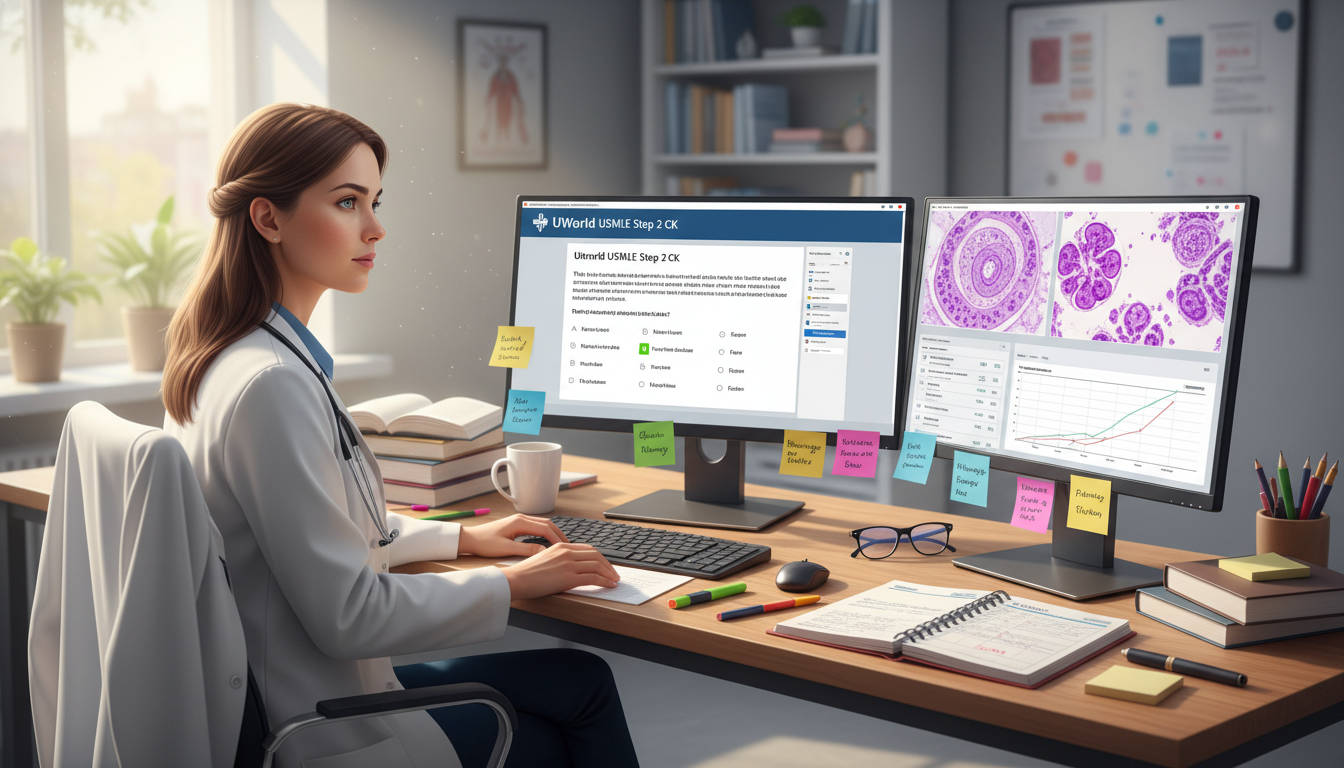
Building a High-Yield Step 2 CK Study Plan as a DO Graduate
Step 1: Assess Your Baseline
Before jumping into full USMLE Step 2 study mode, first figure out where you stand.
Review your COMLEX and Step 1 performance:
- Strong medicine and systems-based performance may predict easier Step 2 CK prep.
- If you struggled with internal medicine or pharmacology, plan extra emphasis there.
Take a baseline assessment:
- Use an NBME Step 2 CK practice exam or a UWorld self-assessment (UWSA) near the beginning.
- Don’t obsess about the score yet—use it for a diagnostic snapshot:
- Identify weak organ systems (e.g., cardiovascular, renal).
- Identify weak disciplines (e.g., pharmacology, ethics, biostatistics).
Inventory your commitments:
- Are you in a pathology research year? On an away rotation? Working clinically?
- How many hours/week can you realistically dedicate to studying?
Step 2: Choose a Study Timeline
Common timelines for DO graduates:
- Dedicated period (4–8 weeks) after major clinical rotations.
- Hybrid approach (2–4 months) studying part-time during rotations, then short dedicated time before the exam.
Example timelines:
- Aggressive (4-week dedicated):
- Full-time studying 8–10 hours/day.
- Best if your clinical knowledge is already strong and you recently took COMLEX Level 2-CE.
- Moderate (6–8 weeks dedicated):
- More common, especially if you want a strong Step 2 CK score.
- Mix of Qbank, review resources, and practice exams.
- Extended (12–16 weeks part-time):
- Ideal if you are balancing rotations or pathology research.
- 2–4 hours/day on weekdays, 6–8 hours/day on weekends.
Choose the longest realistic timeline you can maintain without burnout and without delaying your application unnecessarily.
Step 3: Core Resources for Step 2 CK Preparation
For most DO graduates, an efficient, high-yield resource set looks like this:
Question Bank (Qbank) – Non-negotiable:
- UWorld Step 2 CK: Consider this your primary study tool.
- Aim to complete 100% of the questions once, and ideally 1.5x–2x if time allows.
- Use tutor mode early, then timed blocks as you approach test day.
- Avoid spreading yourself too thin with multiple full Qbanks; better to deeply master one.
- UWorld Step 2 CK: Consider this your primary study tool.
Comprehensive Review Text/Video:
- Online MedEd, Boards and Beyond (Step 2), or a similar structured resource.
- Especially useful if:
- Your clinical foundation from rotations is uneven.
- You feel less confident in core internal medicine, OB/GYN, or pediatrics.
Rapid Review Book:
- Many students use a Step 2 CK review text or condensed notes:
- E.g., Step-Up to Medicine (for internal medicine-heavy review).
- Use as a reference and spot review, not as your main learning engine.
- Many students use a Step 2 CK review text or condensed notes:
Practice Exams:
- NBME Form(s): At least 2 NBMEs to trend your progress.
- UWorld Self-Assessment (UWSA): 1–2 exams near the end of your prep.
Biostats/Ethics Resources:
- Step 2 CK heavily tests biostatistics, epidemiology, and ethics.
- Consider focused practice sets or short review booklets specifically for these areas.
Step 4: Build a Weekly Study Structure
A typical balanced week for a DO graduate might look like:
Daily Qbank:
- 40–80 questions/day depending on where you are in your timeline.
- Early: 40/day with deep review.
- Later: 60–80/day in timed blocks, simulating the exam.
Content Review:
- 2–4 hours/day using videos or concise notes to review weak areas.
- Center your study around topics exposed by your Qbank wrong answers.
Spaced Repetition:
- Use Anki or a similar flashcard system for:
- Pharmacology drugs and adverse effects.
- Must-know diagnostic criteria.
- High-yield scores, formulas, and risk factors.
- Use Anki or a similar flashcard system for:
Weekly Assessment:
- Once a week, track:
- Qbank percent correct (overall and by system).
- Topics with recurrent misses.
- Adjust next week’s focus accordingly.
- Once a week, track:
Example day (mid-prep, 6–8 week dedicated):
- 8:00–10:00 – Qbank block 1 (40 questions, timed).
- 10:00–12:30 – Detailed review of explanations, flagged concepts, and making flashcards.
- 13:30–15:30 – Content review videos (e.g., cardiology, endocrinology).
- 15:30–16:30 – Short Qbank block 2 (20–40 questions, tutor mode).
- 16:30–17:00 – Rapid review of Anki cards.
Tailoring Step 2 CK Preparation with a Pathology Mindset
Leveraging Your Pathology Strengths
As a pathology-focused DO graduate, you may naturally excel at:
- Pathophysiology and mechanisms of disease.
- Interpreting labs, biopsy findings, and imaging in context.
Use these strengths to your advantage on Step 2 CK:
Master Diagnostic Reasoning from the “Lab Side”:
- Focus on questions where:
- Lab values tip the diagnosis (e.g., renal failure, endocrine disorders).
- Biopsy or imaging findings confirm or refine differential diagnoses.
- Think as a future pathologist: What test, lab, or biopsy would definitively answer this clinical question?
- Focus on questions where:
Become Strong in Hematology/Oncology and Immunology:
- These domains overlap heavily with pathology and are high-yield for Step 2 CK.
- Examples:
- Interpreting peripheral smear findings.
- Understanding indications for bone marrow biopsy.
- Evaluating coagulopathy or thrombophilia labs.
Use Rotations Strategically:
- During internal medicine, surgery, OB/GYN, pediatrics, and emergency medicine:
- Deliberately connect clinical presentations to underlying pathology.
- Ask yourself: “What is happening at the tissue/cellular level?”
- This deepens retention and will show up as better performance on complex Step 2 CK questions.
- During internal medicine, surgery, OB/GYN, pediatrics, and emergency medicine:
Balancing Pathology Interest with Clinical Breadth
Even though your career will be lab- and microscope-heavy:
- Step 2 CK expects you to function as a well-rounded, clinically competent physician.
- Do not neglect:
- Acute management algorithms (ACS, sepsis, stroke).
- OB/GYN emergencies (e.g., ectopic pregnancy, postpartum hemorrhage).
- Pediatrics vaccine schedule and common pediatric infections.
- Psychiatry (diagnostic criteria, first-line medication choices, side effects).
For a DO graduate entering the pathology match, you don’t need to be the best at trauma surgery questions, but you do need to demonstrate safe and competent clinical reasoning across all major areas.
Osteopathic Principles: Relevance and Strategy
Although the USMLE Step 2 CK does not directly test osteopathic manipulative treatment (OMT), your osteopathic training still helps:
- Holistic reasoning: You’ve been trained to consider patient context, social determinants, and function—all important in ethics and communication-based questions.
- Broad systems-based thinking: OMM training reinforces understanding of musculoskeletal and neurologic conditions, helpful in many clinical vignettes.
Strategy as a DO graduate:
- Don’t try to “force” OMT concepts into Step 2 CK questions.
- Translate your osteopathic foundation into strong clinical reasoning, especially in cases involving pain syndromes, functional disorders, or musculoskeletal issues.

Integrating Step 2 CK with Your Pathology Residency Application Strategy
Timing Step 2 CK for the Pathology Match
When planning your USMLE Step 2 CK exam date, consider:
- ERAS application deadlines (typically mid-September).
- Score reporting time (usually 2–4 weeks, but verify current timelines).
- Whether you want your Step 2 CK score available to program directors when they first review your application.
Common strategies:
Early Strategy (Spring/Early Summer of Application Year):
- You take Step 2 CK before July–August.
- Score is available for ERAS submission.
- Advantage: A strong score boosts your initial screening.
- Disadvantage: Less clinical experience if taken too early.
Mid Strategy (Late Summer):
- You take Step 2 CK in July or August.
- Ideal if you want:
- More clinical preparation time.
- Score to return before interview offers go out.
- Risk: If there are delays in score reporting, it might come out after some initial reviews.
Late Strategy (After ERAS Submission):
- Appropriate if:
- You already have strong Board scores and pathology experiences.
- You are concerned a weaker Step 2 CK score might hurt your application.
- Many DO graduates in this position still prefer having Step 2 CK done before interviews, so they can discuss it positively if needed.
- Appropriate if:
For most pathology-focused DO graduates, mid strategy (late spring to summer) strikes the best balance.
Presenting Your Step 2 CK Score in Your Application
Once you have your Step 2 CK score:
If it’s a strength (e.g., above average or significantly better than prior exams):
- Highlight your improvement and consistency in your personal statement or at interviews.
- Connect it with your commitment to strong clinical-pathologic reasoning.
If it’s average but consistent:
- Emphasize other parts of your application:
- Pathology rotations and letters.
- Research, case reports, or posters.
- Clinical performance and narrative evaluations.
- Emphasize other parts of your application:
If it’s below expectations:
- Look for:
- Strong path-specific experiences (electives, research, away rotations).
- Strong letters of recommendation from pathologists.
- Evidence of resilience and growth (e.g., improved shelf scores, strong COMLEX scores).
- Be prepared to candidly acknowledge the score if asked and pivot to your strengths.
- Look for:
How Program Directors View Step 2 CK for DO Pathology Applicants
In many pathology programs, program directors will:
- Use Step 2 CK or COMLEX Level 2-CE as part of initial screening.
- Use scores to confirm consistency with the rest of the application.
- Not expect pathology applicants to have ultra-competitive scores like surgical subspecialty applicants—but they do expect competence and reliability.
As a DO graduate, your Step 2 CK score helps:
- Demonstrate that you’re comfortable in the allopathic testing framework.
- Make you more directly comparable in the pathology match with MD candidates.
- Strengthen your case for academic or university-based programs, particularly if you combine it with scholarly activity.
Test-Day Strategy and Final Review
Final 2–3 Weeks: Consolidation Phase
In the last weeks of your USMLE Step 2 study:
Shift towards timed practice and endurance:
- Simulate 2–3 full blocks/day under exam-like conditions.
- Focus on pacing and mental stamina.
Prioritize weak systems and disciplines:
- Review your Qbank performance by organ system.
- Give extra time to:
- Cardiovascular, pulmonary, renal.
- Infectious disease.
- OB/GYN and pediatrics if you historically score lower there.
High-yield rapid review:
- Biostatistics formulas and interpretation.
- Diagnostic criteria (e.g., major psychiatric disorders).
- First-line treatments and contraindications.
Take at least one full-length practice exam:
- Use NBME or UWSA in one sitting.
- Practice breaks, hydration, and snack timing.
Practical Test-Day Tips
Sleep and routine:
- Stabilize your sleep schedule 3–5 days before.
- Avoid intense new content the night before—light review only.
Logistics:
- Confirm test center location, ID, and rules.
- Pack snacks, water, and any allowed comfort items (e.g., earplugs if permitted).
Exam pacing:
- Aim for ~75 seconds/question on average.
- If stuck:
- Eliminate obviously wrong answers.
- Make your best guess.
- Move on—do not let a single question derail your block.
Mindset:
- Expect some unfamiliar, extremely difficult questions.
- Remember: everyone sees “impossible” questions; they’re often experimental or low-weight.
- Focus on performing steadily across the remaining 90–95% of the test.
Frequently Asked Questions (FAQ)
1. As a DO graduate interested in pathology, do I really need to take Step 2 CK if I already have COMLEX scores?
While some programs will consider COMLEX only, taking Step 2 CK significantly broadens your options, especially in the ACGME pathology residency landscape. A solid Step 2 CK score:
- Makes it easier for programs to compare you directly with MD applicants.
- Helps in programs less familiar with interpreting COMLEX percentiles.
- Can strengthen your position in both the osteopathic residency match history and the current unified pathology match environment.
If you are aiming for university-based or academic pathology residencies, Step 2 CK is highly recommended.
2. What Step 2 CK score should I aim for to be competitive for pathology?
While specific numbers change over time, general guidance:
- Aim for at least around the national mean as a baseline.
- If you’re targeting top-tier or academic pathology programs, aim 10–15 points above the mean.
- If your Step 1 or COMLEX Level 1 was lower, using Step 2 CK to show significant improvement can be even more important than the exact final number, as it demonstrates trajectory and resilience.
3. How should I balance USMLE Step 2 study with pathology electives and research?
Consider the following strategy:
- During pathology electives/research blocks:
- Set a consistent daily Qbank goal (e.g., 40–60 questions).
- Integrate learning from your pathology work into Step 2 CK (e.g., lab interpretation, hematology, oncology).
- Reserve your most intense dedicated study time (e.g., 4–8 weeks) for a period when you’re not on demanding clinical rotations.
- If you have a research-heavy block with flexible hours, use that as a combined Step 2 CK preparation + CV-building phase.
4. Is it necessary to do more than one Qbank for Step 2 CK?
For most DO graduates, especially with pathology as the target specialty, one high-quality Qbank (like UWorld) done thoroughly is sufficient. It’s better to:
- Complete one Qbank fully and thoughtfully, reviewing explanations in depth.
- Track patterns in your mistakes and reinforce weak areas with targeted resources.
If you have significant extra time and have already fully mastered UWorld (e.g., >80–85% correct on second pass), adding a second bank can help with additional exposure—but this is optional, not essential, for a strong Step 2 CK score.
By approaching USMLE Step 2 CK preparation with a clear plan, leveraging your pathology strengths, and aligning your exam timing with your overall pathology residency strategy, you can turn Step 2 CK from a hurdle into a powerful asset in your application portfolio as a DO graduate.




















