
Understanding Step 2 CK as a DO Graduate Aiming for Preliminary Surgery
For a DO graduate targeting a preliminary surgery year, USMLE Step 2 CK is more than just another exam—it’s a strategic tool. While COMLEX scores will always be part of your portfolio, a strong Step 2 CK score can:
- Demonstrate parity with MD applicants in a competitive pool
- Offset a weaker Step 1 or COMLEX Level 1 (especially now that Step 1 is pass/fail)
- Show program directors that you can handle the cognitive demands of a demanding prelim surgery residency
- Strengthen your application if you are targeting a categorical surgery spot later
Preliminary surgery years often function as a proving ground. Many DO graduates view them either as:
- A bridge into a categorical general surgery position (via internal transfer or re-application), or
- A stepping stone into other competitive fields (anesthesia, radiology, urology, etc.) where strong USMLE scores are scrutinized.
In both situations, high‑quality Step 2 CK preparation is critical. Because prelim surgery programs know that their residents will be under intense clinical pressure, they tend to value candidates who have already demonstrated resilience and strong test‑taking ability.
Why Step 2 CK Matters Specifically for DO Graduates
As a DO graduate, you bring strengths that surgery programs appreciate: hands‑on skills, a whole‑patient perspective, and osteopathic manipulative medicine (OMM) training. But you may also be navigating:
- Variability in how program directors understand COMLEX scores
- A perception (sometimes outdated) that DO curricula are less aligned with USMLE content
- Concern about how you’ll compare on standardized exams to MD candidates
A competitive Step 2 CK score helps neutralize those concerns and underscores that you can excel on the same exam everyone else takes. It also reassures surgical faculty that you can keep up with dense clinical reasoning under pressure—exactly what you will face on busy preliminary surgery rotations.
Building a Strategic Study Plan for Step 2 CK
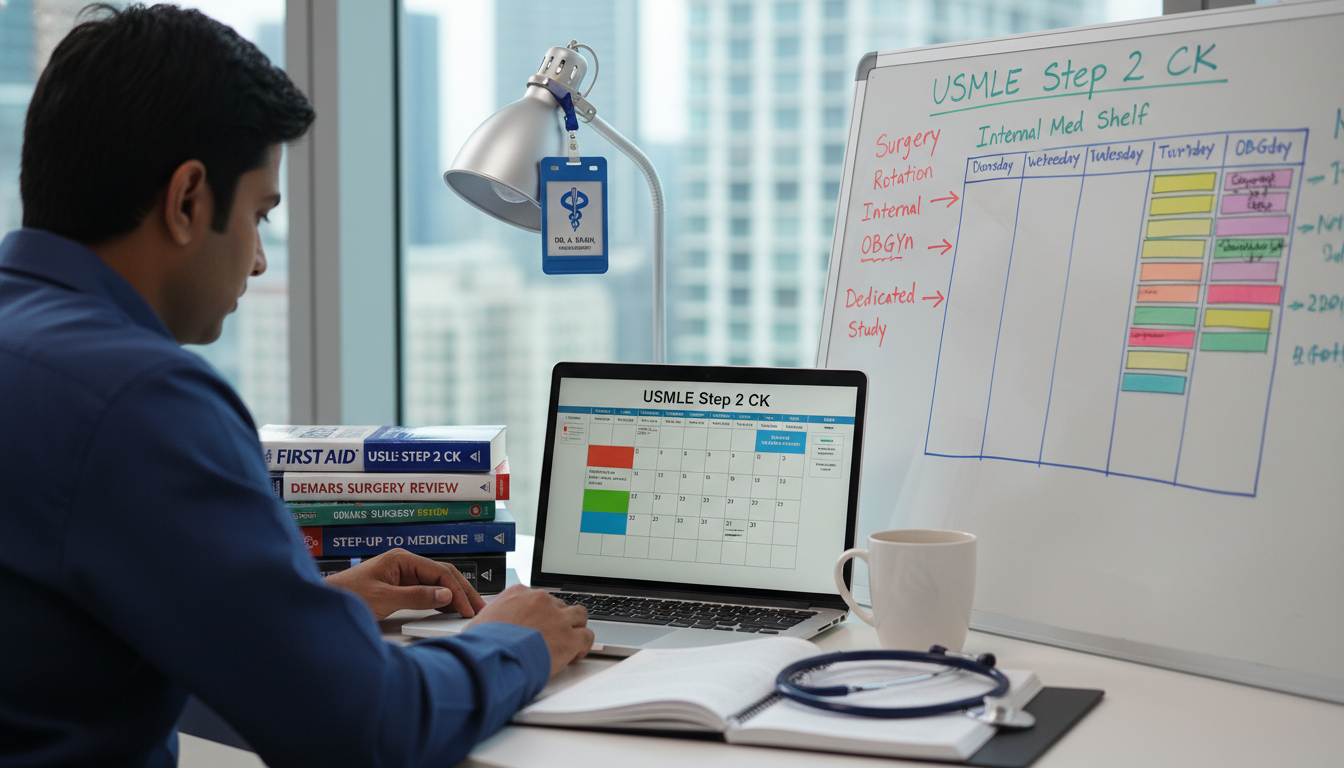
Effective USMLE Step 2 study is not about how many resources you own; it’s about how precisely you use a small, high-yield set and how you structure your time around clinical demands.
Step 2 CK Timeline for a DO Graduate Targeting a Prelim Surgery Year
For most DO graduates applying to a preliminary surgery residency:
- Ideal test date: June to August of the year you apply
- Primary applications (ERAS) open/submit: September
- Goal: Have your Step 2 CK score available early in interview season, especially if Step 1/COMLEX scores are average or below where you’d like them to be
If you are still in your 3rd or early 4th year:
- Aim for 6–10 weeks of focused Step 2 CK preparation, preferably anchored around your core clerkships.
- Front-load medicine, surgery, and OB/GYN material, since these are heavily tested.
If you are already in a preliminary surgery year and considering Step 2 CK (e.g., for re-applying to categorical surgery or another specialty), you’ll have less protected time:
- You may need a longer, lower-intensity study horizon (3–4 months), heavily reliant on question banks and daily consistency.
Key Components of an Effective Step 2 CK Preparation Plan
Baseline Assessment
- Take an NBME practice exam or UWorld Self-Assessment (UWSA) early.
- Identify weak systems: internal medicine subspecialties, OB/GYN, pediatrics, psychiatry, emergency medicine.
- DO graduates with strong hands-on surgical skills often underestimate the breadth of medicine content—Step 2 CK is heavily medicine-weighted.
Resource Selection (Keep It Tight)
For most DO graduates, an efficient resource set includes:
- Main QBank:
- UWorld Step 2 CK (primary; aim to complete 75–100% with careful review)
- Supplementary QBank (optional if time):
- Amboss or Kaplan QBank for extra questions or targeted weak areas
- Rapid Review/Outline Resources:
- OnlineMedEd or Boards & Beyond (to patch conceptual holes quickly)
- High-Yield Notes:
- A concise Step 2 CK review book (e.g., Step-Up to Medicine + a quick review guide)
- Your personal notes from COMLEX/Step 1 + clerkships
Avoid over-collecting resources. Depth in one QBank plus structured review will outperform shallow exposure to many.
- Main QBank:
Daily Structure During Dedicated Study
Example 6-week dedicated schedule (full-time study):
- 6 days per week, 1 rest day
- Morning (3–4 hours):
- 40–60 timed, random UWorld questions (1–2 blocks) in test mode
- Afternoon (3–4 hours):
- Detailed review of every question: correct, incorrect, and guessed
- Annotate high-yield points into one central document or margin notes
- Evening (1–2 hours):
- Short video review or focused reading (weak topics from that day)
- Quick flashcard session for common Step 2 CK patterns (e.g., hypertension management, chest pain workup, post-op complications)
For DO graduates, integrating osteopathic reasoning can help you remember patterns, but focus primarily on USMLE-style algorithms (e.g., ACOG, ACC/AHA, IDSA guidelines).
Balancing Rotations and Step 2 CK Study
If you are still on rotations (especially surgery), time is scarcer:
- Aim for 20–40 UWorld questions daily, even during busy weeks.
- Use commute and downtime for flashcards and short review videos.
- Choose at least 1 half-day per week (post-call or lighter clinic day) for longer, dedicated review.
For a DO graduate interested in a preliminary surgery residency, strategically align your Step 2 CK study with your surgery clerkship:
- Study peri-operative medicine (DVT prophylaxis, postoperative ileus, infections, electrolyte disturbances) while on the surgery floor.
- Correlate real patients with guideline-based management—this improves retention and helps in both exam and interviews.
High-Yield Content Areas for Prelim Surgery–Bound DO Graduates

Step 2 CK is not a surgery exam; it is a comprehensive clinical knowledge exam. However, there are specific domains that align closely with what you’ll see in a preliminary surgery year and are therefore doubly important.
1. Perioperative Medicine and Post-Op Complications
Program directors in surgery care deeply about your ability to manage a sick post-op patient at 3 AM. Step 2 CK reflects that.
Focus on:
Preoperative risk stratification
- Cardiac clearance: who needs stress testing vs. who can go straight to surgery
- Pulmonary risk factors: COPD, OSA, smoking cessation timing
- Medication management: what to do with anticoagulants, antiplatelets, and diabetes meds pre-op
Common post-op issues
- Fever: wind (atelectasis, pneumonia), water (UTI), wound (infection), walk (DVT/PE), wonder drugs
- Fluid and electrolyte disturbances: hyponatremia, hypokalemia, metabolic alkalosis in NG suction patients
- GI complications: ileus vs. small bowel obstruction, C. difficile colitis, anastomotic leak
- Wound complications: hematoma, seroma, wound dehiscence, evisceration
On Step 2 CK, these often appear as vignettes with subtle timing clues (e.g., “Day 1 post-op vs. Day 7 post-op”) that point to different diagnoses.
2. Trauma and Emergency Surgery
High-yield trauma topics that overlap with a surgery prelim role:
- ATLS principles and algorithms
- ABCs: airway first—recognize when to intubate vs. cricothyrotomy
- Hemodynamically unstable patient with suspected internal bleeding: when to go to OR vs. CT vs. FAST
- Specific trauma scenarios
- Blunt abdominal trauma in stable vs. unstable patients
- Penetrating trauma to chest vs. abdomen
- Spinal, head trauma: indications for imaging, ICP management basics
For Step 2 CK, know the correct next step in management rather than the technical procedure details.
3. Internal Medicine: The Core of Step 2 CK
Even if your passion is surgery, the exam is heavily weighted toward internal medicine. Focus on:
- Cardiology: ACS management, heart failure, arrhythmias, valvular disease, endocarditis
- Pulmonology: COPD/asthma exacerbations, PE workup and treatment, pneumonia management
- Infectious Disease:
- Empiric antibiotic selection for common infections
- Sepsis protocols, including initial fluids and vasopressor choices
- Nephrology: AKI patterns, acid-base disorders, electrolyte management
Think like a medicine intern: what labs to order, how to risk-stratify, when to admit vs. discharge.
4. OB/GYN, Pediatrics, and Psychiatry
These may feel distant from surgery but are critical for Step 2 CK:
- OB/GYN: labor management, hypertensive disorders, contraception, ectopic pregnancy
- Pediatrics: febrile neonate, vaccination schedules, common infections, congenital heart disease basics
- Psychiatry: depression, bipolar, schizophrenia, suicide risk assessment, side effects of psych meds
As a DO, you may find your holistic training helpful in psychiatry scenarios, but stay anchored to evidence-based pharmacologic and psychotherapeutic management tested by USMLE.
5. Ethics, Biostatistics, and Communication
These domains are heavily tested, often through nuanced cases:
- Informed consent, surrogate decision-making, capacity vs. competency
- Handling errors and disclosures, confidentiality, reportable conditions
- Biostatistics: sensitivity, specificity, NNT, interpreting confidence intervals and p-values
- Physician-patient communication in difficult situations (end-of-life care, non-adherence, cultural differences)
These concepts cross-cut all specialties and carry significant weight on Step 2 CK.
Test-Taking Strategies and Common Pitfalls for DO Graduates
USMLE Step 2 CK rewards not just content knowledge but pattern recognition and disciplined reasoning under time pressure. As a DO graduate preparing for a prelim surgery year, you’re already used to busy days and quick decisions; the challenge is translating that mindset onto the exam.
Mastering Question Bank Strategy
Timed, Random Blocks
- From early on, do timed, random blocks rather than tutor mode by subject. This conditions you to switch between topics the way the actual exam forces you to.
- Use tutor mode sparingly for early remediation of specific weak areas.
Depth of Review Over Question Count
- It’s better to fully dissect 40 questions than skim through 80.
- For each question, ask:
- Why is the correct answer right?
- Why is each wrong option wrong?
- What is the “take-home” concept the NBME is targeting?
Error Log
- Maintain a running document (digital or paper) of:
- Repeated mistake patterns (e.g., misreading age groups, missing key labs, confusing similar diagnoses)
- “Gee, I should have known that” facts
- Review this log every few days; this is your personal high-yield book.
- Maintain a running document (digital or paper) of:
Time Management on Test Day
- Step 2 CK is a long, mentally exhausting exam. For many DO graduates, the stamina component is underestimated.
- Practice full-length or near-full-length test days during your final 2 weeks:
- 6–7 blocks of 40 questions with only short breaks
- Use the same snacks, hydration strategy, and timing you plan to use on the real day
- Develop a triage approach during each block:
- First pass: quickly answer straightforward questions
- Mark complex or time-intensive ones and return later
- Avoid getting stuck on any single stem for more than ~75 seconds initially
Common Mistakes DO Graduates Should Avoid
Overemphasizing Surgery-Only Topics
- Step 2 CK does not reward overly niche surgical knowledge.
- Complex operative techniques, rare surgical procedures, or OMM-heavy content are far less tested than bread-and-butter medicine, OB, peds, and psych.
Studying Like It’s COMLEX
- USMLE style is less about “buzzwords” and more about structured clinical reasoning with guidelines and algorithms.
- Shift away from memorizing long differential lists and toward learning “what is the next best step?” in common scenarios.
Delaying Step 2 CK Without a Clear Plan
- A DO graduate with a mediocre Step 1/COMLEX score sometimes delays Step 2 CK, hoping for more prep time.
- In reality, long, unfocused delays can hurt: your application may be reviewed without a Step 2 CK score, or you may take it so late that a strong score cannot influence interviews.
- If you need more time, have a specific and realistic plan (e.g., 12 weeks with X qbank questions, Y NBME exams, Z hours/week carved out) rather than a vague “I’ll keep studying.”
Ignoring Wellness and Burnout
- Especially if you are simultaneously finishing rotations or starting a preliminary surgery residency, burnout can crater your performance.
- Build in:
- One true day off per week during dedicated (light review only, no heavy new content)
- Short daily physical activity: even 20 minutes of walking helps retention and stress management
- Healthy sleep boundaries: at least 6–7 hours per night during your final prep weeks whenever possible
Using Your Step 2 CK Score Strategically in the Osteopathic Residency Match
Your Step 2 CK score has strategic implications for both the osteopathic residency match and the broader NRMP match, particularly in the context of a preliminary surgery year.
Interpreting Your Score as a DO Graduate
If your Step 2 CK score is significantly higher than your Step 1 or COMLEX Level 1, this can:
- Reassure surgical prelim and categorical programs that your trajectory is upward.
- Counterbalance early testing missteps and signal that you are now at your peak performance.
If your Step 2 CK score is similar or slightly lower, this is still fine if:
- You remain above program-typical thresholds.
- Your clinical evaluations, letters of recommendation (especially from surgeons), and rotation performance are strong.
If your Step 2 CK score is below expectations, focus on:
- Strong letters from surgical faculty who can attest to your clinical acumen and work ethic.
- A clear narrative in your personal statement about your growth and resilience, without over-defending your score.
How Programs View DO Graduates with Step 2 CK Scores
For preliminary surgery positions, program directors often look for:
- Proof that you can pass in-service exams and eventually your specialty boards
- Evidence that you will not need constant remediation while managing a heavy workload
- Residents who can handle both the operating room and the ward medicine that surgical teams manage every day
A solid USMLE Step 2 CK performance shows:
- You can handle broad clinical decision-making
- You can read, interpret, and apply guidelines under pressure
- You are serious about working in integrated, MD/DO environments
Aligning Step 2 CK with Your Long-Term Goals
If your ultimate goal is a categorical surgery position:
- Use your Step 2 CK score + prelim surgery year evaluations + strong letters to:
- Reapply to categorical surgery programs
- Explore internal categorical spots where prelims are well-regarded
If you are considering transitioning to another specialty (e.g., anesthesia, radiology, EM):
- Many of these specialties weigh Step 2 CK heavily.
- A high score can open doors even if your prelim year is in surgery, especially when paired with good performance and professional recommendations.
FAQs: Step 2 CK Preparation for DO Graduates in Preliminary Surgery
1. As a DO graduate, do I really need both COMLEX and Step 2 CK for a preliminary surgery residency?
Many programs now accept COMLEX alone, but having USMLE Step 2 CK is often advantageous—especially in competitive or historically MD-dominated surgical environments. A USMLE score allows program directors to compare you directly with MD applicants and can reduce confusion about COMLEX conversion charts. If you are aiming for a broad range of prelim surgery programs, or plan to re-apply for categorical positions, Step 2 CK is strongly recommended.
2. How high does my Step 2 CK score need to be to be competitive for prelim surgery?
There is no single cutoff, and preliminary surgery programs tend to have slightly more flexible thresholds than categorical positions. However:
- A score comfortably above the national mean will generally be seen favorably.
- If your Step 1/COMLEX scores are weaker, your Step 2 CK should ideally be clearly stronger, showing an upward trajectory.
Programs look at the entire application—letters from surgeons, clinical performance, and your personal statement—but a strong Step 2 CK makes everything easier.
3. How should I balance my preliminary surgery year with Step 2 CK preparation if I haven’t taken it yet?
If you enter a prelim surgery year without Step 2 CK:
- Start with a long-range, low-intensity plan:
- 10–20 UWorld questions on most days, even during busy rotations
- More intensive review on lighter weeks or vacation
- Use real patients as anchors for your learning (e.g., every postoperative complication becomes a mini Step 2 CK lesson).
- Try to schedule the exam during a relatively lighter block (e.g., ambulatory surgery or elective rotation), with at least 1–2 weeks of semi-dedicated review time before test day.
4. What are the most efficient resources for Step 2 CK if I’m short on time?
If you are pressed for time (common during a prelim surgery year):
- Non-negotiable:
- UWorld Step 2 CK QBank (as much as you can realistically complete)
- Helpful but secondary:
- One structured video series (e.g., OnlineMedEd) to patch conceptual gaps
- Brief review notes or a condensed review book for last 1–2 weeks
Prioritize active learning through questions over passive reading. Even 1–2 well-reviewed blocks per day can move your score meaningfully.
By designing a focused, realistic Step 2 CK preparation plan tailored to your DO background and preliminary surgery goals, you can turn this exam from an obstacle into a powerful asset in your residency journey.