
Understanding Step 2 CK as an International Medical Graduate
USMLE Step 2 CK is often the most important exam for an international medical graduate (IMG) aiming for a strong residency application. For many IMG residency guide resources, Step 2 CK has effectively become the “make-or-break” exam, especially as Step 1 moved to pass/fail.
What Step 2 CK Really Tests
Step 2 CK is not just “more clinical Step 1.” It focuses on:
- Clinical reasoning and management decisions
- Diagnosis and next-best-step questions
- Prioritization and patient safety
- Applying evidence-based medicine in practical scenarios
Think of it as: How would a safe, supervised intern think and act in this situation? Programs look at your Step 2 CK score as a proxy for that.
Why Step 2 CK Matters More for IMGs
For an international medical graduate, Step 2 CK is often:
- The main objective comparison against U.S. medical graduates
- A strong recovery tool if Step 1 performance was average or low
- A key data point used by programs to decide who to interview
High Step 2 CK performance can partially offset:
- Mid-range Step 1 performance
- Less-known medical schools
- Limited U.S. clinical experience
Because many IMGs are several years removed from core clinical rotations, a targeted Step 2 CK preparation plan is essential. You cannot simply “read everything.” You need an efficient, clinical, exam-oriented strategy.
Building an Effective Step 2 CK Study Plan as an IMG
A strong USMLE Step 2 study plan should be structured, realistic, and flexible. As an IMG, your constraints (visa, finances, clinical work, family obligations) may be different from a typical U.S. medical student, so customization is critical.
1. Start with an Honest Baseline Assessment
Before you buy every resource or create a 6-month schedule, figure out where you stand right now.
Options for baseline assessment:
- NBME Self-Assessments (Comprehensive Clinical Science) – reasonably predictive, good for baseline
- UWorld Assessment (if available) – useful once you have some content under your belt
- Old school exams/OSCE feedback – not enough on their own but can hint at weak systems
If your baseline is far from your target Step 2 CK score, you’ll need more months and more repetition. If you are already close, you can emphasize practice questions and exam strategy.
2. Define Your Timeline and Target Score
Your timeline depends on:
- How long since graduation
- Current clinical workload
- Family/personal responsibilities
- Your baseline performance
Typical timelines for IMGs:
- Full-time study (no job/rotations): 3–4 months
- Part-time study (20–30 hours/week): 5–7 months
- Older grads or those far from clinical practice: 6–9 months
Set a target Step 2 CK score based on:
- Your specialty interest (e.g., IM vs. neurosurgery)
- Competitiveness of programs
- Your Step 1 performance
Then, work backwards to create a monthly and weekly plan.
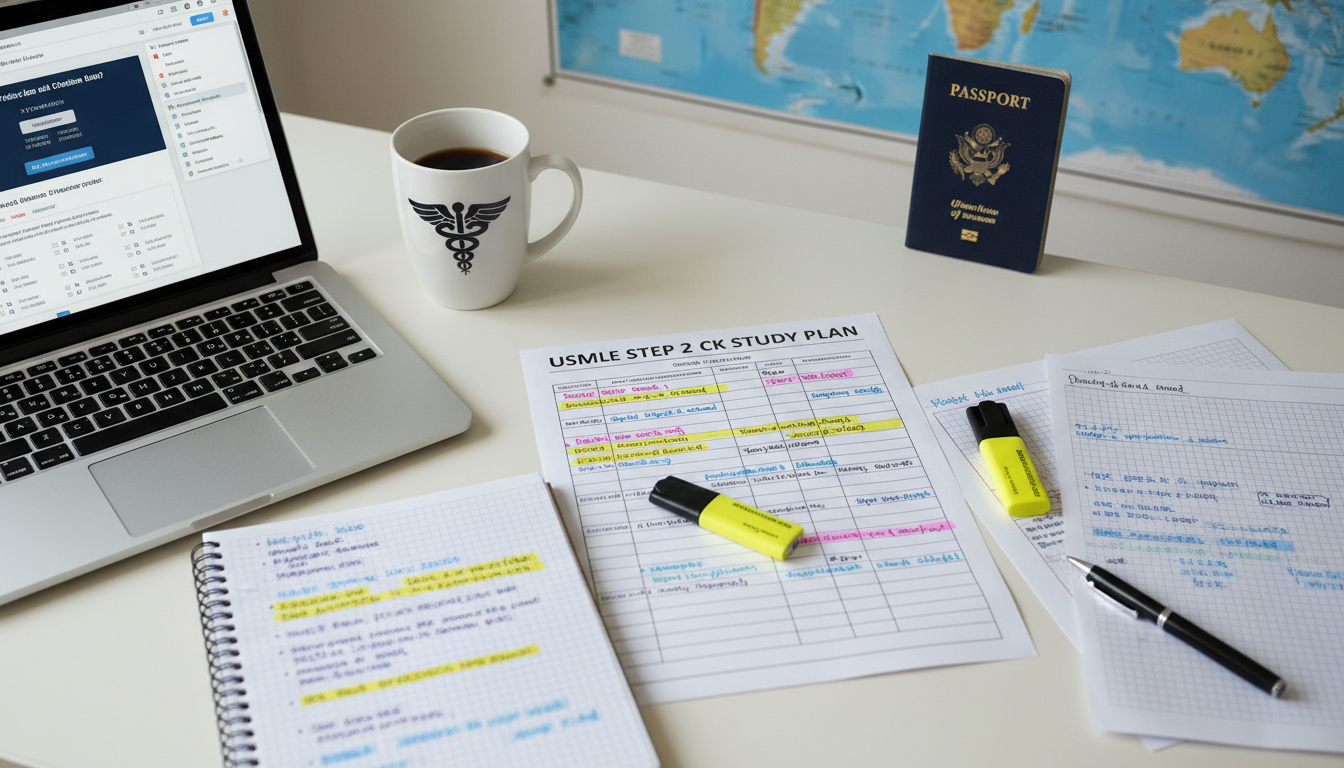
3. Create a Structured Weekly Plan
A practical weekly framework for focused Step 2 CK preparation:
Question Bank (QBank):
- 40–80 questions/day (or 200–300/week), timed, mixed when possible
- Thorough review of every explanation (both right and wrong answers)
Content Review:
- 2–4 hours/day using your primary review resource (e.g., a dedicated Step 2 review book or video series)
- Focus on high-yield systems: cardiology, pulmonology, GI, ID, OB/GYN, pediatrics, psychiatry
Assessment and Review:
- Every 2–3 weeks: 1 practice test (NBME or other reputable assessment)
- One weekly block reserved for reviewing mistakes, revisiting weak topics
Rest and Mental Health:
- At least ½–1 full day off per week to avoid burnout
If you’re doing clinical work concurrently, scale down but protect at least 15–20 hours/week for serious study.
Core Resources and How to Use Them Wisely
Many IMGs fall into the trap of using too many resources and mastering none. An efficient IMG residency guide for Step 2 CK always emphasizes depth with a few high-yield tools, rather than surface coverage of everything.
1. Question Banks: The Heart of Step 2 CK Prep
UWorld Step 2 CK QBank
For most candidates, this is non-negotiable:
- Use timed random blocks as early as possible (to simulate the real exam)
- Aim to complete 1 full pass, and if time permits, a second targeted pass for weak areas
- Don’t obsess over the raw percentage; focus on learning from each question
How to review UWorld effectively:
- For each question, ask:
- Why was the correct answer right?
- Why were the other options wrong?
- What is the general clinical rule or algorithm behind this question?
- Create structured notes (see next section) or use digital flashcards for recurring patterns
- Tag or mark questions that expose major conceptual gaps, then revisit these before test day
If English is not your first language, timed QBank questions also help you get faster at reading and grasping nuances in stems and answer choices.
2. Content Review Resources
You need at least one concise, high-yield reference that covers:
- Core internal medicine and surgery
- OB/GYN
- Pediatrics
- Psychiatry and neurology
- Emergency and ambulatory care
Common options include established Step 2 review books or video-based courses. Your choice depends on learning style:
- If you are a visual/auditory learner: Video-based courses with integrated QBank and notes
- If you prefer reading/writing: A structured review book plus your own outlines
As an international medical graduate, you may have strong factual knowledge but weaker familiarity with U.S.-style guidelines and algorithms. Pay special attention to:
- Screening guidelines (Pap smears, colon cancer, breast cancer, AAA, etc.)
- Vaccination schedules (children and adults)
- Hypertension, diabetes, and lipid management in line with U.S. practice
- Prenatal, intrapartum, and postpartum management steps
These are heavily tested and are sometimes very different from protocols used in other countries.
3. Building High-Yield Notes and Memory Aids
Efficient note-taking methods for USMLE Step 2 study:
- Concept Tables: For example, a table comparing causes of chest pain with key features, diagnostics, and next best steps.
- Algorithms: Draw “if-then” flowcharts for common scenarios like:
- Chest pain evaluation
- Stroke initial management
- Early pregnancy bleeding
- Sepsis protocol
- Mini-summaries: 1–2 pages per high-yield topic (e.g., heart failure, asthma, psych emergencies).
Avoid rewriting entire textbooks. Your notes should distill:
“What does this topic look like on Step 2 CK questions, and what decision does the exam want me to make?”
4. Using Multiple Resources Without Getting Overwhelmed
As an IMG, it’s tempting to think more resources = more security. Instead, think:
- 1 primary QBank (UWorld)
- 1 primary review resource (book or video series)
- Optional:
- A second, smaller QBank for additional practice
- Flashcards for spaced repetition
Before adding a new resource, ask:
“Is this filling a real gap, or is it just making me feel busy?”
Clinical Reasoning, Communication, and U.S. Practice: The IMG Edge
IMGs often underestimate how much cultural and system differences can influence performance on clinical vignettes. Step 2 CK is steeped in U.S. practice standards and expectations.
1. Bridging Clinical Protocol Differences
You might be used to:
- Different antibiotic choices
- Different thresholds for imaging (e.g., CT vs. ultrasound)
- Less emphasis on malpractice avoidance and documentation
- Different availability of certain tests or medications
Step 2 CK, however, tests:
- U.S.-centered guidelines and standards of care
- Cost-effective and safe choices in a U.S.-style system
- Patient autonomy, informed consent, and shared decision-making
Strategies to adapt:
- When reviewing questions, look for phrases that signal U.S. practice (e.g., “screening guidelines,” “USPSTF recommendations”)
- Regularly read concise guideline summaries (e.g., brief overviews of ACC/AHA, ADA, USPSTF) incorporated into your review resources
- Highlight differences between your home country’s practices and the U.S. standard in your notes
2. Strengthening Clinical Reasoning
Step 2 CK favors pattern recognition plus logical thinking:
- Recognize classic symptom clusters (e.g., temporal arteritis, PE, nephritic vs. nephrotic)
- Interpret basic labs, imaging findings, and physical exam clues
- Choose the single best next step, not just a possible step
To train this:
Use “why, why not?” when reviewing explanations:
- Why this diagnosis?
- Why not each alternative?
- If this diagnosis is true, what is the one most important thing to do next?
After each block, identify common traps you fell for:
- Ordering unnecessary tests
- Choosing treatment before stabilizing the patient
- Ignoring red-flag symptoms that require urgent intervention
3. Communication, Ethics, and Professionalism
Clinical communication and ethics often feel “soft,” but they are heavily tested. These topics can be tricky for IMGs due to differences in:
- Hierarchies and how patients question doctors
- Disclosure practices (e.g., bad news, medical errors)
- Attitudes toward autonomy vs. paternalism
Key principles to internalize:
- Respect autonomy: The patient’s informed choice usually prevails, even if you disagree medically, as long as they have capacity.
- Full disclosure: Medical errors must be disclosed honestly, with apology, explanation of consequences, and plan to prevent recurrence.
- Confidentiality: Protect patient privacy; know when it must be breached (harm to self/others, abuse, legal reporting).
- Cultural sensitivity: Acknowledge and respect cultural beliefs; involve interpreters rather than family as translators.
Treat these questions with the same seriousness as pharmacology or cardiology; they can significantly affect your Step 2 CK score.

Practice Exams, Test-Taking Strategies, and Exam-Day Execution
No IMG residency guide on Step 2 CK preparation is complete without a strong focus on practice testing and exam strategy. Many candidates know the content but underperform due to poor pacing, stamina, or anxiety.
1. Using Practice Exams Strategically
Common practice exam tools:
NBME Self-Assessments:
- Use at least 2–3 throughout your preparation
- Early one for baseline, later ones for readiness check
UWorld Self-Assessments (if available):
- Closer in style to UWorld, often a bit harder but good for tracking improvement
Suggested timeline (for a 4–6 month plan):
- Month 1: 1 NBME (baseline)
- Month 3–4: 1 NBME or UWorld Assessment (mid-course correction)
- Final 2–3 weeks: 1–2 more assessments to confirm readiness
Interpret scores as trend and range, not absolute predictions. If your last two assessments are within 5–10 points of your target Step 2 CK score, you’re likely close.
2. Mastering Time Management and Stamina
The exam is long, and many IMGs are out of exam practice if they’ve been in clinical work or away from school.
Train under exam-like conditions:
- Do full 40-question timed blocks regularly
- Occasionally simulate 2–3 blocks back-to-back without long breaks
- During the final month, do at least one full-length simulated day (7–8 blocks with realistic breaks)
For pacing:
- Aim for ~75 seconds/question on average
- Don’t spend more than 90 seconds on a single question early in a block; mark and move on if stuck
- Save a few minutes at the end to revisit marked questions if possible
3. Handling Test Anxiety and Mental Fatigue
Common IMG-specific stressors:
- High stakes: visa, career, and financial pressure tied to this exam
- Language and cultural barriers
- Time away from formal schooling
Practical strategies:
- Build a predictable pre-test routine (sleep schedule, meals, light exercise)
- Practice short breathing exercises between blocks or whenever panic rises
- Use realistic expectations: your goal is not 100%, it’s to consistently choose the highest-yield answer
On exam day:
- Eat light, familiar foods
- Avoid trying to “learn” new material in the last 24 hours
- Focus on execution of the skills you’ve already built
4. Post-Exam Reflection and Next Steps
Once your exam is done:
- Take genuine time to rest—mental recovery is crucial
- When your Step 2 CK score arrives, evaluate it in context:
- Your Step 1 result
- Your specialty choice
- Your overall application (research, clinical experience, letters)
If the score is lower than hoped, it may still be possible to:
- Adjust specialty/program choices
- Strengthen other parts of your application (U.S. clinical experience, letters, personal statement)
- Use it to shape how you present your clinical strengths in your residency application
IMG-Specific Challenges and How to Overcome Them
International medical graduates face a distinctive mix of strengths and vulnerabilities. Recognizing these early lets you prepare more intelligently.
1. Being a “Non-Recent Graduate”
If you are 3–10+ years out of medical school:
- Expect to need more time for Step 2 CK preparation
- Start with a structured content review before diving into high-speed QBank use
- Use question explanations to reconnect theory with practice—ask, “Do I see this in my current practice? How is it handled differently in the U.S.?”
Your clinical experience can actually help with recognizing patterns and staying calm with complex cases—just make sure your knowledge is updated to U.S. guidelines.
2. Studying While Working or Doing Clinical Rotations
Balancing work and Step 2 CK preparation is tough but doable:
- Create non-negotiable study windows (e.g., 2 hours every morning and 3 hours on weekends)
- Use micro-time:
- 2–3 questions on your phone during breaks
- Quick flashcard review on commutes (if safe)
- Prioritize quality over quantity—a focused 90-minute QBank session is better than 4 distracted hours
If you’re in U.S. clinical rotations (electives, observerships):
- Use real patients as memory anchors: link conditions you see with Step 2 CK patterns
- Note differences between how attendings manage cases and what you see in your review resources
3. Language and Reading Speed
If English is not your first language, be purposeful about:
- Reading every word of the question stem and options; key phrases (like “next best step” or “most appropriate initial test”) change everything
- Practicing with timed, English-only QBank blocks to improve speed
- Learning common test phrases and idioms (e.g., “rule out,” “conservative management,” “watchful waiting,” “reassurance”)
Consider reading some short professional articles or guidelines weekly to get used to U.S. medical English.
Frequently Asked Questions (FAQ)
1. How long should an IMG study for Step 2 CK?
Most IMGs do well with:
- 3–4 months of full-time focused study, or
- 5–7 months if studying part-time while working or doing rotations
If you’re a non-recent graduate or far from clinical practice, consider 6–9 months with a strong initial focus on content review before intensive QBank work.
2. What is a “good” Step 2 CK score for an international medical graduate?
“Good” is relative to your specialty and overall application, but for many IMGs:
- A score near or above the U.S. MD average is competitive for internal medicine and several other fields
- For highly competitive specialties (dermatology, plastics, neurosurgery), you typically need a significantly above-average score, plus strong research and experience
Use NRMP or other specialty data to see average Step 2 CK scores for matched applicants in your field of interest.
3. Can a strong Step 2 CK score compensate for a low Step 1?
Often, yes—especially now that Step 1 is pass/fail. A strong Step 2 CK performance can:
- Show that earlier struggles are resolved
- Demonstrate excellent clinical reasoning and updated knowledge
Programs frequently view upward score trends positively. However, Step 2 CK alone cannot fully overcome every limitation, so make sure the rest of your application (observerships, letters, personal statement) is also strong.
4. How many times should I go through UWorld for Step 2 CK?
For most IMGs:
- One complete, careful pass with thorough review is essential
- A second, targeted pass of weak areas (or incorrect questions) is beneficial if time permits
Focus on understanding rather than chasing a specific QBank percentage. The goal is to transfer that learning to any question in the exam, not to memorize UWorld.
By approaching USMLE Step 2 CK preparation with a structured plan, disciplined use of high-yield resources, and attention to IMG-specific challenges, you can transform this exam from a source of anxiety into an opportunity to showcase your clinical strength. Your Step 2 CK score can become one of the strongest pillars of your residency application and a powerful step toward matching into a U.S. program.