


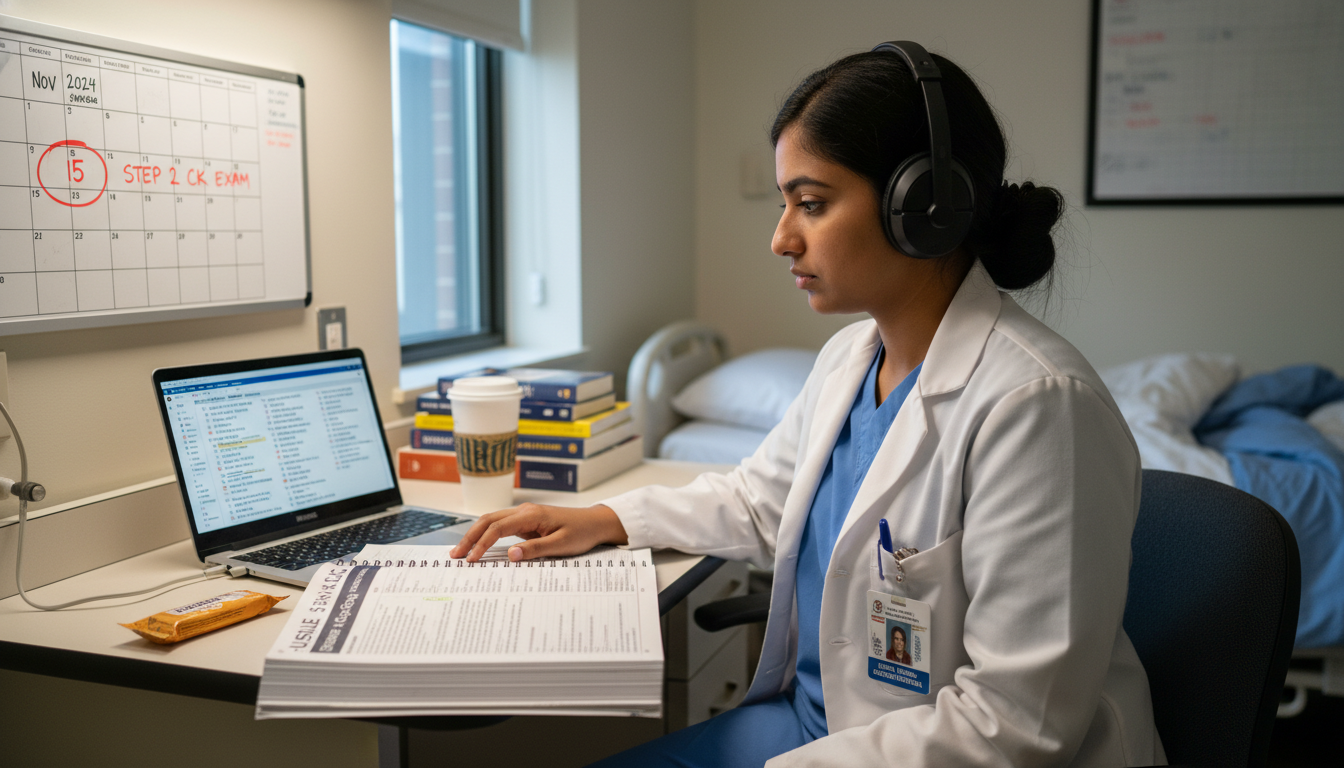
USMLE Step 2 CK is often the most decisive exam for a non-US citizen IMG aiming to match into a strong Transitional Year (TY) program or to use the TY as a launchpad into advanced specialties like Radiology, Anesthesiology, Neurology, or PM&R. Unlike Step 1, Step 2 CK is heavily weighted on clinical reasoning and how you function as an intern—exactly what program directors want to see for a Transitional Year resident.
This guide focuses on USMLE Step 2 CK preparation specifically for non-US citizen IMGs who are applying to or completing a Transitional Year residency. It covers timeline planning, strategy, resources, and practical advice tailored to the realities of visas, finances, and clinical adaptation in the U.S. system.
Understanding Step 2 CK in the Context of a Transitional Year
Step 2 CK is not just another exam; for a foreign national medical graduate, it is often:
- The primary objective measure programs use (especially as Step 1 becomes pass/fail)
- A surrogate for clinical readiness and ability to function in a U.S. hospital
- A differentiator for competitive Transitional Year positions associated with advanced specialties
Why Step 2 CK Matters So Much for Non-US Citizen IMGs
Visa and Sponsorship Considerations
Many Transitional Year programs sponsoring J-1 (and some H-1B) visas screen by Step 2 CK score:- Higher scores may expand the number of TY programs willing to rank or sponsor you
- A strong score can mitigate concerns about an unknown foreign medical school
Screening Thresholds
Program directors often use filters (e.g., Step 2 CK ≥ 230–240) before reviewing applications from non-US citizen IMGs.- A borderline score may not eliminate you, but it reduces the number of programs that will actually see your application.
- A strong score (e.g., 245+) can open doors to university-affiliated TY programs linked with advanced specialties.
Foundation for Transitional Year Performance
Transitional Year is clinically intense. Good USMLE Step 2 study builds:- Rapid decision-making skills for inpatient and ER calls
- A framework for evidence-based management
- Comfort with U.S. guidelines and terminology
Signal of Adaptability to the U.S. System
Non-US citizen IMGs are often evaluated on how well they adapt to:- U.S.-specific standards of care
- Documentation and medicolegal expectations Step 2 CK tests precisely those elements.
When to Take Step 2 CK: Before or During Transitional Year?
Option 1: Before Starting Transitional Year (ideal if possible)
Advantages:
- You can dedicate full-time preparation without 80-hour weeks.
- You enter residency with the score already locked in for fellowship or advanced position planning.
- You may be more familiar with recent exam-style questions if you have just finished medical school.
Disadvantages:
- Less real-world clinical experience in U.S. hospitals.
- Requires strong self-discipline and possibly financial support for several dedicated months.
Option 2: During Transitional Year Residency
Advantages:
- Daily patient care reinforces concepts (e.g., sepsis bundles, anticoagulation choices).
- You develop intuition for U.S. norms, improving your clinical judgment on the exam.
Disadvantages:
- Fatigue, variable schedules, and call can significantly disrupt USMLE Step 2 CK preparation.
- Harder to carve out a “dedicated period” for intensive review.
Practical recommendation for non-US citizen IMGs:
- If you haven’t matched yet and are applying to TY:
Target taking Step 2 CK before ERAS opens so programs see your score in time. - If you already matched into a TY program and still need or want to improve your Step 2 CK score (e.g., for future advanced specialty):
- Plan the exam during a lighter rotation (e.g., outpatient, electives).
- Avoid scheduling during ICU or night float blocks.
Building a Realistic Step 2 CK Study Timeline for a TY Resident

Your timeline depends on three main variables:
- Baseline knowledge and recency of clinical training
- Workload and call schedule in your TY program
- Target Step 2 CK score relative to specialty goals
Step 1: Diagnostic Self-Assessment
Before building a schedule, use at least one assessment:
- NBME Comprehensive Clinical Science Self-Assessment (CCSSA): NBME 10, 11, 12, 13, 14.
- Or a UWorld Self-Assessment (UWSA).
If you are:
- >30–40 points below your target score: You likely need 3–5 months of disciplined study (full-time, or longer if part-time during residency).
- 10–20 points below target: Plan 2–3 months of intensive review.
- At or above target: Focus on consolidation; 4–8 weeks may be enough.
Step 2: Map Your Transitional Year Schedule
As a Transitional Year resident, rotations vary greatly:
- Inpatient medicine or ICU: Long hours; limited study time.
- Night float: Better morning/afternoon study, but fatigue risk.
- Outpatient or electives: Best time to intensify preparation.
Example 6-month blended plan for a non-US citizen IMG in a TY program:
- Months 1–2 (heavy inpatient months):
- 1–2 hours/day on workdays, 3–4 hours on days off.
- Focus: UWorld timed blocks + review, no heavy reading.
- Months 3–4 (mixed inpatient/outpatient):
- 2 hours/workday; 4–6 hours off-days.
- Add targeted reading/annotations, first NBME mid-month 3.
- Months 5–6 (lighter elective/outpatient):
- 4–6 hours/day.
- Finish UWorld, second pass of weak areas, 2–3 NBMEs or UWSAs.
- Take Step 2 CK near the end of month 6.
Step 3: Weekly and Daily Structure
For a resident with 6-day weeks, 70–80 hours/week:
- On workdays:
- 1 timed UWorld block (38–40 Qs) in the evening or early morning.
- 45–90 minutes reviewing explanations.
- On days off:
- 2–3 UWorld blocks.
- 2 hours of high-yield review (e.g., error log, flashcards, weak topics).
For pre-residency, full-time dedicated study:
- 6 days/week; 8–10 hours/day:
- 3–4 UWorld blocks daily (mixed, timed).
- 2–3 hours reviewing explanations.
- 1–2 hours targeted reading or videos (only where needed).
Core Resources and How to Use Them Strategically
For USMLE Step 2 study, the challenge is not finding resources—it’s avoiding resource overload. For a non-US citizen IMG in a TY program, time is limited; aim for depth with few resources rather than superficial coverage of many.
1. Question Banks (Primary Resource)
UWorld Step 2 CK (non-negotiable)
- Use as your central learning tool.
- Always do questions timed and mixed, simulating exam pressure.
- Goal: Complete 100% of the bank, ideally reaching 60–70%+ correct by the end.
How to review:
- For missed and guessed questions, read all explanations, not just the correct one.
- Make short notes or an “error log”:
- Topic
- Why you missed it (knowledge gap vs. misread vs. time pressure)
- Key concept or rule
AMBOSS (optional but powerful)
- Use if you finish UWorld early or need deeper explanations for weak areas.
- Especially good for:
- Obscure details and guideline-based management
- Learning in short bursts during residency
2. Content Review Resources
Online MedEd (OME)
- Good for structured, concise conceptual frameworks.
- Best for:
- Internal medicine
- Surgery
- Ob/gyn
- Pediatrics
- Strategy: Watch high-yield videos for topics you repeatedly miss in UWorld, rather than binge-watching the whole curriculum aimlessly.
Step-Up to Medicine / Master the Boards / other review books
- As a transitional year resident, your time for books is limited.
- Use selectively:
- If you are weaker in medicine or coming from a system with very different guideline practices
- For a 2nd-pass “consolidation” reading after UWorld if time allows
3. Self-Assessments: NBMEs and UWSA
Plan to take:
- At least 2 NBMEs and 1 UWSA:
- First self-assessment: At ~50–60% completion of UWorld.
- Second: 3–4 weeks before exam.
- Final: 7–10 days before exam.
Interpretation:
- NBME scores often slightly underestimate final Step 2 CK score.
- UWSA may overestimate, but good for confidence and identifying last-minute gaps.
High-Yield Content Focus for Transitional Year-Bound IMGs

Step 2 CK is breadth-heavy; almost any topic can appear. But for Transitional Year applicants and residents, certain domains are disproportionately important for both exam success and clinical performance.
1. Internal Medicine (largest exam weight)
Key systems to master:
- Cardiology
- Acute coronary syndromes, heart failure management, arrhythmias, valvular disease
- Pulmonology
- COPD/asthma exacerbations, PE, pneumonia, ARDS
- Infectious Disease
- Sepsis, HIV-related conditions, hospital-acquired infections, antibiotic selection
- Endocrinology
- DKA vs. HHS, thyroid disorders, adrenal insufficiency
- Nephrology & Electrolytes
- AKI vs. CKD, acid-base disorders, hyper/hyponatremia, potassium disturbances
For a foreign national medical graduate, these may differ in subtle but testable ways from your home country’s practice (e.g., preferred anticoagulants, U.S.-specific sepsis protocols). Use UWorld explanations to identify these differences.
2. Emergency and Acute Care
Transitional Year residents frequently handle:
- Chest pain triage and initial management
- Stroke code activation and acute stroke care
- Trauma primary survey (ABCDE, imaging decisions)
- Anaphylaxis, status asthmaticus, toxicologic emergencies
On the exam, pay attention to:
- “Next best step in management” when minutes matter
- When to give tPA, when to do CT first
- When to intubate vs. maintain airway conservatively
3. Obstetrics & Gynecology
This is often underemphasized by IMGs, yet heavily tested:
- High-yield topics:
- Hypertensive disorders in pregnancy (preeclampsia, eclampsia, HELLP)
- Fetal heart rate patterns and management
- Third-trimester bleeding (placenta previa vs. abruption)
- Contraception and early pregnancy complications
Use:
- Algorithms from UWorld
- OME OB/GYN videos if you feel especially weak
4. Pediatrics
Common Step 2 CK pediatric topics:
- Neonatal emergencies (respiratory distress, sepsis)
- Developmental milestones and red flags
- Congenital heart disease presentations
- Vaccination schedules and contraindications
For IMGs, vaccine brands and schedules may differ from your country; rely on UWorld/AMBOSS for U.S.-specific guidelines.
5. Psychiatry and Ethics
As a Transitional Year resident, you will frequently see:
- Delirium vs. dementia vs. depression in elderly inpatients
- Management of suicidal ideation in ER or primary care
- Capacity assessment and involuntary commitment criteria
Ethics and communication:
- End-of-life discussions, code status
- Surrogate decision-making hierarchy
- Confidentiality, minors, and consent
These are often “easier points” if you carefully read questions and understand U.S. medicolegal principles.
Practical Strategies for Non-US Citizen IMGs Balancing TY and Step 2 CK
As a non-US citizen IMG in a demanding clinical environment, you face extra challenges: time zones while communicating with family, visa-pressure stress, language adaptation, and often fewer support systems. Address these proactively.
1. Language and Reading Speed
If English is not your first language:
- Practice timed blocks early; train reading speed.
- Read the question stem once carefully, avoiding re-reading multiple times.
- Build familiarity with common U.S. idioms, abbreviations, and colloquial clinical expressions.
If you consistently run out of time:
- Start by focusing on first and last sentences of long stems to understand the lead-in.
- Practice with 40-question blocks in 55–60 minutes to challenge your speed; then return to 60 minutes.
2. Creating a Sustainable Study Routine in Residency
- Block off non-negotiable study windows (e.g., 7–9 pm every non-call night).
- Use micro-learning:
- 5–10 questions during a lunch break.
- Review flashcards or Anki while commuting (if safe/not driving) or between admissions.
- Coordinate with co-interns, if possible:
- Swap a lighter call day near your exam date.
- Share high-yield pearls and UWorld insights.
3. Managing Stress, Fatigue, and Burnout
Step 2 CK preparation during a Transitional Year while being far from home can be emotionally draining.
Practical strategies:
- Schedule at least one full rest day every 1–2 weeks from both clinical work and studying, if possible.
- Use short, daily decompression rituals:
- 10–15 minutes of walking, stretching, or basic exercise.
- Brief guided meditation or relaxation breathing.
- Maintain easy-to-prepare, healthy food options to avoid reliance on fast food and caffeine overload.
4. Visa and Timeline Considerations
As a foreign national medical graduate, keep track of:
- USMLE deadlines relevant to ECFMG certification and ERAS cycles.
- Any requirements your future advanced specialty may have regarding latest acceptable test dates.
If you are on a J-1 or H-1B visa:
- Avoid scheduling your exam too close to the expiry date of your visa or DS-2019, to leave room for rescheduling if an emergency arises.
- Keep copies of your exam confirmations and performance reports for credentialing and future applications.
Exam Day Strategy and Post-Exam Planning
1. Final 1–2 Weeks Before the Exam
- Focus on:
- Reviewing your error log.
- Targeted revision of weak systems: OB, peds, neuro, psych, or ethics.
- A final NBME or UWSA to check readiness (do not change your date based on a small fluctuation).
Avoid:
- Starting brand-new resources.
- Drastically changing your sleep schedule in the last few days.
2. Day Before the Exam
- Very light review only (high-yield tables, formulas).
- Confirm logistics:
- Prometric center location and travel time
- Required IDs, confirmation email
- Go to bed early; protect sleep as much as possible.
3. On Exam Day
- Use a steady pace: roughly 1.2–1.3 minutes per question.
- Mark questions you are unsure about, but avoid spending >90 seconds on a single question on the first pass.
- Take all breaks:
- Plan for a longer break midway (for a snack and bathroom) and shorter micro-breaks between other blocks.
- Use simple strategies when stuck:
- Eliminate obviously wrong options.
- Choose the answer most consistent with U.S. guidelines and risk-avoidant practice.
4. After Score Release
Interpret your Step 2 CK score in context:
For a Transitional Year applicant:
- Strong score (e.g., 245+): Broader range of TY programs, including university-affiliated and those linked with advanced specialties.
- Moderate score (230–244): Still competitive for many community and some university programs; strengthen the rest of your application (LORs, USCE).
- Lower score (<230): Focus on:
- Strong letters from U.S. rotations
- Clear, consistent narrative in your personal statement
- Applying broadly and strategically
For a Transitional Year resident planning advanced specialty:
- Use the score to communicate readiness for your chosen field.
- If the score is lower than hoped:
- Emphasize strong TY performance, clinical evaluations, and research projects in fellowship or advanced position applications.
FAQs: USMLE Step 2 CK Preparation for Non-US Citizen IMGs in Transitional Year
1. What is a “good” Step 2 CK score for a non-US citizen IMG aiming for a Transitional Year program?
There is no universal cutoff, but in practice:
- 235–245: Reasonably competitive for many TY programs, especially community-based.
- 245–255+: Competitive for a wider range of university-linked TY programs, including those connected to advanced specialties.
- <230: Still possible to match, but you will likely need:
- Broad application strategy
- Strong US clinical experience and letters
- Clear explanation of any academic difficulties (if appropriate)
Remember that some programs use specific filters (e.g., 230 or 240) before even reading applications from non-US citizen IMGs.
2. How many months should I dedicate to USMLE Step 2 CK preparation if I am in a Transitional Year residency?
Most IMGs in residency need 3–6 months of part-time study:
- If you are within 10–15 points of your target score on a diagnostic NBME: 2–3 months may suffice.
- If you are >20–30 points below: Plan for 4–6 months with consistent, structured daily study. Your exact timeline depends heavily on your rotation schedule and how much time you can realistically protect each week.
3. Can I significantly improve my Step 2 CK score after a mediocre Step 1 performance?
Yes. Step 2 CK is more clinically oriented and many IMGs outperform their Step 1 results. Focus on:
- Deep understanding of clinical reasoning rather than memorization
- Repeated question practice (UWorld, AMBOSS)
- Systematic review of your errors A strong Step 2 CK score can partially offset a weaker Step 1, particularly if accompanied by solid clinical evaluations and letters.
4. What is the best way to balance TY duties and USMLE Step 2 CK preparation as a foreign national medical graduate?
- Start early: Don’t wait for a “perfect” month; build a baseline with small daily effort.
- Protect small, consistent blocks of time (1–2 hours) on most days.
- Use lighter rotations and electives for heavier question volume and self-assessments.
- Communicate with your program or chiefs (as appropriate) if you need a specific exam week off or a lighter schedule around your test date.
With disciplined planning, targeted resources, and realistic expectations, a non-US citizen IMG can achieve a strong Step 2 CK score while navigating the challenges of Transitional Year residency and visa-related constraints—and use that success as a powerful stepping stone toward future specialty training in the U.S.




















