
Preparing for USMLE Step 2 CK as a non-US citizen IMG interested in global health presents both unique challenges and powerful opportunities. You are not only aiming for a strong Step 2 CK score, but also building a profile that signals readiness for international medicine, underserved care, and a potential global health residency track.
Below is a comprehensive, practical roadmap tailored to your situation: a foreign national medical graduate balancing exams, visas, clinical experiences, and a passion for global health.
Understanding Step 2 CK in the Context of Global Health
USMLE Step 2 CK is more than just another exam; it is often the deciding exam for non-US citizen IMGs, especially if:
- Your Step 1 is pass/fail (for more recent graduates)
- You have an older Step 1 attempt or lower Step 1 score
- You are attempting to stand out in competitive internal medicine or family medicine programs with a global health residency track or strong international medicine focus
Why Step 2 CK Matters So Much for Non-US Citizen IMGs
Objective comparison
Program directors use Step 2 CK to compare applicants from very different medical schools and countries. A strong Step 2 CK score reassures them you can handle US clinical workload.Compensating for limitations
As a non-US citizen IMG, you may:- Have fewer US clinical experiences
- Face visa sponsorship limitations
- Come from a medical school unfamiliar to program directors
A strong USMLE Step 2 score can offset some of these disadvantages.
Clinical, real-world focus
Step 2 CK tests clinical reasoning, diagnostic prioritization, and management decisions—skills directly relevant to:- Global health practice
- Work in resource-limited settings
- Infectious diseases, obstetrics, pediatrics, emergency care, and public health
Global health friendly specialties still care about scores
Programs with a global health residency track (especially in internal medicine, family medicine, pediatrics, emergency medicine, OB/GYN) often have:- Strong academic affiliations
- Competitive applicant pools
They may be more mission-driven, but they still screen using Step 2 CK thresholds.
Step 2 CK Content Overview with a Global Health Lens
Understanding the exam blueprint is the first step in efficient USMLE Step 2 study planning.
Major Content Domains
Step 2 CK covers:
- Internal Medicine: cardiology, pulmonology, GI, nephrology, endocrinology, infectious diseases, rheumatology, hematology/oncology
- Surgery: pre-op and post-op care, trauma, surgical complications
- Pediatrics: growth and development, congenital conditions, pediatric infections, nutrition
- OB/GYN: prenatal care, labor and delivery, postpartum care, gynecologic oncology, contraception
- Psychiatry and Neurology
- Emergency Medicine and Critical Care
- Preventive Medicine, Ethics, and Population Health
Topics Especially Relevant to Global Health
Your global health interest gives you an advantage in certain areas that US-based graduates sometimes find more foreign. On Step 2 CK, you can expect many questions on:
Infectious diseases:
- Tuberculosis (latent vs active, MDR-TB)
- HIV/AIDS in different stages and in pregnancy
- Malaria, dengue, typhoid, parasitic infections
- Tropical diseases (depending on blueprint trends)
Maternal and child health:
- Pre-eclampsia, eclampsia, gestational diabetes
- Postpartum hemorrhage
- Neonatal resuscitation basics, neonatal sepsis
- Growth failure, malnutrition, micronutrient deficiencies
Public health, epidemiology, and international medicine concepts:
- Screening programs and test characteristics (sensitivity/specificity, NPV/PPV)
- Outbreak investigation
- Vaccination strategies and herd immunity
- Health systems and access barriers
This content overlaps heavily with global health curricula, so leverage that background during your USMLE Step 2 preparation.
Building a High-Yield Study Plan (3–6 Months)
Your optimal USMLE Step 2 study plan depends on your starting point, graduation date, clinical exposure, and visa timeline. Most non-US citizen IMGs do well with a 3–6 month structured preparation period.

Step 1: Baseline Assessment
Before you commit to a schedule:
Review your Step 1 and clinical background
- Strong Step 1 and recent graduation → shorter, more intensive study (3 months)
- Older graduate, long gap from clinical practice, or marginal Step 1 → longer plan (4–6 months)
Diagnostic self-assessment
- Take a UWorld self-assessment (UWSA) or an NBME Comprehensive Clinical Science Self-Assessment (CCSSA)
- This will reveal:
- Your approximate starting Step 2 CK score
- Weak systems (e.g., OB, peds, psych)
- Need for basic review vs. intensive remediation
Step 2: Core Resources Selection
Avoid resource overload. For a non-US citizen IMG, a focused set is more effective:
Primary question bank:
- UWorld Step 2 CK Qbank – non-negotiable. Use it in “tutor” mode early on to learn, then “timed” blocks later.
Secondary Qbank (optional, if 5–6+ months):
- Amboss, Kaplan, or USMLE-Rx – helpful if you finish UWorld early and want more practice.
Text and video references:
- Online MedEd (OME) – concise videos for core concepts
- Boards and Beyond (clinical) – deeper dives for your weaker systems
- Reference text (for clarification only, not cover-to-cover):
- Step-Up to Medicine or
- Master the Boards Step 2 CK
Practice exams (NBME/UWSA):
- Take at least 2–3 assessments:
- One early (baseline)
- One mid-way (to adjust plan)
- One 2–3 weeks before exam (to fine-tune and decide if you’re ready)
Step 3: Sample 12-Week Intensive Study Schedule
Weeks 1–4: Foundation + Systems Review
- Daily:
- 40–60 UWorld questions (tutor mode)
- Carefully review explanations and make short notes or flashcards
- Systems emphasis:
- Week 1: Cardiology, pulmonology
- Week 2: GI, nephrology, endocrinology
- Week 3: Infectious disease (include TB, HIV, tropical diseases), rheumatology
- Week 4: OB/GYN, pediatrics
- Weekly:
- 1 mini NBME-style block (20–40 questions) as a quiz
- 2–3 OME/Boards and Beyond videos on your weakest area
Weeks 5–8: Integration + Timed Practice
- Daily:
- 60–80 UWorld questions in timed, random blocks (simulate exam)
- Focused review of missed questions – identify patterns
- Content focus:
- Neuro, psych, surgery, ER/trauma, ethics and biostatistics
- Start exam stamina training:
- At least once weekly, do 3–4 blocks back-to-back timed
Weeks 9–11: Refinement + Exam Simulation
- Transition to:
- Only random, timed blocks
- 1 full-length practice test (NBME or UWSA)
- High-yield review:
- Make a list of recurring weak topics (e.g., arrhythmias, OB emergencies, pediatric rashes) and allocate 1–2 hours daily for focused review.
- Correct all gaps in:
- Ethics and consent (including cross-cultural scenarios)
- Preventive medicine and screening guidelines
- Biostatistics and epidemiology
Week 12: Final Review and Taper
- Lighten the load:
- 40–60 questions/day
- Review personal notes and formula sheets
- Sleep, nutrition, and stress management become a priority.
- Two days before exam: half-day study only; day before: minimal review and rest.
Tailoring Your Prep as a Non-US Citizen IMG
Your situation as a non-US citizen, foreign national medical graduate introduces specific constraints—and advantages—you should consciously plan around.
Challenge 1: Different Medical School Curriculum
You may have:
- Less emphasis on outpatient primary care or US-style documentation
- More exposure to tropical diseases but less to chronic outpatient management
- Different guidelines from US-based standards (e.g., hypertension, diabetes, cancer screening)
Actionable strategies:
- While doing UWorld, always ask: “What guideline is this based on? US or my home country?” Make a “Guidelines Difference” note sheet:
- Blood pressure thresholds for treatment
- Diabetes screening criteria
- Cancer screening ages and intervals
- Reinforce US-focused management by:
- Watching short guideline summary videos (e.g., for US hypertension, lipid management, diabetes)
- Creating a 1–2 page “US Preventive Medicine Overview” sheet
Challenge 2: Language and Test-Taking Style
Even with good English, Step 2 CK questions can be dense and time-pressured.
Practical tips:
- Practice reading speed:
- Do 5–10 questions where you force yourself to spend no more than 75 seconds per question and note comprehension issues.
- Build a structured approach to each vignette:
- First line: demographic + setting (age, sex, inpatient/outpatient, country/region)
- Chief complaint and key symptoms
- Vital signs – abnormal first
- Labs/imaging – look for single critical finding
- Then the question stem
- Mark keywords:
- “Most appropriate next step in management”
- “Best initial test” vs “Most accurate test”
- “Next step after stabilization”
Challenge 3: Time Zone and Exam Location Constraints
As a foreign national medical graduate, you may:
- Travel internationally to a Prometric center
- Deal with jet lag, unfamiliar cities, or visa timing issues
Preparation checklist:
- Register early for an exam date that:
- Avoids peak travel seasons if flights are expensive
- Allows at least 1–2 days at the exam city before the test
- Before booking flights:
- Confirm visa status and documentation if needed
- Verify local test center rules and transportation options
- Plan a mini “exam rehearsal day”:
- Wake up at the exact time you will on exam day
- Complete 7–8 blocks of questions with realistic breaks
- Practice your eating and hydration strategy
Integrating Global Health Goals into Your Step 2 CK Preparation
Your interest in a global health residency track or international medicine is not separate from Step 2 CK—it can actually strengthen your motivation and performance.
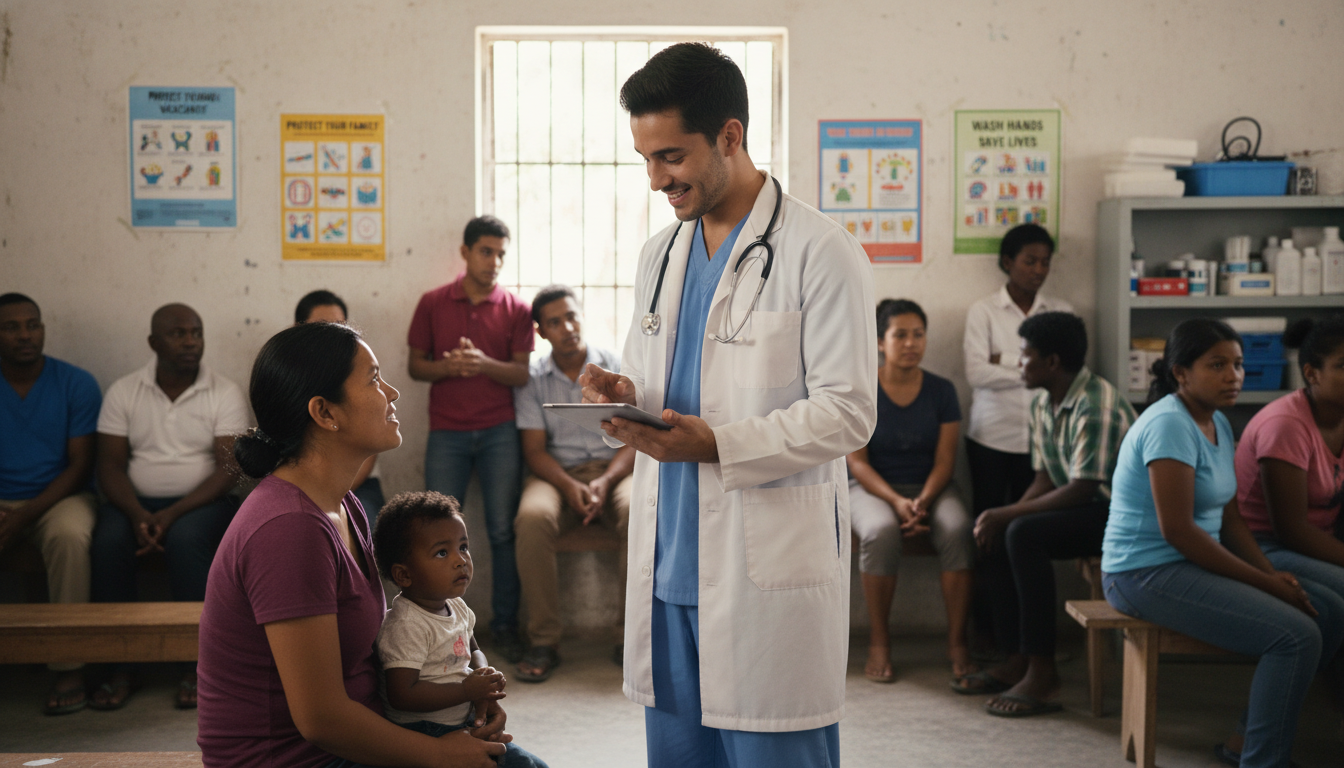
Leverage Global Health Experience in Your Learning
If you have worked in:
- Rural clinics
- Refugee camps
- HIV/TB programs
- Maternal-child health outreach
…then you already have valuable mental frameworks for:
- Triage and prioritization
- Recognizing sick vs stable patients
- Public health and prevention strategies
Example:
- When you see a Step 2 CK question about postpartum hemorrhage, recall real cases:
- Compare textbook management (uterotonics, uterine massage, surgery) with what you had available in your setting.
- Anchor the correct USMLE answer in your real memory, even if resources differed.
Apply a Global Health Mindset to Question Stems
Many vignettes reflect global or underserved contexts:
- Recent immigrant with incomplete vaccination record
- Traveler returning from endemic region with fever
- Pregnant patient with no prior prenatal care
- Patient in low-resource US setting with limited follow-up access
Use your understanding of:
- Health system limitations
- Cultural barriers
- Socioeconomic constraints
…but always adapt to US guideline-based answers. The question is often asking: “What is the best practice in the US system, assuming these are the available options?”
Using Step 2 CK Performance to Support Future Global Health Training
Strong Step 2 CK preparation supports your global health career in several ways:
Demonstrating competence to programs with:
- Global health residency tracks
- Partnerships with international sites
- Emphasis on epidemiology and public health
Allowing you to comfortably match into:
- Internal medicine → pathway to ID, global medicine, public health degrees
- Family medicine → broad-based global primary care
- Pediatrics → child global health, infectious diseases
When interviewing, you can explicitly connect your knowledge:
- “My Step 2 CK preparation deepened my understanding of TB, HIV, maternal health, and epidemiology, which are core to global health practice.”
Exam Day Strategy and Common Pitfalls
Exam Structure and Logistics
- Length: One-day exam, up to 9 hours total
- Blocks: 8 blocks of up to 40 questions each
- Total items: Up to 318 questions
- Break time: 45 minutes, plus any unused tutorial time
Plan your breaks:
- After Block 2, 4, and 6, for example
- Bring:
- Snacks that are easy to digest
- Water or electrolyte drink
- Light lunch
Time Management During Blocks
Aim for:
- ~90 seconds per question on average
- Quick decisions on easy questions; flag complex ones
Practical technique:
- If you cannot decide after 60–75 seconds:
- Eliminate clearly wrong options
- Make your best guess
- Mark the question and move on
Return only if you have time at the end.
Common Pitfalls for Non-US Citizen IMGs
Over-studying rare diseases, under-studying common US conditions
- Focus more on:
- Hypertension, diabetes, heart failure, COPD, asthma
- Depression, anxiety, alcohol use disorder
- Screening and chronic disease follow-up
- Not just malaria and TB (though important).
- Focus more on:
Ignoring biostatistics and epidemiology until late
- As someone interested in global health and international medicine, this content is an opportunity to excel.
- Dedicate weekly time to:
- Sensitivity, specificity, likelihood ratios
- Study designs: cohort, case-control, RCTs
- Interpreting curves, tables, Kaplan-Meier plots
Underestimating fatigue
- Simulate full exam days at least once.
- Develop strategies to reset between blocks: short stretches, deep breathing, hydration.
Letting anxiety override strategy
- Have a pre-written plan for:
- What to do after a difficult block (brief reset, don’t ruminate)
- How to handle a topic you feel weak on (e.g., OB/gyn) appearing frequently—stick to algorithmic thinking.
- Have a pre-written plan for:
Turning Your Step 2 CK Score into a Strong Application
What Is a “Good” Step 2 CK Score for Global Health-Oriented Programs?
Score expectations change over time, but conceptually:
- Competitive for most IM/FM programs with global health interests:
- Typically above the national mean, often in the 230–245+ range
- To compensate for other weaknesses (older graduation year, limited US experience, visa issues):
- The higher your Step 2 CK score, the better.
A very strong score (>250) may significantly boost your chances.
- The higher your Step 2 CK score, the better.
Remember that your Step 2 CK score is one part of a holistic application that should also demonstrate:
- Global health experiences (rotations, projects, NGOs)
- Research or quality improvement in international medicine
- Clear personal statement connecting your story to global health
- Strong letters of recommendation (ideally including at least one US-based if possible)
Timing Step 2 CK Relative to Applications
For a non-US citizen IMG, timing is strategic:
- Aim to have your Step 2 CK score available before ERAS submission if:
- Step 1 is pass/fail and you need an objective score
- Step 1 score is weaker and you’re using Step 2 CK to demonstrate improvement
- If your practice tests are below target:
- Consider delaying your exam within your eligibility period to allow extra study time.
A higher score later is better than a borderline score earlier.
- Consider delaying your exam within your eligibility period to allow extra study time.
Frequently Asked Questions (FAQ)
1. How many months of USMLE Step 2 CK preparation do non-US citizen IMGs usually need?
Most non-US citizen IMGs do well with 3–6 months of focused study, depending on:
- Time since graduation and last clinical exposure
- Strength of Step 1 knowledge
- Familiarity with US-style multiple-choice exams
If you are more than 3–5 years out from graduation or have major clinical knowledge gaps, plan for 4–6 months, with the first half focused on rebuilding core clinical foundations.
2. Is UWorld alone enough for a good Step 2 CK score?
For many candidates, UWorld + 2–3 self-assessments form the core of preparation. However, for a non-US citizen IMG:
- UWorld is essential but usually not sufficient by itself if:
- You have curriculum gaps (e.g., OB/peds underrepresented)
- You are unfamiliar with US guidelines
- Pair UWorld with:
- A structured video resource (Online MedEd or Boards and Beyond)
- Focused reading on your weakest subjects
- Dedicated practice for biostatistics and epidemiology
3. How often should I take practice tests, and which ones are best?
Plan for 2–3 practice tests:
- Early baseline (after 3–4 weeks):
- NBME CCSSA or UWSA
- Mid-prep (halfway):
- Another NBME or UWSA to check progress and adjust study plan
- Final (2–3 weeks before exam):
- UWSA (often predictive) or NBME closest to your exam format
Use each result to:
- Identify weakest systems and question types
- Modify your daily question blocks and content review
4. How can I connect Step 2 CK preparation to future global health residency opportunities?
You can align your Step 2 CK study with your global health aspirations by:
- Paying special attention to infectious diseases, maternal-child health, and public health questions
- Ensuring strong performance in biostatistics and epidemiology
- Reflecting in your personal statement and interviews on how:
- Preparing for Step 2 CK improved your understanding of global disease patterns, prevention strategies, and clinical reasoning
- Highlighting both your Step 2 CK score and your global health experiences when applying to programs with a global health residency track or strong international medicine focus
By approaching USMLE Step 2 CK preparation strategically—as both an exam and a powerful learning opportunity—you position yourself not only to earn a strong score, but also to enter residency as a non-US citizen IMG ready to contribute meaningfully to global health and international medicine.