



Understanding Step 2 CK in the Context of a Preliminary Medicine Year
A preliminary medicine year (prelim IM) can be one of the most demanding periods of your training—and also one of the most strategically important for your USMLE Step 2 CK score. Whether you’re headed for anesthesiology, neurology, radiology, dermatology, PM&R, or another advanced specialty, your prelim year is a powerful (and often underused) opportunity to solidify clinical knowledge and excel on Step 2 CK.
Step 2 CK preparation is unique during a prelim IM year because:
- You are finally seeing “test questions” walk into your exam room.
- Your time and energy are limited by call schedules, nights, and rotations.
- You may have taken Step 2 CK before starting residency—or you may be planning to take it during the prelim year (e.g., international medical graduates or those who delayed the exam).
- Even if you’re done with Step 2 CK, a prelim IM year is perfect for preparing for Step 3 and for solidifying concepts that appear in in‑training exams and later boards.
This guide walks through a practical, realistic approach to USMLE Step 2 study while you’re immersed in clinical work, with a focus on the prelim medicine experience.
How Step 2 CK Fits into Your Training and Career Strategy
Why Step 2 CK Still Matters During a Preliminary Medicine Year
By the time you start your prelim medicine year, many applicants have already taken Step 2 CK. But your Step 2 CK preparation remains highly relevant for several reasons:
For those who haven’t taken Step 2 CK yet
- You may be an international graduate or a student who delayed Step 2 CK until after graduation.
- Your performance now is closely tied to daily patient care; pay attention, and the exam will feel much more intuitive.
- You’ll need to time your exam around rotation schedules, fatigue, and visa or licensing deadlines.
For those who already took Step 2 CK (but want to strengthen IM knowledge)
- The same content forms the foundation for Step 3 and later specialty boards.
- Your prelim IM year is where you transform “book knowledge” into pattern recognition.
- You’ll be evaluated on clinical reasoning every day—on rounds, in sign-out, and in consult calls—skills directly tested on Step 2 CK.
Step 2 CK score and long‑term implications
- Although USMLE Step 1 is now pass/fail, Step 2 CK remains numerically scored and heavily weighted in residency and fellowship decisions.
- Even if you already started residency, a strong Step 2 CK score can improve competitiveness for future fellowships (especially in competitive fields like cardiology, GI, heme/onc, or critical care).
- Programs often use your Step 2 CK score as a predictor of success on in‑training exams and board certification.
How Prelim Medicine Uniquely Supports Step 2 CK Preparation
A preliminary medicine year is a near-perfect clinical laboratory for Step 2 CK preparation:
- Breadth of pathology: You’ll manage sepsis, DKA, COPD exacerbations, acute coronary syndromes, GI bleeds, strokes, and more—the backbone of Step 2 CK.
- Systematic approach: H&P skills, differential diagnoses, diagnostic workups, and management plans are exactly how Step 2 CK questions are structured.
- Real-time feedback: Attendings, fellows, and senior residents will constantly refine your thinking:
- “What’s your differential?”
- “What’s the next best step?”
- “What test would you order first?”
This is Step 2 CK logic in real life.
Key Insight: If you approach each patient like a Step 2 CK question, you’ll turn every shift into active test prep.
Planning Your USMLE Step 2 Study Around a Prelim IM Schedule
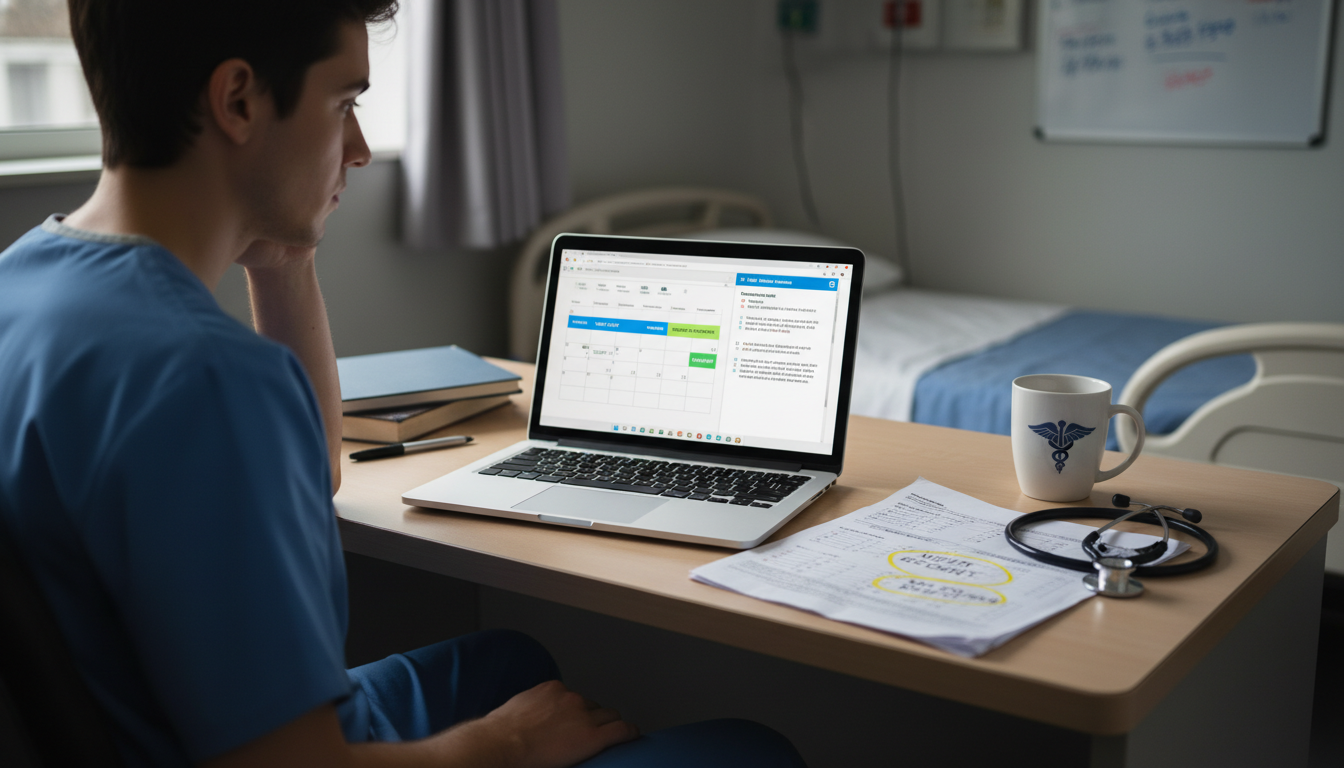
Step 1: Clarify Your Step 2 CK Status and Timeline
Your first action is to define exactly where you stand:
Scenario A: Haven’t taken Step 2 CK yet
- Check ECFMG or NBME deadlines and any program-specific requirements.
- Identify optimal “lighter” months (e.g., elective rotations, ambulatory blocks) for concentrated study and testing.
- Aim to test when you’re at peak clinical familiarity but not completely exhausted—usually 3–6 months into residency.
Scenario B: Already took Step 2 CK but want to strengthen IM knowledge
- Target Step 3 or specialty in‑training exam as your next benchmark.
- Use Step 2 CK-style resources but adjust volume and intensity; you’re reinforcing, not cramming.
Step 2: Map Study Around Your Rotations
Prelim IM schedules are variable, but a useful rule of thumb is to create tiered study expectations by rotation intensity:
Heavy months (e.g., wards, ICU, night float, admissions)
- Daily study: 15–45 minutes
- Focus: Low-friction activities
- 10–20 high-quality questions/day (timed, random, mixed).
- Quick review of wrong answers and “must-know” explanations.
- One short topic review (e.g., 5–10 pages or one Anki deck).
- Priority: Sustainability—avoid burnout.
Moderate months (e.g., subspecialty consults, ED, day float)
- Daily study: 45–75 minutes
- Focus: Consolidation
- 20–40 questions/day.
- System‑based review (e.g., cardiology this week, pulmonary next).
- Target weak areas identified by question bank performance.
Lighter months (e.g., electives, research, ambulatory with fewer calls)
- Daily study: 1.5–3 hours (can be split into chunks)
- Focus: Intensive prep and test scheduling
- 40–80 questions/day.
- NBME practice exams every 2–3 weeks to gauge readiness.
- Fill content gaps with targeted reading or videos.
Example Monthly Study Plan for a Prelim IM Resident
- July (Wards): 15–20 questions/day, quick review, 5–10 Anki cards.
- August (ICU): 10–15 questions/day, focus on sepsis, shock, respiratory failure.
- September (Elective – Cards consults): 40 questions/day, one NBME, focus on cardiology.
- October (Night Float): 10–15 questions/day during downtime, or on off days only.
- November (ED): 25–30 questions/day focused on acute presentations.
- December (Outpatient): 50–60 questions/day, NBME, schedule Step 2 CK exam.
Adapt this skeleton to your institution, well-being, and exam date.
Step 3: Protect Study Time Like a Clinical Task
During prelim IM, everything feels urgent. To make USMLE Step 2 study actually happen:
- Treat it like a daily order: “Complete 20 questions before 10 PM.”
- Use micro‑blocks:
- 5 questions during a quiet 15-minute window.
- One explanation section while eating.
- Flashcards during commute (if not driving) or right before sleep.
- Negotiate with yourself: Some days, you’ll hit only the “minimum viable effort” (e.g., 10 questions). That’s far better than none.
Building an Effective Step 2 CK Resource Strategy
With limited time, resource overload is your enemy. You do not need five question banks and four textbook series. You need a clear, focused set.
Core Resources
Primary Question Bank (non-negotiable)
Choose one high-yield, widely used Step 2 CK Qbank (e.g., UWorld). Use it as your main learning tool, not just an assessment:- Do questions in timed, mixed mode once you have basic familiarity.
- Commit to going through the entire bank once; twice if you start early and have time.
- Use explanations to build your mini‑review texts.
NBME Practice Exams / UWSA
- Start NBMEs once you are 50–60% through your primary Qbank.
- Take an NBME or UWSA every 2–3 weeks during your final 6–8 weeks of preparation.
- Treat them like the real exam: timed, quiet room, no interruptions.
Concise Reference (e.g., concise Step 2 review book or vetted notes)
- Use this to clarify concepts that repeatedly appear in questions.
- Avoid trying to “read everything”; instead, read to answer specific questions generated by your Qbank or clinical cases.
Supporting Resources (Optional and Targeted)
Flashcards (Anki or self-made)
- Best for high-yield facts, scoring systems, and subtle distinctions.
- Focus on:
- Diagnostic criteria (e.g., SIRS vs sepsis vs septic shock).
- First-line vs second-line treatments.
- Risk factors and classic presentations.
- Limit daily card volume to avoid overwhelm.
Short Videos / Lectures
- Ideal when you’re too tired to read but can still absorb content.
- Use them as reinforcement, not as a replacement for questions.
Institutional Teaching and Morning Report
- Think of morning report as a live Step 2 CK session:
- Write down 1–2 key teaching points from each case.
- That “30-year-old with chest pain and normal EKG” becomes a pattern you’ll see again on your exam.
- Think of morning report as a live Step 2 CK session:
Rule of Thumb: If a resource doesn’t directly improve your question performance or clinical reasoning, let it go.
Using Clinical Work to Supercharge Your Step 2 CK Preparation

Turn Every Patient into a Step 2 CK Vignette
For each new admission or consult, walk through the mental structure of a Step 2 CK question:
Presentation
- “This is a 68-year-old man with a history of COPD presenting with shortness of breath and increased sputum.”
- On Step 2 CK, what are they really asking? Usually: next diagnostic step, most likely diagnosis, or initial management.
Key findings
- Identify the 3–5 data points that define the case: vitals, key labs, imaging patterns, risk factors.
- Example: Fever + hypotension + tachycardia + suspected source = sepsis → next step is early antibiotics + fluids.
Next best step
- Ask yourself explicitly:
- What would be the “next best step” if this were a question?
- Is this management step supported by guidelines?
- Would there be a better diagnostic test?
- Ask yourself explicitly:
Write your own one-sentence “question stem” and imagined answer choices while pre‑rounding. Over time, this builds instant pattern recognition.
Example: Converting a Real Case to Step 2 CK Logic
Case: 56-year-old woman, history of DM2 and HTN, presents with fever, dysuria, flank pain, and hypotension.
- Stem recognition: Older woman, UTI symptoms, systemic instability.
- Key exam data: Fever, tachycardia, hypotension, CVA tenderness.
- Labs: Leukocytosis, elevated lactate, maybe creatinine bump.
- Step 2 CK lens:
- Most likely diagnosis? Complicated pyelonephritis with sepsis.
- Next best step in management?
- Immediate IV fluids and broad-spectrum IV antibiotics (e.g., ceftriaxone, piperacillin-tazobactam), urine and blood cultures obtained but not delaying antibiotics.
- Wrong answers commonly seen on exam:
- Oral antibiotics and discharge.
- CT scan before resuscitation.
- Waiting for cultures before giving antibiotics.
Documenting a few cases per week like this is one of the highest-yield forms of USMLE Step 2 study you can do during prelim IM.
Use Your Attendings as Live Explanations
Attendings are essentially walking, talking answer explanations:
- When your plan differs from theirs, ask:
- “Can you help me understand why we’re choosing this test first?”
- “In a board-style question, which management step would they be looking for here?”
- Many attendings know the “exam version” of clinical decisions and can point out Step 2 CK nuances.
Aligning Your Patient Lists with Weak Areas
Track your weakest subjects based on Qbank reports (e.g., OB/GYN, psych, preventive medicine). When a patient presents with an issue in that domain:
- Take extra responsibility: volunteer to present, call consultants, write notes.
- After the shift, do 10–15 topic-specific questions on that area.
- This pairs real memory with abstract test content, creating long-term retention.
Balancing Wellness, Burnout Risk, and Peak Performance
The prelim medicine year is intense. Smart Step 2 CK preparation requires recognizing limits and designing around them.
Recognize the Limits of Exhausted Studying
Four hours of forced, late-night reading after a 28-hour call is not high-yield. Instead:
- Use post-call days for rest first, then light review only if you feel up to it.
- On brutal days, your study goal might be:
- 5–10 questions, or
- Reviewing marked questions from previous days, or
- Watching one short video while lying down.
Consistency over months beats heroic efforts in occasional bursts.
Use Strategic Rest Before Exam Day
If you’re actively taking Step 2 CK during your prelim IM year:
- Aim for your exam during or immediately after a lighter rotation block.
- Try to arrange:
- At least 1 full day off before the exam (ideally 2).
- Minimal clinical shifts in the 3 days leading up to the test.
- The last 2–3 days before the exam:
- Focus on reviewing your “high-yield sheet” of notes and major algorithms (ACS, stroke, sepsis, asthma/COPD, GI bleed, anticoagulation, diabetic emergencies, OB triage).
- Avoid learning entirely new systems unless they are clearly weak and common (e.g., OB emergencies, psych).
Mental Approach and Confidence
Many residents feel Step 2 CK “should have been done” in medical school and can carry guilt or shame if they are taking it late. That mindset is counterproductive.
Reframe it:
- You now have real clinical experience—a major advantage over students.
- You’ve seen dozens of variations of classic diseases; pattern recognition will be stronger.
- You’re solving the same kinds of problems on the wards that you’ll see on exam day.
Putting It All Together: A Sample 8-Week Intensive Plan (During Prelim IM)
This example assumes you’re 3–4 months into prelim IM, have completed ~50% of a Qbank, and are now entering a relatively lighter block while planning to take Step 2 CK in 8 weeks.
Weeks 1–2: Consolidate and Identify Gaps
- Daily:
- 40–60 Qbank questions (timed, mixed).
- Review all explanations; annotate short notes.
- One NBME at the end of Week 2.
- Goal: Identify weakest 2–3 systems.
Weeks 3–4: Target Weakness and Re-Test
- Daily:
- 40–60 questions with emphasis on weak systems (e.g., OB/GYN, peds, psych).
- 15–20 minutes of focused reading/flashcards on those areas.
- One NBME or UWSA near the end of Week 4.
- Adjust: If psych remains low, build daily psych questions into your routine.
Weeks 5–6: High-Yield Integration
- Daily:
- 40–60 questions, now back to fully mixed.
- Create or refine a personal “cheat sheet” of high-yield algorithms and tricky differentials.
- One NBME around Week 6.
- Goal: Confirm that your predicted Step 2 CK score is close to or above your target range.
Weeks 7–8: Polishing and Taper
- Week 7:
- 40–50 questions/day, focus on endurance and timing.
- Review all flagged/marked questions and your notes.
- Week 8:
- Early in the week: last self-assessment (NBME/UWSA).
- 2–3 days out:
- 20–30 review questions/day only, no new topics.
- Revisit algorithms, triage decisions, and must-know tables.
- Day before exam: light review, rest, logistical prep (route to center, ID, snacks).
If you’re on a heavier rotation during these weeks, reduce absolute question numbers but keep the structure of the plan (consolidate → target gaps → integrate → polish).
Frequently Asked Questions (FAQ)
1. I’m an international medical graduate starting a prelim medicine year. Is it realistic to take Step 2 CK during residency?
Yes, it’s realistic but requires planning. Many IMGs successfully sit for Step 2 CK while in a prelim IM year:
- Choose an exam date during or after a relatively lighter rotation block.
- Start Qbank work early—ideally before residency if possible.
- Use your daily clinical exposure to reinforce key concepts and improve your English medical vocabulary.
- Be honest about fatigue: you may need a longer prep timeline (e.g., 4–6 months) but fewer study hours per day.
2. What Step 2 CK score should I aim for if I want a competitive advanced specialty after my prelim year?
Target scores depend on specialty and program competitiveness, but general guidance:
- Most advanced specialties (anesthesia, radiology, neurology, PM&R, etc.): a Step 2 CK score at or above the national mean is often acceptable, higher is better.
- More competitive fields (e.g., dermatology, some radiology/anesthesia programs): aim significantly above the mean.
- Remember: clinical performance, letters, research, and interview performance also weigh heavily. Your prelim IM year is a chance to excel in all of these areas.
3. If I already took Step 2 CK before prelim IM, how should I study differently?
You don’t need to prep as aggressively as someone who hasn’t tested yet, but you can:
- Use your Qbank (or a Step 3 bank) for 10–20 questions/day as longitudinal review.
- Focus on integrating guidelines and decision-making that translate to both Step 3 and your specialty boards.
- Treat morning report, noon conference, and high-yield cases as board-style learning opportunities.
- If your Step 2 CK score was lower than you hoped, use this year to build the foundation for a stronger Step 3 performance.
4. How do I avoid burnout while trying to maintain USMLE Step 2 study during such a busy year?
- Set realistic minimums (e.g., 10 questions on worst days, 40–60 on lighter days).
- Take true breaks: exercise, sleep, hobbies, and social connection improve retention more than extra late-night cramming.
- Periodically reassess your schedule—if your mental health is suffering, pull back and adjust your timeline.
- Remember that consistent, modest effort over months is more powerful—and healthier—than unsustainable surges of studying.
Skillful USMLE Step 2 CK preparation during a preliminary medicine year is not about heroics—it’s about alignment. Align your clinical experiences with a focused question-bank strategy, align your schedule with realistic study blocks, and align your well-being with long-term success. Done well, your prelim IM year will not only prepare you for Step 2 CK, but will also make you a better, safer, and more confident physician in any specialty you ultimately pursue.




















