


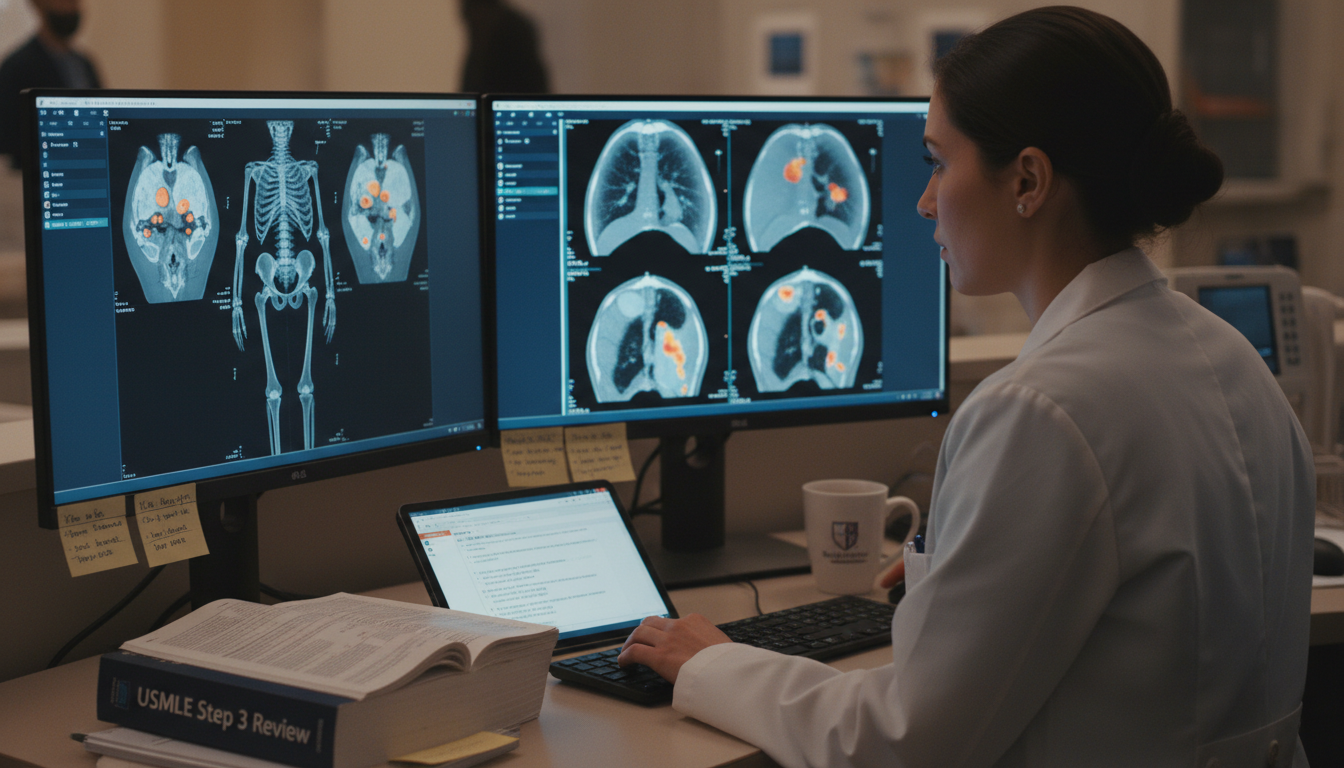
Understanding USMLE Step 3 in the Context of Nuclear Medicine
USMLE Step 3 is often viewed as “the final licensing exam,” but for nuclear medicine residents it plays a more strategic role than that simple label suggests. While your day-to-day training emphasizes radiopharmaceuticals, imaging physics, and interpretation skills, Step 3 tests something different: whether you can function as an independently practicing physician who can diagnose, manage, and follow patients over time.
For applicants and residents in nuclear medicine residency, Step 3 sits at the intersection of licensure, career strategy, and workload management. Planning Step 3 during residency—or just before starting—can significantly impact your training experience, fellowship prospects, and long-term practice options.
Key points to understand from the start:
- Step 3 is not a radiology or nuclear medicine–focused exam. It is heavily weighted toward internal medicine, emergency care, pediatrics, OB/GYN, psychiatry, and ambulatory care.
- However, nuclear medicine physicians are still physicians. You will be expected to:
- Interpret basic clinical data relevant to imaging referrals and incidental findings.
- Manage common conditions at least at the level of triage and initial outpatient care.
- Understand how imaging contributes to, but does not replace, clinical decision-making.
- Many nuclear medicine programs, especially in the U.S., prefer or require residents to have completed Step 3 early in training for:
- State medical licensure
- Visa-related requirements for international medical graduates (IMGs)
- Competitive subspecialty fellowships (e.g., PET, theranostics, hybrid imaging with radiology)
Understanding the structure of Step 3 helps you target your preparation efficiently:
Day 1 (Foundations of Independent Practice – FIP)
- Emphasis: basic sciences in a clinical context, epidemiology, biostatistics, ethics, foundational clinical knowledge.
- Question types: traditional multiple choice only.
- Particularly relevant to nuclear medicine: radiation safety, biostatistics, quality improvement, and ethics in diagnostic testing.
Day 2 (Advanced Clinical Medicine – ACM)
- Emphasis: diagnosis and management, prognosis, and systems-based care.
- Components: multiple-choice questions plus Computer-Based Case Simulations (CCS).
- Particularly relevant to nuclear medicine: evidence-based test ordering, risk–benefit analysis of imaging/radiation, and longitudinal management of complex patients (e.g., oncology, cardiology).
Your nuclear medicine background gives you certain advantages—comfort with statistics, imaging indications, and complex oncology/thyroid disease—but you must deliberately shore up areas not heavily emphasized in your specialty: hands-on primary care, pediatrics, OB/GYN, and acute care.
Why Step 3 Matters for Nuclear Medicine Residents and Applicants
1. Licensure and Regulatory Requirements
Many U.S. states require completion of all three Steps (1, 2 CK, and 3) for:
- Full, unrestricted medical licensure
- Certain hospital privileges
- Credentialing with insurance panels and Medicare/Medicaid
Nuclear medicine physicians—whether purely diagnostic or integrated with theranostics—often need independent licensure to:
- Supervise nuclear medicine technologists
- Sign final reports
- Oversee radiation safety and therapeutic administrations
- Serve as Authorized Users for radioisotope therapy under NRC and state regulations
Delaying Step 3 can delay these professional milestones.
2. Impact on Nuclear Medicine Match and Career Flexibility
In the nuclear medicine match ecosystem, programs may weigh Step 3 differently:
Integrated or combined programs (e.g., diagnostic radiology–nuclear medicine, or programs linked with internal medicine/radiology departments) may:
- Prefer applicants who have already passed Step 3, especially IMGs
- View a strong Step 3 as evidence of broad clinical competence
Standalone nuclear medicine residency programs may:
- Require Step 3 early in PGY-2 or PGY-3 for licensure reasons
- Use Step 3 performance as a proxy for readiness to coordinate care with referring clinicians
Even where it’s not formally required, a solid Step 3 score can:
- Differentiate you in competitive post-residency positions, particularly in:
- Academic nuclear medicine
- Hybrid imaging practices with radiology
- Theranostics and molecular imaging programs
- Support fellowship applications involving:
- PET/CT or PET/MR
- Radionuclide therapy
- Cardiac nuclear imaging
3. Strategic Timing: Before vs. During Nuclear Medicine Residency
Option A: Take Step 3 Before Starting Nuclear Medicine Residency
Pros:
- You enter residency with licensure underway, freeing you to focus on imaging and research.
- Knowledge from med school and Step 2 CK is still “fresh.”
- Helpful if you’re transitioning from another specialty (e.g., internal medicine, radiology prelim) and want your general medicine knowledge documented.
Cons:
- Harder logistically if you are still finishing another residency phase, internship, or visa paperwork.
- Financial and time commitments while transitioning between programs.
Option B: Take Step 3 During Nuclear Medicine Residency
Pros:
- You can time your Step 3 preparation to lighter rotations (e.g., low-call periods, elective time).
- Clinical exposure to major referral conditions (oncology, cardiology, endocrinology) can enrich your understanding.
- Programs sometimes offer academic days or study time.
Cons:
- Heavy imaging workloads, call, and research demands may compete with study time.
- Your general medicine skills may be “rusty” if you have been out of primary clinical care for a while.
Unless your visa or licensure situation demands earlier completion, a common strategy is:
- Plan to take Step 3 within the first 12–18 months of starting nuclear medicine residency.
- Align with a lighter rotation block or a stretch with fewer call shifts.
Building a High-Yield Step 3 Study Plan as a Nuclear Medicine Resident
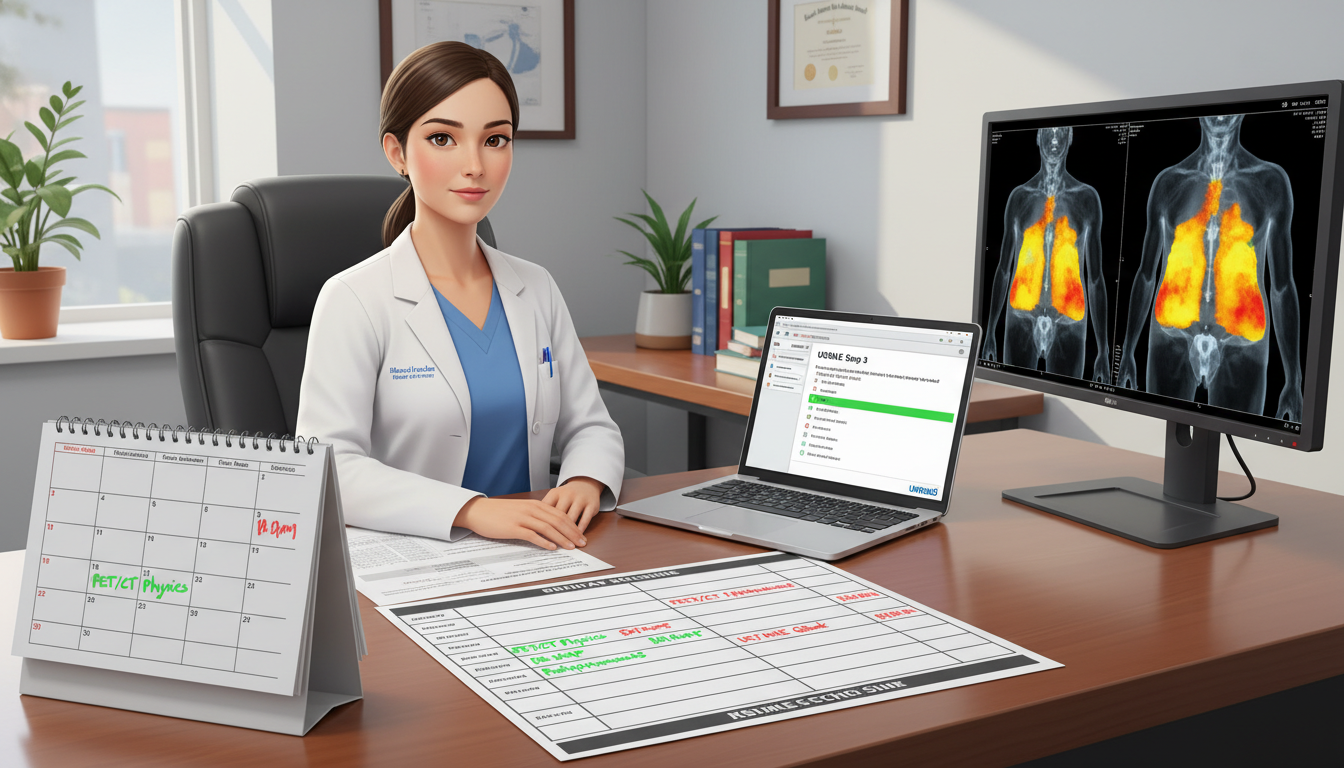
1. Define Your Timeline and Constraints
Begin with a realistic assessment:
- How many hours per week can you dedicate to studying?
- What is your rotation schedule over the next 3–6 months?
- Busy inpatient call or therapy block vs. outpatient/reading room–based rotations?
- Are there non-negotiable deadlines?
- Visa requirements
- State licensure cutoff dates
- Program-specific policies
Typical preparation windows:
- Intensive 6–8 week plan (20–25 hours/week):
- Best if you are between programs or on a very light rotation.
- Moderate 10–16 week plan (8–12 hours/week):
- Ideal for most nuclear medicine residents juggling service, call, and perhaps research.
2. Core Resources: Less Is More
Step 3 is broad, but you do not need an exhaustive library. Choose:
Question Banks (Primary Resource)
- One high-quality, comprehensive Step 3 Qbank (e.g., UWorld, Amboss, or similar).
- Aim for:
- Completing 1 full pass (~1,600–2,000 questions), and
- A focused second pass on weak areas and marked questions.
CCS Practice Tools
- Official USMLE practice CCS cases (NBME/USMLE website)
- A commercial CCS simulator (if available to you):
- Use 20–30 cases to become comfortable with:
- Ordering tests and imaging appropriately
- Transitions in care (ER → floor → ICU → discharge)
- Time management and closure
- Use 20–30 cases to become comfortable with:
Concise Review Text
- A focused Step 3 review book or condensed internal medicine/ambulatory care resource.
- Use this to patch knowledge gaps identified by Qbank performance, especially in:
- Pediatrics
- OB/GYN
- Psychiatry
- Preventive medicine and ambulatory care
3. Weekly Structure for Nuclear Medicine Residents
Example 12-Week Plan (Moderate Intensity)
Weeks 1–4: Foundation and Diagnostic Focus
- 20–30 questions/day on weekdays; 40–50 on weekends.
- Emphasize:
- Common outpatient internal medicine conditions
- Emergency/urgent care triage
- Pediatrics and OB/GYN basics
- Daily 15–20 minutes:
- Review of biostatistics/epidemiology (connect with your imaging research skills).
Weeks 5–8: Advanced Management and CCS Integration
- 30–40 questions/day on weekdays.
- Start 2–3 CCS cases per week.
- Focus on:
- Chronic disease management (DM, HTN, CAD, COPD, asthma)
- Cancer-related care (you’ll see the imaging side daily—integrate the clinical)
- Psychiatric emergencies and stable outpatient management
Weeks 9–12: Consolidation and Exam Readiness
- 40–60 questions on off days; 20–30 on busier days.
- 3–4 CCS cases/week, with special attention to:
- Inpatient medicine & ICU cases
- OB emergencies
- Pediatric emergencies
- Take at least one full-length practice exam (or two half-length) under exam-like conditions:
- Timed
- No interruptions
- Minimal breaks, mirroring test day
4. Daily Study Tactics Optimized for Imaging Residents
You are used to pattern recognition in images; Step 3 requires pattern recognition in clinical vignettes.
Use question explanations as your main learning text.
Treat each explanation like a brief “micro-lecture.” Ask:- Why is each wrong answer wrong?
- How would the answer change with a slight variation in the vignette?
Actively connect imaging with clinical reasoning.
For every imaging study mentioned in a question:- Ask: “Would I order this? Why now? What alternative exists?”
- This reinforces your understanding of indications, sequencing of tests, and appropriate use criteria, which are highly relevant for both Step 3 and nuclear medicine practice.
Spaced repetition of high-yield facts.
- Use flashcards or an app (e.g., Anki) for:
- Pediatric milestones
- Prenatal screening schedules
- Vaccination schedules
- Screening guidelines for cancer and chronic disease
- Use flashcards or an app (e.g., Anki) for:
Leveraging Nuclear Medicine Expertise While Covering Knowledge Gaps

1. Play to Your Strengths
Many nuclear medicine residents come with strong backgrounds from:
- Internal medicine, radiology, or a transitional year
- Oncology, cardiology, or endocrinology rotations
- Research experience in imaging, statistics, or outcomes
Strength areas you can leverage:
Oncology and imaging-based staging
- Understand how imaging results guide treatment decisions:
- E.g., FDG PET/CT upstaging in lymphoma triggering CHOP + immunotherapy vs. local radiation.
- On Step 3:
- When presented a newly staged cancer patient, think: surgery vs. chemo vs. radiation vs. palliative care and how imaging findings influence that sequence.
- Understand how imaging results guide treatment decisions:
Cardiac Nuclear Medicine and Risk Stratification
- Familiarity with stress testing, perfusion imaging, and post-MI risk.
- On Step 3:
- Translate imaging into management: antiplatelet therapy, beta-blockers, ACE inhibitors, statins, and when to refer for cath vs. medical management.
Thyroid Disease and Radioiodine Therapy
- Deep knowledge of hyperthyroidism, thyroid cancer, and iodine physiology.
- On Step 3:
- Focus on correct initial diagnostic steps: TSH, free T4, RAI uptake vs. ultrasound, and how to manage hyperthyroidism in pregnancy or cardiac patients.
Biostatistics and Evidence-Based Imaging
- If you’ve done research or QI projects in nuclear medicine:
- Use that background to excel in:
- PPV, NPV, sensitivity/specificity questions
- Study design (RCT, cohort, case-control)
- Bias and confounding
- Use that background to excel in:
- If you’ve done research or QI projects in nuclear medicine:
2. Systematically Address Common Weak Spots
These are typical weak areas for nuclear medicine (and radiology) residents preparing for USMLE Step 3:
A. Pediatrics
- Emphasize:
- Developmental milestones and red flags
- Pediatric emergencies (sepsis, meningitis, intussusception, pyloric stenosis)
- Vaccination and screening schedules
- Approach:
- Dedicate at least 1–2 focused evenings per week to pediatric-only Qbank blocks.
B. OB/GYN
- Emphasize:
- Prenatal care schedule and routine labs
- Ectopic pregnancy, miscarriages, preeclampsia/eclampsia, postpartum hemorrhage
- Contraception and fertility
- Approach:
- Use algorithms/flowcharts to anchor management:
- E.g., first-trimester bleeding: rule out ectopic with β-hCG and ultrasound → management choices based on stability and findings.
- Use algorithms/flowcharts to anchor management:
C. Psychiatry
- Emphasize:
- Major mood disorders (MDD, bipolar)
- Psychotic disorders, delirium vs dementia
- Substance use disorders and withdrawal management
- Approach:
- Practice differentiating diagnoses by time course, symptom clusters, and age.
D. Ambulatory and Preventive Medicine
- Emphasize:
- Screening guidelines (breast, colon, lung, cervical cancer)
- Chronic disease follow-up intervals and medication adjustments
- Vaccination in special populations (elderly, immunocompromised, pregnant)
For each of these domains, you should:
- Track your Qbank performance by subject.
- Identify topics where your accuracy is consistently <60–65%.
- Assign 1–2 targeted review sessions each week focusing on those subjects.
Test-Day Strategy, CCS Mastery, and Balancing with Nuclear Medicine Training
1. Practical Test-Day Strategy
Before the Exam:
- Complete at least one full-length practice test day:
- 6–7 Qbank blocks of 38–40 questions each
- With timed breaks between blocks
- Plan logistics:
- Familiar route to the test center
- Pack:
- ID, scheduling printout
- Snacks high in protein/complex carbs
- Water or non-caffeinated beverage (moderate caffeine only)
During the Exam:
- Use a two-pass strategy during MCQ blocks:
- First pass:
- Answer easy and moderate questions quickly.
- Second pass:
- Return to flagged questions, especially those requiring calculations or detailed reading.
- First pass:
- Time targets:
- Aim for ~1 minute per question, leaving 5–8 minutes per block for review.
Step 3 questions often test “next best step” with subtle details. Consider:
- Stability vs. instability
- Outpatient vs. inpatient criteria
- Need for immediate imaging vs. observation vs. empiric treatment
Your nuclear medicine background can tempt you to over-order imaging. On Step 3, prioritize:
- Stabilization and life-threatening conditions first.
- Least invasive, highest-yield diagnostic steps.
2. Mastering CCS for Non-Internists
The CCS cases are sometimes anxiety-provoking for non-internist residents (including nuclear medicine). A focused strategy can neutralize that disadvantage:
- Practice at least 20–30 CCS cases, including:
- Chest pain/ACS
- Abdominal pain
- Sepsis
- Trauma
- Pregnancy-related emergencies
- Pediatric fever, respiratory distress
- Develop a default structured approach:
- Initial orders:
- Vitals, oxygen, IV access
- Basic labs (CBC, BMP, LFTs, PT/INR, PTT, cultures if indicated)
- Pregnancy test in reproductive-age females
- Immediate stabilization if needed:
- Fluids, antibiotics, pain control, monitoring
- Imaging and tests:
- Choose rationally based on suspected diagnosis:
- E.g., CT scan vs. ultrasound vs. MRI vs. nuclear scan.
- Avoid unnecessary or duplicative tests.
- Choose rationally based on suspected diagnosis:
- Disposition and follow-up:
- ER → floor vs. ICU
- Consults (surgery, OB, psych, etc.)
- Discharge planning, medications, counseling
- Initial orders:
Remember: CCS is not testing you as a nuclear medicine specialist; it tests general clinical reasoning and safe management.
3. Balancing Step 3 Preparation with Nuclear Medicine Workload
Strategies to protect time and energy:
Align intensive study periods with lighter rotations:
- Outpatient or research blocks
- Rotations with more predictable daytime hours
Micro-study sessions:
- 10–15 questions in between cases or while waiting for delayed imaging sequences.
- 5–10 minutes on flashcards during downtime.
Communicate with your program director or chief residents:
- Share your target exam dates.
- Some programs can adjust call schedules slightly around exam week or grant 1–2 study days.
Guard your sleep and mental health:
- Avoid last-minute all-night study marathons, especially while on clinical service.
- Aim for consistency: 1–2 hours most days is better than erratic 6-hour cramming bursts.
Frequently Asked Questions (FAQ)
1. When is the best time to take Step 3 during a nuclear medicine residency?
Most residents benefit from taking Step 3 within the first 12–18 months of nuclear medicine training. This timing:
- Keeps general clinical knowledge from medical school and prior training from fading.
- Allows you to obtain or progress toward full licensure earlier.
- Minimizes clash with later-year research projects, fellowship applications, or leadership responsibilities.
If you are an IMG with visa requirements or in a state with strict licensure rules, check those timelines first—they may dictate an earlier exam date.
2. Do nuclear medicine programs care about my Step 3 score or just a pass?
Most nuclear medicine residency programs primarily want to see:
- A pass on Step 3 (especially for IMGs and those needing licensure/visa clearance).
However, a strong Step 3 performance can:
- Reassure program directors of your broad clinical competence.
- Strengthen applications for competitive fellowships or combined imaging/radiology positions.
- Serve as a positive data point if other exam scores (e.g., Step 1, Step 2 CK) were borderline.
For the nuclear medicine match, a pass is usually sufficient, but an above-average score is an added asset, not a requirement.
3. How different is Step 3 from my day-to-day nuclear medicine work?
Step 3 is far broader and more primary care–oriented than nuclear medicine practice. While your clinical exposure to oncology, cardiology, and endocrinology helps, Step 3 will test:
- Pediatrics, OB/GYN, psychiatry, emergency medicine, and outpatient preventive care.
- Systems-based practice: quality improvement, cost-effectiveness, and risk management.
- Clinical management decisions rather than imaging interpretation alone.
Think of Step 3 as testing your ability to be a safe, independent physician first, and an imaging specialist second. Use your imaging expertise to inform management steps, not to replace them.
4. Should I modify my Step 3 study plan because I’m in nuclear medicine?
Yes, but selectively. Your core preparation (Qbank, CCS practice, concise review) is the same as for any other specialty. However:
- Lean on your strengths (oncology, cardiac risk stratification, thyroid disease, biostatistics) to study efficiently.
- Allocate extra, dedicated time to historically weak areas for imaging-specialty residents:
- Pediatrics
- OB/GYN
- Psychiatry
- Ambulatory and preventive medicine
- Integrate your daily nuclear medicine cases into your studying:
- Ask, for each referral: “What were the key clinical decisions before this scan? What will change after the scan?”
This dual thinking reinforces both Step 3 reasoning and your value as a consultant.
- Ask, for each referral: “What were the key clinical decisions before this scan? What will change after the scan?”
By approaching USMLE Step 3 preparation with a structured plan tailored to your role as a nuclear medicine resident, you can secure licensure, enhance your competitiveness in the nuclear medicine match and fellowship market, and emerge as a more well-rounded physician. Thoughtful timing, focused resources, and targeted remediation of weak content areas will allow you to successfully integrate Step 3 into your residency without compromising your growth in nuclear medicine itself.




















