
Understanding Step 3 in the Context of Pediatrics-Psychiatry
USMLE Step 3 is the final exam in the USMLE sequence and often the first board exam you take during residency. For those in a Pediatrics-Psychiatry or “triple board” pathway (peds-psych-IM or peds-psych-child psych, depending on institution), Step 3 represents more than just a licensing hurdle—it is an early test of your ability to integrate pediatric medicine and psychiatry in real-world clinical scenarios.
What Step 3 Actually Tests
Step 3 is designed to assess whether you can apply medical knowledge and understanding of biomedical and clinical science essential for the unsupervised practice of medicine, with an emphasis on:
- Patient management and diagnosis over rote memorization
- Ambulatory and longitudinal care rather than purely inpatient crises
- Systems-based practice, risk management, and safety
- Epidemiology, ethics, and communication
- Application of guidelines (e.g., asthma, ADHD, depression, diabetes) in typical clinic scenarios
It has two main components:
Day 1: Foundations of Independent Practice (FIP)
- ~7 blocks of multiple-choice questions
- Focus on diagnosis, epidemiology, ethics, basic management, and biostatistics
Day 2: Advanced Clinical Medicine (ACM)
- Multiple-choice blocks
- Computer-based Case Simulations (CCS) that simulate ambulatory and acute-care encounters over time
For a peds psych residency trainee, this structure is both a challenge and an opportunity. The exam leans heavily on internal medicine and adult medicine, yet you’ll also see pediatrics scenarios and some psychiatry and behavioral health content. The breadth can feel intimidating when much of your current training is specialized.
Why Step 3 Matters Specifically for Pediatrics-Psychiatry & Triple Board Trainees
Residents in peds psych residency or triple board pathways often experience unique scheduling pressures and specialty transitions. Passing Step 3 efficiently and early can:
- Free mental bandwidth: You can focus on your complex triple board training, research, or leadership roles without an exam looming over you.
- Strengthen visa or credentialing status: For international graduates, passing Step 3 may be relevant for certain visas or institutional requirements.
- Protect your schedule: A failure can disrupt your carefully sequenced rotations across pediatrics, psychiatry, and possibly internal medicine.
- Build confidence in integrated care: The USMLE Step 3 case mix forces you to integrate child and adult, medical and psychiatric perspectives—a core competency for peds-psych practice.
Your goal is not just to pass; it’s to use Step 3 preparation as a structured way to fill adult medicine gaps, consolidate pediatric foundations, and sharpen core psychiatry management skills.
When to Take Step 3 During Residency as a Peds-Psych Trainee
Ideal Timing: Know Your Program’s Structure
For a typical categorical pediatric or psychiatry resident, the common advice is to take Step 3 during PGY-1 or early PGY-2. For those in a combined or triple board program, timing gets more nuanced because your year-to-year rotation mix varies.
Important factors:
When your clinical load is reasonable
- Avoid ICU-heavy or night-float months as your main Step 3 preparation period.
- Choose a relatively lighter or outpatient month when you can reliably carve out study time.
Where you are in your rotation sequence
- If you start with a heavy pediatrics block, you may want to take Step 3 after:
- A few months of general pediatrics and some exposure to emergency or inpatient medicine, and
- One or two adult psychiatry or internal medicine blocks (to refresh adult-oriented management).
- If you begin on psychiatry, target a time when you have just rotated through general medicine or pediatrics to refresh systematic medical thinking.
- If you start with a heavy pediatrics block, you may want to take Step 3 after:
Institutional and licensing requirements
- Some states or programs require Step 3 by a certain PGY level for full resident licensure.
- Check if your hospital credentialing or moonlighting opportunities depend on passing Step 3.
Pros and Cons of Early vs. Later Step 3
Taking Step 3 Early (PGY-1–early PGY-2):
Pros:
- Knowledge from Step 1/2 CK is still relatively fresh.
- Reduces long-term exam anxiety.
- Can open doors for moonlighting sooner, depending on your institution.
Cons:
- The transition to intern life is stressful; time and energy are limited.
- You may not yet have integrated your pediatrics-psychiatry workflow, so it can feel like another “generic” exam.
Taking Step 3 Slightly Later (late PGY-2 or early PGY-3):
Pros:
- More real-world clinical experience, including cross-disciplinary care.
- Stronger sense of patterns in chronic disease management, which Step 3 emphasizes.
Cons:
- Less recall of preclinical or Step 1-type material.
- Studying competes with more advanced responsibilities, scholarly projects, or board exam prep.
Actionable advice:
Aim to take Step 3 during residency no later than early-mid PGY-2, unless your program structure strongly favors later. For most triple board trainees, timing it after at least one adult medicine or adult psychiatry rotation and 1–2 core pediatrics blocks strikes the right balance between content familiarity and time availability.
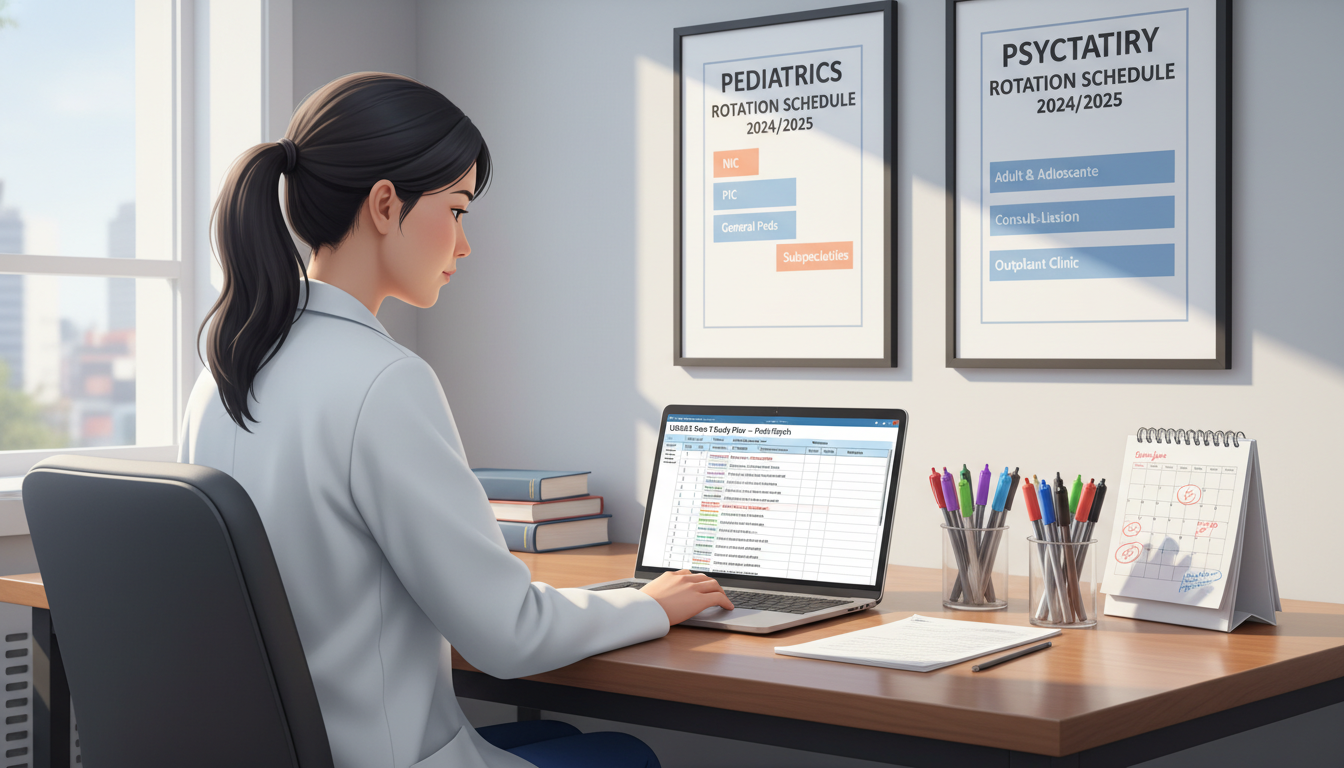
Building a Step 3 Study Plan Tailored to Pediatrics-Psychiatry
Step 1: Assess Your Baseline
Before you dive into content, identify your strengths and weaknesses:
- Review your Step 2 CK score report for low-performing content areas.
- Reflect on your residency experiences:
- Have you mostly done pediatrics so far? Adult medicine may need extra work.
- Have you been immersed in psychiatry? Refresh core pediatric and adult internal medicine.
- Are you strong in clinical reasoning but weaker in biostatistics/ethics?
Take one timed mixed block of a Step 3-style Qbank (e.g., UWorld) under exam-like conditions. Note:
- Overall score and timing issues
- Missed questions by discipline (medicine, pediatrics, OB/GYN, psychiatry, surgery)
- Recurrent themes (e.g., missing subtle red-flag symptoms, forgetting specific guidelines)
Use this data to shape a targeted plan.
Step 2: Define a Realistic Timeframe
Most residents in a peds psych residency or triple board program succeed with about:
- 4–8 weeks of dedicated-but-part-time study (1–2 hours on weekdays, 4–6 hours on one weekend day), or
- 2–3 weeks of semi-dedicated time (e.g., during vacation or a lighter elective).
Pick a timeframe that:
- Fits between major call blocks or board exam preparation for pediatrics or psychiatry
- Respects your need for sleep and mental health
- Still allows you to finish a primary Qbank and review notes
Step 3: Core Study Resources
You do not need an overwhelming number of resources. For USMLE Step 3 preparation, especially if you’re juggling complex rotations, choose high-yield, focused tools:
1. Main Qbank (non-negotiable)
- UWorld Step 3 is the standard, both for multiple choice and CCS (case simulations).
- Aim to complete at least 75–100% of the Qbank.
- Use tutor mode early for learning; switch to timed mode in the last 2–3 weeks.
2. CCS Practice Program
- Use either the official NBME/USMLE CCS practice cases and/or the UWorld CCS software.
- Practice at least 15–20 full CCS cases, focusing on:
- Pediatric acute care (e.g., bronchiolitis, febrile seizure, DKA)
- Adult psychiatric or mixed medical-psychiatric cases (e.g., suicidality with comorbid CAD)
- Primary care chronic disease management
3. Concise Review Text (optional but helpful)
- A short Step 3 review book or digital outline can anchor your reading (e.g., a concise Step 3 review or structured high-yield notes).
- Skim for:
- Algorithms and guidelines (asthma, depression, sepsis, diabetes, prenatal care)
- Tables summarizing screening recommendations
- High-yield ethics and preventive care topics
4. Biostatistics/Ethics Resource
- Use NBME practice materials or dedicated high-yield videos/outlines for:
- Sensitivity/specificity, NPV/PPV
- Study types and biases
- Interpreting confidence intervals and p-values
- Informed consent, capacity, confidentiality, child protection laws (especially relevant in pediatrics and psychiatry)
Step 4: Weekly Structure for a Triple Board Resident
A sample 6-week plan for someone with a moderate call schedule:
Weeks 1–2: Foundation & Systems Review
- 20–30 questions/day on weekdays (tutor mode, mixed disciplines)
- 40–60 questions on one weekend day (timed mode)
- Quick notes on:
- Pediatric emergencies (sepsis, bronchiolitis, meningitis, dehydration, DKA)
- Adult internal medicine basics (CHF, COPD, ACS, diabetes, hypertension)
- Core psychiatry: MDD, bipolar disorder, schizophrenia, anxiety, PTSD, ADHD, autism management
Weeks 3–4: Timed Blocks & Integration
- 1 full timed block/day (38–40 questions), focusing on test endurance and time management
- Begin CCS practice (1–2 cases every other day)
- Weekly theme:
- One deep-dive topic per week (e.g., Week 3: obstetrics/gynecology and women’s mental health; Week 4: neurology and neuropsychiatry)
Weeks 5–6: Exam Readiness & CCS Focus
- 2 full timed blocks on 2–3 days/week
- CCS focus:
- 1–2 CCS cases on most days
- Deliberate practice of order sets, follow-up timing, and documentation
- Targeted review of:
- Biostatistics/ethics
- Missed questions summary from the Qbank
Adjust this framework based on your rotation load and personal pace.
Content Priorities: High-Yield Topics for Peds-Psych and Triple Board Trainees
1. Pediatrics Essentials
Even if much of Step 3 leans adult, pediatrics remains critical—especially for you as a future peds-psych or triple board physician.
Key areas:
Neonatology & Infant Care
- Jaundice evaluation and treatment thresholds
- Sepsis workup in neonates and infants
- Newborn screening and routine follow-up
Respiratory Disorders
- Asthma classification and stepwise therapy
- Bronchiolitis and croup management
- Pneumonia pathogens by age, empiric antibiotics
Infectious Diseases
- Fever without source algorithms
- Meningitis workup and empiric therapy
- Vaccine-preventable diseases and catch-up schedules
Growth & Development
- Milestone red flags
- Failure to thrive workup
- Early signs of autism vs. normal variation
Adolescent Medicine
- Contraception, STI screening and treatment
- Depression, suicidal ideation, eating disorders (where pediatrics and psychiatry intersect significantly)
For each pediatric topic, practice recognizing what can be observed vs. what must be treated urgently and when to admit vs. discharge.
2. Psychiatry & Behavioral Health
Your psychiatry training will help here, but Step 3 questions often test nuances of management steps, legal/ethical issues, and safety rather than diagnosis alone.
Core psychiatric topics:
Mood Disorders
- First-line pharmacotherapy and psychotherapy indications
- Treatment-resistant depression: next steps, augmentation options
- Bipolar disorder: mania vs. hypomania, safe use of antidepressants
Anxiety and Trauma-Related Disorders
- Panic disorder vs. cardiac etiologies
- PTSD and acute stress disorder treatment strategies
- GAD vs. normal stress reactions
Psychosis & Schizophrenia
- Acute agitation management (IM medications, safety, restraints)
- Side effects of antipsychotics (metabolic, extrapyramidal, NMS)
Substance Use Disorders
- Opioid use disorder: buprenorphine vs. methadone vs. naltrexone decisions
- Alcohol withdrawal management and prophylaxis
- Screening tools and brief interventions in primary care
Child & Adolescent Psychiatry
- ADHD management and stimulant/non-stimulant selection
- Autism spectrum disorder: early signs, when to refer
- Suicidal ideation in adolescents: risk assessment, hospitalization thresholds
Consult-Liaison Scenarios
- Capacity assessments in medically ill patients
- Delirium vs. primary psychosis
- Somatic symptom disorder vs. underdiagnosed medical conditions
For each scenario, identify the safest next step, not just the theoretically correct answer. This is where your peds-psych training in risk assessment offers a real advantage.

Mastering CCS and Test-Day Strategy for Step 3 During Residency
CCS (Computer-Based Case Simulations): Why They Matter
For many test-takers, CCS substantially affects the Step 3 score. For a pediatrics-psychiatry or triple board trainee, CCS is also a chance to apply the holistic, cross-disciplinary approach you use daily:
- Recognizing medical instability in a psychiatric patient
- Integrating developmental and psychosocial factors in pediatric cases
- Managing long-term chronic conditions with behavioral components (e.g., diabetes plus depression)
CCS Best Practices
Create a Default Initial Orders Checklist
For any case, think:- Vitals, physical exam, and focused history
- Immediate stabilization if needed: airway, breathing, circulation
- Pain control, symptomatic relief, and safety measures
- Basic labs (CBC, CMP, UA), imaging only if indicated
- Telemetry/monitoring, admission location (ICU vs. floor vs. outpatient)
Practice Pediatric CCS Cases Deliberately
Focus on:- IV fluids and weight-based dosing
- Turnaround times for labs and imaging
- When to consult surgery (e.g., appendicitis) or subspecialties
Psychiatry-Related CCS Nuances
- High-risk suicidality: one-to-one observation, inpatient psych admission
- Substance intoxication: supportive care vs. specific antidotes, monitoring for withdrawal
- Co-management of psych and medical issues (e.g., starting SSRIs in a patient with cardiac risk)
Use Time Advancement Wisely
- After initial management, advance time modestly (hours to days) to check response.
- Don’t forget follow-up: ordering repeat labs, confirming symptom improvement, adjusting treatment.
Test-Day Strategy and Stamina
Before the exam:
- Sleep adequately for at least 2–3 nights before test days.
- Aim for a light review the day before, not a heavy cram session.
- Plan your meals, snacks, and hydration—especially if you have back-to-back exam days.
During the exam:
Pace yourself: Know in advance how many questions per block and time allotted.
Use a two-pass approach on tough blocks:
- First pass: Answer straightforward questions quickly.
- Second pass: Spend more time on complex or unfamiliar questions.
Guess strategically: Never leave a question blank. If unsure, eliminate obvious wrong choices and commit.
Staying grounded as a peds-psych trainee:
- For child/adolescent scenarios, you’ll often be more comfortable; avoid overthinking straightforward questions.
- For adult internal medicine, fall back on patterns: ABCs first, stabilize, then diagnose, then treat.
Integrating Step 3 Prep With Long-Term Triple Board Goals
A strong Step 3 strategy can align with your broader development as a pediatrics-psychiatry physician.
Use Cases to Practice Integrated Thinking
As you do Qbank and CCS:
Ask how a peds-psych lens would change care:
- Pediatric asthma in a child with severe anxiety: Could behavioral strategies reduce ER visits?
- An adolescent with type 1 diabetes and depression: How does mood affect adherence and risk?
Pay attention to transitions of care:
- Discharge planning and outpatient follow-up
- School accommodations and family education
- Coordination between primary care and mental health services
These are exactly the skills you’ll need in clinical practice and board certification for both pediatrics and psychiatry.
Avoiding Burnout During Step 3 Preparation
Combined and triple board paths are demanding. Protecting your well-being during USMLE Step 3 preparation is essential:
- Set a maximum daily study time that respects your mental bandwidth.
- Use short, focused intervals (e.g., 25–45 minutes of solid work followed by a 5–10 minute break).
- Schedule at least one no-study evening per week if your rotation permits.
- Lean on peers or co-residents in peds psych residency programs; consider forming a small study group especially for internal medicine and OB/GYN topics where pediatric and psychiatry exposure is lower.
FAQs About USMLE Step 3 Preparation in Pediatrics-Psychiatry
1. How much time do I really need to prepare for Step 3 during residency?
Most pediatrics-psychiatry and triple board residents succeed with 4–8 weeks of structured, part-time prep while on regular rotations, or 2–3 weeks of more intensive study on a lighter elective or vacation. The key is consistency rather than sheer hours: completing a Qbank, practicing CCS, and briefly reviewing weak content areas is generally sufficient.
2. Is a pediatrics-psychiatry background an advantage or disadvantage for Step 3?
It’s both an advantage and a challenge. Your strengths will likely be in pediatric cases, behavioral health, and complex psychosocial scenarios. The challenge lies in adult internal medicine, OB/GYN, and possibly surgery, especially if your recent rotations have been heavily pediatric or psychiatric. A targeted plan that emphasizes these weaker areas can turn your combined training into a net advantage.
3. What are the most important resources for USMLE Step 3 preparation?
For most residents, especially with limited time, the core resources are:
- A high-quality Step 3 Qbank (e.g., UWorld)
- A dedicated CCS practice platform
- A concise review (book or notes) for guidelines, ethics, and screening
- Short, focused materials for biostatistics and ethics
Adding more resources rarely helps if it comes at the expense of fully utilizing these core tools.
4. Should I try to “overachieve” on Step 3 or just aim to pass?
For most peds psych residency and triple board trainees, passing comfortably is the primary goal. Step 3 scores are typically less critical for fellowship or later career steps than your earlier USMLE scores and your residency performance. That said, aiming for solid understanding rather than minimal passing knowledge will serve you in future board exams and integrated clinical practice. Focus on building durable skills, not chasing marginal score gains.
By aligning your USMLE Step 3 preparation with your unique pediatrics-psychiatry and triple board training path, you can turn this licensing exam into a powerful stepping stone—reinforcing the broad clinical reasoning and integrated care perspective that will define your career.