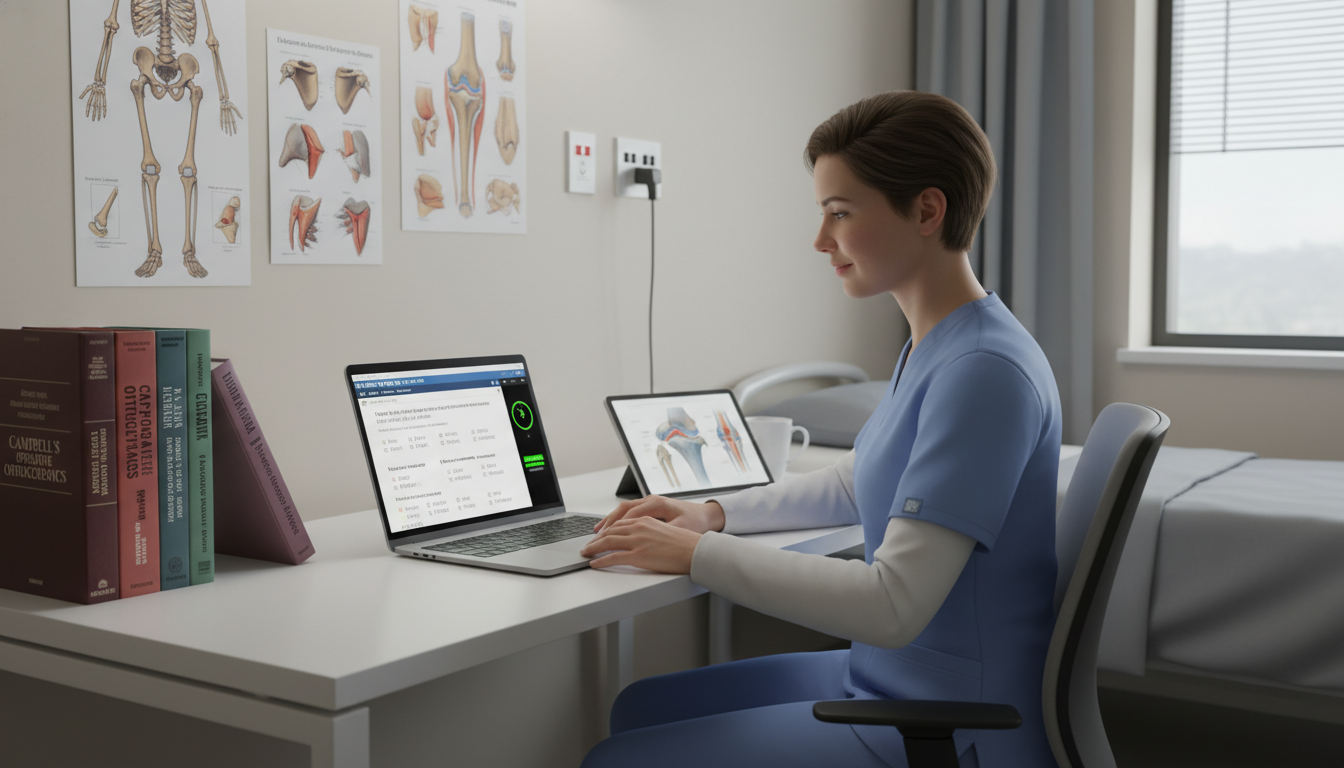
Understanding Step 3 in the Context of Interventional Radiology
USMLE Step 3 is often viewed as the “last exam hurdle,” but for those aiming for interventional radiology residency, it plays a specific strategic role. You are not just checking a licensing box—you are shaping your readiness for independent clinical decision-making in a field that blends procedural skill with nuanced patient management.
Interventional radiology (IR) is increasingly clinical: IR physicians admit patients, manage complex comorbidities, handle peri‑procedural care, and coordinate multidisciplinary treatment. Step 3, especially its emphasis on diagnosis, management, and prognosis in real-world scenarios, directly overlaps with what you’ll do in an IR clinic, consult service, or IR inpatient unit.
Why Step 3 Matters for Interventional Radiology
Licensure and future mobility
- Step 3 is required for full, unsupervised medical licensure in the U.S.
- Having it completed early gives you flexibility if you change programs, take on moonlighting (where allowed), or pursue IR positions in states with earlier licensure timelines.
IR match and competitiveness (for current medical students and early residents)
- For integrated interventional radiology residency (IR/DR), most application weight falls on Step 1 (now P/F), Step 2 CK, research, and letters.
- However, a strong Step 3—if available before the IR match—can reassure programs about your clinical reasoning if you had any Step 2 CK dip or borderline scores.
- Program directors may see completed Step 3 as a marker of maturity, planning, and reliability.
Message it sends to IR program leadership
- Finishing Step 3 early in residency (especially PGY‑1 or early PGY‑2) signals:
- You can manage high-volume responsibilities and still pass a major exam.
- You are serious about clearing licensing requirements to fully focus on IR as training gets more intense.
- Finishing Step 3 early in residency (especially PGY‑1 or early PGY‑2) signals:
Alignment with IR practice
- IR involves medical decision‑making that spans multiple specialties: internal medicine, critical care, emergency medicine, oncology, surgery, and OB/GYN.
- Step 3’s emphasis on longitudinal care, outpatient follow‑up, and multi-system management will reinforce the “IR as a clinical specialty” mindset instead of a purely procedural one.
When to Take Step 3 During Residency as a Future Interventional Radiologist
Timing your USMLE Step 3 during residency is a strategic decision that has consequences for your IR match, your stress level, and your clinical development.
Typical Timing Options
Late 4th year of medical school (rare, but possible for some)
- Pros:
- You finish all steps before residency; no exam hanging over you.
- Step 2 CK knowledge is still fresh.
- Cons:
- Most students are under multiple stresses (sub‑Is, ERAS, interviews).
- Not all states or programs allow this; often you need at least some postgraduate status.
- Limited real-world residency experience, which Step 3 assumes.
- Pros:
PGY‑1 (Intern year) – common and highly strategic
- Internal medicine, surgery, or transitional years provide a strong base in inpatient and outpatient management.
- Pros:
- Clinical medicine is new and fresh; day-to-day decisions mirror Step 3 content.
- You clear the exam before IR-focused years become intense.
- Ideal timing if you’re pursuing ESIR or integrated IR and want no exam burden during early IR rotations.
- Cons:
- Balancing calls, notes, and exam prep can be challenging.
- You need disciplined scheduling.
Early PGY‑2 (or DR year for integrated IR/DR residents)
- Pros:
- You have more experience, especially with cross-coverage and night float.
- You can use your knowledge of imaging and consults to help with diagnostic questions.
- Cons:
- DR year (if in integrated IR/DR) comes with its own learning curve.
- Delaying too long can increase anxiety and reduce recall of core medicine/surgery.
- Pros:
After starting IR-heavy training (late PGY‑2 or PGY‑3+)
- Strongly discouraged unless forced by circumstances.
- IR call, procedures, and research demands often expand rapidly.
- You want your cognitive bandwidth for building procedural mastery and clinical IR expertise, not Step 3.
Bottom line for IR-focused residents:
For most future interventional radiologists, PGY‑1 or early PGY‑2 is the optimal window for Step 3 during residency. It aligns with your heaviest exposure to general medicine while minimizing conflicts with later IR responsibilities.
What Step 3 Actually Tests (and How It Relates to IR)
USMLE Step 3 has two main components:
Day 1 – Foundations of Independent Practice (FIP)
- Multiple‑choice questions on core clinical knowledge and principles.
- Emphasis: diagnosis, diagnostic testing, basic management, epidemiology, and biostatistics.
Day 2 – Advanced Clinical Medicine (ACM)
- Multiple‑choice questions plus Computer-based Case Simulations (CCS).
- Emphasis: advanced management, patient monitoring, longitudinal care, systems-based practice.
Key Content Domains Relevant to Interventional Radiology
Even though Step 3 doesn’t test IR procedures directly, many domains overlap with what you’ll face in practice.
Cardiovascular and Pulmonary medicine
- Managing acute coronary syndromes, heart failure, arrhythmias (e.g., IR managing a massive PE with catheter-directed therapy).
- Ventilator management, ARDS, COPD exacerbations—central to IR ICU consults and post‑procedure patients.
Gastroenterology and Hepatology
- Cirrhosis complications (variceal bleeding, ascites, HCC) are common IR indications (TIPS, paracentesis, locoregional therapies).
- Understanding MELD, Child‑Pugh, and transplant evaluation improves your IR consult reasoning.
Hematology/Oncology
- Hypercoagulable states, DVT/PE management, thrombocytopenia, bleeding disorders—directly relevant to IR procedures.
- Solid and hematologic malignancies: IR plays a role in biopsies, vascular access, ablations, and embolizations.
Endocrine, Renal, and Critical Care
- Acute kidney injury, ESRD, diabetic emergencies, thyroid storm, adrenal crisis: these show up in IR patients undergoing contrast procedures or ICU interventions.
- Fluid management and vasopressor use intersect with periprocedural planning.
Obstetrics, Gynecology, and Women’s Health
- Uterine fibroids, postpartum hemorrhage, pelvic pain, and fertility issues overlap with future IR practice (e.g., UFE, pelvic embolization).
- Step 3 tests safe prescribing and management in pregnancy—critical when IR is consulted for pregnant patients.
Emergency Medicine and Trauma
- Initial management of trauma, sepsis, shock, and acute abdomen—classic entry points for IR consultation.
- Being fluent in early resuscitation helps you function as a consultant who understands the full clinical picture.
Ethics, Systems, and Communication
- Informed consent, end-of-life decisions, capacity assessment, shared decision-making—core to IR given high-risk procedures and oncologic interventions.

Building an Effective Step 3 Preparation Plan as an Aspiring IR Physician
You don’t need a year of dedicated Step 3 preparation; 6–8 weeks of focused, strategic study is usually enough, even during residency—if you are organized. Below is a blueprint tailored to future IR clinicians.
Step 1: Set Clear Goals and Baseline
Clarify your objectives
- Minimum: Pass comfortably, avoid retake.
- Ideal (especially if you have weaker earlier scores): Aim for a solid performance that demonstrates upward trajectory and strong clinical reasoning.
Assess your baseline
- Use a self-assessment from a major question bank or NBME/CCS practice tools early in your prep.
- Identify weak systems (e.g., OB/GYN, psych, peds, biostats) that may have been underemphasized in your current rotation.
Integrate IR-oriented mindset without over-focusing on IR
- You’re not taking an “IR board,” so don’t narrow your prep.
- Instead, think: “How would I manage this patient before/during/after a procedure?” This will connect exam learning to your future IR practice.
Step 2: Choose the Right Resources
For most residents, less is more. Use a focused set of high-yield tools:
Question Bank (QBank) – non‑negotiable
- A major Step 3 QBank (e.g., UWorld) is the core of your preparation.
- Do all questions if possible, or at least >70–80% with careful review.
- Use timed, random sets once you have warmed up; start with tutor mode for weak areas.
CCS (Case Simulations) Practice
- CCS is unique to USMLE Step 3 and heavily weighted.
- Use dedicated CCS practice software (from your QBank or separate tools).
- Focus on:
- Initial orders (ABCs, vitals, IV access, O2).
- Appropriate level of care (ward vs ICU vs ED).
- Frequent re-evaluation and follow-up orders.
- Practice a variety of scenarios: sepsis, DKA, chest pain, trauma, pregnancy, pediatric fevers.
Concise Review Text or Notes (Optional)
- A short review book or digital notes can help with:
- Ethics, biostatistics, and health systems.
- OB/GYN and pediatrics if they are far from your daily practice.
- Avoid starting a large textbook from scratch; residency time is limited.
- A short review book or digital notes can help with:
Biostatistics and CCS-Specific Resources
- Step 3 includes questions on:
- Study design, bias, p‑values, confidence intervals, NNT/NNH, sensitivity/specificity.
- A dedicated short biostats review (often included in QBanks) prevents easy points from slipping away.
- Step 3 includes questions on:
Step 3: Structuring a 6–8 Week Study Schedule During Residency
Here’s a sample 6‑week plan tailored for interns or early residents with busy rotations.
Weeks 1–2: Foundation and Warm‑Up
- Daily (60–90 minutes on weekdays, 2–3 hours weekends)
- 20–30 QBank questions in tutor mode on one or two systems at a time (e.g., cardiology + pulmonary).
- Thoroughly review explanations; create brief notes or flashcards for recurring mistakes.
- Goals:
- Refresh core medicine and identify weak areas.
- Rebuild test-taking stamina after a break since Step 2 CK.
Weeks 3–4: Ramp Up and Integrate CCS
- Daily (1.5–2 hours weekdays, 3–4 hours weekends)
- 40–60 timed QBank questions (mixed systems).
- Start 1–2 CCS cases every 1–2 days.
- Focus:
- Timed, mixed blocks to simulate the exam.
- Apply structured thinking: initial stabilization, differential, testing, definitive treatment, follow-up.
Weeks 5–6: Test Simulation and Targeted Review
- Early in Week 5
- Take a full‑length practice test or several blocks back‑to‑back to gauge performance.
- Review results, with special attention to ethics, OB, peds, and biostatistics.
- Week 5–6 Daily Plan
- 40–80 mixed QBank questions on days off; 20–40 on busy days.
- CCS cases 3–4 times per week, including redoing tricky scenarios.
- Last few days before exam
- Light review only: ethics, guidelines for common diseases, triage, test-of-choice questions.
- Avoid heavy cramming; preserve mental bandwidth and sleep.
Step 4: Integrate Studying with IR‑Relevant Clinical Experiences
If you’re rotating on internal medicine, ICU, ED, or even early DR/IR rotations:
Align your study with daily clinical cases
- If you saw a patient with PE, review guidelines on:
- Risk stratification.
- Anticoagulation choices.
- Indications for thrombolysis or catheter‑directed therapy.
- If on a hepatology or oncology-heavy service, tie in:
- HCC treatments.
- Portal hypertension management.
- When IR is consulted and why.
- If you saw a patient with PE, review guidelines on:
Practice “IR lens” thinking in Step 3 questions
- When a question presents a case that might need a procedure (drainage, biopsy, embolization), ask:
- What medical optimization is required first?
- Is this patient stable enough for a procedure?
- What are the anticoagulation and renal function considerations?
- When a question presents a case that might need a procedure (drainage, biopsy, embolization), ask:

Test Day Strategy: Executing Under Pressure
Good Step 3 preparation is incomplete without a solid test‑day strategy, especially during residency when fatigue and stress are higher.
Logistics and Scheduling
Plan days off around the exam
- If possible, schedule Step 3 during a lighter rotation (e.g., outpatient, electives) rather than ICU or night float.
- Request two consecutive days off (one for each exam day), plus at least one lighter day beforehand for final review and rest.
Know the test structure and rules
- Day 1: Typically 7 blocks of MCQs, ~60 questions each, plus breaks.
- Day 2: MCQs plus CCS cases; fewer MCQ blocks but longer day due to simulations.
- Understand how break times are allocated and how to manage them strategically.
Sleep, nutrition, and pacing
- Aim for consistent sleep in the week leading up to the exam, even during call or shift work.
- Bring snacks and fluids that maintain stable energy (nuts, fruit, bars, water).
In-Exam Tactics for Multiple-Choice Questions
Prioritize patient safety and high-yield actions
- Always stabilize ABCs first in emergencies.
- Don’t skip basic but life-saving steps (e.g., oxygen, IV access, monitoring).
Be guideline-driven but pragmatic
- Use up-to-date, guideline-consistent answers when clearly presented.
- When unsure, choose the option that best aligns with:
- Greatest mortality benefit.
- Most cost-effective, evidence-based practice.
- Least invasive but still definitive management.
Time management
- Monitor your pace: roughly 1 minute per question on average.
- Move steadily; flag only truly uncertain questions and revisit if time allows.
In-Exam Tactics for CCS Cases
Structured approach to every case
First 30–60 seconds:
- Read the stem fully.
- Immediately address ABCs, vitals, and setting (ED vs clinic vs ward).
Initial orders (common patterns):
- Vitals q2–4 hours, pulse oximetry, cardiac monitor if indicated.
- IV access, O2, fingerstick glucose for acutely ill.
- Pain, nausea control when appropriate.
Diagnostic orders:
- Labs and imaging based on likely differentials.
- Don’t order massive “shotgun” panels; be targeted but thorough.
Management and follow-up:
- Start empiric treatment when high suspicion exists (e.g., antibiotics in sepsis) rather than waiting for results.
- Advance the clock appropriately to see results and reassess.
Think like an IR‑informed consultant
- When imaging is key (e.g., suspected PE, abdominal abscess, hemorrhage), choose the correct modality and sequence:
- CT angiography vs V/Q scan vs ultrasound.
- When to use Doppler vs CT vs MRI.
- Step 3 won’t ask you to perform IR procedures, but will often ask:
- When to call a consultant or escalate care.
- When a conservative vs invasive approach is appropriate.
- When imaging is key (e.g., suspected PE, abdominal abscess, hemorrhage), choose the correct modality and sequence:
End cases efficiently
- Once the patient is stable and disposition is clear (admit/discharge/ICU), complete necessary:
- Counseling (smoking cessation, follow-up).
- Preventive care when relevant (vaccines, screenings).
- Don’t continue endless orders once the case is essentially resolved.
- Once the patient is stable and disposition is clear (admit/discharge/ICU), complete necessary:
How Step 3 Preparation Strengthens Your Interventional Radiology Trajectory
Even though USMLE Step 3 doesn’t directly test IR procedures, Step 3 preparation can be leveraged to make you a better future IR physician and a stronger IR residency applicant.
Clinical Confidence and Credibility
- IR increasingly operates as a clinical specialty, not just a procedural support service.
- Step 3 reinforces:
- Broad differential diagnoses.
- Longitudinal care (beyond the procedure).
- Understanding of comorbidities and medications that affect IR outcomes.
When you discuss management with referring teams—e.g., whether a patient is stable enough for a TIPS, or how to manage anticoagulation around a thrombectomy—your Step 3‑honed reasoning will show.
IR Match Narrative and Portfolio
If you are still in the IR match or planning phase:
- A strong Step 3 (when available early) can:
- Add to your narrative of being clinically oriented and systems-aware.
- Mitigate concerns from a slightly lower Step 2 CK if your performance improves.
- Provide talking points in interviews: how you approached clinical reasoning, triage, and risk‑benefit analysis.
For residents in diagnostic radiology aiming for ESIR or independent IR:
- Completing Step 3 promptly:
- Signals you’re ready to focus intensely on learning imaging and IR procedures.
- Avoids scheduling headaches later when ESIR or IR fellowship research and call intensify.
Long-Term IR Practice Benefits
- Managing anticoagulation, contrast nephropathy, critical illness, oncology complications, and pregnancy are part of daily IR practice.
- Step 3 study deepens your understanding of:
- When a procedure is truly indicated.
- How to manage peri‑procedural risks.
- When an alternative, less invasive strategy might be safer.
This big‑picture clinical mindset is what distinguishes excellent interventional radiologists in multidisciplinary teams.
FAQs: USMLE Step 3 Preparation for Future Interventional Radiologists
1. Do IR program directors care about USMLE Step 3 scores?
Most integrated interventional radiology residency programs focus heavily on Step 2 CK, research, letters, and clinical performance. Step 3 is primarily a licensing exam, but:
- A pass on first attempt is important; a failure can raise concerns about clinical reasoning.
- A strong score, especially if taken early, can:
- Help offset earlier borderline scores.
- Demonstrate upward academic trajectory and maturity.
However, not having Step 3 at the time of IR match is not usually harmful, as many applicants take it during intern year.
2. When is the best time to take Step 3 during residency if I’m planning on IR?
For most future interventional radiologists:
- Best window: Late PGY‑1 or early PGY‑2.
- Reasons:
- General medicine, surgery, ED, and ICU knowledge are fresh.
- You’re not yet fully immersed in IR call and advanced procedural practice.
- You free your later years to focus on IR training, ESIR, or independent IR fellowship.
3. How much dedicated time do I need to study for Step 3 if I’m on a busy rotation?
Most residents can prepare effectively with:
- 6–8 weeks of structured study,
- Averaging 1–2 hours per day on weekdays, plus 2–4 hours on weekends,
- Using primarily:
- A high-quality question bank (core tool).
- Regular CCS practice.
- Targeted review of weak areas (OB/GYN, peds, psych, ethics, biostats).
If your rotation is extremely heavy (e.g., ICU, night float), consider delaying until a slightly lighter block so you can maintain consistent study habits.
4. Does Step 3 preparation help with interventional radiology boards or practice?
Indirectly, yes:
- Step 3 reinforces:
- Clinical fundamentals (ICU care, oncology, cardiology, hepatology).
- Systems and ethics, which are woven into IR practice (informed consent, resource utilization).
- Later, as you take:
- Core exam (for DR/IR) and IR CAQ exams, your strong base in clinical medicine and decision-making will support:
- Appropriate procedure selection.
- Safe peri‑procedural management.
- Effective interdisciplinary communication.
- Core exam (for DR/IR) and IR CAQ exams, your strong base in clinical medicine and decision-making will support:
While you’ll still need IR‑specific study for boards, your Step 3 foundation will make that learning faster and more integrated.
By approaching USMLE Step 3 not as a formality but as a clinical reasoning milestone, you set yourself up to be the kind of interventional radiologist who can both perform technically complex procedures and manage the full spectrum of patient care that surrounds them.