



USMLE Step 3 is often overshadowed by Step 1 and Step 2 CK, but for anesthesiology residency applicants and early residents it plays a strategic role. It’s the final licensing exam in the USMLE sequence and a critical milestone as you enter or progress through anesthesiology training. Preparing thoughtfully—rather than “cramming to pass”—can support your anesthesia match prospects, your clinical confidence, and your long‑term career flexibility.
This guide focuses on USMLE Step 3 preparation in the context of anesthesiology: how the exam fits into your anesthesia career path, when to take it, how to study efficiently while applying or during internship, and how to align your prep with the skills you’ll need in the OR, ICU, and pre‑op clinic.
Understanding Step 3 in the Context of Anesthesiology
What Step 3 Actually Tests
USMLE Step 3 assesses whether you can apply medical knowledge and understanding of biomedical and clinical science essential for the unsupervised practice of medicine, with emphasis on:
- Diagnosis and management of common conditions
- Outpatient and inpatient longitudinal care
- Emergency stabilization and triage
- Use of evidence‑based medicine and biostatistics
- Risk assessment, prevention, and health maintenance
- Systems‑based practice and patient safety
For anesthesiology‑bound trainees, this means you need to demonstrate a solid handle on general medicine, surgery, pediatrics, OB/GYN, psychiatry, and emergency care—not just perioperative issues. The exam is less “anesthesia‑heavy” than some expect, but the mindset of rapid risk assessment and acute management overlaps strongly with anesthesia practice.
Step 3 and the Anesthesia Match
For most anesthesiology residency programs, Step 1 and Step 2 CK remain the primary standardized metrics for the anesthesia match. However, Step 3 can still be strategically important:
For IMG applicants or those with visa needs:
- Having USMLE Step 3 completed before residency may improve your chances at some programs, especially those preferring or requiring Step 3 for H‑1B visas.
- Programs often view a solid Step 3 score as proof of exam readiness and reliability, especially if your earlier scores are borderline.
For applicants with weaker Step 1/Step 2 CK scores:
- A strong Step 3 performance can provide evidence of improvement and reassure PDs that you’ve closed knowledge gaps.
For transitional/preliminary year applicants pursuing anesthesiology advanced spots:
- Passing Step 3 during your intern year reduces later stress and signals that you’re progressing well through licensure milestones.
That said, Step 3 is typically not the deciding factor for most anesthesia match outcomes if you already have competitive earlier scores and strong clinical performance.
Step 3 During Residency: Why Timing Matters
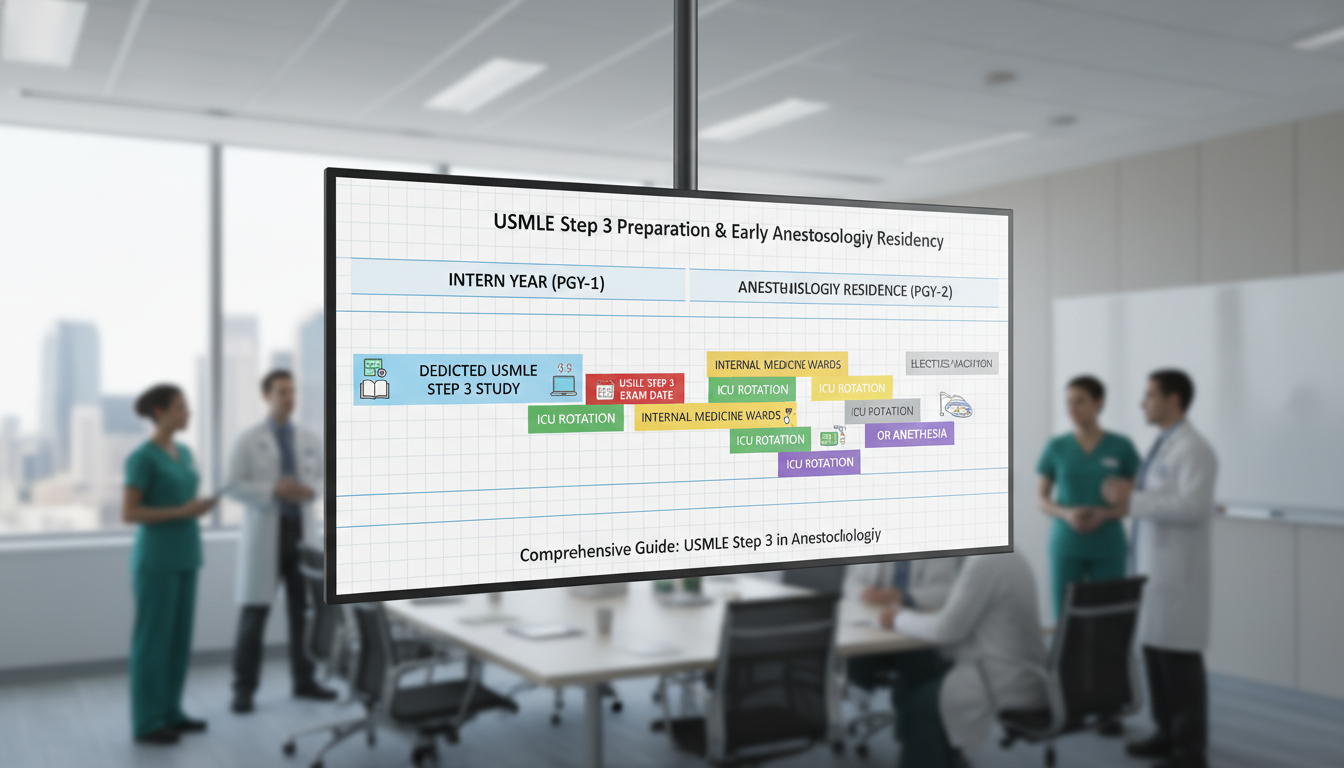
Most anesthesiology residents take USMLE Step 3:
- During PGY‑1 (intern year)—often in a prelim medicine, transitional year, or surgical internship
- Or early in PGY‑2 (CA‑1 year), depending on program structure and time off for exams
Key reasons not to delay Step 3 too long:
Licensure requirements
Many states require completion of Step 3 within a certain number of years after Step 1 or at a specific stage of training for full licensing. Delays can complicate future employment or moonlighting opportunities.Cognitive “distance” from general medicine
Anesthesiology training quickly becomes highly specialized. The further you get from day‑to‑day general medicine, pediatrics, and outpatient care, the harder it can feel to re‑engage those topics.Reduced exam pressure during later training
Getting Step 3 “out of the way” allows you to fully focus on:- Basic and Advanced Anesthesia Board exams (ITE and ABA Applied)
- Complex OR cases, ICU rotations, and subspecialty fellowships
Optimal Timing: When Anesthesiology‑Bound Trainees Should Take Step 3
During Medical School vs. During Internship
You cannot take Step 3 until you have:
- Passed Step 1 and Step 2 CK
- Obtained your medical degree (MD/DO or equivalent)
So, you can’t take Step 3 during medical school. The earliest point is after graduation, typically during your PGY‑1 year.
Pros and Cons: Step 3 During Internship (PGY‑1)
Pros:
- Your knowledge of general medicine, surgery, OB, peds, and ambulatory care is fresher.
- You can link your clinical experiences from wards and ICU to exam content.
- You clear licensing barriers early, which can help if you:
- Want to moonlight later in residency in some states
- Plan to apply for specific state licenses or H‑1B visas
Cons:
- Internship is physically and mentally demanding, and fitting Step 3 into long calls and new responsibilities can be draining.
- Poorly timed exam dates (e.g., near ICU months) can lead to rushed preparation.
Best practice:
Most anesthesiology‑bound residents benefit from taking Step 3 between 6–12 months into internship, once you have adapted to residency workflow but before full burnout and specialization set in.
Step 3 During CA‑1 (PGY‑2) in Anesthesiology
Some residents postpone Step 3 until early CA‑1 year. This can work if:
- Your program offers dedicated study time or exam preparation support.
- Your state and visa/licensure timelines allow a later exam.
- You intentionally review general medicine topics during anesthesia year.
However, balancing learning anesthesia fundamentals (airway, pharmacology, monitoring, crisis management) with Step 3 study can feel heavy. If possible, avoid pushing Step 3 much beyond early CA‑1.
Exam Structure, Content, and Anesthesia‑Relevant Domains
Step 3 Format Overview
USMLE Step 3 is a two‑day exam:
Day 1 – Foundations of Independent Practice (FIP)
- Focus: Basic medical and scientific principles underlying clinical practice
- Content:
- Diagnosis and management across disciplines
- Biostatistics, epidemiology, and population health
- Ethics, patient safety, systems‑based practice
- Structure:
- ~6 blocks of multiple‑choice questions (MCQs)
- No CCS (cases) on Day 1
Day 2 – Advanced Clinical Medicine (ACM)
- Focus: Application of detailed clinical knowledge in the context of patient management
- Content:
- Acute and chronic care
- Emergency and critical care scenarios
- Longitudinal patient management
- Structure:
- Several MCQ blocks
- 13 CCS cases (computer‑based clinical simulations)
For anesthesiology applicants, Day 2 often feels more aligned with the kind of thinking you’ll use in the OR and ICU: rapid triage, resuscitation, and dynamic problem‑solving.
High‑Yield Content Areas for Future Anesthesiologists
Although Step 3 is broad, certain areas have strong overlap with anesthesiology practice and are particularly worth mastering:
Cardiovascular and Pulmonary Medicine
- Management of heart failure, coronary artery disease, arrhythmias
- Hypertensive emergencies and hypotension/shock
- COPD, asthma, pneumonia, ARDS
- Pulmonary embolism and DVT management
Endocrine & Metabolic
- Diabetes inpatient and outpatient management
- DKA/HHS, adrenal insufficiency, thyroid storm/myxedema coma
- Perioperative glucose and steroid management (directly relevant to anesthesiology)
Renal & Electrolytes
- AKI vs chronic kidney disease, dialysis indications
- Electrolyte disturbances (K⁺, Ca²⁺, Na⁺, Mg²⁺) and their acute management
- Fluid resuscitation principles—core to intraoperative care
Respiratory Failure & Critical Care Concepts
- Initial ventilator settings, ARDS management strategies (e.g. low tidal volumes)
- Sepsis and septic shock management
- Sedation, analgesia, delirium in the ICU (overlaps directly with anesthesia pharmacology)
OB/GYN & Pregnancy‑Related Conditions
- Preeclampsia/eclampsia, hemorrhage, gestational diabetes
- Fetal monitoring basics
- Medications contraindicated in pregnancy—key for anesthetic drug choices
Pediatrics
- Neonatal resuscitation principles
- Common pediatric infections, asthma, dehydration management
- Vaccine schedules and preventive care
Emergency Medicine & Trauma
- ACLS and ATLS basics: airway, breathing, circulation, disability, exposure
- Acute intoxications and overdose management
- Burns, shock, and rapid stabilization
These systems are not just high‑yield for Step 3; they directly support safer anesthetic care across OR, PACU, and ICU settings.
Building an Efficient Step 3 Study Plan for Anesthesia‑Bound Trainees
Step 3 Preparation Principles
Because Step 3 comes during internship or early residency, your prep must be:
- Time‑efficient: Fit around 60–80 hour weeks
- Focused: Emphasize Step 3‑style management questions and CCS practice
- Integrated: Link what you see on the wards/OR with what you study
A realistic 6–8 week part‑time plan (while working full‑time) is typical for most residents.
Core Resources for Step 3 Preparation
Common high‑yield resources include:
Question Banks (Qbanks)
- UWorld Step 3: Gold standard; covers exam‑style questions and CCS practice.
- Aim for at least 60–75% of the Qbank completed; 100% is ideal if time allows.
- Use tutor mode initially; switch to timed blocks 2–3 weeks before the exam.
CCS Practice Tools
- UWorld CCS cases and practice software
- Official USMLE practice CCS cases online (free)
- Rehearse command inputs and decision sequences; familiarity with the interface is crucial.
High‑Yield Review Texts or Audio (optional)
- Brief Step 3 review books or notes can be used, but don’t replace Qbanks.
- Audio lectures (for commutes) can be useful if your schedule is tight.
For an anesthesiology‑bound resident, there is typically no need for extensive full‑length textbooks; directed practice through Qbanks and CCS is more impactful.
Sample 6‑Week Study Plan (While Working Full‑Time)
Assumptions:
- You work 60–80 hours/week.
- You can manage ~1.5–2 hours on weekdays and 4–6 hours on one weekend day.
Week 1–2: Foundation & Qbank Warm‑Up
- Daily (weekdays):
- 10–15 mixed Qbank questions in tutor mode
- Thoroughly review explanations, especially:
- Why the correct option is correct
- Why others are wrong
- Create brief notes or flashcards on weak areas (e.g., sepsis bundles, ACS management)
- Weekend:
- 1–2 full timed blocks (40 questions each)
- Start 2–3 simple CCS practice cases to learn interface.
Week 3–4: Expand Coverage & Strengthen CCS
- Target:
- Reach ~50–60% completion of your Qbank by the end of Week 4.
- Daily:
- 15–20 timed questions
- Focus on system‑based review:
- One system per day (e.g., cardio Monday, pulm Tuesday)
- CCS:
- 2–3 CCS cases per week
- Practice ordering:
- Initial stabilization (ABCs, vitals, IV access, O₂)
- Critical first orders (e.g., EKG, troponins, CT head, labs)
- “Don’t miss” safety orders (DVT prophylaxis, pain control, NPO, etc.)
Week 5–6: Simulation of Exam Conditions
- Daily:
- 20–25 timed questions, mixed topics
- Review explanations, focusing on patterns: what does Step 3 want you to do first?
- CCS:
- Aim to complete all or nearly all practice CCS cases.
- Practice under strict time limits for both 10‑ and 20‑minute cases.
- 7–10 days before exam:
- Take a full‑length self‑assessment (e.g., practice exam or unofficial simulation)
- Adjust study to address identified weak areas (OB, psych, ambulatory care, etc.)
Final 2–3 days before exam:
- Light review only:
- High‑yield algorithms (ACS, stroke, sepsis, DKA, PE)
- Preventive care charts (screening ages, immunizations)
- CCS interface tips and command shortcuts
- Ensure good sleep, hydration, and logistics (transport, ID, snacks).

CCS Cases: Strategy and Mindset for Anesthesia‑Bound Trainees
The Computer‑based Case Simulations (CCS) are often the most unfamiliar part of the exam, particularly for those who have not used similar software before. For future anesthesiologists, CCS prep is an opportunity to sharpen clinical judgment in dynamic, acute scenarios.
Core CCS Strategy Principles
Stabilize First (Airway–Breathing–Circulation)
This is second nature for anesthesiology, and Step 3 rewards it. For unstable patients:- Secure airway if needed (intubate, oxygen, suction)
- Support breathing (O₂, ABG, CXR, bronchodilators, non‑invasive ventilation)
- Support circulation (IV access, fluids, vasopressors as needed, EKG)
Order All Appropriate Initial Diagnostics and Monitoring
Think broadly:- Basic labs (CBC, CMP, coagulation studies)
- EKG, chest X‑ray, CT/US as indicated
- Continuous monitoring (telemetry, pulse oximetry, cardiac monitor)
- Nursing orders (vitals frequency, intake/output, fall precautions)
Address Time‑Sensitive Diagnoses
Examples:- ACS: EKG, troponins, aspirin, heparin, nitrates if appropriate
- Stroke: CT head urgently, determine tPA eligibility
- Sepsis: cultures + broad‑spectrum antibiotics + fluids immediately
- Trauma: imaging and surgical consult as needed
Advance the Clock Intentionally
- Check back frequently on unstable patients (every 15–30 minutes).
- For stable patients, follow up in hours or days as appropriate.
- Reassess vitals, symptoms, and key lab trends regularly.
Don’t Forget Preventive and Longitudinal Care
- Vaccinations, screening tests (mammograms, colonoscopy), counseling (smoking cessation, diet, exercise) when appropriate.
- Chronic disease management (e.g., adjusting antihypertensive regimen).
Anesthesia‑Relevant CCS Case Types
Common CCS scenarios that overlap with anesthesiology skills:
Postoperative hypotension or tachycardia
- Evaluate for bleeding, sepsis, MI, PE, hypovolemia.
- Orders: CBC, BMP, type and cross, imaging, fluids, pressors, consult surgery.
Acute respiratory distress
- Evaluate for PE, pulmonary edema, pneumonia, pneumothorax.
- Orders: Chest X‑ray, ABG, CT angiography if PE suspected, oxygen, diuretics, anticoagulation.
Sepsis and shock
- Broad antibiotics, aggressive IV fluids, vasopressors, lactate monitoring, ICU transfer—high overlap with anesthesia/ICU practice.
Obstetric emergencies (eclampsia, hemorrhage)
- Stabilization plus OB consult and appropriate pharmacologic interventions.
Practice these scenarios repeatedly. Your anesthesiology mindset—prioritizing airway, hemodynamics, and rapid re‑evaluation—will serve you well.
Balancing Step 3 Prep With Anesthesiology Training and Life
Coordination With Rotations
Not all rotations are created equal for Step 3 preparation. Aim to schedule the exam and main study push during:
- Lighter rotations, such as:
- Outpatient clinics
- Electives with predictable hours
- Rather than during:
- ICU or night float
- Heavy inpatient ward months
If possible, choose a 2–3 week window with fewer 24‑hour calls in the immediate run‑up to exam day.
Using Clinical Work as Study
Turn your daily cases into Step 3 review opportunities:
On medicine or ICU:
- Every new admission: mentally ask, “How would Step 3 frame the question? What is the most important next step?”
- Compare your daily management plans to Qbank rationales in similar cases.
On anesthesia rotations:
- For each patient, review:
- Their comorbidities (heart failure, COPD, CKD)
- Perioperative risk assessment (e.g., Revised Cardiac Risk Index)
- How you’d manage them postoperatively if complications arise—these are common exam scenarios.
- For each patient, review:
On OB or peds:
- Reinforce Step 3 topics: vaccine schedules, pregnancy risk categories, neonatal resuscitation priorities.
Protecting Well‑Being During Step 3 Preparation
You’re juggling residency stress and exam prep simultaneously. To avoid burnout:
- Set realistic daily goals (e.g., 15–20 questions, not 80).
- Build in one true off‑day per week from studying when possible.
- Use commute time for audio review or mental rehearsal rather than adding more screen time.
- Sleep is a performance enhancer: consistently short sleep sabotages both retention and clinical performance.
Step 3 Scores, Failure, and Impact on Anesthesiology Careers
How Much Does Your Step 3 Score Matter for Anesthesiology?
For residents already in anesthesiology:
- After you’ve matched, passing Step 3 is typically more important than achieving a stellar score.
- Program directors may review your Step 3 performance, but it rarely has the same weight as:
- In‑training exam (ITE) scores
- Clinical evaluations and OR performance
- Professionalism and teamwork
For those applying to anesthesiology residencies or fellowships:
- A failed or low Step 3 score can raise concern, especially in combination with earlier weak scores.
- A solid or improved Step 3 performance can:
- Reassure programs about your exam readiness.
- Support applications for competitive fellowships (cardiac, critical care, pain).
If You Fail Step 3
If you encounter a failure:
Address it proactively
- Speak honestly with your program director and mentor.
- Identify concrete reasons: inadequate prep time, poor test‑taking strategy, burnout.
Create a structured remediation plan
- Increase Qbank coverage.
- Consider additional resources (tutors, structured review courses).
- Improve test endurance via multiple full timed blocks.
Frame it appropriately in future applications
- Emphasize lessons learned and subsequent success (passing on second attempt with a stronger score).
- Highlight consistent or improved performance on anesthesia ITE and clinical rotations.
Programs are more concerned about patterns of repeated failure than a single isolated setback with clear remediation.
FAQs: USMLE Step 3 Preparation in Anesthesiology
1. Should I take Step 3 before or after starting my anesthesiology residency?
Most trainees benefit from taking Step 3 during their intern year, ideally 6–12 months into training. At that point:
- Your general medicine knowledge is still fresh.
- You’ve adjusted to residency workflow.
- You can clear licensing requirements before entering intense CA‑1 anesthesia training.
Taking Step 3 very late (mid‑CA‑1 or beyond) is possible but may be harder because your daily work becomes less general‑medicine focused.
2. How much time do I realistically need to prepare for Step 3 during residency?
For most anesthesiology‑bound interns or residents, 6–8 weeks of part‑time study (10–15 hours per week) is sufficient, assuming:
- You completed Step 2 CK relatively recently.
- You focus on Qbanks and CCS rather than reading large textbooks.
If your Step 2 CK score was borderline or taken long ago, plan toward the longer end of that range and consider more intensive review of weak subject areas (e.g., OB, psych, ambulatory care).
3. Which Step 3 resources are highest yield for someone going into anesthesiology?
The most efficient resources are:
- UWorld Step 3 Qbank (for MCQs)
- UWorld CCS and USMLE practice CCS cases (for simulations)
Supplementary options (used selectively if time allows):
- A concise Step 3 review book or notes
- Audio lectures for commutes
For anesthesiology, there is usually no need for specialized anesthesia texts to prepare for Step 3—the exam is broad, generalist, and management‑oriented.
4. Does passing Step 3 help me get an H‑1B visa for anesthesiology residency?
Many programs that sponsor H‑1B visas require that applicants have:
- Passed all three Steps (1, 2 CK, and 3) before starting residency.
If you’re an international medical graduate (IMG) pursuing anesthesiology and hoping for H‑1B sponsorship:
- Aim to complete USMLE Step 3 before residency start, if possible.
- Confirm visa policies directly with each target program, as requirements vary.
Having Step 3 passed early can also reduce administrative delays and demonstrate your readiness for independent progression.
Preparing for USMLE Step 3 during anesthesiology training is a balancing act, but with a focused plan, smart resource use, and strategic timing, it can become not just another hurdle but a meaningful step toward becoming a safe, thoughtful, and well‑rounded anesthesiologist. Align your Step 3 preparation with the demands of anesthesia practice—rapid stabilization, systematic thinking, and evidence‑based management—and you’ll be better equipped both for the exam and for life in the OR and ICU.




















