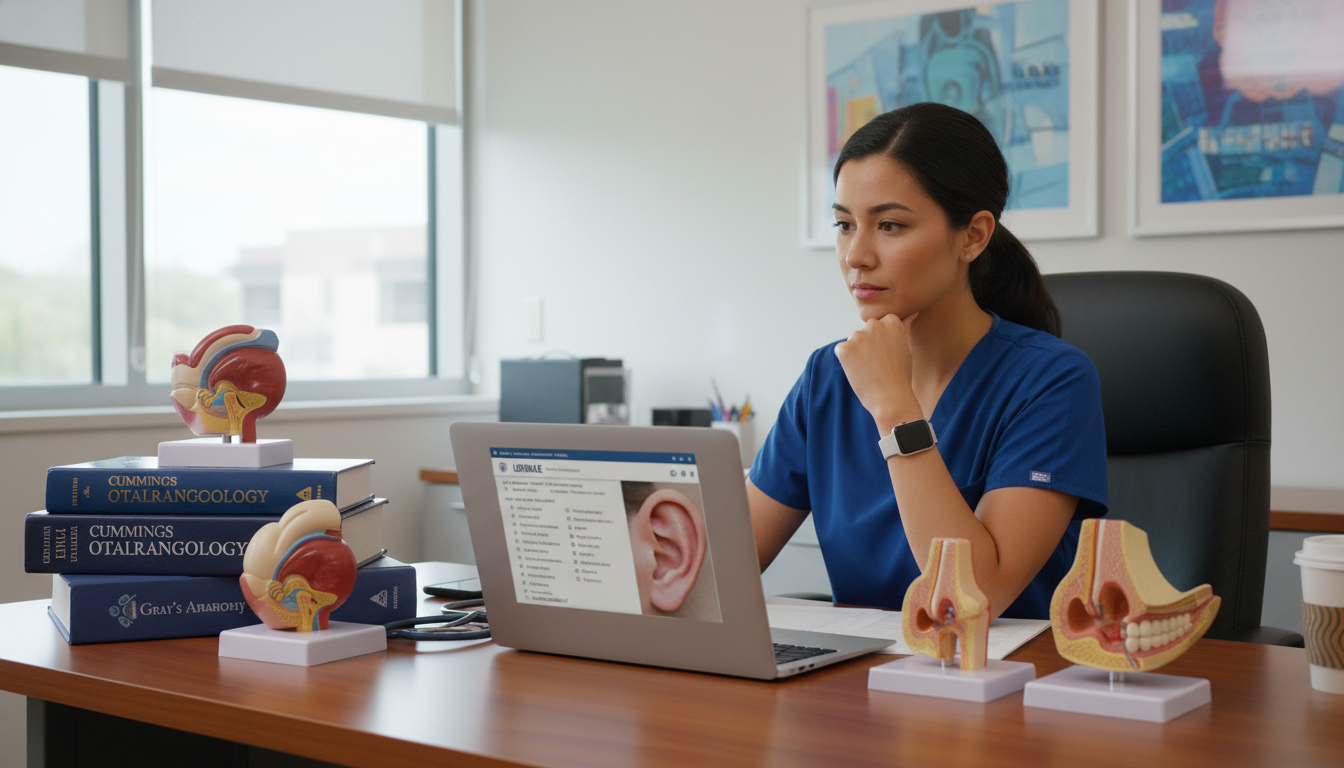
Understanding Step 3 in the Context of ENT Residency and the Otolaryngology Match
USMLE Step 3 often feels like an afterthought compared to Step 1 and Step 2 CK, especially when you are focused on the otolaryngology match. Yet for an aspiring or current ENT resident, Step 3 preparation deserves strategic attention. It is the final exam in the USMLE sequence and the first one you typically take after starting residency. How you plan and prepare can affect:
- Licensing timelines
- Fellowship and job applications
- Visa and contract requirements (for many IMGs)
- Your bandwidth during a demanding ENT residency
What Step 3 Actually Tests
Step 3 is a two-day exam designed to assess whether you can apply medical knowledge and understanding of biomedical and clinical science essential for unsupervised practice. It is not a specialty board exam and is not ENT-focused. Instead, it emphasizes:
- Breadth across all major specialties (internal medicine, pediatrics, OB/GYN, psychiatry, surgery, emergency medicine, preventive medicine)
- Clinical decision-making, especially in ambulatory and emergency settings
- Patient safety, ethics, communication, and systems-based practice
- Management over diagnosis – the “what next?” question
For aspiring otolaryngologists, this means you must temporarily step out of the ENT silo and refresh broad general medicine content. Strong performance can reaffirm to programs that your foundational clinical reasoning remains solid despite early specialization.
Relevance to Otolaryngology Residency and Career
For an ENT residency applicant or junior resident, Step 3 intersects with your journey in several ways:
- Licensure requirements: Many states and institutions require passing Step 3 within a certain number of postgraduate years (often within PGY-3–PGY-5).
- Contract and credentialing: Some hospitals and medical groups expect Step 3 completion for full credentialing or promotion.
- Fellowships and academic careers: A solid Step 3 performance can complement your CV, especially if earlier exams were marginal.
- IMG considerations: For J-1 or H-1B visas, passing USMLE Step 3 is often required or strongly preferred before certain deadlines.
- Personal bandwidth during ENT training: If you delay Step 3 too long, you may face a heavy study burden during senior call, complex cases, or research commitments.
In the context of the otolaryngology match, Step 3 score rarely drives rank lists for categorical ENT positions, since most applicants have not taken it yet. But for prelim surgery or transitional year residents reapplying to ENT, a strong Step 3 can help demonstrate resilience and upward academic trajectory.
Timing: When to Take Step 3 During ENT Residency
One of the key decisions is when to fit Step 3 into your ENT residency trajectory. There is no one-size-fits-all answer, but some patterns and trade-offs are worth considering.
Typical Timing Options
During a Transitional/Preliminary Year (Pre-ENT)
- Pros:
- Knowledge of medicine, surgery, pediatrics, and OB/GYN is still very fresh.
- Less ENT-specific call; more rotation variety can reinforce Step 3 content.
- Frees you to focus on otolaryngology training later.
- Cons:
- Balancing the otolaryngology match itself with Step 3 prep can be taxing.
- Less exposure to systems-based practice and independent decision-making that may help with CCS scenarios.
- Pros:
Early PGY-2 or PGY-3 of ENT (Common Choice)
- Pros:
- You’ve gained clinical maturity and familiarity with real-world decision-making.
- Match is behind you, and your schedule may have some research or elective time.
- Enough time before licensure deadlines.
- Cons:
- Increasing ENT call and OR responsibilities compete for attention.
- Broad IM/peds/OB knowledge may have faded, requiring a more substantial review.
- Pros:
Later in Residency (PGY-4/5)
- Pros:
- High clinical confidence.
- Deeper understanding of management and systems issues.
- Cons:
- Risk of encroaching on licensure or contract deadlines.
- Very busy with complex OR schedules, chief responsibilities, board prep, and possibly fellowship applications.
- General medicine knowledge decays further.
- Pros:
Strategic Considerations for ENT Residents and Reapplicants
- Categorical ENT residents: Aim for completion by early PGY-3 at the latest, unless state or program rules require earlier.
- Prelim/transitional residents targeting ENT: Consider taking Step 3 after match season, during a lighter rotation, to avoid overextending yourself while interviewing and networking.
- IMGs on visas: Verify whether your visa category (e.g., H-1B) requires passing Step 3 before employment start or within a specific period.
- States with timing limits: Some states require Step 3 within 7 years of your first Step (e.g., Step 1) or impose other time restrictions; check your state medical board before locking in a plan.
Actionable advice:
- Map your call-heavy ENT rotations (e.g., head and neck oncology or trauma-heavy months) and avoid scheduling Step 3 near those.
- If your program offers a research block or elective early in residency, that can be prime Step 3 during residency time.

Building a High-Yield Step 3 Study Plan for ENT Residents
Balancing Step 3 preparation with otolaryngology residency responsibilities requires structure, efficiency, and realistic expectations.
Step 1: Clarify Your Goals and Constraints
Ask yourself:
- When is the latest realistic date I can take Step 3 without risking licensure, contracts, or visas?
- How many hours per week can I consistently devote (on average)?
- How comfortable am I with medicine/peds/OB/psychiatry content right now?
- Am I aiming simply to pass, or is a high score important (e.g., for competitive fellowships or to offset weaker earlier scores)?
Based on this, choose between:
- Focused “pass-oriented” plan (4–6 weeks)
Best for residents with strong Step 2 CK background, good clinical skills, and time pressure. - Comprehensive “boost-score” plan (8–12 weeks)
Appropriate if your prior scores were marginal, you lack recent IM/peds experience, or you want to significantly strengthen clinical reasoning.
Step 2: Core Resources for Step 3 Preparation
You do not need an encyclopedic library. For most ENT residents, these are sufficient:
Question Bank (Qbank) – Non-Negotiable
- Use a dedicated USMLE Step 3 Qbank (e.g., UWorld or other reputable provider).
- Focus on timed mixed blocks early to mirror real testing conditions.
- Target completion of at least one full pass (1,600–2,000+ questions), including thorough review of explanations.
CCS (Computer-based Case Simulations) Practice
- Use the official USMLE CCS software and any Qbank CCS cases.
- Learn the interface and order entry logic (e.g., which tests are “stat,” how to advance time appropriately).
- Practicing CCS specifically can yield significant score gains, even with limited overall study time.
Concise Text/Notes for Reference
- A high-yield Step 3 review book or concise online notes to quickly refresh guidelines and algorithms.
- Supplement with up-to-date guidelines (e.g., from CDC, USPSTF) for preventive care, as Step 3 leans into outpatient and preventive medicine.
Self-Assessment Exams
- NBME or Qbank self-assessments for Step 3.
- Use at least 1–2 self-assessments: one early (to gauge baseline) and one close to exam (to refine timing and weak areas).
Step 3: Weekly Structure for Busy ENT Residents
A realistic 6–8 week plan for an otolaryngology resident might look like this:
- Weekdays (4 days/week)
- 1 block of 30–40 timed mixed questions (60–75 minutes)
- 60–90 minutes reviewing explanations and creating brief notes
- One lighter weekday (post-call or heavy OR day)
- 10–15 “light” questions or CCS reading only
- Weekend
- 2–3 hours each day for:
- Extra question blocks
- Focused review of weakest subjects (e.g., OB/peds)
- CCS practice
- 2–3 hours each day for:
Target:
- 40–60 questions/day on average, depending on your schedule and whether you are in a lighter or heavier rotation.
ENT-Specific Time-Saving Tactics
- Use pockets of downtime: Pre-op waiting, between cases, or during shorter clinic no-show gaps are ideal for 5–10 questions at a time.
- Delegate non-educational tasks (where appropriate) and optimize efficiency: Document strategically, pre-chart efficiently, and coordinate with your team to preserve study windows.
- Micro-reviews: Keep short flashcards or a digital note on your phone for high-yield topics (e.g., chest pain algorithms, pediatric fever workup, prenatal care milestones).
Example Study Week on a Busy ENT Service
- Monday: Post-call afternoon at home
- 40 mixed questions + review
- 1 CCS case
- Tuesday: OR-heavy day
- 20 questions in small chunks + brief review
- Wednesday: Clinic day, moderate load
- 40 mixed questions at night + review
- Thursday: Research afternoon
- 40–60 questions + review
- 2 CCS cases
- Friday: OR then light call
- 20–30 questions
- Saturday: Dedicated study morning
- 60–80 questions + targeted content review
- Sunday: Half-day off
- 30–40 questions + 1–2 CCS cases
Over 6–8 weeks, this plan leads to a complete Qbank pass and decent CCS exposure, even with demanding ENT duties.
Content Priorities: What Matters Most on Step 3 (Even for ENT)
Despite your focus on otolaryngology, Step 3 will heavily test non-ENT topics. You must be comfortable with broad primary care and hospital medicine patterns.
Highest-Yield Clinical Areas
Internal Medicine (Core of Step 3)
- Cardiovascular: ACS, arrhythmias, heart failure, hypertension emergencies
- Pulmonary: COPD/asthma management, pneumonia, PE, pleural effusions
- Endocrine: diabetes management (outpatient and inpatient), DKA/HHS, thyroid disorders
- Renal: AKI vs CKD, electrolyte disturbances (especially sodium and potassium)
- Infectious disease: sepsis, SSTIs, HIV prophylaxis and treatment, endocarditis
- Rheumatology: basic workup and management, including emergent issues (e.g., temporal arteritis)
Pediatrics
- Neonatal care: screening, jaundice, sepsis workup
- Childhood immunizations and well-child visits
- Common infections: otitis (familiar to ENT physicians), pneumonia, meningitis, UTI
- Growth and developmental milestones, failure to thrive
- Pediatric emergencies (e.g., epiglottitis, croup, foreign body aspiration – also relevant to ENT)
Obstetrics & Gynecology
- Prenatal care (labs, ultrasounds, screening tests)
- Hypertensive disorders of pregnancy
- Ectopic pregnancy, early pregnancy loss
- Labor and delivery basics, fetal monitoring interpretations
- Common gynecologic infections and contraception
Psychiatry
- Depression, anxiety, bipolar disorder, schizophrenia
- Substance use disorders, withdrawal syndromes
- Suicidality risk assessment and management
- Capacity, informed consent, and emergency holds
Surgery/Emergency Medicine
- Initial trauma evaluation (ABCs), especially airway and bleeding control, which align with ENT skillsets
- Acute abdomen, appendicitis, cholecystitis, bowel obstruction
- Postoperative complications (DVT/PE, wound infections, bleeding, delirium)
- Orthopedic emergencies (e.g., compartment syndrome, septic joints)
Preventive Medicine, Ethics, and Systems-Based Practice
- Screening guidelines (USPSTF A and B recommendations)
- Vaccination schedules (adult and pediatric)
- Quality improvement, patient safety, and error disclosure
- Cost-effective care and use of resources
How ENT Knowledge Helps (and Doesn’t)
Your ENT expertise provides a natural edge in:
- Airway management (intubation, tracheostomy issues, epiglottitis, angioedema)
- Head and neck infections (Ludwig’s angina, peritonsillar abscess)
- Ear diseases (otitis media/externa, mastoiditis, cholesteatoma)
- Head and neck oncology basics (mass workup, staging principles)
However, Step 3 will test these topics alongside systemic issues (e.g., septic shock from a deep neck infection, antibiotic stewardship, ICU care). Your advantage is partial; you still need robust general medicine reasoning.
Actionable strategy:
- When practicing questions, explicitly ask yourself: “If I were the primary care physician or hospitalist, what would I do next?” This mental shift is central to performing well on the USMLE Step 3.

Mastering the Exam Format: MCQs and CCS for Otolaryngology Trainees
Step 3 has two distinct components, each demanding specific strategies: traditional multiple-choice questions (MCQs) and Computer-based Case Simulations (CCS).
Multiple-Choice Question Strategy
Embrace Mixed Blocks Early
- Avoid “organ-system only” practice for too long. Mixed blocks better replicate exam conditions and help you switch cognitive gears—exactly what you do daily in ENT call (from epistaxis to chest pain in 30 seconds).
Focus on Management Algorithms
- Many questions hinge on the next best step:
- Is this patient stable or unstable?
- Do we need immediate intervention, additional diagnostics, or reassurance?
- Practice reading questions with this mental checklist:
- What is the most likely diagnosis or clinical syndrome?
- Have life-threatening causes been ruled out or appropriately treated?
- What management step most improves outcomes now?
- Many questions hinge on the next best step:
Timing and Endurance
- Step 3 is long, and fatigue is real, particularly when you are already dealing with residency-level sleep debt.
- Simulate full-length practice sessions (e.g., 6–7 blocks in a day once or twice before the exam) to gauge your pacing and concentration.
Learn from Explanations, Not Just Answers
- For each question, identify:
- Why is the correct answer correct?
- Why is each wrong option wrong (too early, too late, unnecessary, or harmful)?
- This approach trains your decision-making nuance, not just factual recall.
- For each question, identify:
CCS (Computer-based Case Simulations): High-Yield for Step 3
CCS can significantly influence your USMLE Step 3 score and often feels unfamiliar. ENT residents typically do well when they realize how similar CCS is to managing a “virtual” consult.
Key principles:
Stabilize First
- For emergencies: ABCs, vitals, IV access, oxygen, monitors, pain control.
- Example: A child arrives with suspected epiglottitis: secure the airway in a controlled setting urgently (anesthesia + ENT), administer appropriate antibiotics and steroids, and admit to ICU.
Order Wisely, Not Frantically
- Avoid shotgun ordering; the scoring rewards appropriate, evidence-based testing.
- Think in phases: initial evaluation (very broad), focused diagnostics, follow-up tests if needed.
Advance the Clock Intentionally
- Don’t forget to “move time forward” after ordering tests or starting treatments.
- Reassess: review new labs, vitals, and patient status after each time jump.
Document Disposition and Follow-Up
- Clearly arrange appropriate level of care (ICU vs floor vs discharge).
- Provide outpatient follow-up, lifestyle counseling, and medication adjustments.
Practical steps for CCS prep:
- Work through all official sample CCS cases at least once.
- Do at least 15–20 full CCS cases on commercial platforms.
- After each case, reflect:
- Did I stabilize the patient?
- Did I over-order or under-order tests?
- Did I address preventive care and counseling where appropriate?
For ENT-specific parallels: Think of CCS as akin to managing a complex cellulitis that becomes an airway threat; you must continuously re-evaluate, escalate care, and coordinate services.
Test Day Management, Wellness, and Long-Term Benefits
Performing well on Step 3 is not just about knowledge; it is also about test-day execution and personal sustainability during preparation.
Logistics and Test-Day Tips
- Choose a quiet testing center and favorable dates (avoid post-call days or immediately after 24-hour ENT trauma call).
- Sleep schedule: Normalize your sleep for at least 3–5 days prior, especially if your call pattern has been erratic.
- Nutrition and hydration: Pack snacks and water; avoid major dietary changes the day before.
- Mindset: Approach Step 3 less as a “hurdle” and more as an opportunity to consolidate clinical reasoning for your broader career.
During the exam:
- Pace yourself: Don’t spend disproportionate time on a single question; flag and return if needed.
- For CCS: Prioritize stabilization and the most critical orders early; then refine.
- If an ENT-related question appears (e.g., chronic otitis or laryngeal trauma), leverage your expertise—but still follow Step 3’s primary care-oriented framework (imaging, antibiotics, referrals).
How Step 3 Preparation Benefits Otolaryngology Practice
USMLE Step 3 preparation often yields surprising, long-term advantages for ENT residents:
- Better cross-specialty communication: You’ll understand the language and priorities of hospitalists, intensivists, and pediatricians more deeply.
- Improved perioperative medicine: Managing diabetes, anticoagulation, and cardiac risk in surgical patients becomes more intuitive.
- Enhanced triage and emergency response: Step 3’s focus on initial stabilization and disposition mirrors on-call ENT responsibilities.
- Comfort with systems-based thinking: QI, patient safety, and cost-effective order selection are increasingly central in modern surgical practice and leadership roles.
In short, thoughtful Step 3 preparation is not just an exam chore—it can meaningfully enhance your effectiveness as an otolaryngologist.
FAQs: USMLE Step 3 Preparation for Otolaryngology (ENT) Residents
1. When is the best time to take Step 3 during ENT residency?
For most otolaryngology residents, taking Step 3 in late PGY-1 (transitional/prelim year) or early PGY-2 is ideal. This timing preserves your broad medical knowledge while avoiding the heaviest ENT service demands and pending licensure deadlines. Always check your state board’s timing rules and discuss with your program director.
2. How much time do I need to study for Step 3 if I’m already in an ENT residency?
A typical ENT resident with solid Step 2 CK performance can often prepare adequately in 4–8 weeks with consistent effort—about 1–3 hours per day on average. If your prior scores were borderline or your general medicine exposure has been limited, plan for 8–12 weeks with a strong focus on question banks and CCS.
3. Do I need a high Step 3 score to match into otolaryngology or get an ENT fellowship?
For the otolaryngology match, Step 3 usually is not a major factor, as most applicants have not taken it yet. Program directors focus more on Step 2 CK, clinical performance, research, and letters. For fellowships, a pass on Step 3 is typically sufficient, though a strong score can help if your earlier exams were weaker. Consistent clinical excellence and ENT-specific achievements remain more important than your Step 3 number.
4. What’s the most high-yield way to study if I’m very busy with call and the OR?
For residents with heavy ENT workloads, the most efficient approach is:
- Complete one full Step 3 Qbank in timed, mixed mode.
- Dedicate focused sessions to CCS practice, especially official sample cases.
- Use short, high-yield summaries or notes to review weak areas (often OB/peds/psychiatry).
Leveraging downtime (pre-op, between cases, brief evening windows) for 10–20 questions at a time and reserving one weekend half-day for longer sessions is often the most realistic balance.
By planning proactively, using targeted resources, and integrating your clinical ENT experience with broad-based medical reasoning, you can navigate USMLE Step 3 preparation efficiently—without derailing your progress in otolaryngology residency or the otolaryngology match trajectory.