



Understanding Step 2 CK as a Caribbean IMG Aiming for Pediatrics–Psychiatry
USMLE Step 2 CK is your strongest tool to offset many of the biases and structural hurdles Caribbean IMGs face—especially when you’re targeting a competitive, niche path like Pediatrics-Psychiatry or the triple board pathway (Pediatrics–Psychiatry–Child & Adolescent Psychiatry).
For Caribbean graduates and students (e.g., SGU, AUC, Ross, etc.), a strong Step 2 CK score can:
- Compensate somewhat for concerns about school reputation
- Help overcome a marginal Step 1 outcome (especially if pass-only or low pass)
- Demonstrate readiness for US clinical training, including residency in peds psych or triple board programs
- Strengthen your SGU residency match or other Caribbean medical school residency prospects, particularly in pediatrics, psychiatry, and combined programs
Because Pediatrics-Psychiatry and triple board are relatively small fields, program directors often look closely at your academic record, narrative, and fit. Your Step 2 CK score is one of the most objective data points they have.
Why Step 2 CK Matters More Now
With Step 1 moving to pass/fail, Step 2 CK has become the primary standardized measure of clinical knowledge. For Caribbean IMGs:
- Competitive Pediatrics programs and Psychiatry programs increasingly screen by Step 2 CK score.
- Triple board programs (which are small and selective) pay particular attention to evidence of strong, consistent performance and genuine child mental health interest.
- A high Step 2 CK score can counterbalance moderate preclinical grades or a less competitive school background.
Typical Step 2 CK targets (these are not hard cutoffs, but realistic guidelines):
- Baseline goal for solid consideration in Pediatrics or Psychiatry: ~225–235+
- More competitive target for university-based or academic-track programs, and to be viable for triple board: 240–250+
- If Step 1 was weak or barely passed: Aim for a clearly higher Step 2 CK (≥240) to show growth and capability
Your individual context (prior scores, clinical performance, research, and letters) will shape what “competitive” looks like, but leaning toward a higher goal is wise as a Caribbean IMG.
Core Exam Structure and Content Emphasis for Peds-Psych Aspirants
Understanding the exam’s structure and relative content will let you tailor your USMLE Step 2 study to your Pediatrics–Psychiatry interests while still covering everything.
Exam Overview
- One-day computer-based exam
- 8 blocks, each up to 40 questions
- Total of up to 318 questions
- 9-hour testing day (including break time)
Step 2 CK is heavily clinical and case-based. Questions test diagnosis, next best step in management, workup, interpretation of labs/imaging, and prognosis.
Content Breakdown Relevant to Pediatrics and Psychiatry
While exact percentages vary, the following areas are especially important for a peds psych residency or triple board–minded student:
Pediatrics
- Newborn care: resuscitation, jaundice, screening, congenital anomalies
- Developmental milestones and developmental delay
- Pediatric infections and immunizations
- Failure to thrive, nutrition, dehydration, fluid/electrolyte management
- Pediatric emergencies: respiratory distress, sepsis, shock, meningitis
- Chronic pediatric conditions: asthma, CF, congenital heart disease, diabetes, epilepsy
Psychiatry and Behavioral Sciences
- Child and adolescent psychiatry: ADHD, autism spectrum disorder, learning disorders, mood/anxiety disorders, conduct and oppositional defiant disorders
- Adult psychiatry: depression, bipolar, schizophrenia, substance use, anxiety disorders, personality disorders
- Emergency psychiatry: suicidality, acute psychosis, delirium, agitation, intoxications/withdrawal
- Psychopharmacology: indications, side effects, drug interactions, pregnancy/lactation issues
Ethics, Communication, and Professionalism
- Consent and assent in minors
- Reporting requirements (abuse, neglect, suicidal risk)
- Confidentiality with adolescents
- Working with families, guardians, foster care systems
- Cultural and language barriers (high-yield for Caribbean IMGs working in diverse US settings)
Foundational Clinical Sciences Applied to Practice
- Pathophysiology, pharmacology, and microbiology integrated in clinical cases
- Epidemiology, biostatistics, and evidence-based medicine
- Quality improvement, patient safety, and systems-based practice
As a future peds psych physician, take special note of overlap zones:
- Neurology + psychiatry in children (seizures vs. psychogenic events, tics vs. OCD, intellectual disability vs. specific learning disorders)
- Endocrinology + psychiatry (thyroid disease mimicking mood disorders, diabetes and adherence, steroid-induced psychosis)
- Chronic pediatric illness + mental health (depression in chronic disease, medical trauma)
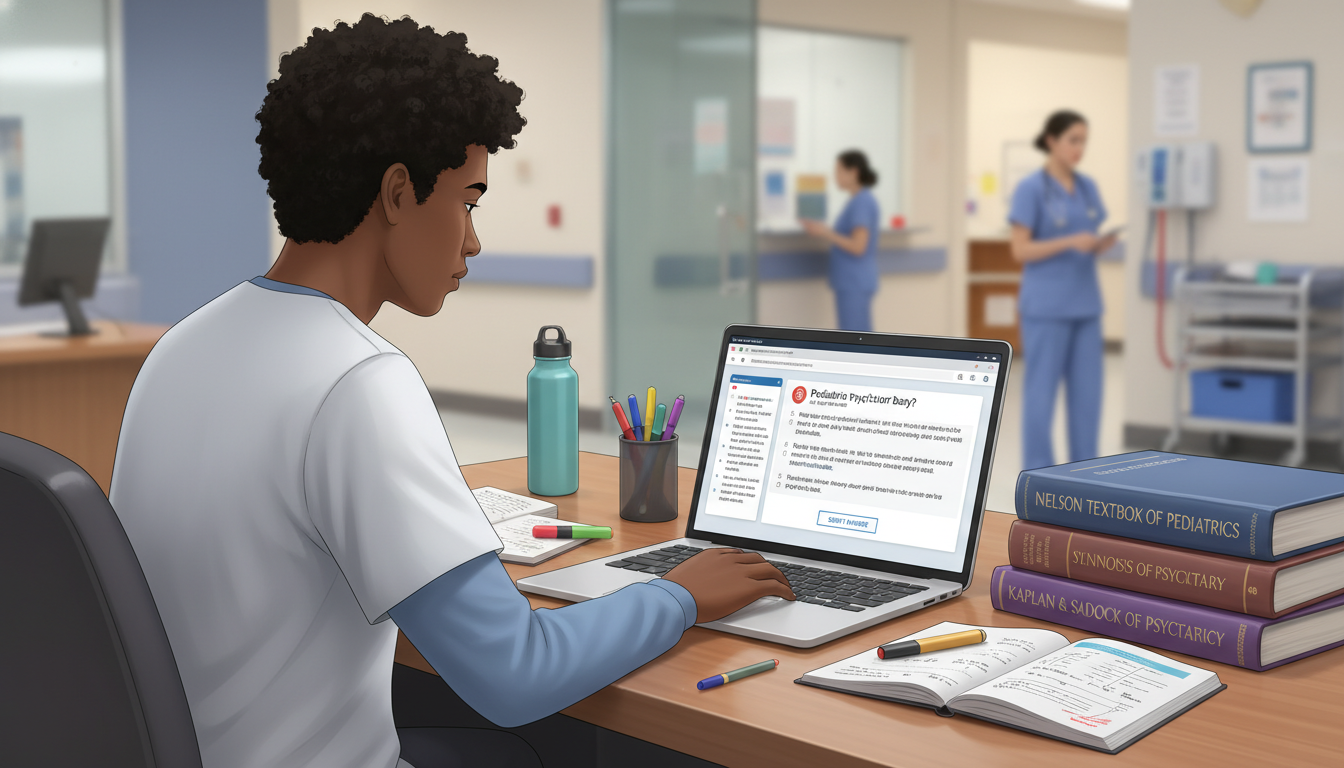
Building a High-Yield Step 2 CK Study Plan as a Caribbean IMG
Your Step 2 CK preparation must balance content mastery, question-based learning, and test-taking strategy—while still managing rotations, possible visa/immigration issues, and residency application timelines.
Step 1: Clarify Your Timeline and Constraints
For Caribbean medical school students (including SGU and similar schools), common scenarios:
Step 2 CK during or immediately after core rotations
- Advantage: Clinical material still fresh
- Challenge: Balancing clerkship duties with studying
Step 2 CK in a dedicated study period after cores (6–12 weeks)
- Advantage: Focused USMLE Step 2 study, fewer competing demands
- Challenge: Requires strong self-discipline and structured schedule
Late Step 2 CK close to ERAS season
- Advantage: More time to prepare
- Challenge: Score may not be ready before residency applications are submitted, affecting interviews
For a Caribbean IMG targeting peds psych or triple board, it’s generally best to take Step 2 CK early enough that:
- Your score is available before ERAS submission
- You can mention it in emails or updates to interest programs
- You have time to retake if something goes unexpectedly wrong (not ideal, but realistic planning)
Step 2: Set a Score Goal Based on Your Target Programs
Research recent Caribbean medical school residency outcomes, including SGU residency match reports, to understand where their graduates are matching in Pediatrics, Psychiatry, and combined programs. Then:
- Identify several Pediatrics, Psychiatry, and triple board programs you might target.
- Check if they list average Step scores or use filters (FREIDA, program websites, or speaking with residents).
- Set a realistic minimum, a target, and an ideal Step 2 CK score range.
Example:
- Minimum acceptable to apply broadly: 225
- Target for solid interview chances in peds and psych: 235–240
- Ideal for triple board consideration: 245+
Your personal numbers may differ, but having explicit goals focuses your effort.
Step 3: Create a Structured Weekly Study Schedule
A typical 8–10 week dedicated period for Step 2 CK might look like this:
Weekly Framework (40–50 hours/week):
Question bank (UWorld or equivalent):
- 40–60 questions/day, timed, random or system-based depending on phase
- Review explanations in depth (2–3 hours for every 40 questions)
Core resources (examples):
- Online MedEd or similar for conceptual reviews
- NBME-style practice exams every 2–3 weeks
- A concise rapid review book (e.g., Step-Up to Medicine for IM topics, plus pediatrics/psych references if needed)
Peds-Psych integration time:
- 3–5 hours/week focusing specifically on child psychiatry, developmental pediatrics, and behavioral topics
- Review guidelines (AAP, AACAP summaries if accessible)
If studying during rotations:
- Target 2–3 hours/day on weekdays, 6–8 hours/day on weekends
- Focus heavily on daily UWorld blocks and review
- Use your current rotation to prioritize systems (e.g., on Pediatrics, emphasize pediatric Step 2 CK preparation topics)
Choosing and Using Resources Strategically
As a Caribbean IMG, you may feel tempted to overcompensate by using too many resources. Resist this. Depth of understanding and practice matters more than breadth of materials.
Core Must-Haves
Primary Question Bank (QBank)
- Most students use UWorld as their main Step 2 CK QBank.
- Approach:
- Do questions timed, preferably random after initial learning phase.
- Treat each question as a learning opportunity:
- Why is the right answer correct?
- Why are the other options wrong?
- What is the “next best step” principle illustrated here?
- Take brief notes of recurring themes (e.g., distinguishing autism vs. language disorder, depression vs. normal adolescent moodiness, indications for inpatient psych admission).
NBME and Official Practice Exams
- Use NBME practice tests and UWSA (UWorld Self-Assessments) to:
- Benchmark your progress
- Predict your Step 2 CK score range
- Identify weak areas (e.g., child psych, ethics, biostatistics)
- Use NBME practice tests and UWSA (UWorld Self-Assessments) to:
Concise Clinical Content Review
- Options: Online MedEd, Boards and Beyond (clinical), or your school’s structured review course.
- Focus on:
- Internal medicine (heavy weight on exam)
- Pediatrics
- Psychiatry
- Surgery, OB/GYN, and EM at a high-yield level
Supplemental Resources for Peds-Psych Focus
While you don’t want to drown in extras, targeted supplements can help:
Pediatrics
- A brief board-style pediatrics text or board review (e.g., for shelf exams)
- Algorithms for pediatric emergencies (bronchiolitis, croup, asthma, sepsis)
Psychiatry
- Short psychiatry review notes or a shelf exam book for psych
- Tables for drug mechanisms, side effects, and monitoring (especially antipsychotics, mood stabilizers, stimulants, SSRIs/SNRIs, and atypical antidepressants)
Ethics and Communication
- Review questions focusing on consent/assent, reporting obligations, confidential care for adolescents, and end-of-life decision-making.
Avoiding Resource Overload
As a Caribbean IMG, you may feel pressure to “do everything” to compete. Instead, follow this rule:
- 1 main QBank (UWorld)
- 1 set of official practice tests (NBMEs + UWSA)
- 1 core review structure (videos or concise text)
- 1–2 small targeted supplements for your specific weak areas (or peds psych focus)
Anything beyond that likely dilutes your effort.

Integrating Pediatrics-Psychiatry Themes into Step 2 CK Preparation
Preparing for Step 2 CK as a future peds psych or triple board physician means keeping your long-term specialty in mind while still maximizing your score.
High-Yield Peds-Psych Clinical Scenarios
ADHD vs. Normal Behavior vs. Oppositional Defiant Disorder
- Practice distinguishing:
- Degree of functional impairment
- Settings (home vs. school vs. both)
- Patterns of intentional defiance vs. inattention/distractibility
- Understand first-line treatments (behavioral therapy vs. stimulants) and contraindications.
- Practice distinguishing:
Autism Spectrum Disorder (ASD) and Developmental Delay
- Recognize red flags in early childhood:
- Lack of joint attention, limited eye contact, failure to respond to name
- Regression of language or social skills
- Know recommended diagnostic workup and early intervention services.
- Recognize red flags in early childhood:
Adolescent Depression and Suicidality
- Identify risk factors, screening tools, and thresholds for inpatient vs. outpatient care.
- Understand confidentiality rules and when to break them (suicidal risk, abuse).
Eating Disorders
- DSM-5 criteria vs. Step 2 CK–style clinical vignettes
- Medical complications warranting hospitalization
- Approach to families and comorbid psychiatric conditions.
Abuse, Neglect, and Trauma
- Mandatory reporting laws, even in ambiguous situations.
- Differentiating accidental vs. non-accidental injury in children.
- Psychological sequelae of trauma (PTSD, depression, behavioral issues).
Linking Exam Preparation to Residency Narratives
Your thorough Step 2 CK preparation helps you:
- Speak more confidently on interviews about pediatric and psychiatric cases.
- Demonstrate that your interest in Pediatrics-Psychiatry or triple board is clinically grounded.
- Anchor your personal statement in real clinical experiences that reflect both child medicine and child mental health.
When writing about your peds psych residency goals, you can refer to:
- How mastering both pediatric pathophysiology and child mental health conditions through Step 2 CK preparation reinforced your drive toward a combined specialty.
- Cases encountered in rotations that reflect integrated bio-psycho-social thinking.
Test-Taking Strategy, Practice Exams, and Performance Analysis
A solid knowledge base is critical, but how you take the exam can significantly impact your Step 2 CK score.
Practice Exams: When and How Many?
During a dedicated period, many strong test-takers follow a schedule like:
- Baseline NBME at the start (to gauge where you are)
- NBME or UWSA at 3–4 weeks (to adjust study plan)
- Another NBME/UWSA at 6 weeks
- Final assessment (NBME or UWSA) 1–2 weeks before the actual exam
Use these scores to:
- Track your USMLE Step 2 study progress over time
- Identify persistent weak areas (e.g., child psychiatry, OB emergencies, biostatistics)
- Decide if you need to push your test date (ideally not, but sometimes wise)
Analyzing Your Mistakes
Every wrong question is valuable data. After each practice test or QBank block, ask:
- Did I miss it because:
- I didn’t know the content?
- I misread the question or overlooked a detail?
- I knew the right answer but changed it?
- I misunderstood what “next best step” the examiner wanted?
Common IMGs’ pitfalls:
- Overthinking and changing correct answers due to anxiety
- Applying home-country or local practice instead of US guidelines
- Getting stuck in differential diagnosis without moving to actionable management
- Underestimating ethics and communication questions
Design targeted fixes, such as:
- Writing rules for when not to change an answer
- Creating quick reference notes for US-first-line treatments and guidelines
- Reviewing ethics question sets weekly
Exam-Day Strategy
On the actual test day:
- Stick to your time discipline from practice (e.g., ~1 minute/question, leaving a few minutes at the end per block).
- Flag only truly uncertain questions; don’t overuse the flag feature.
- Use your breaks wisely:
- Short break after 2 blocks
- Longer break around mid-day for food, hydration, and mental reset
Remember: Your Step 2 CK score reflects both your knowledge and your ability to perform under timed, high-stakes conditions.
Unique Challenges and Advantages for Caribbean IMGs—and How to Leverage Them
As a Caribbean IMG aiming for a US peds psych residency or triple board path, you carry both risk factors and assets.
Common Challenges
Bias and Screening Filters
- Some programs filter out Caribbean medical schools automatically, especially if Step 2 CK is borderline.
- You may need a stronger Step 2 CK score than an equivalent US grad to obtain the same interview opportunities.
Less-Structured Clinical Environment
- Clinical rotations can be variable in quality and supervision.
- You may not get systematic exposure to outpatient child psychiatry or developmental pediatrics.
Visa and Timing Constraints
- Needing a visa sponsorship adds complexity to the application.
- Delays in Step 2 CK score reporting can have bigger impact for IMGs.
Real Strengths You Can Highlight
Adaptability and Resilience
- You’ve trained across cultures, systems, and healthcare environments.
- Use your personal statement and interviews to show how this translates into empathy and flexibility with diverse pediatric and psychiatric populations.
Stronger Clinical Volume in Some Settings
- Many Caribbean clinical affiliations expose students to high-volume hospitals with a wide range of conditions.
- Connect this to your approach to Step 2 CK cases and your comfort managing complex, multi-problem patients.
Intentional Career Planning
- Choosing a niche path like Pediatrics-Psychiatry or triple board as a Caribbean IMG signals deliberate thinking and commitment.
- Your Step 2 CK preparation is part of demonstrating that seriousness.
Translating Your Step 2 CK Success into Match Strength
Once you have your Step 2 CK score:
If it is strong (e.g., 240+):
- Highlight it prominently on your CV and ERAS application.
- Mention it in emails to programs, especially if they value strong clinical exam performance.
- Use it to balance any weaker parts of your application (e.g., Step 1 or preclinical grades).
If it is moderate (e.g., 225–235):
- Compensate via strong clinical evaluations, excellent letters (especially from US pediatric and psychiatry attendings), and a clear narrative about your fit for peds psych or triple board.
- Apply broadly and strategically.
If it is lower than expected:
- Analyze dispassionately what happened (timing, anxiety, content gaps).
- Strengthen other parts of your application: US clinical experience, research in child mental health or pediatrics, compelling personal statement.
- Consider applying initially to categorical Pediatrics or Psychiatry with a long-term goal of child and adolescent psychiatry training if triple board becomes less realistic.
FAQs: Step 2 CK Prep for Caribbean IMGs Targeting Pediatrics–Psychiatry
1. What Step 2 CK score should a Caribbean IMG aim for to be competitive for peds psych or triple board?
While there are no universal cutoffs, many Caribbean IMGs aiming for peds psych residency or triple board should aim for at least the mid-230s, with a preferable target of 240–250+ to maximize interview opportunities, especially in university or academic programs. If you had a low Step 1 or marginal academic record, pushing your Step 2 CK score as high as possible is particularly important.
2. How should I balance Step 2 CK preparation with my Pediatrics and Psychiatry rotations?
Use your rotations as live study environments:
- On Pediatrics: Focus on growth/development, common infections, emergencies, and chronic disease management. Turn real patients into Step 2 CK–style cases and review relevant guidelines after shifts.
- On Psychiatry: Emphasize child and adolescent psychiatry cases, suicidality, psychopharmacology, and risk assessment.
- Allocate 2–3 hours daily for a QBank and content review, and more time on weekends. Keep a running list of topics from your rotation to review in your dedicated study blocks.
3. Are there specific resources recommended for child psychiatry and developmental pediatrics for Step 2 CK?
Step 2 CK–specific resources often integrate peds psych material into general pediatrics and psychiatry sections. In addition to your main QBank and core review:
- Use shelf-review style books for Pediatrics and Psychiatry for focused reading on child and adolescent issues.
- Create summary tables for ADHD, autism, learning disorders, mood disorders in youth, and behavioral disorders.
- If you have access, quick guidelines or synopses from organizations like the AAP or AACAP can reinforce high-yield points—but don’t let them replace core USMLE resources.
4. How does Step 2 CK performance impact my chances as a Caribbean IMG in the SGU residency match or similar outcomes?
In many Caribbean medical school residency outcomes (including SGU residency match reports), applicants with strong Step 2 CK scores tend to match more reliably into desired specialties and more competitive programs. For Pediatrics and Psychiatry in particular, a robust Step 2 CK score:
- Helps offset concerns about school reputation.
- Highlights your readiness for patient care and responsibility.
- Can make your application stand out among other IMGs, especially if combined with strong letters, US clinical experience, and a clear commitment to Pediatrics-Psychiatry or triple board training.
By planning early, using focused Step 2 CK preparation, and aligning your exam strategy with your long-term specialty goals, you can significantly improve your chances of matching into the Pediatrics-Psychiatry pathway you’re working toward.




















