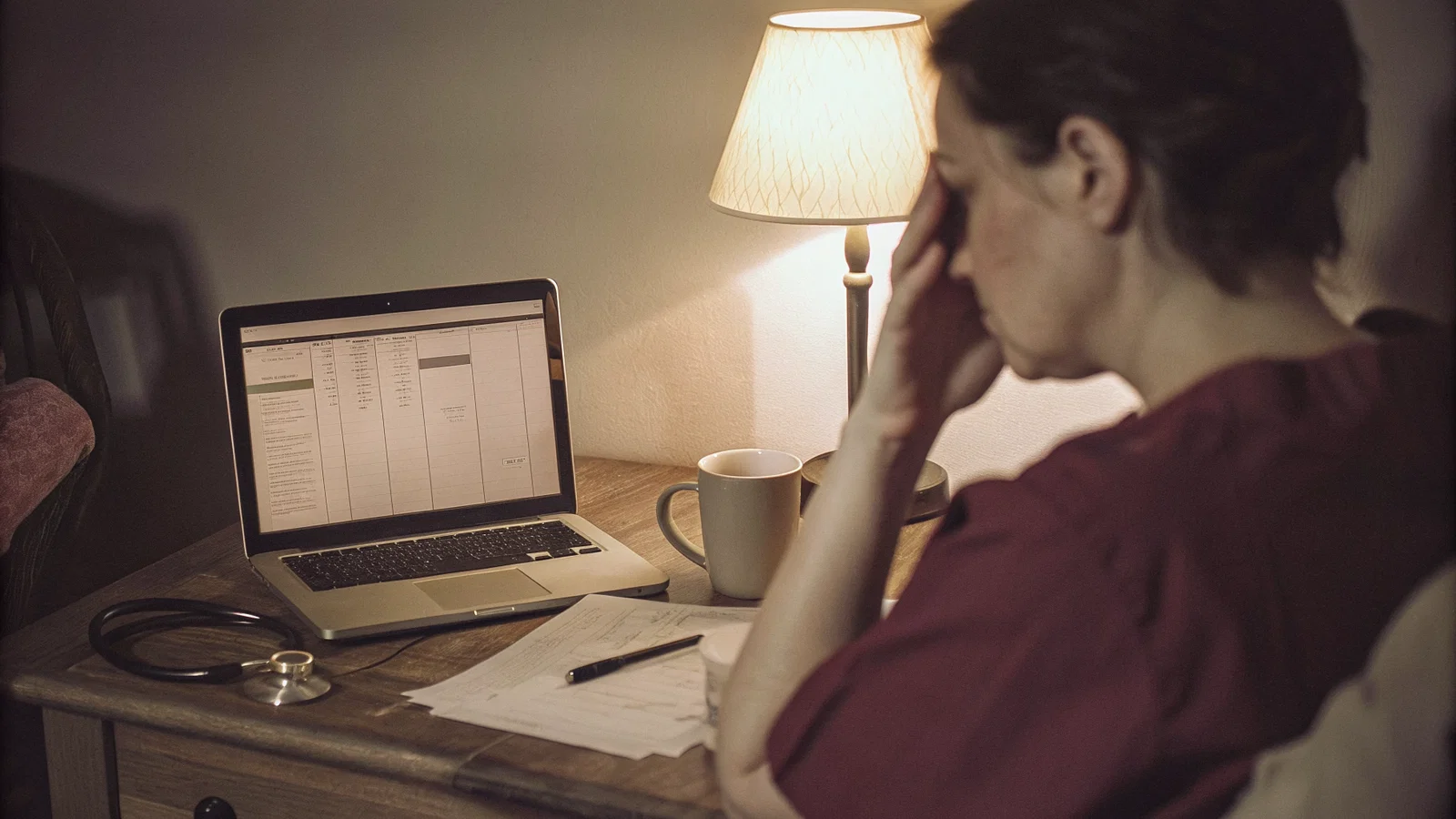
You're done with your shift. You drive home, eat dinner, hug your kid goodnight, then crack open your laptop to finish notes on three patients you couldn't get to during the day. That's 45 minutes of clinical documentation in your pajamas.
Do you log it?
Yes. You log it. Every. Single. Minute.
And if you've been told, or assumed, that charting from home doesn't count toward your 80-hour limit, you've been handed a dangerous lie. This article walks you through exactly how to audit, log, and defend your off-site EHR time so you stay compliant, safe, and sane.
Disclaimer: This article is for educational purposes only; it is not legal advice. For specific ACGME compliance or legal questions, consult a qualified professional.
The 80-Hour Mandate and Remote Charting: A Reality Check
ACGME work hour rules exist for two reasons: patient safety and your own physical survival. The mandate caps clinical work at 80 hours per week, averaged over four weeks. That's clinical work, not "work performed inside hospital walls." The location of your body when you document patient care is irrelevant. If you are placing orders, writing progress notes, completing discharge summaries, or responding to patient messages that require clinical decision-making, you are in the bucket.
A common dodge I hear: "But I'm just finishing up. It's only a few minutes." Doesn't matter. Five minutes. Fifteen. An hour. It all adds to the same running tally. The ACGME Common Program Requirements (Section VI.F.) explicitly state that all clinical activities count, regardless of setting. That includes documentation, even research for a specific patient's case, so long as it's directly tied to clinical responsibilities. What doesn't count? Reading a textbook chapter on heart failure because you want to. That's education.
Some programs, or more precisely, some attendings and coordinators, will say otherwise. You may hear, "Remote documentation isn't tracked" or "I don't log that time." This is where the hidden curriculum rears its ugly head. The unspoken message: if you're too honest about your hours, you'll look inefficient or slow. That's garbage. Under-reporting masks systemic problems, burns you out faster, and puts both your well-being and your program's accreditation at risk. If your duty-hours log is a fiction, then the institution's safety net is fiction too. Real people get hurt, starting with you.
Step-by-Step Workflow for Logging Off-Site EHR Time
Accurate time tracking isn't complicated, but it requires a daily ritual. Here's the workflow I've seen work across multiple residency programs:
- Log your hospital departure time before you leave. Not the time you intend to leave. The time you actually walk out the door. If your program uses an electronic system like New Innovations or MedHub, punch it in immediately. If you rely on a paper log, snap a photo of the clock with your phone.
- When you sit down to chart remotely, mark the start time. This can be as simple as a note on your phone: "Remote EHR start 8:15 PM." Don't rely on memory. Memory is a terrible audit trail.
- Work in a single, focused block if you can. Scattered five-minute phone-checks are hard to aggregate. Bundle your remote tasks. That makes both the charting and the time-stamping easier.
- Mark the end time the moment you close the EHR. Record the exact minute. Not an estimate. Not a rounded number. The EHR itself will often have an audit log that shows your logout timestamps, so your personal note should match that.
- Enter the remote block directly into your residency management system. Select "Clinical Work" or "Patient Care," then in the comment section write, "Remote EHR documentation, 8:15-9:02 PM, [patient initials or note types]." If your tracking app lacks a remote-work option, use the comments field. That note is your shield.
- Submit your daily total. Don't wait for the end of the week. Fatigue makes us forget. Make it part of your end-of-day shutdown sequence: log times, submit, close laptop, exhale.
Before you normalize these extra hours, review how to track home EHR work on ambulatory rotations to ensure you aren't violating standards during specific blocks.
That flowchart isn't theory. It's a defensive playbook. The time you spend on this ritual each day, maybe two minutes, buys you an incontrovertible record if your duty-hour compliance is ever questioned. And it will be questioned if your clinical productivity numbers don't match your logged hours.
For specific insights into your workload, consider how inefficient charting adds 5-7 hours a week to your total residency time.
One nuance: separating education from clinical documentation. Suppose you're reading a newly published study to guide therapy for tomorrow's patient. That's education, not clinical work, and shouldn't inflate your cap. But if you're directly writing orders or summarizing that study in the patient's chart, you've crossed into clinical territory. Log the time spent on the latter. When in doubt, ask yourself: "Am I doing this to complete a patient care task that would otherwise happen during the workday?" If yes, log it.
The Audit Trail: Protecting Yourself with Data
Most residents don't realize their EHR already tracks them. Every login, every note opened, every time you click "sign." Those digital footprints are the closest thing you'll get to an objective witness. Your institution's IT department can pull audit trails that show exactly when you accessed a chart, made changes, or logged off. This is both a gift and a warning.
If your logged duty hours suddenly seem suspicious to a program director, those timestamps can either vindicate you or expose a mismatch. That's why your personal log must mirror the EHR audit data. I've seen a resident nearly dismissed for "inflating hours" after listing remote work from 8 p.m. to 10 p.m., but the EHR showed the last save at 8:23 p.m. The gap? She had left the chart open while doing laundry. Her reporting was technically inaccurate, and credibility plummeted. Don't be that resident. Match your notes to the machine.
The hidden curriculum I mentioned earlier thrives on silence. Take a typical evening: you're finishing notes on a patient whose discharge got delayed because the attending wanted a dozen lab checks. You log the 45 minutes because you know you must. But your senior resident whispers, "Don't list that. They'll think you're slow." That pressure is corrosive and unsafe. If you're regularly exceeding 80 hours because of remote work, that's not your personal failure. It's a system failure, and it needs to be dragged into the light.
Here's what I tell the residents I mentor: Keep a separate "shadow log." A private spreadsheet, a note on your phone, whatever. Record every remote block, the date, the exact times, and a two-word reminder of the tasks. This isn't paranoia. This is evidence. If you ever feel pressured to alter your official log, or if a discrepancy arises, your personal record is your primary defense. Yes, it's one more thing to maintain, but it's the kind of administrative self-care that saves careers. I've watched it save careers.
The chart tells the story without nuance. Accurate reporting correlates with high personal compliance and drastically lower burnout and liability. Under-reporting does the opposite, it shifts the risk onto you and your program. The red bars are a warning, not a hypothetical. When you hide your true hours, you're shielding a dysfunctional schedule that will eventually crack. And guess who gets blamed when the crack appears? Usually, the resident.
Escalation is messy but necessary. If you consistently need remote charting to finish clinical work, and that pushes you beyond 80 hours, you bring it first to your chief residents. Provide them with your shadow log, not a sob story. Say, "Here are the facts. I cannot complete mandatory patient care within my allowed duty hours because documentation time is not built into my daytime workflow. What can we change?" If the chief shrugs, you go to the program director. And if the PD tells you that off-site charting doesn't count? You calmly cite the ACGME policy and ask for a written clarification. That piece of paper is your armor.
Practical Decision Framework for Work-Life Balance
You can't write a note while staring at your sleeping child and call it balance. So before you settle into a routine of remote charting that eats your evenings, ask yourself a brutal question: Is this a me problem, or a system problem?
Charting efficiency vs. overcommitment. Some residents genuinely need to get faster with the EHR. Learn macros, templates, Dragon dictation tricks. If your co-residents finish notes in half the time, invest in skill-building. But if you're already efficient and still drowning, you're overcommitted, not slow. The solution isn't to log more hours, it's to push back.
Negotiate protected documentation time. This is the single most effective move I've seen. During pre-rounding or at the start of your shift, explicitly block one 30-minute window for writing notes, free from interruptions. Let your attending know: "I need a documentation buffer to avoid charting after hours." Most rational attendings prefer an upfront request to a burned-out resident lying about their hours.
Recognize system-wide failure. When every resident in your cohort is logging remote EHR time past 9 p.m., the problem lives higher up. It's not your fault. It's a scheduling design that treats documentation as invisible, unpaid labor. That pattern must be elevated to the program director as an institutional duty-hour violation, not as a personal gripe.
The attending conversation. If a particular attending's note demands consistently push you over the edge, speak up. "Dr. Smith, the level of documentation you're asking for on these patients takes me an extra 45 minutes per day after my shift ends. That puts me at risk of an 80-hour violation. Can we streamline expectations?" You're not being difficult; you're being responsible.
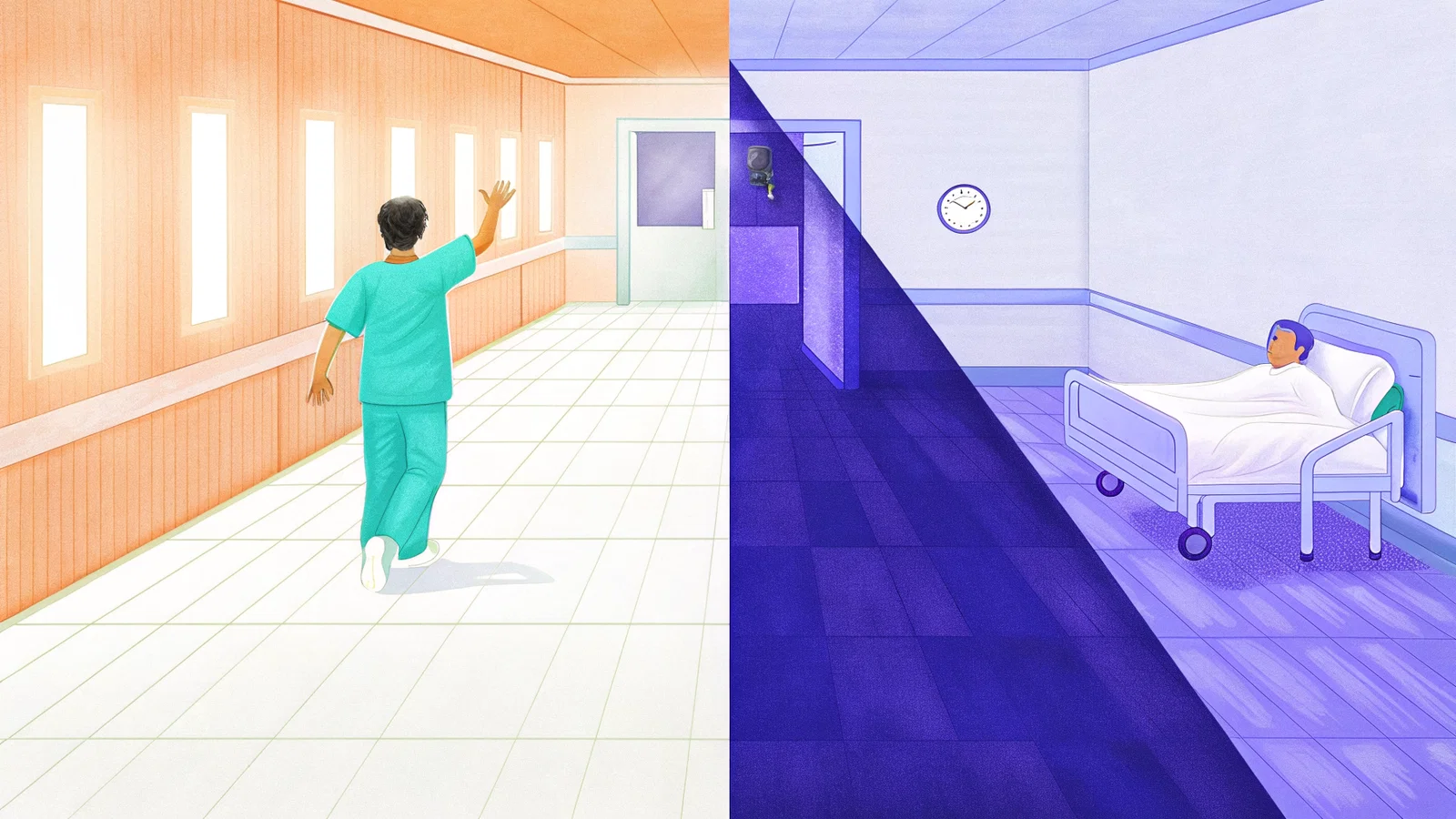
The scale is never perfectly balanced, but the needle should at least sit somewhere in the middle. If documentation time is the only arm holding weight, your well-being is already on the floor. The goal isn't to abolish remote charting entirely, that's rarely realistic, but to shrink it to a sliver, not a chunk. Your evenings, your sleep, your ability to show up the next day with a clear head: all of it depends on drawing that line.
Key Takeaways
- Remote EHR documentation is defined as clinical work under ACGME regulations and must be included in your 80-hour rolling average.
- Do not allow the hidden curriculum to pressure you into working unpaid, unlogged hours that jeopardize your residency standing and personal health.
- Always maintain a personal, time-stamped log of remote work to ensure alignment with institutional reporting systems and EHR audit trails.
- Systemic EHR overwork is a program-wide issue; if documentation consistently exceeds your duty-hour limit, report it to your program director with data, not emotion.