
It’s late June. Promotion decisions are being finalized. You’re PGY-1, staring at your inbox, waiting for that bland, three-sentence email saying you’re promoted to PGY-2 without conditions.
In another room, your program director and the Clinical Competency Committee (CCC) have your name on a screen. Next to your evaluations, procedure log, and in‑training exam score is something you probably don’t think much about:
A neat little column that says: “Duty hour violations: 7 (EPIC), 3 (MedHub logged), 0 (self-reported).”
Now let me tell you what actually happens with that information.
Duty hour data is not just about ACGME compliance. It’s used as a behavioral marker. A risk flag. A personality tell. And when promotion, remediation, or even non-renewal comes up, those red “80+ hour” or “no day off in 9 days” entries become part of the story they tell about you behind closed doors.
You need to understand that story.
First truth: Duty hours are not “just paperwork”
Every resident thinks they know the rules. 80 hours per week, averaged over 4 weeks. One day off in seven. 24+4 max for in-house call. Blah blah. You heard it at orientation, signed the attestation, clicked through the slide deck.
But inside the PD’s office, duty hours aren’t just compliance. They’re interpreted. Patterned. Weaponized sometimes. Used to argue that you’re either:
- Overwhelmed and unsafe
- Disorganized and inefficient
- Or… a quiet time bomb for the next ACGME site visit
Here’s the unspoken hierarchy of how PDs actually look at duty hour “problems” when promotion and remediation are discussed:
| Pattern | How PDs Usually Interpret It |
|---|---|
| Chronic >80h, never reported | Poor insight, unsafe, risky |
| Honest frequent reporting | Struggling, maybe system issue |
| Occasional single violations | Normal, low concern |
| Different from peers on same team | Red flag about YOU, not the system |
| Sudden spike late in year | Burnout, boundary breakdown |
No one tells you this at orientation. They talk like duty hours are a binary: compliant or not compliant. That’s not how PDs think. They look at how you violate and how you log.
I’ve sat through CCC meetings where the in-training exam was decent, patient care feedback was mixed, but what pushed someone into “we need to talk about remediation” territory was: “And also, this intern has 12 unreported violations in the EMR data pull.”
That is the part they never tell you.
Where PDs really get their duty hour data
You probably think duty hour violations = what you enter into New Innovations / MedHub / whatever logging platform your program uses.
That’s cute. That’s not the full story.
Most medium and large programs now quietly use multiple data streams to reconstruct your work hours, especially before ACGME visits and during promotion reviews.
Typical sources:
- Your official logging platform
- EMR login/logout times (Epic, Cerner, etc.)
- Badge swipes / parking data
- Paging system timestamps
- Night float vs day team staffing patterns
They don’t pull all of this every month. They don’t have time. But they absolutely do spot checks on:
- Outlier residents
- Sites that are chronically “busy”
- Years where they’ve had complaints or anonymous surveys mentioning duty hour abuse
And during an ACGME site visit or mock review? They will audit the hell out of the data. If your MedHub says you left at 7 pm every day, but your EMR logouts are 9:42 pm for weeks, that’s going to be an internal conversation.
Here’s how that conversation sounds:
“Look, this intern is consistently logging 70–75 hours a week. But the Epic timestamps show they’re in the charting system past 10 pm three days a week. And they never reported a single violation. That suggests poor insight or maybe they feel pressure not to report. Either way, it’s a problem.”
That “poor insight” phrase? That’s deadly when they’re deciding promotion vs remediation.
How CCCs actually talk about duty hours during promotion meetings
Picture the room: PD, APDs, a few core faculty, program coordinator, sometimes chief residents. PowerPoint up. They go resident by resident.
For borderline residents, duty hours come up in very specific ways. I’ll walk you through the common archetypes.
1. The “Overworked but Honest” Resident
This is the resident who consistently logs violations, usually on heavy rotations.
- “Dr. Patel has five recorded >80-hour weeks on NICU and wards early in the year.”
- Chiefs: “Those were brutal months; several interns logged violations.”
Interpretation: You’re probably fine. System failure, not personal failure. This often helps your case if you’ve raised concerns and documented accurately. It can become:
“They appropriately reported violations. Shows insight. We adjusted the schedule afterward.”
Honest logging rarely hurts you by itself. But it creates a narrative: “We may need to support them with efficiency coaching or adjust their team experience.”
2. The “Silent Martyr”
This is the one that gets PDs’ blood pressure up.
Your MedHub says you’re a model resident: 70–75 hours, no violations. But an EMR audit or nursing feedback reveals you routinely stay hours late, or cross-cover when you shouldn’t, or don’t hand off because you “don’t want to burden night float.”
What the CCC says:
- “We are seeing Epic logouts at 11 pm, but they’re logging 7 pm. That is either dishonesty or poor understanding of duty hours.”
- “Also, nurses say they’re still on the floor at 10 pm after long call days.”
Translation: You are a liability. You make the program look good on paper until ACGME comes knocking. Then you blow them up.
This pattern is frequently tied to remediation recommendations, especially when combined with comments like “difficulty setting boundaries” or “trouble prioritizing tasks.”
3. The “Chronic Outlier”
Same EMR. Same rotation. Same senior resident. Same attending. Everyone else is logging reasonable hours with rare violations. And then there’s you.
- “On wards, every intern that block logged 65–75 hours. Dr. X is consistently 82–88, week after week.”
That makes PDs say out loud what they’d never put in writing: “So it’s not the rotation. It’s them.”
In promotion talks, this often triggers:
- Required remediation in time management and efficiency
- Closer monitoring next year
- A quiet line in your file: “At risk for burnout; difficulty managing census; may need reduced load if not improved”
You might think you’re just “working hard.” They see it as: “This person cannot function with a normal ward census without violating rules.”
When duty hours become ammunition in remediation
Duty hours really become lethal when they’re not alone.
Let me be very blunt: duty hour issues almost never sink someone entirely by themselves. What they do is reinforce a narrative when other concerns already exist.
Here are the combinations that trigger remediation conversations:
- Low in‑training score + chronic duty hour violations
- Multiple “struggles with efficiency” comments + EMR overnights that aren’t logged
- Patient safety event + evidence the resident was post-call, fatigued, and should have gone home
You’ll literally hear comments like:
- “Look at this handoff. They were up 26 hours and still tried to admit a new patient instead of handing off. That’s poor judgment.”
- “They charted notes at 1:30 am the night before the med error. We can’t ignore that.”
That’s when the PD writes a remediation plan that includes:
- Time management coaching
- Mandatory duty hour review
- Closer logging oversight (chief checks your hours weekly)
- Sometimes a forced change of rotation schedule to lower-intensity blocks
Most residents misread this. They think the remediation is “because I worked too hard.” No. It’s because you worked too much, didn’t respect the guardrails, and something else (clinical performance, safety, professionalism) is already shaky.
ACGME visits: when your “fake” entries come back to haunt you
You know those whispered lines: “Just log 80. Don’t make trouble.” Or “Everyone logs out by 7 pm, even if you’re still charting.” You will absolutely hear this from senior residents in some programs. In a few bad ones, even from attendings.
Let me tell you what really happens when ACGME comes.
The program has to provide:
- Aggregated duty hour reports
- Evidence of monitoring
- Any interventions taken when violations were identified
Programs that never show violations look suspicious. Site visitors are not stupid. They’ve seen the same game at 100 programs before you.
What they often do is unofficially cross-check with:
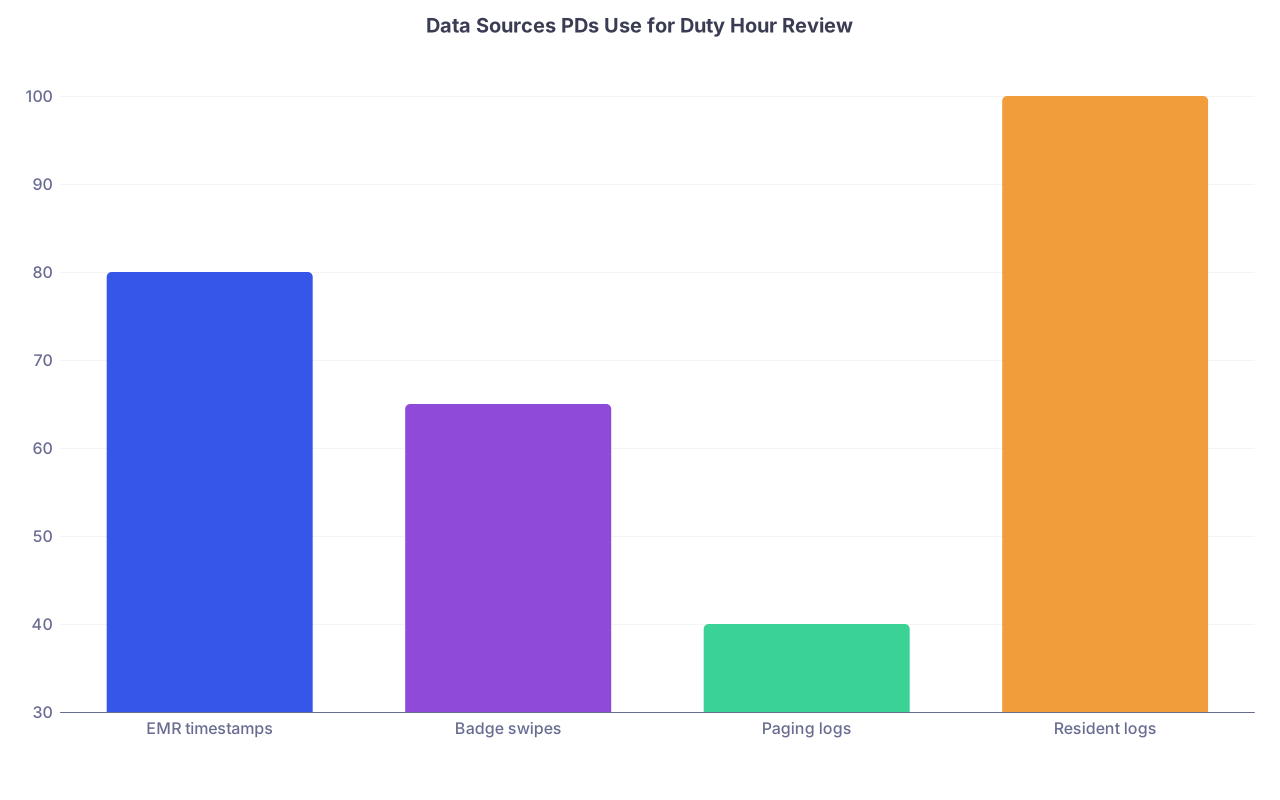
| Category | Value |
|---|---|
| EMR timestamps | 80 |
| Badge swipes | 65 |
| Paging logs | 40 |
| Resident logs | 100 |
You see that? Resident logs are 100% used. EMR data comes close behind. EMR trumps your manual logging when they really need to know.
If your name pops up as an outlier who:
- Logs perfect compliance
- Has EMR data showing chronic late hours
- And maybe got mentioned in anonymous surveys as “always here, always exhausted”
You become a talking point with the PD. Not because they hate you. Because now you threaten their accreditation.
And yes, I’ve watched PDs go from defending a resident to being angry at them once they realize: “We have been telling everyone to report violations, and this person is making our data look fake.”
Fair or not, that is the emotional reality.
How smart residents protect themselves without becoming “that complainer”
Let’s talk strategy. Because you’re not here for theory; you’re here to survive.
You need to hit a very specific balance:
- Honest enough that your data is defensible
- Savvy enough not to look like you’re weaponizing duty hours every time you have a hard shift
Here’s what actually works, from residents who kept their reputations solid and their lives manageable.
1. Report patterned violations, not every painful night
Everyone has a brutal week where they maybe touch 82 hours once. If it’s isolated, most PDs don’t care much. But if you’re running >80 three weeks straight, that’s when you should absolutely log it and mention it to chiefs or the PD.
Phrase it like this:
“I’m consistently over 80 on [rotation] despite trying to be efficient. Others on the team are struggling too. I’m logging those violations but wanted you to be aware; it might be a structural issue.”
That tells them:
- You know the rules
- You’re not hiding hours
- You’re not blaming individuals, you’re pointing at structure
That’s gold. That’s exactly what PDs want to see from a mature resident.
2. Keep your documentation internally consistent
If you’re going to stay late sometimes (and you will), keep your story straight.
- Don’t log going home at 7 pm while your EMR timestamps show you writing notes at 10:45 pm three days a week.
- If you stay late finishing a single note from home, that’s not work hours. If you are admitting, calling consults, reconciling meds at 10 pm? That’s work.
If you do end up working way over, log it and, once it becomes a pattern, write a short, neutral email:
“Just a heads up — last three shifts on [rotation], I’ve gone over duty hours trying to manage [specific consistent issue]. I’ve logged violations accordingly.”
You’re not tattling. You’re protecting yourself for later.
3. Use chiefs as a buffer when needed
Chiefs are often the translation layer between your emotional “this rotation is hell” and the PD’s bureaucratic “show me evidence.”
Talk to them like colleagues:
“I’m not trying to get anyone in trouble, but I’m frequently bumping close to or over 80 on nights here. How are other residents doing? Is this something I should be logging and raising, or am I just being inefficient?”
Good chiefs will give you context:
- “Everyone’s getting crushed; we’re already talking to the PD.”
- Or: “You’re the only one constantly at 85. Let’s talk about your workflow.”
Either way, you learn whether it’s you or the system that will show up in that CCC slide deck.
How duty hours get used in promotion letters, not just threats
Here’s the irony: the same data that can hurt you in remediation can help you in promotion or fellowship letters if you play it right.
I’ve heard PDs say in letters:
- “Despite a very busy service with frequent duty hour pressure, Dr. Y consistently demonstrated efficiency and insight, appropriately logging and addressing system issues.”
- “Dr. Z advocated for schedule changes on a high-acuity rotation that was producing repeated duty hour violations across the class; this resulted in a sustainable fix for future residents.”
Behind closed doors, your reputation for being measured, honest, and thoughtful about duty hours becomes part of the “this is a responsible future attending” narrative.
The key: you cannot be the resident who cries duty hours every time they’re slightly uncomfortable. But you also cannot be the resident whose life outside the hospital has completely evaporated and still logs 70 hours happily while everyone sees you half-dead.
Moderate. Consistent. Adult.
The three resident “types” PDs mentally sort by duty hours
They’ll never say this to your face, but almost every PD I know subconsciously sorts residents into three buckets based on duty hour behavior.
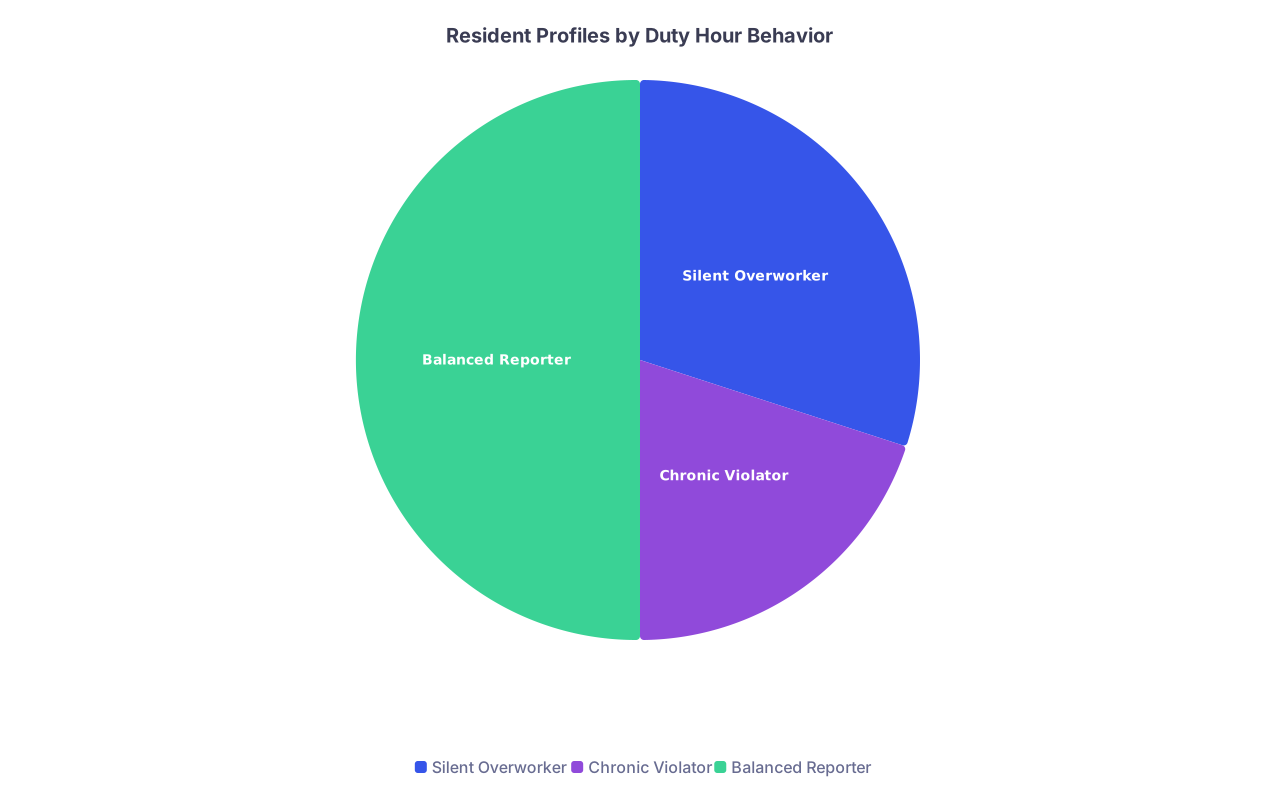
| Category | Value |
|---|---|
| Silent Overworker | 30 |
| Chronic Violator | 20 |
| Balanced Reporter | 50 |
1. The Silent Overworker
- Never logs a violation
- Always looks exhausted
- EMR shows late hours
- Nurses say, “they’re always here”
Viewed as: high risk, poor boundaries, possibly a future patient safety issue. Promotion? Usually yes. But with a quiet note: “Needs close monitoring.”
2. The Chronic Violator / Complainer
- Logs every marginal overage
- Sends frequent emotional emails about schedule unfairness
- Often seen as less resilient by some attendings (fair or not)
Viewed as: potentially justified, but if not paired with reasonable performance and maturity, can be dismissed as “not owning their part.”
3. The Balanced Reporter
- Logs honestly
- Reports real patterns, not one‑off misery
- Talks to chiefs or PD early when a rotation is structurally broken
- Still seen as a team player
Viewed as: safe pair of hands. For promotion and eventually chief or fellowship, this is who PDs like.
You want to be #3.
What to do if duty hours are already in your remediation plan
If you’re reading this because your PD already pulled you into a “we’re concerned about your duty hours” meeting, you’re not alone. This happens every year.
Here’s what works to climb out of that hole:
Don’t argue that you’re just “hard working.” That line makes PDs roll their eyes. Say this instead:
“I realize my current pattern suggests I’m not using my time efficiently or I’m not setting boundaries properly. I want to improve both.”Ask for concrete support:
- Shadow a very efficient senior for two days
- Have chiefs review your task list and daily structure
- Get feedback from an attending known for high-efficiency rounding
Make visible changes in 1–2 rotations:
- Start leaving at a reasonable time some days
- Use checklists and early discharge planning
- Handoff intentionally instead of “I’ll just finish it myself”
What the CCC wants to see isn’t perfection. It’s trajectory.
They want to be able to say next time:
“Six months ago, we were worried. Since then, there have been fewer violations, better evaluations on efficiency, and the resident has been proactive about change.”
That’s how you get promotion back on track.
Quick realities PDs won’t say in public but talk about in private
Let me just list the ugly truths plainly.
- Programs are scared of ACGME and duty hours. They care less about your personal life than about a citation.
- A resident who hides violations is seen as more dangerous than a resident who reports several legitimate ones.
- If your duty hour issues line up with patient complaints, safety events, or “not ready for senior” comments, you will be discussed for remediation. Guaranteed.
- Chiefs sometimes pressure you to under-report. But when things blow up, they won’t be the ones in front of the GMEC explaining the data inconsistencies. Your name will.
And one more: PDs actually like residents who can say, calmly and factually, “The way this rotation is structured, multiple people are going over 80 hours. Here’s the data.”
That’s not being difficult. That’s being a future attending who won’t abuse their own residents later.


| Step | Description |
|---|---|
| Step 1 | Resident Work Hours |
| Step 2 | Resident Logs |
| Step 3 | EMR Timestamps |
| Step 4 | Badge Swipes |
| Step 5 | Duty Hour Summary |
| Step 6 | CCC Review |
| Step 7 | Promote Normally |
| Step 8 | Remediation Plan |
| Step 9 | Concerns? |

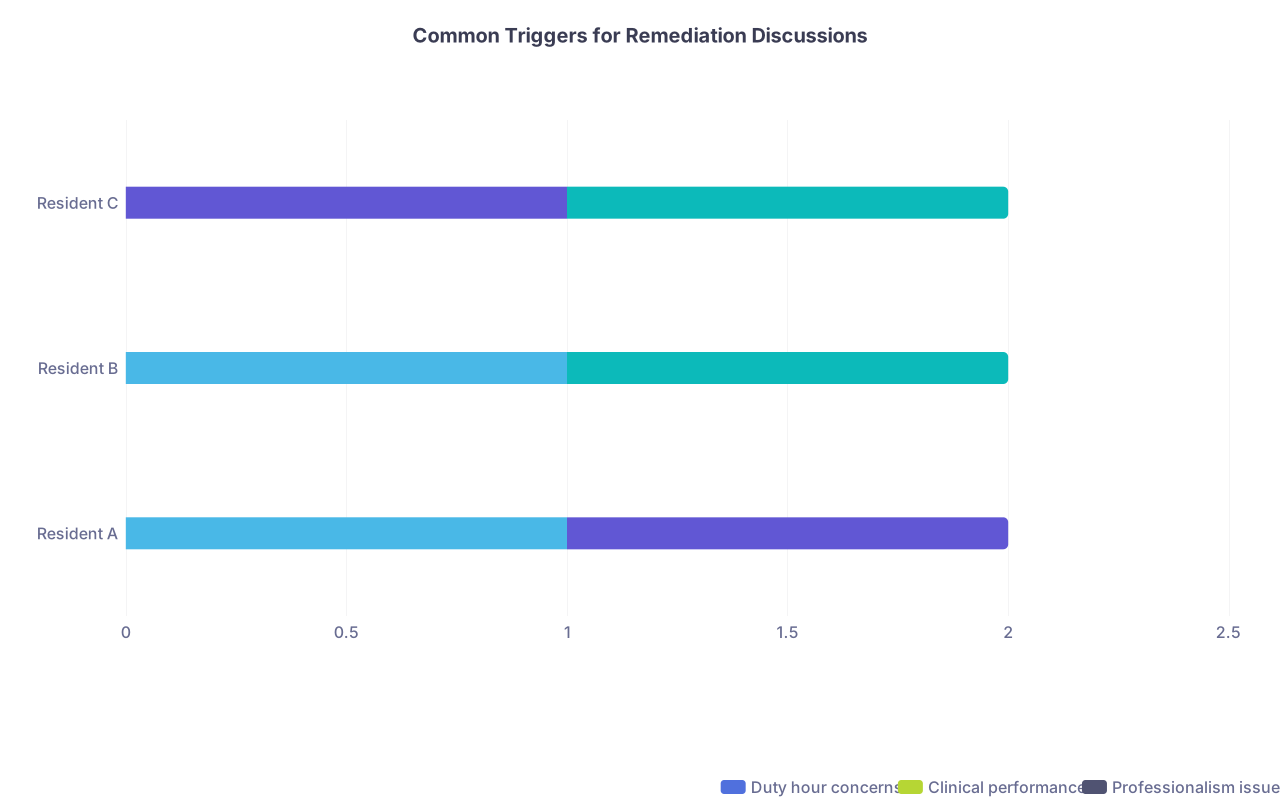
| Category | Duty hour concerns | Clinical performance | Professionalism issues |
|---|---|---|---|
| Resident A | 1 | 1 | 0 |
| Resident B | 1 | 0 | 1 |
| Resident C | 0 | 1 | 1 |