
The fantasy that work hour logs are about “your wellbeing” is only half true. Program directors track your hours to protect the program first, and you second.
Let me tell you what’s actually happening behind those ACGME-compliance emails and MedHub/Medtronic/NIH-logging dashboards. The attendings you think are ignoring your existence? Some of them know your logging patterns better than you think.
This whole system is less about the number you type in and more about the story those numbers tell about you, your service, and your program’s exposure.
The Real Reason Work Hour Logs Exist
Work hour systems didn’t appear because anyone woke up and decided residents deserve rest. They showed up because programs got burned. Citations. Site visits. Residents going anonymous to the RRC. Lawsuits.
Behind closed doors, PDs talk about “duty hours” the way hospital admins talk about “quality metrics.” It’s compliance theater with very real consequences if the optics are bad.
Here’s the blunt truth:
- The ACGME cares if your program looks out of control.
- The institution cares if someone can sue.
- The PD cares about not getting dragged into a special review because your class decided to be heroes and log 110 hours per week.
Your wellness matters. But as a resident, you’re being monitored first as a risk unit inside a regulatory framework.
So no, your PD isn’t refreshing your hours every night. But the data is absolutely used. And patterns matter a lot more than individual entries.
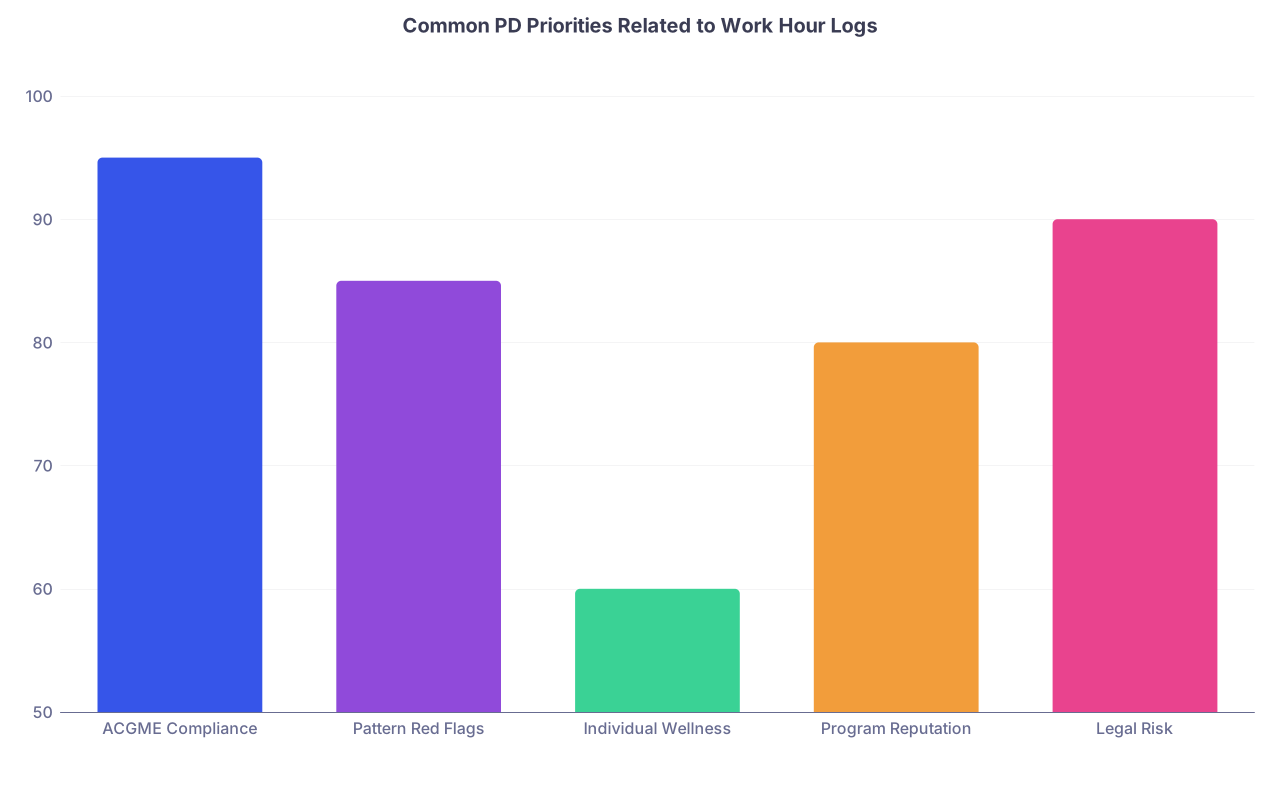
| Category | Value |
|---|---|
| ACGME Compliance | 95 |
| Pattern Red Flags | 85 |
| Individual Wellness | 60 |
| Program Reputation | 80 |
| Legal Risk | 90 |
What PDs Actually Look At (That No One Tells You)
Most residents assume PDs either never look at the data or obsess over every entry. The reality is in between. They almost never care about a single bad week. They care about patterns that make the program look reckless or dysfunctional.
Let me walk you through what gets attention in real meetings.
1. Chronic Violators vs. Single Bad Weeks
One rough week where the trauma service exploded? Logged 88 hours? Nobody’s panicking. A decent PD will silently appreciate that you were honest.
What triggers attention is the repeat offender profile:
- Multiple weeks over 80 hours averaged over 4 weeks
- Regular 28–30 hour continuous shifts recorded as 24
- Logging “24 on / 24 off” that on paper technically passes, but in reality everyone knows is garbage
PDs do not want the RRC to see a pattern of chronic overages. That’s how you end up on “warning” or “probation.”
What they really track is:
“Who is repeatedly over? Which rotations? Which sites? Is this a resident problem, or a system problem?”
If it’s one resident, they start asking:
- Is this person inefficient?
- Are they refusing to go home?
- Are seniors off-loading correctly?
- Is this resident trustworthy with documentation?
If it’s an entire rotation:
- That service chief is getting a quiet but serious email.
- On-site faculty hear: “Fix this before survey year.”
You’ll never see that email, but I’ve sat in those meetings. The tone is not gentle.
2. Underreporters and “Hero Hours”
Everyone knows underreporting happens. PDs, chairs, ACGME surveyors, even your grandma if she’s honest.
But here’s what residents underestimate: chronic underreporting is its own red flag.
Patterns PDs notice:
- Rotations where everyone is magically at 63–68 hours every single week
- Night float schedules where people log almost exactly 80 hours minus 1, every week, no variation
- Residents who verbally complain they’re dying but log 60 hours
That disconnect matters. Because when the ACGME survey goes out and your class answers:
- “I frequently violate duty hours.”
- “I don’t feel I can report violations without fear.”
- “My program is not compliant.”
But your logs show pristine 54-hour weeks?
Now your program looks dishonest. That’s worse than just having high hours.
So PDs quietly track “underreporter risk” by rotation and by class. Not to punish you. To protect the program from the nightmare scenario: data mismatch during an ACGME site visit.
3. The “Liability” Resident Signature
Here’s a dirty little secret. Your name on those logs is not just an educational metric. It’s a liability shield.
If something goes wrong clinically and a chart review shows:
- You’d been on for 26 hours
- You were post-call but still working
- You signed off on something dangerous
The institution wants to be able to say:
“Our records show we were ACGME compliant. The resident’s logged hours did not reflect a violation.”
So PDs track whether you’re actually logging at all. Not because they’re desperate for your wellness data. Because unlogged hours are risk with no paper trail.
Residents who don’t log at all, or log once a month in one massive vague batch? Those names get written down. At some places, I’ve seen coordinators literally maintain an “hour compliance list” that gets reviewed quarterly, and if your name is always in the bottom five, the PD hears about it.
What the Data Tells Them About YOU
You think you’re spending 3 minutes on a bureaucratic chore. Behind the scenes, your logged hours feed into how people perceive you as a trainee.
Harsh? Yes. But true.

1. Reliability and Professionalism
The first thing PDs notice isn’t your total hours. It’s whether you submit them on time.
Every program has the same weekly or biweekly email:
“Please log your duty hours. You are out of compliance.”
There are three types of residents:
- The ones who log weekly, no reminders needed.
- The ones who log right after the first nag email.
- The ones coordinators chase every cycle, who then bulk-enter four weeks of identical-looking hours at 11:58 pm.
Guess whose name comes up when PDs talk about “reliability concerns”? Group 3. Every time.
A coordinator once told me, “If this person can’t be trusted to click 8 boxes a week, how are they on overnight alone?” That attitude gets upstream quickly.
So yes, your logging rhythm becomes a proxy for:
“Do you do the annoying, low-stakes, administrivia of medicine without turning it into a drama?”
2. Self-Advocacy vs. Martyrdom
Residents who never log more than 70 hours, even on services everyone knows run 90+, send a clear message:
“I will burn out quietly rather than document anything uncomfortable.”
Residents who accurately log 85–90 hours when it’s legitimately that bad send a different message:
“I’m not going to lie for you. I’ll do the work, but I won’t cover for systemic dysfunction.”
PDs are split on which they “prefer.”
Politically nervous PDs like compliant underreporters. Stronger PDs, the ones you want writing your letters, actually respect the resident who logs reality without being dramatic about it.
What they hate is the martyr who:
- Works insane hours
- Refuses to log them
- Then melts down during ACGME survey season or vents anonymously online
The data they watch over time is:
“Does this resident’s logging mostly match what we know of the service, and are they willing to raise a flag upstream rather than ambush us on the survey?”
3. Efficiency Questions (Fair or Not)
On some services, everyone knows the rough rhythm.
Night float: 70–75 hours, consistent.
ICU month: 75–85, spiky.
Elective: 45–55.
So when one resident repeatedly logs 10–15 hours more than everyone else on the exact same rotation, the conversation starts:
- Are they extremely thorough?
- Or are they just slow?
- Are they staying extra to chat? Doing unnecessary scut? Struggling with prioritization?
You might be the hard-working hero. Or you might be inefficient and drowning. The logs alone don’t decide that, but they absolutely trigger the discussion.
Smart PDs pair this with faculty feedback:
“Is Alex actually the last one out every night? Or just logging weird?”
That blend of anecdote + numbers is what shapes their impression.
The Game Behind “Rotation-Level” Data
Individual logs matter, but PDs are obsessed with rotation-level patterns. Because that’s where their own neck is on the line.
| Pattern Type | What PDs Usually Think |
|---|---|
| Whole team over 80 hrs | Rotation design or staffing issue |
| One resident always higher | Efficiency, boundary, or support issue |
| Everyone logs 60–65 on heavy service | Underreporting culture problem |
| Frequent 24+1 violations | Call schedule needs restructuring |
| Sudden spike one month | Census surge or new attending problem |
On the PD side, this data feeds into:
- Which services get pressured to change schedules
- Who gets more midlevel support or extra residents
- What they say to the RRC if questioned: “We identified issues on X rotation and made Y changes”
So if everyone on your trauma month is consistently logging 88 hours and real violations, your logs become ammunition. That’s how PDs push back on service chiefs and hospital admins who like free resident labor.
I’ve seen it:
- “Look at the work hour reports. This isn’t defensible. I need another resident or a PA on nights, or we’re getting cited.”
Your accurate suffering becomes a data point for change. But only if you actually log it.
How “Survey Season” Changes Everything
Here’s the part nobody explains to you: ACGME survey responses and duty hour logs must tell the same story or your program looks dishonest.

| Step | Description |
|---|---|
| Step 1 | Residents Log Hours |
| Step 2 | Program Reviews Patterns |
| Step 3 | ACGME Resident Survey |
| Step 4 | Program Looks Honest |
| Step 5 | Site Visit Risk |
| Step 6 | Match or Mismatch |
If your logs show 60–70 hour weeks all year, but 80% of your class says on the survey “duty hour violations are frequent,” the RRC doesn’t quietly shrug.
They think:
- Are residents being pressured to underreport?
- Is this a toxic culture problem?
- Is leadership disengaged or deceptive?
And then:
- “We should talk to this program.”
On the flip side, if logs are rough but honest and your survey says, “Yeah, we occasionally go over on heavy services, but we can report it,” that’s survivable.
Which is why, starting around survey season, you’ll notice more:
- Emails reminding you to log accurately
- PD talks where they suddenly sound very earnest about your wellness
- Hints like, “If there are real duty hour violations, please log them and also talk to us”
They’re not being fake. They’re trying to avoid a mismatch that triggers an RRC microscope.
The Politics of “Fixing” Violations
Let’s talk about what actually happens when you log true violations consistently.

There are three levels of response.
Level 1: Coordinator Cleanup
If one week looks wild, sometimes a coordinator will call or email:
“Hey, just double-checking this entry—did you mean 28 continuous hours?”
They’re not always trying to get you to change it. Sometimes they legit just want to confirm. But yes, at some programs they subtly “suggest” how you might adjust it to stay under technical limits.
This is where you decide how honest you want to be. My advice:
If it truly was a violation, stand by it. Calmly. No drama.
Level 2: PD “Coaching Conversation”
If you’re constantly over, your PD or APD may pull you aside:
- “Are you staying late unnecessarily?”
- “Are you signing out appropriately?”
- “What’s actually going on on that service?”
They’re diagnosing whether this is:
- Your time management problem
- A malignant team culture
- A systemic staffing failure
How you show up in that conversation matters. If you sound thoughtful, specific, and non-emotional, your credibility shoots up. And your logs suddenly carry more weight when they talk to faculty.
Level 3: Service-Level Confrontation
When multiple residents over multiple blocks log the same pattern, the PD goes after the rotation.
You won’t be in that room when they tell the ICU director:
“You cannot keep residents for 30 hours. We have direct evidence.”
But your names and logs are the backbone of that argument.
At some places, it ends with call schedule changes. At weaker programs, it ends with an unofficial culture of, “You’re making the program look bad—just stop logging that.”
You can guess which programs burn people out harder.
How to Log Hours Without Screwing Yourself
You’re in a system that’s flawed, political, and sometimes hypocritical. But you still have to survive it. And you can actually use it to your advantage if you’re smart.
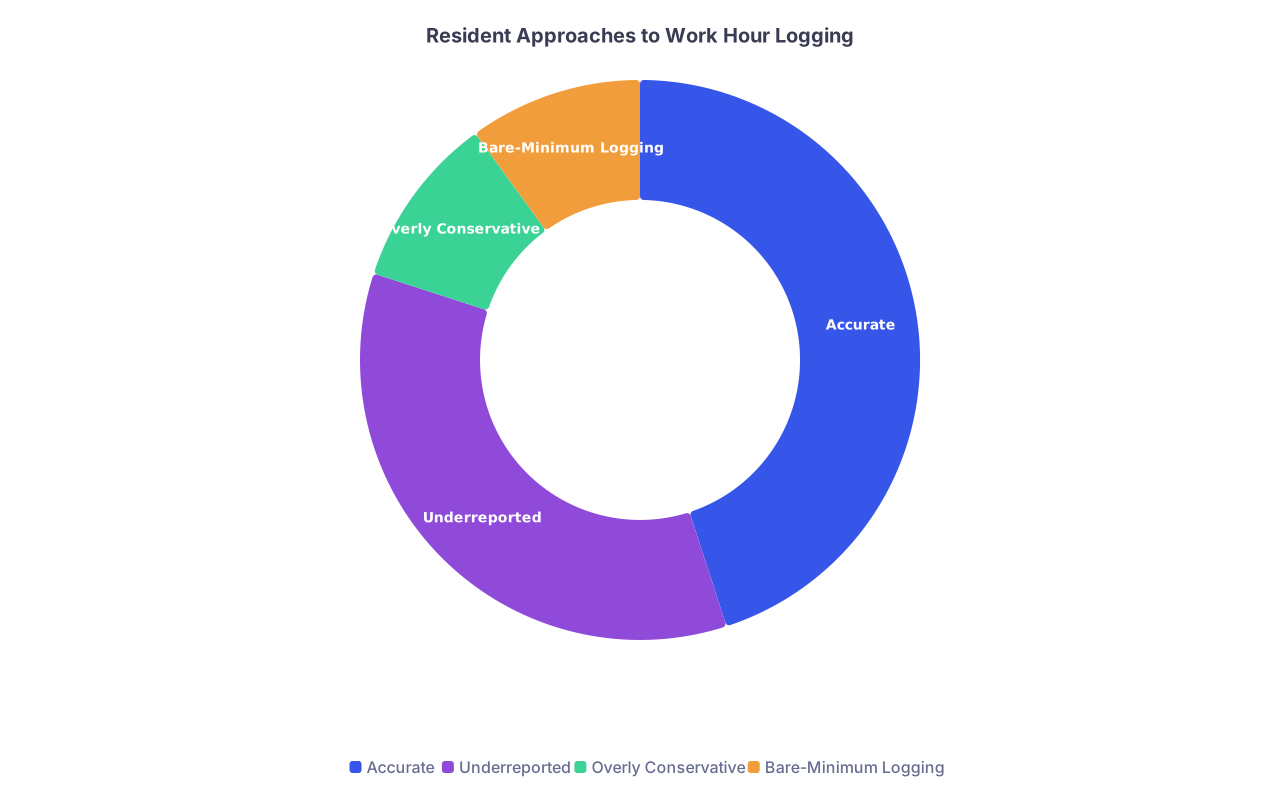
| Category | Value |
|---|---|
| Accurate | 45 |
| Underreported | 35 |
| Overly Conservative | 10 |
| Bare-Minimum Logging | 10 |
Principle 1: Be Honest, Not Dramatic
Log reality within the rules of the system.
- If you worked 83 hours on a nightmare week, log it. Do not round it to 79 because “everyone else does.”
- If you legitimately went home early two days, don’t inflate to look “hardcore.”
Patterns matter more than a single week. One or two rough weeks will not tank your program. Chronic, systemic issues will—and those deserve documentation.
Principle 2: Log Consistently and On Time
Treat duty hour entry like writing the date on your notes: annoying but automatic.
- Set a repeating reminder on your phone weekly.
- Do it at the same time every week (post-call, Sunday night, whatever).
- Never be the one the coordinator is chasing every cycle.
You want your name associated with:
“Handles their admin stuff without being babysat.”
Principle 3: Match Your Story to Your Data
If you’re telling PDs and faculty that a service is crushing you, but your logs are squeaky clean 60-hour weeks, your credibility collapses.
Either:
- Log the reality and be prepared to describe it calmly.
- Or accept that you’re choosing not to document it and stop acting shocked when nothing changes.
You can’t have it both ways: silent logs and public outrage.
Principle 4: Use Logs as Leverage, Not a Weapon
The PDs and chiefs most likely to help you are the ones who see you as:
- Serious
- Honest
- Not out to embarrass them
If you go nuclear—posting screenshots online, accusing the program of abuse—before you’ve ever brought up patterns internally, leadership will circle the wagons. Every time.
Instead, something like:
“I’ve noticed that on X rotation I consistently log over 80 hours, even when I’m being efficient. Here are my hours from the last two months. I’m concerned this isn’t fixable at the individual level.”
That’s how you sound like a colleague, not a liability.

What PDs Wish You Knew (But Rarely Say Out Loud)
Here’s the stuff faculty say in PD meetings, not town halls.
- “I’d rather they log honestly and make me fix the rotation than lie to protect me and then torch us on the survey.”
- “The ones who never log correctly are often the same ones late with evaluations, late with notes, late with everything.”
- “Duty hours are not optional. But if they’re going to blow, I want to know from them, not from an RRC letter.”
- “If they’d just come to me with data instead of rumors, I could actually do something.”
Underneath the compliance theater, good PDs actually do care that you’re not working 100-hour weeks indefinitely. They also care that the program looks functional and honest.
Work hour logs sit right at that intersection: your health, their license.
Understand that, and you’ll stop treating logging like a random chore and start using it like what it really is: a quiet but powerful signal.