
Ignoring fatigue is not toughness. It’s how smart residents end up making the worst clinical decisions of their careers.
Let me be blunt: the clinical judgment errors you’ll lose sleep over later are usually the ones you made when you were already too tired to think straight. Not the hard zebra diagnosis, not the rare complication. The missed potassium. The un-reviewed ECG. The “they look okay” discharge at 5:30 a.m. when they really weren’t.
You’re not special. Fatigue crushes everyone’s cognition. The residents who insist it doesn’t are either lying, compensating, or haven’t been burned yet.
This is about how to not become that cautionary story.
The Biggest Lie in Residency: “I’m Fine”
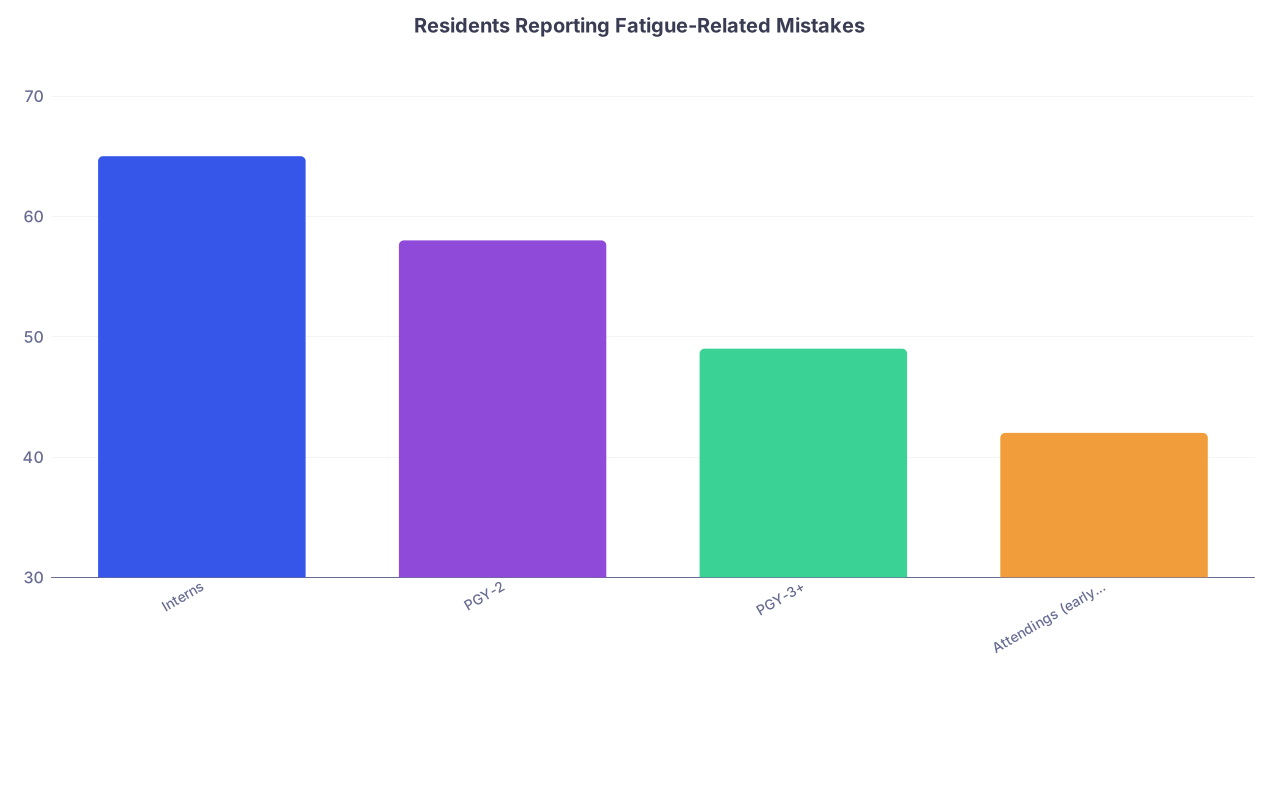
| Category | Value |
|---|---|
| Interns | 65 |
| PGY-2 | 58 |
| PGY-3+ | 49 |
| Attendings (early career) | 42 |
The most dangerous sentence I hear from residents, especially interns, is: “I’m tired, but I’m fine.”
No, you’re not. And here’s the trap you’re walking into.
When you’re sleep-deprived, you:
- Overestimate your abilities
- Underestimate how sick patients are
- Shortcut your reasoning without realizing it
- Stop double-checking things you swear you always double-check
I’ve watched an otherwise excellent resident miss a new left bundle branch block because “the vitals look okay and I need to finish these discharges.” He was 26 hours into a call. The patient ended up in the cath lab later. He still brings that case up.
Not because he didn’t know cardiology.
Because he thought he was “fine.”
The mistake to avoid: believing that noticing you’re tired is enough. The real danger comes when you’re too tired to notice how tired you are. That’s when the judgment errors explode.
You need systems that assume you’ll be impaired:
- Checklists for sign-out, chest pain, sepsis
- Habitual phrases: “Let’s pull up the last creatinine,” “Show me the ECG,” “What changed in the last 6 hours?”
- A default: if my brain says “seems fine” while I’m exhausted, I must prove it with data
If you rely on “I’ll be careful,” you will eventually hurt someone. And you will remember their name.
How Fatigue Warps Your Clinical Judgment (Even When You “Know Better”)

| Step | Description |
|---|---|
| Step 1 | Fatigue |
| Step 2 | Slower Thinking |
| Step 3 | More Heuristics |
| Step 4 | Reduced Vigilance |
| Step 5 | Missed Details |
| Step 6 | Anchoring on First Diagnosis |
| Step 7 | Skipped Safety Checks |
| Step 8 | Diagnostic Errors |
| Step 9 | Treatment Errors |
Let’s break down the specific judgment errors that explode when you’re tired. If you recognize yourself in these, that’s the point.
1. Anchoring Hard on the First Story
Resident at 4 a.m.: patient with abdominal pain, “probably gastroenteritis, she looks okay, she’s young.” Vitals “fine-ish,” chart skimmed, labs “pending, I’ll check later.”
By 9 a.m., she’s hypotensive, febrile, peritonitic. Perforated appendix.
The error: fatigue pushes you to grab the first plausible diagnosis and cling to it. You stop asking: “What else could this be?” You get lazy with your differential.
How to avoid this when tired:
- Force yourself to say out loud: “Give me 3 other possibilities”
- Ask: “What would make me wrong?” and actually look for it
- Pay attention when the story feels too neat at 3 a.m. Neat stories at 3 a.m. are often wrong ones.
2. Skipping the Uncomfortable Reassessments
Tired residents hate walking back into rooms. I’ve watched people actively avoid it.
The common script:
- “I already saw them once.”
- “They were stable an hour ago.”
- “Nurse will call if something changes.”
Then the 6 a.m. vitals are worse. No one saw it until 7:15 because everyone was “just finishing notes.”
You never regret walking back into a room. You only regret the ones you skipped.
Set a hard rule for yourself on nights and post-call:
- Any patient with:
- borderline vitals
- new oxygen requirement
- “something feels off”
gets a second in-person check before sign-out.
Even if you’re dead on your feet. Especially then.
3. Letting “Vital Sign Bias” Override Your Eyes
Fatigued brain loves shortcuts: “BP okay? HR not insane? Sat fine? Then I’m done.”
You ignore:
- The increased work of breathing you would normally catch
- That vague mottling you’d notice if you weren’t half-asleep
- The “I just don’t feel right, doc” that would usually bother you
Judgment error: letting okay-looking vitals silence your gut when your patient doesn’t look okay.
Rule that saves residents:
- When your subjective impression (this person looks sick) disagrees with normal-ish vitals while you’re exhausted, trust your eyes first and dig deeper:
- Look at lactate
- Check urine output
- Look at trends, not snapshots
I’ve seen more missed sepsis because the triage vitals were normal than I’d like to admit.
The “Hero” Trap: Overriding Your Limits

Residency culture quietly (and sometimes loudly) rewards self-sacrifice. Staying late. Powering through. Not complaining. You know the lines:
- “We’ve all done it.”
- “I used to take q2 call, you’ll be fine.”
- “Real medicine happens at 3 a.m.”
So you push. You skip food. You skip water. You stay late to “help.” And you slip into the single most dangerous pattern: believing your value equals your willingness to ignore your own limits.
Clinical judgment collapses fast when you hit that place.
I’ve seen:
- Residents writing opioid orders while literally nodding off
- Orders placed on the wrong patient at hour 26
- Antibiotics never given because the order set was half-clicked, then forgotten
Not because they didn’t care. Because they believed walking away to sleep would make them weak or “less dedicated.”
Your mistake to avoid: confusing saying yes with being good. A well-rested resident who hands off appropriately is safer than a destroyed one who insists on “finishing everything myself.”
Protect yourself with a few hard personal rules:
- If I’ve been awake > 20 hours and I catch myself rereading the same sentence 3 times → I need a 15–20 minute protected break (eyes closed, off the unit if possible).
- If I’m post-call and an attending says “You can stay if you want” → I leave. It is not noble to hang around and make tired decisions.
- If my co-resident looks destroyed → I offer to swap a task, not to admire their “grit.”
You’re not paid to be a martyr. You’re paid to make sound decisions. You cannot do that reliably while wrecked.
Silent Killers: Administrative Fatigue Errors You’ll Underestimate
People think fatigue errors are all dramatic clinical misses. Many are disturbingly boring:
- The discharge summary missing critical follow-up instructions
- The INR recheck not clearly documented
- The potassium level ordered but never rechecked after replacement
- The allergy warning you click past for “just Tylenol” (but it wasn’t just Tylenol)
These “clerical” mistakes cascade into real harm. And they flourish when you’re tired, rushing, and “just trying to finish the list.”
Here’s where you’re at the highest risk:
| Time Block | Common Risks |
|---|---|
| 4–7 a.m. | Missed clinical changes |
| Pre-round rush | Sloppy med rec |
| Post-call noon | Bad handoffs |
| End-of-month | Missed follow-ups |
| 1–3 a.m. | Anchoring, bias |
You can’t magically stop being tired in those windows. But you can:
- Use templates for your discharges and follow-up plans
- Make yourself a quick mental checklist before signing any discharge: diagnosis, meds, follow-up, red flags, labs to be rechecked
- Double-check med reconciliations out loud with the nurse or pharmacist on complex patients
I’ve heard multiple residents say: “The mistake that haunts me isn’t the code; it’s the guy I discharged with no follow-up instructions after starting a new insulin regimen.”
That’s not a knowledge problem. That’s a fatigue and process problem.
When to Say “I’m Too Tired To Be Safe” – And How to Do It Without Getting Crushed

| Step | Description |
|---|---|
| Step 1 | Resident feels unsafe fatigue |
| Step 2 | Pause and self-check |
| Step 3 | Tell senior |
| Step 4 | Redistribute tasks |
| Step 5 | Escalate to attending |
| Step 6 | Document concern |
| Step 7 | Follow up after shift |
| Step 8 | Short break, hydrate |
| Step 9 | Still unsafe? |
| Step 10 | Senior responsive? |
Let me say something most people won’t say out loud: there are times when you are too tired to be safe. Not subjectively. Objectively.
Signs you’re there:
- You’re making the same typo repeatedly in orders
- You can’t hold more than one clinical problem in your working memory
- You read a vital sign trend and forget it 10 seconds later
- You feel emotionally blunted or weirdly apathetic about obviously serious problems
When that happens, you must escalate. Not whine. Not “this is hard.” You frame it as a safety issue.
How to say it in a way that usually gets traction:
- “I’m concerned I’m no longer functioning safely. I’ve caught myself making basic errors. I need help to redistribute some tasks so we don’t miss something important.”
- “I want to be clear: I’m worried about patient safety right now because of my fatigue, not just about my comfort.”
If the senior is decent, they’ll adjust: trade some pages, take admits, let you finish core tasks only.
If they’re dismissive: “We’ve all been there, just push through,” then you escalate once more—calmly, not dramatically—to the attending, again framed as safety:
- “I’m not trying to leave early. I’m flagging that I’m making cognitive errors I don’t usually make. I’m asking for help restructuring the work so we don’t miss something serious.”
Is this socially comfortable? No. Does it protect you and your patients? Yes.
Residents who never do this because they “don’t want to be a problem” often end up the center of a morbidity and mortality discussion. That’s a bigger problem.
Practical Fatigue Buffers That Actually Work (And The Fake Ones That Don’t)
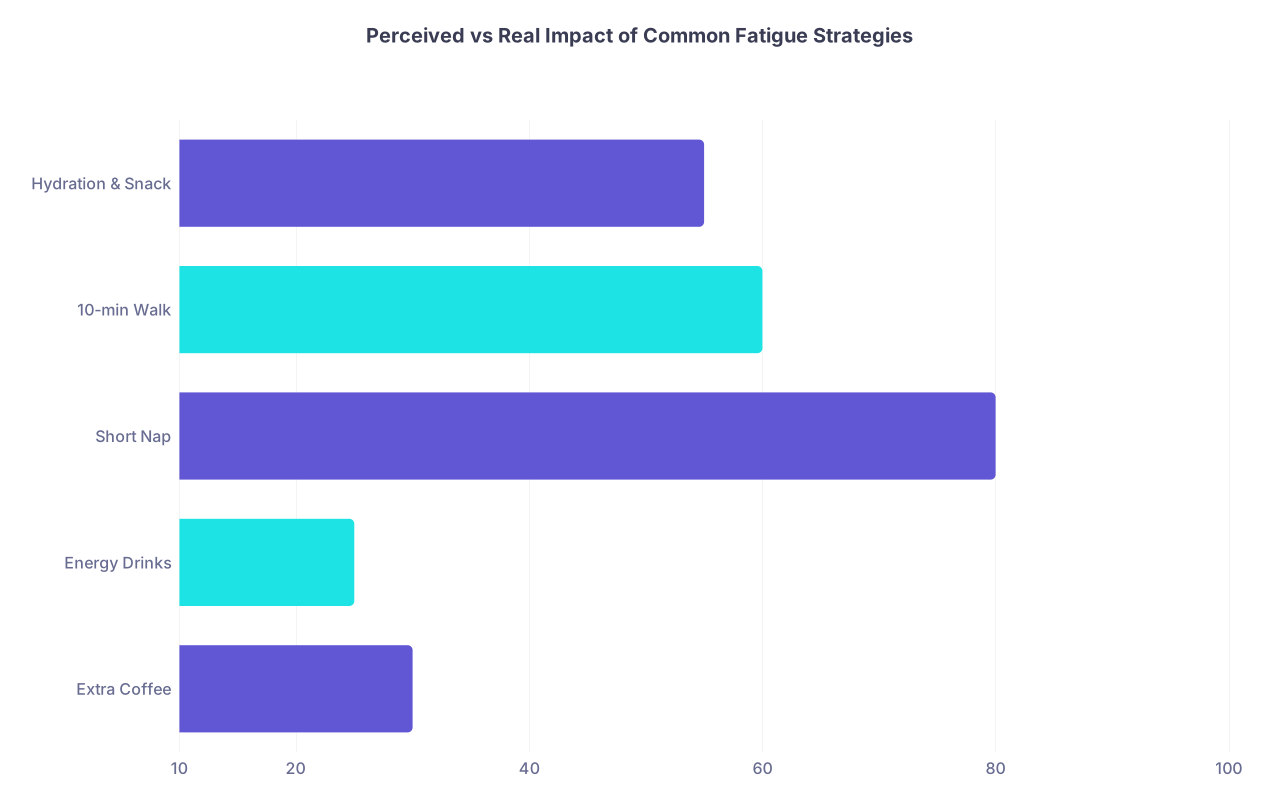
| Category | Value |
|---|---|
| Extra Coffee | 30 |
| Energy Drinks | 25 |
| Short Nap | 80 |
| 10-min Walk | 60 |
| Hydration & Snack | 55 |
People reach for nonsense when they’re tired. More caffeine. Another energy drink. Sugar bomb from the vending machine. It tricks you into feeling more awake, while your actual higher-order thinking is still garbage.
Things that help a little but do not fix your judgment:
- Coffee after midnight (helps attention, not complex reasoning)
- Blasting cold water on your face
- Pacing around the unit
Things that legitimately improve performance in the short term:
- A real 15–20 minute nap, eyes closed, off the unit if possible
- A quick walk outside if you can manage it (even 5–10 minutes)
- 250–500 mL of water + real food with protein and some carbs
You’re not trying to feel “peppy.” You’re trying to pull yourself from “actively unsafe” back to “limited but functional.”
One pattern I see in responsible residents:
- They front-load safety tasks before the fatigue cliffs. For example, on a long call:
- Before 3 a.m.:
- Clean up any pending critical labs to check
- Reassess the top 2 sickest patients
- Make sure there are no “forgotten” consults or pending imaging with no plan
- After 3 a.m., their brain is mostly on maintenance mode, not original heavy decision-making unless absolutely required.
- Before 3 a.m.:
You want the dumbest, simplest things on your plate when you’re at your worst.
Night Float and 28-Hour Call: Special Danger Zones

Different systems, same enemy.
Night Float
Risk pattern:
- Chronic partial sleep deprivation
- Flattened affect that blunts your concern level
- “Everything feels the same” syndrome — you stop feeling urgency
The big mistake: normalizing how wrecked you are by week 2–3. That’s when people start auto-piloting: signouts barely skimmed, cross-cover issues all treated as “probably nothing.”
Your countermeasures:
- During sign-out, write down the 3 patients people are most worried about. Those get in-person reassessments early in the night. No excuses.
- Create a tiny paper checklist you keep in your pocket for cross-cover calls:
- New pain? Vitals, last labs, last imaging, exam.
- New fever? Vitals, cultures, source check, fluid status.
- “Nurse worried”? Go see them. Full stop.
24–28-Hour Call
This is where “I’ll push through and sleep after” is lethal.
Studies are clear: after ~24 hours awake, your cognitive performance drops to legally drunk levels. You wouldn’t write chemotherapy orders after a few beers. But residents try to admit septic patients at hour 25 on zero sleep.
Time-box your expectations:
- First 12–16 hours: you’re reasonably functional. Do complex stuff here.
- 16–24 hours: triple-check anything high-risk (anticoagulation, insulin, complex onc patients).
- Beyond 24 hours: you’re trying not to hurt anyone. That’s the primary goal.
If at hour 25 you’re alone, drowning, and feel your brain shutting down, it’s not heroic to “just get through the last few consults.” It’s dangerous. Call your senior/attending early, not after something crashes.
You’re Not Weak for Respecting Fatigue. You’re Professional.

Here’s the reality: the residents I trust the most are not the ones who brag about grinding through six nights straight. They’re the ones who:
- Admit when they’re hitting the wall
- Have systems that catch their own errors
- Ask for a second set of eyes before finalizing big decisions while exhausted
- Walk away post-call on time so they’re safe the next day
You will have shifts where you are unavoidably hammered. Sick services, understaffed nights, winter respiratory season, disasters. That’s baked into the job.
What you can’t afford is pretending those shifts don’t affect your judgment.
The mistakes residents regret most are very often fatigue-driven:
- The kid they “didn’t re-check” because notes were behind
- The chest pain they downplayed because “stress test was normal 6 months ago” and it was 4:30 a.m.
- The potassium they replaced but never rechecked, because the pager wouldn’t stop and they were mentally done
Those regrets don’t go away. You just build your career around trying not to repeat them.
FAQ (Exactly 3 Questions)
1. How do I tell the difference between normal residency tired and truly unsafe fatigue?
Normal residency tired: you’re sleepy, maybe irritable, but can track conversations, hold multiple problems in mind, and catch yourself when you almost make a mistake. Unsafe fatigue: you keep rereading the same line, you forget labs you just looked at, you feel weirdly detached from obviously serious situations, you make simple ordering or dosing mistakes you never make. If you start surprising yourself with how sloppy you’re getting, that’s not “normal tired.” That’s a safety risk that needs escalation and redistribution of work.
2. Won’t I be seen as weak or less committed if I admit fatigue is affecting my decisions?
You might get comments from the old-school crowd. Ignore most of them. Framing matters: you’re not asking to go home early because you’re “tired,” you’re flagging a patient safety concern because of impaired cognition. The attendings who actually sign their names on your notes care about safety more than bravado. Over a career, the residents who recognize limits are trusted more, not less. The ones who pretend to be invincible eventually have a big enough mistake that no one forgets.
3. What’s one concrete change I can make tomorrow to reduce fatigue-related judgment errors?
Start with two things: 1) build a short personal checklist you run before signing out or discharging any moderately sick patient (diagnosis, vital trends, key labs, meds changes, follow-up, explicit red-flag instructions), and 2) create a habit that whenever you’re on nights or post-call and your brain says “they seem fine,” you must verify with at least one objective piece of data (new vitals, lab, or documented reassessment). Those two alone won’t make you rested, but they will catch a scary number of the errors tired residents regret most.
If you remember nothing else:
- Fatigue doesn’t care how smart or dedicated you are; it will wreck your judgment if you let it.
- Systems, checklists, and early escalation protect you when your brain can’t.
- Admitting you’re too tired to be safe is not weakness; it’s how you stop one bad night from defining your entire career.