The residents who keep breaking duty hours rarely realize which habits are sinking them—until the program director spells it out in a remediation meeting.
You’re not “just working hard.” You’re creating a pattern that looks unsafe, unprofessional, and eventually untrainable. Chronic duty hour violations are not a badge of honor; they’re a red flag. For you. For your program. For the ACGME.
Let me be blunt: people do not usually get in trouble for one overlong call. They get in trouble for the same bad habits, repeated and ignored.
This is about those habits—and how to kill them before they kill your reputation.
The Myth That “I’ll Just Stay Until It’s Done” Is Noble
This is the most common and most dangerous lie residents tell themselves.
“I’ll just stay an extra hour or two so I don’t burden the team.”
No. That mindset is how a “hard‑working” intern becomes “the resident who can’t finish on time” in everyone else’s eyes.
Red‑flag behaviors in this category
- Routinely staying 1–3 hours late “to clean up”
- Refusing to hand off “easy” tasks like discharge summaries or calls to families
- Redoing others’ work instead of accepting “good enough” when appropriate
- Volunteering to “just finish the list” every single day
Here’s what it looks like in practice:
- The intern who “just” updates every problem list to perfection at 5:30 pm.
- The senior who insists on personally rewriting every admission H&P “so it’s right.”
- The resident who calls every single SNF to “make sure they got the discharge summary,” instead of handing off the task.
You think you’re helping. Your PD thinks you can’t manage workload.
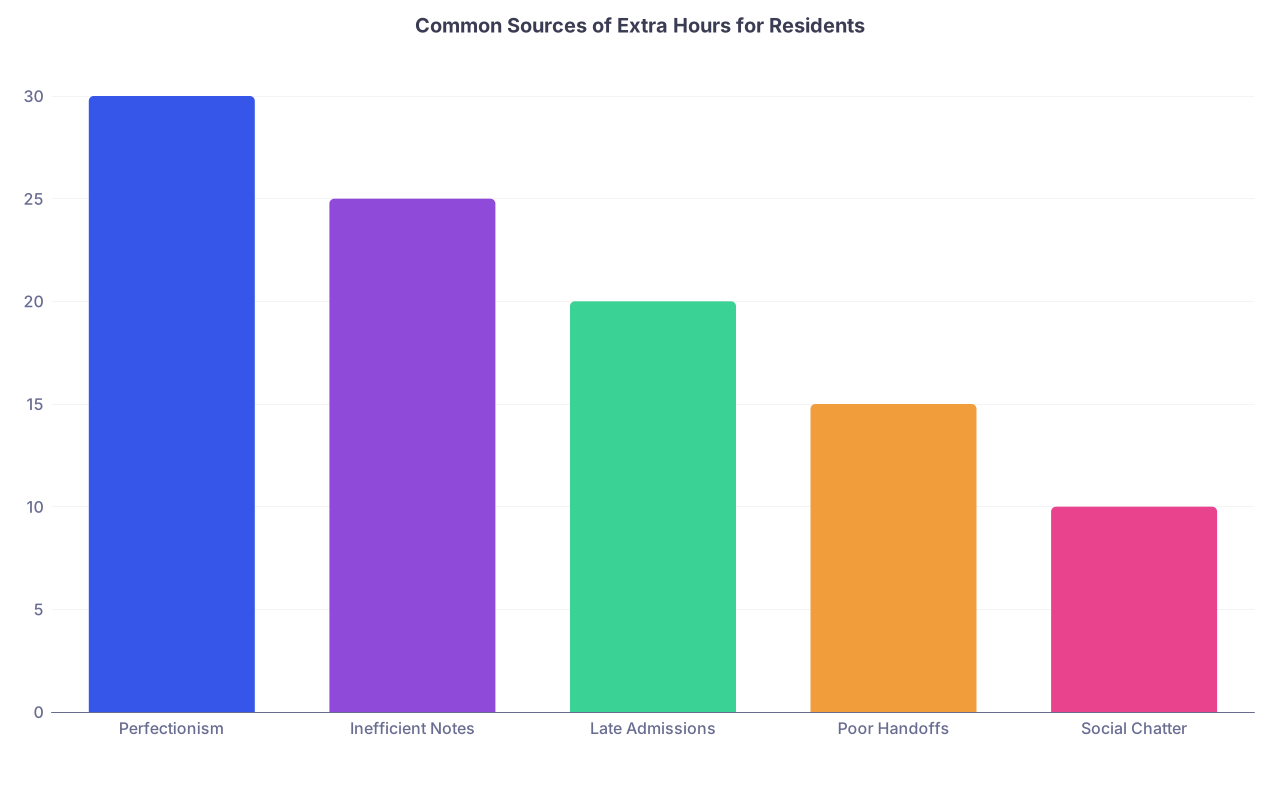
| Category | Value |
|---|---|
| Perfectionism | 30 |
| Inefficient Notes | 25 |
| Late Admissions | 20 |
| Poor Handoffs | 15 |
| Social Chatter | 10 |
How to avoid this trap
You must draw an internal line:
- Decide your hard stop time each day based on your schedule.
- In the last 60–90 minutes, shift focus to:
- essential orders
- clear sign‑out
- time‑critical tasks
- Hand off non‑urgent things, even if they’re “yours.”
If you feel guilty leaving something, ask yourself:
“Is this unsafe if I hand it off, or just uncomfortable for my ego?”
If it’s ego, sign it out and walk out.
Sloppy Time Tracking: The Silent Career Suicide
If you’re regularly under‑reporting your hours “to avoid drama,” you’re making a serious mistake.
Programs get cited when reported hours don’t match reality. Eventually someone talks. Or the ACGME survey exposes the disconnect. If you’re the one gaming the system, you become the liability.
I’ve seen this play out: one resident honestly logs 82 hours/week for three periods in a row. PD pulls logs. A bunch of others show 58–60 with the same workload. Guess who looks honest and overwhelmed, and who looks like a liar?
Red‑flag habits around duty hour logging
- Clicking the same “default” times every shift without thinking
- Logging hours at the end of the month from memory
- Under‑reporting “just this once” because “we were slammed”
- Marking at‑home call as zero because “I wasn’t in the hospital”
- Ignoring the rule that all work counts: EMR from home, phone calls, texts, studying required cases
| Pattern | Risk for Problems |
|---|---|
| Always exact shift times | Low |
| Always rounded down | Medium |
| Often >80 but accurately logged | Mixed (honest but flagged) |
| Always 60 despite heavy rotations | High |
| Large mismatch vs co-residents | Very High |
What you should be doing instead
- Log the same day or at least twice a week.
- Count:
- Pre‑rounding at home in the EMR
- Required notes and calls done from home
- Required conferences
- When you’re over:
- Record it accurately.
- Tell your chief or PD before it becomes a pattern.
Do not try to “protect” the program by lying. Protect yourself by being accurate and proactive.
Disorganized Pre‑Rounds and Notes That Eat Your Day
Chronic violators almost always have this in common: they’re painfully inefficient with basic daily work.
Not bad doctors. Just bad systems.
The disorganization red flags
- You start notes before pre‑rounds, then rewrite everything after seeing the patient.
- You open 30 browser tabs and bounce between patients with no plan.
- You round without a checklist or structured template.
- You constantly re‑read old notes because you didn’t summarize key points earlier.
- You chart in the most time‑consuming part of the day—like mid‑rounds or just before sign‑out.

Typical pattern of an inefficient day
- 6:30 am–7:30 am: Pre‑rounds, but no brief notes.
- 7:30 am–11:30 am: Rounds, taking long, disorganized notes on paper.
- 11:30 am–3:00 pm: Start progress notes from scratch, flipping back and forth.
- 3:00 pm–6:00 pm: Orders, calls, pages, then back to incomplete notes.
- 6:00 pm–8:00 pm: “Just finishing notes” while night team is already there.
By the time you leave, you’ve violated hours. But not because of complex medicine. Because your workflow is a mess.
How to fix this before it burns you
- Use one standard note template for each service.
- During pre‑rounds:
- Type a very brief, skeletal note or at least a problem list update.
- During rounds:
- Add quick bullets to that same note. Not on three different scraps of paper.
- Block specific times:
- 10:30–11:30 am: finish AM notes on stable patients.
- 2:00–3:00 pm: complete remaining notes and DC summaries.
- Aim to have 80–90% of notes done by mid‑afternoon on most days.
If your notes regularly push you 1–2 hours past your shift end, your note structure is wrong. Not your workload.
The “Always Available” Resident Who Never Leaves
Some of you make this mistake because you care too much about being liked.
You respond instantly to every text. You never say no to consults. You answer questions from nurses you barely know because “they’re just trying to help.”
Good intentions. Terrible boundaries.
Red‑flag patterns of being too available
- Staying after sign‑out “in case something comes up”
- Accepting new tasks from nurses after you’ve signed out “because I’m here anyway”
- Being the unofficial tech support / EMR expert / social worker on your team
- Taking consult calls or social calls on your personal phone after leaving
- Never saying, “Please page the on‑call resident; I’m off.”
This is how your day magically becomes 13–14 hours. Not because of acuity. Because you refuse to transition responsibility when your shift ends.
How to create healthy, professional boundaries
- At sign‑out, say clearly: “I’m off now. Night float is covering for anything from here.”
- If approached after sign‑out:
- “I’ve already signed out—can you please page night float? They’re aware of the patient.”
- Do not:
- Open the EMR at home “just to check on one lab” unless you’re on call.
- Text the team late with updates when you’re off.
If you’re on home call or jeopardy, that’s different. But casual, unpaid, undocumented “help” is exactly how residents blow past their duty hours without even realizing it.
Chronic Procrastination on Discharges and Orders
Another pattern I see over and over: residents who leave the most time‑consuming tasks for the worst possible time of day.
Especially discharges.
The procrastination pattern
- You round on the patient at 9 am, know they’re going home.
- You tell them, “We’ll get you out by lunchtime.”
- You don’t start the discharge summary until 3 pm.
- Pharmacy has questions at 4 pm.
- Family shows up at 5 pm with concerns that could have been addressed earlier.
- You walk out at 7:30 pm, seething—but you did it to yourself.
Now repeat this with 3 patients. For a week. It turns into a chronic 70–80 hour week.
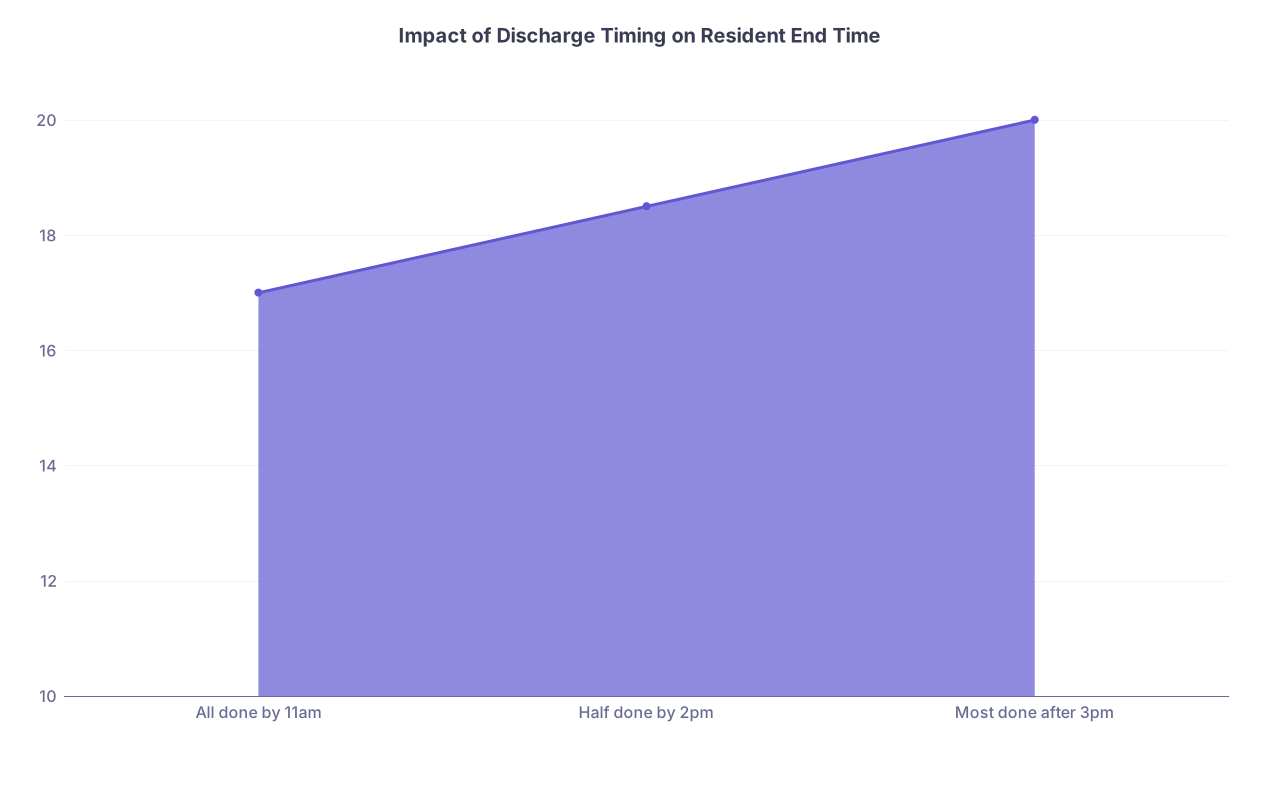
| Category | Value |
|---|---|
| All done by 11am | 17 |
| Half done by 2pm | 18.5 |
| Most done after 3pm | 20 |
(End time is approximate clock-out time in 24-hr format.)
How to stop discharge chaos from wrecking your hours
- As soon as you know someone is going home today:
- Start the DC summary before rounds (or right after).
- Place home med recs early, leave final tweaks for later.
- Put in DC orders with “anticipated time” if your system allows.
- Batch DC tasks:
- Do all discharge summaries in a 60–90 minute block late morning.
- Set a personal rule:
- No routine discharges started after 3 pm unless unavoidable.
The residents who get home on time? They’re not lazier. They front‑load the stuff that explodes if delayed.
Bad Communication With Seniors and Chiefs
One of the fastest ways to turn occasional long days into a documented pattern of violations is silence.
You get crushed one week. Then another. You say nothing. You just keep logging 82–85 hours and hope no one notices.
They will notice.
And they will ask why you didn’t speak up sooner—because duty hour compliance is not optional. It’s a shared responsibility.
Red‑flag communication behaviors
- Never telling your senior that your list is unmanageable
- Keeping admissions when you’re already behind because “I don’t want to look weak”
- Failing to mention repeated late admissions at sign‑out to the chief
- Not tracking when in the week you’re breaking the 80‑hour rule
- Only raising concerns at evaluation time when it’s too late to adjust schedules

| Step | Description |
|---|---|
| Step 1 | Heavy Workload |
| Step 2 | Resident stays late silently |
| Step 3 | Chronic late days |
| Step 4 | Accurate high hour logs |
| Step 5 | Program flagged for violation pattern |
| Step 6 | PD investigates resident |
| Step 7 | Remediation or formal counseling |
What competent, not‑needy communication looks like
You don’t have to whine. You do have to be clear.
Examples:
- “I’m at 68 hours already and still have 2 days left this week. Can we redistribute new admissions today?”
- “We’ve had 3 days straight of post‑5 pm admits; I’m worried about hitting violations. Can we loop in the chief to see if this is a pattern?”
- “I can stay late tonight for safety, but if this keeps happening we’re going to have duty hour issues. How do you want me to log this?”
Program leadership would rather hear this early than read about it in your ACGME survey responses months later.
Toxic Culture: Confusing Heroics With Professionalism
There’s a culture problem in some places. You’ve heard versions of this:
- “Back when I was an intern, we worked 120 hours a week and survived.”
- “Real surgeons don’t care about duty hours.”
- “If you’re leaving on time, you’re not seeing enough.”
This is nonsense. And it’s how residents learn to ignore boundaries and lie on logs.
Cultural red flags you should not internalize
- Seniors bragging about “no‑sleep” calls and expecting you to mimic it
- Attendings rolling their eyes when you mention duty hours
- Peers shaming you for leaving on time: “Half day?”
- Chiefs prioritizing coverage optics over safety and compliance

Here’s the reality: the ACGME doesn’t care how tough your senior thinks you should be. They care if you and your program break rules that exist to protect patients and trainees.
How to protect yourself in a macho culture
- Stick to accurate logging. Do not join the under‑reporting club.
- Anchor your language to patient safety and ACGME rules, not “I’m tired.”
- “I’m concerned about my ability to make safe decisions if I stay longer.”
- “The ACGME requirements are clear; I need to log this accurately.”
- Find at least one ally:
- A reasonable attending
- A chief resident who actually reads the manual
- A faculty mentor
You cannot fix a toxic culture alone. You can refuse to be the one who takes the fall for it when the citation drops.
Personal Life Chaos That Spills Into Work Hours
Not everything is the hospital’s fault. Some duty hour problems are self‑inflicted by pure life disorganization.
I’ve seen residents who:
- Show up 30–45 minutes early every single day because they “need time to get settled,” but then mostly scroll or chat
- Take long, frequent personal calls during the day, then stay late to finish work
- Schedule personal appointments in the middle of the day, then “pay it back” on the other end of the shift
- Stay at the hospital after sign‑out to socialize, then count that as “working late”
Those hours still count. You’re still in the building, still available. You look like someone who can’t separate work and life.
Red‑flag lifestyle mistakes
- Chronic sleep deprivation from optional late‑night gaming/scrolling/TV
- Commuting from an hour away when you had options closer
- Never having food prepared, so you waste time daily figuring out meals
- Using work time as your default “life admin” hour
These things compound. They make you slower, more scattered, and more likely to stay late for legitimate tasks.
What a resident with their life together does
Not perfect. Just intentional.
- Lives reasonably close or adjusts commute expectations
- Has basic systems:
- Default breakfast
- Simple packed lunch or reliable cafeteria routine
- Set bedtime on heavy rotations
- Uses off days for:
- Appointments
- Life admin
- Errands
This isn’t about being a monk. It’s about not sabotaging yourself and then blaming duty hours.
When Chronic Violations Become a Professional Problem
Occasional violations? Normal. That’s why the rules allow flexibility.
Chronic violations? That’s different. That’s when program leadership starts asking uncomfortable questions:
- “Why is this resident always the one staying late?”
- “Is their time management poor?”
- “Are they unsafe if they can’t finish in a reasonable day?”
- “Are we at risk for a citation because of them?”
You do not want to be the outlier when the PD pulls a report of logged hours.
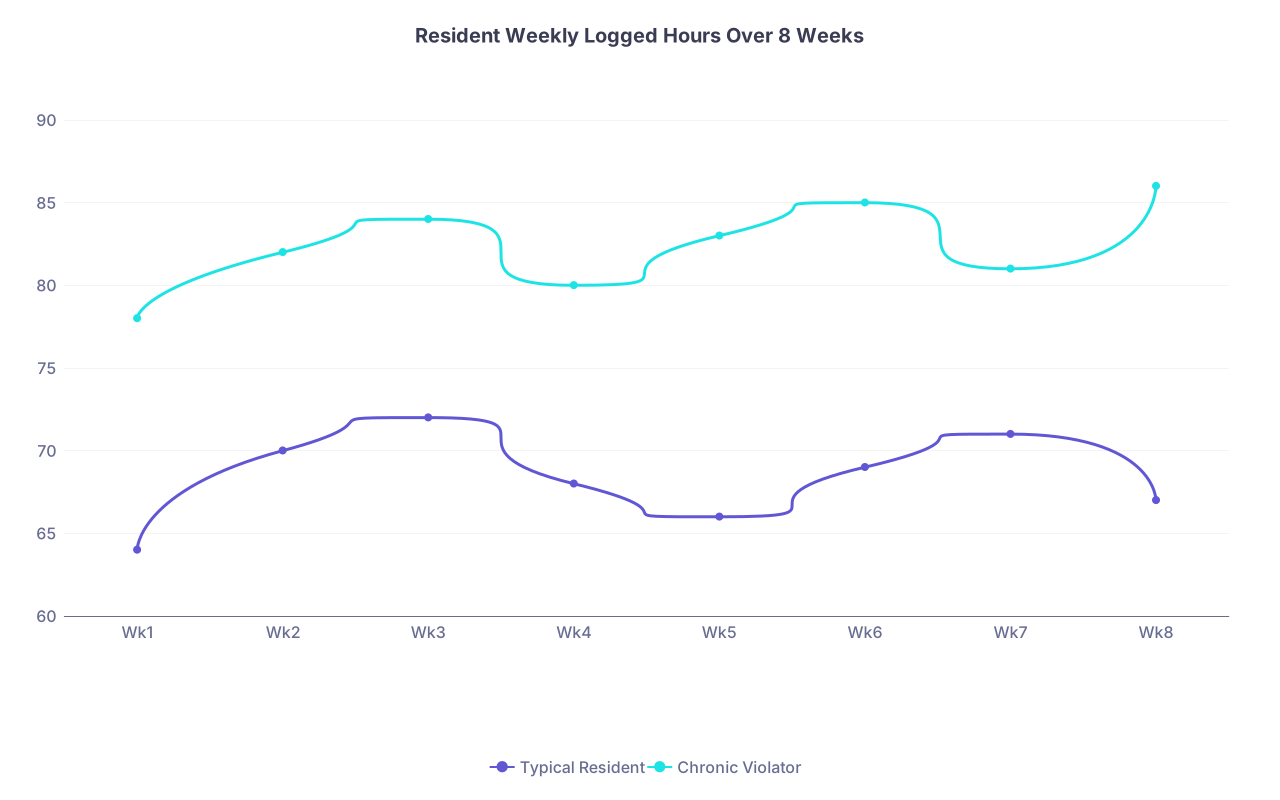
| Category | Typical Resident | Chronic Violator |
|---|---|---|
| Wk1 | 64 | 78 |
| Wk2 | 70 | 82 |
| Wk3 | 72 | 84 |
| Wk4 | 68 | 80 |
| Wk5 | 66 | 83 |
| Wk6 | 69 | 85 |
| Wk7 | 71 | 81 |
| Wk8 | 67 | 86 |
That red line becomes a story someone has to explain. Don’t let that someone be you.
The remediation path you want to avoid
I’ve watched this play out:
- Repeated high hour logs or survey concerns.
- PD meeting: “We’re worried about your efficiency and judgment.”
- Assigned “coaching” with senior or faculty.
- Formal documentation in your file.
- Potential impact on:
- Promotion
- Letters of recommendation
- Fellowship applications
All because no one separated real workload issues from fixable bad habits early.
What You Should Do This Week
Do not wait for your chief or PD to tell you there’s a problem. Assume you have blind spots and go looking for them.
Here’s a concrete move you can make today:
Pull up your last 4 weeks of duty hour logs and your current rotation schedule.
Then:
- Identify:
- Which days you stayed late.
- Roughly why (notes, discharges, late admits, “just helping,” etc.).
- Write down the single biggest pattern you see.
Not five things. One pattern. - Choose one specific change for the next 7 days:
- “All discharges started before 11 am.”
- “No routine EMR use from home.”
- “Hard sign‑out at 5:30 pm with clear hand‑offs.”
- “Finish 80% of notes by 2 pm.”
Then commit to it for one week and watch what happens to your end time.
Open your schedule right now and pick the next heavy day. Decide in advance: what’s your hard stop, and what habit are you refusing to repeat?