This article is for educational purposes only. It is not financial advice, not legal advice, and not tax advice. Figures vary by individual circumstances, so consult a qualified professional before acting.
The 2 AM Audit: A Resident's Nightmare Scenario
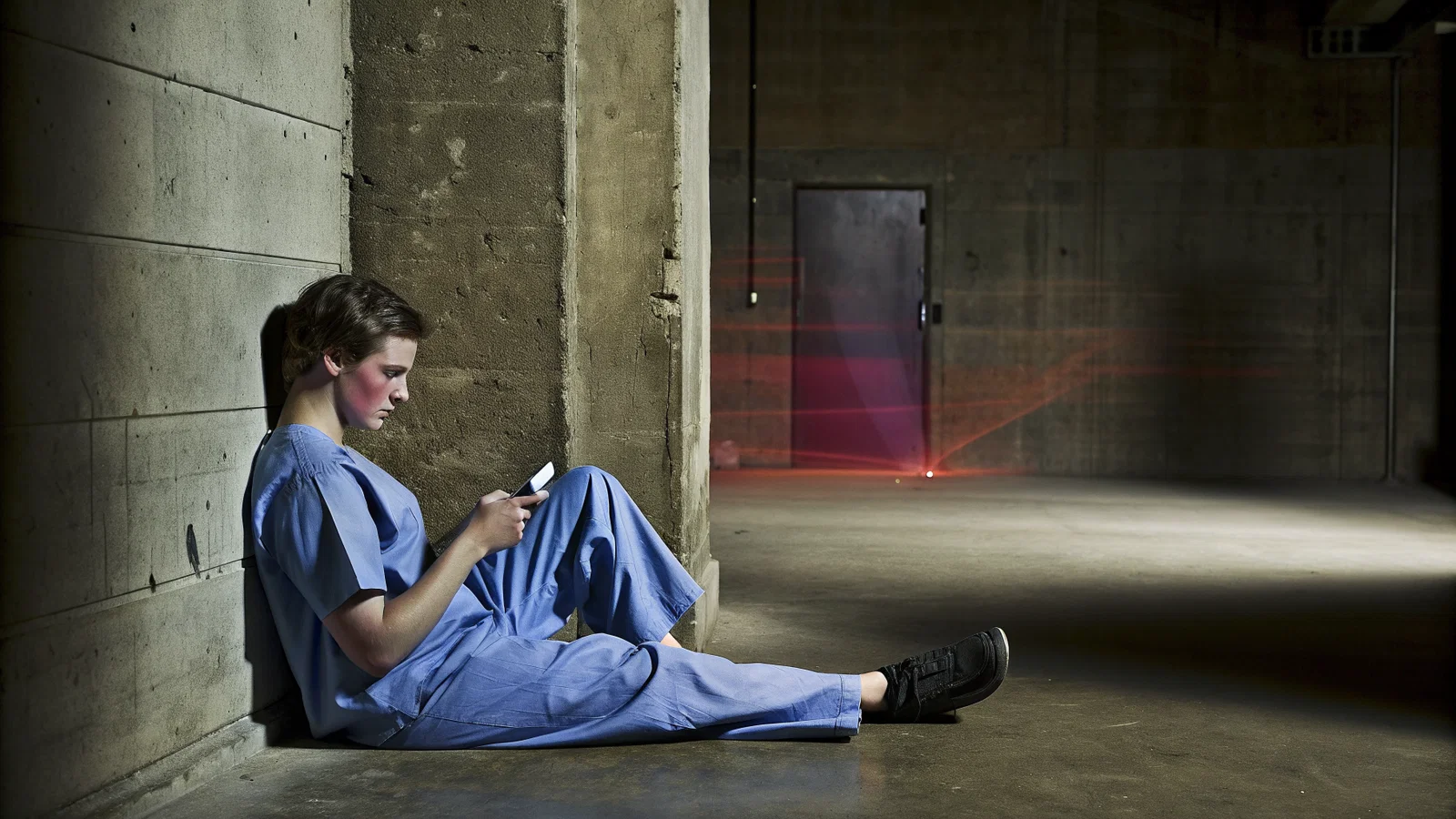
The hospital breathes differently at 2 AM. The clatter of the daytime census fades. The fluorescent lights hum a lower frequency. You are covering three ICU patients, one of whom just spiked a fever, and your pager has been quiet for exactly eleven minutes, which means something terrible is about to happen.
Then your phone lights up. Not a page. A notification from the duty hour tracking software. "Automated Alert: Potential 80-Hour Violation Detected. Please review and attest."
Your stomach drops. Not because you harmed a patient. Not because you missed a critical lab. Because a badge reader in the cafeteria logged your exit at 6:47 AM yesterday, and the algorithm calculated that your in-house time exceeded the weekly threshold by thirty-two minutes.
Let me break down exactly what is happening in that moment and why it matters.
That notification is not benign. It is a data point. It will appear in the program coordinator's Monday morning report. It will sit in a dashboard that the ACGME reviewer will comb through during the next site visit. And depending on whether you train at a university hospital or a community program, the consequences of that alert, and the infrastructure that generated it, could not be more different.
This is the core of the duty hour audit divide. Academic medical centers and community hospitals operate under the same ACGME Common Program Requirements, but the enforcement mechanisms, tracking technology, audit frequency, and, critically, the culture surrounding compliance vary dramatically. The data reflects this divergence, and it affects everything from resident wellness to patient safety outcomes.
Academic Programs: The Fortress of Compliance
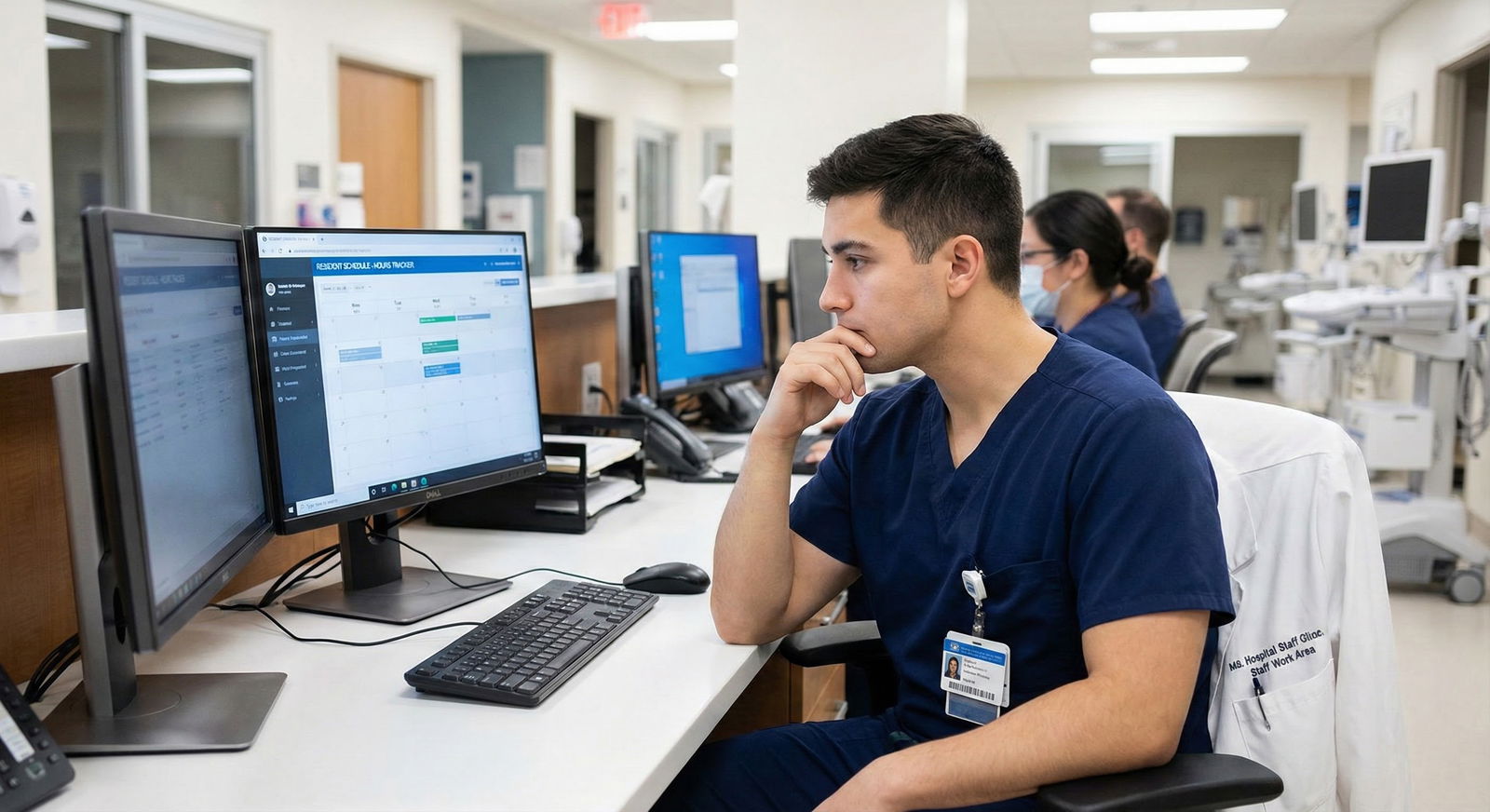
Academic medical centers treat duty hour compliance as an institutional risk management priority. The ACGME sets the baseline, 80 hours per week averaged over four weeks, one day off in seven, call no more frequent than every third night, but academic programs build the fortress around it.
The technology stack alone separates them. Smart badges with RFID tracking, automated time-and-attendance systems like ClockShark, Verite, or internally developed platforms tied to the electronic health record, these are standard issue at most university hospitals. When you badge into the ICU at 5:52 AM, that timestamp feeds directly into a compliance dashboard. When you badge out at 7:03 PM, the system calculates your shift length in real time. There is no forgetting. There is no rounding in your favor.
The "employee versus trainee" distinction drives this. Academic hospitals often employ residents through formal GME offices with dedicated HR infrastructure. The program coordinator is a full-time professional whose job includes pulling weekly compliance reports. The designated institutional official, the DIO, oversees compliance across every residency program in the institution. That means a violation at one program can trigger an institutional review. The stakes are structural, not just departmental.
Research obligations compound the rigidity. Academic schedules must accommodate grant reporting, research time, and teaching responsibilities. The rotation calendar is often locked months in advance. When a resident violates duty hours because they stayed late for a lecture or a grant deadline, the system flags it immediately, and the program director must document a corrective action plan.
The audit culture at academic programs is relentless. Random spot-checks happen monthly in many institutions. The ACGME requires annual updates, but academic programs often run internal audits quarterly or even monthly. I have seen program coordinators who can recite their compliance rate to the decimal point, 96.3 percent this quarter, down from 98.1 percent last quarter, and they know exactly which rotation caused the dip.
Noncompliance carries immediate consequences. A single flagged violation triggers an email chain, resident, chief, coordinator, program director. Repeat violations go to the clinical competency committee. The infrastructure exists to catch problems early. It also exists to generate a paper trail that protects the institution during accreditation reviews.
The fortress works. But it has cracks. High patient volume at academic centers means residents sometimes cannot leave when their shift ends. The system logs them as noncompliant even when the violation is a staffing shortage or a code blue that ran long. The data captures the violation but not the context. And that distinction matters when you are the resident sitting in a corrective action meeting for something you could not control.
Community Programs: The Wild West of Scheduling
Community programs operate in a fundamentally different environment. The IT infrastructure is thinner. The staffing is leaner. The tracking systems, if they exist at all, rely heavily on the honor system.
Most community hospitals lack centralized GME offices with the budget and staffing of their academic counterparts. The program coordinator at a community hospital might handle three or four programs simultaneously, often without dedicated compliance software. Duty hour tracking frequently depends on resident self-reporting through a web portal, a system that is only as accurate as the resident filling it out at the end of a fourteen-hour shift.
The private practice reality shapes everything. Community hospitals are often physician-owned or part of smaller regional health systems where the IT budget prioritizes billing and clinical operations over GME compliance tracking. Smart badges may exist for security purposes but are rarely integrated with duty hour software. I have seen community programs where the "tracking system" is literally a spreadsheet maintained by a chief resident who updates it weekly based on verbal reports from the team.
Moonlighting complicates the picture further. Community programs often allow or implicitly tolerate moonlighting shifts that blur the boundary between formal duty hours and outside employment. A resident who finishes a twelve-hour shift at the community hospital and then picks up a six-hour shift at a freestanding ER down the street is technically accumulating duty hours that count toward the 80-hour limit, but only if they report it. The ACGME requires programs to track all work, including moonlighting at affiliated institutions. In practice, community programs rarely have the infrastructure to enforce this.
Resource constraints create a more insidious problem. Smaller teams mean residents cover multiple roles simultaneously. The senior resident on a community floor is the provider, the cross-cover for admissions, the person fielding nursing calls, and sometimes the one transporting patients to imaging when transport staff are unavailable. Every minute spent in the hospital counts toward duty hours, but the informal nature of these tasks makes them invisible to any tracking system that relies on badge swipes or formal shift start and end times.
The result is predictable. Compliance variance runs higher at community programs. Unintentional violations pile up because nobody is counting in real time. A resident who worked 84 hours this week will not know it until they sit down on Sunday to reconstruct their schedule from memory. By then, the violation has already occurred, and the only corrective action available is documentation after the fact.
The chart above illustrates the pattern. Academic programs see more violations related to meal breaks and high-volume shifts, the infrastructure catches the violations, but the clinical workload prevents compliance. Community programs see higher rates across every category, particularly sleep deprivation and late attestations, because the tracking infrastructure itself is the bottleneck.
Data Deep Dive: What the Numbers Reveal
Let me get specific about the data, because the aggregate statistics obscure important patterns.
Compliance rates at academic programs hover above 95 percent in most published surveys. Community programs report rates between 78 and 85 percent, though this number is almost certainly inflated by underreporting. You cannot violate a threshold that nobody is measuring. The ACGME's own annual data reports show that academic programs submit more violation reports per capita, which sounds paradoxical until you realize that better tracking surfaces more violations. The community programs with the "cleanest" compliance records are often the ones with the least oversight.
The violation types tell a nuanced story. Academic programs struggle with missed meal breaks, a direct consequence of high patient volume and limited cross-coverage. When you have eight patients on a teaching service and your attending expects morning rounds at 7:30 AM, the thirty-minute meal break becomes a theoretical concept. The system logs the missed break. The program documents it. The resident eats a protein bar at the workstation. The violation is real, but the harm is primarily to the resident's wellbeing rather than to patient safety.
Community programs face a different violation profile. Sleep deprivation violations dominate. The on-call structure at many community hospitals remains closer to the traditional model, overnight call with minimal backup, frequent interruptions, and no protected post-call time because the day team is too small to absorb the loss. The data shows that residents at community programs are more likely to exceed the 16-hour continuous duty limit for interns and the 24-hour limit for senior residents. They are also less likely to report it because the tracking mechanism either does not exist or relies on self-attestation.
Audit frequency drives behavior. Academic programs that run monthly internal audits see a behavioral adaptation, residents become hyperaware of their logged hours and adjust their patterns to avoid flags. This is not always positive. I have seen residents leave the hospital before finishing notes because the badge reader was about to trigger a violation. The audit becomes a tail wagging the dog. Community programs that audit quarterly or annually create a different dynamic: residents do not think about duty hours until the audit is announced, at which point they scramble to reconstruct records that are already weeks or months old.
The paper trail gap is the most consequential difference. Academic programs generate a continuous digital record, every badge swipe, every login, every clinic check-in. When an ACGME reviewer asks for documentation, the data exists in exportable format. Community programs often rely on a combination of self-reported logs, call schedules, and retrospective reconstruction. The absence of real-time data means that audits at community programs are inherently subjective. The reviewer is trusting the program's self-report, which is based on resident self-report, which is based on memory. That is not an audit. That is a story.
The Human Cost: Burnout and Safety
The data reveals a paradox that does not get enough attention. Strict auditing, the academic model, can itself contribute to burnout. The constant surveillance, the anxiety of a potential violation, the feeling that a badge reader is managing your professional life, these are stressors that the ACGME did not intend but the compliance infrastructure creates.
I have talked to residents who describe the duty hour tracking system as a second boss. The attending tells you to stay and finish. The system tells you to leave. You are caught between clinical obligation and regulatory compliance, and neither side understands the other's constraints.
But here is the trade-off: the academic model's safety net, however stressful, prevents the systematic sleep deprivation that the community model tolerates. The data linking duty hour violations to medical errors is clear. Fatigue-related errors, medication errors, delayed recognition of clinical deterioration, communication failures during handoffs, occur at statistically higher rates in programs with lax tracking. A 2018 systematic review found that programs with robust compliance monitoring had a 15 to 20 percent lower rate of fatigue-related errors compared to programs with minimal oversight.

Resident autonomy is the tension underneath all of this. Safety regulations exist because the medical profession proved it could not regulate itself. The 80-hour workweek was not a suggestion, it was a mandate born from the Libby Zion case and decades of evidence that exhausted residents make dangerous decisions. But the regulatory response has created a culture where residents feel surveilled rather than supported. The audit treats the resident as a data point. The program treats the resident as a compliance risk. Neither approach addresses the underlying problem: the clinical workload exceeds the available hours.
The summary is blunt. Academic audits are burdensome, anxiety-producing, and sometimes counterproductive, but they provide a safety net that catches violations before they harm patients. Community audits are often reactive, retrospective, and underfunded, which means the first indication of a problem is often a patient outcome, not a dashboard alert.
Bridging the Gap
The dichotomy is clear. Academic programs lead in technology and compliance rigor but struggle with volume-driven violations and the psychological burden of constant surveillance. Community programs lead in clinical flexibility and autonomy but lag in tracking infrastructure, leaving residents and patients exposed to the consequences of unmonitored fatigue.
The future of duty hour auditing lies in portable, cloud-based tracking systems that work regardless of institutional size. A community program should not need a six-figure IT budget to know whether its residents are sleeping. The ACGME has pushed in this direction with simplified reporting requirements and the availability of off-the-shelf compliance platforms, but adoption remains uneven.
The data proves one thing clearly: the method of auditing differs dramatically between settings, but the goal, protecting the resident and the patient, does not. The programs that succeed are the ones that treat duty hour compliance as a clinical safety measure rather than an administrative checkbox. Whether the tracking system costs two hundred thousand dollars or two hundred, the question is the same. Did the resident rest? Did the patient get safe care? Everything else is logistics.