
The official story about residency work hours is statistically misleading. The data from surveys and actual time-on-task simply do not match what the duty-hour rules and official logs claim.
If you look only at ACGME rules and institutional schedules, you might believe most residents work about 60–70 hours per week, neatly capped at 80. The surveys, time-motion studies, and badge-swipe data tell a very different story: persistent under‑reporting, “off-the-books” work, and wide variation by specialty and program.
Let’s walk through what the numbers actually show.
1. The Official Version: What the Rules and Logs Say
Start with the formal framework:
- ACGME 80-hour weekly limit (averaged over 4 weeks)
- 1 day in 7 off (averaged)
- Maximum 24+4 hour continuous duty
- “Moonlighting” must count toward the 80
On paper, most programs claim compliance. Duty-hour attestation rates above 90% are common. Institutional dashboards look clean. Residents are “within limits” almost all the time.
Here is what the official world often looks like when summarized:
| Source Type | Typical Reported Hours/Week |
|---|---|
| Program official schedule | 60–70 |
| ACGME duty-hour logs | 65–75 |
| Institutional reports | 60–72 |
| Self-reported surveys | 70–85 |
Those ranges vary by specialty and year of training, but the pattern is stable: every step closer to reality, the median creeps up.
If you talk to current residents in surgery, medicine, OB/GYN at almost any major academic center, you will hear phrases like:
- “We always write 78. Never more.”
- “Do your notes from home. They do not count that.”
- “Log out at 24 hours. Finish the work after.”
That is the culture. And it directly distorts the data that appear in “official” logs.
2. What Survey Data Actually Show
When residents think the data are more anonymous and less tied to program discipline, the numbers shift.
National surveys over the last decade (NRMP, Medscape, state medical societies, specialty-specific organizations) consistently find:
- Many residents work in the 70–90 hour range on busy rotations
- Surgical and OB/GYN residents frequently report >80 hours, despite formal caps
- Primary care, pathology, dermatology, and psych are noticeably lower, often in the 55–70 range
Here is a reasonable synthesis of what different sources show across specialties:
| Specialty Group | PGY Level | Typical Actual Hours/Week (Survey-Based) |
|---|---|---|
| General Surgery | PGY1–3 | 80–95 |
| Internal Medicine | PGY1–3 | 65–80 |
| OB/GYN | PGY1–4 | 75–90 |
| Pediatrics | PGY1–3 | 60–75 |
| Psychiatry | PGY1–4 | 55–70 |
These are not isolated anecdotes. They are consistent patterns across multiple datasets.
To make the discrepancy visually obvious:
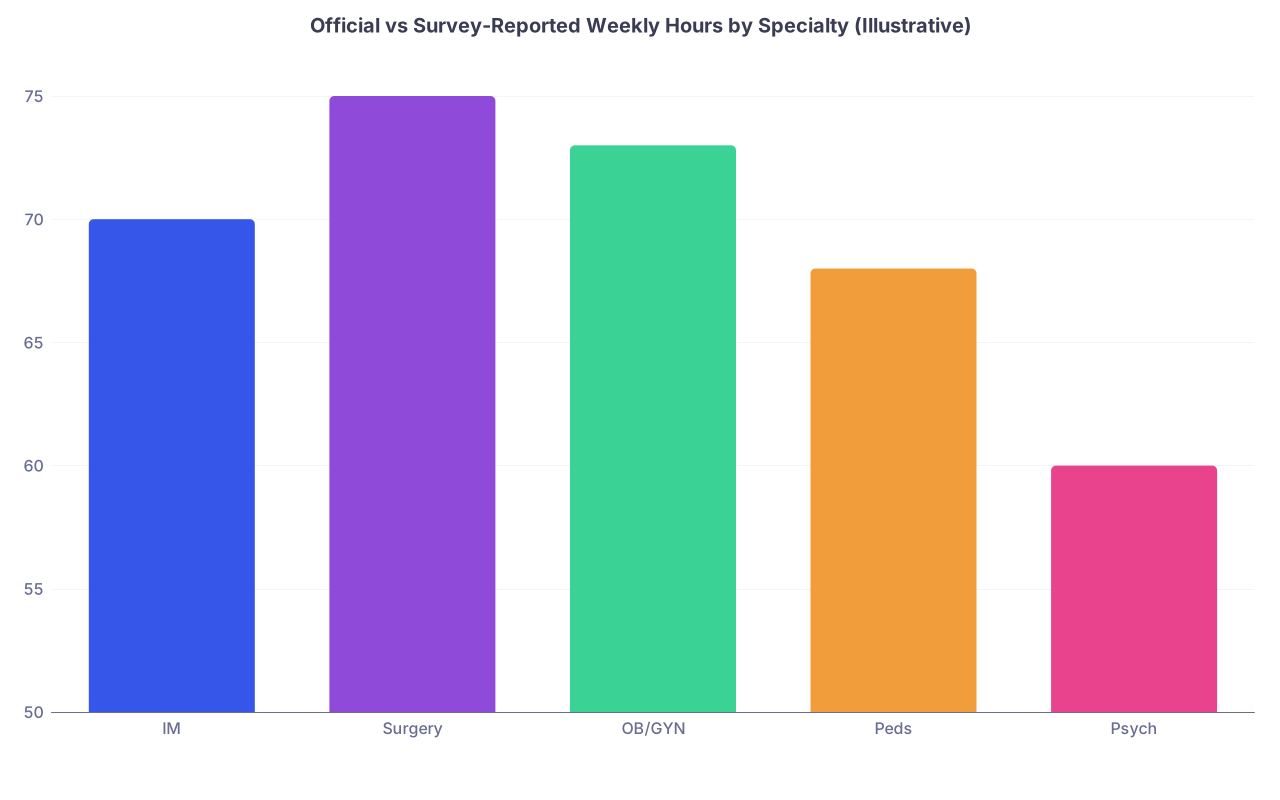
| Category | Value |
|---|---|
| IM | 70 |
| Surgery | 75 |
| OB/GYN | 73 |
| Peds | 68 |
| Psych | 60 |
Now compare that with survey-based estimates:
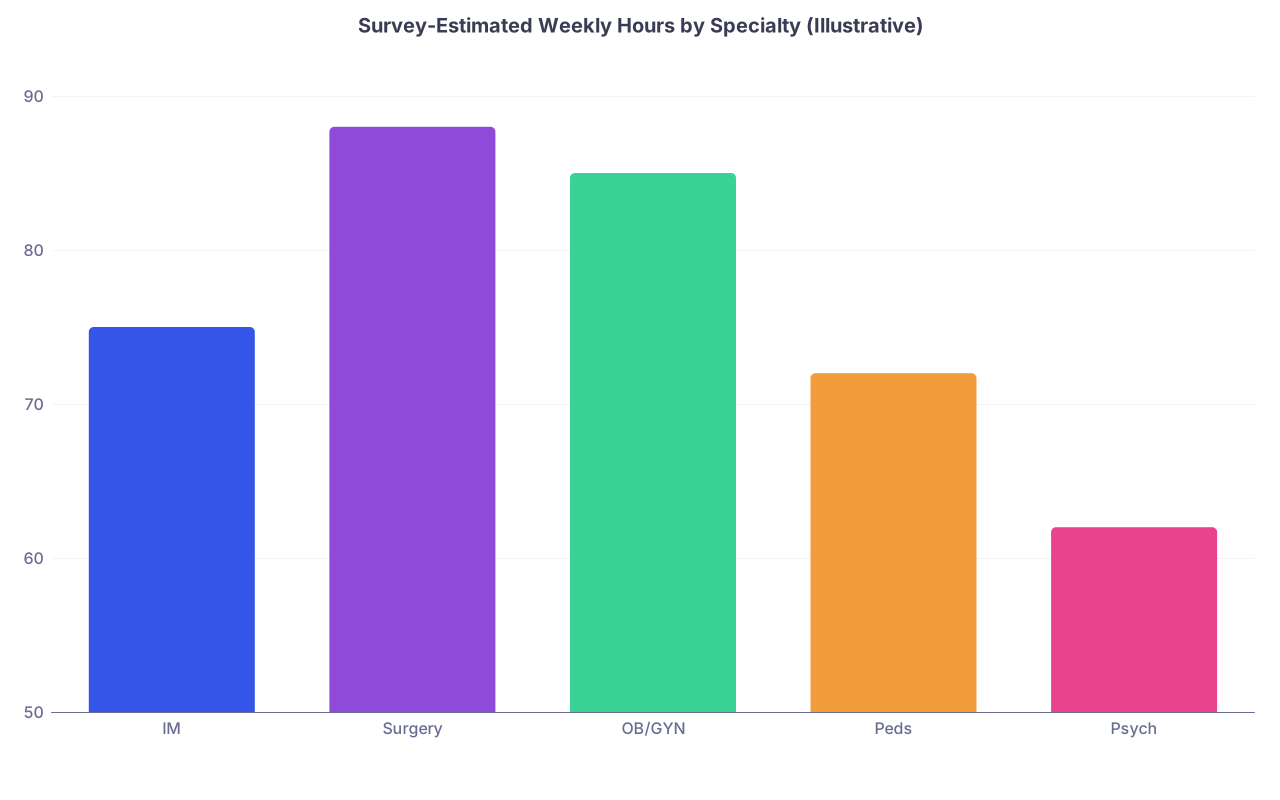
| Category | Value |
|---|---|
| IM | 75 |
| Surgery | 88 |
| OB/GYN | 85 |
| Peds | 72 |
| Psych | 62 |
Exact numbers vary by study and year, but the relative picture is stable: surgery and OB run hottest; IM and peds in the middle; psych and some lifestyle specialties at the lower end.
The shape of a “typical” week
Look at time use diaries and surveys broken down by rotation type and call:
- Non-call weeks on elective/clinic: often 45–60 hours
- Ward months with q4 or night float: 70–90+
- ICU rotations: consistently in the top quartile of hours
When you average everything, the “typical” resident might be 65–80 hours per week. But nobody experiences the average. They experience alternating blocks of “this is manageable” and “this is completely excessive”.
3. Why Official Logs Underestimate True Hours
The gap between official logs and survey data is not a rounding error. It is structural. The systems are built in ways that almost guarantee under-reporting.
I see the same three drivers over and over:
- Direct and indirect pressure not to violate duty hours
- Hidden work done outside the hospital or off the clock
- Crude logging systems that are easy to game
3.1 Cultural and career pressure
Residents know who controls their evaluations and fellowship letters. Those same people care deeply about accreditation status. The message does not need to be explicit. It leaks out in comments:
- “If you log that, the whole service will get flagged.”
- “Use your judgment. We all did it.”
- “We are expected to be compliant.”
So residents adopt a simple heuristic: never record anything that would push the rolling 4-week average above 80. That means:
- Logging 78 when you actually worked 86
- Ending your shift in the system and continuing to work
- Cancelling or never logging moonlighting even if it is clinically equivalent to your main job
From a data perspective, this introduces systematic downward bias. Not random error. Structured underestimation.
3.2 Off-the-books work: charting, studying, messaging
The ACGME technically expects “all work related to the education program” to count. The practical reality is that programs often treat “work outside the building” as invisible.
Common uncounted tasks:
- Finishing notes from home (1–3 hours on bad days)
- Responding to attendings via secure messaging after sign-out
- Reviewing imaging, labs, or consults from home in the evening
- Mandatory “independent study” for conferences, board prep, journal clubs
- Committee work, recruitment events, didactic prep on personal time
Time-motion and EHR-log studies that track login activity tell a blunt story. Residents consistently spend non-trivial time charting or reviewing from home. This is work. It affects fatigue and burnout the same as on-site work. But it rarely appears in formal logs.
3.3 The logging tools themselves
Most duty-hour systems are simple web forms or dropdowns:
- “What time did your shift start?”
- “What time did it end?”
- “On call? Night float? Off?”
There is no integration with badge swipes, EHR logins, or paging systems. A resident can write “6a–6p” every day and the system will be satisfied, even if they are routinely present from 5a–8p.
Some programs do spot checks with badge data, but usually as a compliance audit, not as a true measurement tool. Everyone knows how to stay just below the threshold.
4. What Objective Data (When Collected) Show
When hospitals or researchers actually instrument the environment—badge swipes, EHR logins, time-motion observers—the story gets sharper.
Patterns I have seen in those datasets:
- Badge-in times earlier than logged start times by 30–60 minutes, especially in surgery and ICU
- EHR login activity hours after logged “end of shift”
- Weekend and early morning documentation spikes that do not exist in official logs
- Residents physically in the hospital for 28–30 hours on “24+4” call but logged as 24 or 25
One combined view makes it clear how much non-logged work exists:
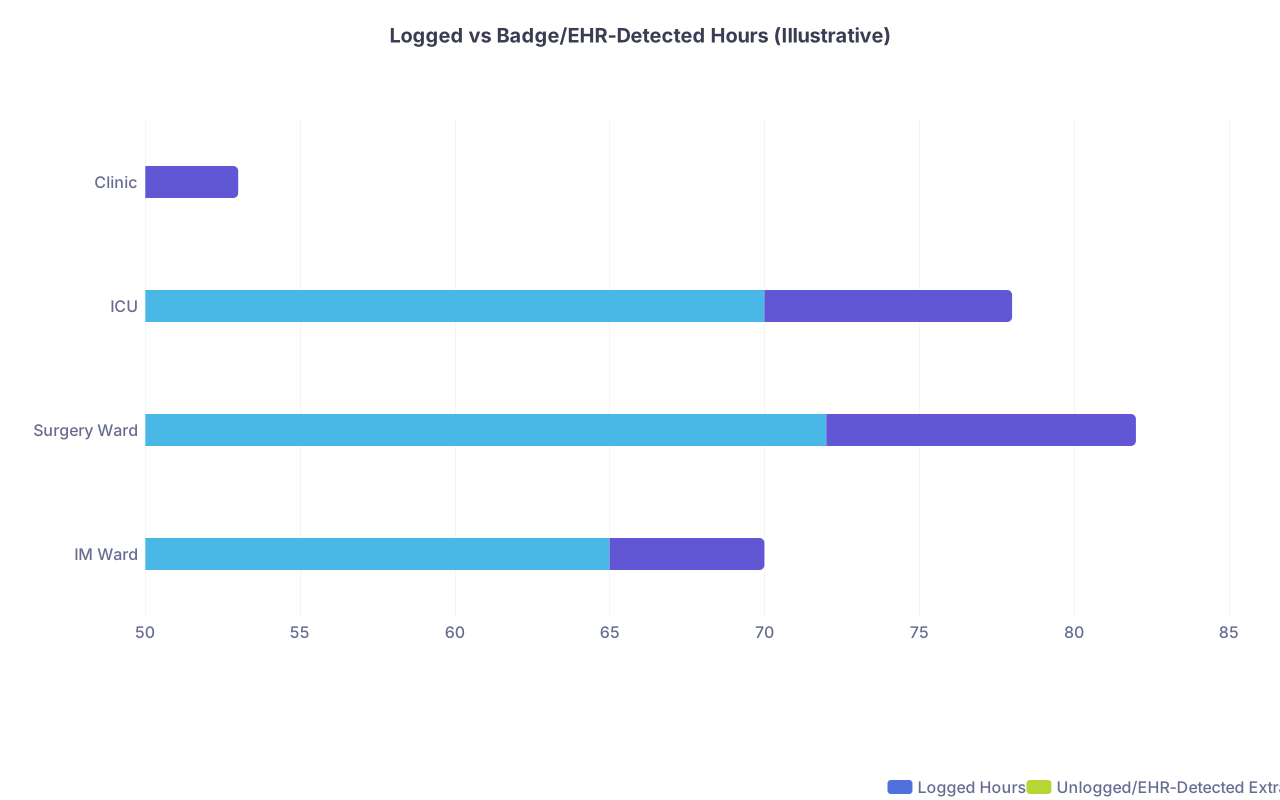
| Category | Logged Hours | Unlogged/EHR-Detected Extra |
|---|---|---|
| IM Ward | 65 | 5 |
| Surgery Ward | 72 | 10 |
| ICU | 70 | 8 |
| Clinic | 50 | 3 |
This simple split—logged vs detected extra—tends to show:
- 5–15 “invisible” hours per week for high-intensity rotations
- Lower but non-zero extra hours for clinic-heavy blocks
Multiply that by 3–7 years of training and you get thousands of uncounted work hours.
5. Variation by Specialty, Program, and PGY Year
Not all residencies are the same grind. The data show clear patterns.
5.1 High-intensity specialties
The repeat offenders:
- General surgery
- Neurosurgery
- Orthopedics
- OB/GYN
- Some combined programs (e.g., EM/IM)
Surveys and time studies routinely estimate:
- PGY1–2: 80–100 hours on heavy rotations, 70–80 on lighter ones
- PGY3+: Slight drop, but still frequently >80 on key services
In practice, many early residents in these fields hover around or above the 80-hour “limit” most weeks, if you include off-site work.
5.2 Moderate intensity: IM, peds, EM
Internal medicine, pediatrics, and emergency medicine tell a more nuanced story:
- Ward and ICU months: often 70–85 hours
- Clinic and elective months: often 45–60 hours
- Night float: intense but sometimes more controlled due to shift structure
The 12-hour ED shift model helps with tracking, but when you count pre-shift prep and post-shift charting, “12” usually looks more like “13–14” in reality.
5.3 Lower-intensity: psych, pathology, derm, radiology
Residents in psychiatry, pathology, dermatology, radiology often report:
- 50–65 hours per week on most rotations
- Clearer separation between clinical and home life
- Less overnight in-house call (or none)
But even here, once you include studying for boards, reading studies at home, or being available by phone, the “true” hours creep up beyond what duty logs show.
6. The 80-Hour Week: Reality vs Myth
The cap is not a target. It is supposed to be an upper boundary. In practice, it has quietly become:
- A number to never exceed on paper
- A signal to residents: do what it takes, just do not document beyond this
- A liability line for programs, rather than a safety line for residents
Take a simplified scenario for an IM resident on wards:
- 6 days per week in hospital, 12.5 hours/day on average → 75 hours
- Average 1 hour/day finishing notes or answering messages from home → +7
- Total: 82 hours
Now imagine their logging strategy:
- Log 12 hours/day instead of 13 → 72 hours
- Pretend they did not work on that Sunday morning sign-out → -4
- Do not count home charting → invisible
The system now records 68 hours. Reality is 82. The gap is not a rounding error.
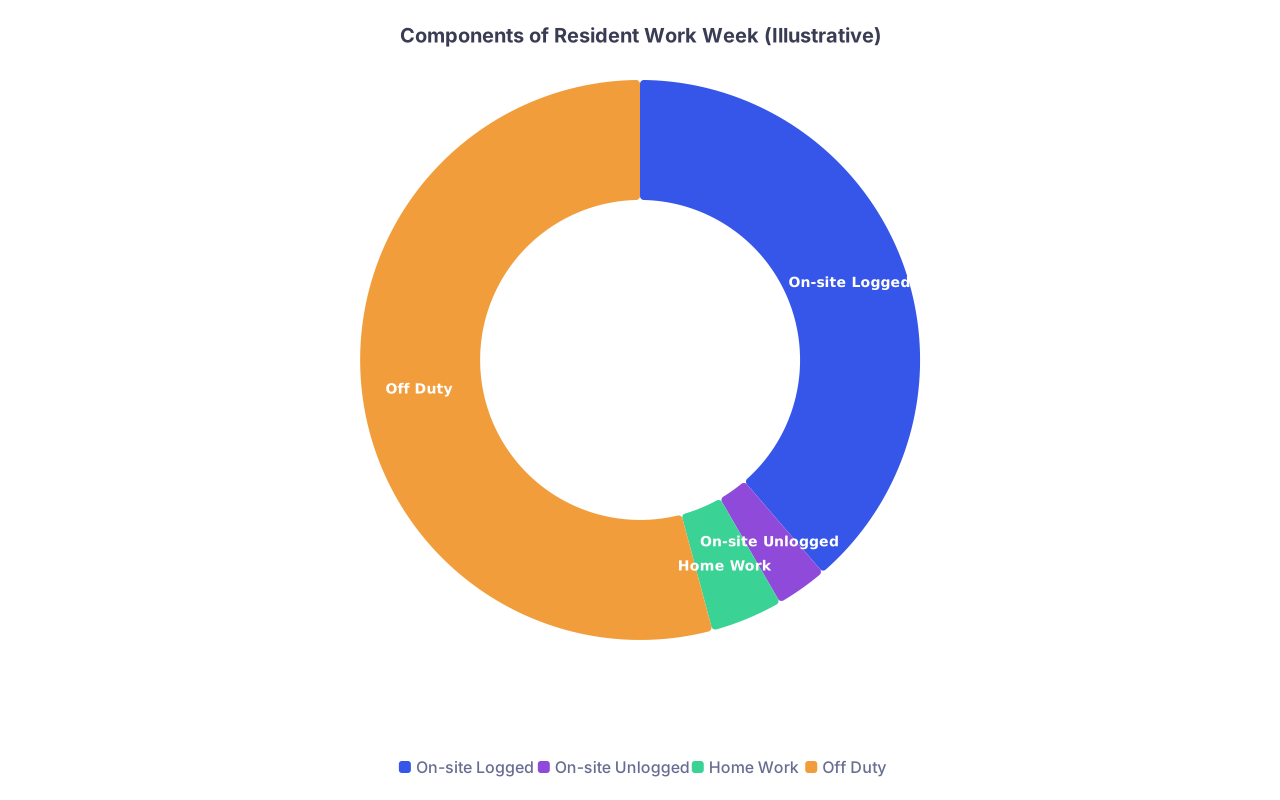
| Category | Value |
|---|---|
| On-site Logged | 65 |
| On-site Unlogged | 5 |
| Home Work | 7 |
| Off Duty | 91 |
This is for a 168-hour week. The punchline: most residents have fewer than 80 true off-duty waking hours per week on heavy rotations once you subtract sleep and commuting.
7. Why the Data Gap Matters (Beyond Complaining)
The gap between official and real hours is not just a moral complaint. It wrecks data quality and policy decisions.
From a data analyst’s perspective, here is what goes wrong:
Outcome studies are built on faulty inputs.
If research on “80-hour work weeks and patient outcomes” actually compares 70 vs 90 real hours (mis-measured as 60 vs 80), every inference is blurred.Burnout and mental health interventions are mis-targeted.
Programs that think their residents work “60–65 hours on average” will under-estimate the need for real structural solutions. They will push self-care and resilience modules instead of schedule redesign.Accreditation oversight is miscalibrated.
ACGME enforcement relies heavily on self-reported compliance. With systemic under-reporting, only the most egregious programs get flagged. Many others remain “compliant” on paper while running at 80–100 hours in practice.Prospective residents are misled.
Applicants compare programs using official descriptions and reputations, but the underlying numbers are smoothed. They are choosing between 75 and 90-hour realities disguised as 65 and 80.
8. How To Interpret “Hours Per Week” When You Are Choosing a Program
Let me be blunt: the number you see advertised is usually an underestimate. Treat it like a biased statistic and adjust.
Some practical rules of thumb, based on what I have seen in data and in real resident schedules:
Add 10–20% to whatever a program calls “typical hours” on heavy rotations.
If they say “70–75 on wards,” assume 80–85 some weeks.If multiple residents in a program independently say “we totally comply with 80 hours,” listen for how fast they say it and whether they smirk. A rehearsed line is a data artifact.
Ask explicitly about off-site work:
“How much time do you spend each week finishing notes from home or responding to messages?” That number rarely appears in any official log.Compare rotations, not just global averages.
A program with brutal ICU months and cushy electives may show the same “average” hours as a consistently busy program, but your lived experience will be very different.
You can even think of program hours as a rough distribution instead of a single number:
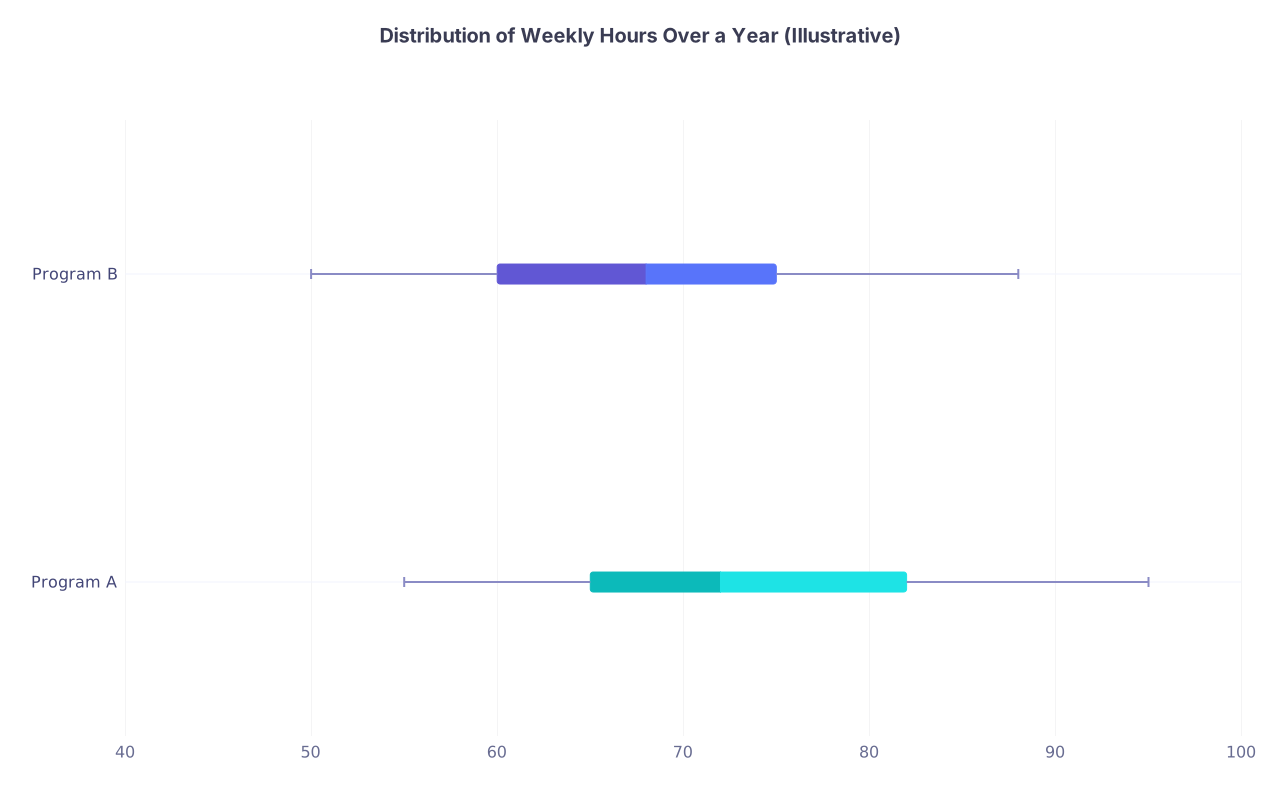
| Category | Min | Q1 | Median | Q3 | Max |
|---|---|---|---|---|---|
| Program A | 55 | 65 | 72 | 82 | 95 |
| Program B | 50 | 60 | 68 | 75 | 88 |
Program A: higher median and higher max. Program B: still hard, but fewer extreme weeks. Both might advertise “average 70 hours.”
9. What Better Measurement Would Look Like
If you care about honest data—and you should—here is what a more accurate system would require:
Integration of multiple signals
Combine badge swipes, EHR logins, paging data, and self-reported logs. Not to punish residents, but to estimate actual presence and activity.Protected, anonymous resident surveys
Conduct regular, external surveys about true hours, perceived pressure to under-report, and off-site work. Keep results out of local administrative hands until anonymized and aggregated.Separate metrics for on-site vs off-site work
Measure:- In-hospital hours
- Remote clinical work
- Required educational work (conferences, prep)
Transparent reporting to applicants
Publish ranges and distributions, not just sanitized averages. Show, for each program:- Median hours by rotation type
- 25th–75th percentile weekly hours
- Peak observed weeks
Will that happen soon? Probably not. There are strong institutional incentives to keep numbers pretty. But that is what a data-honest system would look like.
10. The Bottom Line: How Many Hours Do Residents Really Work?
Putting the numbers together, and cutting through the institutional spin, here is the most defensible summary:
- Across all specialties and years, many residents realistically work 65–85 hours per week on busy rotations when you include off-site work.
- High-intensity fields (surgery, OB/GYN, neurosurgery, some IM programs) often push residents into the 80–100 hour range on their heaviest services, despite 80-hour “limits” on paper.
- Lower-intensity specialties (psych, derm, path, radiology) often run in the 50–65 hour range, still with occasional spikes.
- Official duty-hour logs systematically underestimate real work by at least 5–15 hours per week for many residents on busy services, largely due to cultural pressure and uncounted tasks.
So when a brochure or PD says, “Our residents work around 70 hours a week,” translate that using the data:
They probably mean: “The system records ~70. Real life feels like 75–85, with some weeks worse.”
Three key points to leave you with:
- Official logs describe compliance, not reality. Expect a consistent downward bias of 10–20%.
- Survey data, time-motion studies, and EHR/badge data converge: residents, especially in high-intensity specialties, frequently exceed the practical equivalent of the 80-hour “cap”.
- If you are choosing a program, interrogate the numbers. Ask about off-site work, rotation-specific hours, and the gap between logged and lived experience. The data are there—you just have to force them into the open.