54% of residents meeting criteria for burnout still rate their overall health as “good” or “very good.”
That disconnect between perception and reality is exactly why work hours, depression, and burnout get so badly misunderstood in residency. Residents normalize dysfunction. Programs exploit that normalization. And the data quietly piles up.
Let’s go through what the numbers actually show about residency work hours and mental health, stripped of the usual hand‑waving about “resilience” and “grit.”
What We Know About Burnout and Depression in Residents
Start with prevalence. Not anecdotes. Numbers.
Large multi‑institutional studies across US residency programs consistently report:
- Burnout: roughly 45–60% of residents at any given time
- Depressive symptoms meeting clinical cutoffs: about 25–30%
- Suicidal ideation in the prior year: ~6–10%
A major meta‑analysis in JAMA (pre‑COVID) looking at physicians in training found depressive symptoms in about 29% of residents. That is not “occasional stress.” That is close to one in three.
Burnout is usually measured with tools like the Maslach Burnout Inventory (MBI), which breaks it into three domains:
- Emotional exhaustion
- Depersonalization (cynicism, treating patients like objects)
- Reduced personal accomplishment
Residents usually score worst on emotional exhaustion, then depersonalization. Personal accomplishment often stays weirdly high, even when everything else is burning down. You can thank “I’m learning a lot” + sunk‑cost fallacy for that.
The diagnostic vs. functional gap
Here is the uncomfortable pattern that shows up in the data and in real wards:
- Many residents scoring in the moderate to severe range for depression keep functioning at a high clinical level.
- They show up on time. They chart. They present cleanly on rounds.
- They do not usually self‑report “I am depressed” unless explicitly screened.
This is why relying on self‑referrals or “wellness days” is mostly theater. Programs that do not systematically screen for burnout and depression are essentially choosing to ignore the majority of the problem.
Hours Worked: Where Burnout Starts to Spike
The resident work‑hours story always circles back to “80 hours per week” like that number is sacred. It is not. It is a political compromise that looks increasingly unsupported by mental‑health data.
Average reported hours by specialty (PGY‑2+ level) in many surveys:
| Specialty | Avg Weekly Hours |
|---|---|
| Internal Medicine | 60–70 |
| General Surgery | 70–80 |
| OB/GYN | 65–75 |
| Emergency Med | 45–55 |
| Psychiatry | 50–60 |
Now, what actually happens to burnout and depressive symptoms as hours increase?
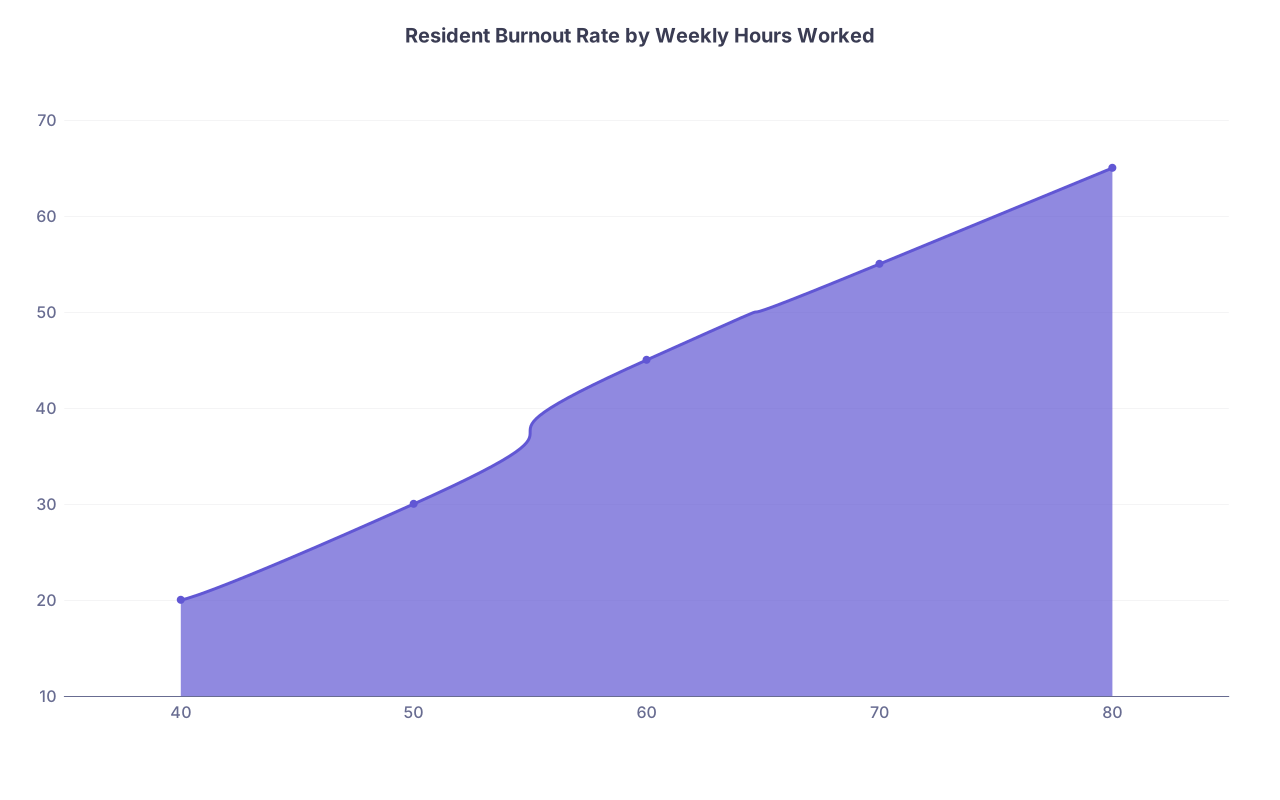
Several studies show roughly linear or slightly curvilinear relationships. Conceptually, it looks like this:
| Category | Value |
|---|---|
| 40 | 20 |
| 50 | 30 |
| 60 | 45 |
| 70 | 55 |
| 80 | 65 |
Interpretation:
- Around 40 hours/week: burnout ~20%
- 50 hours: ~30%
- 60 hours: ~45%
- 70 hours: ~55%
- 80 hours: ≥60–65%
The exact percentages vary by study and specialty. The shape does not. Once you pass about 55–60 hours per week consistently, the odds of burnout climb fast.
The “dose–response” problem
Multiple analyses have shown a dose–response relationship between hours worked and:
- Burnout scores (higher hours → higher exhaustion, depersonalization)
- Depressive symptoms
- Self‑reported medical errors
This is classic epidemiology: exposure (hours) increases, outcome (burnout/depression/errors) increases. You can argue about confounders. You cannot argue that this is random.
And the effect is not subtle. Residents working 80+ hours a week often report burnout rates nearly double those working closer to 50.
Sleep, Shift Structure, and Why 80 Hours Is Not the Whole Story
Raw hours are crude. Residents live inside specific shift structures that can be toxic even when total hours technically fall under the cap.
Big distinctions the data cares about (even if your chief does not):
- Consecutive hours (e.g., 28‑hour vs 16‑hour call)
- Number of overnight shifts / month
- Recovery time between shifts
- Rotations with circadian chaos (EM, ICU, night float)
Sleep deprivation turns out to be a more precise predictor of mental health and performance than hours alone.
Sleep: the underrated mediator
Residents routinely average 4–6 hours of sleep per 24 during heavy blocks. On some ICU or call‑heavy rotations, it is less.
You see this in the literature:
- Residents sleeping <6 hours/night: much higher burnout and depressive scores
- Residents sleeping ≥7 hours/night (rare, but they exist): dramatically lower rates, even with similar nominal work hours
Think of it as this: hours drive sleep loss; sleep loss directly hits mood, cognition, and emotional regulation. The more nights you string together on 4–5 hours of sleep, the more your risk explodes.
I have seen residents on “only” 60‑hour weeks but with brutal q3 overnight calls look worse than colleagues pushing 70 hours on well‑structured day shifts with predictable sleep.
Burnout, Depression, and Self‑Reported Errors
Here’s the part programs pretend is “controversial” but the numbers show very clearly:
Burnout and depression are not just personal tragedies. They show up in patient care.
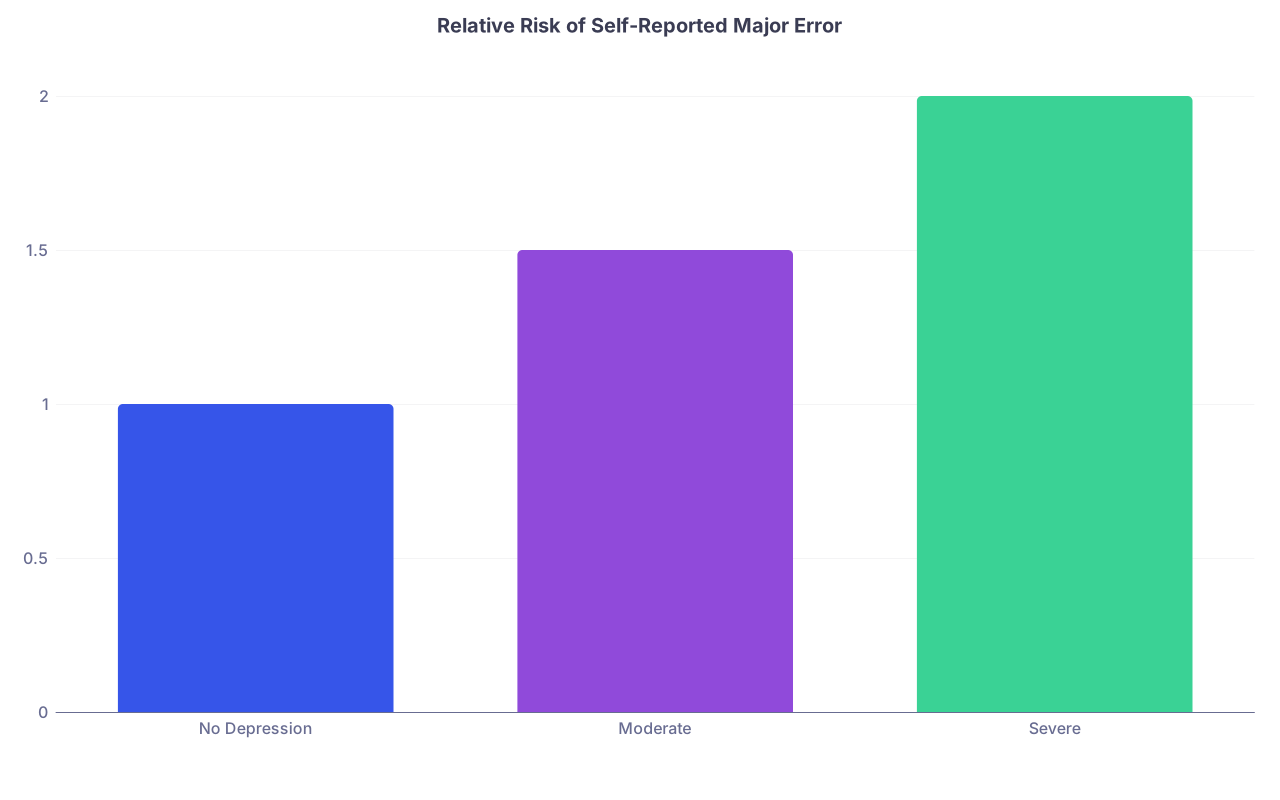
Multiple studies link higher burnout and depressive symptoms to self‑reported medical errors. The pattern looks like this:
- Residents with no significant depression: baseline error reporting.
- Residents with moderate depressive symptoms: ~1.5× more likely to report a major error.
- Residents with severe symptoms: up to 2× or more.
One often‑cited finding: depressive symptoms correlated more strongly with reported errors than total hours themselves. Hours drive mood. Mood mediates performance.
| Category | Value |
|---|---|
| No Depression | 1 |
| Moderate | 1.5 |
| Severe | 2 |
Is this perfect? No. Errors are self‑reported; residents underreport. But the direction and magnitude are consistent across datasets.
Programs that shrug off mental health concerns as “individual issues” are ignoring a direct line from resident distress to potential patient harm.
Specialty, Culture, and Risk: It Is Not Just the Hours
Hours matter, but they do not exist in a vacuum. Two residents both working 65 hours can have completely different burnout profiles depending on:
- Specialty culture
- Level of autonomy and support
- Exposure to trauma and death
- Administrative load vs. meaningful clinical work
Look at a basic comparison:
| Specialty | Burnout Prevalence |
|---|---|
| Internal Medicine | ~45–55% |
| General Surgery | ~55–65% |
| Emergency Med | ~50–60% |
| Psychiatry | ~35–45% |
| Pediatrics | ~40–50% |
Surgery often runs both higher hours and higher burnout. But emergency medicine, with many programs closer to 45–55 hours/week, still posts high burnout rates. Why?
- Irregular shifts, nights, and circadian flips
- High acuity and trauma concentration
- Felt lack of control over volume and boarding
- Frequent moral distress (no beds, no resources, unsafe discharges)
Psychiatry tends to have lower physical workload, somewhat more controlled schedules, and more explicit attention to emotional content. Not perfect, but the numbers reflect a relative protective effect.
The mistake administrators make is pretending these differences are purely about individual resilience or “fit.” They are not. They are structural and cultural.
Work‑Hour Reform: Have the Limits Helped?
You will hear two competing narratives about ACGME work‑hour limits and the 80‑hour rule:
- “Hours caps killed education and did not help burnout.”
- “Limits are the only thing keeping residents from complete collapse.”
Neither is fully supported by data. The truth is more boring and more damning.
What actually changed
Most analyses after duty‑hour reforms show:
- Average hours modestly decreased.
- The worst extremes (100–120‑hour weeks) became less common but did not vanish.
- Night float and other work‑around systems increased.
- Work compression intensified: similar volume packed into slightly fewer hours.
On burnout and depression:
- Some early improvements in fatigue and well‑being for interns after reforms.
- Mixed or minimal long‑term impact on overall burnout prevalence.
- No dramatic step change to “healthy” levels.
Why the underwhelming results?
Because the system changed the cap, not the core drivers: workload, documentation burden, staffing ratios, and the cultural expectation that “a good resident always says yes.”
Programs got very good at staying barely compliant on paper while preserving the same culture of overwork.
Where the Numbers Point: What Actually Reduces Burnout
Strip away the wellness slogans, and certain interventions consistently show measurable impact on burnout and depression.
None of these are free. All of them are cheaper than replacing residents and settling malpractice cases.
1. Reducing chronic overload (not just capping hours)
Residents do better in programs that:
- Keep average weekly hours closer to 55–60 instead of riding the 80‑hour line
- Limit the number of consecutive overnight calls
- Build in real, protected days off (not “post‑call” days that vanish under pages)
The math is simple:
- Cut average weekly hours from 75 to 60 → roughly 15 fewer hours of fatigue accumulation.
- Over a 4‑week block, that is 60 hours back — more than a full additional off‑week’s worth of rest.
This is not trivial.
2. Protecting sleep windows
Data shows that even modest sleep interventions help:
- Predictable protected sleep periods on call (e.g., no non‑urgent pages 1–4 a.m. unless true needs)
- Caps on consecutive nights (no endless night strings)
- Avoiding quick flip scheduling (evening shift followed by early post‑call duties)
Programs that take circadian science seriously see better resident well‑being scores without tanking education. The key is designing schedules around human physiology, not just “that is how we have always done it.”

| Step | Description |
|---|---|
| Step 1 | Work Hours Increase |
| Step 2 | Sleep Decreases |
| Step 3 | Fatigue Increases |
| Step 4 | Burnout Symptoms |
| Step 5 | Depressive Symptoms |
| Step 6 | Higher Error Risk |
Screening, Stigma, and the Hidden Depression Curve
Routine, anonymous screening for depression and burnout in residents is still not universal. That alone tells you the priority system.
Where it is done, the numbers typically show:
- 25–35% with clinically significant depressive symptoms
- A non‑trivial slice with suicidal ideation, often >5% in the past year
- Many of these residents not using any formal support
Barriers they report (and that I have heard almost verbatim from residents):
- Fear of being labeled “weak” or “unreliable”
- Worry about licensing and credentialing questions
- Fear of retaliation (bad evaluations, fewer opportunities)
- Cynicism that any support offered is just check‑box compliance
So you end up with this nonsense situation: programs proudly advertise wellness committees and yoga sessions while a third of their residents quietly meet criteria for depression and keep rounding.
Objective screening plus confidential, truly independent mental‑health access reduces this. Where implemented with real protections, more residents seek help earlier and symptom burdens fall.
Trainees vs. Attendings: This Does Not Magically Fix Itself
One comforting myth: “Residency is just the hard part. It gets better as an attending.”
Sometimes true. Statistically, not as much as people claim.
Attendings often work fewer total hours and have more autonomy. That does help. But:
- Physician burnout overall in the US hovers ~40–50% depending on year and specialty.
- Certain specialties (EM, primary care, OB/GYN) see burnout increase after training due to system pressures and documentation insanity.
So residency is both:
- A high‑risk period for acute depression, suicidal ideation, and extreme fatigue.
- The foundation for long‑term habits and expectations — what you silently internalize as “normal.”
Programs that treat burnout and depression as unfortunate side‑effects of training are essentially training physicians to accept a dysfunctional baseline for the rest of their careers.
What Residents Can Actually Control (and What They Cannot)
You cannot personally fix systemic understaffing or ACGME policy. You can influence the variables closest to you. The data suggests a few levers with disproportionate impact:
Sleep protection as a non‑negotiable
Residents who aggressively protect sleep when off‑duty do better. That means actually sleeping instead of doom‑scrolling until 1 a.m. before a 5 a.m. wakeup. Blunt but true.Micro‑recovery during shifts
Even short, predictable breaks matter. Ten minutes to eat without interruption. Five minutes to step outside between admits. The research on micro‑breaks and cognitive performance is solid.Early recognition and treatment of depression
Data shows treated depression (therapy ± medication) significantly reduces symptom burden and improves functioning. Waiting for a full crash before seeking help is a bad strategy.Documented boundaries
Residents who know the written work‑hour and moonlighting policies and quietly track their actual hours have more leverage when rotators go off the rails. Numbers are harder to gaslight than feelings.
None of this replaces structural change. But the numbers are clear: small, consistent reductions in sleep debt and symptom burden compound. Over a three‑year residency, they can be the difference between “barely crawling to graduation” and “tired but intact.”
The Bottom Line: What the Numbers Really Say
If you strip away the myths and look only at the data on residency work hours, burnout, and depression, you end up with three blunt conclusions:
Burnout and depression are not fringe issues — they are the statistical norm at current work‑hour levels. Around half of residents meet burnout criteria, and roughly a third meet clinical thresholds for depression in many programs.
Work hours and sleep loss show a clear dose–response relationship with mental health and errors. Pushing residents toward the 80‑hour cap and tolerating chronic sleep deprivation reliably increases burnout, depression, and self‑reported mistakes.
Superficial fixes do little; structural changes in workload, schedules, and real mental‑health access do. Programs that reduce chronic overload, protect sleep, and provide confidential, stigma‑free treatment see measurable improvements. The rest are just rearranging deck chairs.
The numbers are not subtle. The only real question is whether training programs are willing to align their culture with what the data has been saying for years.