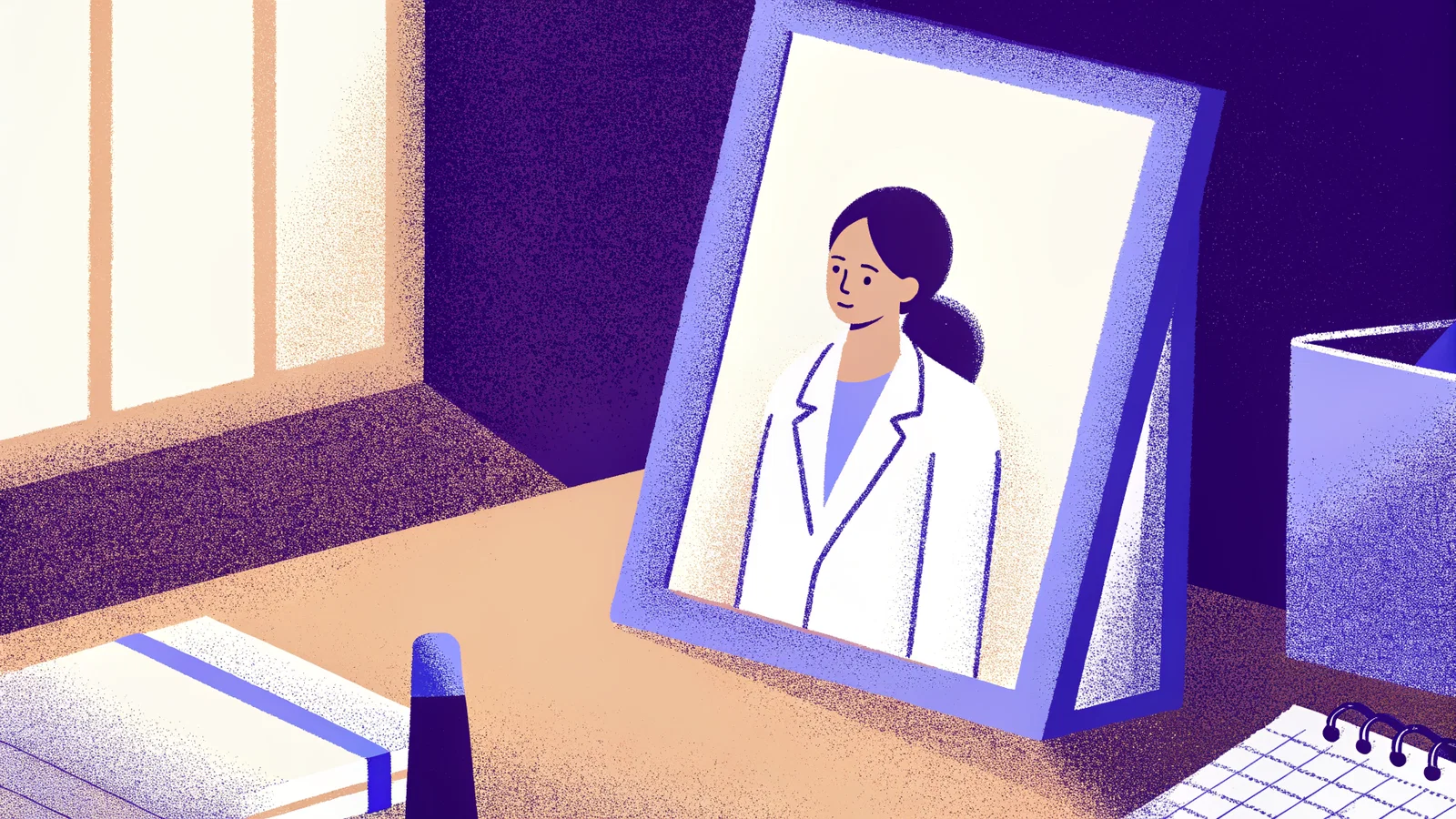
The Core Problem: Telemedicine Time Is Real Work, But Duty Hour Tracking Often Treats It Like It Doesn't Exist
Here's the mismatch that's been quietly wrecking resident schedules: telemedicine clinic work is real clinical work, but most duty hour tracking systems were built for a world where "clinic" meant showing up to a physical room, seeing patients in person, and going home when the last room was empty.
That world is gone.
I've watched residents finish a "4-hour telemedicine clinic" at 5:00 PM, then spend another 90 minutes finishing documentation, replying to portal messages, and coordinating follow-up labs, all while their duty hour log shows they clocked out at 5. The work didn't disappear. It just moved somewhere the tracker can't see.
This is the central problem: telemedicine doesn't reduce workload. It fragments it. And fragmented work is invisible work.
The strain residents feel isn't in their heads. A typical telemedicine session might include scheduled video visits, but the actual job includes pre-visit chart prep, interpreter coordination, message triage, supervision check-ins, and post-visit documentation that bleeds past the scheduled block. Standard duty-hour reports capture the scheduled visit window. They miss everything around it.
The stakes are practical, not theoretical:
- Burnout risk climbs when residents work 10-12 hour days that look like 8 hours on paper.
- Compliance data becomes fiction, programs report clean numbers while residents silently exceed limits.
- Program oversight fails because leadership can't fix what they can't see.
The fix starts with naming the problem: your duty hour system is probably undercounting telemedicine work right now, and that gap is costing residents their time, energy, and trust in the system.
What the Data Says: How Telemedicine Clinic Time Compares With Traditional Clinic and Duty Hours
Let's get concrete. When you compare telemedicine clinic time to traditional in-person clinic across actual measured studies and operational data, here's what consistently shows up.
Visit volume tends to look similar on paper. Telemedicine sessions often schedule the same number of patients per block as in-person clinics. The illusion of efficiency comes from shorter rooming time, you're not walking down a hallway, hunting for an open exam room, or waiting for a patient to physically arrive from the waiting room.
But visit length? It's a different story. Telemedicine visits can run shorter for straightforward follow-ups, check a blood pressure, review a lab, adjust a medication. But they run longer for complex visits where physical exam cues are missing, where patients bring multiple concerns to a video call because "I'm already on," or where interpreter coordination eats extra time.
The hidden minutes pile up in predictable places:
- Pre-visit prep: Reviewing charts, checking prior notes, confirming labs before the video call starts.
- Portal messaging: Patients message more between visits when they know you're "online."
- Interpreter coordination: Setting up language interpretation on video takes longer than in-person.
- Supervision check-ins: Attending availability on telemedicine is often less structured, creating back-and-forth delays.
- After-visit documentation: The same note burden as in-person, but without the natural pause between patients.
Here's where duty-hour systems fail. They often capture scheduled clinic time, the block you're "supposed" to be seeing patients, but miss the fragmented work done between visits, after clinic formally ends, or from home when you finish notes at 9 PM.
The data pattern is consistent across studies: telemedicine shifts time rather than reducing it. Total workload per patient often stays the same or increases, but it spreads across more categories and more hours. The work doesn't disappear, it scatters.
What this means for residents: You're doing the same job, maybe more, but the system tracking your hours doesn't account for the scatter. You look compliant. You feel exhausted. Both things are true at once.
What this means for programs: Your clinic productivity metrics might look improved, more visits scheduled, shorter average visit times, while your residents are quietly working longer than anyone realizes. That's not efficiency. That's displacement.
Why Duty Hour Math Breaks Down in Telemedicine Clinics
The duty hour tracking system was built for a specific model: you show up, you're physically present, you leave when the work is done. Telemedicine breaks that model in four specific ways.
1. Split sessions. Residents might do telemedicine in the morning, switch to in-person rounds, then finish telemedicine documentation in the evening. Standard logs capture the morning block and the rounds. The evening documentation? Often uncounted.
2. Asynchronous work. Portal messages, lab review, and follow-up calls happen between other tasks or during "non-clinical" time. But they're still patient care. They still count.
3. Home-based telemedicine. When residents see patients from home, increasingly common, there's no physical sign-in to trigger tracking. The work is real. The log entry often isn't.
4. Work outside the physical clinic. Even telemedicine done from the hospital often happens in a workspace that isn't "clinic" in the scheduling system. So it gets logged as something else, or not at all.
The result: residents appear compliant while exceeding real cognitive and task burden limits. You can look like you're working 50 hours when you're actually working 65. The math doesn't break because residents are lying, it breaks because the counting system was designed for a different kind of work.
Supervision and education take a hit too. Telemedicine often means less face-to-face teaching. Residents make more independent decisions, escalate through different pathways, and get less real-time feedback. That's not inherently bad, but it changes the educational load in ways programs need to account for.
Program-level risks are serious:
- Inaccurate reporting to oversight bodies
- Inconsistent remediation when residents struggle (because the real workload is hidden)
- Missed signs of overwork until a resident burns out or leaves
The fix isn't to abandon telemedicine. The fix is to update the counting system to match the work.
What Residents and Programs Can Do Now: A Practical Fix-It Protocol
Let's get to solutions. Here's how residents and programs can close the telemedicine duty hour gap starting now.
For Residents: Track Your Real Time
Step 1: Define your start and stop points clearly. Your telemedicine clinic starts when you begin pre-visit prep, not when the first video call connects. It ends when your last note is signed and your last portal message is handled. Track those times.
Step 2: Capture documentation and messaging. Every minute you spend on notes, messages, and follow-up after the scheduled clinic block is still clinic time. Log it. If your program's system doesn't have a category for it, ask for one.
Step 3: Log split sessions consistently. If you do telemedicine in two blocks, morning visits and evening documentation, log both. Don't let the system pretend the second block didn't happen.
Step 4: Track home-based work honestly. If you're finishing notes from home, that's duty hours. Track them. Yes, this might push you over limits. That's the point, the limit exists for a reason, and invisible work still counts.
Step 5: Keep a personal log for two weeks. Track your actual telemedicine time, all of it, and compare it to what your duty hour system shows. The gap is your evidence.
For Programs: Fix the System
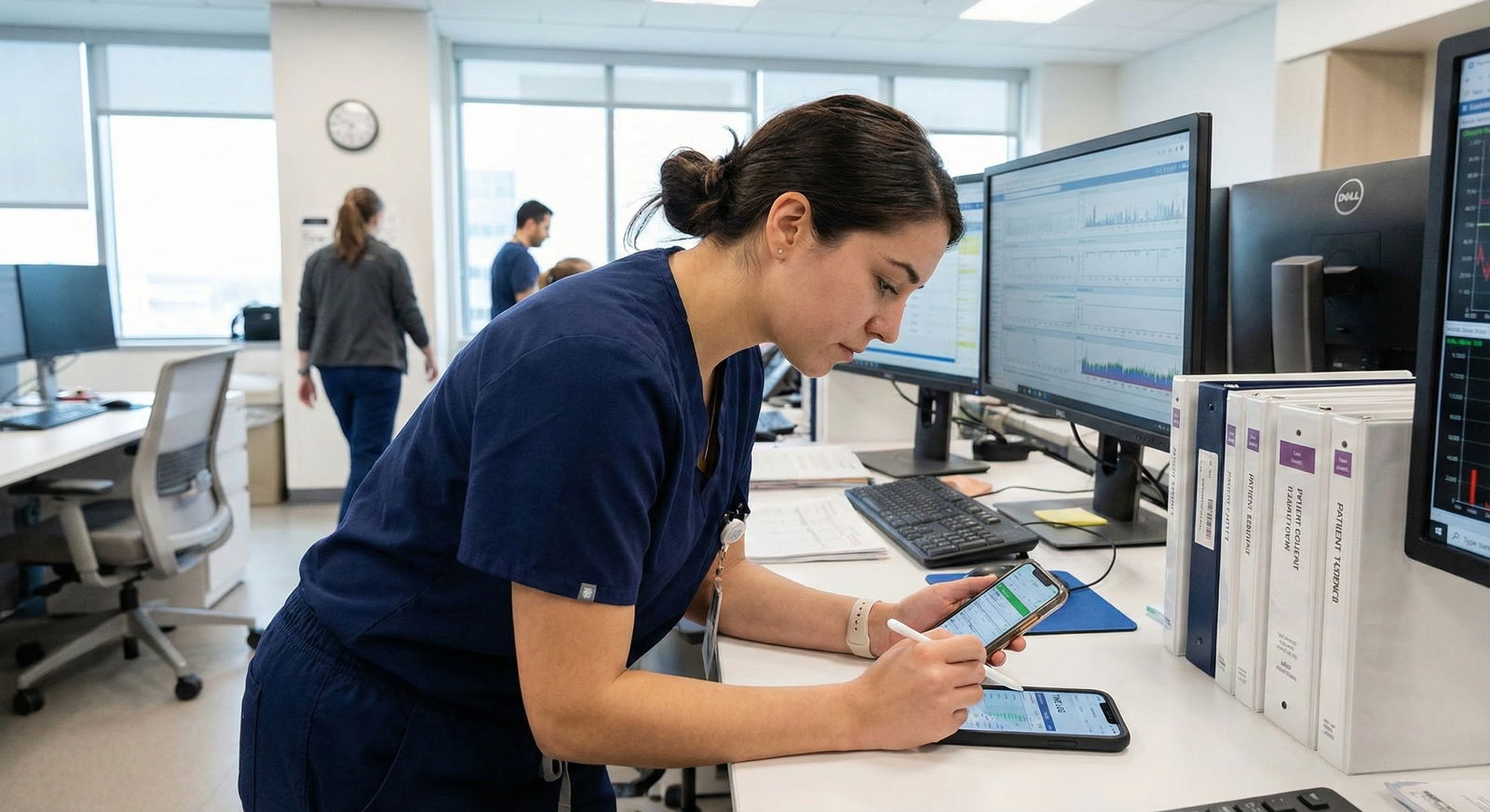
Standardize telemedicine duty hour definitions. Write down what counts: pre-visit prep, scheduled visits, documentation, messaging, interpreter coordination, supervision check-ins. If it's patient-related work, it counts.
Audit clinic templates. Compare scheduled telemedicine blocks to actual work time. If residents consistently log 30-50% more time than the template suggests, the template is wrong, not the residents.
Include asynchronous work in workload reviews. Portal messages and follow-up tasks are clinical work. They belong in workload calculations, not in the "other" column.
Reduce hidden time with workflow changes:
- Pre-visit prep blocks: Schedule 10-15 minutes before each telemedicine session for chart review. Don't make residents do it on their own time.
- Message batching: Set specific times for portal message response rather than expecting residents to monitor continuously.
- Supervised triage protocols: Make escalation pathways clear so residents aren't stuck waiting for attending input without structure.
- Clear escalation rules: Define what gets handled by the resident, what goes to the attending, and what waits for the next clinic day.
Set an Escalation Threshold
If a resident consistently exceeds expected telemedicine time burden, say, more than 25% over the scheduled block for two weeks running, that triggers a conversation. Not punishment. A workflow review. Something in the system is pushing work into hidden hours, and it's the program's job to find and fix it.
If you feel pressured to underreport, escalate. Talk to your chief resident or program director. Document the pattern. The fix starts with honest data.
How to Interpret the Numbers Without Overreacting
Not all telemedicine time data means the same thing. Here's how to read it without either dismissing real problems or overcorrecting.
Legitimate efficiency gains vs work displacement. If telemedicine genuinely reduces total time per encounter, same clinical quality, less overhead, faster documentation, that's a real win. But if visit time shrinks while documentation and messaging grow, that's displacement, not efficiency. The work moved, not disappeared.
Watch for these common interpretation pitfalls:
- Small sample sizes: One month of data from one clinic isn't enough to declare telemedicine a success or failure.
- Specialty differences: Telemedicine works differently in psychiatry vs internal medicine vs pediatrics. Don't generalize.
- Design variation: A well-designed telemedicine workflow with proper support staff looks completely different from a resident flying solo with a laptop.
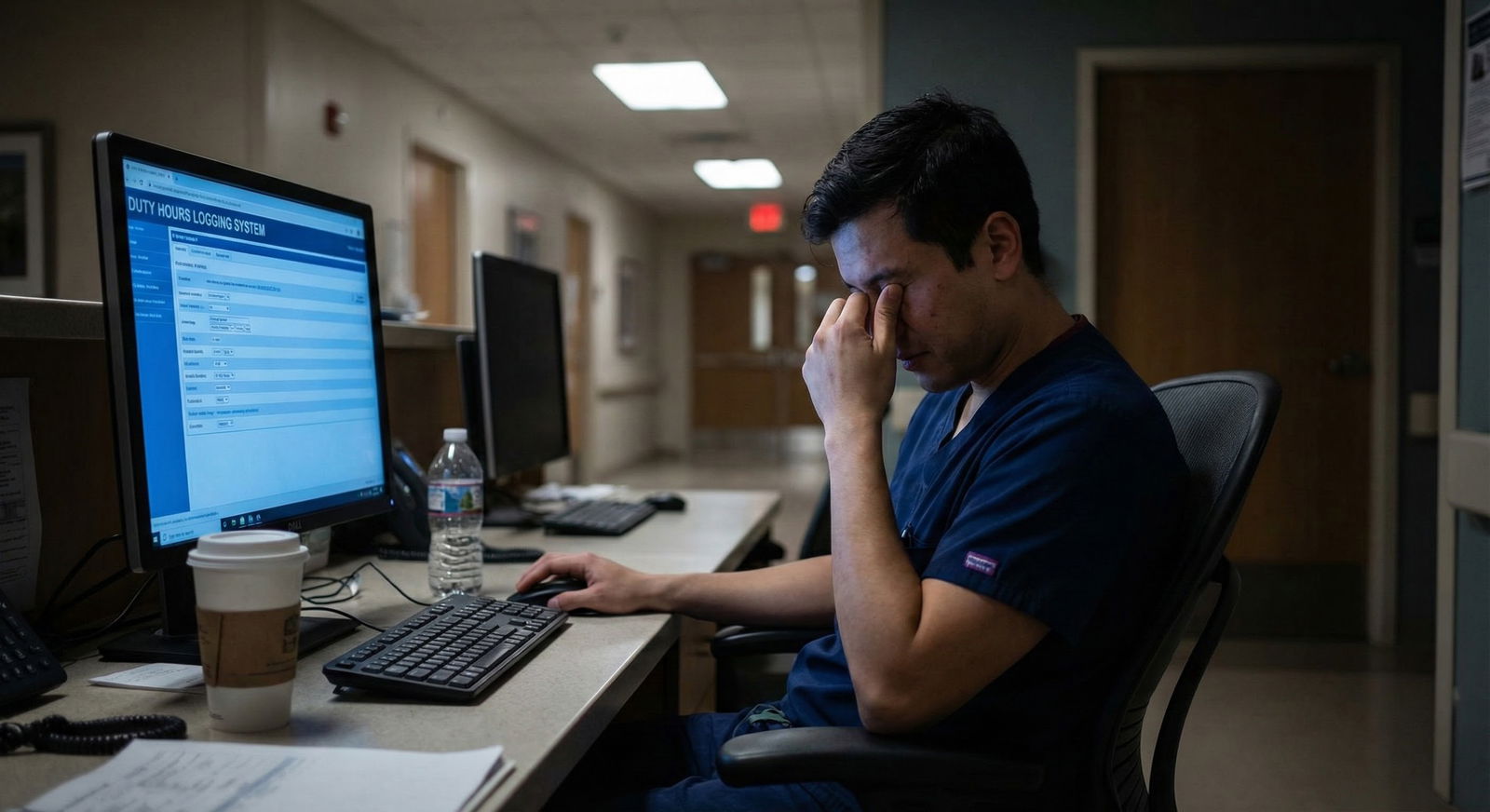
The decision rule is simple: if time saved in visit duration is offset by more after-hours work, the workflow needs redesign. Period. Don't celebrate shorter visits while ignoring longer evenings.
The goal isn't just compliance with duty hour rules. It's sustainable training and patient care. Residents who burn out don't learn well and don't care for patients well. Measuring honestly is the first step to fixing what's broken.
Conclusion: Make Telemedicine Time Visible Before It Becomes Burnout
Here's the bottom line: telemedicine doesn't eliminate work. It redistributes it. And duty hour systems that don't account for that redistribution are setting up residents for silent overload.
The fixes are practical:
- Residents: track your real time honestly, all of it, including the stuff that happens after the scheduled block ends.
- Programs: update your telemedicine duty hour definitions, audit your clinic templates, and stop pretending fragmented work isn't work.
- Systems: redesign workflows that push effort into after-hours time.
Better measurement is the first fix. You can't solve a problem you can't see. Start counting telemedicine time accurately, and the solutions follow from there.
Key Takeaways
- Telemedicine clinic time is often undercounted because duty hour systems miss documentation, messaging, split sessions, and home-based work.
- The fix is practical and immediate: define telemedicine work clearly, track all patient-related time honestly, and redesign workflows that push effort into after-hours.
- Programs need to standardize telemedicine duty hour definitions, audit clinic templates against actual work, and treat asynchronous work as real clinical effort.
- The goal isn't just compliance, it's sustainable training and patient care. Better measurement is the first step.