
Educational disclaimer: This article is for general educational purposes only and is not medical, legal, financial, tax, or employment advice. Residency supervision structures, responsibilities, and compensation-related policies vary by program and institution; follow your local policies and consult qualified supervisors or professionals for guidance on program-specific questions.
It’s 11:47 p.m. Your pager goes off for the fourth time in three minutes.
One nurse wants you at bedside for hypotension. Another is calling about chest pain. A third page says a postop patient has a fever and “looks bad.” Your senior is scrubbed in the OR. The resident covering another service is off-site. The attending is technically available, but you know that if you call, you need to sound like a person who has a plan, not like a raccoon trapped in a supply closet.
This is the moment a lot of interns think they’re failing.
You’re not. Your adrenaline is doing exactly what adrenaline does. Heart rate up. Working memory down. The room gets smaller. Every page feels equally urgent. This is where people make dumb mistakes: they answer the loudest voice first, disappear into one patient for 45 minutes, forget to update anyone, and then spend the rest of the night chasing their own bad decisions.
Don’t do that.
Your job in a sideways shift is not to be flawless. It’s to stay functional and keep patients safe on solo night call. That means five things, in this order: stabilize, triage, communicate, document, and escalate early. Not late. Early. I’ve seen too many interns wait because they wanted one more lab, one more exam, one more minute to “figure it out themselves.” That’s not grit. That’s how patients get hurt and how nights unravel.
If you’re the only intern there when the unit gets noisy and the pages pile up, this is the mindset that keeps you useful: handle the next dangerous thing, not every thing. Keep the team informed. Do the minimum safe work first. Write down what happened. Then move.
Step 1: Triage What Is Actually Urgent
When three things hit at once, you need a filter. Fast. Not a perfect filter. A safe one.
Start with the threats that can kill or seriously harm someone in the next hour:
- Airway or breathing problems
- Unstable vitals
- Active bleeding
- Altered mental status
- Chest pain
- Suspected sepsis
- New neurologic deficit
- Postop deterioration that feels wrong even before you can name why
That’s your first bucket. Those patients get eyeballs now, not after you finish a note, not after you call back the less sick patient, and definitely not after you “just put in one quick Tylenol order.”
Everything else goes into the second bucket:
- Pain med requests
- Mild nausea
- Electrolyte replacement that isn’t immediately dangerous
- Routine fever workup in a clinically stable patient
- “Can you clarify this diet order?”
- “Family wants an update right now”
Those things matter. They just don’t matter first.
If everything feels urgent, use this question: What could hurt this patient in the next hour if I do nothing? That question cuts through a lot of noise.
A practical example:
- Page 1: BP 78/42 after surgery.
- Page 2: Blood sugar 62 but patient is awake and talking.
- Page 3: Family upset that no one has called.
You go to the hypotensive postop patient. Immediately. You ask the nurse to treat the hypoglycemia per protocol and recheck in 15 minutes. The family update waits. That’s not cold. That’s correct.
Another rule: don’t let the loudest caller decide your priorities. Some units page aggressively for everything. Some nurses are calm even when a patient looks terrible. Volume is not acuity. I’ve seen terrifyingly sick patients introduced with, “Hey, whenever you get a sec…” and totally stable patients announced like a code.
You are triaging risk, not tone.
And if you’re torn between two patients? Start with the one whose problem is least reversible if delayed. Airway before paperwork. Hypotension before constipation. New focal weakness before sleep meds. Always.
Step 2: Communicate Like a Dispatcher, Not a Default Hero
When you’re alone, communication is not a courtesy. It’s part of management.
Bad intern instinct: “Let me fix a few things first, then I’ll update people.”
No. That’s how you vanish into one room while the rest of the service keeps burning.
Think like a dispatcher. Your goal is to keep information moving while care is moving. Tell nurses, seniors, and attendings three things clearly:
- What you know
- What you don’t know
- What you need
Use SBAR if your brain is scrambled. It works because it keeps you from rambling.
A clean version sounds like this:
Situation: “Mr. Lee in 8 South is hypotensive to 78/42, postop day 1 colectomy.”
Background: “He was stable two hours ago, has had poor urine output, and just got back from the bathroom.”
Assessment: “He’s pale, tachycardic, awake but dizzy. I’m concerned about bleeding versus sepsis versus volume loss.”
Recommendation/Request: “I’m at bedside now, getting repeat vitals and an exam. I need you to come evaluate, and I’m ordering CBC, lactate, BMP, type and screen, fluids, and asking nursing to get a second IV.”
That is a useful call. “He doesn’t look great” is not.
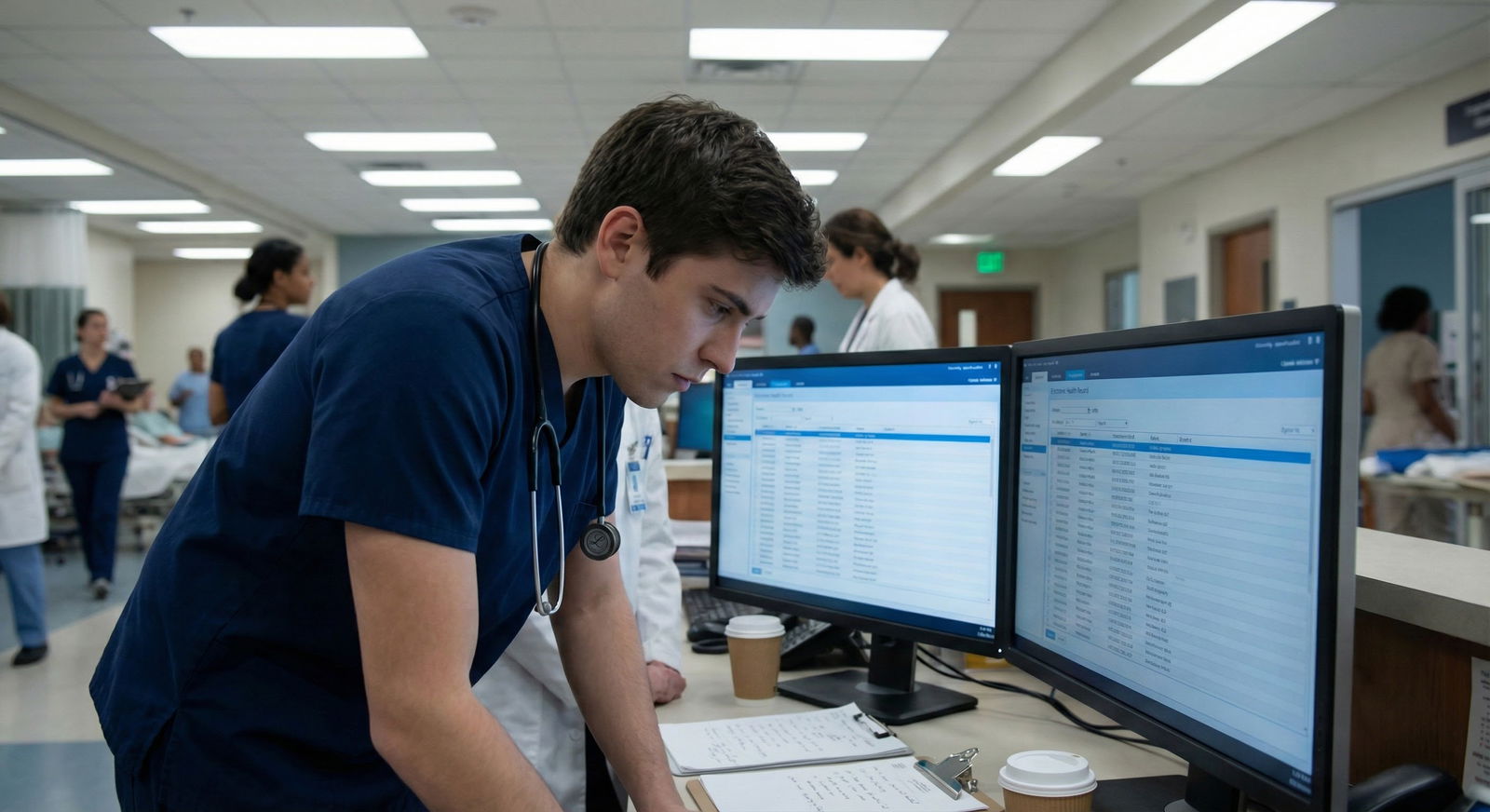
Ask for help early, and make the ask specific:
- “Can you come assess this patient with me?”
- “Can you review this EKG now?”
- “I need you to decide whether this patient needs ICU transfer.”
- “Can you put in the central line order while I stabilize the floor?”
Specific requests make it easier for your senior or attending to help fast. Vague distress signals force them to extract the story while you’re melting down.
Also, set expectations with nurses when you’re juggling multiple issues. Say it out loud:
- “I’m heading to a hypotensive patient. Recheck this temperature and blood pressure in 15 minutes and page me if either worsens.”
- “Give the dextrose now, repeat fingerstick in 15, and call me with the result.”
- “I can’t come this second, but I’m not ignoring this. I’ll call back in 10 minutes.”
That last line matters more than people admit. Nurses get nervous when you disappear. Fair enough. Silence creates more pages, more confusion, and more chaos. A quick callback plan buys you time and trust.
You do not win points for acting like the default hero. Medicine is full of people who confuse suffering quietly with competence. Ignore them. The safest intern is the one who mobilizes help before the wheels come off.
Step 3: Do the Minimum Safe Work First, Then Clean Up the Details
This is where overwhelmed interns get trapped. They start doing everything for one patient. Full chart dive. Gorgeous note. Ten-minute medication reconciliation. Meanwhile the rest of the floor keeps moving.
Don’t build a cathedral in a fire.
In a chaotic moment, do the minimum safe work that changes immediate management:
- See the patient
- Get current vitals
- Examine the problem that matters
- Place immediate orders
- Reassess response
- Escalate if not improving
That’s it. Not elegant. Very effective.
If someone is febrile overnight, you don’t need a philosophical essay on the differential before doing the basics. Is the patient stable? What are the vitals? New oxygen need? Line? Foley? Wound? Lung findings? Urine symptoms? Do they look septic or just warm and annoyed? Fever in a stable patient can often be approached systematically. Fever with hypotension or confusion is a different movie entirely.
Same with hypotension. Same with hypoglycemia. Same with pain crisis. Same with postop concerns.
I’m a big believer in mental checklists because panic destroys sequencing. Use crude, reliable frameworks.
For example:
Overnight fever checklist
- Repeat full vitals
- Assess appearance: toxic or stable?
- Focused exam: lungs, urine, lines, wound, abdomen
- Review recent cultures, antibiotics, procedures
- Orders if needed: CBC, lactate, cultures, CXR, UA, fluids, antibiotics if clinically indicated
- Reassess and escalate if unstable
Hypotension checklist
- Repeat BP manually if needed
- Mental status, pulse, skin, urine output
- Bleeding? Sepsis? Med effect? Arrhythmia? Volume loss?
- IV access, fluid bolus if appropriate, labs, EKG if indicated
- Call senior/rapid response early if persistent or severe
Hypoglycemia checklist
- Is the patient awake and protecting airway?
- Give oral glucose or IV dextrose per protocol
- Recheck glucose in 15 minutes
- Figure out why it happened after the patient is safe
- Adjust insulin plan so it doesn’t happen again at 4 a.m.
Batch tasks whenever possible. If you’re already sending someone for labs, think ahead. Need a CBC, BMP, lactate, blood cultures, and type/screen? Get them in one stick if you can. If you’re placing one order set, include the immediate recheck. If nursing is going back into the room, combine asks instead of creating six separate trips. Efficiency is not just nice. It prevents dropped balls.
And delegate the things that should be delegated. Good nurses can do a lot:
- Repeat vitals
- Start protocol-based hypoglycemia treatment
- Place the patient on oxygen
- Obtain EKG
- Get IV access
- Draw labs
- Monitor urine output
- Reassess symptoms and call back
Use the charge nurse too. On rough nights, a good charge nurse is half your nervous system.
What requires your direct attention? Sick bedside evaluations. Big changes in status. Decisions about escalation of care. Conversations that alter management. Anything where the patient may deteriorate before a delegated task loops back to you.
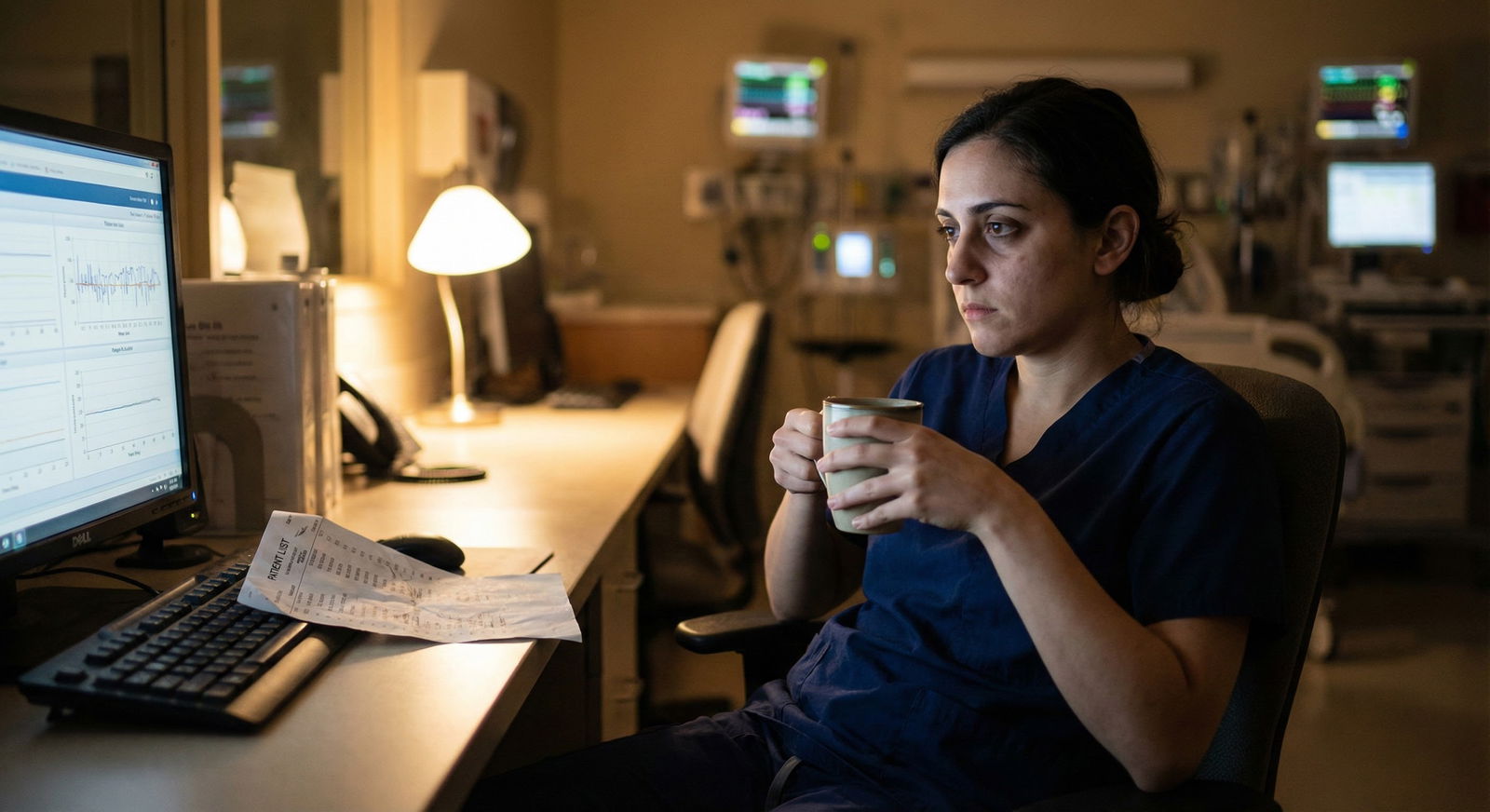
One more thing. Notes are not patient care in the first ten minutes of a problem. I know the chart matters. We’ll get there. But when things are unstable, a fluid bolus beats a polished paragraph every time.
Step 4: Protect Your Documentation and Your Future Self
After the first wave is controlled, document. Briefly. Clearly. Time-stamped.
This is not about writing literature. It’s about creating a record that shows what happened, what you assessed, what you did, and who you told. When nights go bad, memory gets weird fast. By sign-out, three pages become ten, times get fuzzy, and everyone swears they called everyone else “right away.”
Write it down.
Your note should include:
- Time of the event
- Why you were called
- Pertinent vitals and bedside findings
- Your working assessment
- Immediate actions taken
- Who you notified
- What plan was made
- What happened on reassessment
A usable mini-note looks like this:
“2318 called to bedside for BP 82/44. Patient pale, diaphoretic, dizzy but arousable, HR 122, sat 96% RA. Abdomen mildly distended, incision dry, no obvious external bleeding. Concern for postop hypovolemia vs bleeding vs early sepsis. Ordered 1L LR bolus, CBC/BMP/lactate/type & screen, EKG; requested second IV. Senior resident notified at 2322 and attending updated at 2328. BP improved to 94/56 after 500 mL; remains tachycardic. Plan ongoing bedside reassessment, review labs, escalate level of care if persistent instability.”
That note protects the patient, helps the next team, and protects you. All three matter.
Also: document the full escalation and notification chain after a bad overnight event. If you spoke with the senior, write that you spoke with the senior. If the attending was notified, write it. If the plan was to monitor and reassess in 15 minutes, write that too. Closed loops save people from the “I thought someone else was watching it” disaster.
And if the situation keeps evolving, update the chart. Don’t trust your fried post-call brain to reconstruct events later. It won’t.
Step 5: Recover the Shift and Reset for the Next One
Once the immediate fire is out, don’t just limp to sign-out and pretend the night didn’t happen. That’s how bad patterns become habits.
Do a two-minute debrief with yourself, or with your senior if they’re available:
- What went well?
- Where did I get stuck?
- What should I have escalated sooner?
- What system issue made this harder than it needed to be?
Be honest. Not dramatic. Just honest.
Maybe you delayed calling because you wanted more data. Common mistake. Fixable. Maybe you got buried in one room and stopped updating nurses. Also common. Also fixable. Maybe the sign-out was garbage and you walked into landmines. That needs to be said, because “everyone’s tired” is not an excuse for unsafe handoffs.
Your sign-out after a bad night should be painfully clear:
- What happened
- What changed
- What you’re worried about
- What still needs follow-up
- When to escalate
For example: “Mr. Lee became hypotensive around 2315, improved somewhat after 1L fluids but remains tachycardic. CBC pending; concern still for occult bleed vs sepsis. Senior aware, attending updated. Please recheck if BP drops again, if lactate rises, or if mental status changes.”
That is a good handoff. “Had a rough night, keep an eye on him” is worthless.
If you were overwhelmed, say it. Early. To the chief, senior, attending, whoever can actually change staffing or supervision. Silence helps no one. I’ve seen interns think admitting they struggled would make them look weak. Wrong. The weak move is hiding a systems problem until a patient pays for it.
Then reset with a simple plan:
- Sleep
- Review the scenario that tripped you up
- Build one better script or checklist before your next shift
That’s how you get better. Not by replaying the night in shame. By sharpening one failure point at a time.
When you’re the only intern on service and things go sideways, survival is not about doing everything yourself. It’s about doing the next right thing fast, pulling people in early, and leaving a clean trail behind you. That’s real competence. Messy. Efficient. Safe.