
The fastest way to kill your reputation as an intern is to get labeled “unsafe.” And that label sticks.
I’ve watched it happen by October. Bright, well-meaning interns quietly blacklisted by seniors and attendings. Not because they were lazy or mean. Because people didn’t trust them with patients.
Let me be blunt: you cannot afford this mistake. Skills you can grow. Speed you can build. But safety—your judgment, your reliability—people decide early, and they rarely change their minds.
This isn’t about being perfect. It’s about not triggering the “I can’t trust this intern” alarm in the first place.
Below are the specific mistakes that make seniors say “This intern is unsafe” behind closed doors—and exactly how to avoid them.
1. Hiding, Delaying, or Sugarcoating Bad News
If you only remember one thing from this article, make it this: seniors will forgive ignorance; they will not forgive concealment.
The fastest way to be labeled unsafe is to delay telling someone when a patient is crashing, worsening, or even just “feels off.”
Red-flag behaviors that scream “unsafe”:
- Not calling when a patient’s vitals tank because “I didn’t want to bother you at 2 a.m.”
- Waiting to see if labs “trend” before updating anyone on a critical value
- Discovering a serious error (wrong med, missed lab, almost code) and trying to “fix it quietly” instead of telling your senior
- Softening the story: “He’s a little uncomfortable” when the patient is diaphoretic, hypotensive, and pale
I saw an intern once who waited 45 minutes to call about a new chest pain because “the troponin was still pending.” The attending heard about it. That intern’s name came up for the rest of the year whenever “unsafe” was mentioned.
How to avoid this mistake
Use this mental rule:
If you’re wondering, “Should I call my senior?” the answer is yes. Every time.
Situations where you always call immediately:
- New chest pain, shortness of breath, neuro change, or altered mental status
- Sustained abnormal vitals (HR > 120, SBP < 90, RR > 30, SpO₂ < 92% on O₂)
- Any rapid response, near fall, or “something about this feels wrong”
- Critical labs: K⁺ > 6 or < 3, Na⁺ < 125, lactate rising, troponin positive, WBC > 30 or ANC very low
- Any med error with possible harm—even if the patient seems fine
And then tell the full story. Don’t minimize. Don’t try to look smarter. Seniors think in risk, not in ego.
Say:
“Hey, I’m worried about 543. New chest pain, diaphoretic, BP 88/50, trops pending. I’m in the room now.”
That’s safe.
2. “Trust Me, It’s Fine” Without Details
Nothing makes a senior’s skin crawl like an intern who offers reassurance without data.
If your sign-out or update sounds like this:
- “He was a little tachy but it got better.”
- “The nurse was concerned but I went and checked—seems okay.”
- “She just feels off, but I think she’s fine.”
They will stop trusting you. Quickly.
Unsafe pattern: Reassurance without specifics. Seniors are allergic to that.
Compare:
- Unsafe: “BP is kind of low but that’s her baseline.”
- Safe: “BP 88/54, baseline 100s/60s, MAP 65. On 1L LR bolus, mentating well, making urine, lactate this morning 1.2. I rechecked in 15 minutes—93/60.”
The difference isn’t poetry. It’s data.
How to avoid this mistake
When updating or signing out, always include:
Numbers, not adjectives
- Not “low-ish BP” → “SBP 88–95 overnight, MAPs > 60”
- Not “a little tachy” → “HR ranged 110–125”
What you did
- “I examined him, lungs clear, no increased work of breathing. Bolused 500cc, repeat vitals improved.”
Your concern level
- “I’m actually worried this could deteriorate,” or
- “Right now looks stable, but risk is GI bleed worsening.”
If you can’t remember numbers, write them down before calling. Calling unprepared over and over? Also unsafe.
3. Not Owning What You Don’t Know
The interns who terrify seniors aren’t the ones who say “I don’t know.” They’re the ones who pretend they do.
Stuff that gets you mentally flagged:
- Guessing doses on the phone instead of looking them up or verifying
- Saying “labs are fine” when you haven’t actually reviewed them yet
- Making up answers about imaging results, cultures, echo findings
- Nodding through teaching or instructions you didn’t understand, then doing the wrong thing
I’ve watched residents test interns subtly. Ask “What was the K?” after you just said “labs look good.” If you bluff and you’re wrong, you don’t just look unprepared. You look unsafe.
How to avoid this mistake
Three phrases that protect you:
- “I don’t know yet, give me 2 minutes to pull it up.”
- “I’m not comfortable making that call alone—can I run my thinking by you?”
- “I’m not sure what to do next; here’s what I see clinically.”
Make a habit:
- Before calling: pull up vitals, latest labs, meds, and imaging
- If you’re guessing: stop yourself, say “I need to check that,” then check
Nobody expects you to know vancomycin pharmacokinetics as an intern. They do expect you not to fake it.
4. Ignoring Nursing Concerns (or Being Dismissive)
You want the fastest way to get the entire floor staff united against you? Blow off a nurse who’s worried about a patient.
Seniors listen carefully when nurses say, “I don’t feel comfortable with this intern.”
You look unsafe when you:
- Respond to a worried nurse with “Just give it some time” without assessing the patient
- Don’t show up promptly when called for changes in status
- Argue about orders over the phone without seeing the patient
- Ignore repeated calls about the same issue
I’ve heard these exact sentences at sign-out:
“Be careful with [intern name]. Nurses say they never come when the patient is crashing.”
That’s fatal to your reputation.
How to avoid this mistake
Golden rule:
If a nurse is worried enough to call you, it’s serious enough to check.
Concrete habits:
- Physically see the patient. Don’t manage everything from the chair.
- Ask: “What specifically is worrying you?” Nurses know patterns.
- If you disagree, loop in your senior:
“Hey, bedside nurse is concerned about XYZ. I evaluated and here’s what I saw, but they’re still uncomfortable. Can you come take a look?”
When you do respond quickly and communicate what you did, nurses will start saying, “That intern is solid.” Seniors hear that too.
5. Sloppy Orders and Thoughtless Clicking
Nobody calls it out directly, but your order habits are one of the main ways seniors judge whether you’re safe.
Patterns that look careless:
- Ordering meds to “start now” without checking existing doses (double dosing opioids, insulin, anticoagulants)
- Copy-pasting old med lists without reconciling them on admission or transfer
- Not weight-checking pediatrics or weight-based adult meds
- Signing order sets without deselecting inappropriate options (like daily BMPs on young healthy post-op patients or heparin in someone with recent brain bleed)
- Not adjusting renally cleared meds in CKD
This is how real harm happens. And once you’ve had a “near-miss” because of sloppy orders, people watch you more closely.
How to avoid this mistake
Create a mental checklist before placing key orders:
Meds:
- Check: Is this already ordered? If yes, am I duplicating?
- Check: Renal function and weight for renally dosed/weight-based meds
- Question: Does this interact with anything major? (anticoag + DAPT, QT prolongers, etc.)
Labs:
- Do I actually need these daily?
- Will the result change management?
Imaging:
- Right side, right contrast, right indication
- Consider: CT vs ultrasound vs x-ray—ask if unsure
Slow is safe early on. Speed comes later. People notice careful ordering.
6. Disorganized, Incomplete, or Chaotic Sign-Outs
Unsafe handoffs get patients hurt. Everyone knows it.
If your sign-out is consistently:
- Missing active issues (“Oh yeah, he had chest pain this morning, but it went away”)
- Full of vague phrases like “watch closely,” “labs pending,” or “might need something”
- Lacking a clear plan if X happens (“If fever recurs, do… what?”)
- Overloaded with irrelevant history but missing current problems
You’ll get a reputation: “Their sign-outs are dangerous.”
| Situation | Unsafe Sign-Out | Safe Sign-Out |
|---|---|---|
| Fever overnight | "Had a fever, just watch" | "Fever 38.9 at 2 a.m., blood cultures sent, on cefepime; if MAP <65 or lactate up, page senior and consider ICU" |
| Borderline blood pressure | "BP runs low, probably baseline" | "SBP 90–100 all day, asymptomatic; if SBP <85 or symptomatic, give 500cc LR and call night senior" |
| New chest pain | "Had some chest discomfort earlier" | "Chest pain at 3 p.m., trops x2 negative, EKG unchanged; if recurrent pain, get stat EKG/trop and page cross-cover" |
How to avoid this mistake
Structure your sign-out around:
- Active problems, not just diagnoses
- What happened today
- What you’re worried about
- What to do if X happens
Simple template:
- “Admitted for… Complications/risks are… Today we did… I’m worried about… If [trigger] → do [action], then call [who].”
If your senior says, “That’s not enough, what if…?” don’t get defensive. That’s them trying to keep you from looking unsafe.
7. Vanishing or Being Hard to Reach
You can be the smartest intern on the floor, but if people can’t find you when they need you, you are unsafe. Full stop.
Red flags:
- Pagers or phones unanswered for long stretches
- Frequently “off the floor” without anyone knowing where
- Always at conference but never reachable for urgent issues
- Not leaving a way to be contacted when you go to radiology, the ED, cafeteria, etc.
Seniors and attendings don’t care if you wrote a brilliant note. They care if you’re available when the patient is deteriorating.
How to avoid this mistake
Very basic, very non-negotiable:
- Keep your pager/phone on you. All the time. Yes, even to the bathroom.
- If you’ll be away >10–15 minutes, tell your co-intern or senior:
“I’m running to CT with 412, phone on me, can you field non-urgent stuff?” - Return missed pages quickly. Even if the answer is “I’m tied up in a code; I’ll be there as soon as I can.”
Reliability is part of safety. People need to know you won’t just disappear.
8. Not Closing the Loop
Seniors lose faith in interns who start a lot of tasks and complete very few.
Patterns that worry people:
- Ordering tests and never following up results
- Calling consults and not documenting or communicating the recs
- Telling a nurse “I’ll put that order in” and forgetting
- Saying “I’ll check on that” during rounds and never circling back
You become the intern people double-check. That’s code for “I don’t trust them.”
How to avoid this mistake
Develop a simple, low-tech task management system:
- Keep a small pocket list or notes app
- Every time you say “I’ll…”, write it down immediately
- At least twice a day (lunch and late afternoon), sit down and clear the list
Never trust your brain alone on a busy call day. It will fail you, and your patients.
9. Emotional Reactivity and Defensiveness
No, this is not about being “nice.” It’s about how people interpret your reaction to criticism in the context of safety.
Things that make seniors nervous:
- Snapping at nurses when they page “too much”
- Getting visibly annoyed when seniors correct you
- Arguing every feedback point instead of listening
- Blaming others constantly: “The night float screwed this up,” “ED didn’t do their job”
Here’s the ugly truth: once people see you as defensive, they stop telling you about near-misses and small mistakes. That means you lose your early warning system. Then big mistakes happen.
How to avoid this mistake
You don’t have to be a saint. You do have to be trainable.
Simple script when corrected:
- “Got it, I’ll change that now.”
- “Thanks for catching that.”
- “I see what you’re saying—I hadn’t thought of that.”
If you disagree, table it:
- “Ok, I’ll do it this way for now. Can we talk later about when X vs Y makes sense?”
You’re not there to win debates. You’re there to not hurt patients.
10. Overestimating Your Capacity on Call
Overloading yourself is not heroic. It’s dangerous.
Seniors quietly label interns unsafe when they:
- Say “yes” to everything and then don’t follow through
- Try to manage multiple sick patients alone without asking for help
- Refuse to escalate until a situation is clearly crashing
I remember an intern who took sign-out on five tenuous patients, didn’t push back, then fell hours behind. Two sets of antibiotics were delayed, one hypotensive patient didn’t get fluids for over an hour. Nobody called them lazy. They called them unsafe.
How to avoid this mistake
You protect patients by being honest about bandwidth:
- “I can do that, but it will delay getting to the unstable GI bleed in 312. What’s our priority?”
- “I’m at my limit right now with two sick patients. Can someone else pick up this admission?”
This isn’t weakness. It’s situational awareness.
Use this internal barometer:
If you’re losing track of who’s sickest on your list, it’s time to ask for help.
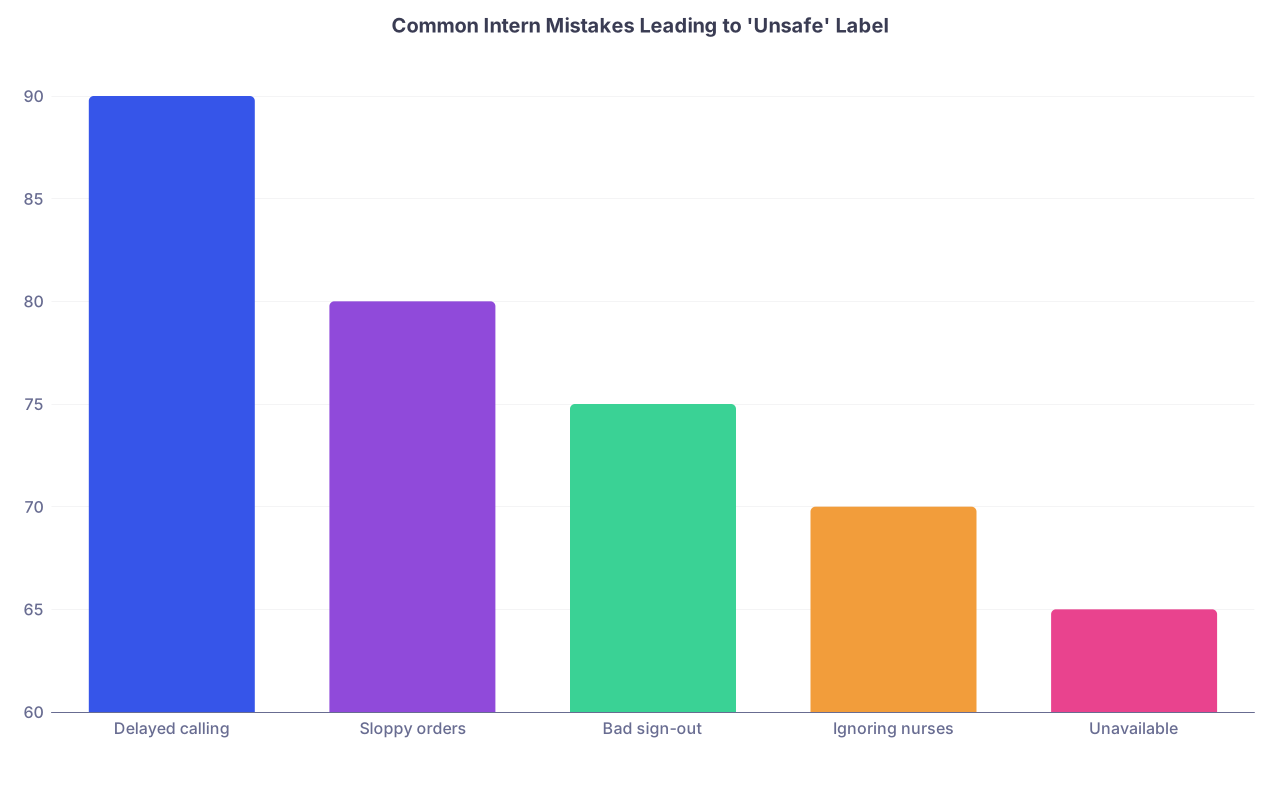
| Category | Value |
|---|---|
| Delayed calling | 90 |
| Sloppy orders | 80 |
| Bad sign-out | 75 |
| Ignoring nurses | 70 |
| Unavailable | 65 |
11. Missing Patterns Over Time
One bad night doesn’t get you labeled unsafe. A pattern does.
What seniors and attendings quietly track:
- Are your patients always the ones with missed labs, delayed antibiotics, or unaddressed vitals?
- Do multiple nurses independently complain about the same behavior?
- Do your sign-outs repeatedly miss active, serious issues?
- Do you always underestimate severity until something blows up?
This is why early course correction matters. Once there’s a pattern, it’s hard to erase.
How to catch and fix your pattern early
Once a month (or more often at the start), ask one direct question to a trusted senior:
“Is there anything I’m doing that makes you worry I could be unsafe?”
Then shut up and listen. No defending. No explaining. Just:
“Thank you. I’ll work on that.”
Then actually change the behavior. People notice.

| Step | Description |
|---|---|
| Step 1 | Get page about change |
| Step 2 | Go see patient now |
| Step 3 | Call senior immediately |
| Step 4 | Get vitals, labs, exam |
| Step 5 | Start initial interventions |
| Step 6 | Update nurse and document |
| Step 7 | Discuss with senior if unsure |
| Step 8 | Sick or unstable |
Practical “Safe Intern” Checklist
Print this in your brain:
- When in doubt, see the patient. Then call.
- When you feel hesitant about calling, call anyway.
- Never reassure without data.
- Don’t pretend to know things you don’t. Own your gaps.
- Take nursing concerns seriously. Show up.
- Double-check high-risk orders (opioids, insulin, anticoagulants, electrolytes).
- Give clear, concrete sign-outs with specific “if X, then Y” plans.
- Be reachable. Always.
- **Close the loop** on every task you start.
- Take feedback without drama. Then fix the behavior.
If you follow just those, you’ll be ahead of half your class on perceived safety.
FAQ (Exactly 4 Questions)
1. What’s worse—calling too much or not calling enough?
Not calling enough. Every senior I know would rather be “bothered” 20 times than find out you sat on a crashing patient because you didn’t want to annoy them. The annoyance fades by morning. The memory of a preventable code doesn’t.
2. How do I recover if I’ve already been labeled “unsafe”?
You won’t fix it in a week, but you can change the narrative. Tell your senior directly: “I know there have been concerns about my safety. I’m working on A, B, and C. If you see me missing something, I want you to tell me in the moment so I can correct it.” Then become obsessively reliable: fast responses, thorough sign-outs, no more hidden problems. Over a few months, people notice the new pattern.
3. Is it bad to admit I’m overwhelmed or at my limit?
No. It’s bad not to. Saying “I’m at capacity with two unstable patients; I need help with this admission” is mature and safe. What scares people is the intern who says nothing, drowns silently, and lets care slip. Overwhelm is normal. Hiding it is dangerous.
4. How can I tell if seniors see me as “safe”?
Listen between the lines. Do they trust you with sicker patients over time? Do they let you run with plans and then just fine-tune, instead of redoing everything? Do nurses say, “I’m glad you’re on today”? The day your senior says, “If you’re worried, I’m worried,” that’s the highest safety compliment you’re going to get.
Open your sign-out from your last call right now. Look at each patient and ask: “If something bad happened tonight, did I give cross-cover exactly what they’d need to act fast?” If the answer is anything other than a clear yes, start fixing that today.