
What do you think your night nurse says about you at 4:15 a.m. after your third useless “just checking in” page?
If you think it’s neutral or kind, you’re wrong.
There are paging habits that instantly brand you as “that resident” — the one people roll their eyes about at the desk, the one whose number everyone recognizes and dreads. And no, it’s not just “being slow to respond.” It’s a whole pattern of behavior that screams: “I don’t respect your time” or “I have no idea how this hospital actually runs.”
Let me walk you through the mistakes that quietly destroy your relationships with nurses and co-residents — and how to avoid becoming the person no one wants to page… or answer.
Mistake #1: The “Page and Vanish” Resident
You know this one. You send a page.
“Call 555-1234 re: pt on 7W”
No further info. No name. No callback context. Nurse or co-resident stops what they’re doing, calls you immediately.
And you. Don’t. Answer.
Or worse: you answer but you’re scrubbed, “in the middle of something,” or have no idea what the page was actually about because you blasted it out without thinking.
Why this drives people insane:
- It forces their interruption twice: once to call you, again later when you’re finally free.
- It signals you don’t plan ahead.
- It wastes precious minutes on a busy floor or in a crowded ED.
Don’t make this mistake:
When you page, be prepared to respond — and be reachable.
Minimum standard:
- Don’t send a non-urgent page right before walking into a procedure or family meeting.
- If you must, have a plan: “I’ll be scrubbed from 13:10–13:40; if I don’t answer, I’ll call you right after.”
- When they call back, answer like you remember you paged them: “Hey, this is Dr. X, I paged you about Mr. Smith’s blood cultures.”
If you regularly “page and vanish,” people start delaying their responses to you. And you’ll deserve it.
Mistake #2: Paging Without Thinking: “Can You Just…?”
This one is subtle but lethal to your reputation.
Residents who do this page for anything the second it crosses their mind:
- “Can you just check that potassium again?” (It was drawn 45 min ago.)
- “Can you just move the patient to the chair?” (PT and nursing already planned it.)
- “Can you just send a UA?” (No order in. No indication clearly stated.)
Every “can you just” page that’s vague, unnecessary, or poorly thought out tells your nurse or co-resident: I use your time as my scratchpad.
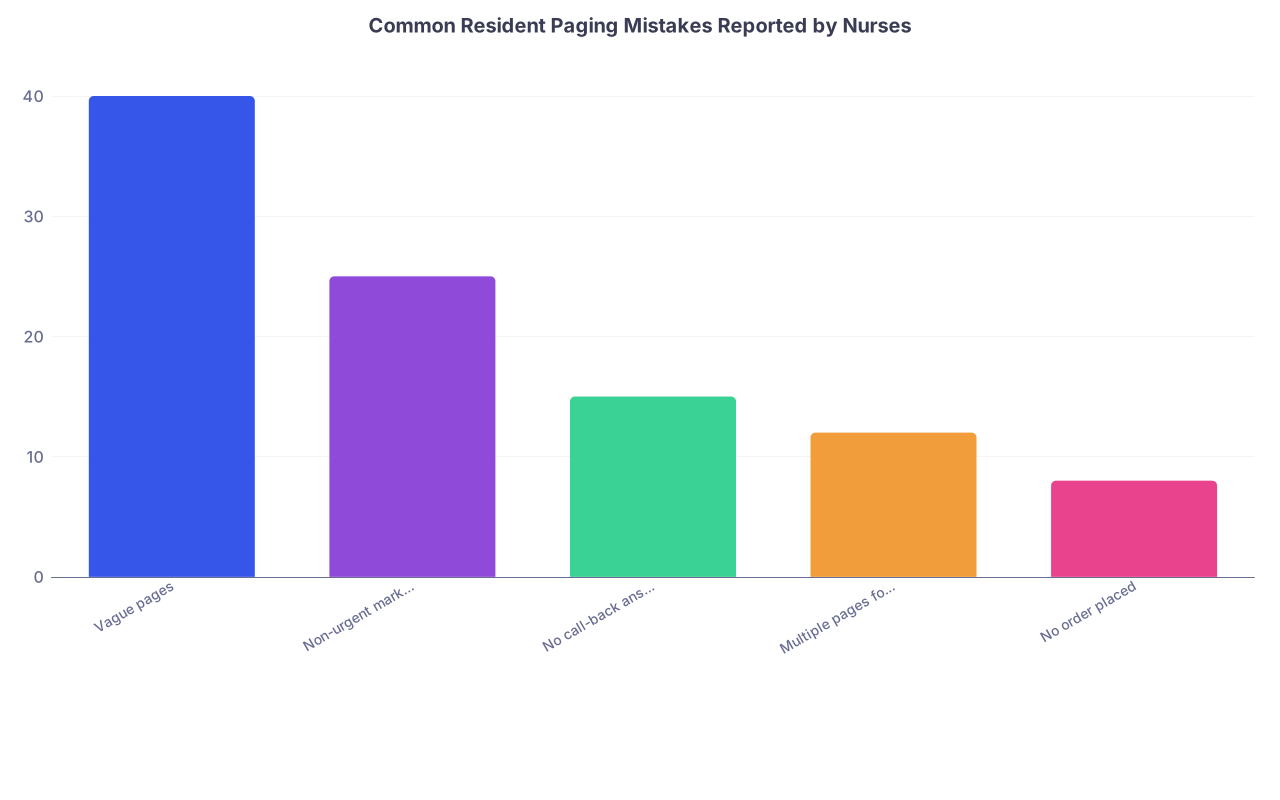
| Category | Value |
|---|---|
| Vague pages | 40 |
| Non-urgent marked STAT | 25 |
| No call-back answer | 15 |
| Multiple pages for same issue | 12 |
| No order placed | 8 |
Red flags you’re guilty of this:
- You page and then realize you forgot to put the order in.
- You page the night float to “follow up lab” instead of just writing it in your sign-out.
- You use pages instead of the EMR task systems your hospital set up.
Better approach before you ever hit send:
Ask yourself three questions:
- Can I solve any part of this myself first?
- Check the chart, vitals, meds. Don’t ask questions the EMR answers in 10 seconds.
- Is this truly time-sensitive?
- Could it safely wait 30–60 minutes? Then don’t disrupt someone doing hands-on care.
- Have I made the ask specific and actionable?
- Bad: “Call me about Mr. Smith.”
- Good: “Pls call re: Mr. Smith, new O2 need, considering ABG vs CXR.”
People aren’t bothered by being paged. They’re bothered by being dragged into your unstructured thinking.
Mistake #3: The 3 a.m. Non-Urgent Page
You want to make enemies on night shift? Start paging for nonsense at 03:00.
I’ve seen residents wake up cross-cover for:
- Renewing a stool softener
- Asking about “bowel regimen preferences” on a stable patient
- Diet changes that aren’t happening until the morning
- Rewriting perfectly fine PRN pain orders
Nurses and co-residents remember exactly who does this.
Hard rule: If it wouldn’t change management in the next 1–2 hours, it’s probably not a 3 a.m. issue.

What is 3 a.m. appropriate:
- New chest pain, SOB, neuro change, hypotension
- Rapid arrhythmias, uncontrolled pain, acute bleeding
- Concerning labs that just resulted (e.g., K 6.5, Hgb 5.2, Na 118)
What usually can wait:
- Diet tweaks
- Routine lab scheduling
- Detailed social work needs
- Changing long-standing PRN meds that are working okay
If you’re not sure, ask yourself: Would I be irritated if someone woke me up at home for this? If your honest answer is yes, you just found your answer.
Mistake #4: Vague, Useless Pages With No Information
This one is universal:
“Call 7E nurse”
“Call about pt”
“Call re: 6109”
No hint if the patient is crashing or just needs a home med dose clarified. So you sprint to a phone between patients, adrenaline going… and get:
“Hey, sorry, I just wanted to confirm you really want the Lasix BID instead of once daily?”
You’ve just trained your co-resident or nurse to never trust that your pages are urgent.
| Situation | Bad Page | Better Page |
|---|---|---|
| Mild tachycardia | Call 6W | Pls call 6W re: Mr. Lee HR 120s, stable BP, on tele |
| Home med question | Call about 7123 | Non-urgent: pls clarify home metformin dose for Ms. Jones |
| Concerning change | Call 555-9876 | STAT: call 555-9876 re: Mr. Patel new O2 need & BP 80s |
Principle: Your page should answer three questions up front:
- Who? (Patient location/name or room)
- How urgent? (STAT / priority / non-urgent)
- What for? (1–2 words: pain, BP, labs, mental status, orders)
You don’t need a novel. One clear line is enough:
“Non-urgent: pls call 7E re: Ms. Clark, pain control”
You’ll be amazed how differently people respond when they know what they’re walking into.
Mistake #5: “STAT” Abuse and Crying Wolf
Nothing burns trust faster than slapping “STAT” on everything.
- “STAT diet order”
- “STAT clarify bowel regimen”
- “STAT CBC” — on a patient with stable mild anemia
Once people realize your STAT is really “whenever you get to it,” they stop taking your urgency seriously. Then the real emergency comes… and you’ve devalued your own warning label.
How you accidentally abuse urgency:
- You’re anxious and label everything high priority.
- You use STAT because you didn’t plan ahead and the scan is about to close.
- You use STAT to jump the queue because you don’t want to wait.
Honestly? Nurses and co-residents can see through that.
Use urgency labels like this:
- STAT: Immediate action required; patient could decompensate without it.
- Priority/soon: Needs to be addressed this shift but patient is stable.
- Non-urgent: Can be done when there’s a lull; doesn’t need interruption of a high-acuity task.
If you’re consistently honest with urgency, you become the person people trust when you do say, “I need you now.”
Mistake #6: Flood Paging Instead of Bundling
Another classic: instead of taking 90 seconds to look at the chart and think ahead, you page three separate times over an hour. Same nurse. Same patient.
- 21:10: “Can we get a BMP on 543?”
- 21:28: “Actually, also a mag and phos.”
- 21:55: “Sorry, can you also send a type and screen?”
That nurse now hates you. And they’re not wrong.
Same goes with co-residents:
- You page consult resident asking a question that’s answered in their note.
- Then page again to clarify your own order.
- Then page about an issue already covered in sign-out they wrote.
Bundling is a professionalism skill.
Before paging, ask:
- What else might we need related to this problem?
- Are there predictable follow-ups I can include now?
- Have I read the last note, checked labs, and thought this through?
Instead of three annoying pages, you send one:
“Pls call re: Mr. X hypotension — want to discuss fluids, labs (BMP/mag/phos), and whether to draw lactate now vs repeat later.”
That’s a page people respect. Because you clearly put in effort before asking for theirs.
Mistake #7: Paging the Wrong Person (and Then Acting Annoyed)
Nothing looks more amateur than repeatedly paging the wrong team — and then sounding frustrated when they tell you so.
Common flavors:
- Paging the day team at 22:30 instead of cross-cover.
- Paging consult resident when primary team should be called.
- Paging ICU about a patient still on the floor who’s clearly not ready to transfer.
- Paging radiology resident about a scheduling issue that belongs to transport or the coordinator.
When you do this, you’re announcing: “I don’t understand how this hospital works, and I’m making it your problem.”
Bare minimum to avoid this:
- Know who covers your patients at night (and where that’s listed).
- Learn which issues go to nursing, which to consults, which to the primary team.
- Don’t page subspecialty for things your own team should manage (no, nephrology doesn’t need to be called for every Cr 1.6 to 1.7 bump).
And if you do reach the wrong person? Own it fast.
“Got it, that’s on me — I’ll reach out to the right team. Thanks.”
That sentence alone can save your reputation a surprising number of times.
Mistake #8: Paging as a Power Move or Emotional Dump
This one is ugly, and I’ve seen it too often.
- Paging a nurse repeatedly when they don’t answer immediately, as if spamming their pager will speed them up.
- Paging a co-resident with obvious passive-aggression: “Pls finally address overdue notes on your patients.”
- Using pages to scold: “You forgot to…” instead of “Can we…”
Pages are not your emotional outlet. They’re tools. When you use them to vent frustration or assert authority, you’re telling everyone you don’t have control of yourself.
And word spreads. Fast.
Rules to protect yourself from becoming “that person”:
- Never page in anger. If you’re heated, draft what you want to say, wait 1 minute, then edit.
- Don’t use all caps unless the patient might literally code.
- Avoid blamey language:
- Bad: “You never sent the labs.”
- Better: “I don’t see the labs yet — can we confirm if they were sent?”
You can be direct without being a jerk. That’s what professionals do.
Mistake #9: Ignoring Pages… Then Pretending You Never Saw Them
Everyone misses a page. You’re in the bathroom, you left the pager at the computer, your hands are in a chest.
That’s not the problem.
The problem is what happens after:
- You call back 40 minutes later and act like the situation is minor, even if it clearly escalated.
- You blame the nurse for not re-paging.
- You get defensive: “I’m covering 40 patients, you know.”
The story on the floor becomes: “They never answer their pager.” Once that label sticks, it’s brutally hard to shake.
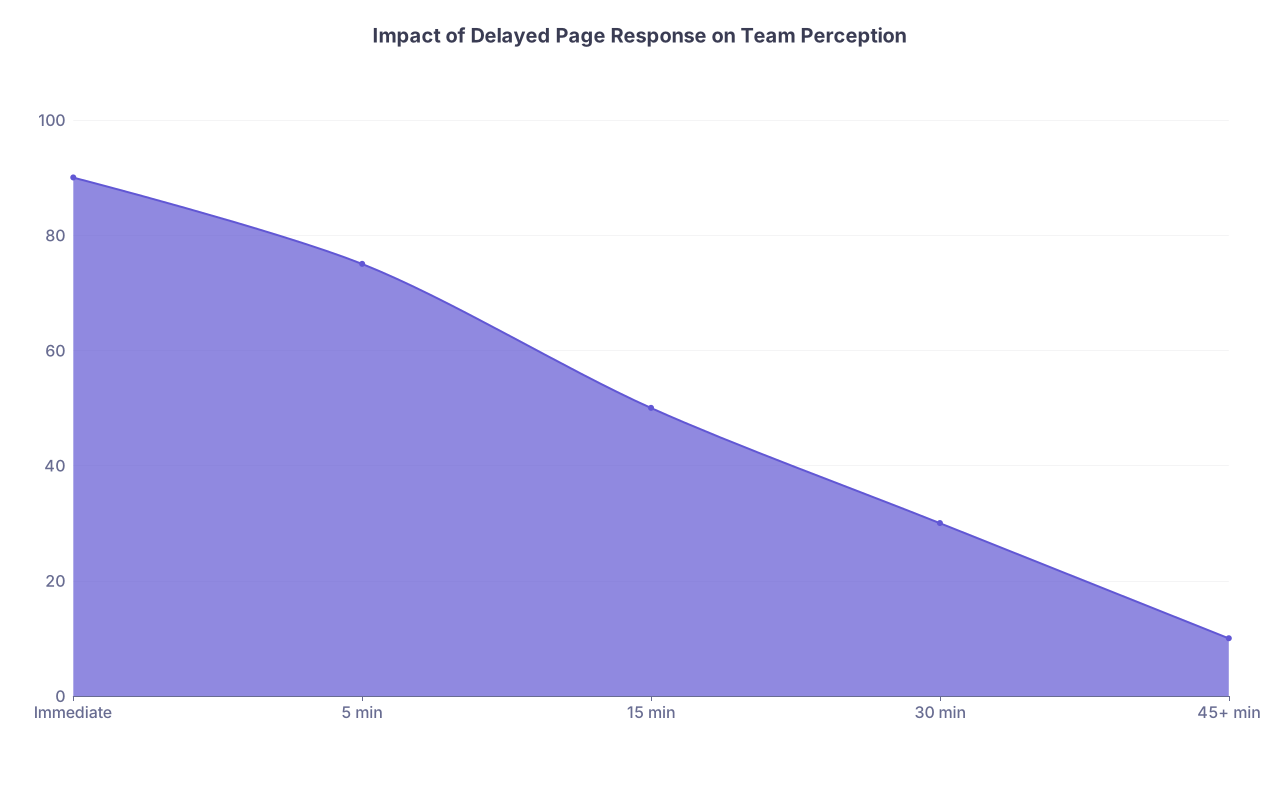
| Category | Value |
|---|---|
| Immediate | 90 |
| 5 min | 75 |
| 15 min | 50 |
| 30 min | 30 |
| 45+ min | 10 |
Better way to handle a missed page:
- Call back as soon as you see it. No shame pause. Just do it.
- Lead with accountability: “Sorry for the delay, just saw this. What’s going on with Mr. Y?”
- If it was truly unsafe, debrief later and adjust your system. Maybe you need:
- Pager forwarding when you’re in a long case
- Clearer expectations with your team about who covers which times
- To actually carry the pager and not leave it at the workstation (yes, that’s you sometimes)
If people see you genuinely trying to respond and take responsibility, they give you grace. If they see excuses and blame? Not so much.
Mistake #10: Using Pages Instead of Face-to-Face (When You’re 10 Feet Away)
You’re sitting at the same workroom desk. Nurse at the station three steps away. Co-resident across the table.
And you page.
It’s absurd. And yes, it happens constantly.
What this says:
- You’re hiding behind devices.
- You’re afraid of direct, efficient, human communication.
- You don’t care enough to get up and walk 5 seconds.
Face-to-face:
- Solves miscommunication faster
- Lets you bundle issues on both sides
- Builds actual relationship equity
Every time you choose to walk over instead of pinging someone from 20 feet away, you’re buying goodwill you’ll need later at 3 a.m. when your septic patient rolls in.
Use pages for:
- When you’re not physically nearby
- When the nurse is in another room and interruption might be unsafe
- When a call-back is clearly more efficient than searching the unit
Don’t use them as avoidance.
Quick Reference: What Makes a “Good” Page?
If you remember nothing else, remember this checklist.
A page that doesn’t annoy everyone usually has:
- Clear urgency: STAT / soon / non-urgent
- Patient identifier: name + location or room
- Reason in 2–5 words: BP, O2, pain, labs, mental status, orders
- Reasonable timing: not 3 a.m. for daytime issues
- Thought behind it: you’ve looked at the chart, anticipated basics, and bundled related needs
Example of a solid page from a resident to a nurse:
“Priority: pls call 6E re: Ms. Davis new HR 130s, on tele, want to discuss assessment + possible labs.”
From nurse to resident:
“STAT: pls call 6W re: Mr. Lopez, BP 80s/40s, new change from baseline.”
Nobody’s annoyed by pages like that. They’re relieved to be working with someone who respects the system.
FAQ (Exactly 5 Questions)
1. How fast do I really need to respond to a page?
You don’t need to teleport, but you should aim to respond within a few minutes for anything that’s not clearly marked non-urgent. For STAT or priority pages, treat them like someone is standing at your shoulder saying, “Hey, this might matter.” If you’re scrubbed, in a code, or truly unable to respond, arrange coverage or call back as soon as humanly possible and say why you were delayed. Silence is what people resent, not being reasonably busy.
2. Should I always call back, or can I sometimes just message in the EMR?
If they paged you, respond in the same “channel” they used unless it’s clearly non-urgent and your institution accepts secure messaging as equivalent. But be careful with that shortcut. Nothing irritates people more than paging you and then watching you send a half-answer via EMR instead of picking up the phone. When in doubt, call — especially for anything clinical, urgent, or nuanced.
3. How do I politely tell a nurse or co-resident that something isn’t appropriate for a STAT page?
You do it after the fire is out, not in the moment. Something like: “Hey, about that STAT page for the bowel regimen at 2 a.m. — I’m always happy to adjust meds, but that kind of thing doesn’t need to be STAT in the middle of the night. If you mark it non-urgent next time, I can still get to it, and we’ll save STAT for when patients are unstable.” Calm, direct, and anchored to patient safety, not your convenience.
4. What if I feel overwhelmed and like everyone is paging me nonstop?
Welcome to residency — but there are ways to make it less miserable. First, fix the mistakes you control: bundle your pages, give clear sign-outs, place clear orders, and proactively clarify plans with nurses before shift change. Half the pages you get at 1 a.m. are for things you didn’t think through at 4 p.m. And if it’s truly unmanageable, talk to your senior or chief about coverage structure rather than just complaining about “too many pages.”
5. How can I repair my reputation if I’ve already been “that resident” with bad paging habits?
You can absolutely recover, but it takes visible change. Start by tightening up your page content, being scrupulous about urgency labels, and over-responding promptly for a while. Apologize directly once or twice where you know you messed up: “I know I used to send a lot of non-urgent stuff overnight — I’m working on not doing that.” People pay attention to consistent patterns more than isolated screwups. Give them a new pattern to talk about.
Open your pager or messaging system right now and look at the last 5 pages you sent. For each one, ask: Was it clear? Was the timing appropriate? Would I have been annoyed to receive it? Fix the next five you send, and you’ll already be less of a headache to work with tomorrow.