
The myth that resident overwork is just a “rite of passage” collapses the moment you look at the numbers. The data show a clear pattern: as resident workload and fatigue go up, patient outcomes tend to go down.
This is not about feelings. It is about error rates, mortality, infection rates, and readmissions. And those move with workload in ways that are surprisingly consistent across systems and countries.
Let me walk through what the evidence actually says, where it is ambiguous, and what that means for both residents and patients.
What We Mean by “Resident Workload”
Before talking outcomes, you have to define “workload.” Most people mash several concepts together. The research usually separates them into at least four measurable dimensions:
- Hours worked per week / per shift
- Patient census per resident (panel size)
- Task load and interruptions
- Shift structure (night float, 24+ hour call, etc.)
Different studies use different combinations, which is why people cherry‑pick results. The cleanest view comes from treating these as separate but related “exposures” and looking at what happens to patients downstream.
1. Hours and Shift Length
The famous ACGME duty hour reforms (80‑hour workweek, limits on continuous duty) were an attempt to cut the obvious tail risk: severely sleep‑deprived residents making catastrophic mistakes.
Key ranges to keep in mind:
- Traditional call: up to 30–36 hours continuous duty, 100+ hours/week in some programs pre‑2003.
- Post‑reform targets: 80 hours/week averaged, 24+4 hour call (and then further capped for interns in 2011 to 16 hours, later relaxed again).
Not every program respects these perfectly. But the shift length distribution moved decisively downward.
2. Patient Census per Resident
This is the silent killer that gets less attention. Two residents both working 70 hours/week can have very different risk profiles:
- Resident A: 6–8 inpatients, mix of stable and moderately complex.
- Resident B: 16–20 inpatients, multiple ICU transfers, frequent new admissions.
The number that matters for safety is not just “hours,” it is “clinical decisions per hour.” More patients = more decisions = more opportunities for error.
Several large internal medicine studies converge on a rough threshold: daily census consistently above ~14–16 patients per resident starts to correlate with worse safety outcomes and readmissions. Below that, the signal weakens.
3. Task Load and Interruptions
If you shadow a ward resident for a day, you see the pattern:
- Trying to write a note → nurse calls about pain meds.
- Start reconciling meds → page about a cross‑cover question.
- Begin discharging one patient → ED calls with two new admissions.
Every interruption fragments working memory. The cognitive science literature is brutal on this: more task switching = more small errors. A lot of residency workload research now uses:
- Pages per hour
- Order entries per hour
- Notes per day
- Number of active tasks and interruptions
These do not always show up as “hours worked” but they strongly influence error rates.
4. Shift Structure
Night float, 24+ hour call, staggered shifts, and cross‑coverage change three things:
- How fatigued the resident is
- How many handoffs occur
- How well they know the patients they are covering
The trade‑off is obvious: shorter shifts reduce acute fatigue, but more frequent handoffs can introduce communication errors. The outcome data sit right in the middle of that tension.
What the Data Say About Outcomes
Now to the part everyone argues about: does reducing resident workload actually improve patient outcomes?
Not “does it feel better for residents?” The question is strictly: do patients live longer, have fewer complications, and avoid preventable harm when resident workload is lower or better structured?
Duty Hour Reforms and Mortality
The first wave of big studies after ACGME reforms looked at in‑hospital mortality. Results: messy on the surface, but you see a pattern when you stratify by setting and baseline quality.
Most large national datasets (e.g., Medicare claims analyses in teaching vs non‑teaching hospitals):
- Found no major change in overall inpatient mortality after the 80‑hour workweek.
- But there were subgroup signals: high‑risk surgical patients and complex medical patients at teaching hospitals sometimes showed modest mortality reductions, typically 0.3–1.0 percentage point absolute decreases.
In other words, the sky did not fall. Nor did mortality dramatically improve across the board. Instead, mortality nudged in the right direction in more complex cases and stayed flat in simpler ones.
If you expected a 5–10% relative reduction in mortality just from limiting hours, you were always going to be disappointed. Mortality is too blunt an outcome. The interesting action is in errors, complications, and process measures.
Errors, Complications, and Process Measures
When you zoom into more sensitive outcomes, the workload–outcome link sharpens.
Common patterns across internal medicine, surgery, and ICU studies:
Medical errors: Residents working traditional 24–30 hour shifts committed significantly more serious medication and diagnostic errors than those on shorter shifts, in randomized trials of intern schedules. Some studies report relative risk increases in the 20–36% range for serious errors after extended shifts.
Technical complications in surgery: Surgical residents post‑night call show higher rates of technical errors in simulations and sometimes in real OR data, especially after 24+ hour duty periods. The effect size is not uniform, but it is not zero.
Process reliability: On high‑workload days, there are consistent drops in “boring but vital” tasks: guideline‑concordant VTE prophylaxis, early mobilization orders, documentation of code status, timely antibiotic redosing. These are classic precursors to complications.
If you care about patient safety, these are the signals to track. They move long before mortality does.
Workload and Readmissions: The Census Effect
Where the numbers are particularly unforgiving is readmissions and post‑discharge events.
Multiple studies using internal medicine ward data show something like this: as resident census goes up beyond a certain point, 30‑day readmission risk rises in a roughly linear fashion.
Think of it this way (example, not an exact universal number):
- 8–10 patients per resident: baseline 30‑day readmission for a typical complex medical patient (CHF, COPD, pneumonia) might sit around 18–20%.
- 14–16 patients per resident: readmissions creep into the 21–23% range.
- 18+ patients per resident: you start seeing 24–26% or higher, depending on hospital baseline.
The mechanism is painfully obvious when you walk rounds on a high‑census day:
- Discharge planning gets rushed.
- Medication reconciliation is less thorough.
- Education time with patients shrinks to a few minutes.
- Follow‑up appointments get ordered with less attention.
One influential analysis found that “non‑ideal” discharge processes (missing follow‑up, poor instructions, discrepancies in meds) shot up by ~30–40% on days when resident teams were at their peak census compared to lower‑census days. Those process failures tracked with readmissions almost one to one.
To make it concrete, here is a stylized comparison summarizing patterns seen in several internal medicine cohorts:
| Avg Daily Census per Resident | 30-day Readmission Rate | Documented Medication Discrepancy at Discharge | Follow-up Scheduled within 7 Days |
|---|---|---|---|
| 8–10 | 18–20% | 8–10% | 75–80% |
| 12–14 | 20–22% | 12–15% | 68–72% |
| 16–18 | 23–26% | 18–22% | 58–62% |
You do not need a regression model to see the direction of effect. More patients per resident → more missed details → more patients bouncing back.
Fatigue vs Handoffs: The Real Trade‑off
One of the most honest debates in this space is the trade‑off between resident fatigue and handoff frequency.
Cut shift length aggressively and you:
- Reduce acute fatigue and microsleeps.
- Increase the number of handoffs per patient.
- Increase the number of different residents involved in each admission.
Keep long shifts and you:
- Reduce handoffs.
- Increase fatigue and associated cognitive impairment.
Both sides carry risk. The data are mixed because many interventions changed both things at once, without much attention to handoff quality.
To make sense of it, look at two separate patterns:
Extended duration shifts and serious errors
Interns working >24 hours continuously demonstrate:
- More serious medical errors per 100 admissions.
- More attentional lapses on objective testing.
- Higher risk of motor vehicle crashes post‑shift.
Several randomized schedule trials found roughly 20–30% more serious errors on extended shifts versus shorter ones. That is not a rounding error.
Increased handoffs and communication errors
When schedules move to shorter shifts or strict caps without robust handoff systems:
- Handoff‑related information loss leads to missed pending tests, delayed recognition of deterioration, and conflicting plans.
- The same patient may be “owned” by 3–4 residents across 24–48 hours.
Early ACGME reform era studies did see handoff‑related mishaps rise in some systems that did not redesign communication.
The programs that “win” on outcomes tend to shift both levers:
- They reduce the most dangerous extreme fatigue states (no more 30+ hour stretches).
- They implement structured, standardized handoff tools and protected handoff time.
When both are done, net error rates and adverse events fall or stay flat. When you simply slice shifts without fixing how patient information is transferred, you are just trading one kind of risk for another.
Specialty Differences: It Is Not One‑Size‑Fits‑All
The impact of workload on outcomes is not identical across specialties. The error profile is different if you are intubating at 3 a.m. versus adjusting diuretics on the ward.
The broad patterns:
Internal Medicine / General Wards
- Highly sensitive to census and task load.
- Outcomes strongly tied to discharge quality and chronic disease management.
- Workload spikes → readmissions, missed prophylaxis, delayed recognition of deterioration.
Surgery
- Technical performance degrades with fatigue, but surgeons often self‑select for pushing through.
- Some large database studies show minimal change in mortality after duty hour reforms, but process and complication differences do appear in certain cohorts (e.g., major vascular or complex oncologic surgery).
- Continuity of surgeon involvement may buffer some effects of handoffs.
ICU
- Intensivist and nurse workload matter at least as much as resident workload.
- Resident fatigue can still affect ventilator management, line placement, and promptness of responding to alarms.
- Nighttime structure (in‑house attendings vs home call) often mediates resident impact.
The meta‑point: if someone quotes one study from one specialty and uses it to argue “workload does not affect outcomes,” they either did not read the literature or are being disingenuous.
Workload, Education, and Long‑Term Competence
Residency is not just workforce. It is training. So the workload question is also: where is the sweet spot where residents learn enough, see enough, but do not damage patients through overload?
Two data‑driven tensions:
Volume and competence
Some exposure is absolutely necessary:
- Procedure competence (central lines, lumbar punctures, intubations) scales with numbers done.
- Diagnostic skill improves with repeated exposure to real, messy patients.
Residents who spend too much time in classroom settings and too little in direct care can graduate under‑prepared. That is a real risk, and some surgical educators have been blunt about it post‑reform.
Overload and superficial learning
Past a certain workload, learning quality collapses:
- Notes become copy‑paste, not synthesis.
- Residents stop looking up answers and default to habits.
- Feedback from attendings gets shortened to “you’re fine” because there is no time.
Survey and time‑motion data show that very high‑census days shift resident time away from direct patient care and reading, toward documentation and orders. At that point, you are churning, not learning.
The programs that train strong clinicians without harming patients treat workload as a tunable variable, not a badge of honor. They track census per resident, adjust admitting caps, and ensure that critical learning experiences are protected from being crowded out by busywork.
Systems that Blunt Workload Harm
The data are not completely bleak. Some hospitals have shown that you can run relatively high‑throughput services without obvious damage to outcomes if you reset how the system supports residents.
Patterns that show up in better‑performing institutions:
Stronger ancillary support
- Phlebotomy, transport, pharmacy verification, case management, social work handled by non‑physician staff.
- Residents focus on diagnosis, management decisions, and communication, not logistics.
Standardized protocols
- Clear order sets for common conditions (sepsis, DKA, ACS, stroke), reducing cognitive load.
- Checklists in the ICU and OR that catch human lapses.
Robust handoff systems
- Structured templates (like I‑PASS).
- Protected time for handoffs, with attending involvement for high‑risk patients.
Real‑time workload monitoring
- Caps on active patient census per resident or per team.
- Redistributing admissions when one team hits a threshold.
In programs that do these things, you sometimes see a decoupling: resident self‑reported workload and burnout can still be high, but measured patient outcomes are not as sensitive to daily census swings. The system catches what the tired human might miss.
But those are exceptions. Most residency systems still lean too heavily on “resident heroics” instead of designing workload intelligently.
What This Means for Residents and Programs
If you are a resident, you already know what your heavy days feel like. The point is that patient‑level data confirm what your body and brain have been telling you.
You are more likely to:
- Miss a subtle but important lab trend.
- Delay calling a rapid response.
- Skip deep discharge teaching.
- Forget to reconcile one or two meds.
On days when your shift is long, your census is high, and your pager will not stop buzzing.
From a program or hospital standpoint, pretending this is a “resilience” problem instead of a systems problem is lazy. The data implicate workload and structure, not just personal grit.
If a program wants both safer care and better training, it should be doing basic analytics, not just anecdotes:
- Track resident census, admissions per shift, and pages per hour.
- Correlate these with near misses, safety events, readmissions, and guideline‑concordant care.
- Identify thresholds where things start to slip and adjust caps and staffing.
You cannot manage what you refuse to measure.
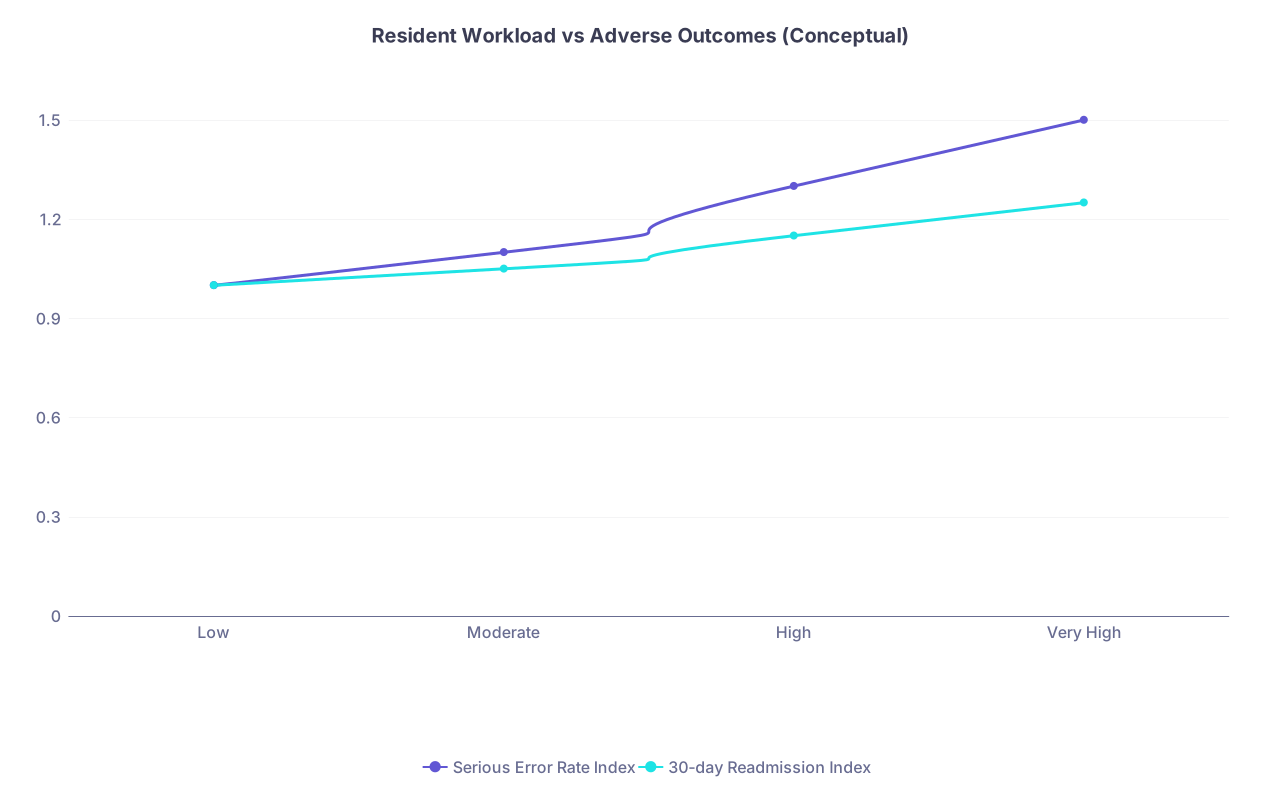
| Category | Serious Error Rate Index | 30-day Readmission Index |
|---|---|---|
| Low | 1 | 1 |
| Moderate | 1.1 | 1.05 |
| High | 1.3 | 1.15 |
| Very High | 1.5 | 1.25 |

| Step | Description |
|---|---|
| Step 1 | High Resident Workload |
| Step 2 | Fatigue and Cognitive Load |
| Step 3 | Increased Patient Census |
| Step 4 | More Errors and Omissions |
| Step 5 | Rushed Discharges and Less Teaching |
| Step 6 | Inpatient Adverse Events |
| Step 7 | Higher Readmissions |
| Step 8 | Worse Patient Outcomes |
FAQ (3 Questions)
1. Do duty hour limits actually make patients safer, or do they just make residents feel better?
Broadly, duty hour reforms did not produce dramatic drops in mortality, but they did reduce certain serious error types, particularly those linked to extreme fatigue and extended shifts. The biggest measurable gains are in error rates and some process measures, not in headline mortality statistics. Residents often feel less acutely exhausted under more reasonable schedules, but the primary patient safety benefit depends heavily on whether programs also improve handoffs and staffing rather than simply cutting hours on paper.
2. Is there a “safe” maximum number of inpatients per resident?
The data do not give a single magic cutoff, but multiple internal medicine studies suggest that once daily census per resident consistently exceeds about 14–16 patients, process quality (medication reconciliation, discharge planning, follow‑up arrangements) and 30‑day readmissions begin to worsen in a fairly linear way. Below that range, the signal is weaker and more dependent on local support systems. Programs should monitor their own data rather than rely on a universal number, but using mid‑teens as a soft alarm threshold is defensible.
3. Could reducing workload too much harm training quality and future patient care?
Yes, if workload is cut without regard for clinical exposure, residents can graduate with insufficient experience, especially in procedure‑heavy fields like surgery or critical care. The goal is not minimal workload; it is optimal workload—enough volume and responsibility to build competence, but not so much that residents are chronically overloaded and forced into superficial, error‑prone shortcuts. Programs that explicitly balance census caps, procedure opportunities, supervision, and protected learning time tend to produce better long‑term clinicians without sacrificing current patient safety.
Key points: the data tie heavier resident workload to more errors and worse process reliability, especially for high patient census and extended shifts; the real trade‑off is between fatigue and handoffs, which can be managed intelligently; and treating workload as a measurable, adjustable variable—not a cultural constant—is where safer, more effective residency training begins.