Optimizing your commute during residency is one of the few realistic ways to add 5–10 hours of focused learning or recovery back into your week—without touching your call schedule or fighting GME.
Most residents waste it. They doom-scroll, half-listen to a podcast they will not remember, or just sit there stewing in resentment. Then they complain they have no time to read, no time to sleep, no time to think. That is fixable.
Let me break this down specifically.
1. Know Your Commute Type Before You “Optimize” Anything
You cannot design a good system until you’re honest about the constraints. The commute for a PGY-2 in Manhattan is not the same problem as for a family medicine resident in a suburban program with a 45‑minute highway drive.
You need to classify your commute realistically:
| Commute Type | Typical Duration | Hands-Free? | Cognitive Load | Risk if Distracted |
|---|---|---|---|---|
| City driving | 15–45 min | Low | High | High |
| Highway driving | 20–60+ min | Medium | Medium | High |
| Train / subway | 20–60+ min | High | Low–Medium | Low |
| Bus / shuttle | 15–45 min | High | Low | Low |
| Walking / biking | 10–30 min | Medium | Medium | Medium |
Two key questions:
- How much of your attention must be on safety?
- Are your hands and eyes free, partially free, or not at all?
From that, you get your “commute learning budget”:
- Driving: audio only, brief mental exercises, no reading, no note-taking. If you are trying to read UpToDate at stoplights, you are being foolish and unsafe.
- Public transit: full cognitive work possible—reading, spaced repetition, planning, even short writing tasks.
- Walking: audio + light mental review, maybe quick voice notes. Nothing that requires constant visual focus.
You also have to separate to-work vs from-work commutes. The mental state is different.
- Morning: more alert, better for new material, priming for the day.
- Evening: depleted, better for consolidation, reflection, decompression.
Treat those as two separate blocks with different purposes.
2. Define Clear Jobs for Your Commute: Learning vs Recovery
Commuting time should serve one of two major functions:
- Improve you as a clinician (learning, retention, pattern-recognition).
- Prevent you from burning out (recovery, emotional processing, mental rest).
If your commute does neither, it is wasted.
You do not want to mix both goals in a single commute block. “Half-podcast, half-trying-to-read guidelines, plus texting co-residents” yields nothing high quality.
Pick one primary purpose per leg:
- Morning: 80–90% of residents do best with learning / priming.
- Evening: 80–90% do better with recovery / consolidation.
Then commit to that on purpose.
3. Morning Commute: Priming, Not Punishment
The morning ride is your chance to load the “clinical RAM” you’ll actually use on shift. Think targeted, case-linked content, not vague, high-yield-for-boards nonsense.
If You’re Driving
Driving is high-risk for distraction. You are limited to:
- Audio content
- Mind-based recall drills
- Very brief voice notes at red lights or via a one-tap shortcut
Good use cases:
- Board-style audio questions (IM, EM, peds, anesthesia, whatever your field).
- Short guideline summaries (e.g., ACC/AHA heart failure, GOLD COPD, pediatric sepsis bundles).
- “Topic of the day” mini-lectures.
Concrete examples I have seen residents use well:
- EM resident: 25‑minute highway drive. Plays 15 USMLE‑style cards converted to audio using text-to-speech, each with a 10‑second pause before the answer.
- IM resident: 35‑minute suburban commute. Rotates between:
- M/W/F: audio review of current inpatient cases (self-made, anonymized).
- Tu/Th: podcast episodes on core IM topics, limited to 1 episode per drive to avoid overload.
You can easily create your own simple structure:
- Monday: Cardiology-focused audio
- Tuesday: Infectious disease
- Wednesday: Pulm/crit
- Thursday: Outpatient/primary care
- Friday: “Wild card” (ethics, leadership, communication)
The trick is preloading content before the week starts. Do it on your lighter weekend day:
- Download podcasts.
- Add 10–20 flashcards to an audio-friendly deck.
- Sync any dedicated audio CME or review courses.
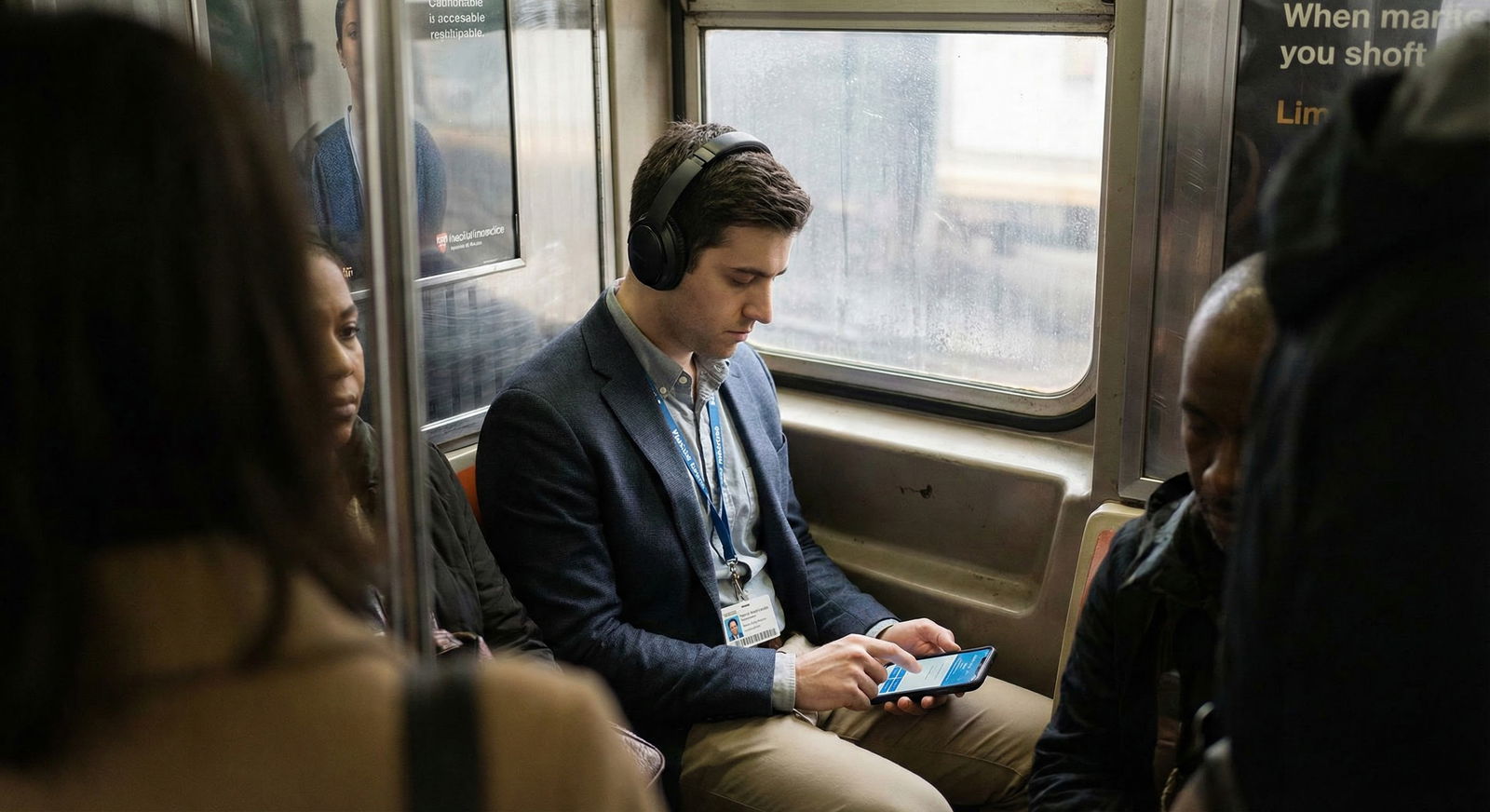
If You’re on Train/Subway/Bus
Here you can do higher-density learning. But you have to protect focus, because transit is full of distractions.
Morning pattern that works:
- First 2–3 minutes: sit, settle, noise-cancelling or in-ear buds in.
- Next 15–25 minutes: deep, focused learning on one microtopic.
- Last 5 minutes: quick recap or planning the first 1–2 tasks when you reach the hospital.
What you can realistically accomplish:
- Read 1–2 UpToDate or similar topic reviews tied to your active patients.
- Grind 15–30 high-yield questions for boards or in-training exam.
- Do a 20‑minute Anki or spaced-repetition session, but only if you keep it case-linked (more on this later).
Bad uses:
- Randomly scrolling medical Twitter.
- Bouncing between 5 different resources in 20 minutes.
- Letting email/WhatsApp destroy your attention.
If you are consistently “too tired” to read in the morning, that is a sign of chronic sleep debt. In that case, forcing dense reading may simply push you deeper into burnout. Shift your morning use to:
- 10–15 minutes of lighter clinical audio.
- 5 minutes of intention-setting:
- Top 1–2 educational goals for the day (“Today I want to really nail AKI staging and fluid choices”).
- One interpersonal or professionalism goal (“No eye-rolling in front of the intern, even when consults say something dumb”).
If You Walk or Bike
Walking: you can do audio learning, plus occasional short mental exercises:
- Listen to a brief guideline podcast.
- Pause it, then summarize out loud in your own words for 30 seconds.
- Use simple mental checklists:
- “What are 3 causes of X I mess up most often?”
- “What questions will I ask every new chest pain patient today?”
Biking: keep it simple and safe. Either silence (mental rehearsal) or very low-volume audio if conditions are safe. Never anything that pulls significant attention away.
4. Evening Commute: Stop Trying to “Crush Content” When Your Brain Is Cooked
Most residents try to pack dense learning into the evening commute. That is the wrong time for brand new, complex material. You are decision-fatigued, emotionally drained, and one step from snapping at the person who bumps you on the train.
Evening should focus on:
- Emotional decompression
- Consolidation (light review of what you actually saw)
- Sleep preparation
If you get this wrong, your sleep quality tanks, and you lose far more than you gained from that extra question block.
Good Evening Commute Options
Low-intensity clinical consolidation
Light, reflective tasks like:
- Mentally walking through 1–3 of the day’s core patients:
- Chief complaint
- Most critical decisions you made
- What you would do differently
- Briefly reviewing one UpToDate/summary page specifically related to a challenging case.
- Writing 1–2 bullets in a running “learning log” (use your notes app or a synced doc).
- Mentally walking through 1–3 of the day’s core patients:
Full non-clinical decompression
Some days, pausing clinical content completely is smarter:
- Fiction audiobook.
- Music you actually enjoy, not “focus playlists” that feel like productivity cosplay.
- Meditation audio or short guided breathing (yes, the cliché Calm/Headspace stuff—except it works when used consistently).
Social/emotional processing
If your commute is safe for conversation (e.g., train, not driving in heavy traffic), brief voice texts to a trusted peer work wonders:
- “Had a really rough code, not sure I agreed with how it was handled.”
- “Consult blew me off and I froze. Need to think how to push back next time.”
You are offloading emotional burden before you walk through your home door.
Things You Should Avoid on the Evening Commute
- High-stakes studying (e.g., cramming for boards) every single evening.
- Reliving every error in excruciating detail without structure—this becomes rumination, not reflection.
- Endless scrolling through Instagram/TikTok or residency group chats. It feels like “turning off your brain” but usually worsens anxiety and sleep.
I usually recommend residents make 3 of 5 weekday evening commutes non-academic. Protect some space where your identity isn’t “resident 24/7”.
5. Designing a Weekly Commute Template That Actually Works
Ad hoc plans die by week two of wards. You need simple, repeatable defaults.
Here is a concrete example template for a PGY-1 in Internal Medicine with:
- 25‑minute city drive each way.
- 6‑day workweek on wards.
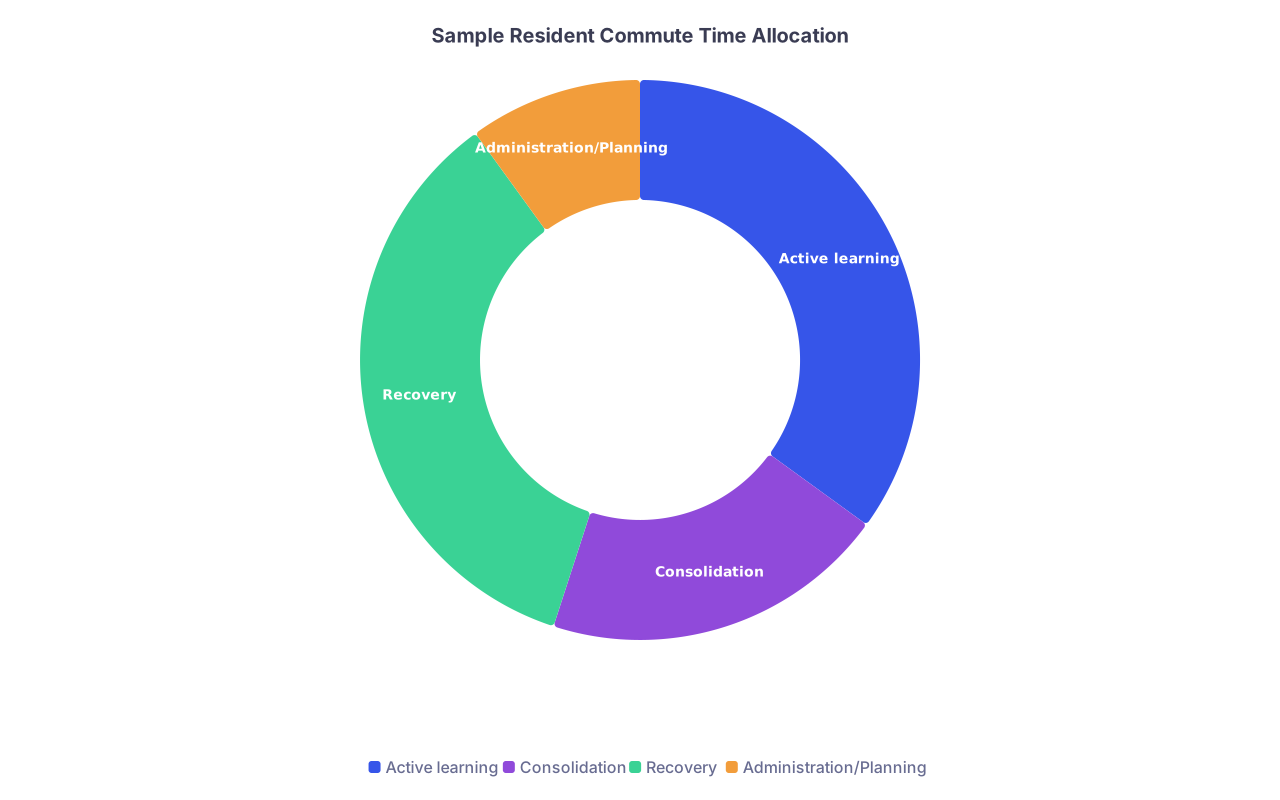
| Category | Value |
|---|---|
| Active learning | 35 |
| Consolidation | 20 |
| Recovery | 35 |
| Administration/Planning | 10 |
Morning (drive in):
- M/W/F:
- 20 minutes: audio board-style questions in your specialty or IM base.
- 5 minutes near arrival: mental checklist of tasks for first hour.
- Tu/Th:
- 15 minutes: rotational topic (cardio, pulm, ID, etc.).
- 10 minutes: listen to your own case-based voice notes from prior days.
Evening (drive home):
- 3 days/week:
- 15 minutes: fiction or non-medical podcast.
- 5–10 minutes: short dictated learning log:
- “Today I learned…”
- “One thing I would handle differently next time…”
- 2 days/week:
- 10 minutes: light clinical reflection audio or summary.
- 10–15 minutes: music or silence.
You adjust by rotation:
- ICU month: evening commutes tilted more toward pure decompression.
- Electives: you can afford 1–2 evenings with slightly more academic audio.
If you are a public-transit commuter with 40 minutes each way, you can push closer to:
- 3 mornings/week: 25–30 minutes focused reading or questions.
- 2 mornings/week: lighter audio + planning.
- 2–3 evenings/week: no clinical content at all.
Do not cram every possible commute with “productive” content. The goal is sustainable learning, not a two-week sprint followed by three months of mental exhaustion.
6. Specific Tools and Workflows That Actually Fit Residency
You do not need another app. You need a light system that you will still use on post-call days.
Think in three categories:
- Audio learning
- Spaced repetition / active recall
- Reflection and planning
1. Audio Learning System
Pick 1–2 primary sources:
- A dedicated board-review audio series or clinical podcast.
- Your own audio files/text-to-speech of key guidelines or high-yield topics.
Your workflow should be:
Sunday: 10–15 minutes to:
- Download 3–6 episodes.
- Queue them for specific days or themes.
- Mark what you want to listen to this week, not “sometime.”
During the week:
- One episode per commute, max. Do not stack 3 episodes and retain zero.
To increase retention:
- Use the pause button deliberately. Before the explanation plays, give yourself a few seconds to answer.
- After each episode, force yourself to state one key takeaway out loud. Not five. Just one.
2. Spaced Repetition / Active Recall
This applies more to transit commuters (train/bus) who can use their hands and eyes. You want a setup that links directly to your clinical work.
Better approach:
- After each shift, add 3–5 cards based on real cases:
- “65‑year-old with decompensated cirrhosis – 3 first-line therapies for hepatorenal syndrome?”
- “Criteria distinguishing HHS vs DKA?”
- Tag by rotation (ICU, cards, wards).
Then:
- Morning train commute: do 10–20 cards tagged to your current rotation.
- Limit yourself to one deck or tag per commute to avoid context-switching.
What you avoid:
- Massive premade decks divorced from what you actually see. Great for Step 1. Terrible for PGY-2 who has just admitted three GI bleeds and still cannot manage octreotide vs PPI confidently.
3. Reflection and Planning
You want a fast, low-friction way to do this.
Minimal setup:
One note file called “Learning Log – PGY-1”.
Structured simple template:
- Date / Rotation
- One thing I learned:
- One decision I would re-think:
- One topic to review later:
You can fill that by:
- Typing on the train in 2–3 minutes.
- Dictating to your phone on the drive (hands-free) and transcribing later.
This log becomes gold when you reach interviews, promotion reviews, or your own sense of progress. You will forget 90% of your actual learning trajectory otherwise.
7. Protecting Recovery: Commute as a Boundary, Not a Blur
Here is where most high-achieving residents sabotage themselves. They decide every minute must be optimized. They turn the commute into an extension of the hospital. Then they wonder why they feel like they never stop working.
Your commute should also be a transition ritual. A psychological airlock between clinical chaos and home.
On at least some commutes each week, do this:
- First 2–5 minutes: decompress from the immediate shift.
- Three slow breaths.
- One sentence to mark the end: “I’m done with the hospital for today.”
- Middle chunk: your chosen activity (audio, reading, or full non-medical entertainment).
- Final 2–3 minutes:
- Deliberate shift to home identity:
- “What kind of partner/parent/friend do I want to be walking in the door?”
- Not some cheesy affirmation. Just a quick intention.
- Deliberate shift to home identity:
Over time, your brain learns: car/train = transition space. That anchors your nervous system. That is not self-help fluff; it is basic habit and conditioning.
If you find yourself repeatedly replaying rough events during the commute—bad outcomes, conflicts, errors—don’t just let it run unchecked. Give it structure:
- “Two-minute rule”:
- For two minutes, let yourself fully think it through.
- At the end, write or say:
- One thing I did reasonably.
- One thing I’ll do differently next time.
- Then redirect attention to something else.
That keeps you from spiraling into useless self-criticism.
8. Adjust by Rotation, Not by Mood Alone
Resident life is seasonal. ICU month is not ambulatory block. You should pre-plan commute strategies by rotation.

| Step | Description |
|---|---|
| Step 1 | New Rotation |
| Step 2 | Prioritize recovery |
| Step 3 | Increase learning load |
| Step 4 | Evening - Decompression |
| Step 5 | Morning - Light priming |
| Step 6 | Evening - Consolidation |
| Step 7 | Morning - Active learning |
| Step 8 | High intensity? |
Examples:
- ICU / Trauma / Busy ED:
- Morning: mostly priming and mental rehearsal, shorter episodes, less new content.
- Evening: majority decompression. Maybe 1–2 short reflective notes per week, not daily.
- Electives / Consult months:
- Morning: more aggressive learning—questions, guideline reading.
- Evening: 2–3 days/week of structured consolidation (writing mini teaching points).
Run a quick 5‑minute review at the start of each new block:
- Commute minutes per day?
- Expected fatigue level?
- Priority this month: survival, learning, or both?
Then pick:
- Max 2 learning tools (e.g., podcast + Anki).
- 1 reflection method (log or voice notes).
- 1 decompression strategy (music, fiction, meditation).
And stick to those for the month.
9. Safety and Sanity: Non-Negotiables
Residents are notoriously good at ignoring risk if it gives them five extra questions.
Do not:
- Read while driving. Not guidelines, not messages, not “just one page.” Stop.
- Do anything cognitively heavy if you are literally nodding off at the wheel. On post-call drives, your primary job is to get home alive. Many programs underestimate how close some residents come to crashing.
- Use headsets or noise-cancelling in a way that makes you oblivious in unsafe environments (late-night subway, biking in traffic).
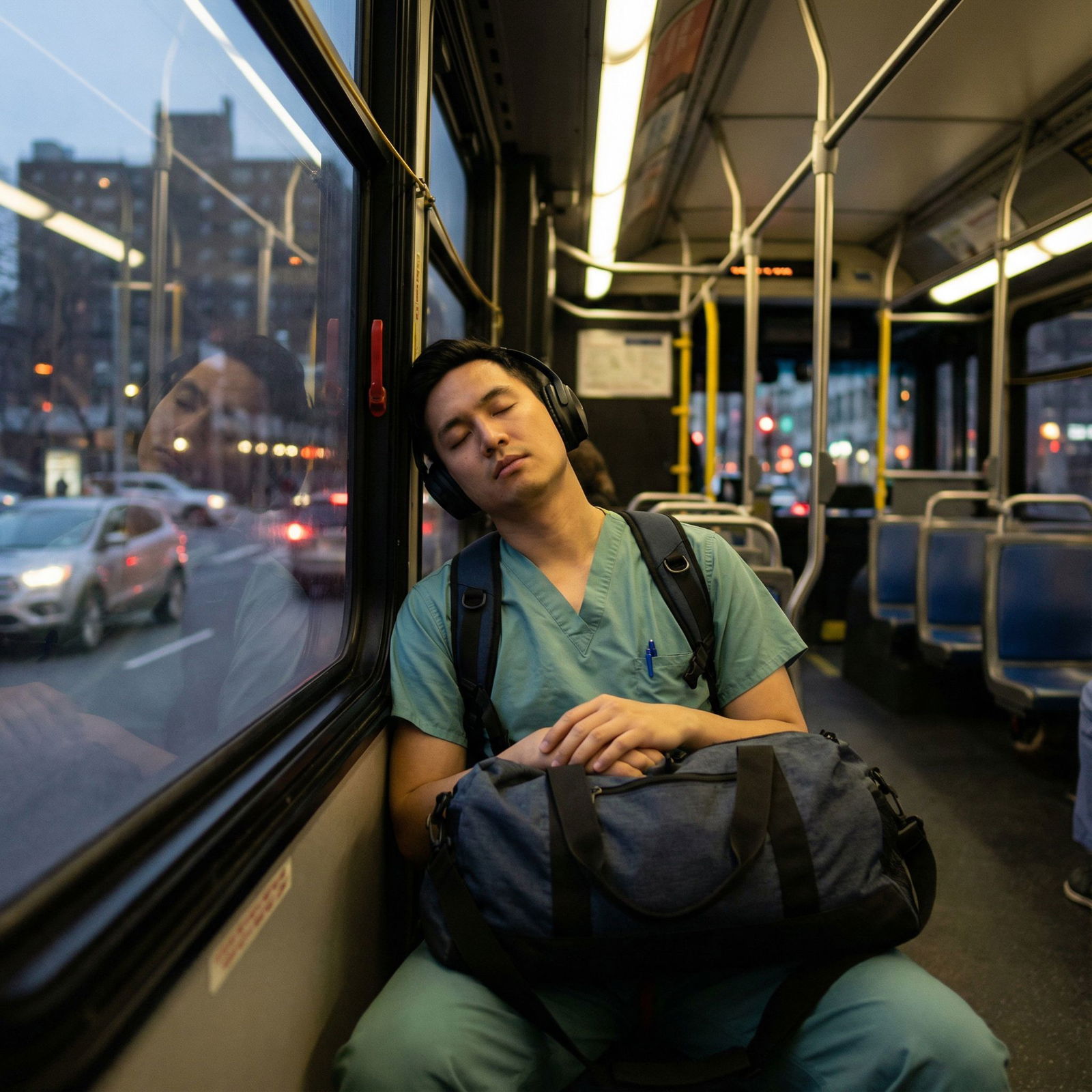
If you are chronically sleep-deprived, you actually may need to use the morning commute for micro-sleep on public transit. Not ideal, but better than falling asleep at the wheel later.
For city drivers creeping along in traffic: if you notice your attention drifting, drop all learning and switch to alertness-supporting options—cooler air, more engaging but simple audio (music, talk radio), and no multitasking.
10. Putting It All Together: A Sample Week in Real Life
Let me sketch something realistic.
You are a PGY-2 in pediatrics:
- 40‑minute subway each way.
- On inpatient peds wards this month.
- You want to improve your respiratory distress management and not feel constantly behind.
Your weekly commute plan:
Monday
- Morning: 25 minutes reading on bronchiolitis and asthma exacerbation, 10 minutes Anki cards based on last week’s cases.
- Evening: fiction audiobook, last 3 minutes jot 2 bullets: “Biggest decision I made today” and “One question I still have.”
Tuesday
- Morning: board-style questions on peds respiratory in an app.
- Evening: light review of one tricky patient from the day, add 3 cards to your deck, then music.
Wednesday
- Morning: guideline podcast on fever in infants.
- Evening: full decompression. No clinical content. Just audiobook or music.
Thursday
- Morning: read on pediatric pneumonia management; quickly jot down red flags and admission criteria.
- Evening: brief reflection on any emotionally heavy cases; if nothing major, just non-medical audio.
Friday
- Morning: mixed: 15 minutes cards (respiratory), 10 minutes on something you struggled with (nutrition, growth charts).
- Evening: weekly wrap:
- 3 things you learned this week (typed).
- 1 skill to focus on next week.
Notice what this is not:
- It is not “be productive every second.”
- It is not 2 hours of hard studying every day.
- It is targeted, rotation-linked, with explicit rest baked in.
11. Quick Checklist to Audit Your Current Commute
If you want a blunt litmus test, here you go:
Ask yourself for the last week:
- How many commutes did I remember anything I “learned” afterward?
- How many commutes left me feeling slightly less stressed, not more?
- How often did I get home still mentally at the hospital?
If your honest answers are:
- “I don’t remember much of anything I listened to.”
- “I often arrive at home more tense than when I left.”
- “I replay the same negative events every day.”
Then your commute is currently hurting you more than helping.
Start small:
- Pick 1 morning per week for intentional learning.
- Pick 1 evening per week for deliberate decompression.
- Add 1 reflection log entry per week.
Once that feels stable, layer more. Not before.

| Step | Description |
|---|---|
| Step 1 | Leave Home |
| Step 2 | 2 min settle |
| Step 3 | Focused learning block |
| Step 4 | Arrive at hospital |
| Step 5 | Leave hospital |
| Step 6 | 2 min decompress |
| Step 7 | Consolidation or recovery |
| Step 8 | Arrive home |
| Step 9 | Morning |
| Step 10 | Evening |
Core Takeaways
- Treat your commute as a designed block of time with a single main job per leg: learning in the morning, recovery or light consolidation in the evening.
- Match your strategy to your commute type and rotation intensity—drivers stick to audio and safety, transit riders can add reading and spaced repetition.
- Build a simple weekly template and stick to it: a couple of learning tools, one reflection method, one decompression strategy. Consistency beats heroic overuse that collapses within two weeks.
If you get this right, you quietly reclaim hours every week—without ever asking for a single change to your schedule.