
The average resident tries to “fix” life with big resolutions. That is why most residents stay overwhelmed, exhausted, and constantly behind. The residents who quietly pull ahead are the ones who build ruthless, tiny systems that run even on a post-call brain.
Let me break this down very specifically: micro‑habits are not cute wellness ideas. They are 10‑minute operational systems that protect your brain, your time, and your future from the chaos of residency.
We will build them like that.
The Rules of Micro‑Habits That Actually Work in Residency
If a “habit” requires willpower, it will die on night float.
So any system you build in residency has to meet four rules:
- It must take 10 minutes or less.
- It must survive when you are tired, hungry, and annoyed.
- It must be clearly tied to something you already do every day.
- It must compound – meaning the benefit grows over weeks and months.
Think of them as pre‑programmed “scripts” that run at fixed anchor points in your day: wake up, pre‑rounds, post‑rounds, sign‑out, before sleep. Your job is not to “decide” to do them. Your job is to obey the script.
To keep this concrete, I will organize these micro‑systems around the main pain points of residency:
- Cognitive overload and memory
- Time and task chaos
- Studying for boards while on service
- Emotional fatigue and burnout risk
- Health erosion (sleep, food, exercise)
- Career and future planning
We will layer 10‑minute habits into each.
1. The 10‑Minute Cognitive Offload: Inbox Zero for Your Brain
Your brain is the worst place to store tasks. On a busy MICU month, I have seen residents trying to remember 30+ to‑dos per day in their head. That is how mistakes happen.
You need a daily “brain dump” system. Ten minutes. Non‑negotiable.
Anchor: First 10 minutes after you sit down at a computer before rounds OR the first calm moment after sign‑out.
Tool:
One capture tool only. I do not care whether it is:
- A small pocket notebook (the kind that fits under your badge)
- A single notes app (Apple Notes, Google Keep, Notion, whatever)
- A single “Tasks” list in your EMR if you must
Pick one. Commit.
The micro‑script (takes 10 minutes):
- Write today’s date at the top.
- Dump everything in your head in bullet form. Absolutely everything:
- “Check iron studies on bed 14”
- “Ask pharmacy about DOAC dosing”
- “Email program coordinator about vacation swap”
- “Call mom”
- Mark each item with one letter:
- P = patient / clinical
- A = admin (emails, forms, scheduling)
- S = self (life, relationships, health, finances)
- Now star only 3 items:
- One P, one A, one S. These are today’s non‑negotiables.
You are not making a perfect to‑do list. You are unloading the mental RAM and choosing three critical moves.
Compounding effect after 3–4 weeks:
- You stop waking up at 2am thinking, “Did I order that CT?”
- Fewer balls get dropped (especially annoying admin ones that get you in trouble).
- Your cognitive fatigue in the afternoon is lower because your brain is not running task‑reminder background processes all day.
This is boring. It is also how high‑functioning seniors keep mental clarity on horrible services.
2. The 10‑Minute “Case to Concept” Drill: Protecting Your Board Prep
Most residents either cram for boards in short, miserable bursts or tell themselves they will “really study on electives.” Then real life happens.
You need 10 minutes daily of deliberate clinical learning tied to actual patients.
Anchor: After rounds, when you finally sit to place orders and answer pages, or at the end of sign‑out before you open your phone.
Tools:
- One question bank app (AMBOSS, UWorld, BoardVitals, etc.)
- Or a core text resource (UpToDate, AMBOSS articles)
The micro‑script: “One Case → One Concept”
- Pick one patient from today that bothered you:
- You were unsure of the plan.
- You felt dumb writing the assessment.
- Attending asked a question and you fumbled.
- Translate patient → concept:
- COPD exacerbation on BiPAP → NIPPV indications and failure criteria
- Febrile neutropenia → initial empiric antibiotic choices
- Spend 7 minutes on one focused learning action:
- Do 3–5 targeted QBank questions on that concept, or
- Read exactly one concise article section (e.g., UpToDate overview) on that topic
- Spend 3 minutes writing a 3‑line summary in your notes app or notebook:
- 1 line: “When to suspect/diagnose”
- 1 line: “First‑line management”
- 1 line: “One pitfall or nuance my attending mentioned”
That is it. No marathon sessions. One patient, one concept, one tiny written artifact.
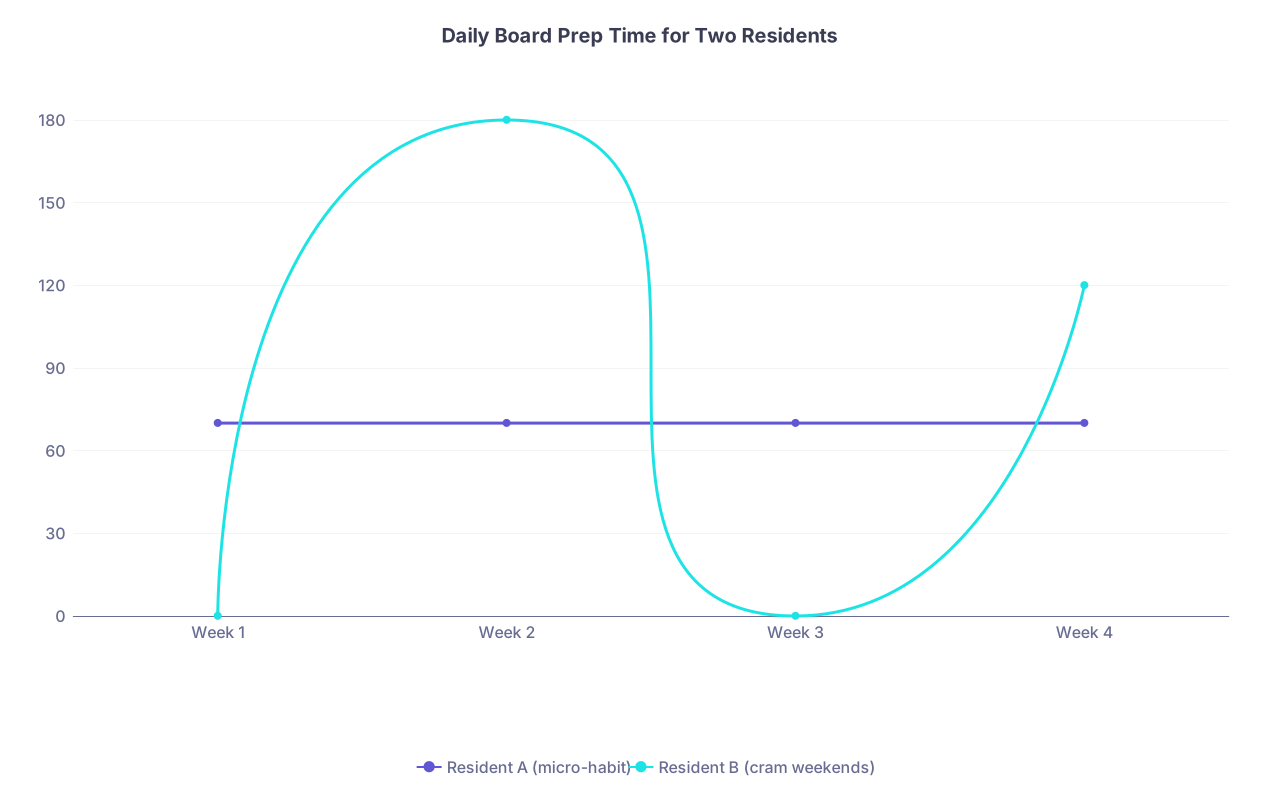
| Category | Resident A (micro-habit) | Resident B (cram weekends) |
|---|---|---|
| Week 1 | 70 | 0 |
| Week 2 | 70 | 180 |
| Week 3 | 70 | 0 |
| Week 4 | 70 | 120 |
By the end of a 4‑week rotation, you will have:
- 20–25 ultra‑relevant, case‑anchored concepts that stick
- A reviewable log that doubles as fast board prep
- A much more coherent sense of pattern recognition (“I always miss when to escalate BiPAP”)
This compounds harder than any random “do 40 questions on Saturday” approach.
3. The 10‑Minute Handoff Upgrade: Future‑You Protection
Sloppy handoffs are how you create more work for yourself tomorrow and irritate every team you work with.
You want a 10‑minute end‑of‑day habit that is not about the formal sign‑out (you will do that anyway). This is about making tomorrow’s you less miserable.
Anchor: Last 10 minutes before you leave the hospital or before night float sign‑out.
Tool: Whatever you use for patient lists: EMR list, Word doc, OneNote, etc.
The micro‑script: “Tomorrow Me” Checklist
For each patient, scan your list and do three things:
- Add a one‑line “most likely issue overnight”:
- “May drop pressures; on maxed pressors”
- “Likely to spike fever; cultures pending”
- Add one “first‑step plan” linked to that issue:
- “If SBP < 90 → 500cc LR bolus then call”
- “If fever > 38.3 → pan‑culture, lactate, start vanc/zosyn”
- Star or bold the one patient you must see first tomorrow and write why:
- “New GI bleed, Hgb 6.8, GI consult at 9am”
You are not writing a novel. You are writing a quick safety net.
Compounding gains:
- Night float trusts your sign‑outs. They will say this out loud. Attendings notice.
- Your own morning pre‑rounds are dramatically smoother because you already know who needs you first.
- You reduce the “oh no, I forgot to mention X” midnight calls.
On ICU or heme‑onc, this habit is not optional if you care about patient safety.
4. The 10‑Minute Emotional Debrief: Burnout Early Warning System
Most residents either bottle everything up until they crash, or trauma‑dump in random ways that never resolve anything.
You need a 10‑minute emotional hygiene system. Not journaling for Instagram. A daily debrief that spots trouble early.
Anchor: Last 10 minutes before sleep. Yes, even post‑call. You can do it on your phone in bed.
Tool: Notes app, physical notebook, or even a voice memo if you hate writing.
The micro‑script: “3‑2‑1 Reflect”
Write down:
- 3 concrete things that happened today (good, bad, neutral):
- “Family meeting with septic shock patient went badly”
- “Intern nailed her first LP – felt proud of her”
- “Got snappy with nurse about Tylenol order”
- 2 feelings attached to those events (real words, not vague ones):
- “Frustrated, guilty, relieved, anxious, proud, numb”
- 1 small adjustment for tomorrow:
- “If I feel myself snapping, I will ask for 2 minutes to regroup before responding.”
- “I will talk to my co‑resident about sharing family meetings on that service.”
- “I will schedule therapy consult email this weekend.”
Ten minutes. No overthinking.
After a month of this, patterns jump out:
- Certain rotations are destroying your mood.
- Specific attendings or colleagues consistently trigger anger or shame.
- You see yourself improving at boundary‑setting or spiraling toward “numb.”
That is the early warning system for burnout. Residents who ignore it are the ones who wake up PGY‑3 wondering why they hate everything.
5. The 10‑Minute Physical Maintenance Loop: Minimum Viable Health
You will not build a perfect fitness routine during residency. Stop pretending. But you can build 10‑minute physiological anchors that stop the slide.
Think of these as “non‑negotiable baselines.”
5a. Hydration + Electrolyte Reset (2–3 minutes)
Anchor: First time you sit at the computer in the morning.
System:
- Keep a 1‑liter bottle at your workstation.
- Fill it once at the start of the day.
- Add a pinch of salt or an electrolyte tab if you are on a sweat‑heavy service (ED, trauma, surgery).
Micro‑rule: That bottle is empty by the end of your shift. No tracking app. Just the bottle.
5b. Micro‑Mobility Block (5 minutes)
Anchor: Before or after lunch (or whenever you scarf food).
System (no equipment, hospital‑friendly):
- 1 minute: neck circles and side bends
- 2 minutes: shoulder rolls, scapular squeezes, doorway pec stretch
- 1 minute: cat‑camel against the wall or leaning on the counter
- 1 minute: air squats or heel raises by the nurse’s station
You will feel ridiculous the first week. Then your back pain decreases by week 3 and you stop caring what anyone thinks.
5c. Sleep Protection Routine (2–3 minutes)
You cannot extend your sleep time reliably. You can, however, harden your transition into sleep.
Anchor: As you enter your bedroom or wherever you crash.
System:
- Phone to “Do Not Disturb” automatically at a set time window (e.g., 21:30–06:00). Favorites or hospital can still break through.
- One simple cue that tells your brain “we are done”:
- Turn off overhead light, only bedside.
- Put pager/phone to charge in the same spot every night, not on your chest.
You are building a reliable “off switch.” That compounds into better sleep efficiency, which is all you are realistically going to get.
6. The 10‑Minute Weekly Money Check: Financial Sanity
Residents ignore money until PGY‑3, then panic. You do not need a full financial plan. You need a 10‑minute weekly ritual that keeps you out of trouble and sets up future control.
Anchor: One fixed evening per week. I like Sunday night, after dinner.
Tools: One banking app + one simple spreadsheet or budgeting app (YNAB, Mint, a Google Sheet).
The micro‑script: “Past‑Present‑Future” (10 minutes)
- Past (3 minutes): Look at last week’s transactions.
- Scan for anything obviously dumb or surprising.
- Label 1–2 “regret” spends (e.g., 3 Grubhub orders in one call weekend).
- Present (3 minutes): Check your three critical numbers:
- Current checking balance
- Total credit card balance
- Emergency buffer (even if that is $200)
- Future (4 minutes): Move one small thing:
- Extra $25 to highest‑interest debt
- $50 auto‑transfer to Roth IRA (if you have one)
- Or, set one bill to auto‑pay so you stop thinking about it
| Metric | Target Range |
|---|---|
| Checking Balance | 1–1.5x monthly rent |
| Credit Card Balance | Trending downward |
| Emergency Buffer | $200 → $1000+ over year |
| Weekly Review Time | 10 minutes |
This habit does not make you rich. It keeps you out of silent financial holes and gets you used to seeing your numbers, which most residents avoid.
7. The 10‑Minute Micro‑Planning Block: Dominate Tomorrow in Advance
Residents “plan” by reacting to pages. You need a 10‑minute forward‑looking habit that makes tomorrow less chaotic.
Anchor: End of day, right after your emotional debrief or just before you toss your white coat.
Tool: Same place you keep your brain dump list. Do not add more tools.
The micro‑script: “Tomorrow in 10 Lines”
On a new page or note, write:
- Date + rotation name + call status (e.g., “6/12 – Wards – Short Call”).
- Time blocks you already know:
- “07:00 pre‑rounds, 08:30 rounds, 11:00 tumor board, 14:00 clinic, 18:00 sign‑out.”
- Three “must‑wins” for tomorrow (already starred in your brain dump but rewrite them):
- One patient‑care outcome (P)
- One admin / residency task (A)
- One self / life task (S)
- One “if I have 10 spare minutes, I will…” backup:
- “Do 3 QBank questions on DKA”
- “Clear email back to inbox zero”
- “Set therapy appointment”
Then close it. You are not building an hour‑long bullet journal layout. You are telling your brain the plan so it can subconsciously structure the chaos around those fixed points.
After 2–3 weeks, you will notice that even on insane days, some part of your plan still happens because your brain knows what “matters most.”
8. The 10‑Minute Relationship Maintenance: Don’t Emerge PGY‑3 Alone
I have watched residents come out of training having nuked most of their friendships and half their relationship. Not because they are bad people. Because residency fills every unprotected space.
You need a micro‑habit that keeps a few key connections alive with minimal effort.
Anchor: Once per day, right after you check your phone leaving the hospital or while microwaving dinner.
Tools: Your normal messaging app.
The micro‑script: “One Ping” Rule (≤10 minutes)
Daily, reach out to exactly one person:
- Rotate between: partner, close friend, family, colleague.
- Message content formula:
- One specific reference (“Remember that time we…”) or
- One simple check‑in (“How did that interview/meeting/appointment go?”)
Example:
“Hey, remember that awful sushi place by the old apartment? Walked by a cafeteria tray that reminded me of it. How are you doing this week?”
You are not starting long conversations. You are keeping the thread alive.
Compounding effect:
- When you need support (bad outcome, complaint, missed fellowship), these people are still emotionally present.
- Your partner/family feels like you still “show up” even when busy.
This is cheap insurance against isolation.
9. The 10‑Minute “What Did I Miss?” Clinical Upgrade
Strong residents differ from average ones in one core behavior: they close feedback loops daily. Not at the end of the month.
You need a 10‑minute clinical calibration habit.
Anchor: Once per day, usually mid‑afternoon lull or early evening after sign‑out.
Tools: EMR and your brain.
The micro‑script: Results + Regret Review
Pick 2–3 patients from earlier in the week where:
- You made a diagnostic or management call.
- You were at least somewhat uncertain.
Then:
- Check what happened:
- Lab/imaging results that came back.
- Changes in diagnosis or treatment.
- Attending addenda or consultant notes.
- Ask yourself explicitly:
- “If I were to re‑write my initial assessment today, what would I change?”
- “What early clue was there that I missed?”
- “What is one sentence I could add to my future notes to reflect this nuance?”
You can jot a one‑line takeaway into the same notebook you use for “Case to Concept.”
Over months, this habit rewires your internal pattern recognition. Instead of repeating errors until a morbidity/mortality conference forces the lesson, you are learning quietly every day.
10. The 10‑Minute Weekly Career Compass: Avoiding the Drift
Residents drift into whatever fellowship (or job) is easiest or most obvious. If you want control over your career, you need a minimal but consistent reflection system.
Anchor: Once per week, right after your money check or on a post‑call afternoon when you are too fried for anything else.
Tools: Same notebook or a dedicated “career” note.
The micro‑script: “Rotation Radar” (10 minutes)
Answer these questions in brief bullets:
- This week, what specific tasks did I enjoy disproportionately?
- “Teaching interns about acid‑base.”
- “Procedures in the ICU.”
- “Outpatient follow‑up calls with my clinic patients.”
- What drained me more than it should have?
- “Family meetings every day in heme‑onc.”
- “OR days with long standing and little autonomy.”
- “Endless paperwork in clinic.”
- Who did I see that has a career I respect? What exactly do I respect?
- “Pulm/crit attending who works 60% ICU, 40% clinic, home by 6pm.”
- “Hospitalist who does admin QI work two days a week.”
- One concrete micro‑step to explore or move toward these interests:
- “Email Dr. X about joining her QI project.”
- “Ask the PICU fellow how they chose their program.”
- “Bookmark society website for fellowship I am considering.”
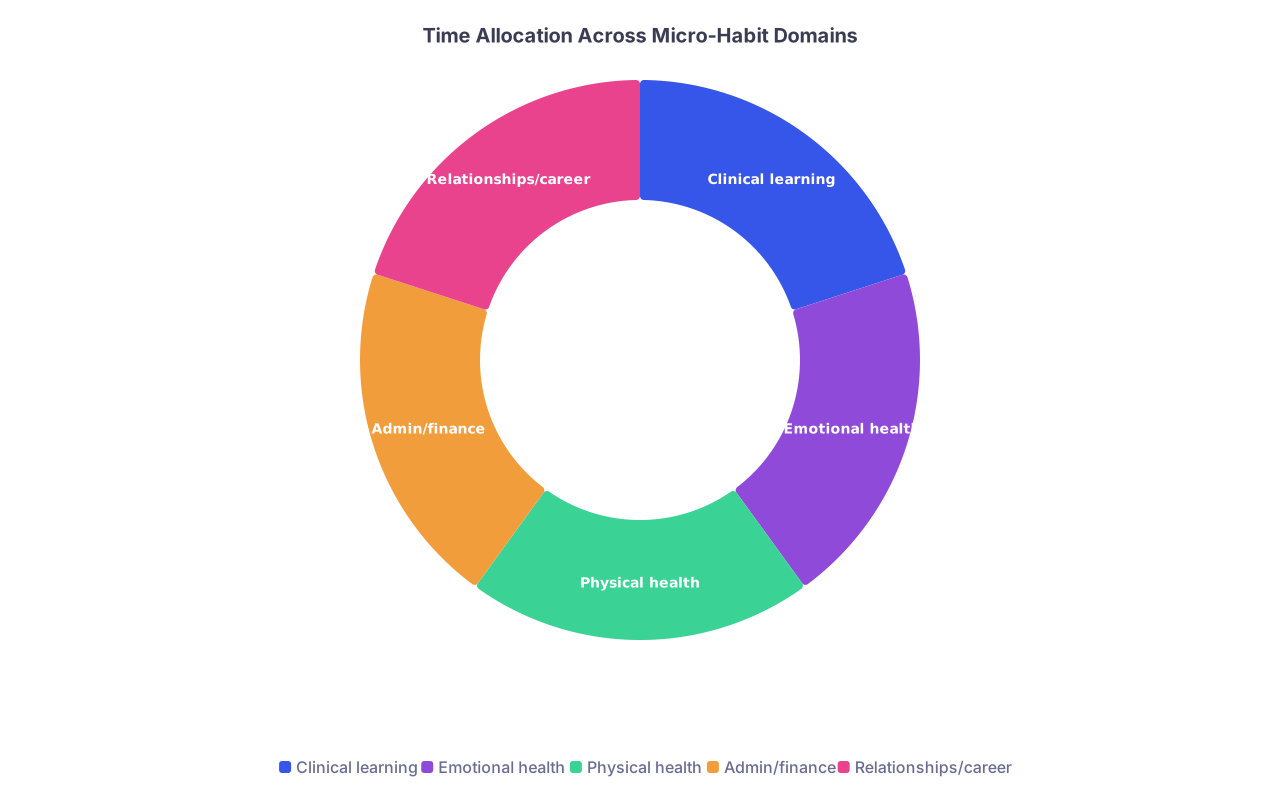
| Category | Value |
|---|---|
| Clinical learning | 20 |
| Emotional health | 20 |
| Physical health | 20 |
| Admin/finance | 20 |
| Relationships/career | 20 |
Over a year, that 10‑minute weekly compass protects you from waking up in PGY‑3 realizing you never seriously explored or prepared for the paths you actually like.
How to Stack These Without Overwhelming Yourself
Looking at all of this at once can feel like another full‑time job. That is not the point. You are not meant to start 10 habits tomorrow.
The sensible way to do this is like progressive overload in the gym.
Month 1 – Core Survival Stack (3 habits):
- Daily Brain Dump (Section 1)
- Case to Concept (Section 2)
- 3‑2‑1 Emotional Debrief (Section 4)
These three alone will dramatically change how you feel by the end of a nightmare rotation.
Month 2 – Operational Upgrade (add 3):
- Tomorrow in 10 Lines (Section 7)
- Micro‑Mobility + Hydration (Section 5)
- “What Did I Miss?” Clinical Review (Section 9)
Now you are improving daily instead of just surviving.
Month 3 – Long‑Game Protection (add 3 weekly, not daily):
- Weekly Money Check (Section 6)
- Weekly Career Compass (Section 10)
- Daily One Ping Relationship touch (Section 8)
Notice: only one of these is daily (the One Ping). The other two are weekly.
You end up with:
- 5–6 daily micro‑scripts, each ≤10 minutes, mostly tied to things you already do.
- 2–3 weekly systems that take 10 minutes each.
You are not “fitting in” habits around residency. You are embedding them into the structure of residency itself.
Three Choices That Make or Break This
Let me be blunt. The difference between residents who actually implement these and those who just nod and move on comes down to three concrete decisions:
One Capture System Only
Splitting between five apps and three notebooks is the fastest way to kill this. Pick one home base for tasks and reflections. Stick to it for 3 months.Anchors Are Sacred
If you “do it whenever,” you will not do it. Tie each habit to a specific anchor:- “When I sit at the computer before rounds → brain dump.”
- “After rounds before notes → Case to Concept.”
- “In bed before sleep → 3‑2‑1 Reflect.”
No Zero Days Rule
Some days you will not have 10 minutes. Then do the 2‑minute version:- Write 3 bullets instead of a full brain dump.
- Read one paragraph instead of a full article.
- Send a 5‑word text instead of a crafted message.
The point is continuity, not perfection.
Core Takeaways
- Micro‑habits that work in residency are operational systems, not aspirational wellness slogans. Ten minutes, anchored to your actual workflow, compounding over weeks.
- You should aggressively prioritize a small stack: brain dump, case‑linked learning, emotional debrief, micro‑planning, and minimal physical maintenance. These directly reduce errors and burnout.
- When you respect anchors and avoid “zero days,” these tiny routines quietly shift you from overwhelmed and reactive to intentional and compounding – even in the worst months of residency.