
Most night float residents nap poorly not because of “duty hours” – but because their nap strategy is scientifically wrong.
Let me break this down specifically. You are expected to make clinical decisions at 03:00 with an EEG pattern that would get a truck driver pulled off the road. You cannot “power through” this safely for weeks. You need an actual, evidence-based nap strategy – not folklore, not what your senior did during fellowship, and not what some wellness flyer says.
This is the playbook I wish more programs taught explicitly.
The Physiology You Are Fighting
If you do not understand what you are fighting, you will keep guessing and keep feeling terrible.
There are three overlapping problems on night float:
- Circadian misalignment – your brain still thinks night = sleep.
- Sleep restriction – you are cumulative-hours-in-debt by day 3–4.
- Sleep inertia – the groggy, stupid-feeling 15–45 minutes after waking.
You will not “fix” circadian misalignment in a 1-week night float. You manage around it.
Two key physiological anchors matter for nap strategy:
- Circadian low point: For most adults on a daytime schedule, the worst alertness window is ~03:00–06:00. On nights, this is where you are most dangerous.
- Ultradian cycles: Sleep architecture runs in roughly 90-minute cycles: light sleep → deep slow-wave sleep (SWS) → REM. Waking from deep SWS = brutal inertia.
Evidence from occupational fatigue, anesthesia, and shift work medicine is consistent:
- Short naps (10–25 minutes) improve alertness with minimal sleep inertia.
- Longer naps (~90 minutes) can be helpful if you complete a full cycle, but they are harder to time and build into a busy call night.
- Intermediate naps (40–60 minutes) are usually the worst – enough SWS to generate awful sleep inertia, not long enough to feel “slept.”
Your night float nap strategy should work with these constraints, not against them.
Core Evidence-Based Nap Principles for Night Float
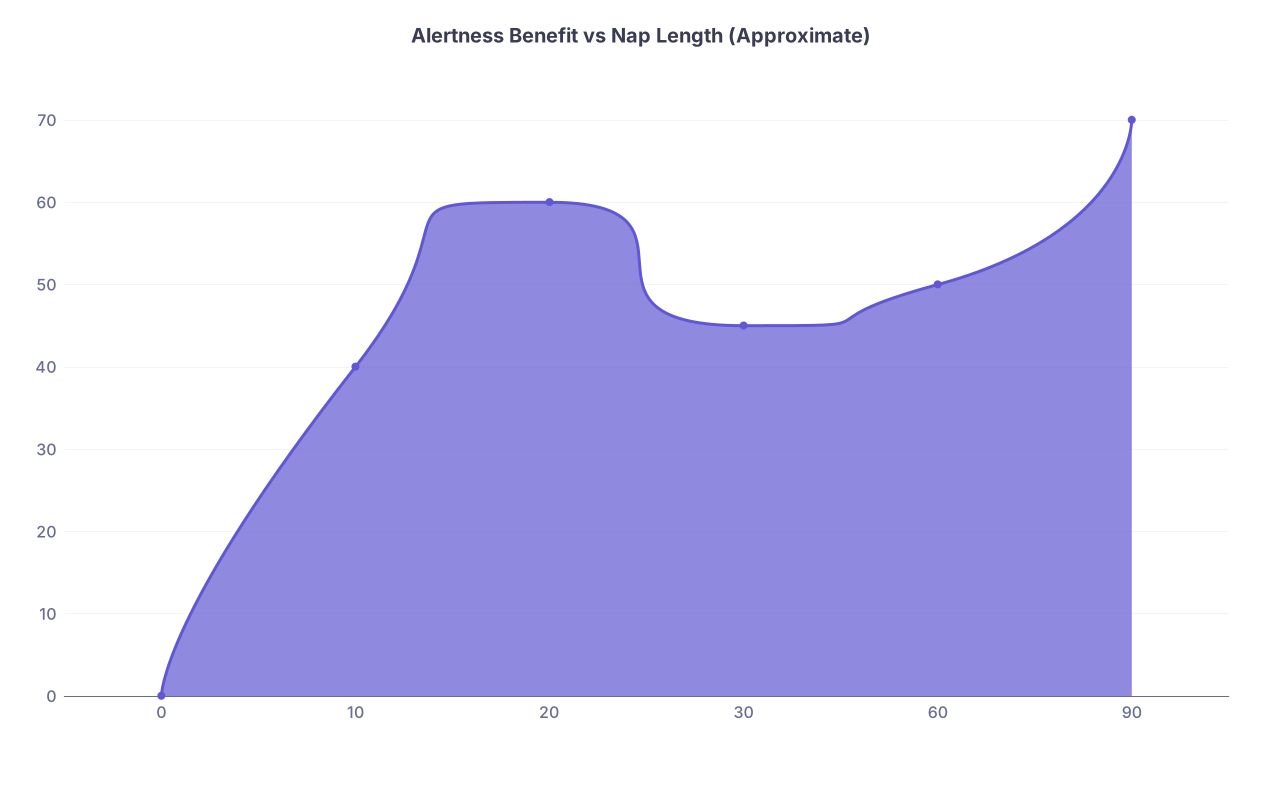
| Category | Value |
|---|---|
| 0 | 0 |
| 10 | 40 |
| 20 | 60 |
| 30 | 45 |
| 60 | 50 |
| 90 | 70 |
The research is scattered across aviation, transportation, EM, anesthesia, ICU staff, and industrial shift workers. The physiology is the same; your badge and pager are different.
Here are the rules that actually hold up:
The strategic nap is preventive, not reactive.
If you only nap once you are falling asleep on the keyboard, you are late. Controlled studies show prophylactic napping before the circadian low is more effective than trying to recover after you crash.Go short or go full-cycle. Avoid the middle.
- Ideal “booster” nap for most residents on nights: 15–25 minutes.
- If you have a protected block and stable coverage: shoot for 70–90 minutes.
- Avoid 30–60 minutes unless you can afford 30–40 minutes of feeling useless afterward.
Caffeine is a tool, not a lifestyle. Time it.
The “caffeine nap” (caffeine immediately before a short nap) has been shown to improve post-nap alertness more than either alone. But not at 05:30 if you hope to sleep post-call. You time it early–mid shift.Anchor your main sleep vs. your naps.
On a 7-night stretch, you need a consistent anchor sleep period most days (usually post-call AM or afternoon), and naps are secondary. You cannot let random micro-naps replace consolidated sleep.Protect wake-up transitions.
Evidence is clear: immediate, complex decision-making right when you wake from deeper sleep is dangerous. Build a 10–20 minute “buffer” between nap and high-stakes work whenever possible.
Concrete Nap Schedules That Actually Work
Let me give you practical templates. You are not a lab rat; you have admissions, cross-coverage, rapid responses, and ICU transfers. So these are realistic, not fantasy.
Assumptions:
- Typical night float: 19:00–07:00 (or similar)
- You have at least one other resident / APP / nocturnist in-house
| Strategy Name | Nap Time (Approx) | Duration | Best For |
|---|---|---|---|
| Early Booster | 23:30–00:00 | 20 min | New to nights, lower census |
| Circadian Bridge | 02:30–03:00 | 20–25 min | Historically sleepy at 03:00 |
| Anchor Cycle | 02:00–03:20 | 70–90 min | Stable coverage, high-risk units |
| Double Short Naps | 00:30 + 04:00 | 2 x 15–20 | High-interrupt environment |
| Front-Loaded Nap | 21:00–22:30 | 60–90 min | Pre-shift at home/hospital |
1. The Early Circadian Booster (my default recommendation)
Goal: Improve alertness through the 03:00–06:00 danger window with minimal inertia and minimal interference with post-call sleep.
Pattern:
- Arrive 18:30–19:00, get sign-out, settle in.
- Admissions, cross-coverage until roughly 23:00–23:30.
- If the floor is stable and partner coverage is in place, take a 15–20-minute nap around 23:30–00:00.
- Use a caffeine-nap combo: drink a small coffee or 100–150 mg caffeine immediately before you lie down. Set 2 alarms.
Why this works:
- You are still relatively early in the night. Sleep pressure is moderate, not crushing.
- Caffeine takes 15–30 minutes to kick in, so by the time you are waking, it is starting to work.
- This carries you across the first-half slump and pushes your worst fatigue later into the least-busy morning hours.
2. The Circadian-Bridge Nap (riskier but powerful)
Goal: Directly support the 03:00–06:00 nadir, where both cognition and mood are objectively terrible.
Pattern:
- Active work from 19:00–02:15.
- Short nap around 02:30–03:00, 20–25 minutes.
- No caffeine right before this nap; if you use caffeine, have it around 01:30–02:00, at least 30–60 minutes before nap.
Problem:
- Many hospitals are busiest 22:00–02:00 with ED admits, then 02:00–05:00 is quieter. This nap is theoretically ideal, but reality often interrupts it.
I have seen residents assign this nap time formally in ICU night float: cross-cover pairs alternate, and the attending enforces “no unnecessary wakes” during that 20-minute protected window. Programs that treat it like a safety intervention – not a luxury – see fewer 04:00 disasters.
3. The Full-Cycle Anchor Nap In-House
Goal: One solid sleep cycle on shift for those in brutal, cognitively demanding settings (neuro ICU, transplant, CT ICU) where being wiped out at 05:00 is not an option.
Pattern:
- Plan for 70–90 minutes between roughly 02:00–03:30.
- Requires:
- Explicit coverage agreement with co-resident / nocturnist.
- Nurse buy-in (“Do not page [Name] for routing stuff during this window unless it will literally hurt someone.”).
- A wake-up buffer: you are not going straight from REM into a massive GI bleed without 10–15 minutes to shake off inertia.
Risk/reality:
- This is the closest you get to real sleep on nights.
- But: wake from deep SWS at 75 minutes with someone screaming “we need you in room 12 now” and you will be cognitively compromised.
- If your environment is highly interrupt-driven and non-negotiable (ED boarding nightmare, single-resident coverage), this is unrealistic. Stick to short naps.
Pre-Shift Naps: The Most Underused, High-Yield Trick
Residents systematically underuse pre-shift naps. You think, “I want to be tired when I get off so I can sleep.” That thinking kills you at 02:00.
Evidence from shift workers and EMS: a 60–120-minute early-evening nap before your first 1–2 night shifts markedly improves alertness through the first part of the night. You are basically “banking” sleep.
What I recommend for a new 7-night stretch:
Night 1:
- Wake at your normal morning time.
- Early afternoon nap: 60–90 minutes between 14:00–16:00.
- Light exposure suppressed in the late evening if you want to start nudging your rhythm (blue light filters, dimmer room).
Night 2–3:
- If your schedule allows, a pre-shift nap 18:00–19:00 (even 30–40 minutes) at home or in a quiet hospital space before sign-in.
This pre-loads your sleep need so you are not diving into night float already in a deficit.
How to Nap in a Hospital Without Making Things Worse
Here is where people mess this up. The nap itself is not the main problem. It is the way you nap.
1. Control the environment ruthlessly
You do not need spa-level zen. You need three things:
- Darkness (or at least dimness)
- Silence (or controlled noise)
- Physical comfort enough to fall asleep within 5–10 minutes
Practical specifics I have seen work:
- Eye mask and earplugs in your white coat permanently. Do not count on the call room blinds; they will be garbage.
- White noise app on your phone at low volume if the hall is noisy.
- Temperature: request maintenance to set call rooms cooler at night (around 18–21°C / 65–70°F). Warmer = groggier.
If you consistently cannot sleep in the call room because of noise or random knocks, find an alternative: a consultation room, unused conference room, even a recliner in a quiet procedure room. I have watched PGY-2s get the best naps in a darkened ECHO room with a closed door and no pager range issues.
2. Use strict alarms and wake-up rituals
Sleep inertia is manageable if you respect it.
- Always set two alarms, 2–3 minutes apart. One on your phone, one on the pager if needed.
- When the alarm goes off: sit up immediately. Do not hit snooze. That extra 7 minutes destroys sleep architecture and deepens inertia.
- Have a fixed 5–10-minute wake-up routine:
- Sit upright, feet on floor.
- Sip cold water.
- Wash your face with cool water or use a wet wipe.
- Bright light exposure if possible (well-lit hallway, nurses’ station).
- A few slow, deep breaths or active stretching.
You are not doing yoga at 03:00. You are telling your brain: “We are awake now. Neurons, on.”
If you know you wake up slowly, do not schedule your nap so close to something critical that your first page post-nap is a crashing patient.
Caffeine Timing: Stop Sabotaging Your Post-Call Sleep
Most residents do caffeine completely backward: nothing early, then a big bolus at 03:30, then shock when they cannot sleep until noon.
The pharmacology is not complicated:
- Peak effect: 30–60 minutes after ingestion.
- Half-life: 3–7 hours (often longer in stressed, sleep-deprived bodies).
- So 200 mg at 04:00 is still ~100 mg in your system at 11:00. And that is assuming textbook kinetics.
You want caffeine to support the middle of your shift, not handcuff your daytime sleep.
Safer pattern:
- First dose: around 21:00–22:00 (100–150 mg).
- Second (and often last) dose: around 01:00–02:00.
- Hard stop: no caffeine after 03:00–03:30 if you hope to get to sleep reasonably after sign-out.
Combine with naps:
- Caffeine-nap at 23:30–00:00: drink a small coffee or tea, then 15–20-minute nap.
- Do not caffeinate immediately before a 03:00 nap. Take it at 01:30–02:00 so you are on the upswing while napping, not prolonging wakeful half-life out to 10:00.
Residents who implement this systematically report a very consistent pattern: more functional at 02:00–04:00, still able to fall asleep within 60–90 minutes of getting home.
Adapting Nap Strategy to Your Specialty and Unit
Night float in psychiatry is not the same as night float in trauma surgery. The nap strategy must match clinical reality.
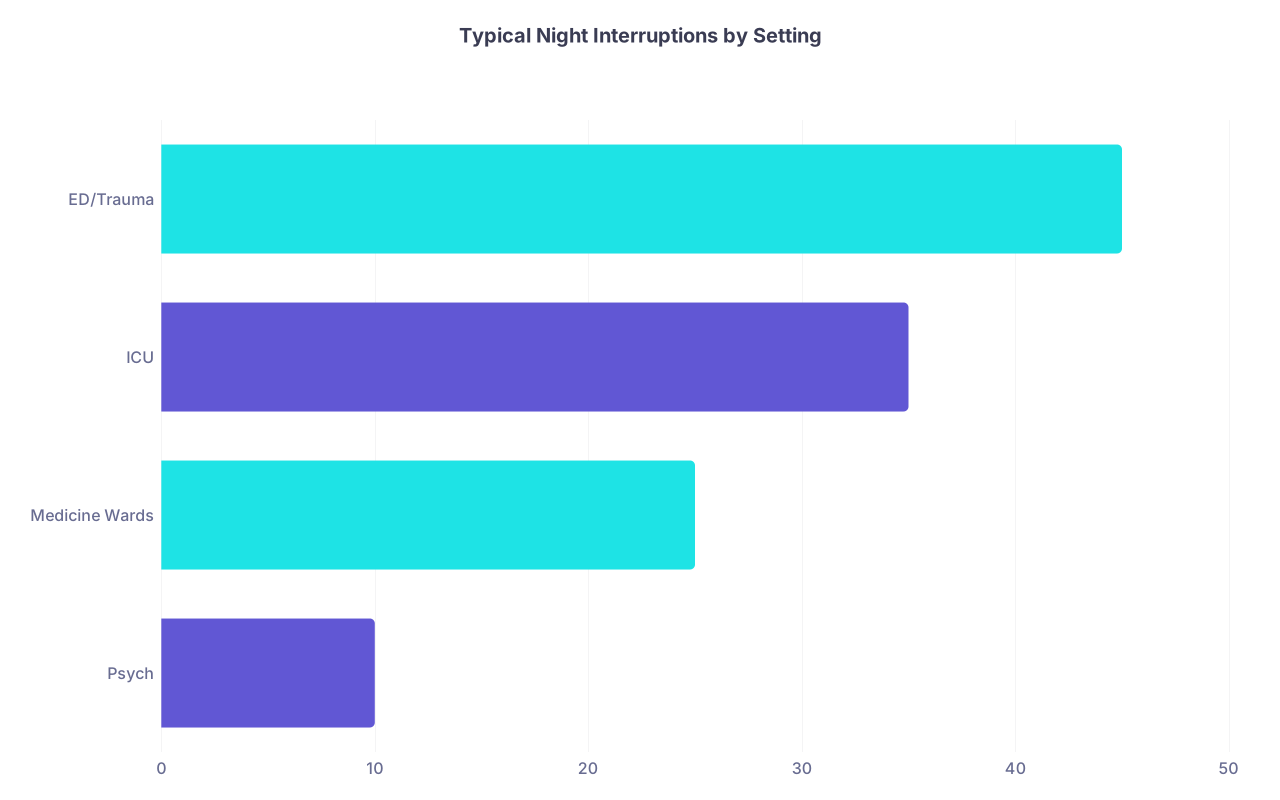
| Category | Value |
|---|---|
| Psych | 10 |
| Medicine Wards | 25 |
| ICU | 35 |
| ED/Trauma | 45 |
Numbers are illustrative, but you know the feel.
Internal Medicine Wards
- Peaks: 19:00–01:00 (admissions, pages), moderate after.
- Strategy that usually works:
- Pre-shift nap if possible.
- Short booster nap around 23:30–00:00.
- Optional second 10–15-min micro-nap around 03:30–04:00 if stable.
You are rarely spared pages for 90 minutes, so think multiple short naps and aggressive triage of interruptions (“Call me back in 20 unless they are unstable”).
ICUs (Med, Neuro, CT, etc.)
- Constant high-cognitive load, but often decent staffing.
- Nursing culture often more accepting of structured rest if framed as safety.
- Strategy:
- One planned longer-cycle nap (70–90 minutes) between 01:00–04:00 with explicit cross-coverage.
- Alternatively, two 20–25-minute naps (pre- and intra-circadian low).
ICU attendings who care about safety will back you if you frame it correctly: “I want to ensure I am sharp for complex ventilator decisions at 05:00. Can we structure the night so there is a 60–90 minute protected block where [co-resident] covers?”
Emergency Medicine / Trauma Surgery
- Nap reality: chaotic, unpredictable.
- You are unlikely to get a guaranteed 90-minute block.
- Strategy:
- Opportunistic 10–20-minute naps between waves.
- Micro-naps: 5–10 minutes with eyes closed in a dark room during lull periods. They are not myth; even these improve reaction time slightly.
- Pre-shift naps are critical because in-shift sleep is low quality.
You may need a stronger emphasis on pre-shift sleep and strict caffeine discipline, recognizing that “real” naps during an EMS surge are fantasy.
Psychiatry, Neurology Consults, Other Lower-Volume Services
You have more flexibility, which ironically leads some residents to completely wreck their sleep.
- Strategy:
- Do not convert nights into 3-hour lab naps and 4-hour phone scroll sessions. Keep naps structured: one 60–90-minute block or two shorter naps.
- Maintain a consistent post-call anchor sleep during the day. No, binge-watching until 14:00 then sleeping 15:00–20:00 is not a strategy.
Protecting Post-Call Sleep While Using Naps
If your nap strategy wrecks your post-call sleep, you are just redistributing exhaustion.
Rules that generally work:
Keep last in-shift nap before 05:00.
If you nap 05:30–06:00, you are telling your circadian system, “Night is ongoing,” which can make it harder to fall asleep at 09:00–10:00.Cap total in-shift nap time.
For most residents on a 7-night block, 60–120 minutes total per night of in-shift napping is the upper limit before it starts pushing your main sleep later and later.Have a standard post-call sleep routine.
- Light exposure on the way home minimal (sunglasses).
- Quick snack, shower, then straight to bed.
- Aim for one main block of 4–6 hours, then a short afternoon nap only if needed.
You are not trying to live like a nocturnist for 1 week. You are trying to survive the block with your brain intact and then re-entrain quickly.
When Naps Are a Red Flag, Not a Strategy
Sometimes the resident trying to “nap smarter” actually has a deeper sleep problem. Watch for these:
- You cannot fall asleep even with a 20–25-minute break and clear exhaustion.
- You wake from short naps more disoriented than your peers consistently.
- Off rotation, you need >10–11 hours of sleep to function.
- You snore loudly, wake choking, or have witnessed apneas.
In those cases, we are no longer talking about nap tactics. We are talking about:
- Sleep apnea
- Narcolepsy / idiopathic hypersomnia
- Severe circadian rhythm disorders
- Mood or anxiety disorders destroying sleep
If that is you: this is not about “toughing it out.” Talk to your program leadership and get a sleep medicine referral. Residents with treated apnea often describe the difference as night and day – they thought they were just “not a night person.”
How to Get Your Program to Take This Seriously
Some PDs get this. Some roll their eyes and say, “We did Q2 call, you’ll be fine.”
Frame it as patient safety and evidence-based fatigue management, not “I am tired and want more sleep.”
You can point to:
- Data from anesthesia literature on provider error rates during circadian lows.
- Shift-work research showing 25–40% reductions in performance lapses with strategic naps.
- ACGME language about fatigue mitigation strategies – napping is explicitly mentioned in multiple specialties.
Practical steps:
- Propose a night float nap policy: e.g., “Each in-house night provider gets one 20-minute protected nap between 22:00–02:00 and/or 02:00–04:00, with explicit cross-coverage.”
- Ask for physical improvements: blackout curtains in call rooms, functional beds, reliable locks, noise signage.
- Ask that the concept be taught at orientation – not just left to folklore.
Programs spend hours on central line checklists and almost zero on the physiology of the resident placing those lines at 04:30. That imbalance is absurd.
FAQs
1. Will short naps make it harder for me to sleep when I get home post-call?
Usually, no – if you keep them short (10–25 minutes) and avoid napping too close to shift end (after ~05:00). Short naps reduce acute sleepiness without fully clearing homeostatic sleep pressure. That means you still have enough drive to sleep after sign-out. What destroys post-call sleep more often is 05:30–06:30 “accidental” hour-long naps plus mistimed caffeine.
2. I feel worse after any nap. Should I just stop napping?
Feeling terrible after naps is almost always a sleep inertia plus timing problem, not a fundamental “I can’t nap” issue. If your usual pattern is a 45-minute lie-down with no alarm, you are repeatedly waking from deep slow-wave sleep. Force yourself to use a 15–20-minute timer for several nights in a row. Use an aggressive wake-up routine (lights, cold water, movement). Many residents who “hate naps” do much better once they switch to disciplined short naps.
3. Is a 5–10-minute micro-nap even worth it on a brutal night?
Surprisingly, yes. Data from transportation and EM indicates that even 5–10 minutes of actual sleep can improve reaction time and subjective sleepiness. The caveat: you must actually fall asleep, not just doom-scroll. If you have a quiet 10 minutes and your eyes are heavy, close them, use an alarm, and take it. On trauma or EM nights, micro-naps may be the only realistic option.
4. Should I adjust my entire circadian rhythm to nights during a 1-week night float?
For most residents, no. A 1-week block is too short for a full shift of your circadian rhythm, and your family / clinic / didactics schedule usually makes it impossible. What works better: keep a daytime anchor (still sleeping mainly during the day after shifts), use consistent timing of that sleep, and layer strategic naps on top. Full “nocturnalization” makes more sense for long blocks (4+ weeks) with minimal day obligations.
5. How do I coordinate naps with co-residents so nobody gets dumped on?
Treat naps like any other part of patient care logistics. At the start of the night, explicitly agree: “You nap 23:30–23:50, I nap 02:30–02:50, we cover for each other unless someone is crashing.” Let nursing know when each of you is on “do not disturb unless urgent” status. The resentment comes when naps are ad hoc and one person repeatedly disappears without clear structure. Make it standardized, and it becomes teamwork, not abandonment.
6. Are sleep medications or melatonin useful for daytime post-call sleep?
Melatonin can be modestly helpful for shifting circadian timing and improving daytime sleep onset, especially if taken in low doses (0.5–3 mg) 1–2 hours before your intended sleep time. Sedative-hypnotics (zolpidem, benzos) are a different story; they may knock you out but can worsen sleep architecture, interact with call duties, and create dependence. Use them only under guidance and never in the 6–8 hours before you are expected to be clinically responsible. For most residents, environmental control, consistent timing, and smart naps buy more than pills.
Key points:
- Night float is not a willpower contest. It is a physiology problem that demands strategy.
- Short, timed naps (10–25 minutes) and, when feasible, full-cycle anchor naps (70–90 minutes) are safer and more effective than random 45-minute crashes.
- Caffeine timing, structured co-resident coverage, and protection of wake-up transitions make the difference between barely surviving nights and functioning like a clinician who should be trusted with real patients at 03:00.