
It’s 2:17 a.m. You’re on night float, drowning in cross-cover pages, and you watch it happen again.
Nurse calls about a borderline patient. Two interns are available. The senior glances up, hesitates, then says: “Let’s send Sam. Alex is already slammed; I don’t want to burn them out.”
You look at the list. You’re also slammed. So is everyone. But somehow, one intern keeps getting shielded. The rough families get redirected. The hard consults get reassigned. Feedback gets “softened.” And when things blow up, that same intern’s name magically disappears from the story.
You go home wondering: What are they doing that I am not? Are they just a favorite? Is this politics or performance? Or is there something deeper you were never told about how protection really works?
Let me walk you through what program directors and attendings actually say about this when you are not in the room.
Because this part is never in the orientation slides.
The Uncomfortable Truth: “Protection” Is a Strategic Resource
Here’s the thing nobody says out loud: protection is not about fairness. It is about risk management.
Program directors and chiefs do a kind of mental triage on their interns. Constantly. They will never call it this to your face, but behind closed doors, they talk exactly like this:
- Who is at risk of burning out and quitting?
- Who is a medicolegal liability right now?
- Who is a future star we do not want to lose?
- Who can we “push” harder without them collapsing?
And then they allocate protection accordingly.
I’ve been in PD offices where they pull up the list, go down name by name and say things like:
“Look, he’s solid, he’ll be fine. I can give him the heavy rotation; he’ll swim.”
“I’m genuinely worried she’s going to crash. Give her the kinder attending and one of the better teams.”
“This one is going to be faculty. I do not want to fry him intern year.”
They are not protecting “the best” or “the weakest.” They are protecting people they cannot afford to lose or break.
The hard part for you: from your vantage point, those categories are invisible.
You just see that some interns get buffered from the worst chaos and others get fed to the meat grinder.
The Three Buckets PDs Quietly Sort You Into
When PDs and chiefs talk about their interns, they mentally sort you into buckets. Nobody hands you this framework. You only see the consequences.
| Intern Type | How PDs Think | Typical Treatment |
|---|---|---|
| Fragile / At Risk | Might break, quit, or fail spectacularly | Heavy protection, softer rotations |
| Reliable Workhorse | Will cope, won’t complain | Less protection, more workload |
| High-Value Asset | Future star, recruitment tool | Targeted protection, curated opportunities |
Let me break down what each one looks like behind the scenes.
1. The Fragile / At-Risk Intern
This is the intern who is barely keeping it together. Sometimes everyone knows it; sometimes only leadership sees the warning signs.
Red flags PDs watch:
- Repeated late notes, chronic disorganization, missing basic things.
- Emotionally raw on the wards. Crying in workrooms. Snapping at nurses.
- Personal crises: relationship breakups, sick parents, immigration issues, child-care issues.
- Concerning professionalism: late, withdrawn, inconsistent.
When they talk about these interns, the conversation sounds like:
“We cannot afford to break her. If we push, she will fail Step 3 and we’ll be stuck in remediation hell.”
“He is one bad event away from going on leave. Protect him this block.”
So they start:
- Pairing them with the gentler attendings.
- Taking them off the worst rotations.
- Quietly shifting admissions or night float coverage away from them.
- Softening feedback: “Let’s just tell them to ‘keep working’ on efficiency and check back in a month.”
To the team, it looks like: “Why does she always get the lighter interns? Why aren’t they ever on nights with that malignant attending?”
Because leadership has already decided: this person is at risk, and if they break, it’s a disaster for everyone.
Protection here isn’t a reward. It’s damage control.
2. The Reliable Workhorse
This is where most decent interns land. Competent, functional, not an immediate superstar, not a problem child.
Here’s the brutal truth: this group gets the least protection.
Not because anyone hates them. Because they are “safe.”
In PD-speak:
“He’s solid. He can handle it.”
“She gets her work done, doesn’t complain, patients love her. Give her the busy firm; she’ll manage.”
So they load them up:
- Heavy rotations.
- Full admission caps.
- Night shifts with the toughest attendings.
- “Leadership opportunities” that are actually just more work.
They get feedback like: “You’re doing great, just keep it up.” No one steps in to say, “You’re drowning; let’s take something off your plate,” because they don’t present as drowning. They present as dependable.
You know that co-intern who seems to always be picking up the extra admission “for the team”? The one people say “we couldn’t survive without”? That’s the workhorse. The system quietly decides they can handle being unprotected.
You might be that person. If you are, a lot of what you call “unfairness” is actually leadership milking your reliability.
They won’t phrase it like that. But that’s what’s happening.
3. The High-Value Asset
This one stings for people to hear, but you asked for how it actually works, not the brochure version.
Some interns are labeled early as “high value”:
- 260+ board scores plus publications in high-impact journals.
- Already committed to a competitive fellowship the program wants to feed (cards, GI, heme/onc, derm from prelim, etc.).
- Charismatic, polished, the ones they want representing the program to applicants and hospital leadership.
- Med school AOA, chief resident potential, the “future faculty” cohort.
Listen behind closed doors and you’ll hear:
“We do not want to burn him out; fellowship will be looking at his letters.”
“She is the face of our recruitment; I need her happy and not resentful.”
“He’s on the fast track for chief. Let’s make sure he’s set up to succeed.”
So what happens:
- They land with the “top teaching” attendings (who are also the most supportive).
- Rotations get quietly arranged so they avoid the worst of the malignant services.
- They get pulled for elective opportunities, research time, conferences.
- When they screw up, the tone is: “We know you’re great, here’s how to avoid this next time.”
You look at their schedule and think, “Wow, what a lucky string of rotations.” It’s not luck. It is deliberate.
They will still work hard. They still suffer. But the system is angled to protect their trajectory.
The Four Invisible Factors That Decide Who Gets Shielded
Let’s talk about what actually moves you between those buckets. Because it’s not as simple as “favorites.”
1. Who Program Leadership Trusts Under Pressure
Attendings and PDs ask themselves one question constantly: “If I walk away, will this intern keep the floor from catching fire?”
Some interns radiate control even when they’re overwhelmed. They:
- Call early for help, not late.
- Communicate clearly with nurses.
- Own their mistakes without excuses.
- Bounce back after a bad day without spiraling or blaming everyone.
Those interns strangely get both more responsibility and more slack. When they make a bad call, seniors and attendings step in to protect them:
“That was on me, I should’ve guided them better.”
“We were all slammed, he did what he could.”
Others give off a different vibe: scattered, defensive, or unpredictable when stressed. The reaction changes:
“We cannot have them on nights with that census.”
“She needs a softer environment; this is too much for her.”
Same objective performance. Different perceived risk. Protection follows trust, not effort.
2. Whether You Trigger the “This Might Blow Up on Us” Alarm
There are three things that terrify PDs:
- A resident suicide or serious mental health crisis.
- A catastrophic patient event clearly tied to resident incompetence.
- A massive professionalism scandal (harassment, substance issues, big conflicts).
Interns who even hint at falling into one of these categories get a disproportionate share of shielding.
Examples I’ve seen:
- Intern who breaks down in front of two attendings in one week → suddenly “rotated” away from the most chaotic service and put with the nurturing attending everyone calls “mom.”
- Intern whose charting is so sloppy that risk management flags their cases → suddenly given easier patients, more direct supervision, daily check-ins.
- Intern involved in a heated argument with a nurse that reaches the CMO → they get placed where the nursing staff is more tolerant and the senior is very hands-on.
You think: “They’re messing up and being rewarded with protection.” Leadership thinks: “We’re one event away from disaster if we don’t wrap some padding around them.”
It’s not about deserving. It’s about preventing worst-case headlines.
3. Who Makes Life Easier vs. Harder for the System
This one’s darker, but it’s real.
Some interns:
- Don’t complain publicly.
- Are polite to coordinators and schedulers.
- Say yes to random administrative asks.
- Show up looking awake, professional, and not chronically miserable.
- Finish basic work without constant nudging.
Those people get labeled “easy.” In a system stretched thin, “easy” people get exploited more and protected less. The calculus is:
“He can handle one more admission; he won’t melt down.”
“She never pushes back. Just give it to her.”
On the flip side, an intern who:
- Sends long emails about duty hours, violations, or rotation toxicity.
- Has parents who are physicians at the same hospital.
- Comes from a powerhouse med school with strong med-ed leadership.
- Is visibly close with the PD or DIO.
…is simply more dangerous to upset. Annoying? Sometimes. But powerful. So people step more carefully:
“Do not schedule him with that attending again; I’m not reading another three-page email.”
“Her mom is on faculty; just move her off that rotation.”
You can hate this dynamic. Perfectly reasonable. But if you deny it exists, you’ll keep misreading why some people are inexplicably cushioned.
4. The “Would I Want Them as Faculty Here?” Effect
Every PD has a mental list of interns they’d love to keep as faculty. They won’t admit it openly in July, but the list appears faster than you think.
Those people get a different type of protection. It’s not about their feelings; it’s about their future value to the institution.
They get:
- Prime electives.
- Letters from the most powerful attendings.
- Relief from some scut “so they have time to write.”
- Shielding from toxic personalities who might sour them on the program.
Why? Because a few years from now, that intern might be the “homegrown GI attending” that boosts fellowship match and program prestige.
When that’s on the line, leadership plays the long game. They invest. Protection is a form of investment.
What You Can Actually Do to Get Treated Differently
You cannot control all of this. But you’re not powerless, either. You just have to stop playing the game you think exists and start playing the one that actually does.
1. Stop Being Invisible
The worst category you can be in is: “We don’t think about you at all.”
If leadership doesn’t know your name, you’re just part of the generic “they’ll cope” pile. You get dragged wherever the system needs warm bodies.
You don’t need to be a brown-noser, but you do need to be seen as a real person, not just a name on a schedule. That means:
- Show up to resident meetings and actually ask one clear, thoughtful question once in a while.
- If you’re struggling, go to the PD or APD early, not when you’re already broken.
- When you do something well, make sure the right people know—senior mentions it in sign-out, attending co-signs your note, etc.
Protected interns are rarely ghosts. They’re known quantities.
2. Learn How to Signal “I’m at My Limit” Early and Calmly
Interns who get buried are often the ones who only show distress when they’re already completely underwater.
From the faculty side, that looks like:
- 3 weeks of “doing fine”
- Then a sudden crash: errors, panic, emotional meltdown.
Those people trigger damage control, not thoughtful protection.
The ones who get better shielding learn to say, early:
“I’m managing, but I’m right at my edge. If we add more to this, I’m worried I’ll start missing things.”
Or to the chief:
“I can do this rotation, but not back-to-back with nights. I won’t be safe.”
Calm, concrete, specific. Not vague suffering.
When you frame it as patient safety and sustainability, not “I don’t like working hard,” you sound like someone worth investing in, not someone to push until they snap.
3. Build Alliance With the Right People (Not Just the Nicest People)
Interns waste a lot of social energy bonding with whoever is friendly, not necessarily whoever actually influences their life.
The people who shape your protection level:
- Program director and APDs.
- Chiefs (massively underrated power).
- A few high-volume, high-respect attendings whose word carries weight.
- The program coordinator (who often knows everything).
When one of them says in a meeting, “She’s working really hard, but I’m worried she’s getting crushed on that rotation,” stuff changes. Schedules move. Attending assignments get rethought.
This isn’t about groveling. It’s about:
- Being prepared on their services.
- Owning your mistakes directly.
- Asking for one or two very specific pieces of advice and then actually following it.
- Not making their life harder with disorganization or drama.
Respected voices speak up for you only if you give them a reason to believe you’re worth protecting.
4. Know When to Quietly Say “No”
Workhorse interns get abused because they never say no. Ever.
Protected interns are not necessarily lazier. They’re just more willing to say:
“I can take this admission, but I’m not going to be able to safely discharge those three patients before noon conference. Which do you want me to prioritize?”
or
“I’m at my cap, so if we’re admitting this one to our team, I’ll need to hand off one of the long-stay patients to Blue.”
You’re not refusing. You’re forcing your senior or attending to acknowledge reality and choose. That shift—from you silently absorbing everything to you framing tradeoffs—changes how people treat you.
Over time, it also quietly signals to leadership: “This intern won’t just quietly suffocate. If we overload them, they’ll push back in a reasonable way.”
Those are the people who end up getting more measured workloads.
The Dark Side: When “Protection” Is Just Politics
Let’s not pretend it’s all rational strategy. Sometimes protection is just favoritism dressed up as concern.
I’ve seen:
- Interns socially tight with a chief suddenly “needing” lighter rotations.
- Legacy residents (parent is faculty) magically avoiding the malignant surgical attending every time.
- Residents who partied with fellows or attendings on weekends getting more slack on weekdays.
Sometimes people really are just favorites.
You cannot completely beat that. But here’s how you avoid being collateral damage:
- Don’t badmouth the protected intern publicly. That never lands how you think.
- Document genuine safety issues and send them through the right channels—chiefs, wellness committees, PDs.
- If the pattern is egregious, bring it up in a scheduled, calm meeting: “I’ve noticed X and Y consistently avoid nights on Z service. I’m concerned about fairness and burnout on the rest of us.”
The more specific and unemotional you are, the harder you are to dismiss as “just complaining.”
And sometimes? You vote with your feet. You choose different electives, different mentors, different institutions for fellowship. Not every system is fixable from the inside as an intern.
What PDs Won’t Say to Your Face—but Say to Each Other
Pull up a chair to the imaginary PD meeting for a second. These are the exact phrases I’ve heard behind closed doors:
“He’s not going to ask for help until it’s way too late. We need to watch him.”
“She is fantastic, but she will never say no. Make sure we are not killing her.”
“He’s going into derm. I’m not wasting him on five months of night float.”
“She almost quit last month; I am not putting her on MICU again.”
“If he has another blow-up with nursing, we will be in HR for weeks. Move him.”
Read those again. Protection is rarely about “who deserves it.” It is about who leadership:
- Fears losing.
- Fears being burned by.
- Wants to recruit long-term.
- Knows they can safely push.
You sit there wondering, “Why does that intern always get a break?” Leadership is upstairs asking, “If we lose that intern, what does it cost us?”
That’s the ledger that decides who gets padding.
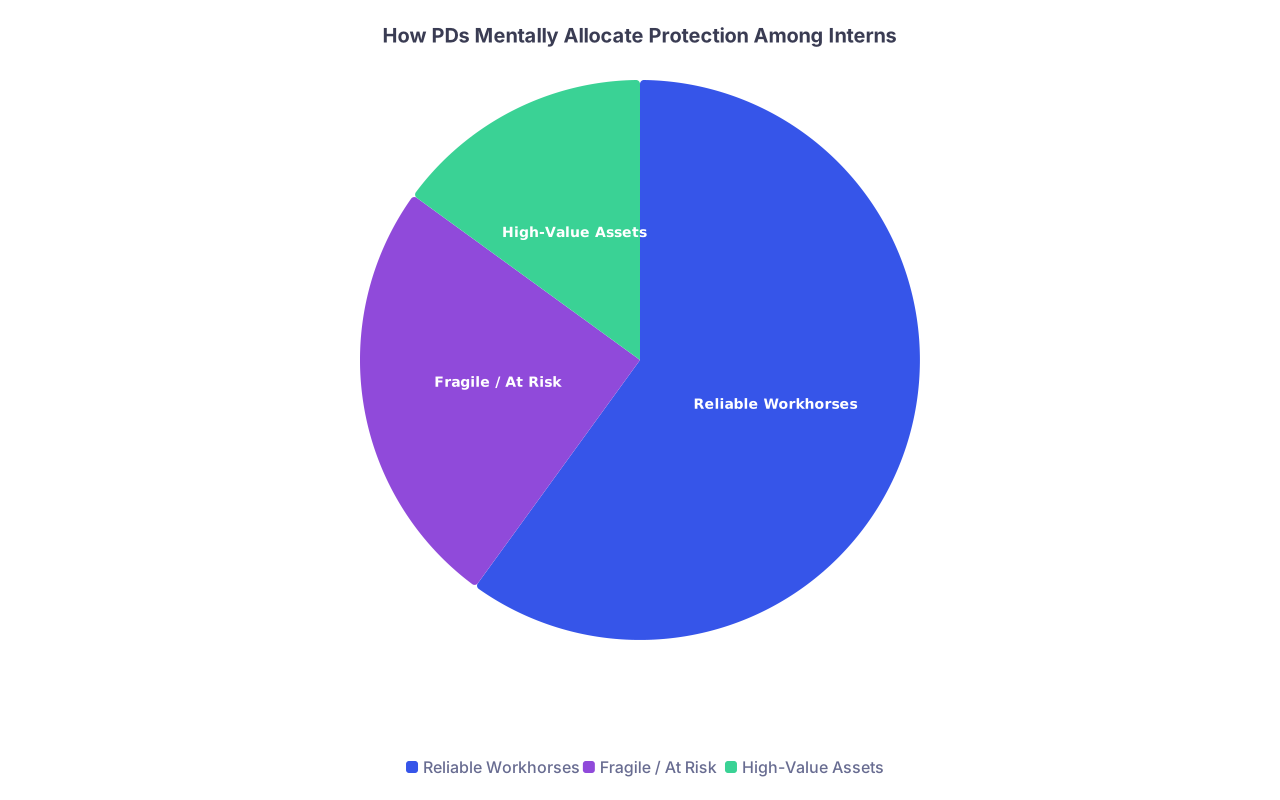
| Category | Value |
|---|---|
| Reliable Workhorses | 60 |
| Fragile / At Risk | 25 |
| High-Value Assets | 15 |

| Step | Description |
|---|---|
| Step 1 | Intern Enters Program |
| Step 2 | Fragile At Risk |
| Step 3 | High Value Asset |
| Step 4 | Reliable Workhorse |
| Step 5 | Heavy Protection |
| Step 6 | Targeted Protection |
| Step 7 | More Work Less Shielding |
| Step 8 | Perceived Risk |
| Step 9 | Future Value |
FAQs
1. Is there any way to move from “workhorse” to “high-value” in leadership’s eyes?
Yes, but it doesn’t happen through suffering quietly. It happens when you combine reliability with visible growth and trajectory. That means doing your job well, then adding one or two things that signal future potential: a small research project with a respected attending, a talk at noon conference that actually lands, or taking ownership of a quality-improvement task and closing the loop. When attendings start saying, “She’s not just solid, she’s going somewhere,” you shift categories.
2. How do I ask for help without getting labeled as “fragile”?
You frame it in terms of patient care and sustainability, not personal discomfort. “I’m noticing that with this current load, I’m behind on notes and I’m worried I’ll miss important trends. Can we talk about how to redistribute or improve my efficiency?” That sounds like a safe, thoughtful physician, not someone unreliable. The panic breakdown at 3 a.m. with no prior signal—that’s what gets you labeled fragile.
3. What if my PD is the problem and clearly plays favorites?
Blunt truth: as an intern, your leverage is limited. You document, you use structured feedback tools, and you loop in chiefs or faculty you trust. If the environment is toxic and leadership is unresponsive, your real power move is strategic exit—fellowship elsewhere, external mentors, and building your CV so your career isn’t chained to that PD’s opinion. You do not win by lighting yourself on fire at a town hall.
4. I feel like I’m always the one getting dumped on. How do I change that?
Stop absorbing everything silently. Use language that forces prioritization: “I can do X or Y safely, not both. Which matters more?” Build at least one strong ally among attendings or chiefs who sees your workload up close. And track your hours and tasks for a couple of brutal weeks—bring real data, not just vibes, when you talk to leadership. When the reliable workhorse starts calmly insisting on boundaries, the system either adjusts your load or reveals its true colors. Either way, you stop being the default dumping ground.
Key Takeaways
First, protection is not a moral judgment. It is a strategic allocation of risk, value, and hassle from leadership’s point of view.
Second, “reliable” interns often get the least shielding. If you never set limits or make your reality visible, you willingly become the workhorse.
Third, your best leverage is early, calm, specific communication plus one or two strong allies in positions of influence. You cannot rig the system completely, but you can stop playing blind.