
The average ICU progress note presentation is bloated, disorganized, and wastes the attending’s time.
You can do better. In five minutes. Every time.
Let me break this down specifically: the 5‑minute ICU progress note is a designed product. Structure, order, and ruthless prioritization. If you are rambling past minute 7 and the attending stops you with “Ok, what’s the plan?”—your structure is wrong, not your knowledge.
This is the blueprint I teach interns when they start their first MICU month.
The Non‑Negotiable Goal of an ICU Progress Note
Your goal on rounds is not to “say everything you did in the last 24 hours.”
Your goal is to answer two questions, fast and clearly:
- What is this patient’s current trajectory in the unit?
- What is the plan—today—to move them toward stability or a controlled end point?
Everything else is scaffolding.
If you remember nothing else, remember this sequence:
- One-line frame
- Overnight / interval events
- Current status (ABCs, devices, vitals, key labs)
- Problems and plan (systems-based, prioritized)
- Disposition / code / communication
The trick is in the timing and what you do not say. Let’s build it out to a real 5‑minute structure.
Global Time Structure: What Fits in 5 Minutes
Here is how a clean 5‑minute ICU presentation usually segments:
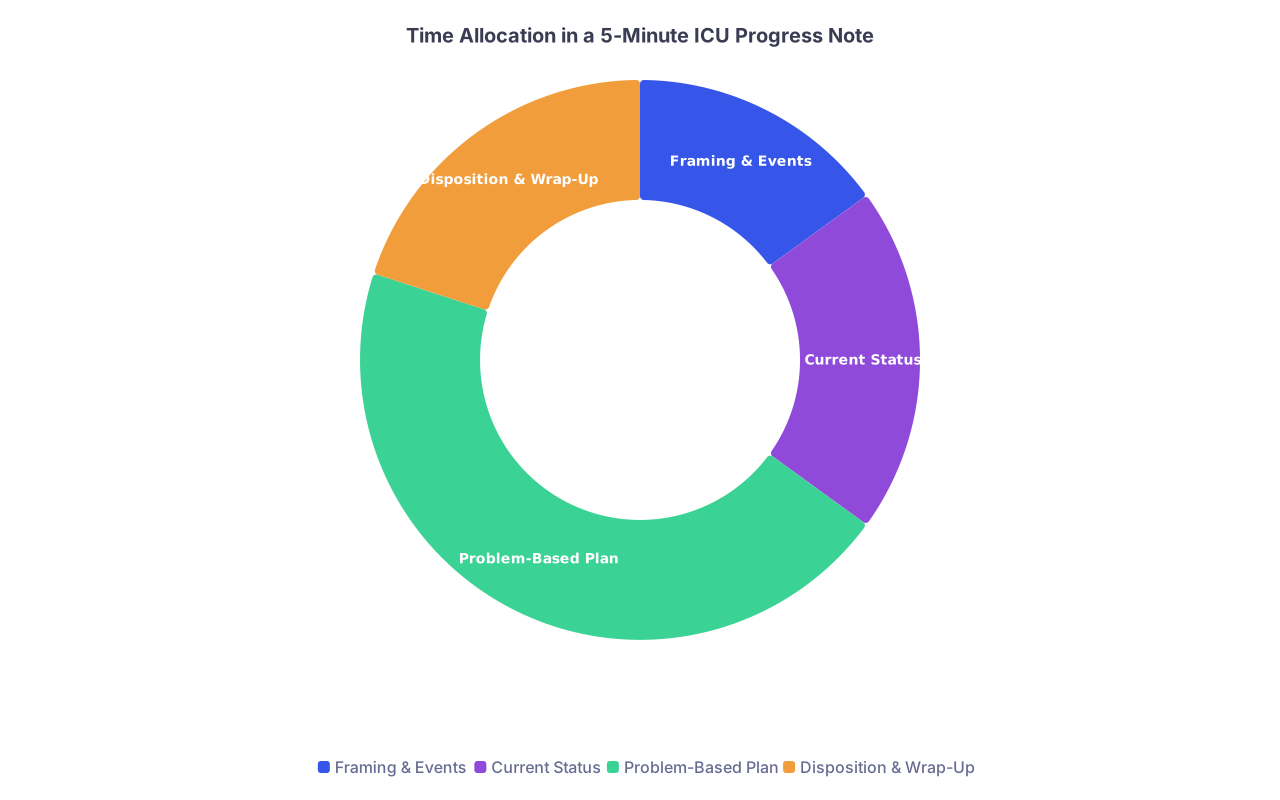
| Category | Value |
|---|---|
| Framing & Events | 45 |
| Current Status | 60 |
| Problem-Based Plan | 135 |
| Disposition & Wrap-Up | 60 |
That is:
- 30–45 seconds: Framing + overnight events
- 45–60 seconds: Current state snapshot
- 2–2.5 minutes: Problems + plan (80+% of value is here)
- 45–60 seconds: Disposition, code, family updates, quick reframe
If you spend 3 minutes on vitals and I/Os, you are burning time on the least cognitively valuable section. The attending can read flowsheets. They need your interpretation and plan.
Step 1: Open Strong – The One‑Line Frame (10–15 seconds)
If your first sentence is “So this is a 67-year-old man with a history of hypertension, diabetes, CKD, BPH, prior appendectomy…” you are already losing.
You give a one‑line identity and reason for being in the ICU. That is it.
Structure:
- Age / sex
- Highest‑yield comorbidities only
- Primary ICU problem
- Current ICU “phase” (shock day 2, post‑op day 1, vent day 5, etc.)
Examples:
- “Mr. Jones is a 67‑year‑old man with COPD and CAD, here with septic shock from pneumonia, now ICU day 3, shock day 2, intubated and improving vasopressor needs.”
- “Ms. Lee is a 45‑year‑old woman with decompensated cirrhosis admitted with variceal bleeding, ICU day 1, now hemodynamically stable post‑banding, still intubated for airway protection.”
Do not list everything in the problem list. Only what changes how we think about today’s plan.
That one sentence orients the team and tells them what mental model to use: early septic shock vs resolving shock vs pre‑extubation vs end‑of‑life.
Step 2: Overnight / Interval Events (20–30 seconds)
This is where most residents overtalk. You are not reading a nursing narrative. You are extracting actionable and trajectory‑changing events.
You want:
- Major clinical changes:
- New pressor started or stopped
- Intubation/extubation
- Arrhythmia, code, rapid escalation
- New fever, new bleeding, new neuro change
- Diagnostic events:
- New CT/US/echo with key result
- Critical lab findings (troponin jump, lactate doubled, new positive blood culture)
- Therapeutic interventions:
- Started stress‑dose steroids, changed antibiotics, dialysis initiated, lines placed
- Anything that changed the big picture:
- Goals of care conversation, family meeting, code change
Example:
“Overnight, his levophed requirement increased from 0.06 to 0.14, with MAPs drifting into the low 60s, so he was bolused with 1L LR with some improvement. No new arrhythmias. He remained intubated with stable ventilator settings. His 0200 lactate increased from 2.5 to 4.1. Blood cultures from yesterday grew E. coli; vanc was stopped, meropenem continued.”
Notice what is missing: every minor PRN, every bit of nursing documentation, pausing to read timestamps. Not helpful.
Step 3: Current Status Snapshot – “What are we dealing with right now?” (45–60 seconds)
This is where you paint the current physiology in broad, clinically relevant strokes. Still concise. You are answering: how sick is this patient, and what are the big knobs we are currently turning?
Think in this order: Airway/Breathing, Circulation, Neuro, Renal/Fluids, Infectious, Nutrition/Lines.
3A. Airway and Breathing
Key components:
- Intubated or not / interface
- Ventilation mode and broad settings (only the ones that matter)
- Current oxygenation/ventilation performance
Example:
“He’s intubated on volume control, rate 18, TV 6 cc/kg, PEEP 10, FiO2 50%. Saturating 94–96%, peak pressures 28–30, plateau 23.”
If spontaneously breathing:
“She is on 3 liters nasal cannula, sats 95–98%, respiratory rate 18–22, speaking in full sentences, no accessory muscle use.”
Skip full vent settings in a borderline stable patient if they have not changed and are not the focus. Mention what changed compared to yesterday only if relevant: “Yesterday PEEP was 12, we were able to wean to 8.”
3B. Circulation
Here you summarize:
- Hemodynamics (BP/MAP range, HR trends)
- Vasopressors/inotropes and doses
- Lactate trend only if relevant
Example:
“Over the last 24 hours, MAPs have ranged 60–70. Heart rate has been 90–110 in sinus. He is on norepinephrine at 0.12, up from 0.06 yesterday afternoon. Most recent lactate is 3.6, previously 4.1 overnight and 2.5 yesterday morning.”
No need to recite every single blood pressure reading unless this is a specifically unstable patient.
3C. Neuro
Short, functional, to the point:
- Sedation and analgesia
- Mental status / exam
Example:
“He’s on propofol at 25 and fentanyl at 75. When we lighten sedation he opens eyes to voice, follows simple commands, moves all extremities.”
Or:
“She’s off sedation, awake, oriented to person and place but not time, follows commands, no focal deficits.”
3D. Renal / Fluids / I&O
Here is where people love to drown attendings in exact milliliters. Do not.
Hit:
- Renal function trend (Cr, BUN if important)
- Yesterday’s net balance (ballpark)
- Urine output trend (good / marginal / oliguric)
| Category | Value |
|---|---|
| Framing & Events | 45 |
| Current Status | 60 |
| Problem-Based Plan | 135 |
| Disposition & Wrap-Up | 60 |
Illustration of style, not actual numbers that matter.
Example:
“Creatinine is 2.1 from 1.8 yesterday, baseline 1.0. Over the last 24 hours, he’s net positive about 1.5 liters, mostly from resuscitation. Urine output has been 0.4–0.5 mL/kg/hr despite fluids.”
If stable:
“Renal function is stable, Cr 0.9, and she’s been roughly even, plus 200 yesterday with urine output 1–1.5 mL/kg/hr.”
3E. Infectious / Inflammation
Key elements:
- Temp trend (febrile/afebrile)
- WBC trend if relevant
- Current antimicrobial coverage (not every dose and time)
Example:
“Temperature peaked at 38.4 overnight, currently 37.8. WBC is 18 from 16 yesterday. She is on meropenem day 2 and vancomycin was stopped this morning after negative MRSA swab.”
3F. Nutrition / Lines / Other
Very brief:
“She is on tube feeds at goal 55 mL/hr, tolerating well. Access includes a right IJ triple lumen placed yesterday and a radial arterial line, both day 1.”
This entire “current status” block should not exceed 60 seconds when you are focused. You are enabling the attending to visualize the patient’s physiologic state. You are not narrating the chart.
Step 4: Problems and Plan – The Core of the 5 Minutes (2–2.5 minutes)
If you only perfect one section, make it this one. This is where you show you are not a data parrot. You are a clinician.
Two rules:
- Always go problem‑based, not raw systems reading.
- Start with the active, life‑threatening problems. Not “1. FEN/GI.”
I typically structure it like this:
- Primary ICU problem / shock / respiratory failure
- Other active organ failures (renal, neuro, cardiac)
- Infections / sepsis focus
- Chronic comorbidities impacting ICU course (cirrhosis, CAD, etc.)
- Prophylaxis / lines / sedation / restraints
- Disposition (brief, or in closing section)
An Example Skeleton
Let’s take a prototypical septic shock on vent case. Your problems list might sound like:
- Septic shock secondary to pneumonia
- Acute hypoxemic respiratory failure, ARDS pattern
- Acute kidney injury
- Atrial fibrillation with RVR (now rate controlled)
- Stress ulcer prophylaxis / DVT prophylaxis / lines
Now, for each problem, you give:
- One‑sentence assessment (trajectory + differential if needed)
- Bullet‑type but spoken plan: 2–4 concrete actions or “continue” statements
Problem 1: Septic shock
“First, septic shock secondary to E. coli pneumonia. He remains vasopressor dependent but with improving lactate after fluid resuscitation.”
Then the plan:
“Plan:
– Continue norepinephrine, targeting MAP >65, with low threshold to add vasopressin if norepi requirement exceeds 0.2.
– No further fluid boluses right now, given rising O2 needs and positive 1.5 L balance; instead, we will use dynamic assessments with pressor adjustments.
– Continue meropenem day 2; now that cultures are back with pan‑sensitive E. coli, we can discuss narrowing later today to ceftriaxone if he remains stable.
– Trend lactate every 6 hours today until it is consistently <2 and vasopressor needs plateau or improve.”
Short, specific. You are telling the attending your thresholds.
Problem 2: Respiratory failure
“Second, acute hypoxemic respiratory failure with moderate ARDS. P:F ratio yesterday was about 130, now roughly 160 on PEEP 10, FiO2 50%.”
Plan:
“Plan:
– Maintain low tidal volume ventilation at 6 mL/kg ideal body weight and plateau <30.
– Given improving oxygenation, we can consider weaning FiO2 toward 40% this morning while keeping PEEP at 10, then reassess this afternoon.
– No signs of significant auto‑PEEP or high driving pressures, so we will not paralyze currently.
– Sedation goal RASS –1 to 0; start spontaneous awakening trial and SBT assessment tomorrow if pressor needs and oxygenation continue to improve.”
Notice: you are tying the vent strategy to objective markers and future decisions (SBT, SAT).
Problem 3: AKI
“Third, acute kidney injury likely multifactorial from septic shock and prior contrast, creatinine up to 2.1 from baseline 1.0.”
Plan:
“Plan:
– Aim for even to slightly negative fluid balance today given lung status, with careful pressor adjustment.
– Maintain MAP >65; avoid nephrotoxins and monitor vancomycin levels if resumed.
– Re‑dose diuretics only if he becomes significantly volume overloaded with adequate blood pressure.
– No urgent dialysis indications this morning—K is 4.7, bicarb 20, no severe acidosis. We will re‑discuss with nephrology if creatinine continues to climb or urine output drops below 0.3 mL/kg/hr.”
Again, focused, anticipatory, not listing every lab.
Problem 4: Arrhythmia
“Fourth, atrial fibrillation with RVR yesterday, now rate controlled on amiodarone infusion.”
Plan:
“Plan:
– Continue amiodarone drip until 24‑hour mark, then transition to oral if hemodynamics allow.
– Maintain electrolytes with potassium >4 and magnesium >2.
– No anticoagulation initiation today given thrombocytopenia and recent line placement; reassess CHA₂DS₂‑VASc and bleeding risk once shock stabilizes.”
You do not need to recite every arrhythmia event; you already covered big overnight events before.
Problem 5: “Bundled” Issues
“Fifth, ICU bundles and prophylaxis.”
Plan (very quick):
“Plan:
– He is on famotidine for stress ulcer prophylaxis and enoxaparin for DVT prophylaxis; both will be continued.
– Head of bed elevated, daily sedation interruption goal, turning schedule in place.
– Lines: right IJ triple lumen and left radial A‑line placed yesterday, both clean without signs of infection; no Foley, we will place a bladder scan protocol.
– Full code at this time.”
This whole problems section should take 2–3 minutes when spoken at a normal pace with some compression.
Step 5: Disposition, Code Status, and Communication (30–45 seconds)
You close by zooming out:
- Where is this patient going in the next 24–72 hours?
- What is the goals‑of‑care context?
Example:
“In terms of disposition, he is not ready for stepdown today given ongoing vasopressor requirement and moderate oxygen needs. Best case, if pressors wean off and oxygen continues to improve, we could consider SBT and possible extubation in 48–72 hours. He remains full code, but we have not yet had a detailed goals‑of‑care conversation with his family; his daughter is coming this afternoon, and I plan to discuss prognosis and preferences with them, especially if shock does not improve.”
If there was a major GOC change:
“Yesterday we had a family meeting and transitioned him to DNR with intubation still acceptable, but no CPR or escalation to ECMO. Family understands the severity of his illness and wants continued ICU‐level care for now.”
Your job is to make sure the team shares a mental model: Are we escalating, maintaining, de‑escalating, or shifting to comfort?
A Concrete 5‑Minute Example
Let me string this together in a way you can actually hear on rounds. Imagine you at the foot of the bed, reading from your note outline, not your entire chart.
“One‑liner: Mr. Jones is a 67‑year‑old man with COPD and CAD, here with septic shock from E. coli pneumonia, now ICU day 3, shock day 2, intubated with slowly improving oxygenation but increased vasopressor needs overnight.
Overnight events: His levophed requirement increased from 0.06 to 0.14 with MAPs drifting into the low 60s; he got 1 liter of LR with modest improvement. No new arrhythmias. He remained intubated without ventilator changes. His 2 AM lactate rose from 2.5 to 4.1, now down to 3.6 this morning. Blood cultures from admission grew E. coli, susceptible to ceftriaxone; we stopped vancomycin and continued meropenem.
Current status:
Respiratory – He is intubated on volume control, rate 18, TV 420 mL (about 6 mL/kg), PEEP 10, FiO2 50%. Sats 94–96%, peak pressures 30, plateau 23.
Hemodynamics – MAPs mostly 60–70 overnight, HR 90–110 in sinus. He is on norepinephrine 0.12; lactate trending down slightly from 4.1 to 3.6.
Neuro – On propofol at 25 and fentanyl at 75; with lightening of sedation he opens eyes to voice, follows commands, moves all extremities.
Renal/fluids – Creatinine 2.1 from 1.8 yesterday, baseline 1.0. Net positive about 1.5 liters in the last 24 hours; urine output 0.4–0.5 mL/kg/hr.
Infectious – Temp peaked 38.4, currently 37.8. WBC 18 from 16. On meropenem day 2, narrowed from broad coverage.
Lines/nutrition – Right IJ triple lumen and radial A‑line day 1, both clean. On tube feeds at goal 50 mL/hr, tolerating.
Problems and plan:
Septic shock from E. coli pneumonia. He remains vasopressor dependent but with slowly improving lactate. Plan is to continue norepinephrine targeting MAP >65, and if requirement exceeds 0.2, add vasopressin rather than more fluid. Given positive 1.5 L balance and worsening lung function yesterday, we will avoid further fluid boluses unless there is clear evidence of hypovolemia. Continue meropenem for now, with plan to narrow to ceftriaxone tomorrow if he remains stable. Trend lactate every 6 hours today until <2 or clearly down‑trending with stable pressor needs.
Acute hypoxemic respiratory failure with moderate ARDS. P:F approximately 150–160 this morning. We will maintain low tidal volume ventilation, keep plateau <30, and try to wean FiO2 from 50 down toward 40 as tolerated while holding PEEP at 10. No current indication for paralysis or prone positioning given improving oxygenation. Sedation goal RASS –1 to 0; if vasopressors and oxygenation improve, we will consider SAT/SBT in 48 hours.
Acute kidney injury, likely from shock and contrast load. Creatinine up to 2.1, urine output borderline but adequate. Plan is to aim for even fluid balance today, potentially slightly negative given lungs, and avoid nephrotoxins. No emergent indication for dialysis—potassium and acid‑base are acceptable. We will re‑consult nephrology if urine output declines below 0.3 mL/kg/hr or creatinine continues to rise.
Atrial fibrillation with RVR yesterday, now controlled on amiodarone. He is currently in sinus rhythm in the 90s. Continue amiodarone drip through 24 hours, then transition to oral if hemodynamics remain stable. We will keep potassium >4 and magnesium >2. We are holding off on anticoagulation today given thrombocytopenia and recent line placement, with plan to reassess once shock improves.
ICU bundle and prophylaxis. He is on famotidine for stress ulcer prophylaxis and enoxaparin for DVT prophylaxis; we will continue both. HOB elevated, Q2H turns, daily sedation interruption goal. Lines are day 1 without signs of infection. Foley is not in place; we are using bladder scans.
Disposition and goals: He remains critically ill with ongoing vasopressor requirement, not ready for stepdown. Best case, if he comes off pressors and oxygen improves, we could be looking at SAT/SBT and possible extubation in 48–72 hours. He is currently full code. His daughter is expected this afternoon; I plan a structured goals‑of‑care discussion with her today, especially if he remains on escalating pressors.”
That is under five minutes at a normal speaking pace. Clear, prioritized, and easy for an attending to quickly modify: “Ok, I agree with all that, but given his fluid status I want you to start a gentle diuretic drip this afternoon.”
How This Structure Translates Into Your Actual Written Note
Your spoken structure and your written note should mirror each other. Otherwise you are doubling your cognitive load.
A simple way to align them:
| Spoken Section | Written Note Section Heading |
|---|---|
| One-line frame | Brief HPI / Summary |
| Overnight events | Interval Events |
| Current status snapshot | Objective (organized by systems) |
| Problems & plan (by issue) | Assessment & Plan (problem list) |
| Disposition / code / GOC | Disposition / Code / GOC |
Write your problem list in the order you plan to speak it. Top‑load the ICU‑critical issues. If “nutrition” is problem #1 in your note, you are sending the wrong message about priorities.
And yes, you absolutely can (and should) keep your written objective detailed—for medico‑legal and communication reasons—but your spoken objective is always filtered.
Common Mistakes That Ruin a 5‑Minute ICU Note
I have watched residents do these over and over. Fix them and you will instantly look more senior.
1. Chronologic Storytelling
You are not giving a TED talk. “He came in three days ago with shortness of breath…” No. That was the admission, this is ICU day 3. The attending knows why he is here or can scan the chart.
Use only the minimum historical context that changes today’s plan: “status post laparotomy day 2,” “status post CABG day 1,” “post tPA 12 hours ago.”
2. Data Without Interpretation
“Lactate went from 2.5 to 4.1 to 3.6” is trivia. “Lactate peaked at 4.1 overnight during vasopressor escalation and is now down to 3.6 with current support” is medicine.
End raw data phrases with meaning: “consistent with…”, “suggesting…”, “which we think is due to…”.
3. Burying the Lead
If the patient coded at 3 AM and they are now on 3 pressors and 100% FiO2, that is the first thing out of your mouth after the one‑liner. Not minute 4.
4. Repeating the EMR
Reading the vital signs rows, intubation settings line by line, or I/O in exact ml: waste of air. Summarize and move on.
5. No Clear Plan
“I think we will continue to monitor” is not a plan. What will you accept, and what will trigger a change? Spell it out:
- “If his norepinephrine requirement exceeds 0.2, we will add vasopressin.”
- “If his creatinine climbs above 3 or he becomes oliguric <0.3 mL/kg/hr, we will call nephrology for possible RRT.”
Attendings love threshold thinking because it shows foresight.
Practicing and Internalizing the 5‑Minute Structure
This is a skill. You will not magically nail it on day one of ICU.
Practical steps:
- Script your first sentence and first problem. Actually write them down before rounds. Say them out loud once.
- Time yourself on one patient. Use your phone’s stopwatch in your pocket before rounds. Aim for 4–5 minutes. If you are at 8, you know you are over‑reporting objective data.
- Ask your attending one targeted question: “Was that the right level of detail on the vent and pressors, or would you prefer more/less?” Most will give very specific feedback.
- Watch the best upper‑level in the unit. There is always one fellow or senior who is crisp. Steal their phrasing.
You will find that by week 2, this structure becomes muscle memory. Your cognitive energy can then shift from “what order do I say this?” to “what is actually wrong with this patient and what am I missing?”
ICU vs Floor: Why the Structure Must Be Tighter
On the floor, you can get away with long problem lists and leisurely histories. Patients are relatively stable. Time pressure is real but not murderous.
In the ICU:
- The team has to move through 10–20 critically ill patients.
- Every minute you waste is a minute not spent at a bedside where someone is decompensating.
- Decisions are often made in real time during your presentation.
Your five minutes need to function like an executive summary. Focused, decision‑oriented, no filler.
To visualize it, think of an attending’s attention as a finite resource across the list:
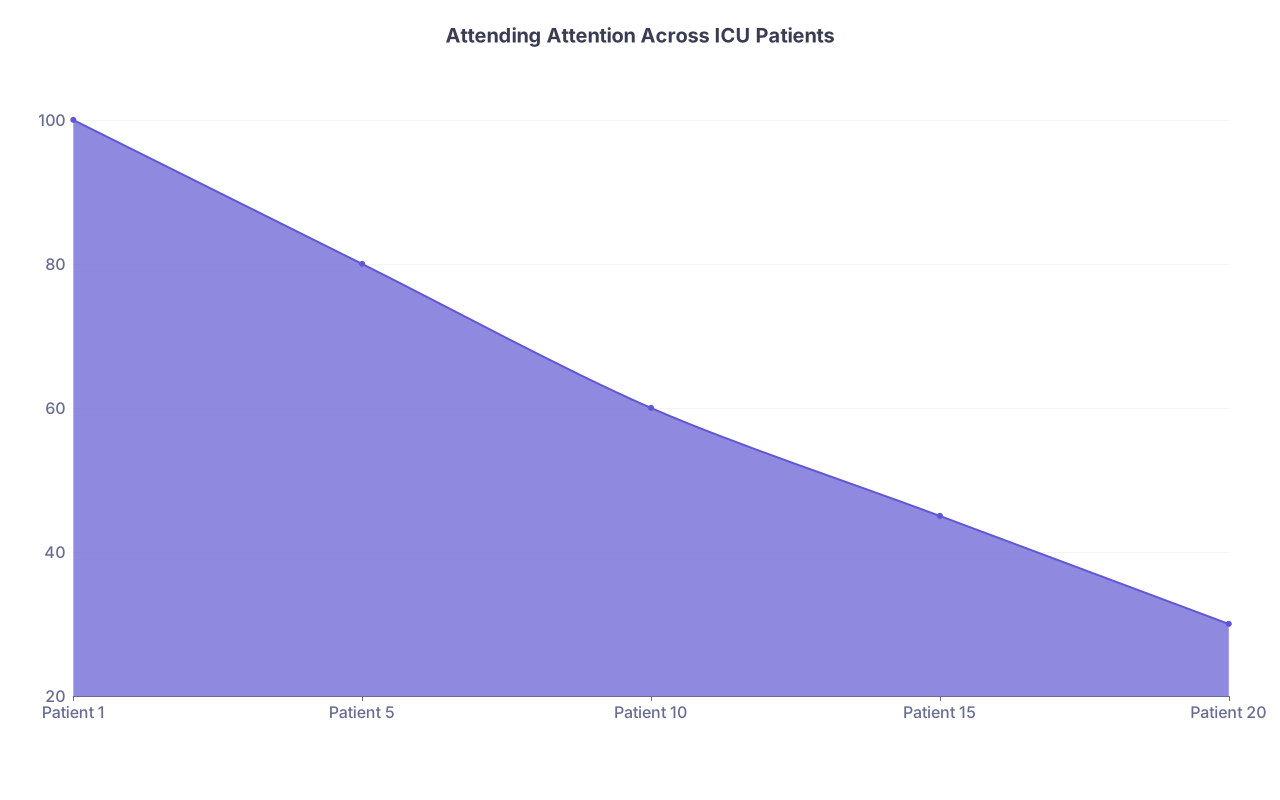
| Category | Value |
|---|---|
| Patient 1 | 100 |
| Patient 5 | 80 |
| Patient 10 | 60 |
| Patient 15 | 45 |
| Patient 20 | 30 |
You want to be the resident whose presentations conserve that resource, not erode it.
A Quick Rounds Flow You Can Memorize
If you like mental checklists, here is the “ICU 5‑Minute Note” sequence you can run in your head:

| Step | Description |
|---|---|
| Step 1 | One line ID |
| Step 2 | Overnight events |
| Step 3 | Current status snapshot |
| Step 4 | Problem 1 - primary issue |
| Step 5 | Problem 2+ - other organ failures |
| Step 6 | Bundles and prophylaxis |
| Step 7 | Disposition and goals |
Say it before you walk into the room:
“ID, events, status, problems, bundles, dispo.”
Use that to yank yourself back if you start wandering.
Final Tight Summary
Three points to take with you:
- A 5‑minute ICU progress note lives or dies on structure: one‑liner, key events, current status, problem‑based plan, disposition.
- Stop reading the chart at people. Summarize the objective data; spend most of your time on assessment, thresholds, and concrete plans.
- Prioritize the ICU problems first—shock, respiratory failure, organ support—then wrap with bundles and dispo. If you lead with electrolytes and FEN, you are doing it wrong.