The most dangerous work‑life balance mistakes in PGY‑1 do not look like mistakes at first.
They look like “being a team player.” Like “paying your dues.” Like “I can push through for just one more rotation.” That is exactly how residents slide into burnout, wreck their health, and start resenting a career they worked a decade to enter.
You are not lazy for wanting a life outside the hospital. You are reckless if you think it will “just happen” on its own.
Let me walk you through the traps PGY‑1s fall into again and again, and how to avoid becoming another cautionary story whispered in the call room.
Trap #1: Treating PGY‑1 Like a Temporary Survival Contest
Most interns secretly run the same script: “This year is supposed to be hell. I will just survive it and fix my life as a PGY‑2.”
That mindset is a setup.
Here is what actually happens when you do that:
- You normalize 5–6 hours of broken sleep for months.
- You stop exercising “just for this rotation.”
- You eat whatever is available in the work room.
- You detach from friends and family because “they do not get it.”
- You tell yourself you will deal with the debt, the weight gain, the anxiety later.
By October, you are not “pushing through.” You are running on fumes.
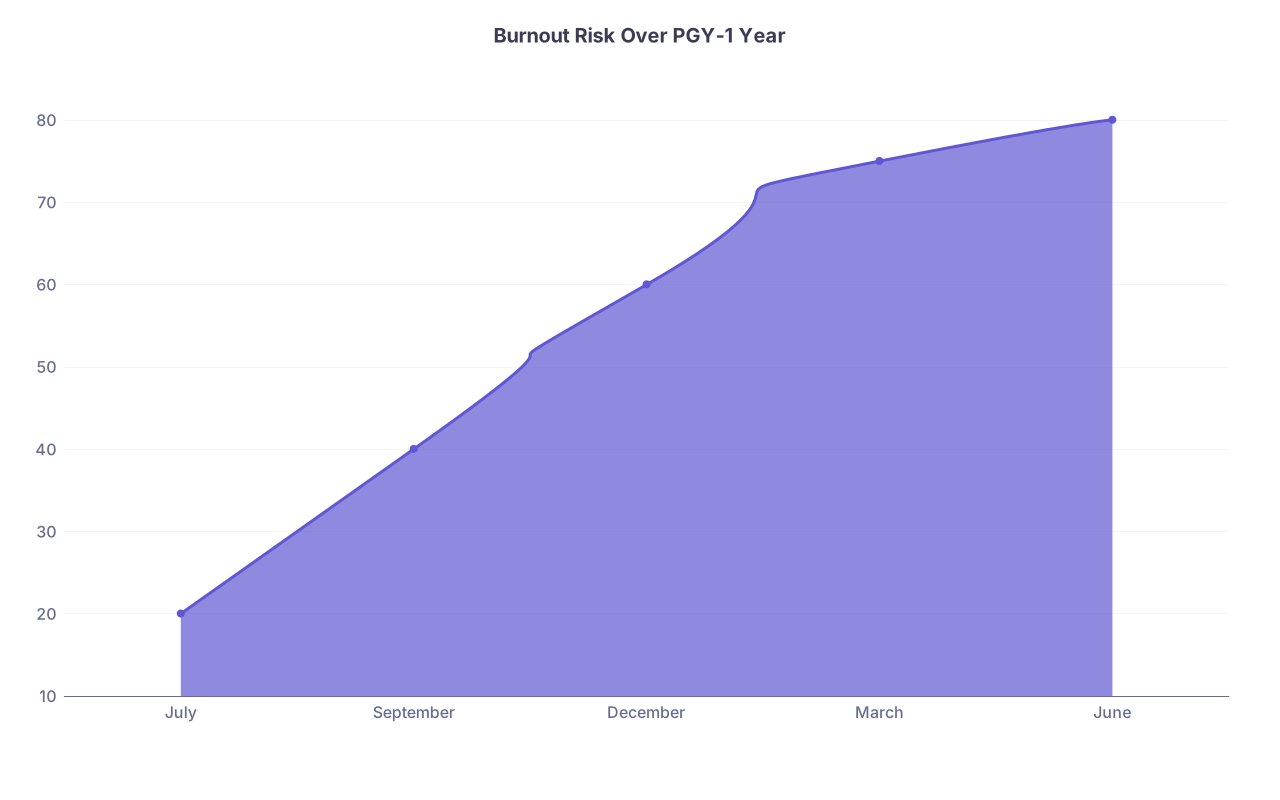
| Category | Value |
|---|---|
| July | 20 |
| September | 40 |
| December | 60 |
| March | 75 |
| June | 80 |
I have heard interns on night float at 3 a.m. say, “It is fine, residency is only three years.” That is not resilience. That is denial.
Avoid this trap by:
Designing a “minimum viable life” from day one.
Not a perfect life. A non-negotiable baseline:- Sleep floor (e.g., never less than 6 hours in 24 unless truly emergent).
- One form of movement most days (10–20 minutes counts).
- One relationship you refuse to drop (weekly call with partner / parent / friend).
- One weekly reset block (90–120 minutes off-screens, non-medical).
Treating PGY‑1 as training for a sustainable career, not a hazing ritual.
If the habits you are building this year could not carry you through the next 20 years without breaking you, they are the wrong habits.Catching yourself when you use “after this rotation” as a crutch.
Anytime you say “after wards / ICU / nights, I’ll…”, assume that thing will never happen unless you schedule a small version this week.
Trap #2: Confusing Being Helpful with Being Exploited
PGY‑1s are easy targets for guilt‑based overwork. You want to be liked. You want good evaluations. So you say yes. To everything.
- “Can you stay a bit late to help admit two more?” (You have already signed out.)
- “Just finish the discharges before leaving.” (You are 14 hours in.)
- “Do you mind covering this weekend? You are single and live close.”
You think you are being a good team player. Often you are just being easy to exploit.

Warning signs you have crossed from helpful to exploited:
- You are regularly the last intern leaving, for no clear educational reason.
- Requests to “help out” always flow in one direction—toward you.
- Seniors frame coverage as a moral issue: “If you care about patients…”
- You feel anxious saying no, even when you are clearly off duty.
How to avoid this trap without being “that intern”:
Use neutral, boundary-setting language.
You do not need a speech, just practiced phrases:- “I am past my duty hours; I need to sign out now.”
- “I can help with one more, then I have to leave.”
- “I already agreed to cover X; I cannot safely take on Y too.”
Anchor yourself to objective rules, not vibes.
ACGME duty hour rules are not suggestions. If you are consistently in violation, that is not you “being committed.” That is a program problem. Document it.Notice the pattern, not the one-off.
Staying late once because a patient is crashing is part of the job.
Staying late 4–5 days a week because “the list is heavy” means the system is offloading work onto whoever complains least. Often the intern who never says no.
Trap #3: Letting Documentation and “Efficiency” Eat Your Life
Interns waste a shocking amount of time through sloppy workflow:
- Repeating the same note 10 times because you do not use templates.
- Checking labs one by one instead of using decent filters.
- Writing “mini novels” in the chart that no one reads.
- Doing inbox and messages in random 5‑minute fragments all day long.
The cost is not just annoyance. It is lost hours every week that could have been sleep, exercise, or simply not staring at a screen.
| Task Type | Inefficient Time | Efficient Time | Weekly Savings |
|---|---|---|---|
| Daily progress note x10 | 90 min | 45 min | ~3.75 hours |
| Order entry per admit | 20 min | 10 min | ~1.5 hours |
| Inbox/messages daily | 40 min scattered | 20 min batched | ~2 hours |
Typical PGY‑1 mistake:
You assume you are just “slow” and will “get faster naturally.” You won't, not if you repeat the same clumsy processes every day.
How to stop letting the EHR steal your life:
Build brutal templates and shortcuts early.
- Smart phrases for common admit H&Ps and daily notes.
- Default order sets for standard diagnoses.
- Text expanders for your usual counseling / discharge language.
Batch, do not graze.
- 2–3 defined “inbox blocks” per day (e.g., 10:30, 14:30, 17:00) instead of constant checking.
- One focused pre‑rounds review pass instead of flipping back and forth.
Cut the narrative bloat.
No one needs a novel on a stable COPD admission day 3.
Clear, accurate, concise. The rest is self‑soothing perfectionism.
If you reclaim even 30–45 minutes a day from documentation waste, that is 3–5 extra hours of life per week. Over a year, that is hundreds of hours.
Trap #4: Letting Your Identity Shrink to “I Am My Residency”
This one is subtle and deadly.
You stop saying, “I like running / playing piano / baking.”
You start saying, “I used to run / play / bake, but residency…”
Suddenly your entire identity becomes:
- Which program you are in.
- Your last evaluation comment.
- Whether an attending praised or humiliated you on rounds.
That is how smart, previously interesting people end up scrolling UpToDate in bed at 1 a.m. not because they need it, but because they cannot turn it off.

Why this is so dangerous for work‑life balance:
- Every criticism at work feels like a verdict on your entire self.
- You overinvest time into marginal gains (rewriting notes for hours) because there is “nothing else” to you.
- You feel guilty doing anything non-medical, as if resting is “less serious.”
Protect yourself with deliberate “non‑doctor” anchors:
Keep 1–2 pre‑residency hobbies alive in micro‑form.
- Used to run half marathons? Commit to 2 short runs a week.
- Loved painting? 20 minutes on one weekend morning.
- Language learning? One 10‑minute app session before bed.
Protect at least one non‑medicine social circle.
Friends who do not care about your last M&M conference.
They will remind you that the world is larger than your hospital.Ban “I am just an intern” as your self‑description.
You are a person who happens to be training as a physician. You had values, interests, and relationships long before you had an MD. Do not surrender them.
Trap #5: Ignoring Your Body Until It Forces the Issue
Residents are extremely good at ignoring physical warning signs:
- “It is just call bloat.”
- “Everyone gains weight this year.”
- “My back hurts because I am soft, I will deal with it later.”
Then one day “later” shows up as:
- Sleep so fragmented you cannot think straight.
- GERD so bad you live on antacids and coffee.
- Back pain that makes every 12‑hour shift miserable.
- Anxiety spikes every Sunday night.
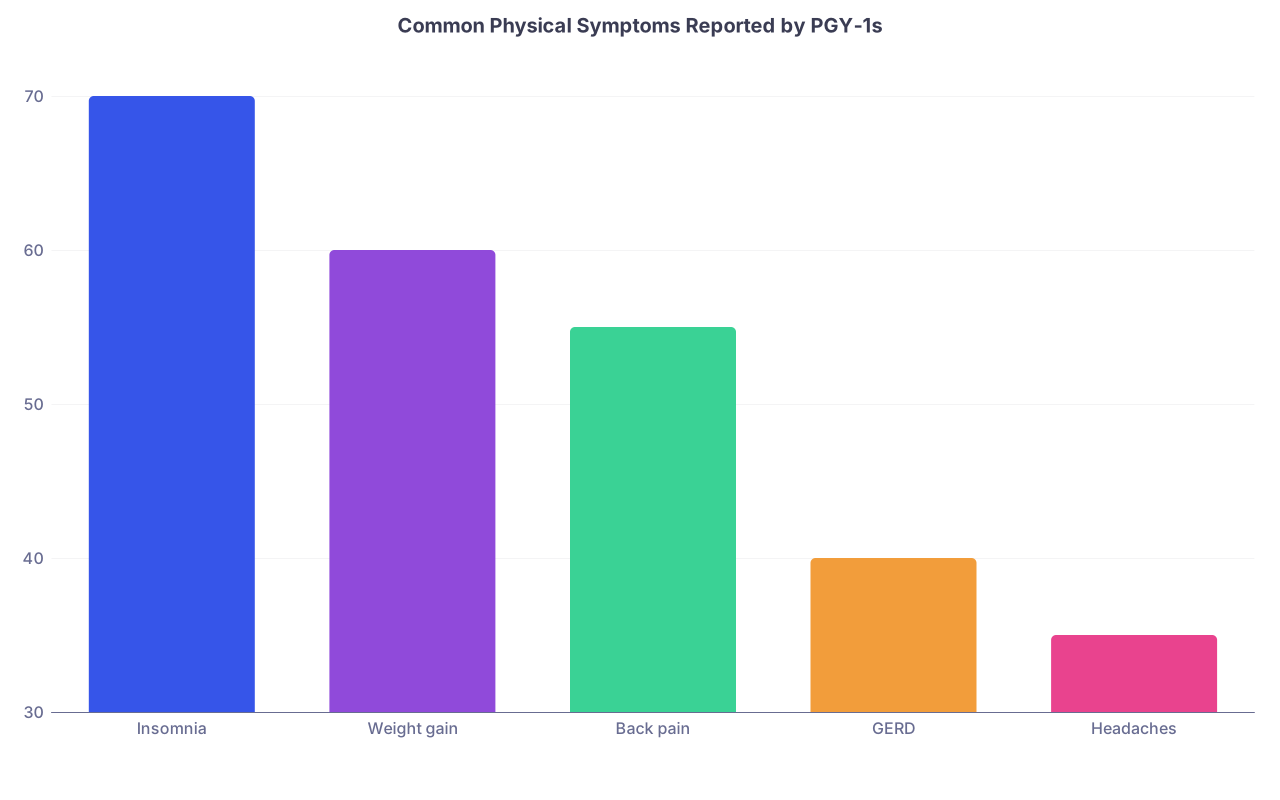
| Category | Value |
|---|---|
| Insomnia | 70 |
| Weight gain | 60 |
| Back pain | 55 |
| GERD | 40 |
| Headaches | 35 |
You would not tell a patient, “Just ignore those symptoms for a year, it is a tough job.” Stop doing it to yourself.
Minimum physical-health standards you should not compromise:
Sleep:
- Chronic <6 hours on non‑call days is not “dedication,” it is impairment.
- If you consistently cannot sleep even when you have the time, that is a problem to treat, not just tolerate.
Food:
- Coffee and crackers are not a meal.
- You need most days to include something with actual protein and something that grew in soil.
Movement:
- You do not need a gym membership.
- 10–15 minutes of brisk walking, stretching, or bodyweight exercises on most days does more for your mood and cognition than one heroic 2‑hour workout once a month.
Medical care for yourself:
- You need your own PCP. Not “curbside” from co‑residents.
- You need to actually attend your own appointments. Schedule them like you would OR time.
Trap #6: Underestimating the Mental Health Cost – Until It Breaks
The biggest lie in residency culture: “Everyone feels this way. It is normal.”
Feeling occasionally tired, frustrated, or overwhelmed? Normal.
Feeling numb, hopeless, or detached from patients and loved ones for weeks? Not normal. That is early burnout or depression, and pretending otherwise does not make you tough. It makes you a risk.

I have watched interns go from enthusiastic in July to saying things like:
- “I do not feel anything with bad news anymore.”
- “If a bus hit me on the way to work, I would be relieved.”
- “I am not suicidal, but if I did not wake up, that would be fine.”
These are not “jokes.” They are bright red flags.
Do not make these mental‑health mistakes:
Do not wait for a complete breakdown to seek help.
By the time you are missing shifts or crying in stairwells, the fire is already out of control. Go when you first notice:- Persistent dread of work.
- Loss of interest in everything non-medical.
- Increasing irritability with patients, nurses, or family.
- Thoughts that others would be “better off without you.”
Do not assume help == career suicide.
Most programs know they have a wellness problem. Many quietly appreciate residents who get help before things implode.
Read your state board and hospital policies yourself. Not the rumor mill.Use existing, low-friction resources.
- Employee assistance programs (often free, confidential sessions).
- Resident support groups, if they are not performative nonsense.
- External therapists with no link to your program at all.
You would fight like hell to keep your patient safe. Extend even half of that urgency to yourself.
Trap #7: Saying “Yes” to Everything Academic and Regretting It
There is a special PGY‑1 archetype: the resume maximalist.
They:
- Join three QI projects, two committees, and a research group by September.
- Agree to “just help with data collection” that becomes a second job.
- Sign up for every teaching or mentoring opportunity that floats by.
By January they are sending 1 a.m. emails about a poster while on night float, wondering why they are miserable.
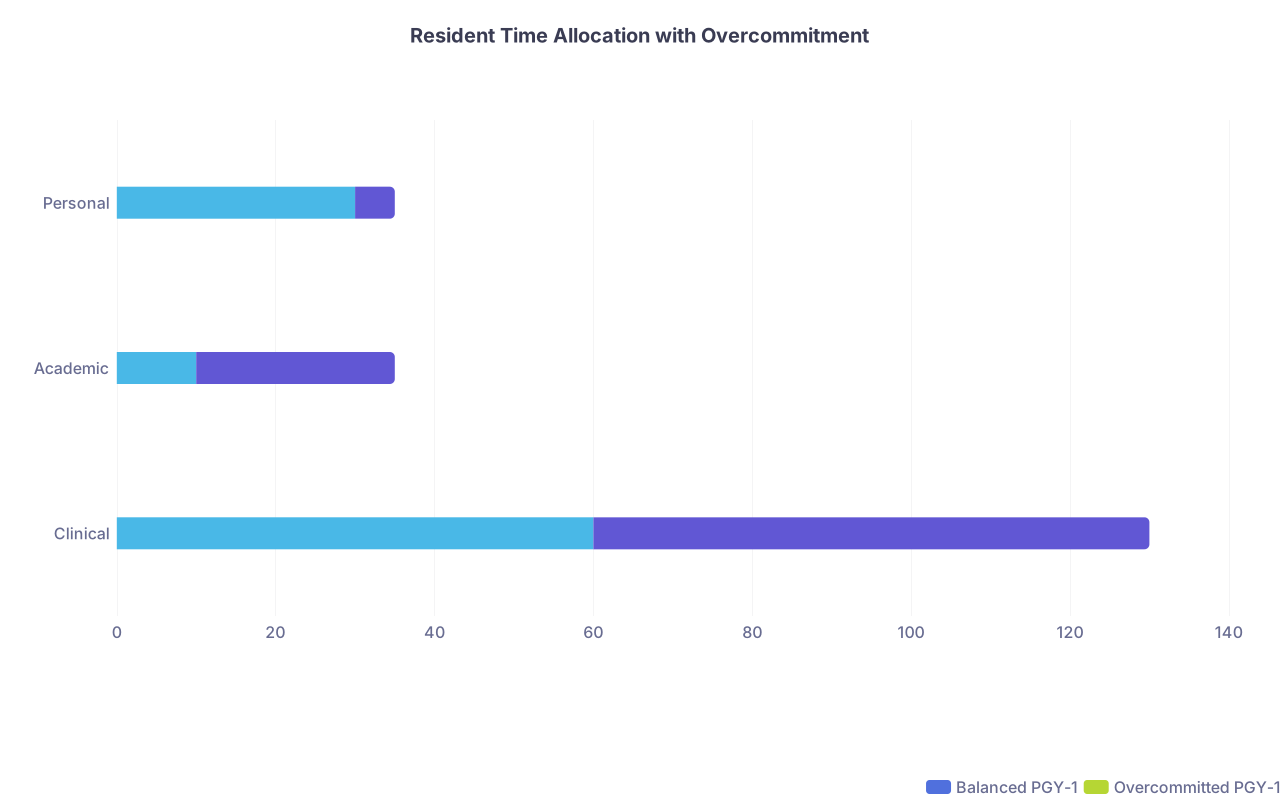
| Category | Balanced PGY-1 | Overcommitted PGY-1 |
|---|---|---|
| Clinical | 60 | 70 |
| Academic | 10 | 25 |
| Personal | 30 | 5 |
The mistake:
You treat every opportunity as rare and precious. You forget that your main job in PGY‑1 is to become a safe, competent physician, not a professional meeting attendee.
How to avoid burying yourself:
Apply the “PGY‑1 filter” to every new ask:
- Does this directly advance a clear career goal? (E.g., academic job, fellowship.)
- Is the time expectation explicit and realistic?
- Can I drop it without burning bridges if clinical life explodes?
If the answer to any is no, you probably should not say yes.
Cap your major commitments.
For most interns, this is:- 1 research or QI project
- 1 recurring nonclinical role (committee, resident council, etc.)
Anything beyond that should require a very strong reason.
Use honest but firm declines.
- “I appreciate the opportunity, but my current clinical load makes it hard to commit and do a good job.”
- “This sounds great, but my mentor and I agreed I will focus on one project at a time this year.”
You will have years to build your CV. You only get one shot at not destroying yourself in PGY‑1.
Trap #8: Treating Relationships as Optional, Then Wondering Why You Feel Empty
PGY‑1 slowly eats your relationships if you do not actively defend them.
The sequence looks like this:
- You start canceling plans “just for this month.”
- You answer texts two days late with “sorry, crazy at the hospital.”
- You keep telling your partner “it will calm down soon” when it clearly will not.
- Family stops inviting you because “you are always busy.”
Then one day you realize you have no one you feel comfortable calling when you are at your lowest. That emptiness is not an accident. It is the cumulative result of “I will make it up to them later.”

Avoid this by treating relationships like critical infrastructure:
Set predictable contact rituals.
- Weekly 20–30 minute call with a parent, sibling, or close friend.
- Short check‑in message to your partner at approximately the same times daily.
- Monthly in‑person meet‑up on a golden weekend, booked in advance.
Be honest about your bandwidth.
Stop saying “I will try to be there” when you will not. That breeds resentment. Say:- “This schedule is rough; I can commit to X, but not Y.”
- “I really want to see you; my next realistic free weekend is [date].”
Let at least one person see the unfiltered version of you.
Not the polished “I am fine, just tired” script. Someone who knows when you say, “I am okay,” but your voice sounds wrong.
FAQ: PGY‑1 Work‑Life Balance Traps
1. Is it realistic to expect any real work‑life balance during PGY‑1?
Yes, but only if you stop chasing a fantasy version of balance. You will not have equal time for work, sleep, hobbies, and social life. You can, however, protect a baseline of sleep, health, and connection that keeps you functional and human. The goal is not comfort; the goal is sustainability.
2. How do I know if I am working “too much” versus just having a hard rotation?
Look for patterns, not isolated weeks. If you are chronically over duty hours, regularly sacrificing basic needs (sleep, food, bathroom breaks) on non‑emergent days, and your program response to concerns is dismissive or punitive, that is beyond “hard rotation.” Document your hours honestly. Talk to chief residents or GME if the pattern persists.
3. What if saying no or setting boundaries hurts my evaluations?
Chronic overcompliance will hurt you more. Residents who burn out, make errors, or develop serious health problems do not end up with great evaluations either. Most reasonable seniors respect clear, professional boundaries, especially when framed around patient safety and duty hours. If a specific attending retaliates for appropriate boundaries, that is a political problem your chiefs or program leadership need to hear about.
4. How do I maintain hobbies when my schedule is insane and unpredictable?
Shrink the hobby instead of abandoning it. If you used to play 2‑hour soccer games, maybe now it is 15 minutes of juggling in the park. If you used to go to weekly art class, maybe now it is sketching for 10 minutes on post‑call days. Consistency beats intensity. Tie your hobby to anchors you already have (after breakfast, before bed, after sign‑out on golden weekends).
5. When should I seriously consider getting professional mental health help during residency?
Do not wait for “rock bottom.” Seek help if for more than 2 weeks you notice: persistent dread about going to work, loss of interest in activities you used to enjoy, significant changes in sleep or appetite, recurring thoughts that you would be better off not waking up, or feedback from people who know you well that you do not seem like yourself. Early intervention is not a luxury; it is insurance against much worse outcomes.
Keep this simple:
- PGY‑1 will stretch you. It should not erase you.
- The habits you build this year will become your default for the rest of your career—choose them like that is true.
- Any “success” that requires sacrificing your health, relationships, and sanity is not success. It is a slow, preventable failure dressed up as dedication.