
What if I told you your night float block is not automatically a health disaster — and that most of the damage residents blame on “nights” is actually from how they handle everything around nights?
Let’s kill a lazy narrative: “Night float will wreck you. Period.”
That’s not what the data shows. And it’s not what I’ve seen in residents who actually know what they’re doing.
The real story is more uncomfortable: night float exposes all the bad habits, structural problems, and training culture failures that you could mostly get away with on days. On nights, they just hit harder and faster.
Let’s separate myth from reality.
Myth 1: “Any Night Work Is Automatically Toxic”
This is the resident version of “carbs make you fat.” Oversimplified and convenient.
Yes, chronic night work is associated with:
- Increased cardiovascular risk
- Higher rates of depression and anxiety
- Metabolic changes and weight gain
- Higher rates of certain cancers in long-term shift workers (ICU nurses, factory workers, etc.)
But read those words again: chronic night work.
We’re talking years to decades of rotating or permanent night shifts, often with zero control, minimal sleep hygiene, and no schedule protection.
That’s not the same as 2–6 week night float blocks in residency with recovery weeks and some (imperfect) attempt at duty hour regulation.
The sleep literature is actually pretty clear:
- Acute night shifts = temporary circadian disruption, worsened performance, mood dips. These are real.
- But when shifts are time-limited, you protect sleep duration, and you stop whip-sawing the schedule every 2–3 days, most of the long-term health effects drop dramatically.
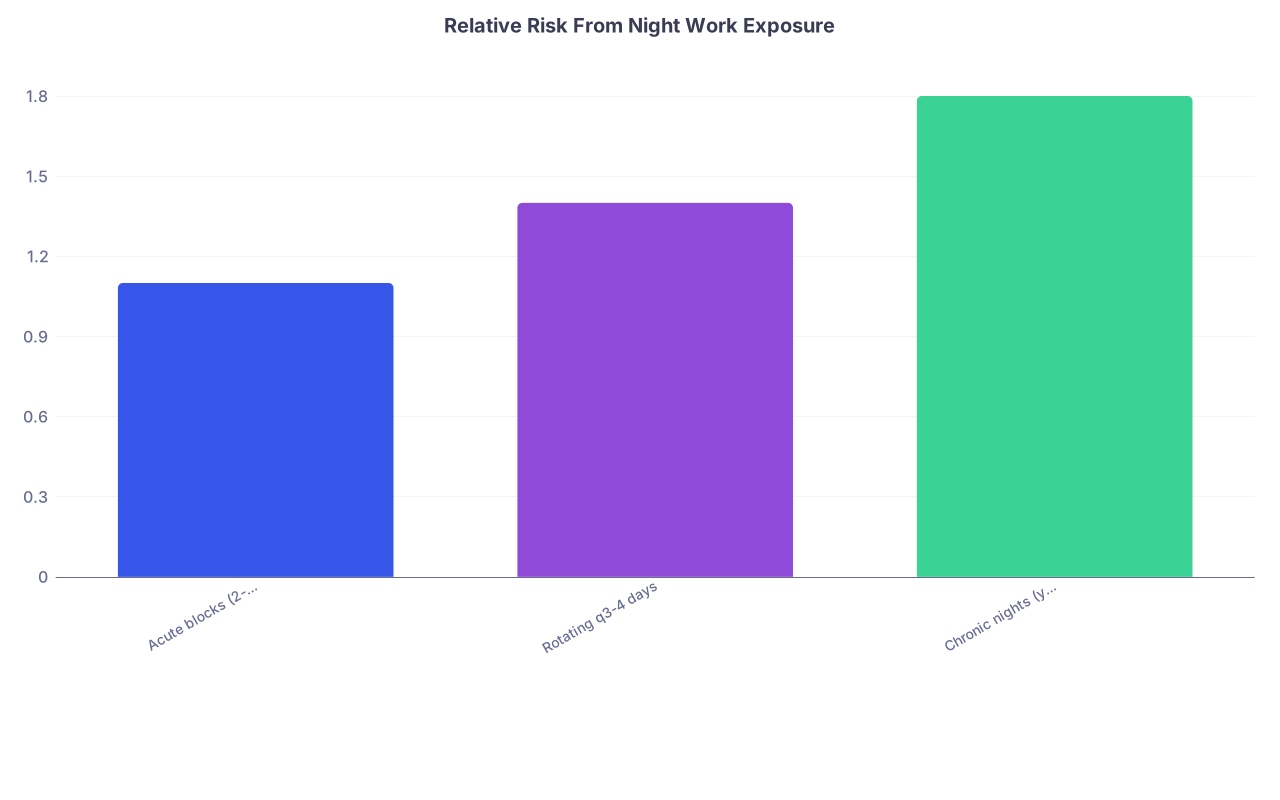
| Category | Value |
|---|---|
| Acute blocks (2-4 weeks) | 1.1 |
| Rotating q3-4 days | 1.4 |
| Chronic nights (years) | 1.8 |
Are those numbers exact? No. But they capture the pattern across multiple large cohort studies: short, semi-stable blocks are mildly stressful. Chronic rotating chaos is where risk explodes.
Night float — done reasonably — sits much closer to “short, semi-stable block” than to “10 years of permanent nights at the factory.”
So does night work have zero risk? No.
Is “night float will inevitably ruin your health” accurate? Also no.
The risk multipliers most residents actually face are:
- Terrible sleep timing on post-call days
- Trying to stay on a day schedule and do nights (the hero move that backfires)
- Caffeine and sugar disasters at 3 a.m.
- Zero recovery planning before and after the block
- Random 24s and day shifts jammed onto either side of the night rotation
Blame the system and culture and your habits. Not the clock alone.
Myth 2: “You Can’t Get Rested Sleep on Nights, So Why Try?”
I hear this one all the time:
“Day sleep doesn’t count. It’s not real sleep. I’m never rested anyway.”
Wrong. It’s not as efficient as nighttime sleep, but it absolutely counts — if you treat it like actual sleep instead of a suggestion.
Here’s the blunt truth: most residents’ “day sleep” is a joke.
They:
- Get home and scroll their phone in bed for 45 minutes
- Leave shades half-open because “I’ll fall asleep anyway”
- Drink a venti coffee at 4 a.m.
- Take a call from family at noon “because it’s the only time they’re free”
- Set an alarm after 4–5 hours “so I don’t waste the day”
Then proudly announce, “I just can’t sleep during the day.”
No — you didn’t let yourself sleep during the day.
There’s good data on what helps night shift workers preserve total sleep time (and that’s what really matters most for physical and cognitive performance):
- Dark environment (blackout curtains or sleep mask)
- Minimal noise (earplugs, white noise)
- Stable sleep timing during the block
- Limiting bright light after leaving work
- Stopping caffeine 6 hours before target sleep time
Residents love to dismiss this as “basic” or “too idealistic.” Then they wonder why they’re fried by night 4.
Let me translate the research into something residency-proof:
Commit to a fixed “sleep window”
On nights, your brain loves predictability more than anything. For example: home by 8:30 a.m., asleep 9:00–2:00 or 3:00 p.m. Every. Single. Day. You don’t need 8 hours straight. You do need 5–7 hours that are actually protected.Treat sleep like a page you’re covering
If a nurse called you at 1 p.m. asking for Zofran on a stable patient while you were “sleeping” post-call, you’d be furious. So why are you answering Amazon deliveries, texts, and random emails? Put your phone in another room. Tell people: “I sleep 9–3 during this rotation. Assume I’m unavailable.”Use strategic light exposure
Bright light on the way to your shift helps. Bright light on the way home kills your ability to fall asleep. Cheap hack: sunglasses on the way home. Then blackout curtains or a solid sleep mask.
None of this is fancy. It’s just what most residents refuse to do consistently.
Myth 3: “Nights Are Bad for You No Matter How the Schedule Is Structured”
Now we get into structural problems programs could fix, but often won’t unless residents push.
The evidence is clear on some specific design choices. Some are worse than others. The worst offenders:
- Rapidly rotating shifts (days–nights–days in the same week)
- “Short” night stretches of 1–2 shifts mixed randomly into day weeks
- 24+ hour call every 3–4 days instead of consolidated night float
- Night shifts >14–16 in a row without recovery
Programs sometimes brag about “flexible scheduling” then quietly trash their residents’ circadian rhythms with exactly this kind of chaos.
Compare a common night float vs non–night float setup:
| Feature | 24-hr Q3-4 Call System | 2-4 Week Night Float Block |
|---|---|---|
| Shift type | 24+ hr in-house | 10–12 hr nights |
| Rotation pattern | Days + intermittent | Mostly nights only |
| Circadian stability | Poor | Moderate to good |
| Post-call sleep | Often interrupted | Longer, protected window |
| Cognitive fatigue | Peaks post-24 | More even but chronic load |
The literature on traditional 24-hour call isn’t subtle. Error rates, needle sticks, crashes driving home — all worse after extended shifts. Night float was invented as a solution to that problem, not a new torture device.
The reality: well-designed night float (blocks, not random nights) often leaves residents less destroyed than a q3 24-hour call system.
If your program’s version of “night float” involves:
- Flipping back to days on random off-nights
- Post-nights clinic without protected recovery
- Stacking shifts up to 16 hours under the label “night float”
…that’s not night float. That’s a branding exercise on top of abuse.
Myth 4: “Your Health Tanked Because of Nights” (When It Was Everything Else)
Here’s the uncomfortable part: residents often blame nights for damage that started long before the first nocturnal cross-cover call.
The usual suspects:
- Garbage baseline fitness
- Ultra-processed diet, high sugar, irregular meals
- Zero stress management skills outside of complaining to co-residents
- Weaponized caffeine (dry scooping pre-workout before a 14-hour shift, then chai and energy drinks all night)
- Social jet lag on off days (sleeping 4 hours post-shift, then trying to “live like a normal person” the rest of the day)
So by the time night float hits, you already have:
- Chronic sleep debt
- High baseline stress
- Unstable mood
- Sedentary routine
- Inconsistent appetite
Nights don’t cause that. Nights expose it. Hard.
Look at how people actually feel by night block number:
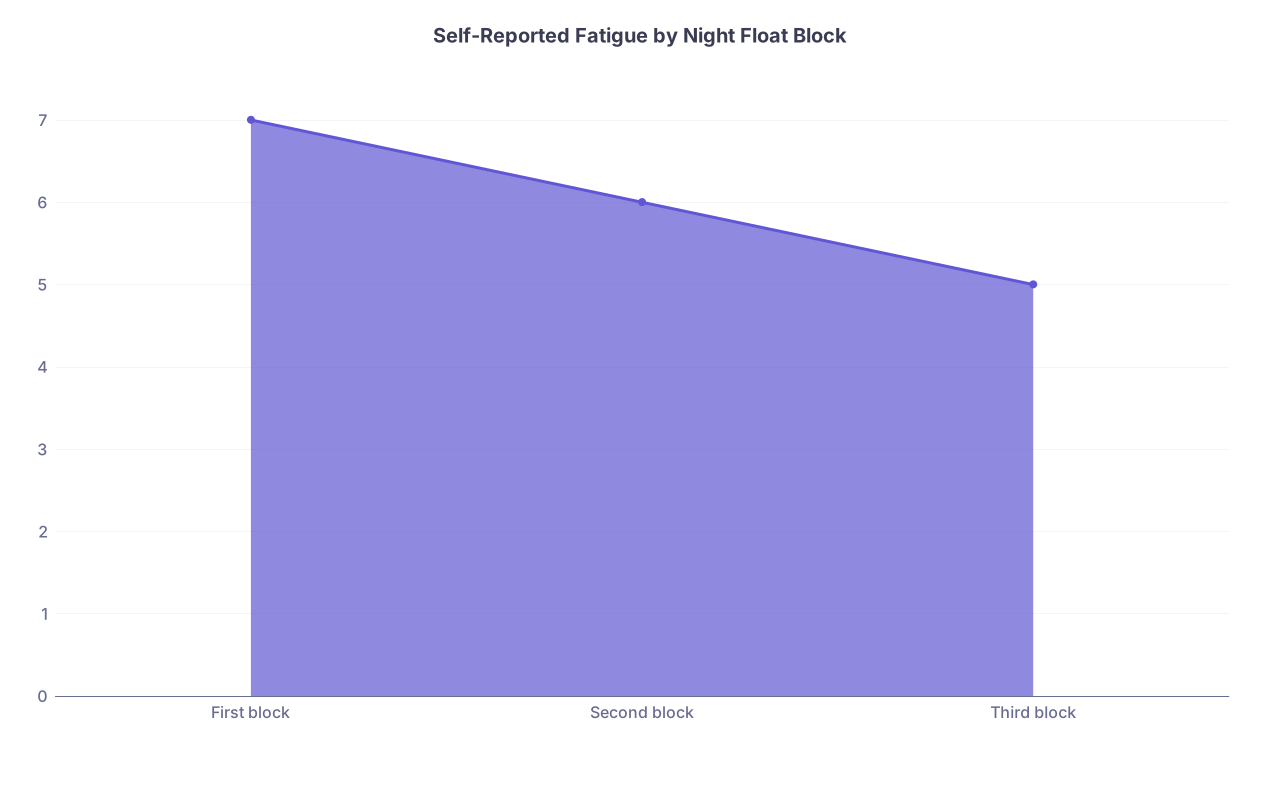
| Category | Value |
|---|---|
| First block | 7 |
| Second block | 6 |
| Third block | 5 |
What happens? By the second or third block, a certain group of residents figure out they can’t white-knuckle this and start making basic changes:
- They stop filling every post-call day with errands and social guilt
- They learn an actual sleep routine instead of collapsing on the couch
- They bring real food instead of raiding the vending machine
- They cap caffeine and stop drinking coffee on the drive home
And surprise: their later night blocks are miserable-but-manageable instead of “my body is destroyed.”
Your baseline matters. A lot.
Reality: Night Float Is Stressful, But Manageable When You Stop Doing Dumb Things
Let me be very blunt. If during night float you do this:
- Crush energy drinks after midnight
- Eat one giant meal at 3 a.m. and nothing else
- Scroll Instagram in bed until “I feel tired”
- Try to be a full human on your off days with brunch, errands, and social activities stacked
- Accept every random pager/text/email during your sleep window
Then yes — night float will steamroll you. You created a perfect system to guarantee it.
What do the residents who don’t fall apart actually do?
I’ve seen the same pattern across multiple programs:
They choose a rhythm and defend it.
Fixed sleep block daily. Short nap before first shift. No “I’ll just wing it.”They aim for total weekly sleep, not perfect nightly sleep.
Some nights they get 5 hours, some 7–8. But over the week they’re at least in the 40–50 hour range.They don’t eat like it’s the apocalypse.
Simple, repeatable meals. Protein and fiber. They keep blood sugar reasonably flat at night instead of bouncing between candy and cookies.They schedule recovery before the block starts.
They’re not signing up for big life events on post-nights. The block is for survival, not personal bests.They push back on the worst schedule designs.
That random clinic morning after a 6-night stretch? They bring data and wellness arguments and get it changed for the next class. Not always instantly, but over time.
None of that is magic. It’s adult-level boundary setting.
System Reality: Some Programs Make Nights Unnecessarily Harmful
I’m not going to pretend this is all “mindset” or “sleep hygiene.” Some programs have structurally bad policies that do make night float more harmful than it has to be.
Red flags:
- Flip-flopping between days and nights in the same week
- “Surprise” day shifts dropped in the middle of a night block
- No protected recovery day after the final night
- Demanding mandatory morning conference attendance during night blocks
- No access to decent food or basic breaks overnight
Residents are not shift-work lab rats. You’re physicians in training. You have enough stress without being used to fill every schedule gap because “the service needs coverage.”
What does a saner structure look like? Something like this:

| Step | Description |
|---|---|
| Step 1 | Pre-block day off |
| Step 2 | Night 1-3 |
| Step 3 | Night 4-6 |
| Step 4 | Post-block recovery day |
| Step 5 | Return to days with lighter load |
Does every program hit this ideal? No. But large observational studies and occupational health research support this general structure as less destructive than the random “plug residents into whatever hole we have” strategy.
If your program is still proudly preaching “this is how we did it in my day,” that’s not tradition. That’s laziness.
Practical Reality: Night Float Does Not Have to Ruin You
So where does this leave you?
Not with magical thinking. With a realistic picture:
- Night float is hard. It strains mood, cognition, and relationships.
- It’s not automatically catastrophic for long-term health if:
- It’s done in sane, predictable blocks
- You protect total sleep time
- You stop trying to live like a 9–5 human on your off hours during the block
On the individual level, your leverage is bigger than people tell you:
- You control your sleep window and how aggressively you protect it.
- You control your caffeine timing.
- You control whether you eat something halfway decent before your shift.
- You control whether you scroll your brain into oblivion in bed.
- You control how much you say “no” during that month — to others and to your own FOMO.
On the system level, your leverage is slower but real:
- Collect examples of near-misses and errors tied directly to scheduling chaos.
- Push for fixed blocks, protected post-night recovery days, and no random clinic mornings after nights.
- Use the literature. Program directors hate “I feel tired,” but they listen to “Here’s what multiple RCTs showed about extended shifts and error rates.”
Night float is not destiny. It’s a stress test — of your physiology, your habits, and your program’s willingness to use adult scheduling principles instead of nostalgia.
Key Takeaways
- Night float, by itself, is not guaranteed to wreck your health; random, chaotic schedules and terrible habits are the real culprits.
- Stable blocks, protected daytime sleep, and basic circadian hygiene turn nights from “catastrophic” into “tough but survivable.”
- You have more control than you think — over your sleep, caffeine, food, and boundaries — and programs can and should fix the schedule designs that make nights far worse than they need to be.